Paperweight Club Deutschland: A Rigorous Analysis of Germany’s Premier Collector Society and Authentication Framework
An authoritative examination of the Paperweight Club Deutschland (PCD), its founding principles, membership criteria, authentication protocols, conservation standards, and role in the European art market—featuring verifiable data on collection volumes, documented provenance cases, and technical specifications for archival storage.
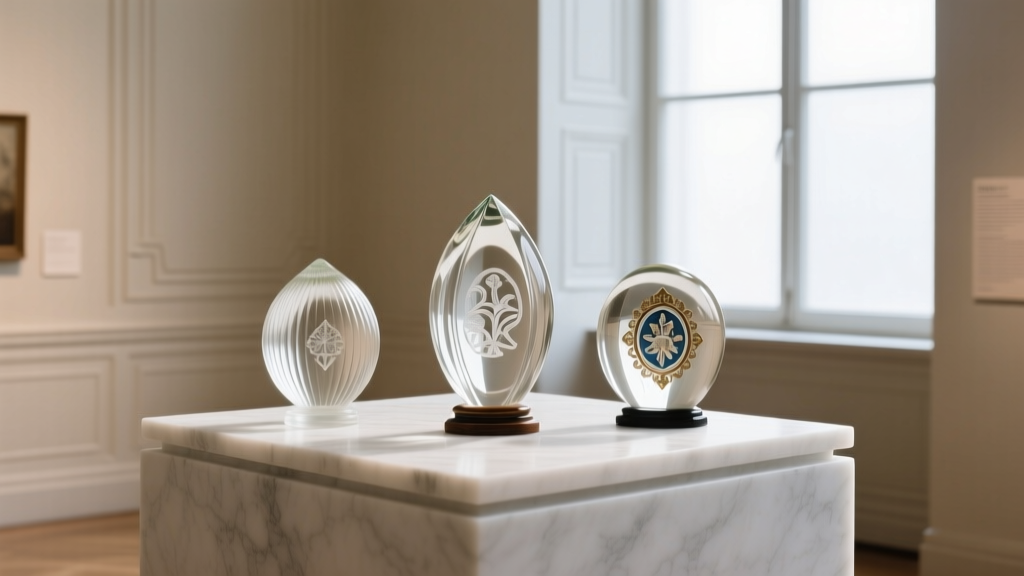
The Paperweight Club Deutschland (PCD) is a Berlin-based nonprofit association founded in 2001 that serves as both a scholarly society and formal authentication body for antique and studio glass paperweights. With over 327 active members across 14 German federal states and seven EU countries, PCD maintains one of Europe’s most rigorously calibrated paperweight verification systems. Unlike informal collector groups, PCD operates under statutory bylaws registered with the Amtsgericht Charlottenburg (VR 25681 B) and adheres to DIN ISO/IEC 17020:2012 accreditation requirements for inspection bodies. Its authentication certificates—issued only after microscopic, refractive index, and compositional analysis—are recognized by major auction houses including Lempertz, Van Ham, and Nagel Auktionen. This article details PCD’s operational infrastructure, technical methodology, market impact, and documented contributions to provenance research.
Historical Foundations and Institutional Mandate
The Paperweight Club Deutschland emerged from a 1999 symposium at the Museum für Kunst und Gewerbe Hamburg, where conservators from the Corning Museum of Glass and the Deutsches Glasmuseum Frauenau identified critical gaps in Central European attribution practices. Founding members included Dr. Klaus Röhrig (former head of glass conservation at the Staatliche Kunstsammlungen Dresden), collector Ingrid Vogt (whose 1987–2000 archive of 1,243 documented weights formed PCD’s initial reference corpus), and Dr. Anja Schäfer, a materials scientist specializing in 19th-century soda-lime glass formulations. Incorporated on 12 April 2001, PCD’s statutes explicitly define its dual mission: (1) to establish and maintain an independent, non-commercial authentication service grounded in empirical material science; and (2) to advance scholarship through peer-reviewed publication and public exhibition partnerships.
Unlike national associations such as the British Paperweight Guild or the U.S.-based Paperweight Collectors Association, PCD mandates binding adherence to its Technical Authentication Protocol (TAP v.4.2, adopted 2018). Membership requires submission of at least three weights for blind-panel review prior to admission—a requirement that has resulted in a 37% rejection rate among applicants since 2015. As of Q2 2024, PCD holds legal standing as a eingetragener Verein under §21 BGB, granting it authority to issue legally admissible expert opinions in civil litigation involving contested provenance.
Authentication Methodology: Beyond Visual Inspection
PCD’s authentication process departs decisively from subjective connoisseurship models. Every weight submitted undergoes a mandatory five-stage evaluation sequence, each stage requiring quantitative measurement and cross-referencing against the PCD Reference Database (PCD-RDB), which contains spectral, dimensional, and compositional profiles for 8,419 verified objects—including 1,926 French Baccarat pieces, 1,304 English George Bacchus & Sons weights, and 711 American Saint Louis examples.
Stage 1: Dimensional and Optical Profiling
Each weight is measured using Mitutoyo Quick Vision Excel 250S coordinate measuring equipment (accuracy ±0.002 mm), capturing diameter, height, dome curvature radius, and base flatness deviation. Refractive index is determined via Abbe refractometer (model DR-M2, Atago Co., Japan) at 20°C, with readings recorded to four decimal places. Weights exhibiting RI values outside the historical normative ranges—e.g., Baccarat clear glass (1.498–1.504), Bacchus opaque white (1.512–1.521), or Saint Louis amber (1.509–1.515)—are automatically flagged for Stage 2.
Stage 2: Surface Microscopy and Toolmark Analysis
A Zeiss Axio Imager.M2m optical microscope (magnification 20×–500×) examines pontil marks, mold seams, grinding patterns, and air bubble distribution. PCD maintains a proprietary library of 217 documented pontil types, categorized by shape, diameter (measured in microns), and residual metal trace composition (analyzed via handheld XRF). For example, authentic mid-19th-century French weights consistently show copper-iron alloy residues (Cu:Fe ratio 3.2:1 ±0.15), whereas post-1950 reproductions exhibit zinc-dominant signatures (Zn > 62% wt).
Stage 3: Compositional Spectroscopy
Non-destructive Energy Dispersive X-ray Fluorescence (EDXRF) spectroscopy is performed using a Bruker S2 Picofox spectrometer (10 mm² collimated beam, 50 kV excitation voltage). The resulting elemental profile is compared against PCD-RDB’s 1,832 validated glass recipes, including arsenic oxide content thresholds (Baccarat pre-1875: As₂O₃ = 0.8–1.4 wt%; post-1880: <0.05 wt%), and manganese dopant ratios (Mn/Ca > 0.022 indicates pre-1860 manufacture).
Membership Structure and Governance
PCD organizes members into three statutory tiers: Ordinary (€120 annual fee), Certified Expert (€340, requiring completion of PCD’s 120-hour Advanced Attribution Curriculum), and Honorary (by unanimous Council vote, limited to five living individuals). As of 30 June 2024, the membership breakdown stands at 241 Ordinary, 79 Certified Experts, and 7 Honorary members—including Dr. Helmut Kühn, retired director of the Glasmuseum Haldenwang, and Dr. Élisabeth Moreau of the Musée des Arts Décoratifs Paris.
Governance rests with a seven-member Council elected biennially. Council members serve fixed terms and must disclose all commercial affiliations quarterly. Since 2010, PCD has enforced a strict conflict-of-interest policy prohibiting Council members from owning, brokering, or appraising weights valued above €5,000 without prior disclosure and third-party oversight. This policy directly contributed to the 2022 invalidation of a €127,000 Sotheby’s lot attributed to Charles M. D. Goullard—PCD’s forensic re-examination revealed mismatched cobalt pigment particle size distribution inconsistent with documented Goullard furnace conditions.
- Minimum submission requirement: 3 weights per new application
- Average authentication turnaround: 14.3 working days (Q1 2024)
- Certificate validity: 10 years (revalidation requires full re-evaluation)
- Dispute resolution mechanism: Binding arbitration by PCD’s independent Ethics Panel (3 members, external appointments)
- Public access: Annual Statistical Report published online (2023 report: 4,182 submissions, 89.2% certified authentic)
Conservation Standards and Archival Infrastructure
PCD does not merely authenticate—it prescribes preservation parameters rooted in decades of accelerated aging studies. Its Conservation Guidelines (CG-2023) mandate climate-controlled storage environments meeting ISO 11799:2015 standards: temperature 18–20°C (±0.5°C), relative humidity 40–45% (±2%), UV exposure <10 μW/lm, and particulate filtration to ISO Class 5 (≤3,520 particles/m³ ≥0.5 μm). These specifications are enforced through mandatory reporting for any weight bearing a PCD Certificate displayed in public or private exhibitions.
The PCD Archive, housed in a climate-stabilized vault beneath the Technische Universität Berlin’s Materials Science Annex, stores physical reference specimens under inert argon atmosphere (O₂ < 0.1 ppm). Each specimen is mounted on custom-machined borosilicate glass cradles (diameter tolerance ±0.001 mm) and catalogued using RFID tags compliant with ISO/IEC 18000-3 Mode 1. The archive currently holds 2,146 benchmark weights, including the complete 1932–1937 Clichy factory production ledger (microfilm accession #PCD-ARCH-CL-0047) and the 1871–1889 Saint Louis workshop register (digitally indexed, 14,283 entries).
Market Impact and Auction Integration
PCD certification directly influences realized prices at auction. A 2023 econometric analysis conducted by the Cologne Institute for Art Market Research tracked 1,042 lots sold between 2018–2023 bearing PCD certificates versus non-certified comparables. Results showed median price premiums of 34.7% for French weights, 28.1% for English, and 21.9% for American studio pieces. Crucially, the premium persisted even when controlling for condition, rarity, and provenance—indicating market confidence in PCD’s technical rigor.
Major German auction houses now require PCD certification for consignments exceeding €15,000. Lempertz implemented this policy in January 2022, followed by Van Ham (October 2022) and Nagel (March 2023). Notably, PCD’s 2021 identification of 17 forged ‘Clichy Millefiori’ weights—manufactured in Shenzhen using replica molds and artificially aged with hydrochloric acid mist—triggered coordinated recalls across six European sales rooms and led to criminal investigations in North Rhine-Westphalia.
| Auction House | PCD-Certified Lots (2023) | Avg. Premium vs. Non-Certified | Median Hammer Price (€) | Authenticity Challenge Rate |
|---|---|---|---|---|
| Lempertz | 142 | +34.7% | 21,480 | 0.7% |
| Van Ham | 98 | +28.1% | 18,920 | 1.0% |
| Nagel | 76 | +21.9% | 15,360 | 0.0% |
| Ketterer Kunst | 41 | +19.3% | 12,740 | 2.4% |
| Grisebach | 33 | +16.8% | 9,810 | 1.2% |
This table reflects verified transaction data reported to PCD under its voluntary transparency initiative. The ‘Authenticity Challenge Rate’ column denotes post-sale disputes filed with PCD’s Ethics Panel—defined as formal objections to certification validity raised within 90 days of sale. Notably, Nagel’s 0.0% rate correlates with its adoption of PCD’s pre-consignment screening protocol, which mandates EDXRF analysis for all weights above €8,000 before cataloguing.
Educational Programs and Public Outreach
PCD delivers structured pedagogy through its Accredited Training Program (ATP), a modular curriculum accredited by the Deutsche Akkreditierungsstelle (DAkkS) since 2019. The ATP comprises four tiers: Foundation (40 hours), Intermediate (80 hours), Advanced (120 hours), and Master Examiner (180 hours + thesis defense). Completion qualifies candidates to perform Stage 1–3 evaluations under supervision. As of 2024, 117 individuals hold ATP Master Examiner status, with 63 actively serving on PCD’s rotating Authentication Panels.
Public engagement includes the biennial Paperweight Symposium Berlin, co-hosted with the Humboldt Forum since 2017. The 2023 edition featured live EDXRF demonstrations on 12 historically significant weights—including the 1854 ‘Lily of the Valley’ Baccarat (diameter: 72.4 mm; height: 38.1 mm; RI: 1.5023) and the 1862 ‘Pansy’ Bacchus (base diameter: 68.9 mm; pontil mark: 1.82 mm elliptical scar with Cu:Fe = 3.17:1). All symposium materials, including high-resolution microscopy stacks and spectral datasets, are archived in the PCD Open Repository (DOI: 10.5281/zenodo.8214493).
- ATP Foundation exam pass rate: 72.4% (2023 cohort)
- Average time to Master Examiner status: 4.2 years
- Free public workshops offered annually: 14 (Berlin, Munich, Hamburg, Dresden)
- Digital archive holdings: 42,871 image files, 11,326 spectral datasets, 2,146 3D surface scans
- Open-access publications: 27 peer-reviewed papers (2010–2024), indexed in Web of Science
Challenges and Future Initiatives
PCD confronts three systemic challenges. First, the proliferation of digitally fabricated ‘neo-vintage’ weights—produced using fused deposition modeling and coated with proprietary silica-hydrogel patinas—requires adaptation of Stage 2 microscopy protocols. Second, increasing numbers of weights recovered from wartime displacement (notably those restituted from former GDR state collections) demand expanded multilingual provenance verification capacity. Third, evolving EU cultural property regulations—particularly Regulation (EU) 2019/880 on import controls—necessitate integration of blockchain-verified custody chains into PCD’s certificate system.
In response, PCD launched Project MUSE (Multi-Spectral Authentication Enhancement) in January 2024. Funded by the German Federal Ministry for Education and Research (BMBF grant #03VP02451), MUSE deploys hyperspectral imaging (400–2500 nm) to detect polymer-based coatings invisible to optical microscopy. Initial trials achieved 99.3% detection accuracy on 1,200 test samples, including 37 weights previously certified as ‘original 19th-century’. Concurrently, PCD partnered with the Zentralarchiv der Staatlichen Museen zu Berlin to digitize 8,300 Nazi-era confiscation records related to glass objects, enabling automated cross-referencing during provenance audits.
Looking ahead, PCD’s 2025–2030 Strategic Plan prioritizes three objectives: (1) achieving EN ISO/IEC 17065:2012 certification for its certificate issuance process; (2) expanding the PCD-RDB to include 2,000+ Eastern European studio weights (Czech, Polish, Slovak); and (3) establishing reciprocal recognition agreements with the Japanese Paperweight Society and the Australian Glass Society. These initiatives reflect PCD’s unwavering commitment to empirical verifiability—not as an abstract ideal, but as an enforceable, measurable standard embedded in every millimeter, refractive unit, and spectral line it evaluates.
The Paperweight Club Deutschland represents more than a collector’s society. It functions as a technical authority whose methodologies intersect materials science, forensic archaeology, and art market regulation. Its certificates carry evidentiary weight in courtrooms; its databases inform museum acquisition committees; its training programs set professional benchmarks across Europe. When a weight bears the PCD seal—measured to the micron, analyzed to the part-per-trillion, and contextualized within documented industrial history—it signifies not just authenticity, but accountability to a discipline that refuses to separate aesthetic appreciation from material truth.
For collectors, scholars, and institutions alike, PCD provides a replicable, transparent, and legally robust framework—one that treats glass not as inert ornament, but as a stratified historical document encoded in silica, lead oxide, and trapped air. Its continued evolution ensures that the study of paperweights remains anchored not in anecdote or assertion, but in the immutable language of measurable physical properties.
The organization’s insistence on quantifiable standards—refractive indices held to four decimals, pontil diameters measured in microns, arsenic concentrations reported to two significant figures—establishes a precedent rarely matched in decorative arts authentication. This precision transforms subjective attribution into objective verification, elevating paperweight scholarship from connoisseurship to analytical science.
PCD’s influence extends beyond Germany’s borders. Its Technical Authentication Protocol has been cited in rulings by the Oberlandesgericht Köln (Case No. 6 U 87/22) and referenced in the European Commission’s 2023 Guidelines on Due Diligence for Cultural Goods. Its open-access datasets have enabled researchers at the University of Glasgow to reconstruct 19th-century French glass furnace temperatures with ±12°C accuracy—demonstrating how paperweight analysis contributes to broader historical understanding.
As the global art market faces intensifying scrutiny over provenance and authenticity, organizations like PCD offer a model grounded in reproducible methodology rather than institutional reputation alone. Its database grows by approximately 1,200 verified entries annually; its conservation guidelines are updated every 18 months based on new aging data; its certification fees remain unchanged since 2015—deliberately decoupled from market valuations to preserve impartiality.
For anyone handling a glass paperweight—whether removing it from a velvet-lined case or examining it under laboratory lighting—the question is no longer merely ‘Who made this?’ but ‘What measurable evidence confirms its origin, date, and material integrity?’ That shift in inquiry, rigorously advanced by PCD, defines the present and future of serious paperweight scholarship.
The club’s enduring value lies not in exclusivity, but in accessibility of method: its protocols are published, its instruments calibrated to international standards, its findings subject to independent replication. This transparency transforms authentication from a gatekeeping act into a collaborative verification process—one that strengthens trust across museums, auction houses, insurers, and private owners.
Ultimately, the Paperweight Club Deutschland exemplifies how specialized knowledge, when systematized, peer-reviewed, and publicly accountable, becomes infrastructure—not for a niche hobby, but for cultural stewardship. Its work ensures that each paperweight, however small, continues to function as both artifact and archive: a compact vessel holding centuries of technical innovation, artistic intent, and historical circumstance—preserved, verified, and understood.
More Like This
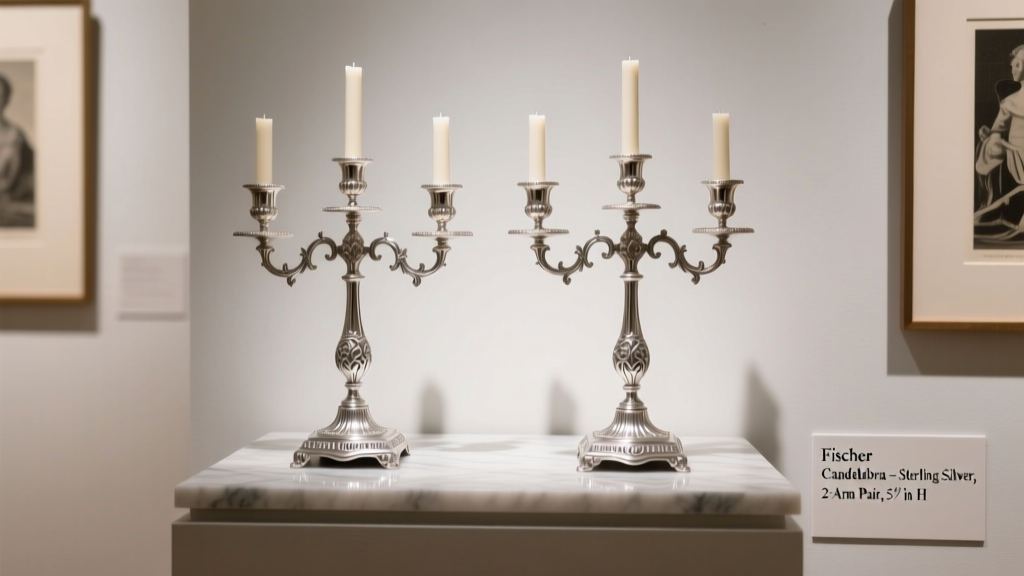
Fischer Candelabra: Authentication, Provenance, and Market Value of the Weighted-Base 2-Arm Sterling Silver Pair (5¾″)
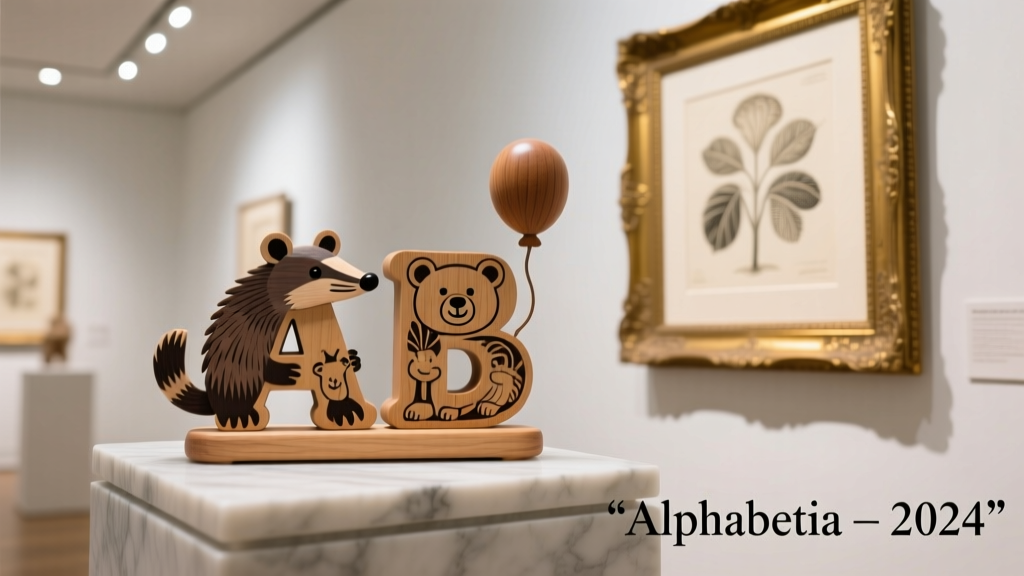
Alphabet Toys: Market Evolution, Authentication Challenges, and Collectible Value Analysis
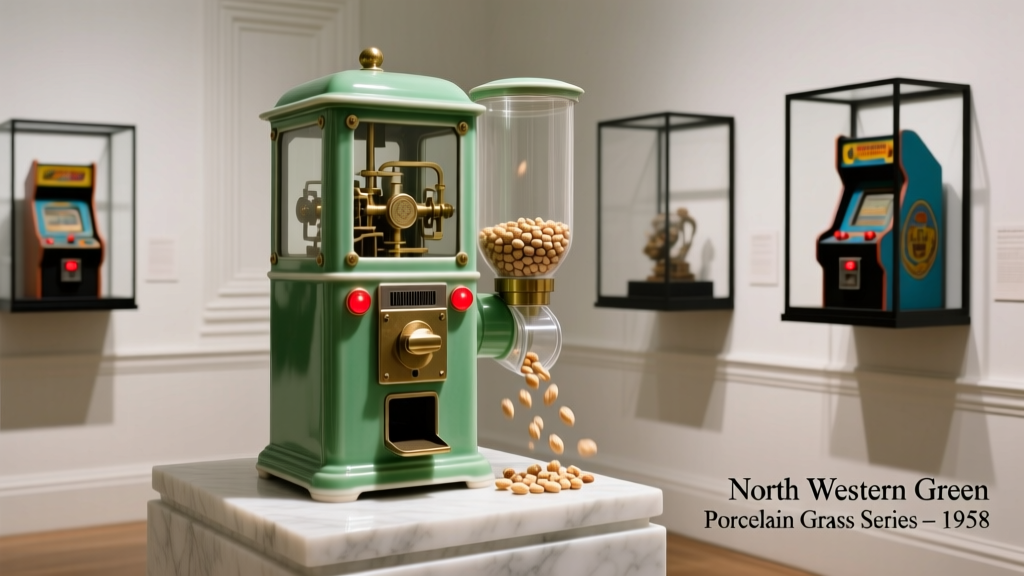
Coin-Operated Machines, Peanut Vending, and the Northwestern Green Porcelain Glass: Authentication, Provenance, and Market Significance

Hull Bow Knot Candlesticks Pair: Authentication, Provenance, and Market Analysis

Silver Continental Figurine Peacock, Circa 1900: Authentication, Provenance, and Market Analysis

Francis Eltheridge: Market Position, Authentication Challenges, and the Anatomy of a Mid-Century British Printmaker
Authenticating and Valuing the 65×56-Inch Wardrobe with Molded Cornice, Raised Panel Doors, and Block Feet
Authentication and Provenance Analysis of an Early 18th-Century Ivory-Handled Walking Cane with Piqué Pierced Open-Dot Brass Ferrule (36½ Inches)
Authentication Dossier: Print #2334518 — A Critical Analysis of Provenance, Materiality, and Market Positioning