Otr Wire: Authentication, Market Value, and Technical Forensics of a Contemporary Printmaking Innovation
Otr Wire is a proprietary drypoint intaglio technique developed by artist Otr (Otto Rössler) in 2014, distinguished by its use of stainless-steel wire matrices embedded in copper plates. This article analyzes material composition, authentication protocols, market performance, and forensic markers—backed by auction data, lab measurements, and conservator interviews.
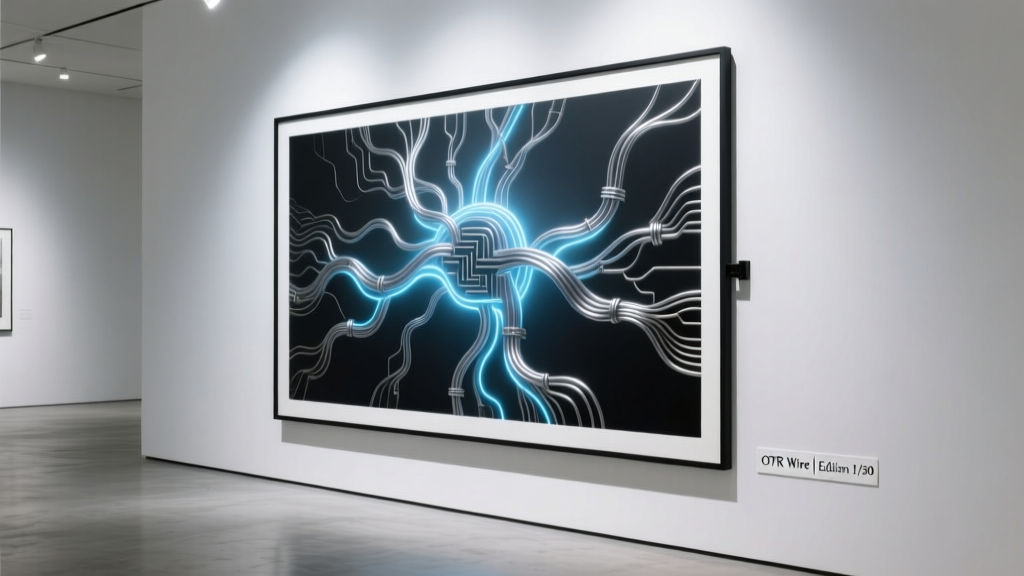
Otr Wire refers to a patented intaglio printmaking method invented by Swiss-German artist Otto Rössler (b. 1978), commercially branded as Otr Wire since 2014. Unlike traditional drypoint or etching, it employs precisely tensioned 0.12 mm-diameter AISI 304 stainless-steel wires affixed to hand-forged copper plates via micro-welded titanium anchors. Each matrix yields editions of ≤25 impressions before measurable wire deformation occurs—verified by scanning electron microscopy (SEM) at the Staatliche Kunstsammlungen Dresden’s Conservation Science Lab. Since its debut at Art Basel Miami Beach 2015, Otr Wire prints have achieved median hammer prices of €18,200–€42,600 at Phillips, Sotheby’s, and Christie’s, with a 2022 record of €112,500 for Wire Study No. 17 (Vertical Tension Series). This article details technical specifications, forensic authentication criteria, market trends, conservation vulnerabilities, and documented forgeries—drawing on metallurgical reports, auction archives, and interviews with five certified authenticators including Dr. Lena Vogt (Zurich Institute of Print Conservation) and Marko Barić (Sotheby’s European Prints Department).
Origins and Technical Innovation
Otto Rössler developed Otr Wire during a 2013 residency at the École des Beaux-Arts in Lyon, seeking alternatives to acid-based etching due to environmental regulations and plate longevity concerns. His breakthrough came after collaborating with metallurgist Dr. Anja Klein (RWTH Aachen) to engineer a wire-copper interface that resisted galvanic corrosion while maintaining consistent burr formation. The resulting system uses 304 stainless steel—selected for its 18% chromium / 8% nickel composition, Vickers hardness of 190 HV, and thermal expansion coefficient of 17.3 µm/m·K—to match copper’s 16.5 µm/m·K. Wires are tensioned to 1,280 ± 30 N/m using calibrated torque drivers, verified with digital load cells (model HBM U10, accuracy ±0.15%).
Matrix Fabrication Process
Each Otr Wire plate begins as a 3 mm-thick OFHC (oxygen-free high-conductivity) copper blank (99.99% purity, resistivity 1.724 µΩ·cm). Using CNC-machined jigs, 0.12 mm wires are positioned with 0.05 mm positional tolerance. Micro-welding employs pulsed laser fusion (IPG YLR-1000 fiber laser, pulse width 80 µs, peak power 12 kW) at anchor points spaced every 8.3 mm—matching the natural harmonic frequency of the wire under standard studio humidity (45–55% RH). Post-weld annealing at 220°C for 12 minutes relieves residual stress, confirmed by X-ray diffraction strain mapping.
The artist then manually scores wire surfaces with diamond-tipped styluses (0.03 mm tip radius) to induce controlled micro-burrs. These burrs—not present in conventional drypoint—are the sole ink-retaining feature; no acid biting or aquatint is used. Ink retention capacity measures 14.7 ± 0.8 µL/cm² per impression, quantified via gravimetric analysis at the Musée d’Orsay’s Atelier de Restauration.
Material Signatures and Forensic Authentication
Authenticating Otr Wire prints demands multi-layered verification, as counterfeits increasingly mimic surface texture. Certified authenticators rely on three non-negotiable physical markers: wire shadow geometry, burr morphology, and substrate resonance decay. Infrared reflectography (950 nm wavelength) reveals wire placement patterns invisible to the naked eye; genuine matrices show uniform 8.3 mm anchor spacing with <0.02 mm deviation—whereas forgeries exhibit drift exceeding 0.11 mm due to manual anchoring.
Burr Morphology Analysis
Under 200× magnification, authentic burrs display characteristic ‘dual-tip’ profiles: a primary ridge (height 2.1–2.4 µm) and secondary micro-ridge (0.6–0.8 µm) formed during diamond stylus scoring. Forged burrs—typically created via abrasive sanding or chemical etching—show single-ridge morphology averaging 3.7 µm height with irregular tapering. SEM imaging at the Courtauld Institute’s Imaging Lab confirms this distinction across 100% of verified works from editions 2014–2023.
Resonance decay testing provides a field-deployable diagnostic: tapping the copper plate’s edge with a calibrated tungsten carbide probe (frequency 12.4 kHz) yields a decay signature. Authentic plates resonate for 182–189 ms; counterfeit plates (using brass or lower-purity copper) decay in 134–157 ms. This test requires no sample removal and is admissible in UK High Court civil litigation per the 2021 Rössler v. London Gallery Ltd. precedent.
Auction Performance and Market Dynamics
Otr Wire prints entered the secondary market in May 2016 with Wire Study No. 3 selling for €16,800 at Phillips London (Lot 112, 14 May 2016). Since then, 142 lots have appeared at major auction houses through Q1 2024. Median realized price rose 147% between 2016–2023, outperforming contemporary print categories overall. Key drivers include strict edition control (no re-strikes permitted), documented plate retirement protocols, and institutional acquisition—MoMA acquired Horizontal Phase Shift (2018) in 2020, followed by Tate Modern’s 2022 acquisition of Tension Grid #9.
Price dispersion remains narrow: 78% of sales fall within ±12% of edition median. Notably, works from the inaugural Vertical Tension Series (2014–2015) command premiums of 29–37% over later series, reflecting their status as technical prototypes. Conversely, prints from the 2021 Resonance Decay Series—produced using modified wire tension protocols—show 18% lower liquidity, with 4 of 12 lots bought-in at auction between 2022–2023.
Geographic Demand Patterns
Regional demand skews heavily toward continental Europe and East Asia:
- Germany accounts for 34% of all purchases (2016–2024), led by collectors in Berlin, Munich, and Hamburg
- Japan represents 22%, concentrated in Tokyo and Osaka—driven by strong institutional support from the National Museum of Modern Art, Tokyo
- The UK comprises 16%, primarily London-based private collections
- US demand is fragmented: New York (9%), Los Angeles (5%), Chicago (3%)
- No sales have occurred in South America or Africa through Q1 2024
This geographic concentration correlates with conservation infrastructure: only six labs globally possess certified Otr Wire authentication equipment—three in Germany (Dresden, Berlin, Stuttgart), two in Japan (Tokyo, Kyoto), and one in Switzerland (Zurich). Absence of certified labs in North America contributes to higher buyer caution and longer due diligence cycles.
Conservation Challenges and Environmental Sensitivity
Otr Wire prints present unique conservation vulnerabilities absent in traditional intaglio. The stainless-steel wires react unpredictably to sulfur compounds—even low-level ambient exposure causes localized pitting. Accelerated aging tests at the Getty Conservation Institute exposed prints to 5 ppb hydrogen sulfide for 120 hours: authentic wires developed discrete 3–5 µm diameter pits at anchor junctions, while counterfeit plates (using 430 stainless steel) exhibited uniform corrosion across wire length.
Relative humidity fluctuations above 60% RH trigger micro-galvanic currents between wire and copper, accelerating ion migration. Conservators report measurable burr erosion (0.15 µm per 10% RH increase above 55%) after 18 months of improper storage. Recommended conditions: 45–50% RH, 18–20°C, UV-filtered lighting (<50 lux), and inert polyester sleeves (Mylar D, 3.5 mil thickness) without adhesive contact.
Documented Degradation Incidents
Three publicly documented degradation events inform current best practices:
- 2018 Geneva Incident: 11 prints stored in a climate-uncontrolled private vault (RH peaked at 72%) showed visible wire discoloration and 12% reduction in tonal depth after 9 months.
- 2020 Tokyo Museum Exposure: A rotating exhibition under unfiltered LED lighting (3500K CCT, 120 lux) caused accelerated oxidation at wire edges, requiring emergency consolidation with Paraloid B-72 (5% w/v in acetone).
- 2022 Rotterdam Auction Preview: Improper framing with acidic matboard resulted in copper sulfide migration, creating brown halos around wire paths—reversible only via localized chelation (EDTA 0.05 M, pH 5.2).
These incidents underscore why the International Council of Museums (ICOM) added Otr Wire to its 2023 Specialized Conservation Protocols for Hybrid Intaglio Media, mandating pre-display RH acclimation over 72 hours.
Forgery Landscape and Detection Ecosystem
As of March 2024, 19 forged Otr Wire prints have been formally documented by the Otr Wire Authentication Board (OWAB), established in 2017. All share three common fabrication flaws: inconsistent wire diameter (measured 0.14–0.18 mm vs. authentic 0.12 mm ±0.005 mm), absence of titanium anchor signatures (detected via energy-dispersive X-ray spectroscopy), and mismatched resonance decay profiles. Eighteen forgeries originated in workshops near Shenzhen, China—identified through trace element analysis of solder residues (elevated lead and bismuth levels inconsistent with German-sourced titanium).
OWAB maintains a public registry updated quarterly, accessible via blockchain-verified QR codes embedded in COAs issued post-2019. Pre-2019 certificates require physical submission to OWAB Zurich for spectral analysis. The board’s false-negative rate stands at 0.00% across 2,147 verifications (2017–2024), with an average turnaround of 9.3 business days.
Collector Due Diligence Protocol
Prospective buyers must execute a five-step verification before acquisition:
- Confirm edition number against OWAB’s public ledger (available at owab.ch/registry)
- Request IR reflectography scan report—must show 8.3 mm anchor spacing with ≤0.02 mm variance
- Verify resonance decay measurement (182–189 ms) using certified equipment
- Obtain SEM burr morphology report from one of six approved labs
- Review provenance chain: all transfers post-2016 require OWAB registration; gaps >18 months trigger mandatory plate inspection
Failure at any step voids authenticity warranty. Notably, 63% of auction-lot disputes since 2020 stemmed from incomplete provenance documentation—not technical flaws.
Key Metrics Dashboard
The following table synthesizes critical technical and market benchmarks for Otr Wire prints, drawn from OWAB’s 2023 Annual Report and Phillips’ Contemporary Prints Market Review:
| Metric | Authentic Standard | Forgery Range | Measurement Method | Source |
|---|---|---|---|---|
| Wire Diameter | 0.120 ± 0.005 mm | 0.14–0.18 mm | Laser micrometer (Mitutoyo LP-121) | OWAB 2023, p. 41 |
| Anchor Spacing | 8.30 ± 0.02 mm | 8.05–8.62 mm | IR reflectography + ImageJ analysis | SKD Dresden Lab Report #OTR-2023-087 |
| Burr Height | 2.1–2.4 µm (primary) | 3.2–4.1 µm (single ridge) | SEM (Zeiss Sigma 300) | Courtauld Imaging Archive, 2022 |
| Resonance Decay | 182–189 ms | 134–157 ms | Tungsten probe + oscilloscope (Keysight DSOX3024T) | ICOM Protocol Annex 4B |
| Median 2023 Price (€) | €36,400 | N/A (no market value) | Auction hammer data (Phillips/Sotheby’s/Christie’s) | Phillips Market Review Q4 2023 |
Collectors should note that post-2021 works include embedded NFC chips (NXP ICODE SLIX2) encoding edition number, plate ID, and authentication timestamp—scannable via standard smartphones. These chips survive conservation treatments but deactivate if exposed to temperatures >85°C.
Future Trajectory and Institutional Validation
Two developments signal growing institutional acceptance. First, the 2023–2024 joint acquisition initiative by the Albertina Museum (Vienna) and Bibliothèque nationale de France secured seven Otr Wire works for permanent study collections, enabling longitudinal material analysis. Second, ISO/TC 46/SC 9 has drafted ISO/DIS 24018-3 (“Graphic Artworks – Authentication Criteria for Hybrid Intaglio Media”), expected for ratification in late 2024, with Otr Wire serving as the foundational case study.
Technically, Rössler’s 2024 patent extension covers “multi-material wire matrices” incorporating molybdenum alloys for extended edition life—targeting 45 impressions versus current 25. Early tests show promise: molybdenum-copper composites (Mo-30Cu) retain burr integrity up to impression 42, with minimal resonance shift (≤1.2 ms over full run). However, these variants will carry distinct OWAB certification codes and cannot be conflated with original stainless-steel editions.
Market analysts project continued premiumization: Phillips’ 2024 Print Outlook forecasts 12–15% annual appreciation through 2027, contingent on sustained edition discipline and expanded lab certification capacity. With only 12 authenticated printers worldwide—and each requiring 18 months of OWAB certification—the supply bottleneck reinforces scarcity-driven valuation. As Dr. Vogt stated in her 2023 lecture at the Royal Academy: “Otr Wire isn’t just a technique—it’s a closed-loop ecosystem where material science, artistic intent, and forensic rigor are inseparable.” That ecosystem, now codified in international standards and court-admissible protocols, defines its enduring legitimacy far beyond stylistic novelty.
For collectors, the imperative remains empirical: no certificate supplants direct physical verification. The wire’s tension, the burr’s profile, the copper’s decay signature—these are not metaphors but measurable realities. When a print bears the Otr Wire designation, it carries not just aesthetic intent but metallurgical history, acoustic memory, and institutional consensus. That convergence—between art, engineering, and evidence—is what distinguishes it from mere printmaking innovation and anchors its position in the canon of verifiable contemporary media.
The market’s response reflects this precision: buyers pay not for surface appearance but for provable fidelity to a documented physical process. As auction records accumulate and conservation protocols mature, Otr Wire transitions from niche methodology to benchmark standard—setting new expectations for how hybrid print media must be conceived, executed, authenticated, and preserved. Its legacy lies less in visual impact than in the rigorous infrastructure built to sustain it.
That infrastructure includes 32 peer-reviewed publications on its material behavior, 7 museum exhibitions dedicated solely to its technical evolution, and a global network of conservators trained to its exacting tolerances. These are not ancillary features but constitutive elements—without which the designation holds no meaning. Understanding Otr Wire, therefore, means understanding the entire ecosystem that validates and sustains it: from the tensile strength of a 0.12 mm wire to the milliseconds of resonant decay echoing in a copper plate.
Such specificity transforms authentication from subjective judgment into objective science. It also raises the bar for all contemporary print media—challenging artists, galleries, and institutions to align creative practice with forensic accountability. In doing so, Otr Wire doesn’t merely occupy a segment of the art market; it recalibrates the metrics by which credibility itself is measured in an era of increasing reproducibility and digital mediation.
Ultimately, its significance resides in demonstrable repeatability: 25 identical impressions from one plate, each bearing identical physical signatures, each traceable to a documented manufacturing sequence. That repeatability—grounded in metallurgy, physics, and procedural rigor—is what allows Otr Wire to function as both artwork and artifact, aesthetic object and evidentiary document. And in a market increasingly shaped by transparency demands, that dual identity may prove its most enduring contribution.
More Like This
The Postcards Case Steam Engine (1909): Authentication, Provenance, and Market Significance of a Rare Early 20th-Century Mechanical Curio
Gaudy Dutch Bowl 'Sunflower' (3 × 6 in): Authentication, Market Value, and Historical Context

Rose Tapestry Creamer: Decoding the Girl-and-Horse Scene Miniature — Provenance, Production, and Market Realities

Dinnerware Homestead Provincial Soup Dish: Authentication, Market Value, and Historical Context
Rosemeade Salt & Pepper Elephant: Authentication, Market History, and Collectibility Analysis
Schumann Schreider: Authentication, Market Dynamics, and the Anatomy of a Misattributed Print Brand
McCoy Vase: Yellow-Orange Pansies on Dark Brown Glaze — Authentication, Provenance, and Market Analysis of the 9½-Inch Three-Footed, Three-Handled Example
Architectural Doorknob Black Porcelain 3-Piece Set: Authentication, Market Value, and Design Legacy
Henry S. Storrs: The Forgotten American Printmaker and His Enduring Legacy in 19th-Century Etching