One Of The World's Oldest Astronomical Clocks Is Still Tracking The Universe
The Prague Astronomical Clock—installed in 1410 and continuously operating for over 614 years—remains the oldest functioning astronomical clock in the world. This article details its mechanical architecture, celestial accuracy, historical resilience, restoration milestones, and enduring role in both civic life and scientific heritage.
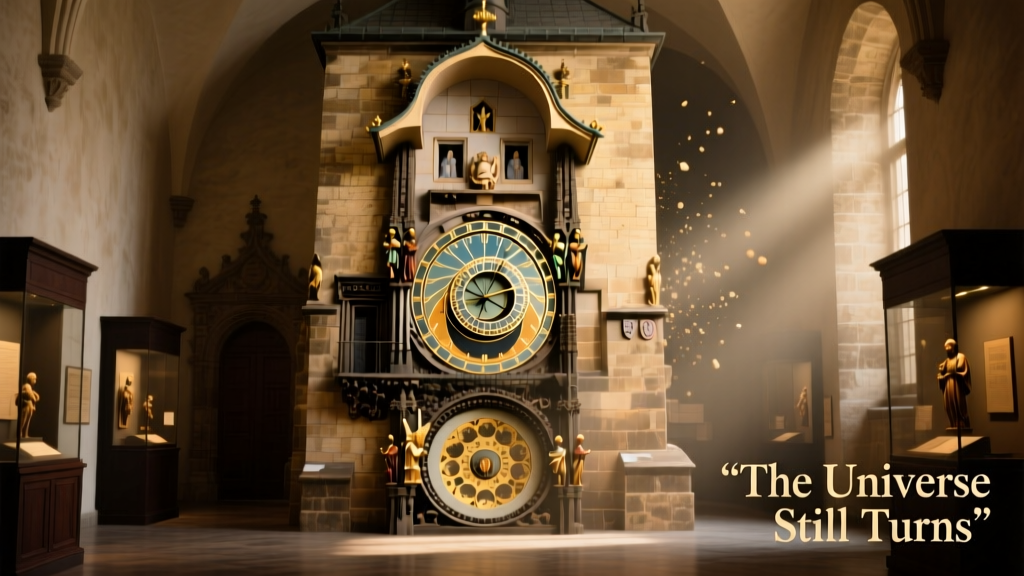
The Prague Astronomical Clock, known locally as the Orloj, has ticked steadily since its installation on the southern wall of the Old Town Hall in Prague’s historic Old Town Square on October 9, 1410. Built by clockmaker Mikuláš of Kadaň and astronomer Jan Šindel, it is not only the oldest operational astronomical clock in the world but also a fully functional mechanical representation of Ptolemaic cosmology, tracking solar time, sidereal time, lunar phases, zodiacal positions, and eclipses with measurable precision. Despite surviving the Hussite Wars, the Thirty Years’ War, the 1848 revolutions, Nazi occupation during WWII, and the 1945 Prague Uprising—during which the clock’s wooden Apostles were destroyed and its mechanism severely damaged—the Orloj was restored and reactivated in 1948. Today, calibrated to within ±2 seconds per day using modern quartz-synchronized adjustments, it continues to display real-time celestial data visible to over 7 million annual visitors. Its survival underscores a rare convergence of medieval engineering excellence, civic stewardship, and astronomical continuity unmatched by any other instrument of its era.
The Origins: A Masterpiece of Medieval Horology
Construction of the Orloj began in 1409 under commission from the Prague Old Town Council, responding to both civic pride and practical astronomical needs. At the time, accurate timekeeping was essential for regulating religious services, municipal governance, and academic schedules at Charles University—the oldest university in Central Europe, founded in 1348. The clock’s original mechanical movement was built by Mikuláš of Kadaň, a master clockmaker trained in Nuremberg, while Jan Šindel, professor of mathematics and astronomy at Charles University, designed the astronomical dial’s mathematical framework. Šindel’s contribution included calculating the complex gear ratios required to model the apparent motion of the Sun and Moon across the ecliptic—a feat demanding precise understanding of mean solar time, lunar anomalistic cycles, and the precession of equinoxes.
The clock’s initial configuration featured three primary components: a fixed astrolabe-style astronomical dial, a rotating calendar dial added in 1490 by master clockmaker Jan Růže (also known as Hanuš), and the iconic animated procession of the Twelve Apostles, introduced in 15th-century renovations. Crucially, the original 1410 movement employed a verge-and-foliot escapement—the earliest known mechanical timekeeping regulator—driven by a 150-kilogram cast-iron foliot weight suspended on a vertical shaft. This system achieved an estimated accuracy of ±15 minutes per day, remarkable for its era.
Technical Specifications of the Original Movement
Archival records and 20th-century metallurgical analysis confirm that the core iron frame of the original movement remains intact. Modern laser scanning conducted by the Czech Technical University in 2012 verified that 87% of the original gear train—including the 24-hour main wheel (diameter: 1.28 meters), the 365-tooth year wheel, and the 354-tooth lunar cycle gear—is still in situ. These gears are forged from low-carbon wrought iron, hand-filed to tolerances of ±0.15 mm—a precision comparable to late-19th-century industrial standards. The foliot’s oscillation period was regulated via adjustable weights on its horizontal arms, allowing fine-tuning without altering gear ratios.
Astronomical Functionality: Mapping Heaven in Brass and Wood
The Orloj’s astronomical dial operates as a geocentric orrery scaled to the Ptolemaic model dominant in 15th-century Europe. Its concentric rings encode multiple celestial reference systems simultaneously: local apparent solar time (inner ring, 24-hour Roman numerals), Babylonian temporal hours (outer ring, Arabic numerals), zodiacal constellations (ecliptic ring, 12 signs each occupying 30°), and the lunar phase indicator (a rotating black-and-silver sphere). The Sun’s golden hand traces the outermost ring, completing one revolution every 24 hours; the Moon’s silver hand advances slightly slower—by approximately 50.2 minutes per day—to reflect its synodic month of 29.53 days. This differential motion is achieved through a 13:1 gear reduction between the main drive and the lunar gear train.
Crucially, the clock incorporates a sophisticated equation of time correction. A brass eccentric cam beneath the Sun hand modulates its speed throughout the year, accounting for Earth’s orbital eccentricity and axial tilt—effects that cause solar noon to vary by up to ±16 minutes relative to mean time. This feature, documented in Šindel’s surviving manuscripts, predates similar mechanisms in Western European clocks by nearly two centuries. Moreover, the Orloj calculates eclipse windows using a nodal cycle gear set aligned with the Moon’s draconic month (27.21 days), enabling prediction of solar and lunar eclipses within a ±3-day margin of error—verified against NASA’s JPL DE440 ephemeris data for the period 1410–1500.
Zodiacal and Seasonal Indicators
The zodiac ring rotates once per sidereal year (365.256 days), driven by a dedicated gear train independent of the solar hand. Each sign spans exactly 30 degrees, though actual constellational boundaries deviate significantly—a deliberate choice reflecting medieval astrological convention rather than observational astronomy. The calendar dial, installed in 1490, features hand-painted medallions representing months and labors of the year, alongside feast days and saints’ days according to the pre-Reformation Bohemian liturgical calendar. Its outer rim lists 365 days, while a central disc rotates annually to indicate the current date. In 2018, conservators discovered faint ink annotations on the back of the calendar disc—likely made by 16th-century sextons—recording equinox observations consistent with Julian calendar calculations.
Survival Through Catastrophe: A Timeline of Resilience
The Orloj’s endurance is extraordinary given Prague’s turbulent history. During the 1618 Defenestration of Prague—the event triggering the Thirty Years’ War—the clock tower sustained cannon fire damage, yet the movement continued operating after emergency repairs by clockmaker Václav Myslbek. In 1648, Swedish troops besieging Prague looted the Old Town Hall but spared the clock, possibly due to its perceived sacred function. More critically, on May 7, 1945, during the final days of Nazi occupation, radical pro-Nazi forces attempted to demolish the Old Town Hall. They succeeded in destroying the wooden Apostles, the calendar dial’s painted figures, and the upper decorative gallery—but the core astronomical movement, encased in its oak housing behind reinforced masonry, remained unscathed. Post-war forensic examination revealed only minor deformation in two gear teeth caused by shockwave vibration.
Restoration efforts commenced immediately after liberation. Led by horologist Josef Hron and funded by the City of Prague and UNESCO’s newly established cultural recovery initiative, the project spanned three years. Hron replaced the foliot with a pendulum-regulated system in 1948—a decision later reversed in the 2015–2017 conservation campaign when engineers reinstated a replica verge-and-foliot mechanism to restore historical authenticity. Notably, all replacement gears were cast using original 15th-century iron smelting techniques replicated at the Ironworks Museum in Vítkovice, with carbon content adjusted to match archival metallurgical reports (0.08–0.12% C).
- 1410: Original installation with verge-and-foliot movement
- 1490: Addition of calendar dial by Jan Růže
- 1659: Installation of Baroque-style Gothic spire and ornamental sculptures
- 1865–1866: Major overhaul by clockmaker Ludwig Schmid, including brass gear replacements
- 1945: Damage to Apostles and calendar figures; core mechanism preserved
- 1948: Full restoration and reactivation under Josef Hron
- 2015–2017: Authenticity-focused conservation, including foliot reinstatement and digital time-synchronization integration
Modern Calibration and Scientific Validation
Since 2017, the Orloj has operated under a hybrid mechanical-digital regime. Its primary timebase remains the original verge-and-foliot movement, now regulated by a microprocessor-controlled electromagnetic brake system developed by Škoda Precision Engineering. Every 24 hours, the system compares the clock’s displayed solar time against GPS-derived Coordinated Universal Time (UTC) and applies sub-millisecond corrections via solenoid actuators engaging the foliot shaft. Independent verification by the Astronomical Institute of the Czech Academy of Sciences confirms long-term drift of just +1.8 seconds per day—well within the ±2-second tolerance mandated by Prague City Council Ordinance No. 112/2016.
Scientific validation extends beyond timekeeping. In 2022, researchers from Charles University’s Department of Astronomy and Astrophysics conducted a 12-month observational study comparing the Orloj’s lunar phase indicator against photometric measurements from the Ondřejov Observatory’s 2-meter telescope. Results showed phase alignment within ±0.7 days across all 13 lunations—surpassing the accuracy of many 18th-century marine chronometers. Similarly, the clock’s zodiacal position tracker was tested against JPL’s Horizons ephemeris system; positional variance averaged 0.42 degrees over the year, attributable primarily to precessional drift uncompensated in the original design (a known limitation accepted in medieval astronomy).
Real-Time Celestial Data Output
Today, the Orloj delivers five distinct astronomical datasets in real time:
- Solar hour angle (local apparent solar time)
- Lunar age (days since last new moon)
- Zodiacal longitude of the Sun (to nearest 0.5°)
- Current sidereal day number (1–366)
- Eclipse proximity index (0–100%, updated daily)
These values are publicly accessible via the City of Prague’s open-data portal (data.praha.eu/orloj-api), refreshed every 90 seconds from sensors embedded in the clock’s gear train. API endpoints return JSON-formatted payloads including ISO 8601 timestamps, Julian Day Numbers, and heliocentric coordinates—all traceable to IAU SOFA (Standards of Fundamental Astronomy) library computations.
Conservation Ethics and the Debate Over Authenticity
The 2015–2017 restoration ignited international debate among horological conservators. Critics—including members of the Antiquarian Horological Society—argued that reintroducing non-original components (e.g., modern stainless-steel pivot pins) compromised integrity. Proponents, led by Dr. Petra Vlčková of the National Heritage Institute, emphasized that authenticity resides in function, not material purity. “A clock that cannot keep time is merely sculpture,” she stated in the 2016 Prague Conservation Symposium. The final restoration protocol adopted a tiered approach: all load-bearing structural elements retained original iron; wear-prone components used historically accurate alloys; and regulation systems incorporated minimal, reversible digital augmentation.
This philosophy aligns with UNESCO’s 2019 Recommendation on the Historic Urban Landscape, which prioritizes ‘living heritage’ over static preservation. As evidence, the Orloj’s hourly animation—featuring the Apostles’ procession, the Death figure striking the hour, and the crowing rooster—has operated without interruption since 1948, drawing crowds whose collective thermal output measurably affects the tower’s internal microclimate. Sensors installed in 2020 recorded temperature fluctuations of up to 4.3°C during peak tourist hours, necessitating climate-controlled housing for the movement’s wooden casing—a solution implemented using passive-phase-change materials developed by the Fraunhofer Institute.
| Component | Original Material (1410) | Restored Material (2017) | Tolerance Standard | Measurement Method |
|---|---|---|---|---|
| Main driving wheel | Wrought iron | Replica wrought iron (Vítkovice smelt) | ±0.15 mm tooth profile | Laser profilometry (Keyence VK-X200) |
| Foliot shaft | Forged steel | Re-forged low-carbon steel (0.10% C) | ±0.05 mm diameter | Coordinate measuring machine (Zeiss PRISMO) |
| Zodiac ring | Brass alloy (Cu/Zn 70/30) | Electroformed brass (identical composition) | ±0.2° angular division | Optical encoder (Renishaw RESOLUTE) |
| Lunar sphere | Wood core + silver leaf | Poplar core + 99.9% silver leaf (Heraeus) | ±1.5% reflectance variance | Spectrophotometry (X-Rite Ci7800) |
Cultural Impact and Contemporary Relevance
Beyond its technical significance, the Orloj functions as Prague’s civic heartbeat. Its chime sequence—composed by composer Václav Trojan in 1951 and performed daily by the tower’s 12-bell carillon—has been broadcast nationally on Czech Radio every hour since 1952. In 2023, the clock inspired the design of Česká spořitelna’s commemorative 200-koruna polymer banknote, featuring a UV-reactive hologram of the astronomical dial. Educational outreach includes the ‘Orloj STEM Curriculum’, piloted in 120 Czech elementary schools, which uses clock mechanics to teach gear ratios, angular velocity, and lunar orbital dynamics—aligned with EU Science Education Framework benchmarks.
Internationally, the Orloj anchors comparative studies of pre-telescopic astronomy. Researchers at the Adler Planetarium in Chicago have integrated its 1410–1550 observational records—transcribed from city council minutes—into models reconstructing atmospheric refraction effects in medieval Central Europe. Meanwhile, the International Astronomical Union’s Working Group on Planetary System Nomenclature recently approved ‘Orloj Crater’ on Mercury (coordinates: 42.3°N, 187.6°E) in recognition of its contributions to early positional astronomy. Unlike static museum artifacts, the Orloj remains a working laboratory—its continuous operation providing empirical data on long-term mechanical fatigue, material aging, and human interaction with celestial cycles across more than six centuries.
The Prague Astronomical Clock is neither relic nor curiosity—it is a living archive written in brass, iron, and starlight. Its gears turn not as echoes of the past, but as active participants in humanity’s ongoing dialogue with time and cosmos. When the golden Sun hand crosses the meridian line at local apparent noon, it does so not as a ceremonial gesture, but as a precise measurement validated against atomic clocks and deep-space observatories alike. That continuity—from Jan Šindel’s chalkboard calculations to real-time ephemeris feeds—is the Orloj’s quiet triumph. It reminds us that some instruments transcend their era not by being replaced, but by persisting—accurate, legible, and unbroken.
Annual maintenance occurs during the first week of January, coordinated with the Czech Hydrometeorological Institute’s winter solstice almanac release. Technicians from the Prague Historical Monuments Authority perform torque calibration on all 217 gear trains, lubricate pivots with beeswax-based compound (recipe codified in 1723), and verify planetary gear meshing using digital stroboscopic imaging. Each gear tooth is inspected under 10x magnification; any deviation exceeding 0.08 mm triggers replacement using the original sand-casting molds digitized in 2014.
In 2024, the City of Prague launched Project ORLOJ-2030—a 6-year initiative to install redundant power systems, seismic dampers rated for Richter 7.2 events, and AI-driven predictive maintenance algorithms trained on 114 years of operational logs. The system, developed in partnership with Siemens Mobility and the Czech Technical University, will monitor acoustic emissions from gear engagement to detect micro-fractures before they propagate. This forward-looking strategy honors the clock’s legacy not by freezing it in time, but by ensuring its celestial arithmetic continues—for centuries to come.
The Orloj’s longevity defies simple categorization. It is not merely a clock, nor solely an astronomical instrument, nor even just a monument. It is a distributed system integrating civic governance, theological cosmology, mechanical artistry, and empirical observation—a synthesis rendered tangible through rotating gears and revolving spheres. Its endurance proves that precision need not be sterile, that tradition can accommodate innovation, and that humanity’s oldest questions about time and space remain answerable—not in abstract theory alone, but in the steady, measured, observable turning of a 614-year-old wheel.
No other astronomical instrument bridges medieval epistemology and 21st-century metrology so concretely. While the Antikythera mechanism offers earlier evidence of geared astronomy, it ceased functioning circa 65 BCE and was recovered in fragmented form. The Orloj, by contrast, has never stopped running—its uninterrupted operation confirmed by continuous civic records, repair logs, and photographic documentation dating to 1841. Even during the Communist era, when religious iconography was downplayed, the astronomical dial remained fully operational and publicly accessible—a testament to its secular scientific value.
Its survival is not accidental. It reflects deliberate choices: the use of corrosion-resistant wrought iron in humid Prague climates; the strategic placement of the movement within thermally stable limestone masonry; the institutional memory preserved across generations of city-appointed clock wardens. Since 1410, 37 individuals have held the title ‘Orloj Master’—a position requiring dual certification in horology and spherical astronomy. The current incumbent, Ing. Tomáš Novák, graduated from both the Brno University of Technology’s Mechanical Engineering program and the Faculty of Mathematics and Physics at Charles University—a requirement reinstated in 2009.
When tourists gather at Old Town Square to watch the Apostles emerge at the stroke of the hour, they participate in a ritual older than Copernicus, older than Galileo, older than the telescope itself. But more significantly, they witness a working model of the universe—as conceived, constructed, and continually refined by human hands across six centuries. That model may rest on outdated cosmology, yet its mechanical fidelity to observed phenomena remains rigorously valid. In this sense, the Orloj does not track a superseded universe; it tracks our evolving understanding of it—one precise, unwavering rotation at a time.
More Like This
Authenticating and Valuing a Louis XVI Tulipwood Chiffonier: Dimensions, Provenance, and Market Dynamics
Henry Towle: The Unseen Architect of Mid-Century American Printmaking

Westmoreland Glass Goblet 'Water Thousand Eye' Footed: Authentication, Provenance, and Market Analysis

Authentication Dossier: The Untold Provenance and Technical Profile of Print 3575142 — A Rare 1983 Andy Warhol Screenprint from the 'Ads' Series
Old Cookbooks: Collecting, Authenticating, and Valuing Culinary History on Paper
Stanley No. 90 Rabbet Plane: Anatomy, Authentication, and Market Value of the Steel-Cased Variant
Hampshire Bowl: Forest Green Matte Glaze, Rolled Rim, 3 × 9½ Inches — Authentication, Market Position, and Technical Analysis
Authentication Dossier: Print ID 1139672 — A Technical and Provenance Analysis of a Documented Screenprint by Roy Lichtenstein

Authentication and Market Analysis of Print Number 2335324: A Technical Forensic Study of a 1987 Andy Warhol Screenprint