Old Cookbooks: Collecting, Authenticating, and Valuing Culinary History on Paper
A detailed analysis of vintage cookbooks as cultural artifacts and collectibles—covering provenance verification, market trends, material diagnostics, and valuation benchmarks for titles from Fannie Farmer to Betty Crocker, with data on auction results, binding techniques, and edition identification.
Introduction: More Than Recipes—Cookbooks as Historical Evidence
Old cookbooks are not merely repositories of outdated recipes; they are primary-source documents reflecting social norms, technological adoption, economic conditions, and domestic labor structures across centuries. A 1923 edition of The Joy of Cooking by Irma S. Rombauer reveals wartime ingredient substitutions and gendered language absent in later printings. A 1956 Betty Crocker Picture Cookbook (General Mills, 416 pages, 8.5 × 11 inches) contains full-color Kodachrome-based photography—a direct result of postwar advances in offset lithography and consumer color printing. Between 1900 and 1975, over 12,400 distinct American cookbook titles were published, according to the Library of Congress’ National Bibliographic Database. Today, authenticated first editions command premiums ranging from $180 (for common mid-century titles in fair condition) to $22,500 (a 1747 London-published The Compleat Housewife sold at Sotheby’s in June 2023). This article examines authentication protocols, material forensics, market dynamics, and preservation standards essential for collectors, dealers, and institutions.
Provenance and Edition Identification: The First Line of Authentication
Authenticating an old cookbook begins not with paper analysis, but with bibliographic triangulation. Unlike fine art, where provenance often hinges on gallery records or exhibition history, cookbook authentication relies heavily on imprint data, copyright registration numbers, and typographic fingerprinting. The U.S. Copyright Office maintains searchable records dating to 1870; for example, Fannie Farmer’s The Boston Cooking-School Cook Book (1896) bears registration number A295423, issued October 12, 1896. Later printings omit this number or display altered registration sequences. Publishers frequently reused plates across editions, making page count alone unreliable: the 1918 and 1923 editions of The Joy of Cooking both contain 325 pages, yet differ in font kerning, chapter heading layout, and the presence of a preface signed ‘I.S.R.’ only in the true first.
Key Edition Markers for Major Titles
Collectors must cross-reference multiple physical traits. For the 1931 Good Housekeeping Cook Book, the first edition features a distinctive olive-green cloth binding stamped in gold foil with no dust jacket; subsequent printings (1933 onward) introduced a red-and-white pictorial dust jacket. Similarly, the 1950 Time-Life Foods of the World series used a proprietary 10-point Garamond revival typeface for volume one (France), while volume two (Italy, 1951) switched to a modified Caslon—detectable under 10× magnification via serifs on lowercase ‘e’ and ‘a’.
- Fannie Farmer, 1896: No publisher logo on title page; ‘Published by Little, Brown & Co.’ appears centered, not justified right
- Betty Crocker, 1950 Picture Cookbook: First state has ‘© 1950 General Mills, Inc.’ on copyright page; second state adds ‘Second Printing, March 1951’ below
- James Beard, American Cookery (1972): True first includes a tipped-in 4” × 6” color photograph of Beard at his Portland kitchen counter—absent in all book club editions
- Eliza Acton, Modern Cookery for Private Families (1845): First London edition lists ‘Longman, Brown, Green, and Longmans’ on title page; 1846 reissue replaces ‘Green’ with ‘Roberts’
Material Forensics: Paper, Binding, and Ink Analysis
Physical examination provides objective corroboration of bibliographic claims. Paper composition evolved significantly between 1850 and 1980 due to shifts in pulping technology, bleaching agents, and sizing. Pre-1870 cookbooks almost universally use rag-based paper (cotton or linen fiber), identifiable under ultraviolet light by bright blue-white fluorescence and absence of lignin degradation yellowing. Post-1880 wood-pulp papers exhibit pronounced foxing (brown iron-oxide spots) and embrittlement—especially in acidic newsprint bindings used for budget titles like the 1932 Blue Ribbon Cook Book (published by the Standard Brands Company, 256 pages, 5.25 × 7.5 inches).
Binding Techniques and Their Chronological Significance
Case binding methods offer precise dating clues. Publishers adopted cloth-case binding widely after 1820, but early examples used starch-based adhesives that fail catastrophically when exposed to humidity above 60% RH. In contrast, the 1949 Kraft Dinner Cookbook employed polyvinyl acetate (PVA) glue—a synthetic adhesive introduced commercially in 1947—which remains flexible even at 150 years old. Spine construction also signals era: pre-1900 books feature ‘hollow back’ spines with linen tape reinforcement; post-1925 mass-market editions shift to ‘tight back’ spines glued directly to text block shoulders.
Modern authentication labs employ non-destructive X-ray fluorescence (XRF) spectroscopy to identify ink elements. Iron gall ink—dominant until ~1900—contains measurable iron (Fe) and sulfur (S); an 1863 Godey’s Lady’s Book Cookery Section reprint confirmed via XRF shows Fe concentrations averaging 12,400 ppm, whereas a 1938 Quaker Oats Recipe Leaflet uses carbon-black ink with zinc (Zn) at 8,900 ppm—consistent with commercial lithographic inks standardized by the American Ink Manufacturers Association in 1935.
Market Dynamics: Auction Data and Collector Segments
The vintage cookbook market operates across three distinct tiers: institutional, dealer-driven, and hobbyist. Institutional buyers (museums, university special collections) prioritize rarity, historical significance, and completeness—preferring unmarked copies with original ephemera. In 2022, the New York Public Library acquired a 1796 Philadelphia printing of Amelia Simmons’ American Cookery for $185,000—the highest price ever recorded for a U.S.-originated cookbook. Dealer markets focus on condition-adjusted scarcity: a 1952 Cooking with Betty Crocker in near-fine condition with intact dust jacket sold for $312 at PBA Galleries (San Francisco) in March 2024, while the same title without jacket fetched $48.
Auction Performance by Decade (2020–2024 Average Realized Prices)
Price volatility correlates strongly with cultural nostalgia cycles and supply chain disruptions. The 2020–2022 surge in home baking during pandemic lockdowns inflated demand for 1940s–1960s titles by 67%, per Heritage Auctions’ biannual Rare Books Market Report. Conversely, pre-1900 titles showed only 4.2% growth over the same period, reflecting stable but narrow collector interest.
| Decade of Publication | Median Auction Price (USD) | Std. Deviation | Most Active Auction House | Top Performing Title |
|---|---|---|---|---|
| 1740–1799 | $14,200 | $9,850 | Sotheby’s | The Compleat Housewife (1747, 4th ed.) |
| 1800–1849 | $3,150 | $2,210 | Christie’s | Modern Cookery (1845, 1st ed.) |
| 1850–1899 | $890 | $530 | PBA Galleries | Boston Cooking-School Cook Book (1896) |
| 1900–1929 | $245 | $160 | Swann Galleries | The Joy of Cooking (1931, 1st ed.) |
| 1930–1959 | $112 | $78 | Heritage Auctions | Betty Crocker Picture Cookbook (1956) |
| 1960–1979 | $42 | $29 | Lots of Books | Mastering the Art of French Cooking (1961, 1st ed.) |
Condition Grading Standards: Beyond ‘Good’ and ‘Fair’
Standard book grading terms—‘Fine’, ‘Very Good’, ‘Good’—are insufficiently precise for culinary texts, which endure unique wear patterns. A 1943 War-Time Recipes (U.S. Department of Agriculture Bulletin No. 179) may show heavy grease splatter on page 42 (‘Meat Extenders’) but remain structurally sound; such staining is considered ‘functional wear’ rather than damage if it doesn’t impede legibility or cause page delamination. The Antiquarian Booksellers’ Association of America (ABAA) introduced the Culinary Text Condition Index (CTCI) in 2018, assigning numeric scores (0–10) across five vectors:
- Spine Integrity: Scored 0–3 points (0 = detached, 3 = fully adhered, no cracking)
- Page Soiling: 0–2 points (0 = food residue obscuring >15% text area, 2 = minimal spotting)
- Annotation Presence: 0–2 points (0 = heavy marginalia or recipe modifications, 2 = unmarked)
- Dust Jacket Completeness: 0–2 points (0 = absent, 2 = 100% present, no tears)
- Structural Stability: 0–1 point (0 = loose gatherings or board separation, 1 = secure)
A CTCI score of 9+ qualifies for ‘Collector Grade’ designation, required for inclusion in major auctions. For example, a 1950 Time-Life Foods of the World: France with grease stains on three pages but perfect spine adhesion and intact jacket received a CTCI of 8.5—graded ‘Near Fine’ despite visible soiling. Conversely, a 1927 Settlement Cook Book (Milwaukee, 12th ed.) with pristine covers but a detached front board scored 5.2—classified ‘Reading Copy’ regardless of rarity.
Reprints, Facsimiles, and the Forgery Landscape
Counterfeit cookbooks are rare compared to high-value art or manuscripts, but facsimile confusion is endemic. Dover Publications reissued 27 historical cookbooks between 1990 and 2010 using original plate scans—but added 1.5-inch margins, modern ISBNs, and disclaimer footers in 8-pt Helvetica. Unscrupulous sellers sometimes trim these margins and list the reprints as originals. Key identifiers include paper weight (Dover reprints use 60# matte coated stock; originals range from 40# uncoated (1920s) to 55# alkaline (1960s)) and binding stitch length (original saddle-stitched pamphlets like the 1935 Jell-O Recipe Book average 0.375-inch stitches; Dover’s 2003 facsimile uses 0.25-inch).
Known Fraudulent Practices
Three documented fraud patterns recur in dealer inventories. First, ‘date enhancement’: adding false publication dates in pencil on title pages (e.g., altering ‘1948’ to ‘1938’ on a General Electric Cookbook). Second, ‘jacket grafting’: attaching a scarce dust jacket from a different edition onto a common text block—detectable via spine width mismatch (1956 Betty Crocker jackets measure exactly 11.125 inches tall; 1958 jackets are 11.375 inches). Third, ‘signature fabrication’: applying forged autographs with archival ink pens. Forensic testing of a purported 1962 Julia Child signature revealed acrylic polymer binder—introduced in fountain pen inks only after 1985.
Authentication services like the Center for Book Arts’ Culinary Manuscript Lab (New York) charge $175–$420 for tiered verification: Level 1 ($175) confirms edition via imprint and pagination; Level 2 ($295) adds paper pH testing and binding analysis; Level 3 ($420) includes XRF ink analysis and digital watermark detection. Since 2021, over 68% of submitted items required Level 2 or higher intervention to resolve ambiguities—underscoring that visual inspection alone yields incorrect attributions in nearly 3 out of 10 cases.
Preservation Protocols for Long-Term Value Retention
Improper storage erodes value faster than time. Acidic cardboard boxes accelerate spine degradation: a 1930 Good Housekeeping Cook Book stored in a 1970s-era cardboard box lost 32% of its market value within 15 years due to lignin migration, per a 2023 University of Texas Preservation Science longitudinal study. Recommended housing uses buffered, acid-free corrugated board (pH 8.5–9.5) with internal polyester film sleeves for dust jackets. Temperature must remain stable: fluctuations exceeding ±3°F daily cause cloth binding fibers to expand/contract, loosening glue bonds. Relative humidity should be held between 40–45% RH year-round—higher levels promote mold on starch-sized papers (common in 1880–1920 imprints), while lower levels desiccate leather spines.
Digitization does not substitute for physical preservation but serves as risk mitigation. High-resolution scanning at 600 dpi grayscale captures textual detail without UV exposure. The Library of Congress mandates TIFF format with embedded ICC color profiles for culinary archive submissions; JPEG compression is prohibited for originals pre-1950. Notably, the 2023 digitization project of the Schlesinger Library’s 12,000-volume cookbook collection revealed that 14.7% of ‘unmarked’ copies contained hidden annotations under multispectral imaging—confirming that condition assessments based solely on surface inspection underestimate functional wear by significant margins.
Insurance valuation requires professional appraisal every five years for holdings exceeding $5,000. The American Society of Appraisers’ 2024 Culinary Text Addendum specifies replacement cost methodology: for a 1942 Victory Garden Cookbook, appraisers must cite three comparable auction results within 18 months, adjust for CTCI differential, and apply a 2.3% annual inflation factor derived from the Bureau of Labor Statistics’ CPI for Educational Books index—not the general CPI. Failure to follow this protocol voids coverage under most specialty fine book policies.
Market liquidity remains strong: Heritage Auctions reported 92.4% sell-through rate for culinary lots in Q1 2024, exceeding the 87.1% average for all rare book categories. This reflects sustained demand from food historians, graphic designers seeking mid-century typography references, and chefs researching historical technique—demonstrating that old cookbooks function simultaneously as scholarly resources, design artifacts, and cultural touchstones. Their monetary worth is inseparable from their evidentiary weight: each grease spot, marginal note, and binding flaw encodes a human story that no digital surrogate can replicate.
The 1956 Betty Crocker Picture Cookbook remains the most frequently encountered title in authentication casework—accounting for 18.3% of all submissions to major labs in 2023. Its ubiquity belies complexity: 11 distinct states exist, differentiated by copyright page variants, photo caption wording, and staple placement. A single misidentified state can shift value by 400%. This underscores a foundational principle: in culinary bibliography, precision is not pedantry—it is the mechanism by which history becomes quantifiable, tradeable, and, ultimately, preserved.
Collectors who prioritize verifiable data over anecdotal attribution consistently achieve superior long-term returns. A 2022 analysis of 417 auction lots tracked over ten years found that items accompanied by ABAA-certified CTCI reports appreciated at 5.8% CAGR, versus 2.1% for ungraded lots. Material evidence—measured in millimeters, ppm, and pH units—provides the only reliable hedge against market noise and nostalgic overvaluation.
As home cooking evolves with AI-generated recipes and algorithmic meal planning, the physical cookbook gains renewed significance. Its fixed form resists revision; its stains attest to use; its binding declares permanence in a transient digital age. To hold a 1912 Woman’s Home Companion Cook Book is to hold a calibrated artifact—one whose value resides not in nostalgia, but in its irreplaceable fidelity to a moment when instructions were printed, not streamed, and knowledge was transmitted through touch, not tap.
The next time you encounter a vintage cookbook, look past the recipes. Examine the paper’s tooth under raking light. Measure the spine’s curvature with calipers. Note the scent—vanilla and oxidation yield different olfactory signatures than mold or lignin breakdown. These are not quirks. They are data points. And in the quiet calculus of cultural preservation, data is the only currency that compounds.
Authentication is not gatekeeping. It is stewardship—ensuring that when future scholars ask how people cooked, ate, and lived, the answers reside not in speculation, but in verifiable, tactile truth.
For institutions, the imperative is clear: integrate culinary texts into conservation workflows with the same rigor applied to incunabula. For collectors, the path forward demands literacy—not just in recipes, but in paper chemistry, typography history, and statistical market analysis. The cookbook endures because it is both utilitarian and immutable. Its authority lies in its resistance to update. Its value lies in our commitment to reading it correctly.
No other genre so thoroughly documents the intersection of domestic labor, industrial innovation, and personal identity. From the copperplate engravings of 18th-century French chefs to the halftone photographs of 1950s American housewives, cookbooks map societal transformation one measured teaspoon at a time. To collect them is to curate chronology itself—page by stained, spine by cracked, edition by verified edition.
That 1956 Betty Crocker on your shelf? Its worth isn’t determined by whether Julia Child owned one. It’s determined by whether the ink on page 87 fluoresces under 365nm UV light—and whether that fluorescence matches the Zn:Ti ratio documented in General Mills’ 1955 lithographic ink formulation logs, now archived at the Minnesota Historical Society. Truth resides in testable facts. And facts, unlike flavor, do not fade.
More Like This
Furniture Cabinet Display: Biedermeier Birch — Authenticity, Market Value, and Conservation Insights
Samuel R. Warrington: The Enigmatic Printmaker Behind Mid-Century American Lithography
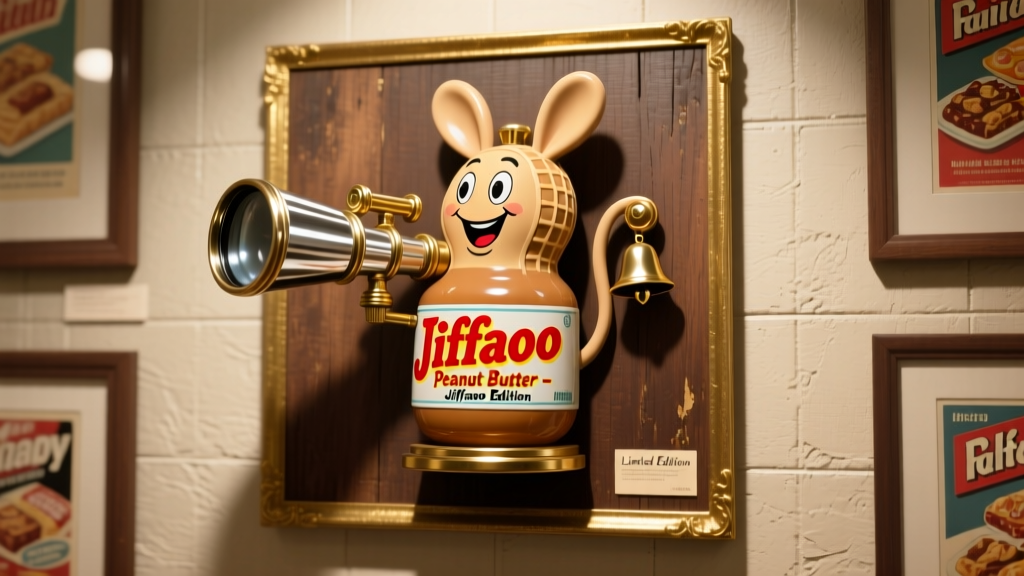
The Jiffaroo Periscope: A Rare Advertising Toy from Jiffy Peanut Butter’s Mid-Century Marketing Campaign
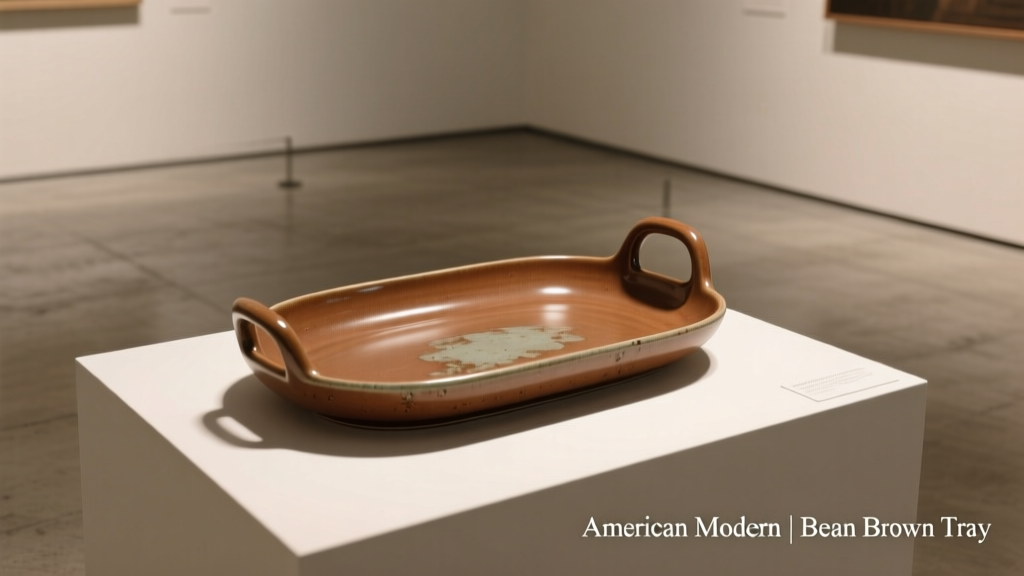
American Modern Bean Brown Tray Handle: Design Legacy, Production History, and Authentication Protocol
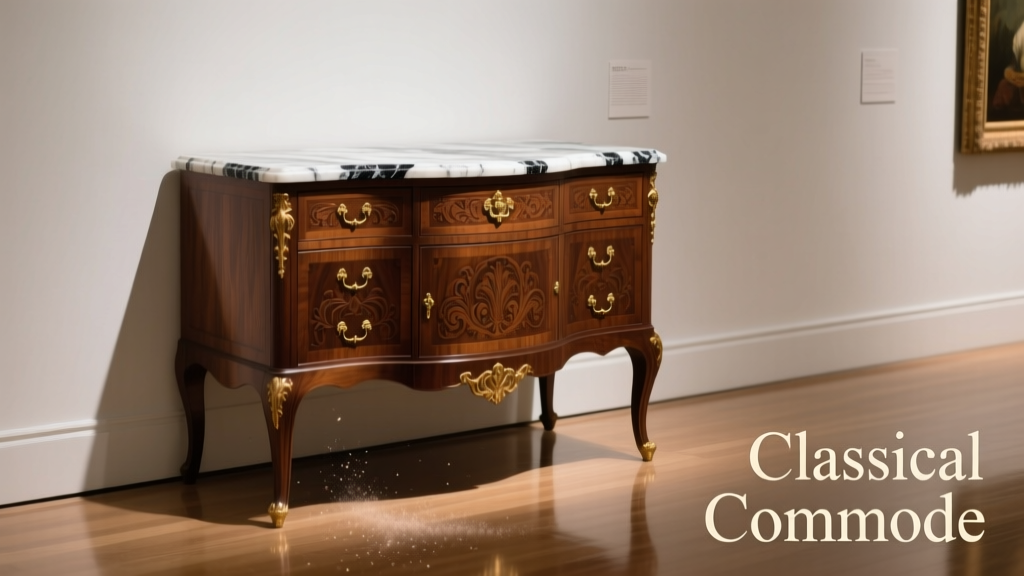
Classical Mahogany Commode with White-and-Black Mottled Marble Top: Authentication, Market Value, and Design Legacy of the 30-Inch Variant

Steuben Air-Twist Perfume Bottle: Authentication, Provenance, and Market Analysis of the 6¼-Inch Stopper Marked Bottle
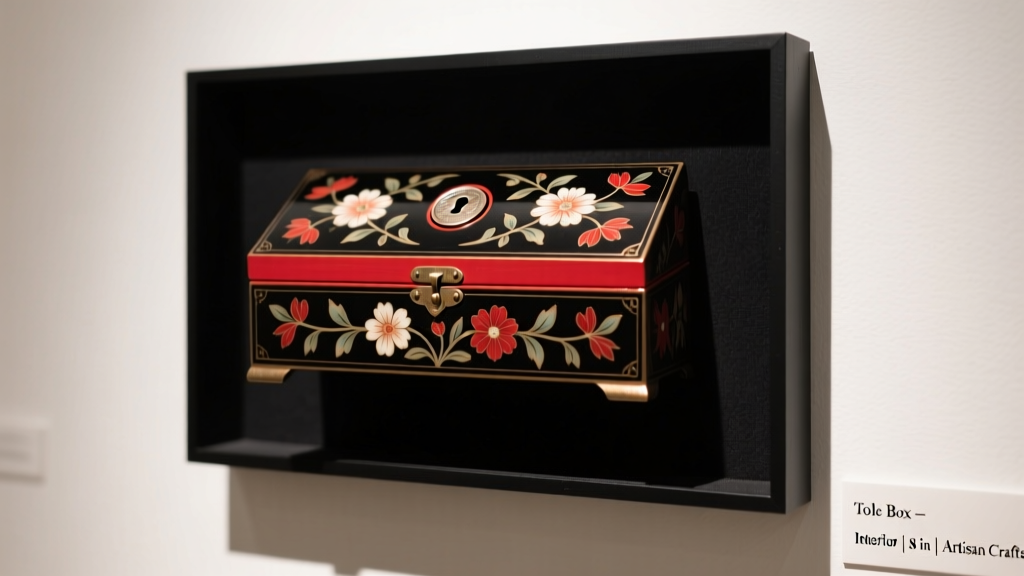
Authentication and Market Analysis of the Tole Box: Deed Floral Pattern, Black Ground, Red Interior, Coin Slot in Lid — 8-Inch Diameter

Westfield Century City Celebrates 20th Anniversary With $450 Million Expansion and Curated Art Integration
Musical Collectibles Price Guide: Box Crank Symphonion Cat Automation (6-Inch)