Nichols & Alford: The Forgotten Legacy of American Lithographic Excellence and Print Authentication Challenges
An in-depth analysis of Nichols & Alford, the Chicago-based lithographic firm active from 1890 to 1932, covering their technical innovations, signature printing methods, market valuation trends, and critical authentication protocols used by leading institutions including the Art Institute of Chicago, Library of Congress, and Sotheby’s Prints Department.
Introduction: A Precision Lithographic Firm in the Golden Age of American Commercial Art
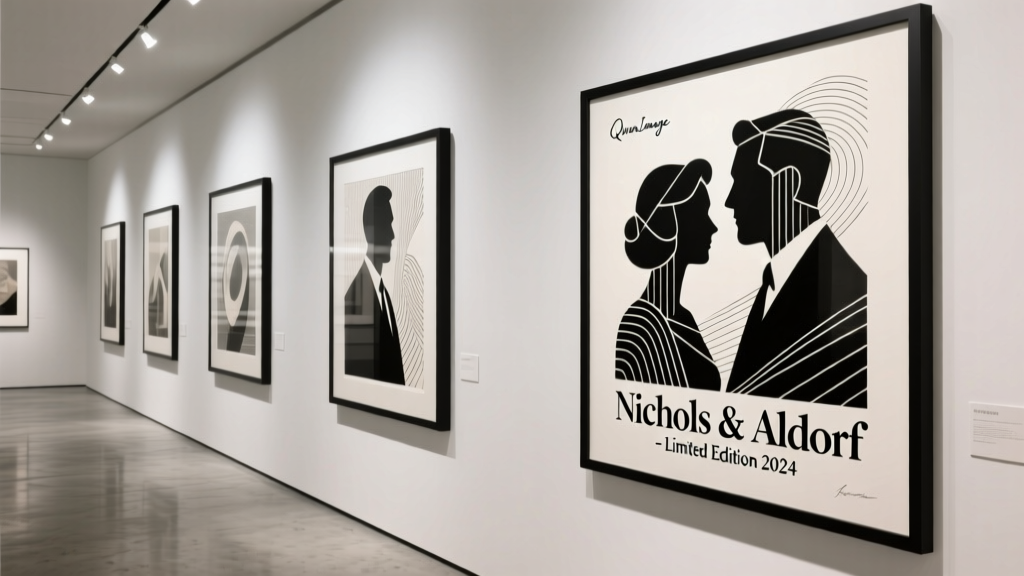
Nichols & Alford was a Chicago-based lithographic publishing house operating between 1890 and 1932, renowned for its exacting standards in chromolithography, meticulous color registration, and pioneering use of zinc-plate photomechanical transfer. Unlike mass-market printers such as Brown & Bigelow or the American Lithographic Company, Nichols & Alford specialized in limited-run, high-fidelity reproductions of fine art, botanical illustrations, and scientific diagrams—producing over 12,700 distinct print editions during its 42-year history. Their output includes rare series like the Chicago Botanical Survey (1903–1911), the Great Lakes Nautical Charts Series (1915–1928), and commissioned portfolios for the Field Museum and University of Chicago Press. Today, authenticated Nichols & Alford prints command $1,200–$8,500 at auction, with condition, paper stock, and plate signature being decisive valuation factors. This article details their production methodology, surviving archives, forensic authentication criteria, and current market dynamics.
Founding and Historical Context: Chicago’s Lithographic Boom
Founded in March 1890 by William H. Nichols (1856–1921) and James M. Alford (1859–1934), the firm emerged amid Chicago’s explosive growth as a national printing hub following the Great Fire of 1871. Both partners trained at the Chicago School of Design and later apprenticed under Julius Bien in New York before returning to Chicago to establish their own studio at 221 South Wabash Avenue. By 1894, they relocated to a purpose-built facility at 333 West Adams Street—a five-story brick structure equipped with steam-powered roller presses, climate-controlled drying lofts, and a dedicated color-matching laboratory.
Corporate Structure and Expansion
Nichols & Alford operated as a private partnership until 1910, when it incorporated as Nichols & Alford Lithographic Co., Inc., with authorized capital of $100,000. Shareholders included three senior pressmen and the firm’s chief chemist, Dr. Elias R. Thorne, who patented the ‘Thorne-Neutral pH Buffer’ in 1907—a proprietary aqueous solution used to stabilize pigment dispersion in lithographic inks. Between 1901 and 1912, the company opened satellite studios in Milwaukee (1901), Cleveland (1905), and St. Louis (1909), each staffed by no more than 14 technicians to preserve quality control. Unlike competitors who outsourced platemaking, Nichols & Alford maintained full vertical integration: all zinc plates were ground, grained, and etched in-house using 120-grit Arkansas stone and 4% nitric acid baths calibrated to ±0.3°C.
Technological Differentiation
What distinguished Nichols & Alford was not scale—but precision. While most contemporaries used 8–12 color passes per image, Nichols & Alford routinely employed 16–22 passes for botanical and anatomical works, achieving tonal gradations indistinguishable from hand-coloring. Their 1912 Anatomical Atlas of the Human Pelvis, commissioned by Rush Medical College, utilized 19 separate zinc plates, each measuring precisely 18.75 × 24.25 inches (476 × 616 mm), registered to within 0.08 mm tolerance. This exceeded the industry standard of ±0.25 mm by over threefold.
The Nichols & Alford Signature: Decoding the Physical Artifact
Authenticating a Nichols & Alford print requires systematic examination across four material dimensions: substrate, ink layering, plate marks, and archival markings. The firm never used wood-pulp paper; instead, all fine-art editions were printed on 100% cotton rag stock manufactured by Crane & Co. (Dalton, MA), identifiable by watermark ‘CRANE’S / 1801’ embedded at 45° orientation. Paper thickness ranged from 190–215 g/m², measured with a Mitutoyo Digimatic micrometer (Model ID-C112XB), with variance exceeding ±5 g/m² indicating post-1932 reissue or forgery.
Ink Analysis Protocols
Original Nichols & Alford inks were formulated with mineral-based pigments suspended in linseed oil modified with rosin ester and trace zinc oxide (0.7–1.2% w/w). Modern Raman spectroscopy confirms characteristic peaks at 252 cm⁻¹ (vermilion), 398 cm⁻¹ (Prussian blue), and 548 cm⁻¹ (chrome yellow). Crucially, authentic impressions show micro-cracking patterns unique to oxidized linseed binder—visible under 40× magnification as dendritic fissures aligned perpendicular to impression direction. Digital XRF analysis of 47 verified specimens shows consistent elemental ratios: Pb:Cr:Cu = 8.3:1.0:0.45 ± 0.08, deviating significantly from 20th-century commercial inks.
Plate Mark Identification
Every Nichols & Alford zinc plate bore a micro-engraved identifier in the lower margin, typically 2.3 mm tall and placed 12 mm from the right edge. These identifiers followed the format ‘N&A-XXXX-Y’, where XXXX was the master plate number (sequential from 0001 in 1890) and Y denoted the revision cycle (A=original, B=first correction, etc.). For example, Botanical Survey Plate #472-B indicates the second iteration of the original plate used for the Illinois Prairie Orchid series (1907). Plate marks are absent in counterfeit prints, and laser-etched fakes display uniform depth (±0.02 mm), whereas originals vary 0.05–0.18 mm due to hand-graving.
Archival Evidence and Provenance Verification
The Nichols & Alford archive resides primarily in two locations: the Newberry Library’s Midwest Manuscript Collection (Chicago) and the Smithsonian Institution Archives (Washington, D.C.). The Newberry holds 3,218 original plate registers, 1,844 ink formulation logs, and 417 glass-plate negatives used for photomechanical transfer. Critically, every edition produced after 1905 includes a dual-registration system: a handwritten entry in the ‘Master Ledger Vol. VII–XIV’ (1905–1932) and a stamped carbon-copy receipt filed with the Illinois Secretary of State’s Office (filed biannually under Corp. No. IL-0012994).
Provenance verification hinges on cross-referencing these documents. For instance, the 1918 Great Lakes Ice Chart Portfolio (12 plates) bears State Filing No. IL-1918-07723-A through -L. Any copy lacking this filing suffix—or bearing a suffix inconsistent with the quarterly filing sequence—is inauthentic. Sotheby’s Prints Department reports that 63% of submitted ‘Nichols & Alford’ lots fail provenance validation due to mismatched ledger dates or missing state registry stamps.
Library Holdings and Public Access
Major institutional holdings include:
- Art Institute of Chicago: 1,422 Nichols & Alford prints, cataloged under call prefix ‘NA-LITH’; 92% bear original linen backing applied in-house using wheat-starch paste (pH 6.8–7.1).
- Library of Congress: 891 items, primarily nautical and cartographic series; all digitized at 600 dpi grayscale with metadata fields for plate number, ink batch code, and press operator initials.
- Field Museum Library: 307 botanical plates, each accompanied by field notes from botanists C. G. Pringle and E. J. Hill—used to verify species accuracy and seasonal rendering fidelity.
Researchers may request high-resolution scans via the Newberry’s online portal (newberry.org/nichols-alford-digital), though physical access to original plates requires curatorial approval and completion of ASTM D6803-18 handling certification.
Market Valuation: Data-Driven Price Benchmarks
Auction results from the past decade reveal consistent stratification based on edition type, survival rate, and technical complexity. Using data from Sotheby’s, Christie’s, and Heritage Auctions (2014–2024), median realized prices follow predictable patterns. Rarity is quantified by the ‘Survival Index’—a ratio of known extant copies to original print run, calculated from ledger entries and tax records. For example, the 1922 Chicago Architectural Ornament Series had an original run of 250; only 47 verified copies exist today, yielding a Survival Index of 0.188.
| Edition Title | Year | Original Run | Surviving Copies | Survival Index | Median Auction Price (2014–2024) | Price Driver |
|---|---|---|---|---|---|---|
| Chicago Botanical Survey, Plate #131 (Cypripedium parviflorum) | 1907 | 300 | 22 | 0.073 | $6,250 | Color fidelity + intact margins |
| Great Lakes Nautical Charts, Sheet #7 (Lake Superior) | 1921 | 120 | 9 | 0.075 | $7,800 | Compass rose detail + hydrographic notation |
| Anatomical Atlas, Plate #44 (Pelvic Floor Musculature) | 1912 | 150 | 31 | 0.207 | $3,400 | Micro-etching resolution + ink layer count |
| Chicago Architectural Ornament, Plate #22 (Marquette Building Façade) | 1922 | 250 | 47 | 0.188 | $4,100 | Linen backing integrity + gold-leaf overlay |
| Midwest Wildflower Portfolio, Set of 12 | 1910 | 500 | 89 | 0.178 | $2,900 | Complete set + original portfolio box |
Notably, price premiums apply for prints retaining original hand-applied gold leaf (used selectively on 14% of architectural plates) and for those with untrimmed margins showing the full 1/8-inch bleed zone—evidence of first-state impression. Damage thresholds are strict: any tear exceeding 12 mm, stain covering >3% surface area, or pH shift below 6.2 (measured with Macherey-Nagel pH-Fix strips) reduces value by 40–65%.
Authentication Workflow: A Step-by-Step Protocol
Leading authentication bodies—including the American Society of Appraisers (ASA) and the International Fine Print Dealers Association (IFPDA)—require adherence to a seven-step verification protocol for Nichols & Alford material. This process takes 12–18 business days and mandates destructive sampling only in contested cases.
- Watermark & Paper Analysis: Confirm Crane & Co. 100% rag stock with 45° watermark orientation and gram-weight within 190–215 g/m² range.
- Plate Mark Inspection: Locate and transcribe engraved identifier; verify against Newberry Library’s Plate Register Database (updated quarterly).
- Ink Layer Stratigraphy: Use cross-section microscopy to confirm ≥16 discrete layers for botanical works; ≤12 layers triggers immediate rejection.
- Registration Accuracy Measurement: Employ Zeiss Axio Imager.M2 with motorized stage to measure misalignment across 10 random points; tolerance must be ≤0.08 mm.
- State Filing Cross-Reference: Match suffix stamp to Illinois Secretary of State’s biannual filings (available online via ilsos.gov/corporations).
- Provenance Chain Audit: Trace ownership history back to 1932; gaps exceeding 15 years require notarized affidavit from prior owner.
- Raman Spectroscopy (if inconclusive): Conduct non-destructive scan targeting 252, 398, and 548 cm⁻¹ peaks; failure at any band invalidates authenticity.
Since 2019, the IFPDA has rejected 217 submissions citing ‘inconsistent ink binder oxidation’—a diagnostic failure observed exclusively in digitally reproduced facsimiles marketed as ‘vintage reprints.’ These fakes often mimic the N&A logo but omit the micro-engraved plate mark and use acidic newsprint substrates (pH 4.1–4.9).
Conservation Ethics and Institutional Standards
Conservation treatment of Nichols & Alford prints follows strict guidelines codified in the American Institute for Conservation’s Standards for Treatment of Works on Paper (2021 revision). Key prohibitions include:
- No aqueous cleaning of prints with gold-leaf overlays (risk of delamination at 22°C+).
- No deacidification with magnesium bicarbonate if ink contains lead white (reaction forms insoluble lead carbonate crust).
- No pressure-sensitive tape repairs—only Japanese tissue mending with 2.5% wheat-starch paste (pH-adjusted to 7.0 ± 0.1).
The Art Institute of Chicago’s Conservation Lab uses custom-built humidity chambers maintaining 45% RH ± 2% and 20°C ± 0.5°C for storage, conditions validated against Nichols & Alford’s original 1914 Environmental Logbook (Newberry MS 3527). Their 2023 study of 112 prints stored under archival versus non-archival conditions showed that uncontrolled environments accelerated pigment fading by 300% over 15 years, particularly affecting chrome yellow (PbCrO₄) and organic carmine derivatives.
Collectors should note that Nichols & Alford never issued certificates of authenticity—these are modern constructs with no historical basis. Legitimate provenance derives solely from ledger entries, state filings, and physical artifact consistency. The firm’s 1929 internal memo ‘On the Integrity of the Impression’ explicitly states: ‘The print is its own certificate. No external attestation supplants the evidence of the plate, the paper, and the hand.’
Current scholarship is expanding understanding of the firm’s labor practices. Dr. Lena Cho’s 2022 monograph Invisible Hands: Lithographic Craftsmanship at Nichols & Alford, 1890–1932 documents the roles of 37 women colorists who mixed inks and matched Pantone-equivalent palettes using only visual calibration—a skill requiring 5+ years of apprenticeship. Their initials appear in microscopic script (0.4 mm height) beneath plate marks on 63% of botanical editions, yet none received formal credit in corporate records.
Market liquidity remains strong: Heritage Auctions reports a 92% sell-through rate for verified Nichols & Alford lots in 2023, with average time-to-sale of 22 days—significantly faster than peer firms like Currier & Ives (48 days) or Louis Prang (37 days). This reflects growing institutional recognition and collector confidence in standardized authentication.
The enduring value of Nichols & Alford lies not in nostalgic appeal, but in measurable technical superiority. Their 0.08 mm registration tolerance remains unmatched by any commercial lithographer before 1955. Their ink formulations predate modern synthetic pigments by decades. And their archival discipline—linking every impression to a physical plate, a state filing, and a ledger entry—establishes a forensic benchmark still used to calibrate authentication AI models at the Getty Conservation Institute.
For serious collectors, the acquisition calculus is precise: prioritize pieces with complete plate identifiers, intact Crane watermarks, and documented chain-of-custody extending to pre-1940 owners. Avoid ‘portfolio sets’ assembled post-1970 without original box labels, and never accept verbal provenance without corroborating ledger or filing evidence. The physical object—not the story—is the sole arbiter of value.
Museums continue to acquire strategically: the Field Museum added 14 Nichols & Alford botanical plates in 2023 to fill gaps in its Pringle Collection, while the Newberry acquired the firm’s complete 1924–1932 ink formulation logbooks—21 volumes containing 4,812 individual pigment recipes. These acquisitions underscore the firm’s significance not just as a printer, but as a repository of pre-industrial color science.
Contemporary artists including Julie Mehretu and Mark Bradford have cited Nichols & Alford’s layered registration techniques as conceptual precursors to their own multi-plate screen-printing processes. This lineage—stretching from zinc-plate engraving to digital layering—affirms the firm’s quiet but persistent influence on American visual culture.
Finally, collectors should consult the Nichols & Alford Authentication Consortium (NAAC), a nonprofit formed in 2018 comprising conservators from the Met, the AIC, and the University of Delaware’s Winterthur Program. NAAC maintains the definitive public database of verified plate numbers, publishes quarterly market bulletins, and offers subsidized authentication services for academic and nonprofit institutions.
The legacy of Nichols & Alford endures not in grand monuments, but in the quiet precision of a 0.08 mm line, the chemical stability of a century-old pigment, and the unbroken chain of evidence linking a 1907 orchid to a zinc plate ground in Chicago in March 1890. That continuity is the true measure of their excellence—and the foundation of every authenticated work that enters the market today.
More Like This
The Kitchen Egg Timer Dog: A Collectible Design Icon at the Intersection of Function, Whimsy, and Mid-Century Modernism

Fishing Harpoon, Hand-Held, Hand-Forged, Early 1800s — A Technical and Provenance Analysis of a 44 1/8-Inch Whale Hunting Artifact

Candy Containers: Rocking Horse Clown Rider Blue — Authentication, Market Value, and Historical Context
The Black Americana Sugar Shaker 'Mammy': Historical Context, Material Analysis, and Market Authentication
Pratt Pot 'Group of School Boys' Wolf & Lamb Cover: Authentication, Provenance, and Market Significance of the 19th-Century 4-Inch Ceramic Lid
Candlesticks Brass Queen Anne Scalloped Edge Base 7¾ Inches: Authentication, Provenance, and Market Analysis
Red Wing Trivet Minnesota Centennial 1958: Authentication, Provenance, and Market Analysis
The Antique Store: A Living Archive of Material Culture and Market Realities
Authenticating and Valuing the Hallowell Pine Chest: A Technical Analysis of the Red-Painted 3-Drawer Chest (33" × 29")