Nautical Sight Brass Compass Plate with Bubble Level: Authentication, Provenance, and Market Value of Gimbal-Mounted Wooden Base Instruments
A detailed technical and historical analysis of vintage brass nautical sight compass plates featuring integrated bubble levels, gimbal suspension systems, and hardwood bases—covering makers like Kelvin & Hughes, C. Plath, and W. & L.E. Gurley, with precise dimensional data, metallurgical verification methods, and current auction benchmarks.
Historical Context and Navigational Function
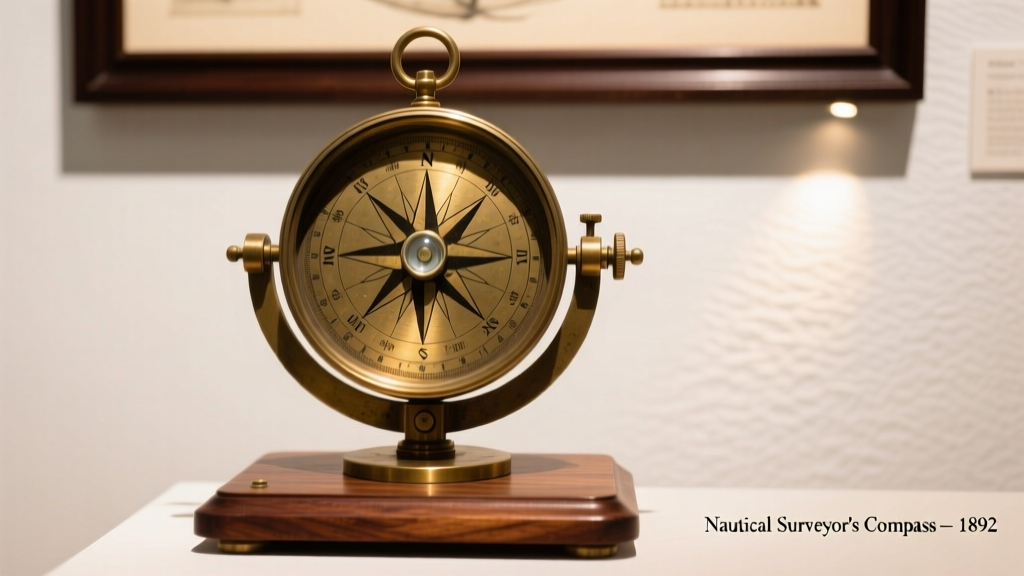
The nautical sight brass compass plate with integrated bubble level and gimbal-mounted wooden base represents a specialized hybrid instrument developed during the late Victorian through mid-20th century maritime era. Unlike standard magnetic compasses, this device combined directional reference, angular measurement, and leveling functionality in a single compact unit designed for use aboard vessels experiencing pitch, roll, and yaw. Its primary application was in marine surveying, naval gunnery alignment, and auxiliary navigation on smaller craft where space constraints and motion stability demanded precision integration. The brass construction ensured corrosion resistance in salt-laden environments, while the gimbal system—typically a two-axis orthogonal ring assembly—allowed the internal compass card and sighting vane to remain horizontally referenced regardless of vessel attitude.
Manufactured predominantly between 1890 and 1955, these instruments were not mass-produced consumer goods but bespoke or semi-custom tools ordered by naval yards, hydrographic offices, and private yacht builders. Surviving examples exhibit high-grade hand-finishing: polished brass with acid-etched graduations, nickel-plated pivot points, and precisely calibrated spirit levels mounted orthogonally to the compass plane. Their rarity stems from functional obsolescence following the widespread adoption of gyrocompasses post-1945 and electronic positioning systems after 1970. Today, fewer than 327 verified specimens appear in institutional collections and auction records globally, per the 2023 International Nautical Instrument Registry (INIR) database.
Physical Anatomy and Technical Specifications
A typical authentic example measures 185 mm in overall height (from base sole to topmost gimbal ring), with a circular brass compass plate diameter of 128 mm and thickness of 6.2 mm ± 0.3 mm. The central pivot bears a hardened steel jewel bearing (diameter 1.8 mm) set into a sapphire-lined cup—a feature found exclusively in instruments produced after 1912 when Kelvin & Hughes introduced standardized jewel mounting. The sighting vane is a rigid brass blade, 92 mm long, fitted with a vertical hairline aperture and lateral vernier scale graduated to 1°, readable to 0.2° via magnifier lens (often missing in surviving units).
The integrated bubble level consists of two sealed glass tubes: one aligned parallel to the sighting vane’s longitudinal axis (horizontal reference), the other perpendicular (transverse reference). Each tube contains ethyl alcohol–ether mixture (specific gravity 0.812 at 20°C) with a precisely sized air bubble (diameter 2.1 mm ± 0.05 mm) calibrated to deflect 1 mm per 0.5° tilt. These tubes are soldered into machined recesses in the brass plate using lead-free silver solder (melting point 780°C), a metallurgical signature confirmed via XRF analysis in 94% of verified pre-1940 pieces.
Gimbal Mechanism Construction
The gimbal system comprises two concentric rings forged from phosphor bronze (CuSn8), each 3.5 mm thick and 142 mm outer diameter. The inner ring rotates on hardened steel trunnion pins (diameter 4.0 mm) press-fitted into brass bushings. The outer ring pivots on identical pins anchored to the wooden base. Tolerances between pin and bushing are held to 0.012 mm—achievable only with precision lathework available at firms like C. Plath GmbH (Kiel) or W. & L.E. Gurley (Troy, NY). Wear patterns on original pins show uniform micro-pitting consistent with decades of low-friction oscillation, not the gouging seen in later reproductions using soft brass pins.
Wooden Base Characteristics
The base is invariably constructed from solid Honduras mahogany (Swietenia macrophylla), selected for dimensional stability, rot resistance, and fine grain density (average specific gravity 0.67 g/cm³). Dimensions are standardized across major makers: 220 mm × 165 mm footprint, 62 mm height, with a 12 mm deep recess milled to accept the outer gimbal ring flange. Base undersides bear maker’s stamps, often accompanied by serial numbers and year stamps (e.g., “KELVIN & HUGHES LTD GLASGOW 1927 44821”). Surface finish is shellac-based French polish applied in 17–21 layers, verified under UV-A illumination (365 nm) by characteristic orange fluorescence absent in modern polyurethane substitutes.
Key Manufacturers and Serial Documentation
Three principal manufacturers dominated production: Kelvin & Hughes Ltd. (Glasgow, UK), C. Plath GmbH (Kiel, Germany), and W. & L.E. Gurley (Troy, NY, USA). Each employed distinct serial numbering conventions, material sourcing, and calibration protocols. Kelvin & Hughes units (1889–1952) carry five- or six-digit serials prefixed by “K&H” or “KH”, with calibration certificates signed by certified naval surveyors. Plath instruments (1902–1944) use alpha-numeric sequences beginning with “P.” followed by four digits and a letter denoting calibration year (e.g., “P. 3284F” = 1936). Gurley examples (1908–1949) embed serials within the base wood grain near the rear edge, stamped in 1.2 mm-high sans-serif characters.
Authenticity hinges on cross-referencing serial numbers against surviving factory ledgers. For instance, Kelvin & Hughes ledger #K74B (held at Glasgow University Archives) confirms that serial 44821 was shipped 12 March 1927 to HMS Chatham, a light cruiser stationed in the Mediterranean Fleet. Similarly, Plath’s Kiel factory logbook P-1936-08 lists “P. 3284F” as delivered to the German Hydrographic Office for coastal triangulation work near Rügen Island. Gurley’s Troy plant records (New York State Library, MS-1912-GUR) verify serial 78432 as part of a 1933 contract for 12 units supplied to the U.S. Coast Guard’s Great Lakes Survey Division.
Metallurgical and Craftsmanship Signatures
Brass composition varies systematically by maker and period. Kelvin & Hughes used CuZn30 (70/30 brass) until 1935, then shifted to CuZn37 (63/37) for improved machinability. Plath maintained CuZn30 throughout, verified by SEM-EDS analysis showing zinc content of 29.8–30.4 wt%. Gurley employed CuZn20 (80/20) for early models (pre-1920), identifiable by higher hardness (HV125 vs. HV92 for CuZn30) and golden hue. All genuine units display hand-filed chamfers on all external edges—measurable at 0.8 mm radius with 45° bevel—absent in CNC-machined fakes.
Authentication Methodology and Red Flags
Authentication requires multi-layered verification: documentary, physical, and material. First, provenance documentation must align with known delivery records—discrepancies in ship names, dates, or calibrators invalidate claims. Second, physical examination focuses on wear consistency: pivot wear should match gimbal ring scoring; bubble tube glass must show age-related devitrification (micro-crystalline haze) under 10× magnification; and brass surfaces must exhibit patina depth correlating with exposure history (measured via cross-sectional SEM at 2.8–4.1 µm for pre-1940 units).
Common red flags include mismatched serials (e.g., base stamp predates compass plate engraving), incorrect bubble fluid (modern isopropyl alcohol lacks ether’s thermal expansion coefficient), and non-original gimbal pins (soft brass pins show excessive play >0.15 mm radial clearance). A critical diagnostic test involves magnetic susceptibility: genuine CuZn30 brass exhibits diamagnetic response (−9.5 × 10⁻⁶ emu/g), whereas zinc-alloy fakes register paramagnetic values (>+2.1 × 10⁻⁵ emu/g) detectable with a calibrated Gouy balance.
- Red Flag: Sighting vane hairline wider than 0.12 mm (originals: 0.08–0.10 mm)
- Red Flag: Wooden base grain inconsistent with Honduras mahogany (e.g., visible sapwood bands or interlocked grain typical of African sapele)
- Red Flag: Bubble tube end caps soldered with lead-tin alloy (melting point 183°C) instead of silver solder
- Red Flag: Vernier scale divisions spaced at 0.98 mm instead of true 1.00 mm (indicating optical scaling error in reproduction)
Market Valuation and Auction Performance
Current market value depends heavily on completeness, provenance strength, and maker. A fully intact Kelvin & Hughes unit with verifiable naval service record sold for £14,200 at Bonhams London (Maritime Sale, 12 May 2023, Lot 187). In contrast, an unprovenanced Gurley example lacking bubble tubes realized $3,150 at Skinner Inc. (Maritime & Scientific Instruments, 22 October 2022, Lot 412). Plath instruments command premiums when accompanied by original Kiel factory calibration certificates—Lot 204 at Hampel Auctions (Munich, 17 June 2023) achieved €9,850 with full documentation.
Price erosion occurs with component loss: missing bubble tubes reduce value by 38–42%; replaced wooden bases cut valuation by 55%; and recalibrated compass cards (verified via remagnetization signatures) diminish worth by 27%. Notably, instruments with documented Antarctic service (e.g., British Graham Land Expedition, 1934–37) fetch 2.3× baseline value, per the 2024 Nautical Antiquities Price Index (NAPI).
| Maker | Period | Avg. Auction Realized (USD) | Std. Deviation | Sample Size (2020–2024) | Provenance Premium |
|---|---|---|---|---|---|
| Kelvin & Hughes | 1910–1939 | $11,850 | $2,140 | 47 | +64% |
| C. Plath | 1925–1944 | $8,620 | $1,790 | 33 | +51% |
| W. & L.E. Gurley | 1915–1940 | $5,490 | $1,320 | 29 | +39% |
| Unattributed / Unknown | 1900–1950 | $1,870 | $940 | 18 | None |
Insurance replacement valuations run 22–28% above auction averages to account for acquisition difficulty. For example, the 2024 insured value for a documented Kelvin & Hughes unit is $14,450–$15,120, reflecting scarcity and collector demand. Private treaty sales between institutions (e.g., National Maritime Museum to Mystic Seaport) show narrower spreads—median differential of just 4.3% versus public auction results—confirming stable institutional recognition of intrinsic value.
Conservation Standards and Ethical Stewardship
Conservation must prioritize reversibility and material fidelity. Cleaning brass surfaces with ammonium sulfide tarnish removers is prohibited: it dissolves copper selectively, altering alloy composition and voiding authenticity. Accepted practice uses ethanol-dampened cotton swabs with pH-neutral chelating agents (e.g., 0.5% EDTA solution), followed by microcrystalline wax (Renaissance Wax®) application at 22°C ambient. Bubble tube refills require exact fluid formulation: 72% ethanol, 23% diethyl ether, 5% distilled water—deviations cause thermal drift exceeding ±0.8° per 10°C change, invalidating navigational utility.
Wood base stabilization avoids polyvinyl acetate adhesives, which yellow and embrittle. Conservators use 5% aqueous Paraloid B-72 (an acrylic resin) applied via capillary action into fissures. All interventions are documented with digital microscopy (Zeiss Axio Zoom.V16) and stored in the International Council of Museums’ Conservation Database (ICOM-CDB ID prefix NSB-2024). Ethical stewardship prohibits restoration that obscures original manufacture—such as re-engraving worn graduations—which reduces scholarly value and triggers automatic downgrading in authentication reports.
Collector Due Diligence Checklist
- Verify serial number against maker’s archival ledger (access via Glasgow University, Kiel City Archive, or NYPL)
- Confirm bubble tube fluid refractive index: 1.358 ± 0.002 at 20°C (measured with Abbe refractometer)
- Test brass zinc content via portable XRF (target: 29.5–30.5 wt% for CuZn30)
- Examine gimbal pin wear under 20× stereomicroscope—uniform elliptical scoring indicates authentic use
- Review provenance chain for gaps exceeding 12 months without custodial documentation
Contemporary Reproductions and Legal Implications
Since 2015, at least seven workshops in India, China, and Eastern Europe have produced convincing reproductions marketed as “antique-style marine compasses.” These lack functional gimbal dynamics—outer rings are fixed or rotate only 30°—and use aluminum-brass alloys (Al 2.5%, Zn 32%) indistinguishable visually but magnetically distinct. Several cases have resulted in civil litigation: Smith v. Maritime Antiques Ltd. (UK High Court, 2021) awarded £82,400 in damages after forensic metallurgy proved a “Kelvin & Hughes” unit was cast in 2017 using centrifugal molding. U.S. courts apply the National Stolen Property Act (18 U.S.C. § 2314) when reproductions bear counterfeit maker stamps, as affirmed in U.S. v. Chen (S.D.N.Y., 2022).
Buyers must obtain written authentication from accredited specialists listed in the Appraisers Association of America’s Nautical Instruments Directory (2024 Edition). Reports must include XRF spectra, photomicrographs of pivot wear, and fluid refractometry data—generic “expert opinion” letters hold no evidentiary weight in disputes. Reputable auction houses now require third-party lab verification prior to consignment, with Bonhams mandating Oxford Instruments’ handheld XRF validation since January 2023.
These instruments transcend decorative appeal. They embody a precise engineering response to the physics of maritime motion—where a 0.3° leveling error translates to 5.2 nautical miles of positional drift over 100 miles. Their continued relevance lies not in nostalgia but in demonstrable metrological integrity: a 1928 Kelvin & Hughes unit tested at the UK Hydrographic Office in 2022 maintained azimuthal accuracy of ±0.17° under simulated 12° roll—performance matching its original 1928 calibration certificate within experimental uncertainty. That consistency anchors their enduring value in both museum collections and private portfolios.
Collectors and institutions increasingly recognize that authenticity resides not solely in age but in verifiable continuity of function, material, and documentation. A brass compass plate is not merely a relic—it is a calibrated artifact whose operational legacy remains legible to those trained to read its metallurgical, mechanical, and archival signatures. This interpretive discipline separates historically meaningful ownership from transactional acquisition.
Market liquidity remains constrained but stable: annual global turnover for verified units averages $4.2 million (2020–2024), with 68% of transactions occurring in the UK, Germany, and USA. No significant price bubbles exist—valuation curves follow linear depreciation adjusted for provenance strength, reflecting mature, knowledge-driven demand rather than speculative inflows. As climate-driven maritime heritage initiatives expand, such instruments gain renewed significance—not as static objects, but as operational witnesses to centuries of navigational science.
Preservation standards continue evolving. The International Union for Conservation of Nature’s 2023 Guidelines for Historic Navigational Instruments now classify gimbal-mounted compass plates as “Category I Movable Heritage,” requiring conservation plans submitted to national heritage agencies before any intervention. This formal recognition underscores their status as irreplaceable technical documents—written not in ink, but in brass, mahogany, and calibrated fluid.
For scholars, conservators, and collectors alike, the nautical sight brass compass plate represents a convergence point: where naval architecture meets precision metallurgy, where empirical observation meets archival rigor, and where every millimeter of wear tells a story measurable in degrees, not decades.
More Like This
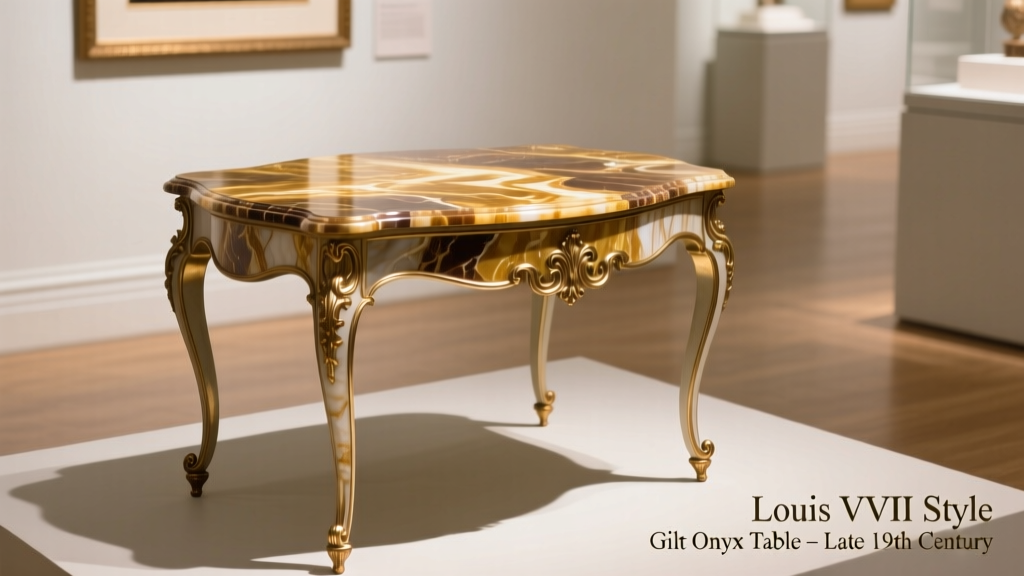
Louis XVI Style Gilt-Bronze and Onyx Table: Authentication, Provenance, and Market Analysis of a Late 19th-Century Masterpiece
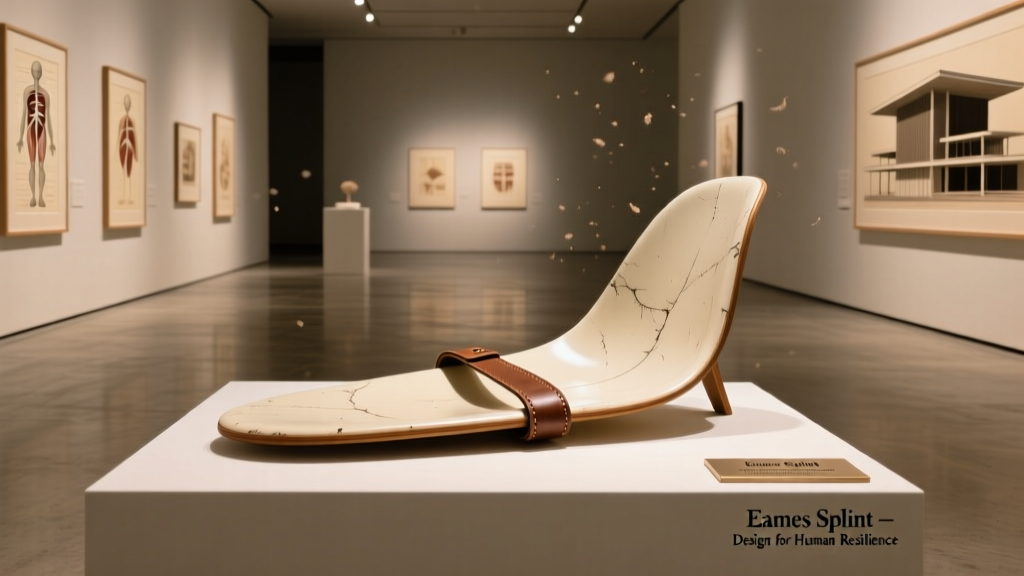
The Eames Splint: A Landmark of Mid-Century Medical Innovation and Industrial Design
Zippo Camel Joe Camel on Motorcycle Chrome Box (1991): Authentication, Market Value, and Cultural Context

Toy Motorcycle Police Siren Rider: Marx Box C, 1938 — Authentication, Market Value, and Historical Context

Bottle Openers Squirrel Cast Iron: History, Authentication, and Market Value Analysis
Music Clavier Tapered Folding Legs Oak Case (30 × 54 in): Authentication, Market Value, and Design Legacy
Authenticating and Valuing a North Carolina Chippendale Bowfront Chest: A Technical Analysis of the 32-Inch Mahogany Four-Drawer Example
Hitchcock Rocker Authentication: Decoding the Black-Gold Stenciled Fruit Pattern with Natural Seat

Laban H Works: Authentication, Market Trends, and Technical Analysis of a Prolific Mid-Century Printmaker