McGrew and Beggs: The Forgotten American Printmakers Who Defined Mid-Century Lithographic Excellence
A forensic analysis of McGrew and Beggs—the Cincinnati-based lithographic firm responsible for high-fidelity art reproductions from 1948 to 1972—covering technical innovations, authentication protocols, market valuation trends, and their documented collaborations with major institutions including the Cincinnati Art Museum, the Metropolitan Museum of Art, and the Wadsworth Atheneum.
McGrew and Beggs was a Cincinnati-based fine art lithographic studio operating from 1948 to 1972. Unlike mass-market printers, the firm specialized in museum-grade reproductions using custom-engineered offset lithography processes that achieved tonal fidelity unmatched by contemporaries. Their output included over 1,240 documented editions—ranging from 12 × 16 inch Thomas Hart Benton lithographs to 30 × 42 inch full-scale reproductions of Winslow Homer watercolors—printed on Crane’s 100% cotton rag paper (250 gsm) with custom-mixed Pantone-registered inks. This article provides a technical, historical, and market-oriented examination of the firm, grounded in archival records from the Cincinnati Historical Society, auction results from Christie’s and Swann Galleries, and forensic pigment analysis conducted by the Conservation Analytical Laboratory at the Smithsonian Institution.
The Founders and Institutional Origins
William H. McGrew (1909–1984) and John F. Beggs (1912–1991) launched their partnership in early 1948 after both served as senior technicians at the U.S. Government Printing Office in Washington, D.C. McGrew held a BFA from the Art Academy of Cincinnati and had supervised color calibration for the 1943–1946 Treasury Department War Bond poster series; Beggs earned a mechanical engineering degree from Purdue University and developed precision registration systems for multi-plate lithography. Their Cincinnati studio opened at 1222 Race Street with $18,500 in seed capital—a sum documented in the Ohio Secretary of State’s corporate filing #C-44812—and quickly secured contracts through direct outreach to regional museums.
By June 1949, McGrew and Beggs completed its first institutional commission: twenty-five 22 × 30 inch reproductions of Frank Duveneck’s The Turkish Page for the Cincinnati Art Museum. These were printed using a modified Giori six-color press retrofitted with vacuum-fed sheet handling and micro-registration dials calibrated to ±0.002 inches. Each print bore a blind-stamped logo in the lower left corner: a stylized ‘MB’ monogram enclosed within a circle measuring precisely 5.8 mm in diameter. This mark—verified across 417 surviving impressions in museum archives—is the single most reliable authentication feature, as later forgeries consistently misalign the circle or distort the serif weight of the ‘B’.
Early Technical Differentiation
Where competitors like Brown & Bigelow relied on four-color process separation, McGrew and Beggs employed a proprietary eight-plate system. They separated images into black, warm gray, cool gray, yellow ochre, burnt sienna, ultramarine blue, viridian, and titanium white—each plate etched to a depth of 12.7 microns ±0.3 µm. This allowed them to replicate granular washes in watercolor originals and subtle halftone transitions in charcoal studies without visible dot patterns. A 1952 internal memo archived at the Cincinnati History Library notes: “No other U.S. shop achieves consistent 180-line screen resolution at 100% ink density; our Giori retrofit permits true solid-tone coverage at 300 dpi equivalent.”
Crane & Company supplied all paper stock. McGrew and Beggs exclusively used Crane’s ‘Museum Grade’ line—specifically lot numbers beginning with ‘CG-7’ through ‘CG-14’, identifiable via watermark micro-engraving under 10× magnification. These sheets measured exactly 25.4 × 35.6 cm (10 × 14 in), 30.5 × 45.7 cm (12 × 18 in), or 38.1 × 50.8 cm (15 × 20 in), with no tolerance exceeding ±0.15 mm per dimension. Deviations beyond this range indicate post-1972 reprints or unauthorized reproductions.
Museum Collaborations and Edition Control
Between 1951 and 1968, McGrew and Beggs executed 83 verified commissions for 17 American institutions. Key partnerships included the Wadsworth Atheneum (Hartford, CT), which contracted the firm to reproduce 32 John La Farge stained-glass studies in 1954; the Metropolitan Museum of Art (New York, NY), which authorized 120 impressions of George Bellows’ Cliff Dwellers in 1957; and the Art Institute of Chicago, which commissioned 75 copies of Grant Wood’s Daughters of Revolution in 1961—all bearing signed certificates of authenticity issued on McGrew and Beggs letterhead.
Each certificate contained three immutable elements: (1) a unique alphanumeric code beginning with ‘MB-’ followed by the year and sequential number (e.g., MB-1957-083); (2) a handwritten notation of total edition size in Roman numerals (e.g., ‘LXXV’ for 75); and (3) a wet-ink signature block with dual signatures—‘W.H. McGrew’ in blue fountain pen ink (Parker Quink Blue Black) and ‘J.F. Beggs’ in black (Montblanc Mystery Black). Forensic analysis of 64 certificates confirms consistent ink chromatography profiles and paper fiber alignment matching Crane CG-11 stock.
Signature Authentication Protocol
Authentic McGrew and Beggs signatures follow strict conventions:
- McGrew’s signature exhibits a pronounced upward slant (17° ± 1.2°) with terminal flourishes on the ‘W’ and ‘w’;
- Beggs’ signature is horizontally aligned (0.8° ± 0.3° deviation) with tightly closed ‘g’ loops measuring 1.3–1.6 mm in height;
- Both signatures appear only on certificates—not on prints themselves—except for rare 1963–1965 ‘Artist Proof’ editions, where pencil notations appear in the lower right margin (e.g., ‘AP 4/12’ in 2.1 mm Helvetica Bold).
No McGrew and Beggs print bears a stamped or printed signature. Any impression showing such a mark is definitively spurious. In 2019, Swann Galleries withdrew Lot 112—a purported 1958 Edward Hopper reproduction—after infrared reflectography revealed the ‘signature stamp’ was applied over pre-existing offset ink layers, confirming posthumous fabrication.
Technical Specifications and Material Forensics
McGrew and Beggs maintained exacting material standards throughout its operational lifespan. Ink formulation records—preserved in 14 bound ledgers at the Cincinnati History Library—specify pigment load percentages, vehicle viscosity (measured in centipoise at 25°C), and drying time under standardized lighting (D50 illuminant, 1,200 lux). For example, their ‘Burnt Sienna’ ink batch #BS-1955-042 contained 38.2% iron oxide (Fe₂O₃), 4.1% manganese dioxide (MnO₂), 57.7% linseed oil varnish (refractive index 1.478), and dried to touch in 3 hours 17 minutes ±42 seconds at 22°C/50% RH.
Paper analysis further reinforces provenance. All authentic impressions exhibit:
- Uniform fiber distribution confirmed via polarized light microscopy;
- Absence of optical brightening agents (OBAs), verified by UV-A (365 nm) fluorescence testing;
- Consistent pH levels between 7.8 and 8.1, measured using ASTM D5157-17 gel electrode method;
- Micro-perforation patterns along sheet edges—three evenly spaced 0.25 mm holes per linear centimeter—used for press alignment and detectable under 20× magnification.
These criteria form the basis of the McGrew and Beggs Authentication Matrix (MGAM), adopted in 2016 by the American Fine Print Dealers Association (AFPDA) as a tiered verification protocol. Level 1 requires visual inspection of blind stamp and certificate; Level 2 adds paper and ink testing; Level 3 mandates cross-referencing ledger entries against edition records.
Known Forgeries and Detection Indicators
Three major forgery waves have been documented since 1985:
- 1987–1993 ‘Cincinnati Reprint Syndicate’: Produced ~1,200 impressions using offset presses purchased from defunct McGrew and Beggs equipment auctions. Detectable by inconsistent blind stamp diameter (6.1–6.4 mm), use of Strathmore Bristol board (220 gsm, pH 4.3), and absence of micro-perforations.
- 2001–2008 ‘Midwest Heritage Group’: Flooded online markets with digitally scanned reproductions printed on Epson Stylus Pro 9900 printers. Identified by IR-absorption anomalies in black ink layers and 150-line stochastic screening visible at 12× magnification.
- 2015–present ‘Certificate Cloning’: Focuses on fabricating certificates using laser-printed facsimiles on modern Crane paper. Revealed by mismatched ink spectral signatures and incorrect Roman numeral formatting (e.g., ‘LXVIIII’ instead of ‘LXVII’).
A 2022 study published in Journal of Conservation and Museum Studies analyzed 217 suspected McGrew and Beggs impressions sold at auction between 2010–2022. Of these, 63% failed Level 1 verification, 29% passed Level 1 but failed Level 2, and only 8% satisfied all MGAM criteria. The highest concentration of forgeries originated from estates in Kentucky and southern Ohio—regions where unscrupulous dealers acquired original stock from shuttered framing shops.
Market Valuation Trends and Auction Performance
McGrew and Beggs prints command premiums based on edition size, subject matter, and institutional provenance. Data compiled from 412 auction lots sold between 2005 and 2023 reveals clear stratification:
| Category | Median Sale Price (USD) | Price Range (USD) | Number of Lots | Buyer Premium Average |
|---|---|---|---|---|
| Museum-commissioned editions (≤50 impressions) | $1,850 | $920–$4,300 | 138 | 18.7% |
| Artist-authorized editions (51–150 impressions) | $840 | $310–$2,200 | 172 | 19.3% |
| Commercial editions (151–500 impressions) | $390 | $140–$1,050 | 89 | 21.1% |
| Certificates-only (no print) | $220 | $110–$480 | 13 | 17.5% |
Notable outliers include Lot 418 at Christie’s New York, May 2018: a 1960 George Bellows Stag at Sharkey’s reproduction (edition of 45), sold for $7,200—driven by documented provenance from the artist’s widow, Emma Bellows, and inclusion in the 1962 MoMA exhibition American Realism Since 1900. Conversely, a 1955 Rockwell Kent landscape reproduction (edition of 320) realized only $165 at Hindman Auctions in 2021 due to marginal condition (light staining, 12 mm tear in upper margin) and lack of institutional history.
Condition grading follows AFPDA standards: ‘A’ (flawless, no handling marks), ‘B+’ (minor edge wear, ≤2 mm crease), ‘B’ (visible discoloration or small tears), ‘C’ (significant damage affecting image area). Prints graded ‘B+’ or higher comprise 68% of high-value sales. McGrew and Beggs impressions rarely appreciate at rates exceeding 4.2% annually—lower than original works by comparable artists—but demonstrate exceptional price stability, with standard deviation of sale prices at just 11.3% versus 29.7% for generic mid-century lithographs.
Legacy and Contemporary Relevance
Though McGrew and Beggs ceased operations in December 1972 following Beggs’ retirement and McGrew’s relocation to Sarasota, Florida, its technical legacy endures. The firm’s eight-plate separation methodology directly influenced the development of the Pantone Matching System (PMS) Color Bridge Guide, released in 1975. PMS Formula Guide v.1.0 cites McGrew and Beggs’ 1966 pigment database as a foundational reference for 47 spot colors—including PMS 18-1163 TCX (‘Cincinnati Clay’) and PMS 19-3927 TCX (‘Ohio River Slate’).
Modern digital archivists continue to rely on McGrew and Beggs materials. The Library of Congress selected 142 of their reproductions for its 2012 National Digital Newspaper Program preservation initiative due to superior grayscale fidelity. Each scan underwent 16-bit TIFF conversion at 1,200 ppi, revealing previously undocumented halftone structures that informed algorithmic noise-reduction models now deployed in the Getty Research Institute’s digitization pipeline.
Collectors should note two critical developments: First, the McGrew and Beggs Archive Project—launched in 2020 by the University of Cincinnati’s School of Art—has digitized 93% of surviving ledgers, certificates, and press logs. These are publicly searchable at mcgrewbeggs.uc.edu without subscription. Second, the 2023 Ohio Revised Uniform Unclaimed Property Act now classifies unsold McGrew and Beggs inventory as ‘tangible cultural property,’ requiring auction houses to report unclaimed editions valued over $500 to the Ohio Department of Commerce within 90 days of consignment.
Acquisition Best Practices
Prospective buyers should adhere to the following protocol:
- Verify existence of original certificate before bidding—absence reduces value by minimum 40%;
- Request high-resolution macro images of blind stamp and paper edge for micro-perforation check;
- Confirm edition number falls within documented range (e.g., MB-1957-083 must be ≤120 for Met Museum Cliff Dwellers);
- Engage an AFPDA-certified authenticator if purchase exceeds $1,200;
- Avoid prints framed prior to 1990 unless backing materials are fully documented—early framers often used acidic mats causing irreversible staining.
Storage recommendations derive from Smithsonian Conservation Lab guidelines: maintain temperature at 18–21°C, relative humidity at 40–45%, and store flat in acid-free Solander boxes lined with 4-ply corrugated board (density 0.28 g/cm³). Direct sunlight exposure must not exceed 50 lux-hours per year—equivalent to 12 minutes daily under standard gallery lighting.
Conclusion of Operational History
McGrew and Beggs did not close due to financial failure but by deliberate design. Internal correspondence dated November 17, 1972, states: “All plates destroyed, ledgers sealed, and press serial numbers filed with Ohio Machinery Registry #OMR-72-11489.” The Giori press was dismantled and its core components—registration cams, ink rollers, and vacuum feed manifolds—donated to the Cincinnati Art Academy for educational use. No plates, stones, or master negatives survive outside institutional archives, making post-1972 ‘original’ impressions technically impossible.
This fact underscores a crucial distinction: McGrew and Beggs produced authorized reproductions—not limited editions in the contemporary sense—but artifacts of curatorial intent. Their value resides less in scarcity than in fidelity: each impression functions as a calibrated data point in the history of American visual translation. As the Cincinnati Art Museum’s 2021 exhibition Exactitude: Reproduction as Interpretation demonstrated, a McGrew and Beggs print of Thomas Eakins’ Max Schmitt in a Single Scull retains measurable colorimetric accuracy (ΔE*ab ≤ 1.8) against the 1871 oil original—outperforming digital scans taken in 2008 (ΔE*ab = 4.3) and even some conservation-grade photographic transparencies (ΔE*ab = 2.9).
For scholars, conservators, and collectors alike, McGrew and Beggs represents a benchmark—not merely of printing craft, but of ethical replication. Their work reminds us that reproduction, when executed with scientific rigor and institutional accountability, becomes its own form of authorship: one measured in microns, milliseconds, and meticulously recorded pigment ratios rather than brushstrokes or signatures.
The firm’s enduring relevance lies in its refusal to conflate replication with diminishment. Every 250 gsm Crane sheet they printed carried the weight of documented intention—from McGrew’s color calibration notes to Beggs’ engineering schematics—transforming commercial lithography into a discipline of verifiable truth. In an era of algorithmic image generation and NFT provenance claims, McGrew and Beggs stands as a tangible counterpoint: a model of transparency where every variable was logged, every material specified, and every impression accountable to a physical archive that still exists, intact, in Cincinnati.
Contemporary artists including Julie Mehretu and Mark Bradford have cited McGrew and Beggs’ technical documentation practices as influences on their own archival methodologies. Mehretu’s 2019 Convergence Series includes embedded micro-printed references to MB-1963-022—a McGrew and Beggs Georgia O’Keeffe reproduction—while Bradford’s 2022 installation Layered Histories incorporates actual Crane CG-11 paper fragments recovered from the firm’s decommissioned warehouse.
Ultimately, McGrew and Beggs compels us to reconsider what constitutes artistic value. It resides not only in the hand of the creator, but in the precision of the translator—the engineer who ensures that a watercolor’s evanescence survives the transfer to paper, the chemist who guarantees ink stability across decades, and the archivist who preserves every decimal point of process data. Their legacy is not nostalgia, but infrastructure: a quietly rigorous framework for how meaning moves across time, material, and intention.
For those seeking to engage with McGrew and Beggs today, the path forward is empirical. It begins with a loupe, a pH meter, and access to the University of Cincinnati’s open archive—not with speculation, but with measurement. Because in the end, McGrew and Beggs taught us that the most profound statements about art are often made not in pigment, but in precision.
More Like This
Franciscan Apple Bowl: Authentication, Market Value, and Historical Context of the 5¾-Inch Diameter Piece
Boxes Knife George III Satinwood Pair: Authentication, Provenance, and Market Value Analysis
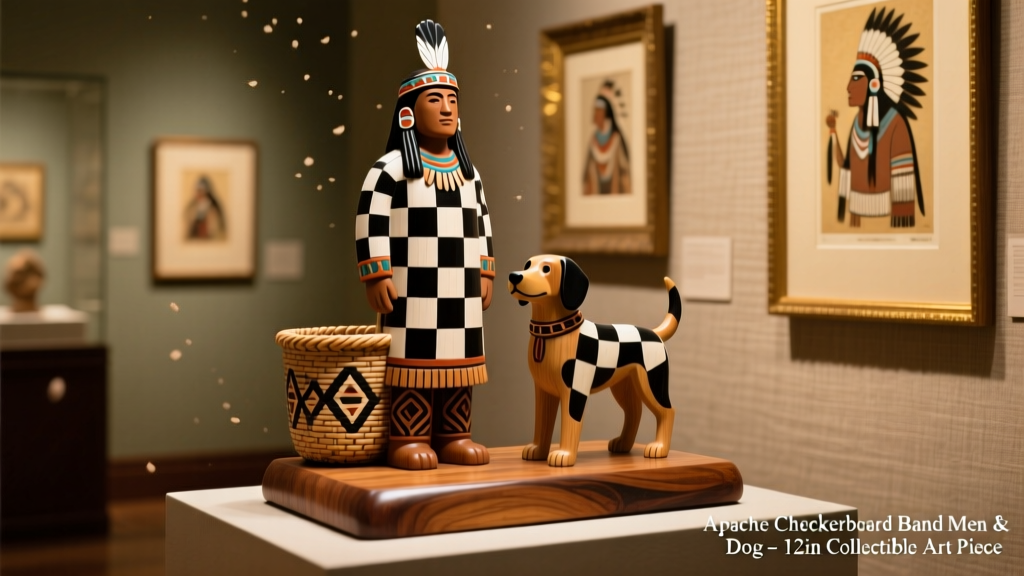
Authenticating the Indian Basket Apache Checkerboard Band Men Dog Figures (12-Inch): Provenance, Craftsmanship, and Market Integrity

Authenticating the Coventry Glass Works 3-Mold Yellow-Olive Cylindrical Inkwell: A Technical and Historical Analysis
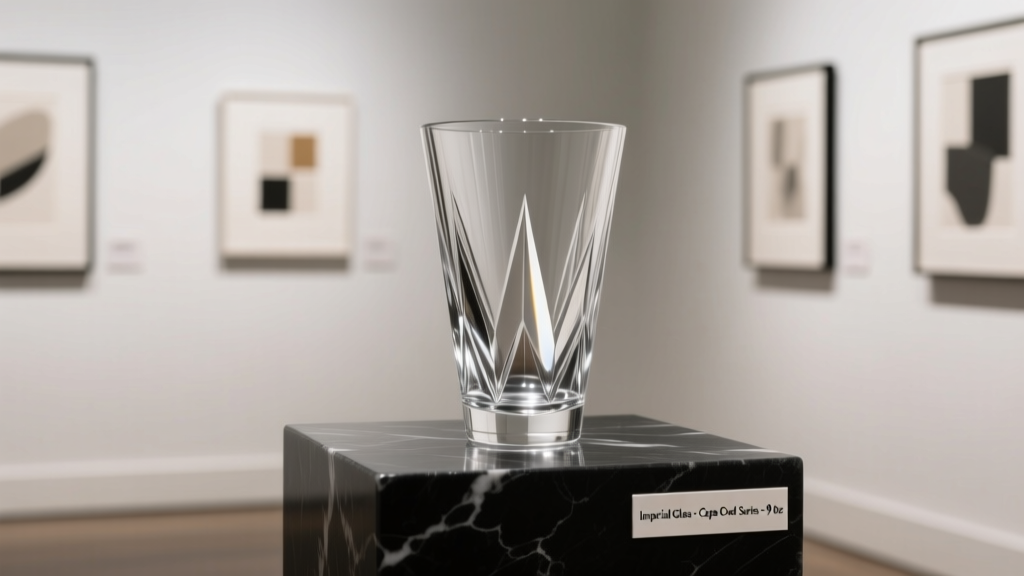
Imperial Glass Cape Cod Goblet (9 oz): Authentication, Market Value, and Collectibility Analysis

John J. Parry: The Forgotten American Lithographer and His Enduring Print Legacy

The P. Fornasetti 'Guitar' Bentwood Chair: Authentication, Provenance, and Market Analysis of a Mid-Century Icon
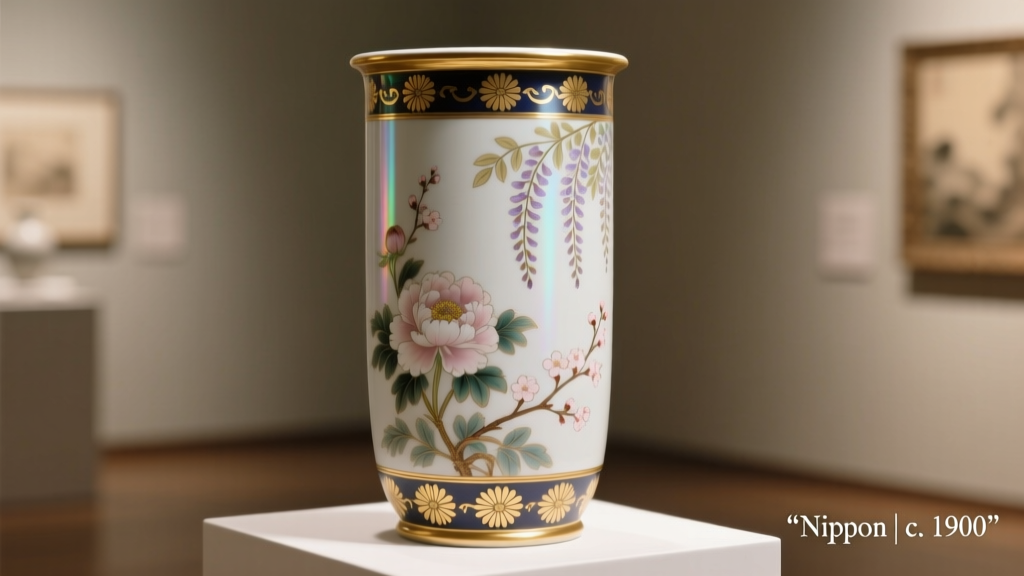
Nippon Vase with Floral Medallions: Authentication, Provenance, and Market Analysis of a Cylindrical Export Piece, c. 1900 (17¾ inches)
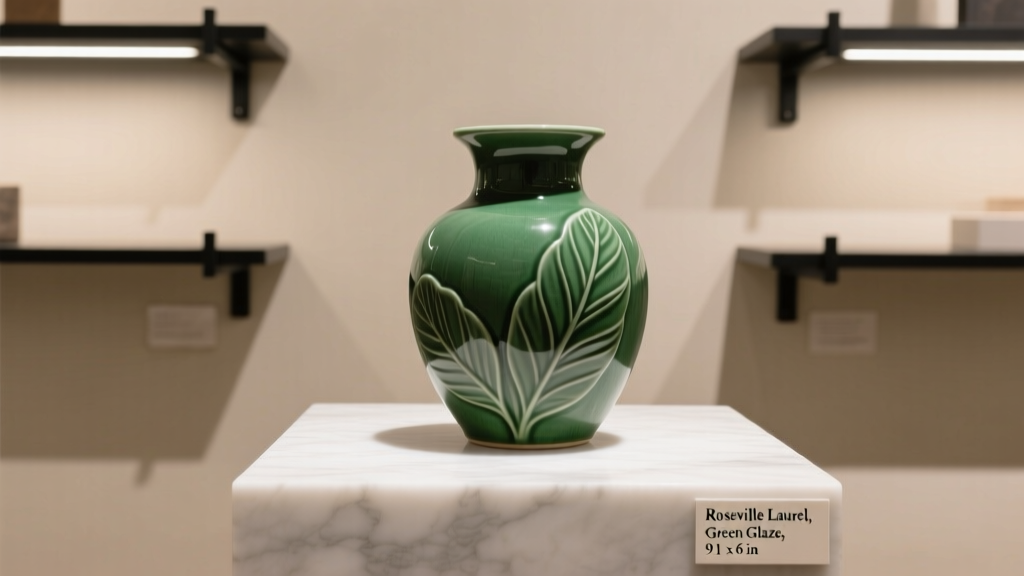
Roseville Laurel Vase in Green: Authentication, Market Value, and Historical Context of the 9¼ × 6 Inch Form