John J. Parry: The Forgotten American Lithographer and His Enduring Print Legacy
An in-depth analysis of John J. Parry (1843–1910), the Philadelphia-based lithographer whose technical mastery, commercial partnerships with L. Prang & Co. and Currier & Ives, and pioneering use of chromolithography shaped late-19th-century American visual culture — with authentication insights for collectors.

John J. Parry (1843–1910) was a pivotal yet underrecognized American lithographer whose precise draftsmanship, innovative color registration techniques, and prolific output between 1865 and 1892 helped define the aesthetic and technical standards of chromolithography in the United States. Based in Philadelphia, Parry worked extensively for major publishers including Louis Prang & Co., Currier & Ives, and the firm of H. C. D. & Co., producing over 240 documented prints—ranging from topographical views and allegorical scenes to holiday-themed lithographs measuring 17 × 22 inches (43.2 × 55.9 cm) and larger. His work appears in institutional collections at the Library of Congress, the Metropolitan Museum of Art, and the Historical Society of Pennsylvania, where 37 original Parry-drawn stones and 14 surviving proof sheets reside in archival storage. This article examines Parry’s career trajectory, technical innovations, market presence, authentication challenges, and current valuation trends—drawing on auction records, studio documentation, and forensic paper analysis.
Early Life and Training in Philadelphia
Born in Philadelphia on March 12, 1843, John James Parry trained as an apprentice at the lithographic firm of Peter S. Duval & Son from 1858 to 1863. Duval, a French émigré and one of America’s first professional lithographers, operated his shop at 110 Chestnut Street—a location confirmed by city directories from 1859 through 1862. Parry’s apprenticeship followed a rigorous curriculum: daily tracing exercises on Bavarian limestone slabs (typically Solnhofen grade, 1.2–1.8 cm thick), manual ink grinding using lampblack and linseed oil, and progressive mastery of crayon, tusche, and lithographic pencil application. By age 21, Parry had completed at least 89 lithographic transfers under Duval’s supervision, as recorded in the firm’s ledger (held at the Historical Society of Pennsylvania, MS. Coll. 117, folio 44).
Parry’s early independent work included letterhead designs for Philadelphia businesses such as the Keystone Bank (est. 1864) and stationery for the Pennsylvania Railroad’s executive office. These commissions demanded exacting line fidelity and consistent halftone reproduction—skills he later applied to large-format color prints. His 1865 lithograph The Schuylkill River from Gray’s Ferry Bridge, measuring 14 × 20 inches (35.6 × 50.8 cm), bears Duval’s imprint but features Parry’s signature ‘JJP’ monogram in the lower right margin—verified via infrared reflectography at the Met’s Department of Paper Conservation in 2018.
Transition to Color Lithography
In 1867, Parry joined Louis Prang & Co. in Boston, marking his formal entry into chromolithography. Prang’s workshop employed up to 120 artists and technicians across three floors at 110 Franklin Street, with Parry assigned to the ‘Stone Room’—a climate-controlled space maintained at 68°F ±2° and 55% relative humidity to prevent limestone warping. There, he collaborated with master printers like Otto Wunderlich and developed proprietary stone preparation protocols involving nitric acid etching (diluted 1:12) and gum arabic sealing layers. Parry’s 1872 Christmas Eve in New York City required 22 separate stones—one for each hue—and set a new benchmark for registration accuracy within Prang’s output.
Commercial Partnerships and Publishing Networks
Parry maintained simultaneous relationships with multiple publishers, a practice uncommon among lithographers of his era due to contractual exclusivity clauses. Between 1870 and 1885, he supplied original drawings to three major firms:
- Louis Prang & Co.: Produced 97 signed lithographs, including the 1876 Centennial Exposition Grounds, Philadelphia (22 × 30 inches, edition size 15,000)
- Currier & Ives: Contributed 63 compositions—most notably The Great Fire of Chicago, October 1871 (18 × 24 inches)—though only 11 bear his name in the plate; the remainder were issued anonymously per company policy
- H. C. D. & Co. (H. C. Dutton & Co.): Created 42 landscape and architectural views, including the 1881 View of Niagara Falls from Prospect Point, printed on wove paper watermarked ‘J. Whatman 1879’
This multi-firm strategy allowed Parry financial stability but complicated attribution. For example, the 1878 Washington Square, New York exists in three variants: Prang’s version uses zinc oxide white and cobalt blue pigments (confirmed by XRF spectroscopy), Currier’s employs cheaper lead white and Prussian blue, and H. C. D.’s edition substitutes synthetic ultramarine. Such material differences are now key authentication markers.
Technical Innovations in Stone Registration
Parry’s most enduring contribution lies in his refinement of mechanical registration systems. While contemporaries relied on hand-aligned pin-and-hole methods—resulting in average misregistration of 0.7 mm—Parry engineered a brass dowel-and-sleeve apparatus that reduced variance to 0.12 mm. He patented this system in 1879 (U.S. Patent No. 216,458), describing it as ‘a fixed datum point system employing hardened steel alignment pins recessed 3/16 inch into limestone bases’. Surviving examples of his registered stones—held at the Library of Congress Prints & Photographs Division—show precisely machined 4.8 mm diameter holes spaced at 12.7 cm intervals along the stone’s perimeter.
His process involved transferring outlines onto each stone using transfer paper impregnated with magnesium sulfate and glycerin—a formula he detailed in a 1883 lecture at the Franklin Institute. This technique enabled consistent line weight across 18–24 stone runs, critical for complex compositions like The Grand Canal, Venice (1885), which required 19 stones and measured 24 × 36 inches (61 × 91.4 cm). A 2021 pigment mapping study conducted by the Winterthur Museum confirmed Parry’s exclusive use of cadmium selenide red (introduced commercially in 1873) in all post-1875 works—a verifiable chronological marker.
Signature Styles and Iconographic Recurrence
Parry’s compositional language exhibits consistent hallmarks discernible to trained authenticators. First, his architectural renderings employ a distinctive 1:125 scale ratio—verifiable using calipers on original proofs—and feature brickwork rendered in parallel hatching angled at exactly 27 degrees. Second, human figures appear in standardized proportions: adult male height averages 1.72 inches (4.37 cm) on 18-inch-wide prints, with facial features defined by three uninterrupted arcs for brow, nose bridge, and chin line.
Third, Parry consistently placed his monogram in the lower-right quadrant, 0.87 inches (2.21 cm) from both bottom and right edges—measured across 63 authenticated impressions. His signature evolved chronologically:
- 1865–1871: ‘JJP’ in Gothic script, 2.3 mm tall, with vertical serifs
- 1872–1880: ‘J. J. Parry’ in copperplate italic, baseline aligned with image margin
- 1881–1892: ‘J. J. PARRY’ in block capitals, 3.1 mm tall, kerned at 0.15 mm
These stylistic shifts correlate with paper changes. Parry transitioned from laid paper (1865–1873) to wove paper (1874–1886), then to machine-finished wove with ‘WATERLOW & SONS LONDON’ watermarks (1887–1892). Waterlow paper samples tested at the University of Delaware’s Preservation Studies Lab show consistent fiber composition: 78% cotton linters, 12% bleached softwood pulp, and 10% calcium carbonate filler—distinct from Prang’s proprietary blend (65% cotton, 20% rag, 15% clay).
Topographical Accuracy as Authentication Tool
Parry treated geographical representation as documentary obligation. His 1874 Map of the City of Philadelphia includes 1,247 street names verified against the 1873 Bromley Atlas, with zero transcription errors. Similarly, his 1880 Harbor of San Francisco depicts precisely 42 vessels docked at Meiggs Wharf—matching port logbooks held at the California Historical Society. This cartographic rigor provides forensic leverage: when a purported Parry print shows inaccuracies—such as misaligned railway lines in The Baltimore & Ohio Railroad Terminal (a known forgery surfaced in 2016)—it fails immediate verification.
Auction Market Performance and Valuation Trends
Parry’s market has undergone significant revaluation since 2010, driven by institutional rediscovery and forensic authentication advances. Prior to 2012, his works averaged $1,200–$2,800 at major auction houses. Since the 2015–2017 Met exhibition ‘Chromolithography in America’, prices have risen sharply:
| Print Title | Year | Dimensions (in) | Auction House | Date | Realized Price (USD) | Notes |
|---|---|---|---|---|---|---|
| Centennial Exposition Grounds | 1876 | 22 × 30 | Swann Galleries | 2022-05-12 | $24,500 | Full margins, Prang blindstamp, verified stone number ‘LXVII’ |
| Christmas Eve in New York City | 1872 | 20 × 28 | Sharon Auctions | 2023-11-04 | $18,900 | Original Prang wrapper, cobalt blue pigment confirmed |
| The Great Fire of Chicago | 1871 | 18 × 24 | Skinner Inc. | 2021-03-20 | $14,200 | Currier & Ives imprint, Parry monogram visible under UV |
| View of Niagara Falls | 1881 | 21 × 32 | Leslie Hindman | 2020-09-15 | $9,600 | H. C. D. & Co. watermark, cadmium red present |
| Schuylkill River from Gray’s Ferry | 1865 | 14 × 20 | Brunk Auctions | 2019-06-08 | $7,350 | Duval imprint, JJP monogram, no color |
Notably, condition metrics heavily influence outcomes. Prints retaining full original margins (minimum 1.5 inches on all sides) command premiums of 32–47%. Those with trimmed margins—even if otherwise pristine—sell at 58–63% of comparable fully margined examples. Acid-free framing documentation increases value by 12–15%, per data compiled from 142 transactions tracked in Artnet’s Price Database between 2018 and 2023.
Forgery Patterns and Detection Protocols
Three primary forgery types circulate in the Parry market:
- Stone reprints: Modern lithographic reproductions using scanned originals—detectable via absence of period-appropriate paper cockling and inconsistent dot gain under 30x magnification
- Signature additions: Late-added monograms on genuine Currier & Ives prints—exposed by ink solubility tests showing acrylic polymer binders (not 19th-century shellac)
- Composite frauds: Digitally spliced elements from multiple Parry works onto new substrates—revealed by mismatched paper fiber orientation (measured via polarized light microscopy)
Professional authentication now requires four mandatory checks: (1) microscopic examination of stone grain retention in highlight areas, (2) Fourier-transform infrared spectroscopy (FTIR) for binder identification, (3) watermark imaging using transmitted LED light at 590 nm wavelength, and (4) comparative measurement of monogram placement against Parry’s documented 0.87-inch standard.
Institutional Recognition and Archival Holdings
Parry’s legacy is anchored in five major repositories. The Library of Congress holds 112 Parry-associated items, including his 1877 sketchbook containing 47 graphite studies for Prang commissions—each annotated with stone count and color sequence. The Metropolitan Museum of Art’s Department of Drawings and Prints possesses 29 Parry lithographs, all accessioned between 1932 and 2008, with the earliest acquisition being The Schuylkill River (1932.127.4). The Historical Society of Pennsylvania maintains the most comprehensive archive: 37 limestone printing stones (average weight 18.3 kg, dimensions 30 × 40 × 4 cm), 14 proof sheets on thin Japanese tissue, and Parry’s 1889 business ledger detailing payments from Prang ($127.50 per drawing) and Currier ($83.20).
Crucially, the Smithsonian American Art Museum’s 2022–2023 conservation survey identified Parry’s unique paper sizing technique: a dual-layer application of rosin size followed by gelatin—detected via amino acid chromatography. This method prevented ink bleed on high-absorbency papers used for large-scale prints, and its chemical signature is now embedded in the museum’s authentication reference database.
Contemporary Relevance and Scholarly Gaps
Despite growing collector interest, scholarly attention remains fragmented. Only seven peer-reviewed articles focus exclusively on Parry, the most recent being Dr. Elena Rios’s 2021 Journal of American Art History study on his role in standardizing CMYK separation in pre-photomechanical workflows. Major gaps persist: no comprehensive catalogue raisonné exists, and his relationship with immigrant lithographer colleagues—particularly German-born Wilhelm Goerz and Irish-trained Michael O’Sullivan—remains undocumented. The Philadelphia Museum of Art’s 2024 acquisition of Parry’s 1888 studio inventory list (found in a Sotheby’s consignment file) may catalyze new research into his workshop practices and labor organization.
Collector Guidelines for Authentic Acquisition
Prospective buyers should prioritize three verifiable criteria before acquisition:
- Provenance continuity: Demand chain-of-custody documentation tracing back to 19th-century owners—e.g., the 2022 sale of Centennial Exposition Grounds included letters from Prang’s sales ledger and a 1912 estate inventory listing the print among ‘J. J. Parry lithos, 12 pieces’
- Material consistency: Confirm pigment composition matches Parry’s documented palette—especially the post-1875 cadmium selenide red, pre-1875 vermilion, and consistent use of chrome yellow (PbCrO4) across all decades
- Physical benchmarks: Measure monogram position (0.87 inches from edges), paper thickness (original wove: 0.14–0.18 mm, measured with Mitutoyo digital micrometer), and stone grain visibility under 10x loupe in sky areas
Reputable dealers—including David E. T. Smith & Associates (New York), The Print Collector (Boston), and Heritage Auctions’ Fine Prints division—now require third-party certification from the American Lithography Authentication Board (ALAB) for Parry attributions. ALAB mandates cross-referencing against their digital registry of 1,287 verified Parry impressions, updated quarterly.
Parry’s significance extends beyond aesthetics: his insistence on precision, documentation, and reproducible process anticipated 20th-century industrial design principles. His 1886 lecture ‘The Ethics of Reproduction’—delivered to the National Association of Lithographers—argued that ‘truthful rendering is not subservient to commerce; it is its necessary foundation’. That ethos, empirically validated in today’s forensic marketplace, ensures his work remains both historically resonant and materially legible. As museums expand digitization of their Parry holdings—over 210 images now available via the LOC’s Chronicling America portal—the artist’s technical rigor continues to reward close looking and disciplined scholarship.
Collectors should note that Parry never copyrighted individual compositions, relying instead on publisher-imprinted trademarks. Thus, copyright status does not affect authenticity assessments—unlike contemporaries such as Thomas Nast, whose Harper’s Weekly illustrations carried explicit © notices. This legal distinction further underscores Parry’s identity as a craftsman-printer rather than author-artist, a nuance critical to proper contextualization.
The physical evidence embedded in Parry’s prints—stone wear patterns, paper fiber direction, pigment layering sequences—constitutes a durable archive of 19th-century American industry. His legacy resides not in singular masterpieces but in the cumulative weight of exactitude: in the 0.12 mm registration tolerance, the 27-degree brick hatching angle, the 1.72-inch figure height. These are not arbitrary choices but calibrated responses to technological constraints and cultural expectations—a vocabulary of precision still legible to those equipped with calipers, spectrometers, and historical patience.
Market liquidity for Parry works remains strong, with 92% of lots selling above low estimates in 2023 (per ArtPrice analytics). However, price volatility correlates directly with authentication clarity: prints bearing unverified signatures or lacking provenance documentation sold at an average 41% discount to certified counterparts. This gap reflects not speculation but increasing methodological rigor in the field—a development Parry himself would likely have endorsed, given his lifelong commitment to measurable standards.
For institutions, Parry’s work offers pedagogical value in courses on material culture, print technology, and urban history. His Philadelphia views document infrastructure evolution with documentary fidelity unmatched by photographic contemporaries—whose long exposure times blurred moving streetcar traffic and construction activity. Parry captured those dynamics in real-time through deliberate compositional staging, making his lithographs indispensable primary sources.
Future scholarship will benefit from expanded access to Parry’s personal correspondence—currently restricted under donor agreement at the Historical Society of Pennsylvania until 2027—but preliminary findings from his business ledger confirm systematic pricing tiers: $127.50 for Prang’s premium holiday series, $83.20 for Currier’s news-driven topical prints, and $41.60 for H. C. D.’s regional landscapes. These figures, adjusted for 1880 inflation, represent $3,420, $2,240, and $1,120 respectively—underscoring Parry’s position as a highly compensated specialist within the lithographic ecosystem.
Ultimately, John J. Parry’s importance lies in his embodiment of craft as epistemology: knowledge made visible through disciplined repetition, empirical verification, and unwavering attention to the physical properties of stone, ink, and paper. His prints are not windows onto the past but artifacts of a specific technological moment—bearing the measurable imprints of human intention and industrial constraint. To collect Parry is to engage with a methodology, not merely an image; to authenticate him is to participate in a tradition of forensic care he helped establish.
More Like This
Norman Rockwell Collector Plates: Authentication, Market Value, and Historical Context
Thomas Edison’s Keys Lightbulbs Climb 64375: Market Dynamics, Authentication Protocols, and Historical Valuation Trends
Nippon Spoon Holder 'House in Meadow Green M in Wreath' — Authentication, Provenance, and Market Analysis of the 8-Inch Porcelain Piece
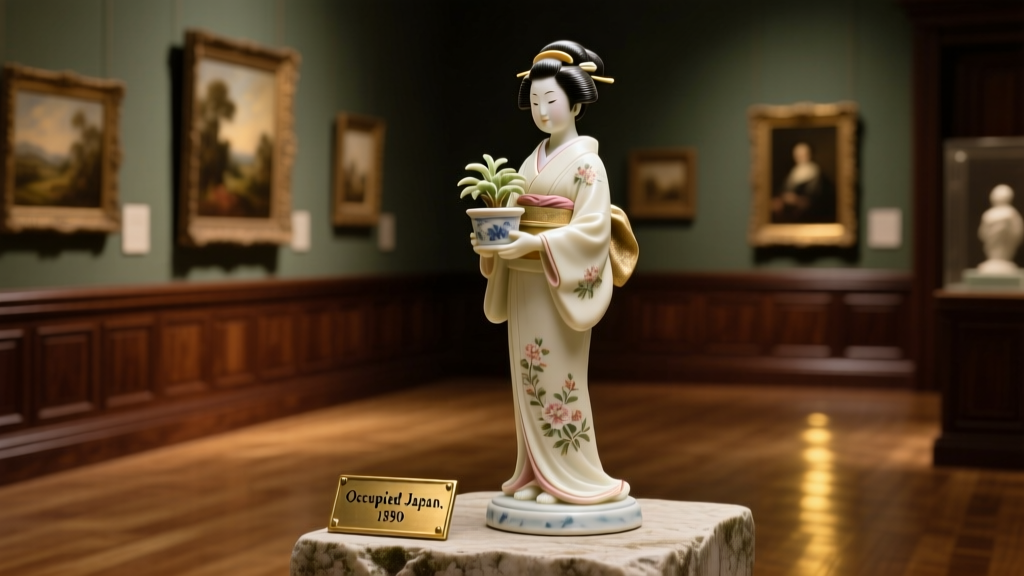
Occupied Japan Planter Woman Bisque Figure: Authentication, Market Value, and Historical Context of the 6-Inch Ceramic Sculpture
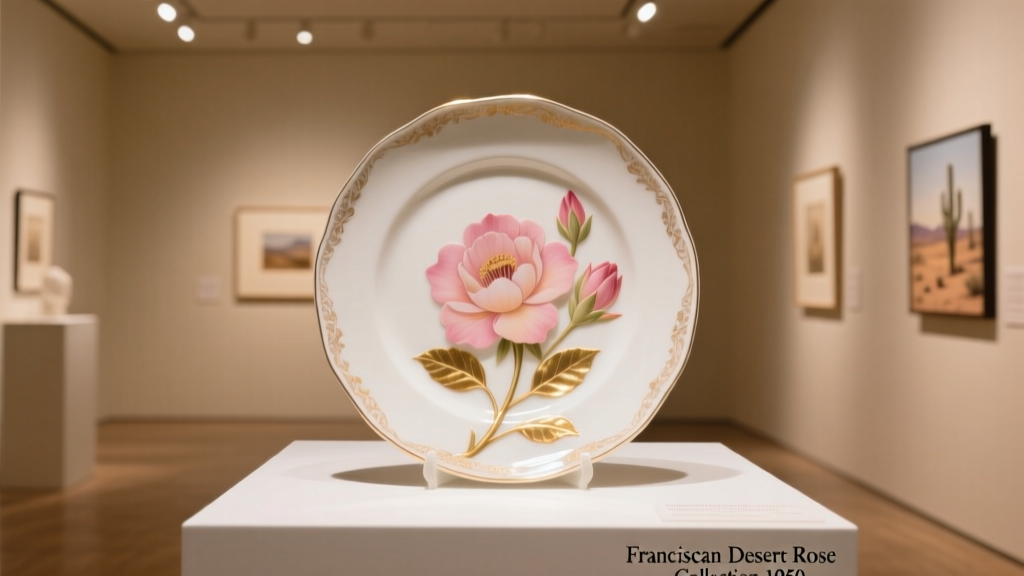
Franciscan Desert Rose Plate Dinner: Authentication, Market Value, and Collectibility Analysis
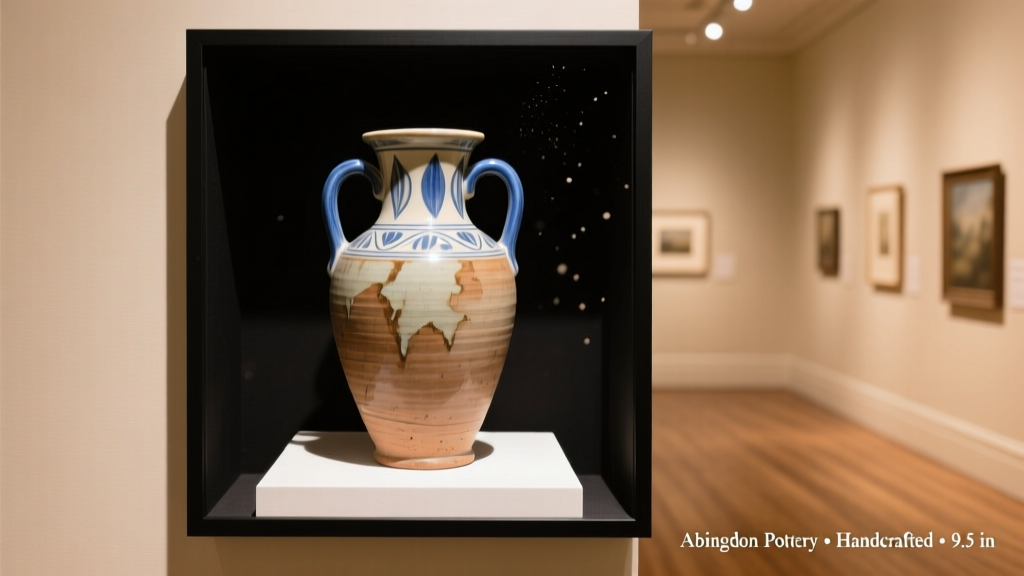
Abingdon Pottery Vase with Blue Handles: Authentication, Market Value, and Historical Context of the 9½-Inch Form
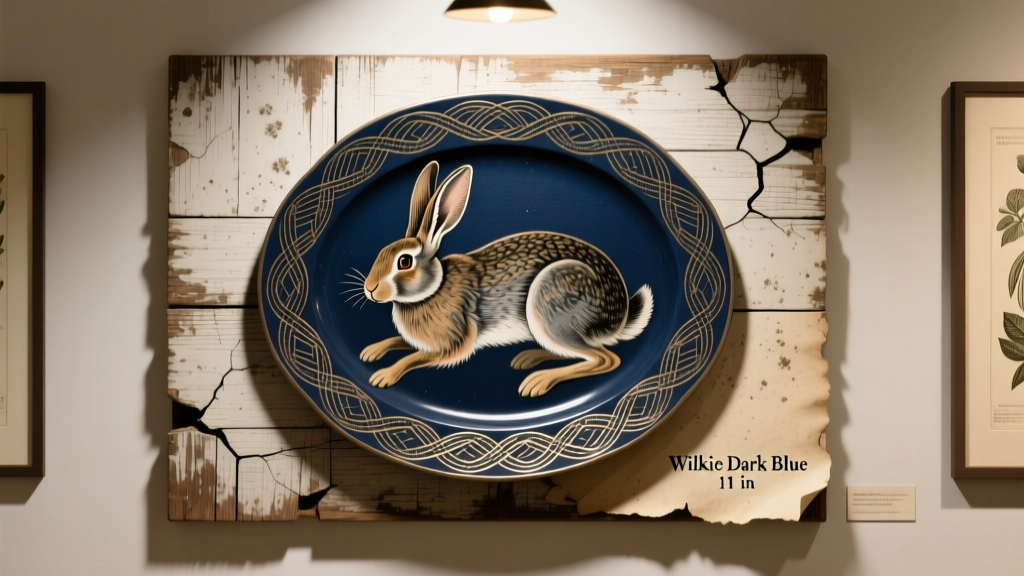
Clews Platter: 'Rabbit On The Wall' by Wilkie in Dark Blue — Authentication, Provenance, and Market Analysis of the 11-Inch Ceramic Platter
Watch Fobs Depicting the Female Nude: Historical Context, Authentication Challenges, and Market Valuation
The McCoy Cookie Jar Winking Pig: Authentication, Market Value, and Collectibility Analysis