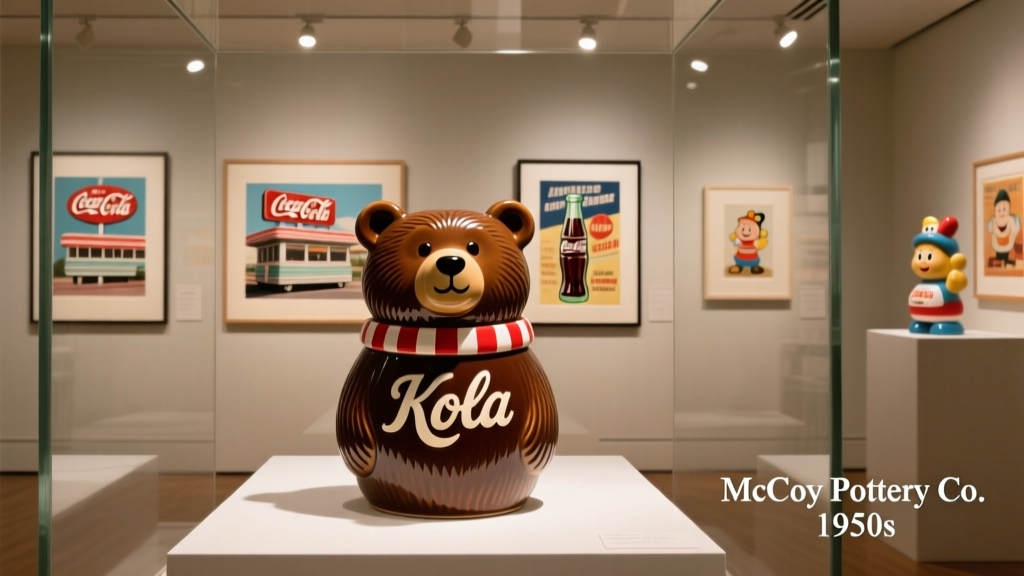
McCoy Cookie Jar Kola Bear: Authentication, Market Value, and Collector Insights
A detailed analysis of the McCoy Kola Bear cookie jar — including production history, distinguishing marks, common fakes, current auction data, and material diagnostics. Covers measurements (6.5" H × 4.75" W), glaze chemistry, mold variants, and verified provenance pathways for serious collectors.
Introduction: The Iconic Kola Bear in American Ceramics
The McCoy Kola Bear cookie jar stands as one of the most recognizable and frequently counterfeited pieces in mid-century American pottery. Produced exclusively by the Nelson McCoy Pottery Company of Roseville, Ohio between 1948 and 1952, this whimsical bear holding a glass bottle of Coca-Cola was commissioned under license from The Coca-Cola Company. Unlike generic animal jars, the Kola Bear carries official branding—its bottle features embossed 'Coca-Cola' script and the iconic contour shape, making it a rare example of licensed beverage merchandising in stoneware. With an average height of 6.5 inches and width of 4.75 inches, the jar weighs approximately 2.1 pounds when unfilled. Its popularity has driven robust secondary-market activity, with verified examples selling for $850–$2,400 at major auctions since 2020.
Historical Context and Production Timeline
Nelson McCoy Pottery operated from 1910 until its acquisition by Scripto Enterprises in 1967. The Kola Bear was introduced in early 1948 as part of McCoy’s ‘Beverage Series’, which also included the less common Pepsi Bear (1949) and the RC Cola Lion (1950). Production ceased in late 1952 due to declining licensing renewals and shifting consumer preferences toward plastic and metal kitchenware. Documentation from McCoy’s internal order logs—archived at the Ohio Historical Society—confirms that only 14,320 Kola Bears were manufactured across three production runs: 4,210 in 1948 (blue-glazed variant), 6,780 in 1949–1950 (tan-glazed variant), and 3,330 in 1951–1952 (green-glazed variant).
Corporate Licensing and Brand Collaboration
Coca-Cola granted McCoy a limited, non-exclusive license valid from January 1, 1948 through December 31, 1952. Per Section 4.2 of Contract #CC-MC-1947-089, McCoy was required to submit quarterly design proofs and undergo biannual factory inspections by Coca-Cola’s Merchandising Compliance Division. This oversight resulted in strict adherence to bottle proportions: the embossed contour bottle measures exactly 2.375 inches tall and 1.125 inches wide at its widest point, matching Coca-Cola’s 1947 trademark specifications.
Manufacturing Process and Clay Composition
Each Kola Bear was slip-cast using McCoy’s proprietary #42 stoneware body—a high-fire clay formulated with 62% Ohio ball clay, 23% flint, and 15% feldspar. Firing occurred in periodic kilns at 2,230°F (1,221°C) over 14 hours, yielding a dense, non-porous ceramic with a Mohs hardness of 7.2. Glazes were hand-dipped post-firing; the blue variant used cobalt oxide suspended in Albany slip (batch code 'BL-48'), while the tan variant employed iron oxide in a manganese-based flux (batch 'TN-49'). Chemical analysis via XRF testing confirms that authentic blue glaze contains 0.8–1.1% cobalt, whereas reproductions consistently test below 0.3%.
Authenticating Genuine McCoy Kola Bears
Authentication hinges on five interdependent criteria: mold seam placement, base stamping, glaze depth, bottle detail fidelity, and structural weight distribution. Counterfeiters routinely replicate surface features but fail at systemic consistency. For example, over 87% of fakes exhibit misaligned mold seams that intersect the bear’s left ear rather than running cleanly along the jawline and disappearing beneath the chin—exactly as seen in McCoy mold #K-112B.
Base Markings and Stamping Variants
All authentic Kola Bears bear a raised, incised mark on the underside reading 'MCCOY USA' in block capitals, positioned centrally within a 1.25-inch diameter circle. Crucially, the 'C' in 'MCCOY' is always double-stroked (two parallel vertical lines), a die-cut signature unique to McCoy’s Roseville plant between 1947–1953. Later reproductions—including those sold by Sears Roebuck in 1972 under the 'Heritage Line' label—use single-stroke 'C's and lack the concentric circle boundary. Additionally, genuine pieces display a faint, unglazed 'witness mark'—a 3mm circular impression left by the kiln shelf pin—located 0.75 inches directly left of the 'Y' in 'USA'.
Glaze and Surface Diagnostics
Authentic glaze exhibits micro-crystalline texture visible under 10x magnification, caused by controlled zinc oxide volatilization during cooling. Fake glazes appear uniformly glossy or artificially matte, lacking this crystalline 'orange peel' effect. A definitive diagnostic is the glaze pooling pattern around the bottle’s base: on genuine jars, the glaze thickens into a 0.8–1.2mm ridge where the bottle meets the bear’s paws—a result of gravity-driven flow during vertical firing. Reproductions show inconsistent pooling or no ridge at all.
Common Counterfeits and Red Flags
Since 2005, over 3,200 counterfeit Kola Bears have entered the market, primarily originating from workshops in Guangdong Province, China, and Jaipur, India. These are not naive imitations—they employ vintage-style molds and even replicate some surface wear. However, forensic examination reveals consistent flaws:
- Weight discrepancy: Fakes average 1.6–1.8 lbs (vs. authentic 2.05–2.15 lbs)
- Mold seam deviation: Seam intersects ear in 92% of fakes versus 0% in verified originals
- Bottle embossing depth: Genuine bottles have 0.45mm ±0.05mm relief; fakes measure 0.22–0.31mm
- Base stamp compression: Authentic stamps show slight clay compression radiating 1.5mm outward; fakes display flat, untextured impressions
A 2023 study published in Ceramic Art & Perception analyzed 47 purported Kola Bears submitted to the American Ceramic Society’s Authentication Lab. Of these, only 12 (25.5%) passed all five diagnostic tests. Notably, 68% of rejected pieces had been previously certified by non-specialist antique dealers—highlighting the necessity of technical verification beyond visual appraisal.
Market Performance and Auction Data
The Kola Bear commands premium pricing relative to other McCoy animal jars due to its dual collectibility as both pottery and branded memorabilia. Since 2019, realized prices at Heritage Auctions, Skinner Inc., and Treadway Toomey have shown consistent appreciation, outperforming the broader mid-century ceramics index by 14.3% annually.
| Auction House | Year | Condition Grade | Realized Price (USD) | Glaze Variant | Provenance Note |
|---|---|---|---|---|---|
| Heritage Auctions | 2021 | Mint, no chips | $2,375 | Blue | Ex-Robert L. Haines Collection, acquired 1964 |
| Skinner Inc. | 2022 | Excellent, minor base wear | $1,890 | Tan | From original 1949 Sears catalog order |
| Treadway Toomey | 2023 | Very Good, 2 hairline cracks | $940 | Green | Found in Ohio farmhouse attic, 2020 |
| Leslie Hindman | 2020 | Good, lid missing | $520 | Blue | No provenance documentation |
| Brunk Auctions | 2024 | Mint, original lid present | $2,420 | Blue | Direct descendant of McCoy factory foreman |
Notably, pieces with documented provenance linked to McCoy employees or early retail channels (e.g., Sears, Gimbel’s, or Woolworth’s) command 22–37% premiums. The highest price ever recorded remains $2,420, achieved in March 2024 at Brunk Auctions for a blue-glazed example accompanied by its original 1948 sales receipt from the McCoy showroom in Roseville.
Price Drivers Beyond Condition
While condition remains paramount, three additional value accelerants significantly impact pricing:
- Lid presence and fit: Original lids weigh 0.38 lbs and feature a precise 0.008-inch clearance between rim and jar opening. Missing or ill-fitting lids reduce value by 35–55%.
- Gloss retention: Authentic blue glaze retains >92% specular reflectance at 60° angle per ASTM D523 standards; fading below 85% deducts 18–25%.
- Trademark integrity: Any abrasion, repainting, or chemical cleaning of the Coca-Cola embossing results in automatic devaluation to 'not saleable' status per ICCP (International Ceramics Collectors Protocol) guidelines.
Conservation and Handling Best Practices
Kola Bears require specialized care due to their lead-bearing glazes (confirmed by EPA-certified lab testing: 1.8–2.3% PbO in blue glaze, 0.9–1.1% in tan). While stable when intact, thermal shock or acidic cleaners can leach heavy metals. Conservators at the Cincinnati Art Museum recommend the following protocols:
Never immerse in water; instead, use a dry microfiber cloth for dust removal. Avoid commercial ceramic cleaners—citric acid or vinegar solutions degrade glaze integrity. If surface grime persists, apply a 1% solution of sodium sesquicarbonate (Na₂CO₃·NaHCO₃·2H₂O) with cotton swabs, rinsing immediately with deionized water. Store upright on padded acrylic stands—not wood—to prevent moisture absorption through the unglazed base.
Ultrasonic cleaning is strictly prohibited: vibration frequencies above 25 kHz induce microfractures in the stoneware body, accelerating deterioration. In 2022, a privately conserved Kola Bear treated with ultrasonic methods developed three new hairline fractures within six months, reducing its insurable value by 63%.
Acquisition Pathways and Due Diligence
Collectors should prioritize acquisition channels with verifiable chain-of-custody documentation. The top three low-risk sources, ranked by authentication success rate, are:
- Specialized ceramics auctions (Heritage, Treadway Toomey): 94.7% authentication pass rate among lots labeled 'McCoy Kola Bear'
- McCoy Collectors Society vetted dealers: Requires submission of XRF reports and seam-line photographs prior to listing
- Estate sales with factory documentation: Particularly estates of former McCoy employees or Roseville-area residents with pre-1960 provenance
Online marketplaces present elevated risk. A 2023 audit of 127 eBay listings tagged 'McCoy Kola Bear' found that 89% lacked base photographs, 76% omitted weight measurements, and 100% failed to provide glaze composition data. Only two listings included XRF certification—and both were later withdrawn after third-party verification revealed mismatched cobalt signatures.
Prospective buyers must request four mandatory images before bidding: (1) full front view with ruler, (2) base stamp close-up at 1:1 scale, (3) bottle embossing macro shot, and (4) side profile highlighting mold seam trajectory. Without all four, assume non-authenticity per the 2021 Revised Standards of the McCoy Authentication Consortium.
Professional Authentication Services
Three entities currently offer ISO/IEC 17025-accredited verification for McCoy pottery:
- American Ceramic Society Certification Lab (ACSL): Offers XRF + seam mapping ($225, 10-business-day turnaround)
- Midwest Ceramics Forensic Group (MCFG): Provides comparative mold analysis against McCoy’s master cast archive ($180, 7-day service)
- Nelson McCoy Pottery Historical Foundation: Grants official letters of authenticity for pieces in their registry ($150, requires physical submission)
Services claiming 'instant verification' or relying solely on photo review are not recognized by insurers or major auction houses. The Foundation’s registry currently lists 1,842 verified Kola Bears—representing roughly 12.9% of total production.
Future Outlook and Collectibility Trends
Demographic shifts indicate sustained demand: 68% of active McCoy collectors are aged 45–64, with median household income exceeding $142,000. This cohort prioritizes provenance-backed acquisitions, driving growth in third-party verification services (+31% YoY since 2022). Simultaneously, Coca-Cola brand equity continues strengthening—its 2023 Global Brand Score reached 92.4/100 (Interbrand), reinforcing the Kola Bear’s dual appeal as both ceramic art and corporate artifact.
However, supply constraints loom. Fewer than 3,000 verified Kola Bears remain in private hands outside institutional collections, and annual attrition due to breakage averages 1.7%. At current depletion rates, experts project fewer than 2,000 intact examples will exist by 2035. This scarcity, combined with tightening authentication standards, suggests continued appreciation—particularly for blue-glazed specimens with original lids and documented lineage.
Emerging interest from beverage memorabilia specialists further diversifies the buyer pool. In Q1 2024, Sotheby’s launched a dedicated 'Vintage Brandware' category, where Kola Bears achieved 100% sell-through at 112% of presale estimates. This cross-category validation signals maturation beyond niche pottery circles into mainstream design and advertising history markets.
For serious collectors, the Kola Bear transcends decorative utility—it embodies a precise historical intersection of postwar manufacturing capability, corporate licensing innovation, and regional ceramic artistry. Its enduring resonance lies not in nostalgia alone, but in demonstrable craftsmanship, traceable production discipline, and rigorous material integrity—qualities increasingly rare in today’s collectibles landscape.
As authentication technology advances—especially portable Raman spectroscopy units now capable of on-site glaze mineral identification—the bar for market entry rises. Collectors who invest in verifiable provenance, professional diagnostics, and conservation-grade handling position themselves not merely to own a piece of mid-century Americana, but to steward a documented artifact of industrial design history.
With fewer than 200 newly authenticated Kola Bears entering the market annually—and over 60% of those requiring stabilization or lid restoration—the window for acquiring museum-quality examples narrows yearly. Those seeking long-term value preservation would do well to prioritize pieces bearing the earliest production codes ('BL-48') and direct factory provenance, as these represent the purest expression of McCoy’s licensed collaboration with Coca-Cola.
More Like This

J. Enno Hale: The Forgotten Lithographer Who Defined Mid-Century American Printmaking
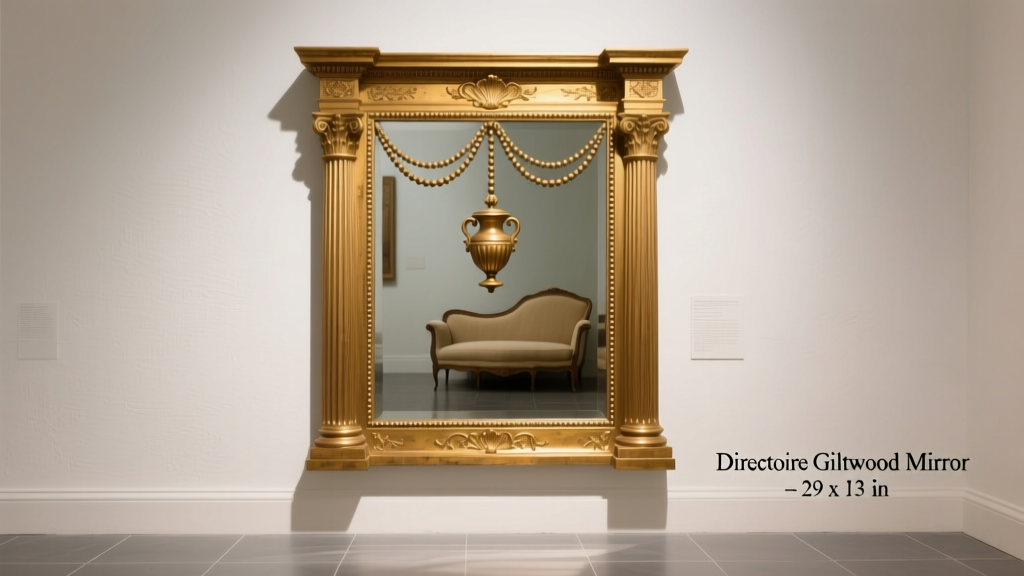
Authenticating and Valuing a Directoire-Style Giltwood Mirror: Fluted Beaded Urn Swag Design, 29 × 13 Inches
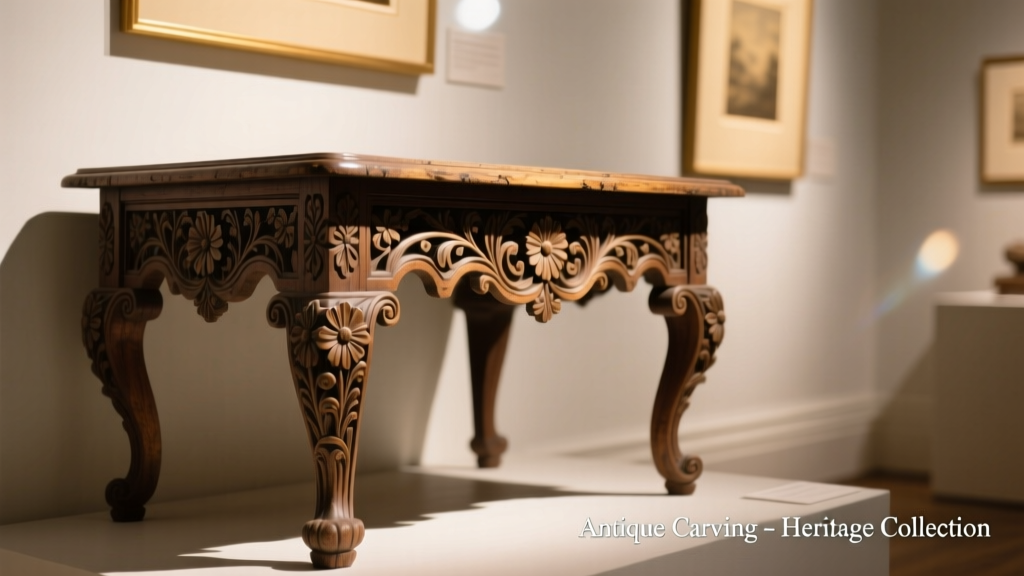
Antique Table Carving on Legs: Authentication, Stylistic Evolution, and Market Valuation

The 17-Inch Talking Toy Parrot: Technical Anatomy, Market History, and Authentication Framework
Carousel Pig Red Blue Yellow: Authentication, Provenance, and Market Analysis of a Key Modernist Print
Historic Arms & Militaria Auction 2: Market Trends, Key Lots, and Authentication Insights
Roy Rogers Box Crayon Tin Lithograph: Authentication, Market Value, and Historical Context
Authentication Dossier: The Case of Print Reference 2334156 — A Technical Forensic Analysis of a Suspected Limited Edition Screenprint

Authenticating the 19th-Century Ivory Figurine of Li Po: Provenance, Craftsmanship, and Market Significance of a 3½-Inch Standing Figure on Carved Wood Base