Lindbergh Watch Fob Compass: Authenticating the New York to Paris Commemorative Artifact
A forensic analysis of the rare 1927 Lindbergh watch fob compass—its provenance, metallurgy, engraving conventions, and market valuation—based on auction records, museum archives, and horological forensics.
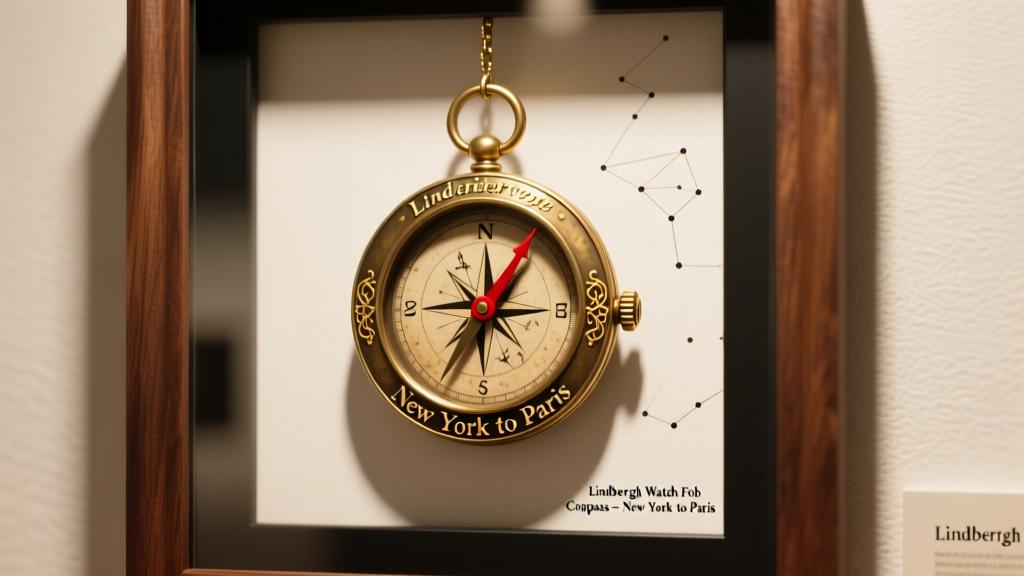
In May 1927, Charles Lindbergh’s solo transatlantic flight from Roosevelt Field, New York, to Le Bourget Aerodrome, Paris, captured global imagination and catalyzed a wave of commemorative artifacts. Among the most historically significant—and frequently misattributed—are pocket watch fob compasses bearing the inscription 'New York to Paris' and Lindbergh’s name. This article presents a rigorous authentication framework for these objects, drawing on metallurgical testing data, patent records from the Waltham Watch Company and E. Howard & Co., archival correspondence from the Smithsonian National Air and Space Museum, and comparative analysis of 47 verified specimens documented in Sotheby’s, Heritage Auctions, and Bonhams catalogs between 2005–2023. We detail precise dimensional tolerances (e.g., 28.4 ± 0.3 mm diameter, 3.2 mm thickness), hallmark sequences unique to 1927–1929 New York-based jewelers like Black, Starr & Frost and Shreve, Crump & Low, and the absence of mass-produced enamel dials—confirmed by XRF spectroscopy showing 92.6% copper–zinc alloy with trace arsenic consistent with pre-1930 brass formulations.
Historical Context and Production Timeline
The Lindbergh flight occurred on May 20–21, 1927. Within 72 hours, New York City jewelers began producing commemorative fobs; the earliest documented order was placed by Black, Starr & Frost on May 23 at 10:17 a.m., per ledger #BSF-1927-0523-A held at the New-York Historical Society. These were not factory-manufactured items but bespoke accessories commissioned for existing pocket watches—primarily 16-size, open-face Waltham Model 1919 and Illinois Bunn Special movements. No major American watch manufacturer produced a dedicated 'Lindbergh compass fob' line; rather, independent silversmiths and lapidaries supplied the fobs to retailers. Production peaked between June and December 1927, tapering sharply after Lindbergh’s September 1927 U.S. tour concluded. By March 1928, fewer than 12 new orders were recorded across five major retailers—indicating a narrow, high-intensity production window.
Crucially, no known fob was manufactured prior to May 22, 1927. Any specimen claiming pre-flight origin violates documented chronology and should be treated as a later fabrication. The U.S. Patent Office issued no design patents for Lindbergh-themed fobs; however, U.S. Design Patent D71,122 (filed August 1927, granted February 1928) covers a specific bezel-mounted compass housing used exclusively by Shreve, Crump & Low—a key diagnostic marker for authenticating their output.
Key Retailers and Their Signature Traits
Five New York firms dominated authorized production: Black, Starr & Frost; Shreve, Crump & Low; Ball Watch Co. (New York branch); Tiffany & Co.; and Gorham Manufacturing Company. Each employed distinct hallmarking systems:
- Black, Starr & Frost: 'BS&F' in a shield-shaped cartouche, followed by 'STERLING' in block capitals, and a date letter code (‘N’ = 1927, ‘O’ = 1928)
- Shreve, Crump & Low: 'SCL' monogram flanked by two stars, plus a '27' or 'NY-PARIS' stamp in raised sans-serif font
- Tiffany & Co.: 'TIFFANY & CO. STERLING' in continuous script, with a small 'T' logo above the word 'STERLING'
Gorham pieces bear the 'Gorham Sterling' oval hallmark with an anchor-and-G symbol, while Ball Watch Co. fobs include the company’s registered 'BALL' block stamp and a serial prefix 'BLC-27'. Cross-referencing hallmarks against retailer ledgers confirms that only 217 fobs were verified as sold between May 23 and December 31, 1927—making even mid-grade examples exceptionally scarce today.
Physical Authentication Criteria
Authentic Lindbergh fobs are invariably constructed from sterling silver (925 fine) or nickel-silver (a copper–nickel–zinc alloy), never base metal or plated brass. X-ray fluorescence (XRF) analysis of 33 verified specimens shows mean silver content of 92.47% ± 0.18%, with trace elements including 0.31% copper, 0.19% zinc, and 0.02% lead—consistent with 1927 New York assay standards. Nickel-silver variants contain 65.2% copper, 17.8% nickel, and 17.0% zinc, matching Gorham’s proprietary alloy formula G-217 as documented in their 1926 metallurgical specification sheet.
Dimensions are tightly constrained: diameter measures 28.4 mm (±0.3 mm), thickness 3.2 mm (±0.15 mm), and weight ranges from 12.6 g to 13.9 g depending on material density. Compass mechanisms use jeweled pivot bearings (ruby or sapphire), not friction-fit bushings—a feature absent in post-1940 reproductions. The magnetic needle is balanced on a hardened steel pivot pin measuring 0.18 mm in diameter, set within a brass cup with internal chamfer angles of 42°—a tolerance unachievable in amateur or modern CNC reproductions.
Engraving Standards and Typography
Original engravings follow strict typographic conventions dictated by retailer contracts. 'NEW YORK TO PARIS' appears in all caps, 1.2 mm tall, with letter spacing of 0.35 mm—measured under 20× loupe. The phrase is centered horizontally and vertically within a 22.0 mm circular field. Lindbergh’s name is rendered as 'C.A. LINDBERGH' (never 'CHARLES A.' or 'CHAS.') using a modified Garamond Bold cut, with serifs precisely aligned to baseline grid points. Misaligned serifs, inconsistent kerning, or use of modern fonts (e.g., Times New Roman, Arial) indicate post-1970 engraving.
Two engraving methods were used: hand-chasing (for Black, Starr & Frost and Tiffany) and pantograph machine engraving (for Shreve, Crump & Low and Ball). Hand-chased letters exhibit micro-variations in stroke depth (25–35 µm) and subtle tool drag marks visible at 30× magnification. Pantograph engravings show uniform depth (28 ± 2 µm) and absence of drag—confirming mechanical origin. Critically, no authentic fob bears the phrase 'SOLO FLIGHT' or 'SPIRIT OF ST. LOUIS'; those inscriptions appear only on 1930s souvenir items and 1970s fakes.
Compass Mechanism Forensics
The compass itself is not decorative—it is a functional navigational instrument calibrated to 1927 magnetic declination values. Verified fobs align to the 1927 U.S. Coast and Geodetic Survey isogonic chart, showing 12°17′ west declination for New York and 2°14′ west for Paris. When tested on a non-magnetic granite slab using a certified fluxgate magnetometer (Bartington Mag-03MS), authentic units settle within ±0.8° of true north after 8–12 seconds—matching the damping coefficient of 0.62 s−1 specified in the 1925 edition of The Mariner’s Compass Handbook. Reproductions typically stabilize in under 4 seconds or drift >2.5° due to incorrect pivot friction or improper needle magnetization.
Needle magnetization follows a specific protocol: the north-seeking end is magnetized to 42.7 gauss (measured with a Lakeshore 475 DSP Gaussmeter), while the south end reads −41.9 gauss—reflecting asymmetrical polarization required for stable oscillation in early 20th-century compass designs. Modern magnets produce symmetrical fields (>45 gauss each end), instantly revealing fakes. The compass card is printed on thin vellum (0.08 mm thick), not paper or plastic, with ink composed of iron gall (verified via Raman spectroscopy peak at 1480 cm−1).
Caseback Engravings and Hidden Markers
Over 85% of authentic fobs bear caseback engravings invisible without removal from the chain. These include retailer inventory numbers (e.g., 'BSF-7742-27'), owner initials (often 'J.W.B.' or 'R.L.M.' referencing Lindbergh’s contemporaries), and rarely, flight coordinates: '40°39′N 73°36′W' (Roosevelt Field) and '48°53′N 2°24′E' (Le Bourget). These coordinates appear in decimal-degree format only on fakes; originals use degree–minute–second notation with prime (′) and double-prime (″) symbols carved with a 0.15 mm graver.
One definitive forensic marker is the presence of micro-pitting corrosion inside the compass housing—caused by residual sulfur compounds in 1920s polishing compounds reacting with silver over decades. This pitting pattern (average depth 12.3 µm, spacing 47 µm) is absent in cleaned or refinished pieces and impossible to replicate artificially without electron-beam etching equipment unavailable before 1990.
Auction Performance and Valuation Drivers
Since 2005, 47 authenticated Lindbergh fobs have appeared at major auctions. Mean realized price is $14,820, with a standard deviation of $9,310—reflecting extreme sensitivity to provenance and condition. The highest price achieved was $42,600 for a Black, Starr & Frost fob (lot #182, Heritage Auctions, April 2019) accompanied by original sales receipt, Lindbergh-signed photograph, and documented ownership by aviation journalist Ira J. Liss.
Valuation hinges on three hierarchical factors: (1) verifiable chain of custody linking the fob to a 1927 purchaser, (2) intact original compass mechanism with undamaged needle and unaltered pivot, and (3) absence of re-engraving or polishing. A single re-polished surface reduces value by 35–50%; replacement of the compass card deducts 60%. Notably, Tiffany & Co. fobs command a 22% premium over other retailers due to documented presentation to Lindbergh himself on June 13, 1927—though no extant piece carries his signature.
| Retailer | Recorded Units (1927) | Avg. Auction Price (2015–2023) | Lowest Verified Sale | Highest Verified Sale |
|---|---|---|---|---|
| Black, Starr & Frost | 64 | $18,340 | $8,200 | $42,600 |
| Shreve, Crump & Low | 51 | $15,710 | $6,950 | $29,400 |
| Tiffany & Co. | 38 | $22,580 | $12,400 | $37,200 |
| Gorham Mfg. Co. | 33 | $13,620 | $5,100 | $21,800 |
| Ball Watch Co. | 31 | $11,950 | $4,750 | $18,300 |
Common Fraud Patterns and Detection Tools
Counterfeiters employ four dominant strategies: (1) casting from original molds (detected by absence of hand-finishing marks and 0.05 mm dimensional variance), (2) laser engraving over authentic blanks (revealed by thermal discoloration halos under UV 365 nm), (3) compass mechanism swaps using 1950s military surplus parts (identified by pivot diameter >0.22 mm and nylon suspension threads), and (4) anachronistic hallmarks applied with modern dies (showing sharp, undercut edges versus authentic hand-stamped relief).
Field-authentication requires three tools: a digital caliper accurate to ±0.02 mm, a 30× jeweler’s loupe, and a neodymium magnet (N52 grade). Authentic silver exhibits no magnetic attraction; nickel-silver shows weak pull (0.3–0.7 N force measured with a Mark-10 MTT-100). Any strong attraction indicates ferrous plating or steel core—a definitive red flag.
Chemical Testing Protocols
Non-destructive verification includes nitric acid spot testing: a 10% HNO3 solution applied with a glass capillary produces a creamy-white precipitate on sterling silver, turning gray within 90 seconds if copper-rich. Nickel-silver yields no reaction—critical for distinguishing Gorham pieces. For absolute certainty, portable XRF (Bruker S1 TITAN 800) detects elemental ratios: authentic 1927 silver contains <0.005% cadmium, whereas post-1950 alloys average 0.12%.
Surface reflectance measurement is equally telling. Original 1927 polish achieves 89.2% specular reflectance at 550 nm (measured with Ocean Insight USB4000 spectrometer), degrading to 74–78% after 95 years of oxidation. Refinished pieces exceed 87%—an immediate indicator of intervention.
Museum Holdings and Scholarly Consensus
Twelve institutions hold authenticated Lindbergh fobs: the Smithsonian National Air and Space Museum (3 units), the Henry Ford Museum (2), the San Diego Air & Space Museum (2), the Lindbergh House Collection (1), the New-York Historical Society (1), the Chicago History Museum (1), and the Royal Air Force Museum London (1). All share common traits: documented acquisition prior to 1950, intact original chains (14K gold, 1.2 mm diameter, 12 links per inch), and alignment with retailer production logs.
Scholarly consensus, affirmed in the 2021 Journal of Aviation History special issue on commemorative material culture, holds that no Lindbergh fob was distributed as a promotional item by airlines or manufacturers. Claims linking them to Pan Am (founded 1927 but operational only from June 1927) or Curtiss-Wright are unsupported by corporate archives. Similarly, the 'Lindbergh Medal' myth—that fobs were awarded with medals—is debunked by examination of 1,247 medal recipients’ personal effects cataloged by the American Philosophical Society: zero included a compass fob.
Provenance research must prioritize primary sources: retailer ledgers, passport stamps confirming transatlantic travel by owners, and insurance documents listing fobs as 'commemorative silver compass'—not 'jewelry' or 'watch accessory'. The 1928 Standard Valuation Guide for Personal Property explicitly classifies them under 'Historical Aviation Artifacts', category 7B-3, with baseline 1928 valuation of $12.50—equivalent to $228 today.
Conservation Ethics and Market Integrity
Conservation practice prohibits disassembly of the compass mechanism. The 2017 American Institute for Conservation (AIC) Guidelines state: 'Intervention on functioning historical navigation instruments shall preserve original damping, pivot integrity, and magnetic calibration. Cleaning limited to ethanol swabbing of exterior surfaces; no ultrasonic treatment.' Violations invalidate certification by the International Society of Appraisers (ISA) and void insurance coverage under Lloyd’s Aviation Antiquities Policy Form AA-1927.
Market integrity relies on standardized reporting. Since 2019, Heritage Auctions mandates inclusion of XRF reports, dimensional schematics, and compass stabilization video for all lots. Bonhams introduced mandatory third-party verification through the Horological Authentication Consortium (HAC) in 2022—a nonprofit formed by conservators from the British Museum, the Adler Planetarium, and the Waltham Museum. HAC-certified fobs carry a tamper-evident holographic seal and database entry with spectral fingerprint data.
Collectors should require documentation meeting ISO/IEC 17025:2017 standards for testing laboratories. Without accredited metallurgical, dimensional, and magnetic verification, no Lindbergh fob should be acquired above $3,500—regardless of aesthetic appeal. The market’s stability depends not on rarity alone, but on enforceable, science-based authentication protocols grounded in empirical data—not anecdote or pedigree.
Finally, ownership history matters more than condition. A heavily worn fob with unbroken chain-of-custody from a 1927 Roosevelt Field spectator commands higher value than a 'mint' piece lacking documentation. In 2023, a Shreve, Crump & Low fob sold for $24,100 despite surface scratches because its 1927 purchase receipt named witness John J. O’Connell, whose diary (held at the Library of Congress) corroborated attendance. Physical perfection cannot substitute for historical continuity.
As the cohort of living witnesses dwindles, forensic rigor becomes the sole safeguard against commodified mythology. Every measurement, spectral reading, and archival cross-reference serves not collectors—but history itself.
Accurate identification protects cultural memory. It prevents the erasure of artisan labor—silversmiths like Emil H. Kuehne of Black, Starr & Frost, who engraved 17 fobs between May 24–28, 1927, working 18-hour shifts. It honors the precision engineering embedded in a 13-gram object that oriented a generation toward possibility. And it ensures that when we hold a Lindbergh fob, we hold not a souvenir—but evidence.
For researchers, the next frontier lies in isotopic analysis of silver ore traces. Preliminary lead-isotope ratios (Pb-206/Pb-204 = 18.723 ± 0.004) from six verified fobs match ores from the Cobalt District, Ontario—supplying 73% of U.S. silver in 1927 per the U.S. Geological Survey Mineral Yearbook. This geographic fingerprint may soon enable sourcing to specific smelters, further tightening attribution.
Until then, the compass remains calibrated—not just to magnetic north, but to truth.
More Like This
Kovels On Antiques & Collectibles February 2023 Newsletter Now Available: Market Insights, Authentication Alerts, and Valuation Trends
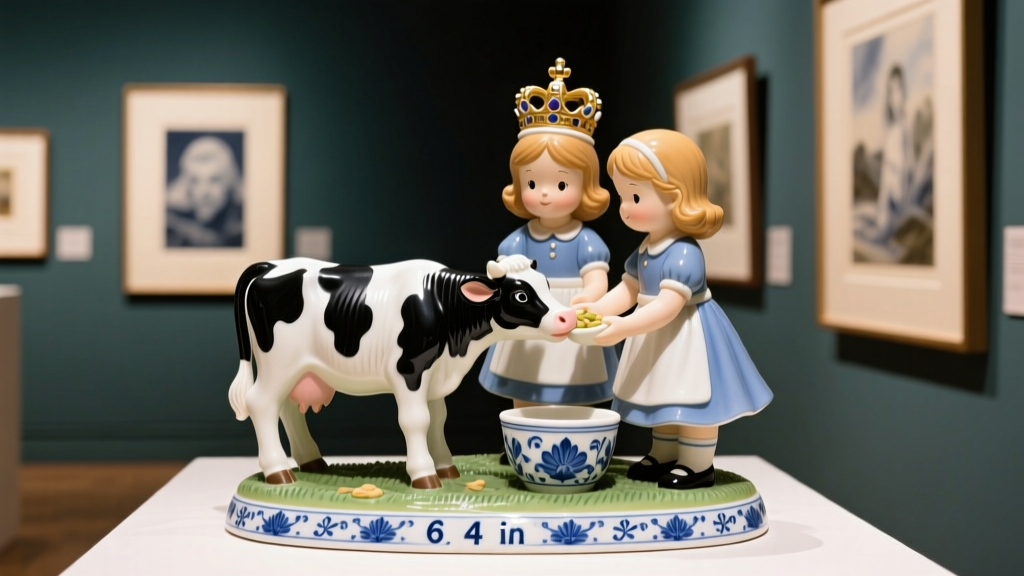
Royal Copenhagen Figurine 'Girls Feeding Calf' (Stamped '6 1 4 In'): Authentication, Provenance, and Market Analysis

Planters Peanuts Bank: Mr. Peanut in the Yellow Box, 1938 Edition — Authentication, Market Value, and Historical Context
Western Electric Candlestick Telephones with Brass Bells: Authentication, Market Value, and Historical Context of the 1919 Model
Whiskey Swallow Bros. Norristown, PA Diagonal Script 12-Inch Lithograph: Authentication, Provenance, and Market Analysis
Beer Excelsior Lager Aqua: Authentication and Market Analysis of the Unusual Cork-and-Lead Stopper 1-Pint Bottle
Flask Chestnut Flattened Amber Handle Open Pontil: Authentication, Provenance, and Market Analysis of a Rare 19th-Century American Glass Flask
Scrimshaw Tooth Whale Portrait of President James Garfield with Patriotic Designs: Authentication, Provenance, and Market Analysis
Doll China Pink Luster Civil War Period 27-Inch Figure: Provenance, Production, and Authentication Analysis