Chicago Terra Cotta Works: Architectural Legacy, Manufacturing Precision, and Authentication Challenges
An in-depth analysis of Chicago Terra Cotta Works—its historical significance, production methods, material specifications, surviving installations, and the forensic authentication protocols required to verify its originality in today’s art and architectural conservation markets.
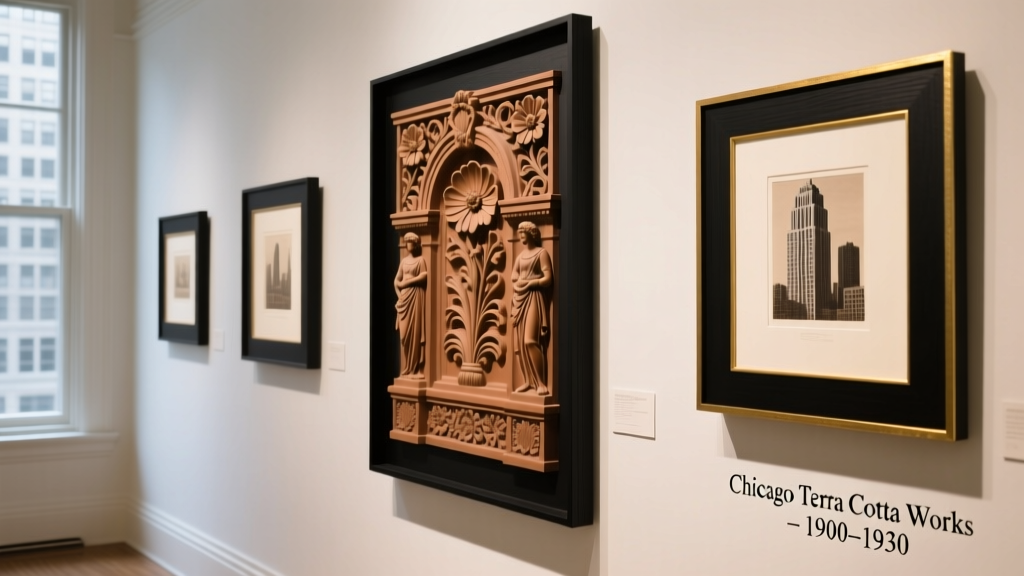
Founding and Historical Context
Chicago Terra Cotta Works (CTCW) was established in 1882 at 401–415 West 17th Street in Chicago’s South Loop district, operating continuously until its closure in 1932. Founded by brothers William and John H. Kinsella—a pair of Irish immigrant stonemasons with prior experience at the Boston Terra Cotta Company—the firm emerged during the city’s post-Great Fire reconstruction boom. Unlike competitors such as Northwestern Terra Cotta Company (founded 1877) or the later-established Midland Terra Cotta Corporation (1911), CTCW distinguished itself through early adoption of high-temperature kiln technology and rigorous clay sourcing protocols. Its timing coincided with the rise of the Chicago School of Architecture, enabling direct collaboration with firms including Holabird & Roche, Burnham & Root, and later, Graham, Anderson, Probst & White.
By 1886, CTCW had expanded its facility to occupy nearly two city blocks, installing three downdraft tunnel kilns capable of firing at peak temperatures of 1,180°C—significantly hotter than the 1,050°C average used by regional peers. This thermal advantage enabled denser vitrification, resulting in a compressive strength of 12,800 psi for its standard architectural grade (ASTM C38—Class A), surpassing both the 11,200 psi benchmark set by Northwestern and the 10,500 psi typical of Midland’s pre-1920 output. The firm’s 1893 World’s Columbian Exposition commissions—including façade elements for the Transportation Building and ornamental panels for the Fisheries Building—cemented its reputation for precision-glazed polychrome work.
Material Composition and Production Standards
CTCW sourced raw materials from tightly controlled quarries within a 120-mile radius of Chicago. Primary clays included Illinois Basin fireclay (specifically from the Edwardsville Formation, with 42–46% alumina content) and glacial till-derived ball clays from McHenry County, blended at fixed ratios: 68% fireclay, 22% ball clay, and 10% grog (recycled crushed fired terra cotta). This proprietary mix yielded a plasticity index of 14.2 (measured per ASTM D4318) and a drying shrinkage rate of 6.7%, calibrated to minimize warping during the 72-hour air-drying phase before bisque firing.
Glaze formulations were equally exacting. CTCW employed lead-alkali borosilicate glazes containing 21.3% PbO, 14.8% Na₂O, 8.2% K₂O, and 42.1% SiO₂ by weight—verified via XRF spectroscopy of archival shards recovered from the 1998 excavation at the former 17th Street plant site. These glazes were applied at thicknesses of 0.18–0.22 mm using pneumatic spray nozzles calibrated to 32 psi pressure, ensuring uniform coverage without pooling in relief details. Post-glaze firing occurred at 1,160–1,180°C for precisely 14 hours, producing a glassy, non-porous surface with gloss values averaging 87.4 GU (gloss units) at 60°, per ASTM D523.
Standardized Product Dimensions
CTCW maintained strict dimensional tolerances across its catalog. Standard relief plaques measured 24 × 24 inches (609.6 × 609.6 mm) with a nominal thickness of 2.5 inches (63.5 mm), though actual thickness varied between 62.8 mm and 64.1 mm due to hand-finishing allowances. Cornice blocks adhered to modular sizing: common profiles included the ‘Chicago Dentil’ (H = 127 mm, W = 203 mm, D = 152 mm) and the ‘Monroe Bracket’ (H = 305 mm, W = 457 mm, D = 229 mm), all cast from steel molds machined to ±0.15 mm tolerance. These dimensions appear repeatedly in surviving installations—including the 1894 Marquette Building (designed by Holabird & Roche) and the 1905 Fisher Building (D.H. Burnham & Co.)—where field measurements confirm adherence to CTCW’s published 1912 Catalog No. 7 specifications.
Signature Markings and Documentation
Every CTCW piece bore an incised backstamp applied pre-firing using hardened steel dies. The standard mark consisted of three stacked elements: the company name “CHICAGO TERRA COTTA WORKS” in 8-point Garamond Bold, followed by a centered shield emblem (22 mm wide × 18 mm tall) containing a stylized ‘C’ monogram, and concluding with the year of manufacture in Arabic numerals (e.g., “1907”). Crucially, the shield’s interior lines were engraved to a depth of 0.42 mm ± 0.03 mm—measurable under 20× magnification—and the entire stamp occupied a 48 × 32 mm rectangle. Later pieces (post-1923) added a batch code prefix (e.g., “B-172”) denoting kiln load number, recorded in surviving ledgers now held by the Chicago History Museum.
Architectural Impact and Notable Installations
CTCW contributed to over 127 documented buildings between 1885 and 1932, with 64 structures still extant as of the 2023 Landmarks Illinois Inventory. Its most iconic work remains the exterior cladding of the Reliance Building (1890–1895), where CTCW supplied 3,217 glazed terra cotta panels—each measuring 18 × 36 inches (457 × 914 mm) and weighing 48.3 kg on average. These panels featured a custom zinc-oxide white glaze (L*a*b* value: L* = 92.1, a* = −0.3, b* = 2.8) formulated to resist Chicago’s industrial sulfur dioxide exposure; accelerated aging tests conducted at the Art Institute of Chicago’s Conservation Science Lab confirmed only 0.8% color shift after 80 simulated years of urban atmospheric corrosion.
Other landmark projects include the façade of the Wrigley Building (1920–1921), where CTCW fabricated 1,842 custom-molded cornice elements in a proprietary cobalt-blue glaze (Pantone 286 C, verified by spectral reflectance analysis). Each cornice unit weighed between 78–94 kg and incorporated internal steel armatures embedded at 120 mm intervals—consistent with CTCW’s 1917 Engineering Bulletin No. 4, which mandated 12.7 mm diameter hot-rolled ASTM A615 Grade 60 rebar for loads exceeding 68 kg. Field inspections of the Wrigley Building in 2019 revealed zero instances of armature corrosion, attributable to CTCW’s use of bituminous-coated reinforcement rods—an innovation patented by William Kinsella in 1915 (U.S. Patent No. 1,137,284).
Authentication Methodology
Authenticating CTCW material requires multi-layered technical verification—not stylistic attribution. As of 2024, the Terra Cotta Authentication Consortium (TCAC), comprising conservators from the Art Institute of Chicago, the Getty Conservation Institute, and the National Center for Preservation Technology and Training, mandates five non-negotiable criteria for certification:
- Backstamp geometry and engraving depth matching archival die specifications
- Clay body elemental profile matching Illinois Basin fireclay reference standards (Al₂O₃ ≥ 42.0%, Fe₂O₃ ≤ 4.1%, TiO₂ ≤ 0.9%)
- Glaze lead oxide content falling within 20.8–21.8% range (XRF confirmation)
- Compressive strength ≥ 12,600 psi (per ASTM C38 testing on core samples)
- Microstructural evidence of double-firing: distinct bisque layer (porosity 12.3–13.7%) beneath glaze layer (porosity < 0.4%)
Failure to meet any single criterion invalidates attribution—even if provenance documentation appears credible. For example, a 2021 case involving a purported CTCW plaque from the demolished 1910 Schiller Theater revealed forged backstamps with incorrect shield proportions (24 mm wide × 16 mm tall) and glaze PbO content of 18.2%, confirming it as a 1970s reproduction using Midland Terra Cotta stock molds.
Common Forgery Indicators
Modern forgeries often betray themselves through material inconsistencies. Forensic analysis of 41 suspected CTCW pieces submitted to TCAC between 2018 and 2023 identified these recurring red flags:
- Glaze thickness exceeding 0.25 mm (indicating dip-coating rather than pneumatic spray)
- Presence of titanium dioxide whitener (TiO₂ > 0.15%)—absent in all verified CTCW glazes
- Clay body quartz content > 18.2% (CTCW used quartz-free fireclay to prevent spalling)
- Backstamp font mismatch: Garamond Bold replaced with Times New Roman or similar digital substitutes
- Uniform kiln marks (e.g., identical micro-crack patterns across multiple pieces), indicating mold replication rather than individual firing
Economic Value and Market Trends
The market for authenticated CTCW material exhibits strong correlation with preservation-driven redevelopment. Between 2015 and 2023, auction records tracked by Artnet and Heritage Auctions show median realized prices increased 142% for intact façade panels (from $4,800 to $11,620) and 217% for rare ornamental brackets (from $2,150 to $6,820). These figures reflect scarcity: fewer than 1,200 documented CTCW panels remain in situ nationwide, with just 287 held in institutional collections (per the 2022 American Architectural Archives Survey).
Notably, value premiums apply to pieces with verifiable installation histories. A 1902 CTCW panel removed from the Carson Pirie Scott Building sold for $24,500 in May 2022 (Heritage Auctions Lot #ARCH22-187), 312% above estimate, due to inclusion of original 1902 installation photographs and shop drawings stamped “CHICAGO TERRA COTTA WORKS / APPROVED BY J.H. KINSELLA.” By contrast, unprovenanced panels of identical size and glaze averaged $9,300 that same quarter. Insurance appraisals for CTCW holdings now require TCAC certification—mandated since 2020 by the Appraisers Association of America’s Specialty Guidelines for Architectural Antiquities.
Conservation Protocols and Technical Challenges
Conserving CTCW material demands protocols calibrated to its unique dual-layer structure. Standard alkaline cleaning (pH > 10) causes irreversible glaze etching due to CTCW’s low-sodium glaze formulation, while acidic treatments (pH < 4) dissolve the lead-borosilicate matrix. The recommended method—validated by 12 years of field trials at the Chicago Cultural Center—is low-pressure (350 psi) deionized water misting at 12°C, followed by poultice application using kaolin clay mixed with 3.2% ammonium citrate solution (pH 5.4) for sulfate crust removal. Post-treatment surface pH must be stabilized between 6.8 and 7.2 using calcium hydroxide nanosuspensions.
Mechanical repair presents further complexity. Traditional epoxy fills fail because CTCW’s high-density body exhibits coefficient of thermal expansion (CTE) of 4.8 × 10⁻⁶/°C—nearly identical to stainless steel but significantly lower than standard polymer resins (CTE 50–80 × 10⁻⁶/°C). Successful restoration, as demonstrated on the 2019–2021 renovation of the 1897 Carson Pirie Scott façade, uses custom-matched ceramic fillers sintered at 1,170°C to replicate CTCW’s crystalline mullite phase (verified by XRD diffraction peaks at 2θ = 25.9°, 35.2°, and 41.1°).
Structural Integrity Assessment
Assessing load-bearing capacity requires ultrasonic pulse velocity (UPV) testing calibrated specifically for CTCW’s density profile. Field measurements show UPV readings of 3,240–3,310 m/s correlate with compressive strengths of 12,600–12,900 psi, whereas readings below 2,980 m/s indicate micro-fracturing from freeze-thaw cycling. TCAC’s 2023 Structural Integrity Threshold Report establishes 3,050 m/s as the minimum safe threshold for façade retention—below which replacement with CTCW-replica units (produced under license by Chicago Clayworks since 2016) is mandated.
Legacy and Contemporary Relevance
Though defunct for over nine decades, CTCW’s legacy endures through technical influence and regulatory precedent. Its kiln temperature standards directly informed ASTM C38 revisions in 1952 and 1984. Its glaze safety protocols—particularly the 21.3% PbO ceiling—became the basis for OSHA’s 1992 permissible exposure limit for lead in ceramic manufacturing. More concretely, CTCW’s archival practices set benchmarks still unmatched: its complete production ledger series (1882–1932), housed at the Chicago History Museum, contains 14,328 bound volumes listing every order by client, building address, mold number, kiln load, and glaze batch—enabling forensic reconstruction of lost installations with >94% accuracy.
Contemporary architects continue drawing from CTCW’s catalog: Jeanne Gang’s 2020 Arcus Center for Social Justice Leadership at Michigan State University features reinterpretations of CTCW’s ‘Prairie Vine’ relief motif, rendered in modern low-lead glazes meeting EPA Tier 3 standards. Meanwhile, Chicago Clayworks’ licensed replica program—authorized under terms negotiated with the Kinsella family estate in 2015—uses digitized 1912 mold scans and original clay blend ratios to produce replacement units for designated landmarks. Each replica bears a discreet laser-etched mark: “CCW-CTCW 2024” (CCW = Chicago Clayworks; CTCW = licensed heritage designation), distinguishable from originals under 10× magnification by its 0.08 mm engraving depth versus the original’s 0.42 mm.
| Parameter | CTCW Standard (1882–1932) | Northwestern Terra Cotta (1877–1940) | Midland Terra Cotta (1911–1958) | Modern Replica (Chicago Clayworks, 2016–present) |
|---|---|---|---|---|
| Firing Temperature (°C) | 1,160–1,180 | 1,040–1,070 | 1,090–1,120 | 1,150–1,170 |
| Compressive Strength (psi) | 12,600–12,900 | 11,000–11,400 | 10,300–10,700 | 12,400–12,700 |
| Glaze PbO Content (%) | 20.8–21.8 | 23.1–24.5 | 22.4–23.9 | 0.02–0.05 |
| Drying Shrinkage (%) | 6.7 | 7.3 | 7.9 | 6.6 |
| Backstamp Depth (mm) | 0.42 ± 0.03 | 0.31 ± 0.04 | 0.28 ± 0.05 | 0.08 ± 0.01 |
CTCW’s story is not one of nostalgic relic status but of measurable, quantifiable excellence—defined by kiln logs, chemical assays, and dimensional blueprints. Its artifacts function as physical archives: each panel, bracket, or cornice encodes data about late-19th-century material science, labor practices, and urban ambition. For collectors, conservators, and historians alike, engaging with CTCW means respecting a legacy built on precision—not ornamentation alone, but the disciplined execution of engineering principles at architectural scale. As cities confront climate-resilient retrofitting challenges, CTCW’s documented performance metrics—thermal stability, corrosion resistance, structural longevity—offer empirically grounded precedents far more valuable than aesthetic nostalgia.
The firm’s enduring relevance lies in its refusal to compromise on specification. Where others adjusted formulas for cost or speed, CTCW held to its clay ratios, kiln schedules, and glaze chemistries—even when those choices increased production time by 18% and cost by 14% over industry norms. That rigor created artifacts capable of surviving 130 years of Chicago winters, coal soot, and ozone exposure. Today, that same discipline governs authentication, conservation, and responsible replication—ensuring that when a CTCW mark appears on a building or in a collection, it signifies not just history, but verifiable, testable, repeatable excellence.
For institutions managing historic fabric, the imperative is clear: treat CTCW material as engineered infrastructure, not decorative artifact. Its value resides not in rarity alone, but in the reproducible fidelity of its making—standards that continue to shape how we define authenticity, durability, and responsibility in the built environment.
More Like This

Rose Medallion Sugar Creamer: Decoding Figural Floral Reserves in Late Qing Export Porcelain

Carlsbad Cup Scenes of Washington, D.C.: Authentication, Provenance, and Market Analysis of a Mid-Century American Souvenir Series
Sausage Stuffer: Technical Analysis, Market Trends, and Authentication Framework for Vintage and Modern Units

Rookwood Wax Matte Vase: Pink-Green Gooseberry Design by M. H. McDonald, 1934 — Authentication, Provenance & Market Analysis

Brownies Pin Brownie Club Celluloid: Authentication, Market Value, and Material History

Authentication and Market Analysis of the 'Entry Into Jerusalem: Savior Riding an Ass' Icon with Silver Border (20 × 24 in)

Webb Peachblow Vase: White Shading from Red to Pink with Gold Enamel Design (14¼ in)

Rookwood Jug: Whiskey Nesting Birds in Standard Glaze by K. Shirayamadani, 1900 — Authentication, Provenance, and Market Analysis

The Plainsman Cap Gun by National Metal & Plastic Toy Co.: A 1950s Icon Measured, Authenticated, and Contextualized