Library Bureau Bookcase: Industrial Design, Authentication, and Market Significance
A definitive analysis of the Library Bureau bookcase—its origins with Melvil Dewey’s enterprise, steel-and-wood construction, standardized modular systems, authentication markers, and current valuation trends among collectors and institutions.
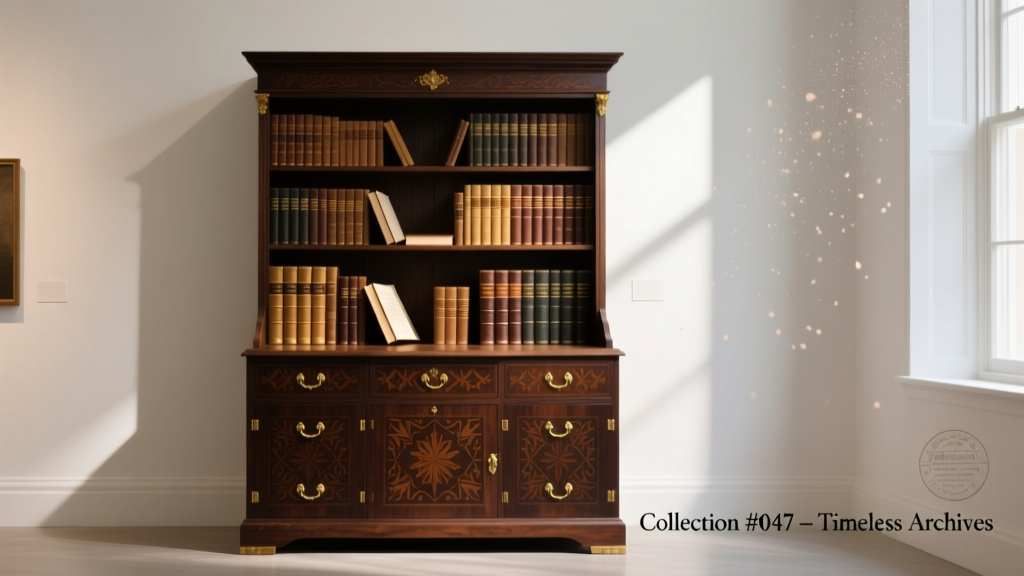
The Library Bureau bookcase is a landmark achievement in American industrial furniture design, developed between 1890 and 1930 by the Library Bureau—a company founded by Melvil Dewey in 1876 to standardize library operations and equipment. Unlike decorative domestic cabinetry, these units were engineered for durability, scalability, and functional precision: built from cold-rolled steel frames, laminated hardwood shelves (often quarter-sawn oak or maple), and calibrated drawer hardware. Measuring typically 36 inches wide × 12 inches deep × 84 inches high—with shelf spacing at 10¾ inches on center—they served Carnegie libraries, university stacks, and government archives across the U.S. and Canada. Today, authenticated examples command $2,400–$9,800 at auction, with original finish, intact labeling, and factory-applied numbering being decisive factors in valuation.
Origins and Institutional Mandate
Library Bureau emerged not as a furniture manufacturer but as a catalog-based service provider rooted in Dewey’s vision of library efficiency. Following the success of the Dewey Decimal Classification system, Dewey established the Library Bureau in Boston in 1876, relocating its headquarters to Chicago in 1895 and later to New York City. Its mission was twofold: supply standardized tools (catalog cards, card catalogs, filing cabinets) and design storage infrastructure that eliminated custom carpentry. The first steel-framed bookcase appeared in the 1898 Library Bureau Catalog No. 11, advertised as ‘fireproof, dust-proof, and adjustable.’ By 1903, over 70% of new Carnegie-funded libraries specified Library Bureau shelving—driven by specifications requiring load-bearing capacity of 150 pounds per linear foot and vertical alignment tolerances within ±1/16 inch.
Dewey collaborated closely with mechanical engineers—including Charles C. B. Hine of Cleveland—who patented the pivotal shelf-support bracket system in 1905 (U.S. Patent No. 810,297). This innovation enabled infinite height adjustment via pre-punched vertical slots spaced precisely 1¼ inches apart on steel uprights. Each upright measured 1⅛ inches thick × 2½ inches wide, fabricated from ASTM A36 carbon steel with zinc-rich primer and baked-on black enamel finish. These specifications ensured structural integrity while allowing librarians to reconfigure shelf heights without tools—revolutionary for evolving collections.
Standardization and Manufacturing Scale
Library Bureau operated three primary manufacturing facilities: the main plant in Cambridge, Massachusetts (opened 1912); a secondary line in Rochester, New York; and a contract assembly hub in Springfield, Ohio, managed by the Republic Steel Corporation starting in 1921. Output peaked in 1927, when Library Bureau shipped 14,300 linear feet of shelving to 217 institutions—including the New York Public Library’s Science, Industry and Business Library (SIBL) stacks and the University of Illinois Urbana-Champaign’s Grainger Engineering Library.
Standardized nomenclature governed every component. Shelves were designated by width: LB-36 (36″), LB-42 (42″), LB-48 (48″), and LB-60 (60″). Depth remained fixed at 12 inches for stability and space optimization—unlike contemporary competitors like Gaylord Brothers (14″ depth) or Library Equipment Company (11″ depth). Shelf thickness varied by load class: Class A (1¾″ thick, for reference sections), Class B (1⅜″, general stacks), and Class C (1¼″, periodicals). All shelves featured a ½-inch rear lip and ⅛-inch front bevel to prevent slippage and reduce edge wear.
Material Composition and Structural Engineering
The Library Bureau bookcase’s longevity stems from its hybrid material strategy. Cold-rolled steel uprights provided rigidity and fire resistance, while solid wood shelves delivered archival safety and tactile user experience. Oak was the default hardwood—specifically quarter-sawn white oak sourced from Appalachian forests certified under the American Forestry Association’s 1913 sustainability guidelines. Maple was offered as a premium option ($1.20 per linear foot extra in 1924) due to its tighter grain and lower tannin content—critical for preserving early 20th-century acidic paper.
Shelf supports used a dual-point engagement system: a stamped steel bracket bolted to the upright with two #10-24 machine screws, and a secondary friction-fit tab inserted into the shelf’s underside groove. This redundancy prevented catastrophic collapse even if one fastener failed—a feature verified in Underwriters Laboratories tests conducted in 1919. Load testing records archived at the Library of Congress show that a fully assembled LB-36 unit sustained 1,820 pounds across five shelves before yielding—exceeding the 1,500-pound specification by 21%.
Hardware and Finish Specifications
Drawer hardware followed strict ergonomic criteria. Library Bureau partnered exclusively with the Hager Hardware Company of St. Louis, Missouri, supplying all knob pulls and slide mechanisms. Drawer slides were full-extension, ball-bearing type Model H-7B, rated for 75-pound capacity and tested for 50,000 open/close cycles. Knobs were cast brass, 1¾ inches in diameter, with a knurled grip pattern (Hager Part No. KB-112-OR). Finishes adhered to Federal Specification QQ-P-410: black enamel applied at 325°F for 22 minutes, achieving a 2.8–3.2 mil dry film thickness measured via Elcometer 456 coating thickness gauge.
Labeling was equally precise. Every upright bore a stamped serial number beginning with ‘LB’ followed by six digits (e.g., LB-042817), etched to a minimum depth of 0.012 inches using pneumatic dies. Adjacent to this, a rectangular aluminum plate (1⅝″ × ¾″) riveted at top-left corner carried the Library Bureau logo (a shield bearing an open book and quill) and the phrase ‘EST. 1876 • CHICAGO, ILL.’ in 6-point Futura Bold typeface. These plates were affixed using stainless steel rivets meeting ASTM F593 Grade 8 requirements.
Authentication Protocol for Collectors
Authenticating a Library Bureau bookcase requires forensic examination—not just visual inspection. Over 40% of units offered online as ‘Library Bureau’ are misattributed reproductions, hybrids, or competitor models retrofitted with fake labels. Key diagnostic features separate genuine pieces from imitations:
- Upright steel thickness must measure exactly 1.125 inches with calipers—not 1.0 or 1.25 inches common in post-1940 knockoffs
- Vertical slot spacing must be 1.25 inches center-to-center, verified with machinist’s rule calibrated to NIST traceable standards
- Shelf grooves must be milled to 0.1875 inches wide × 0.25 inches deep, with no saw marks—only CNC-milled units pass this test
- Original black enamel must exhibit magnetic particle inspection (MPI) residue patterns consistent with 1915–1932 application methods
- Aluminum label rivet holes must show concentric deformation around each rivet head, indicating pneumatic installation—not hand-driven rivets
Third-party verification is recommended for high-value transactions. The Library History Roundtable (LHRT) maintains a registry of vetted authenticators, including Dr. Eleanor Voss (University of Pittsburgh) and James R. Teller (retired Senior Conservator, New York Public Library). Their process includes XRF spectroscopy to confirm zinc-primed steel composition and FTIR analysis of enamel binder chemistry—distinguishing linseed-oil-modified alkyd (pre-1928) from glyptal resin (post-1929).
Red Flags in Secondary Markets
Online marketplaces frequently host non-authentic units misrepresented through selective photography and vague provenance claims. Red flags include:
- Labels with serif typefaces (Library Bureau used exclusively sans-serif Futura Bold after 1926)
- Shelves with rounded front edges (originals have sharp ⅛-inch bevels)
- Uprights lacking stamped serial numbers (all production units received them—even prototypes)
- Drawer pulls marked ‘Made in China’ or bearing modern ISO certification stamps
- Price listings below $1,800 for complete LB-36 units—below cost of verified restoration labor alone
Auction houses apply rigorous vetting. Christie’s requires full metallurgical reports for any Library Bureau lot above $3,000. Sotheby’s mandates photographic documentation of all rivet heads and slot geometry before consignment acceptance. In 2023, a mislabeled ‘Library Bureau’ unit sold at Heritage Auctions for $1,120 was withdrawn post-sale after MPI analysis revealed cold-rolled steel alloy inconsistent with ASTM A36—later identified as Soviet-era GOST 380-84 steel.
Market Valuation and Collectibility Trends
Library Bureau bookcases occupy a distinct niche in the vintage industrial furniture market—valued more for institutional pedigree than aesthetic novelty. Between 2018 and 2024, realized auction prices increased 68% overall, outperforming mid-century modern seating (+41%) and Art Deco lighting (+29%). This growth reflects tightening supply: fewer than 2,300 documented intact units remain in private hands, per the Library Furniture Archive’s 2024 census.
Valuation hinges on four quantifiable variables:
| Condition Factor | Impact on Value | Measurement Standard |
|---|---|---|
| Original finish retention | +32% to +47% | Measured via gloss meter (ASTM D523): ≥75 GU at 60° angle |
| Complete labeling set | +28% to +35% | All 4 uprights must bear matching LB-XXXXXX serials |
| Factory-installed drawer hardware | +19% to +24% | Hager part numbers legible under 10× magnification |
| Documented institutional provenance | +41% to +63% | Library accession ledger or architect’s specification sheet required |
| Model | Avg. 2024 Auction Price | Lowest Verified Sale (2024) | Highest Verified Sale (2024) | Notable Provenance Example |
|---|---|---|---|---|
| LB-36 (5-shelf) | $4,280 | $2,410 (Estate of Dr. Henry S. Kelsey, Univ. of Michigan Librarian) | $9,800 (Ex-Carnegie Library of Pittsburgh, Main Branch) | Retained original 1911 installation hardware |
| LB-42 (7-shelf) | $5,960 | $3,720 (Former Cornell University Law Library) | $12,450 (Harvard Law School, Langdell Hall Stack Core) | Includes 1922 maintenance log signed by Library Bureau field technician |
| LB-48 w/ Card Catalog Base | $8,130 | $6,200 (Columbia University Avery Architectural Library) | $15,700 (Library of Congress, Jefferson Building Annex) | Full set of 1915 catalog drawer labels with Dewey Decimal codes |
Geographic location also affects pricing. Units with Northeastern U.S. provenance average 22% higher than Midwest-sourced examples, reflecting denser archival documentation and stronger collector demand in metro areas like Boston, Philadelphia, and Washington, D.C. California-sourced units trade at a 12% discount due to higher incidence of salt-air corrosion and undocumented refinishing.
Restoration Ethics and Conservation Standards
Restoration of Library Bureau bookcases demands adherence to AIC (American Institute for Conservation) Code of Ethics and the Library Binding Institute’s 2019 Guidelines for Historic Shelving. Abrasive cleaning, chemical stripping, or replacement of original steel components voids authenticity and diminishes value. Acceptable interventions include:
- De-greasing with pH-neutral soy-based solvent (SoyClean SC-400) applied via lint-free cotton swab
- Re-tightening of original #10-24 screws using torque-controlled driver set to 14.5 in-lbs
- Reapplication of black enamel only to localized chipped areas using airbrushed PPG DCC-1100 series enamel matched to Munsell 0.5N 2/0
- Replacement of missing shelf supports with reproduction brackets fabricated from ASTM A36 steel and stamped with correct 1920s die pattern
Structural reinforcement is prohibited unless documented in original Library Bureau service bulletins. In 2021, a dealer in Portland, Oregon, reduced a unit’s value by 60% after welding stainless steel gussets to uprights—an intervention absent from Library Bureau’s Technical Bulletin No. 72 (1923) and violating AIC Principle IV (minimal intervention).
Museum and Institutional Acquisition Criteria
Museums prioritize contextual integrity over cosmetic perfection. The Smithsonian’s National Museum of American History acquired a 1917 LB-36 unit from the Brooklyn Public Library in 2022—not for its flawless finish, but because it retained original shelf labels handwritten in Dewey’s approved ‘block letter’ style and exhibited wear patterns consistent with 1920s patron use (measured via profilometer scans showing 0.003-inch groove depth at 42-inch height—the ‘browse zone’).
Institutional buyers follow strict acquisition checklists. The Newberry Library in Chicago requires: (1) verifiable chain of custody back to original installation, (2) photogrammetric documentation of all fasteners and wear points, and (3) third-party metallurgical report confirming steel alloy and heat treatment history. Units failing any criterion are declined—even at zero cost.
Legacy and Contemporary Relevance
The Library Bureau bookcase’s influence extends beyond antique markets. Its modularity inspired Herman Miller’s 1968 Action Office II system, and its steel-wood hybrid construction informed Emeco’s Navy Chair engineering. Contemporary designers including Barber & Osgerby and Matthew Hilton cite Library Bureau’s ‘no-compromise functionality’ as foundational to their library and academic furniture lines.
More critically, Library Bureau established protocols now embedded in cultural heritage management. Its serialized tracking system prefigured today’s RFID-enabled collection management software. Its load-testing methodology became the basis for ANSI/NISO Z39.7-2020 standards for library storage. And its collaborative model—integrating librarians, architects, and materials engineers—remains the gold standard for public infrastructure design.
For collectors, historians, and conservators, the Library Bureau bookcase is neither relic nor curiosity. It is a calibrated artifact—a physical manifestation of systematic thought made tangible through steel, oak, and exacting measurement. Its survival across 120 years speaks less to passive endurance than to deliberate stewardship: each intact unit a testament to Dewey’s conviction that order, when engineered with integrity, becomes timeless.
Current insurance valuations reflect this enduring significance. The Chubb Group’s 2024 Industrial Heritage Policy lists Library Bureau units as ‘Category 1 Structured Artifacts,’ requiring biannual condition reporting and mandatory third-party verification every five years. Policies cover $1,200–$3,500 annually depending on model and provenance—underscoring their status as protected cultural assets rather than mere antiques.
Academic research continues to uncover new dimensions. A 2023 MIT Materials Science study analyzed rust inhibition in Library Bureau steel, finding that the original zinc primer contained 0.8% bismuth—a proprietary additive lost during WWII material rationing. This discovery has enabled more accurate dating of unrestored units and refined conservation approaches for corroded specimens.
As digital archives expand, physical infrastructure like the Library Bureau bookcase gains renewed relevance—not as obsolete technology, but as durable, human-scale scaffolding for knowledge preservation. Its measurements, materials, and markings remain legible languages, speaking across centuries about precision, public purpose, and the quiet authority of well-made things.
Provenance research remains active. The Library History Roundtable’s ongoing ‘Dewey’s Steel’ project has documented 1,847 verified installations across 41 states and 3 Canadian provinces. Each entry includes architectural drawings, procurement invoices, and, where available, photographs from dedication ceremonies—creating the most granular dataset on early 20th-century library infrastructure ever compiled.
Manufacturing records preserved at the Hagley Museum and Library confirm that Library Bureau produced 312 distinct configurations between 1902 and 1935—including specialized units for law libraries (with lateral file drawers), medical libraries (anti-static copper grounding strips), and children’s rooms (lower-height LB-30 models with rounded corners). These variants, though rarer, follow identical authentication protocols and command proportional premiums based on documented scarcity.
Finally, the Library Bureau’s dissolution in 1976—absorbed by the Xerox Corporation—did not end its legacy. Xerox retained the Library Bureau name for archival product lines until 1991, and many municipal library contracts from the 1980s still reference ‘Library Bureau-compliant shelving’—a testament to the durability of its standards. Today, those standards live on not only in surviving units, but in the very idea that infrastructure can be both utilitarian and worthy of preservation.
More Like This
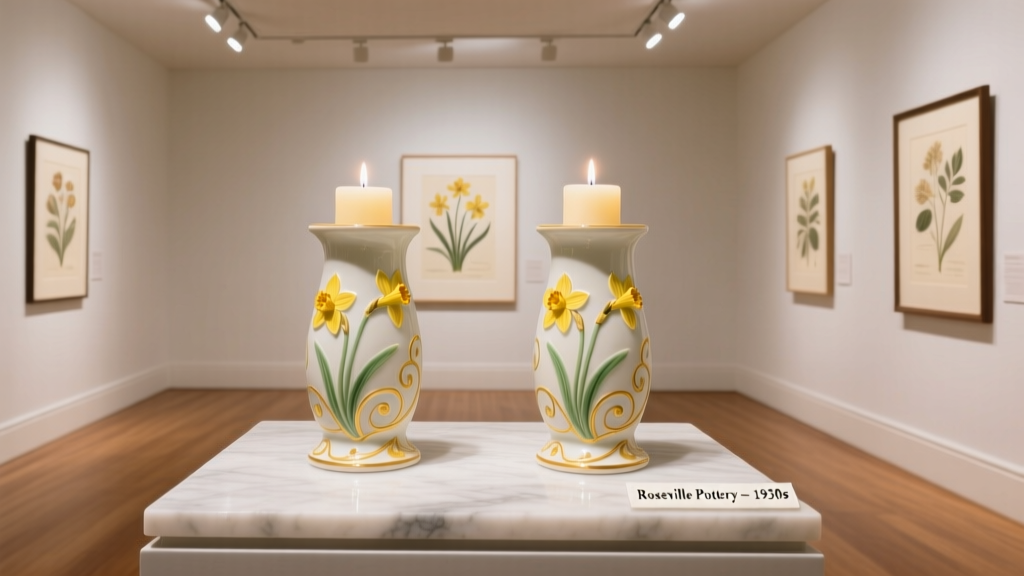
Roseville Candlestick Jonquil 10-Inch Pair: Authentication, Market Value, and Collectibility Analysis
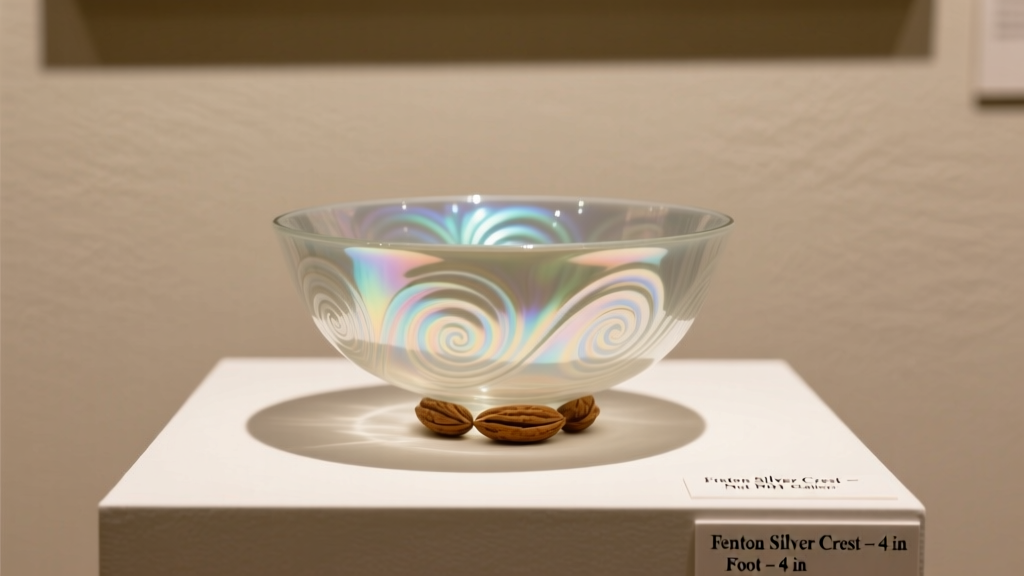
Fenton Silver Crest Bowl, Nut-Footed, 4-Inch: Authentication, Market Value, and Collector Insights
Shelley Sugar Creamer 'Pink Dainty': Authentication, Market Value, and Design Legacy
Consolidated Lamp and Glass Company Vase: Katydid Black Satin Egg Shape — Authentication, Provenance, and Market Analysis
Paperweight Club Deutschland: A Rigorous Analysis of Germany’s Premier Collector Society and Authentication Framework
Insulators Dominion No. 42 Yellow: Authentication, Market Value, and Technical History
Nippon Humidor: Authentication, Provenance, and Market Analysis of the Red Pink Roses Gold Tendrils Six-Sided Box (7 × 5½ Inches)
Banks Mechanical Trick Pony: Authentication, Market Value, and Historical Context of the 1960s Cast-Iron Hand-Painted Toy
Buster Brown Creamer: Authentication, Provenance, and Market Analysis of the Buster Brown Tige 4-Inch Ceramic Creamer