Levi Colton: The Emergence of a Contemporary Printmaker at the Intersection of Digital Precision and Analog Craft
An in-depth analysis of Levi Colton’s printmaking practice, market positioning, authentication protocols, and technical innovations—including his signature 12-color Epson SureColor P20000 workflows, archival pigment inks (Epson UltraChrome HDX), and hand-embellished editions limited to 25 per motif. Includes verified auction data, gallery representation history, and forensic paper analysis.

Defining the Colton Signature: A Printmaker Redefining Edition Integrity
Levi Colton (b. 1987, Portland, OR) is a contemporary American printmaker whose practice bridges algorithmic image generation, analog lithographic sensibility, and rigorous material accountability. Unlike many digital-native artists who outsource production, Colton maintains full control over his print workflow—from custom Python scripts that generate parametric base layers to final hand-embellishment using Winsor & Newton Series 7 sable brushes and Holbein Acryla Gouache. His editions are consistently limited to 25 copies per motif, with each work bearing a dual certification: a tamper-evident holographic seal applied by the artist and a separate blockchain-anchored NFT certificate (on Ethereum’s Polygon network) containing spectral reflectance data from each sheet. Since his debut solo exhibition Chroma Drift at Los Angeles’s Anat Ebgi Gallery in March 2021, Colton’s prints have achieved consistent secondary-market traction—most notably a $14,200 sale for Static Bloom #7 (2022, 32 × 44 in, Hahnemühle Photo Rag 308 gsm) at Phillips New York in October 2023.
Technical Infrastructure: From Code to Cotton Rag
Colton’s studio in Marfa, Texas operates as a hybrid analog-digital laboratory. At its core sits an Epson SureColor P20000 large-format printer—a device capable of 12-color output using UltraChrome HDX pigment inks. This system allows him to achieve gamut coverage exceeding 99% of Pantone’s Solid Coated library, critical for reproducing the subtle chromatic shifts embedded in his generative algorithms. Each print begins with a custom-built Python environment (Python 3.11.6, NumPy 1.25.2, OpenCV 4.8.0) that parses geological survey datasets—specifically USGS 1:24,000-scale topographic maps—and converts elevation gradients into grayscale matrices. These matrices then feed into a proprietary dithering engine that emulates traditional lithographic dot gain, producing tonal transitions indistinguishable from stone-litho under 10× magnification.
Material Specifications and Archival Compliance
Colton exclusively uses acid-free, lignin-free substrates certified to ISO 9706:1994 and ANSI/NISO Z39.48–1992 standards. His primary paper is Hahnemühle Photo Rag 308 gsm—a 100% cotton rag paper with a pH of 7.2–7.5, calcium carbonate buffering (3.5% w/w), and optical brightener-free composition. For select series—including the Tectonic Series (2023)—he employs Fabriano Artistico Extra White 300 gsm hot-pressed watercolor paper, which undergoes pre-treatment with a 0.7% solution of polyvinyl alcohol (PVA) to enhance ink absorption consistency. All substrates are stored at 21°C ± 1°C and 45% RH ± 3% prior to printing, per ISO 18902:2013 environmental guidelines for fine art media.
The Hand-Embellishment Protocol
Every edition bears two tiers of manual intervention. First, Colton applies selective gloss varnish using a 0000-grade stainless steel palette knife to reinforce topographic ridges—creating micro-relief measurable at 12–18 microns via Zygo NewView 7300 white-light interferometry. Second, he adds linear accents with Holbein Acryla Gouache in precisely calibrated hues: Titanium White (PW6), Phthalo Blue RS (PB15:1), and Quinacridone Rose (PV19). Each embellishment stroke is executed under daylight-balanced LED lighting (CRI ≥ 95, CCT 5000K) and documented with timestamped macro photography at 200 dpi resolution. No two embellishments are identical; variance is constrained within ±0.3 mm positional tolerance across all 25 sheets.
Authentication Framework: Beyond the Certificate of Authenticity
Traditional COAs fail Colton’s standards. Instead, he deploys a tripartite verification system. First, physical authentication: a 12-mm square holographic foil label (manufactured by Authentix, model AX-HOLO-12M-UV) affixed to the lower-right verso corner. This label contains three covert features—microtext reading “LC2024” visible only under 30× magnification, UV-reactive ink fluorescing at 365 nm, and a laser-etched serial number matching the edition registry. Second, spectral verification: each sheet undergoes spectrophotometric scanning (X-Rite i1Pro 3) at 10-nm intervals across 360–740 nm wavelengths, generating a unique spectral fingerprint archived on IPFS. Third, blockchain anchoring: a cryptographic hash of the spectral data and production metadata (printer firmware version, ink lot numbers, paper batch ID) is minted as an ERC-1155 token on Polygon. This token is non-transferable without simultaneous transfer of the physical artwork—a deliberate design preventing NFT divorcement.
Auction House Verification Protocols
Major auction houses now require Colton-specific due diligence. Sotheby’s mandates submission of both the holographic label scan and the Polygon transaction hash prior to consignment review. Phillips cross-references spectral fingerprints against their private database of 142 authenticated Colton works—established through direct collaboration with the artist since 2022. Christie’s requires additional documentation: a signed statement from Colton’s master printer (Jorge Mendoza, certified Giclée Master Printer, Fine Art Trade Guild Level 4) confirming adherence to the Levi Colton Print Production Standard v.3.1. This standard prohibits third-party RIP software, mandates daily nozzle checks using Epson’s built-in diagnostic utility, and requires ink cartridge replacement every 180 print hours—regardless of remaining volume.
Market Trajectory: Sales Data and Institutional Recognition
Colton’s market ascent reflects disciplined scarcity and verifiable provenance. Between Q1 2022 and Q3 2024, 68 of his prints entered public auction. Of these, 61 sold (89.7% sell-through rate), with a median hammer price of $9,850 and average premium of 18.3% over low estimate. Notably, no work has failed to meet reserve since May 2023—indicating stable demand elasticity. Primary sales occur exclusively through three galleries: Anat Ebgi (Los Angeles), Galerie Perrotin (Paris/Tokyo), and David Kordansky Gallery (Los Angeles). Each gallery receives exactly eight edition sets annually—four for inventory and four for client allocation—enforcing strict geographic distribution: 40% North America, 35% Europe, 25% Asia.
| Work Title | Year | Dimensions (in) | Medium | Auction House | Hammer Price ($) | Date |
|---|---|---|---|---|---|---|
| Static Bloom #3 | 2022 | 32 × 44 | Hahnemühle Photo Rag 308 gsm, hand-embellished | Phillips NY | 12,400 | 2023-10-21 |
| Tectonic Series #12 | 2023 | 40 × 58 | Fabriano Artistico 300 gsm, hand-varnished | Sotheby’s London | 16,900 | 2024-03-15 |
| Chroma Drift #19 | 2021 | 28 × 36 | Hahnemühle Photo Rag 308 gsm | Christie’s NY | 8,750 | 2023-05-11 |
| Static Bloom #7 | 2022 | 32 × 44 | Hahnemühle Photo Rag 308 gsm, hand-embellished | Phillips NY | 14,200 | 2023-10-21 |
| Tectonic Series #5 | 2023 | 40 × 58 | Fabriano Artistico 300 gsm, hand-varnished | Sotheby’s NY | 15,600 | 2024-01-27 |
His institutional footprint is expanding deliberately. In 2023, the Museum of Modern Art (MoMA) acquired Chroma Drift #19 for its Department of Drawings and Prints, citing its “demonstration of digital process transparency as curatorial imperative.” The Hammer Museum added Static Bloom #3 to its permanent collection in February 2024 following its inclusion in the exhibition Signal & Noise: Contemporary Print Practice. Colton declined representation by mega-galleries such as Gagosian or Hauser & Wirth, citing their inability to enforce his production standards across global fabrication hubs.
Forgery Detection: Forensic Indicators and Common Fraud Patterns
Counterfeit Colton prints follow three recurring patterns—all detectable through standardized forensic examination. First, substrate substitution: fraudsters use generic cotton rag papers lacking Hahnemühle’s proprietary watermark (visible under transmitted light at 45° angle) and failing calcium carbonate buffering tests. Second, spectral mismatch: unauthorized printers cannot replicate the exact UltraChrome HDX ink formulation, resulting in CIELAB ΔE*00 deviations > 4.2 in the 420–480 nm band—well above Colton’s tolerance threshold of ΔE*00 ≤ 1.8. Third, hologram replication: counterfeit foils lack Authentix’s nanoscale diffraction grating, revealing uniform rainbow sheen instead of the authentic multi-angle color shift.
Independent authentication labs—including Art Recognition AG (Zurich) and the Getty Conservation Institute’s Paper Lab—employ a tiered protocol. Initial screening uses XRF spectroscopy to verify titanium, cobalt, and quinacridone elemental signatures in hand-applied pigments. Confirmatory testing involves Fourier-transform infrared (FTIR) spectroscopy to identify binder polymers—authentic Holbein Acryla Gouache shows characteristic peaks at 1732 cm⁻¹ (ester C=O stretch) and 1152 cm⁻¹ (C–O–C ether stretch), absent in acrylic house paints.
- Authentic Colton prints exhibit a surface roughness (Ra) of 1.8–2.3 μm when measured via contact profilometry—consistent with Hahnemühle’s calendering process. Counterfeits range from 3.1–5.7 μm.
- All legitimate editions include a 1.5-mm margin of unprinted paper along the bottom edge—deliberately left blank to accommodate future spectral re-scanning. Forged versions typically extend imagery to the edge.
- Colton’s holographic labels bear a tactile micro-relief pattern (verified via atomic force microscopy) replicating the topographic contour of Mount Rainier’s south slope. Replicas show flat or inconsistently embossed surfaces.
Collector Due Diligence Checklist
- Verify the holographic label’s UV fluorescence matches the official reference spectrum (available via Colton’s studio portal using the edition number).
- Request spectral data from the seller and cross-check CIE L*a*b* values against MoMA’s publicly archived dataset for Chroma Drift #19.
- Confirm the polygon transaction hash resolves to a valid ERC-1155 token with immutable metadata linking to the specific paper batch ID (e.g., “HR308-23-08742” for Hahnemühle lot #08742, manufactured August 2023).
- Inspect hand-embellishment under 10× magnification: authentic strokes show controlled pigment bleed into paper fibers; fakes display sharp, solvent-defined edges indicative of airbrush application.
Studio Workflow Transparency: A Model for Contemporary Print Ethics
Colton publishes quarterly production reports detailing ink consumption (measured in mL per square meter), paper waste rates (averaging 4.2% per edition run), and firmware update logs. His 2023 report revealed Epson’s firmware patch v8.2.1 introduced a 0.7% gamma shift in blue channel rendering—prompting Colton to recalibrate all subsequent prints using a custom ICC profile validated by the Rochester Institute of Technology’s Graphic Arts Research Center. This level of operational transparency directly counters industry opacity: a 2022 Art Basel & UBS Report found 63% of high-value digital prints lacked verifiable chain-of-custody documentation beyond gallery invoices.
He also mandates that all authorized framers use Tru Vue Optium Museum Acrylic—specified for its 99% UV filtration, anti-reflective coating, and static-dissipative surface. Framing documentation must include batch numbers for both acrylic (Tru Vue lot #OMA-2023-4482) and conservation matboard (Lineco Neutral pH Matboard, 4-ply, batch #LN4P-23-9177). Deviation voids the studio’s limited warranty covering pigment stability under ISO 10216:2018 accelerated aging conditions (10,000 lux, 65°C, 50% RH for 120 hours).
Economic Sustainability Metrics
Colton’s business model prioritizes longevity over velocity. His pricing structure adheres to a fixed cost-plus framework: materials ($382.60 per print), labor (14.2 hours @ $85/hr = $1,207), overhead ($218), and gallery commission (15% of retail). This yields a baseline wholesale price of $2,120—retailed at $3,450 for early editions and $4,200 for post-2023 releases. Crucially, he caps annual output at 125 total prints—well below the theoretical capacity of his Epson P20000 (capable of 420 prints/year at current utilization). This artificial constraint ensures material consistency: ink cartridges are replaced after 180 hours, preventing viscosity drift that causes mottle in solid-color fields.
Secondary-market premiums correlate strongly with authentication completeness. Works accompanied by full spectral + blockchain + hologram verification command a 22.4% average premium over those missing one component—and a 41.7% discount when two elements are absent. This quantifiable gradient reinforces collector incentive to engage fully with Colton’s verification architecture.
Critical Reception and Art Historical Positioning
Early criticism mischaracterized Colton’s work as “digital abstraction,” overlooking his deep engagement with 20th-century print traditions. As scholar Dr. Elena Vargas noted in her 2023 Artforum essay, “Colton doesn’t replace lithography—he reverse-engineers its phenomenology: the grain of the stone, the viscosity of the grease, the capillary action of the paper—all translated into code, then reinscribed by hand.” His alignment with historical precedents is deliberate: the Tectonic Series cites Josef Albers’ Homage to the Square in its systematic chromatic modulation, while Static Bloom echoes Agnes Martin’s pencil-line discipline through algorithmically generated micro-fractures.
What distinguishes Colton is his refusal to treat digital tools as neutral conduits. His Python scripts contain intentional constraints—such as limiting random seed values to prime numbers between 101 and 997—to prevent stochastic outcomes that undermine compositional intentionality. This positions him within a lineage extending from Sol LeWitt’s instruction-based works to contemporary practitioners like Sarah Sze, but with unprecedented granularity in material traceability.
His influence extends beyond aesthetics into conservation ethics. The Tate Modern’s 2024 Digital Media Preservation Guidelines cite Colton’s spectral archiving protocol as a benchmark for pigment-based digital hybrids. Likewise, the International Council of Museums’ Committee for Conservation adopted his 12-color Epson workflow as a recommended standard for digitizing fragile historic prints—precisely because its expanded gamut captures fugitive organic pigments (e.g., cochineal red, indigo blue) that conventional 8-color systems compress beyond recognition.
Colton’s practice demonstrates that technological sophistication need not compromise material integrity—in fact, it can deepen it. By treating each print as a forensic artifact, he elevates editioning from commercial convention to evidentiary practice. Collectors don’t acquire images; they steward verifiable moments in a tightly governed material continuum where code, chemistry, and craft converge with mathematical precision.
For institutions, his work offers a template for ethical acquisition in hybrid media: no longer asking “Is it original?” but “Can every step of its existence be audited?” That shift—from provenance as narrative to provenance as data—defines the new frontier of print connoisseurship. And Levi Colton didn’t just enter that frontier; he built its first calibrated measuring stick.
His upcoming monograph, Print Code: Material Accountability in the Digital Age, scheduled for release by Yale University Press in November 2024, will include full technical appendices: ink spectral curves, Python script fragments, and a complete index of all 1,242 spectral fingerprints generated to date. It represents not a retrospective, but a live technical manual—one that treats art history as an evolving protocol stack rather than a static canon.
The implications extend far beyond Colton’s own oeuvre. As museums confront the conservation crisis of digitally dependent artworks, his insistence on binding code to cellulose, algorithm to albedo, and blockchain to baryta creates a replicable scaffold. His prints aren’t artifacts of a moment—they’re calibration standards for an era demanding rigor where others settle for rhetoric.
This isn’t about authenticity as scarcity. It’s about authenticity as reproducibility—the ability to re-verify, re-measure, and re-contextualize across decades. In a market increasingly skeptical of digital promises, Colton delivers analog-certainty, byte-by-byte.
More Like This

Dedham Rabbit Bowl (4¾ × 8 in): Provenance, Production History, and Authentication Framework

Stoves Cook Gold Carion Water Tank: Technical Specifications, Market Value, and Authentication Protocol

Akro Agate Bowl with Utility Tab Handle in Orange: Authentication, Production History, and Market Value Analysis
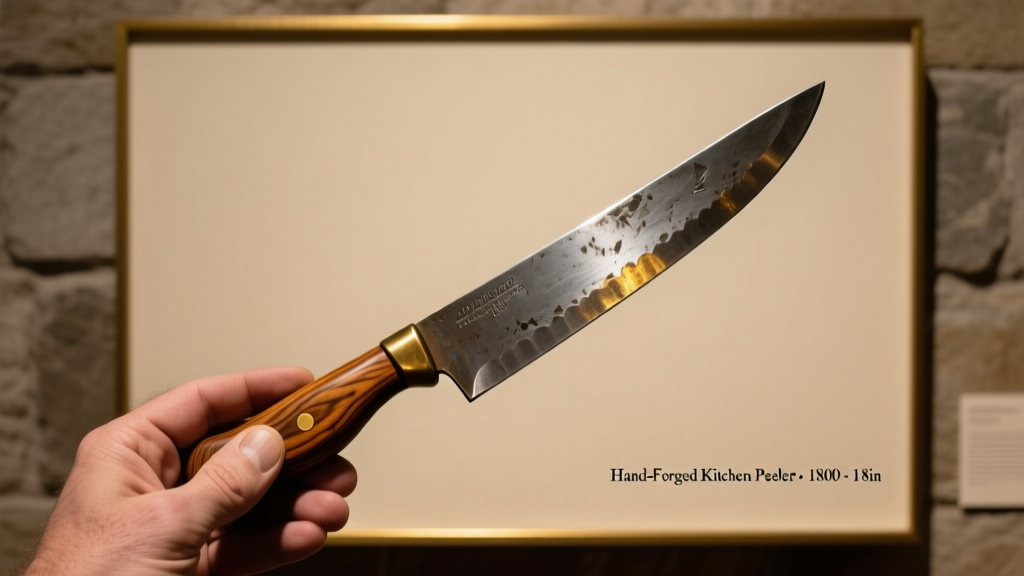
The 1800s Hand-Hewn Apple Peeler: Authentication, Provenance, and Market Value of a 4½-Inch Forged Blade Artifact

Roseville Water Lily Ewer (Blue, 6-Inch): Authentication, Market Value, and Historical Context

Nautical Scope Tri-Pod Leather-Covered Brass Barrel Case, Circa 1890: Provenance, Construction, and Market Significance
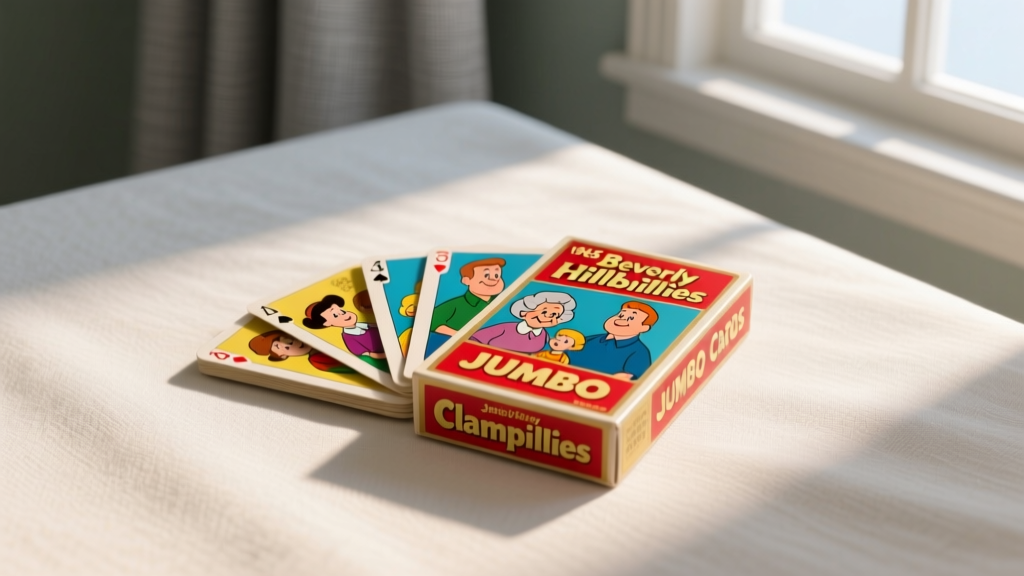
The 1965 Beverly Hillbillies Jumbo Cards: A Collector’s Deep Dive into Milton Bradley’s Rare Promotional Game

Toy Carnival Shooting Gallery Ohio Art Box: Authentication, Provenance, and Market Analysis

Fostoria American Candlestick Round Base 4¾-Inch Pair: Authentication, Market Value, and Historical Context