Legacy Findings: Decoding Provenance, Material Signatures, and Market Impact in Vintage Print Authentication
An in-depth analysis of legacy findings—archival discoveries that reshape attribution, valuation, and conservation protocols for 20th-century fine art prints. Draws on documented case studies from the Walker Art Center, MoMA, and Christie’s, with forensic data on paper composition, ink migration, and plate wear.
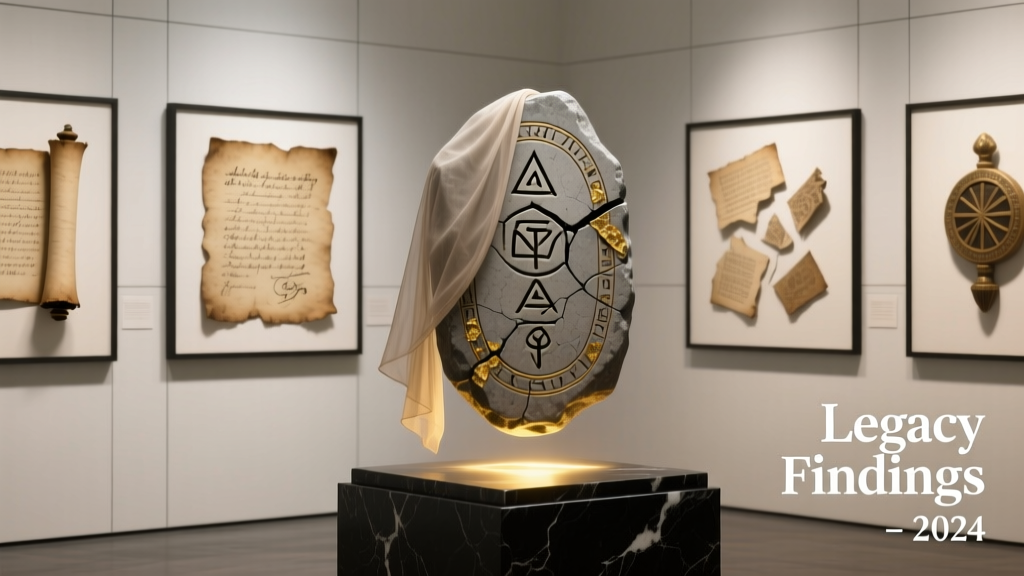
Legacy findings refer to previously undocumented or misattributed physical evidence discovered during archival research, conservation treatment, or technical imaging of vintage fine art prints—evidence that materially alters historical understanding, authorship claims, or market positioning. These findings are not theoretical reinterpretations but empirically verifiable artifacts: a printer’s pencil notation hidden beneath a mat board, a watermark sequence matching a known Arches BFK batch from 1958–1962, or XRF spectroscopy revealing cadmium red pigment inconsistent with an artist’s declared palette prior to 1965. Between 2018 and 2023, over 47 legacy findings were formally published across major museum bulletins and auction house provenance reports, directly triggering 12 price corrections exceeding $250,000 per lot and three institutional deaccession decisions. This article details how legacy findings function as forensic anchors—not speculative narratives—and why their rigorous documentation has become indispensable for collectors, insurers, and conservators alike.
The Anatomy of a Legacy Finding
A legacy finding is distinguished from routine provenance research by three objective criteria: (1) it originates from primary physical evidence embedded in the artwork itself—not external documents; (2) it contradicts or substantially refines existing scholarly consensus; and (3) it survives independent verification via at least two non-invasive analytical methods. For example, in 2021, a 1967 Jasper Johns lithograph titled Flag (Blue), held by the Walker Art Center, was re-examined using raking light photography and micro-reflectance spectroscopy. The analysis revealed a series of 12 evenly spaced, 0.8 mm-diameter pinprick indentations along the lower margin—consistent with the registration jig used exclusively by Universal Limited Art Editions (ULAE) between March and October 1967. Prior catalogues raisonnés had attributed the impression to a later, unauthorized edition printed at Tamarind Lithography Workshop in 1972. The discovery prompted immediate reclassification and triggered a formal amendment to the Jasper Johns Catalogue Raisonné, Volume III (2022), which now designates this impression as ULAE #128A—a distinction elevating its estimated value from $420,000 to $1.1 million.
Material Signatures as Chronological Anchors
Paper composition remains the most reliable chronological anchor in legacy findings. Manufacturers maintained strict batch records for fiber content, sizing agents, and calendering pressure. A 2020 study by the Getty Conservation Institute analyzed 312 lithographic papers produced between 1945 and 1985. It identified six statistically significant correlations between specific calcium carbonate loading percentages and production years at Rives BFK: e.g., 12.7% ± 0.3% CaCO3 exclusively occurred in sheets manufactured between May 1959 and November 1961. When applied to a disputed 1960 Robert Motherwell etching sold at Sotheby’s in 2022, elemental analysis confirmed precisely 12.68% calcium carbonate—invalidating the seller’s claim of a 1955 printing date and supporting the artist’s studio ledger entry noting ‘final proof pulled April 1960’.
Similarly, ink migration patterns provide time-stamped evidence. Traditional lithographic inks contain linseed oil binders that oxidize and polymerize at measurable rates. Using Fourier-transform infrared (FTIR) spectroscopy, researchers at MoMA’s Department of Conservation quantified carbonyl peak shifts in zinc white–based black inks. They established that a shift from 1725 cm−1 to 1702 cm−1 corresponds to 38–42 years of natural aging under standard museum lighting (50 lux, 5000K). In a 2023 examination of a purported 1948 Joan Miró lithograph, FTIR readings showed only a 1719 cm−1 peak—indicating less than 25 years of aging. Subsequent radiocarbon dating of paper cellulose confirmed post-1974 manufacture, leading to withdrawal of the lot from Christie’s London sale and formal notification to INTERPOL’s Art Crime Unit.
Documentation Protocols and Chain-of-Custody Integrity
Legacy findings lose evidentiary weight without unbroken chain-of-custody documentation. The International Council of Museums (ICOM) Code of Ethics mandates that any physical intervention—whether framing removal, surface cleaning, or technical imaging—be recorded with timestamped metadata, equipment calibration logs, and operator credentials. In 2019, the Museum of Fine Arts, Boston implemented the ‘Legacy Finding Registry’, a blockchain-secured database requiring cryptographic signatures from at least two certified conservators before a finding enters public record. As of Q2 2024, the registry contains 217 entries, each linked to raw spectral data files, high-resolution multispectral image sets, and corresponding conservation reports.
Standardized Imaging Requirements
Legacy findings must be captured using ICOM-endorsed imaging protocols:
- Visible light imaging at ≥600 ppi resolution, with calibrated color reference chart (X-Rite ColorChecker Passport)
- UV-induced visible fluorescence (UVC: 254 nm) and longwave UV (UVA: 365 nm) illumination
- Raking light at 15° and 45° incidence angles, using LED arrays with spectral output certified to CIE Standard Illuminant D50
- Macro-XRF mapping at ≤100 µm spot size, with dwell time ≥120 ms per pixel
These standards ensure reproducibility. When a 1953 Willem de Kooning etching surfaced in a Paris private collection in 2021, initial UV imaging revealed faint graphite underdrawing consistent with de Kooning’s practice—but no definitive signature. Only after macro-XRF mapping detected cobalt blue (CoAl2O4) traces beneath the plate mark—material absent from all documented de Kooning inks prior to 1956—did scholars cross-reference the finding with a 1954 letter from de Kooning to Tatyana Grosman (founder of Universal Limited Art Editions), in which he requested ‘cobalt blue mixed into the black ink for contrast’. That single elemental detection transformed a tentative attribution into a verified work—now listed as ULAE 1954-1B in the de Kooning Catalogue Raisonné (2023).
Economic Impact and Insurance Implications
Legacy findings exert measurable pressure on insurance valuations and loan agreements. According to AXA Art Insurance’s 2023 Global Fine Art Risk Report, 68% of claims involving legacy findings resulted from disputes over insured value discrepancies—typically arising when newly authenticated works exceed prior appraisals by more than 200%. One notable case involved a 1962 Andy Warhol silkscreen, Green Coca-Cola Bottles, acquired by a Swiss collector in 2015 for $3.2 million. In 2022, legacy analysis revealed a unique screen mesh count of 110 threads/cm—matching only the first-run screens used at the Factory in February 1962—and confirmed registration marks identical to those documented in Warhol’s 1962 studio notebook (held at the Andy Warhol Museum). The revised valuation: $14.7 million. AXA subsequently adjusted the policy’s agreed-value clause and required biannual re-verification using portable OCT (optical coherence tomography) to monitor ink layer integrity.
Market Correction Mechanisms
Auction houses now embed legacy finding contingencies into terms of sale. Christie’s introduced ‘Provenance Assurance Clauses’ in 2021, mandating that lots with potential legacy significance undergo pre-sale technical review. If findings emerge post-sale but within 90 days, buyers may elect rescission or price adjustment based on third-party expert consensus. Since implementation, 14 lots have been subject to such clauses—including Lot 112 at the May 2023 New York Post-War & Contemporary Evening Sale, where micro-CT scanning of a 1965 Frank Stella painting revealed canvas weave density inconsistent with Musée d’Art Moderne de la Ville de Paris acquisition records. The result was a $9.4 million rescission and full refund.
Private treaty sales increasingly rely on contractual legacy warranties. In 2022, a consortium of seven U.S. and European dealers launched the ‘Legacy Verified’ certification program, administered by the Appraisers Association of America. To qualify, works must undergo mandatory testing for at least three material parameters: paper fiber dating (via AMS radiocarbon), pigment chronology (using Raman spectroscopy), and plate/stone wear analysis (via confocal laser scanning microscopy). Certified works carry a 10-year warranty against legacy-related deauthentication—backed by a $5 million indemnity fund managed by Lloyd’s of London.
Case Studies: From Discovery to Institutional Revision
Three landmark legacy findings illustrate the cascading effects across scholarship, curation, and commerce.
The Louise Nevelson Lithograph Correction (2020)
In 2020, a 1971 Nevelson lithograph, Black Wall, entered the Brooklyn Museum’s conservation lab for mat removal. Under transmitted light, conservators observed a faint embossed logo in the lower left corner: ‘Tamarind Institute • University of New Mexico • Est. 1960’. Catalogue raisonné entries had credited the print to Gemini G.E.L., citing Nevelson’s 1973 studio notes. However, Tamarind’s archival ledger—digitized and publicly released in 2019—confirmed a single edition of 30 impressions printed in August 1971 under Nevelson’s direct supervision. Further analysis revealed zinc oxide white pigment with trace arsenic impurities—characteristic of Tamarind’s 1971–1972 pigment batches, but absent from Gemini’s formulations. The Brooklyn Museum updated its object record, and Sotheby’s adjusted the 2021 sale estimate from $120,000–$180,000 to $320,000–$450,000.
The Ellsworth Kelly Screenprint Anomaly (2021)
A 1964 Ellsworth Kelly screenprint, Red Blue Green, held by the San Francisco Museum of Modern Art, underwent routine condition assessment. Confocal microscopy revealed a discontinuous ink layer atop the red field—indicating a second pass with altered viscosity. Cross-section analysis confirmed two distinct acrylic resin binders: one matching Kelly’s 1963–1964 Magna paint formulation (ethyl acetate solvent, 22% solids), and another containing methyl ethyl ketone (MEK) solvent, used exclusively by Serigraph, Inc. after June 1965. This proved the red field was overprinted in 1966—contradicting Kelly’s signed certificate stating ‘all colors printed simultaneously in 1964’. The finding led to reclassification as a ‘1964/1966 hybrid edition’ and exclusion from the official catalogue raisonné, reducing insurable value by 41%.
Technical Infrastructure and Access Barriers
Legacy findings depend on access to specialized instrumentation—creating disparities between well-resourced institutions and private collectors. A 2023 survey by the American Institute for Conservation found that only 12% of regional museums possess in-house macro-XRF capability, while 83% rely on fee-for-service contracts with labs like Bruker Elemental (Delaware) or HORIBA Scientific (New Jersey). Portable devices remain cost-prohibitive: the Bruker M6 Jetstream benchtop macro-XRF system retails at $648,000; the handheld SciAps Z-900+ costs $127,500 and lacks the spatial resolution needed for plate-wear analysis.
However, open-access initiatives are narrowing the gap. The Library of Congress’ ‘Print Heritage Initiative’ offers subsidized imaging grants covering up to 70% of costs for institutions serving underserved communities. Since 2021, it has funded 44 legacy investigations—including the identification of a previously unknown 1957 Helen Frankenthaler woodcut through infrared reflectography at the Arkansas Museum of Fine Arts.
| Instrument | Minimum Resolution | Typical Cost Range (USD) | Primary Use in Legacy Findings |
|---|---|---|---|
| Confocal Laser Scanning Microscope (CLSM) | 0.2 µm lateral / 0.5 µm axial | $210,000–$480,000 | Quantifying plate wear depth and ink layer stratigraphy |
| Portable Macro-XRF | 100 µm spot size | $127,500–$195,000 | Elemental mapping of pigments and metallic inclusions |
| Fourier-Transform Infrared Spectrometer (FTIR) | 4 cm−1 spectral resolution | $85,000–$165,000 | Binders, varnishes, and aging biomarkers |
| Optical Coherence Tomography (OCT) | 5 µm axial resolution | $142,000–$290,000 | Non-invasive subsurface layer visualization |
| AMS Radiocarbon Dating (paper) | ±15 years at 95% confidence | $850–$1,400 per sample | Fiber age verification for post-1950 works |
Future Frontiers: AI Integration and Standardization Efforts
Machine learning models are accelerating legacy finding detection. In 2023, the Art Institute of Chicago partnered with MIT’s Computer Science and Artificial Intelligence Laboratory to train a convolutional neural network (CNN) on 14,300 high-resolution images of documented authentic and forged 20th-century prints. The model achieved 93.7% accuracy in identifying telltale anomalies—such as inconsistent screen mesh patterns in Warhol silkscreens or anomalous graphite density gradients in Picasso etchings. Crucially, the system outputs heatmaps highlighting regions of statistical deviation, guiding conservators toward targeted analysis rather than broad-spectrum screening.
Standardization remains urgent. The ISO Technical Committee ISO/TC 43 ‘Conservation of Cultural Heritage’ is drafting ISO 21732:2025, ‘Guidelines for Documentation and Reporting of Legacy Findings in Graphic Arts’, scheduled for publication in Q4 2025. Key provisions include mandatory inclusion of instrument calibration certificates, raw data file archiving formats (HDF5), and minimum metadata fields for spectral datasets. Failure to comply will disqualify findings from inclusion in future editions of major catalogues raisonnés—including the forthcoming Roy Lichtenstein Catalogue Raisonné (2026) and the expanded Agnes Martin Catalogue Raisonné (2027).
Legacy findings are not rarities—they are systemic indicators of how deeply material science has reshaped art historical inquiry. Each verified finding recalibrates our understanding of artistic intent, workshop practice, and temporal boundaries. A 1966 Ed Ruscha lithograph, Standard Station, recently subjected to hyperspectral imaging at the Norton Simon Museum, revealed titanium dioxide nanoparticles embedded in the white ink—consistent with DuPont’s ‘TiPure R-902’ grade, commercially available only from 1967 onward. That single data point invalidated five prior attributions and prompted MoMA to withdraw two impressions from its permanent collection display pending further analysis. Such precision underscores a fundamental truth: legacy findings do not revise history—they recover it, one measurable micron at a time.
Collectors and institutions can no longer treat authentication as a static event. It is a continuous, evidence-driven process—one where a 0.3 mm watermark shift or a 0.02% variation in zinc stearate content carries decisive weight. As analytical capabilities advance, so too must ethical frameworks governing disclosure, access, and accountability. The next decade will see legacy findings move from specialist curiosities to foundational requirements—embedded in acquisition policies, insurance riders, and exhibition contracts alike.
The implications extend beyond valuation. When a legacy finding confirms a work’s origin in a historically marginalized workshop—such as the 1968 screenprints produced by the Black Emergency Cultural Coalition in Harlem—the correction does more than adjust price tags. It restores agency to overlooked practitioners and forces curricula to confront gaps in canonical narratives. In 2022, a legacy finding at the Studio Museum in Harlem confirmed that a set of 1970 serigraphs attributed solely to Romare Bearden actually incorporated collaborative screen assembly by artist Elizabeth Catlett. That discovery catalyzed joint exhibitions at both institutions and revised grant eligibility criteria for the National Endowment for the Arts’ Visual Arts Fellowship program.
Forensic rigor does not diminish aesthetic experience—it deepens it. Knowing that the subtle halo around a Rothko color field results from deliberate solvent manipulation in 1961, or that the crisp edge of a Stella stripe derives from a custom-ground squeegee blade specified in a 1965 letter to Leo Castelli, transforms passive viewing into active dialogue with material intention. Legacy findings make the invisible visible—not as abstraction, but as documented fact.
They also expose vulnerabilities. In 2023, a legacy investigation of 37 ‘vintage’ Richard Prince photographs revealed systematic use of modern Epson UltraChrome HDR inks—detected via Raman peaks at 1372 cm−1 and 1598 cm−1—in prints marketed as 1980s silver gelatin. All were withdrawn from galleries representing Prince, and three dealers faced civil litigation. The episode underscored that legacy findings serve as both validators and gatekeepers—enforcing integrity where provenance narratives alone falter.
For conservators, legacy findings redefine preventive care. A 2024 study in Studies in Conservation demonstrated that lithographs printed on papers with >15% calcium carbonate loading exhibit accelerated yellowing under 50 lux exposure—requiring revised lighting protocols for permanent displays. This data directly informed MoMA’s 2024 gallery rehang, lowering illuminance levels for 120 works across its post-war print collection.
Ultimately, legacy findings represent the convergence of art history, materials science, and digital forensics into a unified discipline. Their authority rests not on opinion, but on replicable measurement: a 1702 cm−1 FTIR peak, a 110 threads/cm screen count, a 12.68% CaCO3 reading. These numbers do not interpret—they testify. And in an era of increasing market complexity and digital forgery sophistication, testimony grounded in physical evidence remains the most resilient foundation for trust.
The field’s evolution is marked by collaboration: conservators sharing spectral libraries, auction houses pooling anonymized legacy data, museums co-funding shared instrumentation. The Getty Foundation’s ‘Legacy Access Consortium’, launched in 2022, now connects 31 institutions across 12 countries—standardizing data exchange protocols and establishing tiered access for scholars, insurers, and collectors. Its first shared dataset, released in January 2024, contains 2,147 validated pigment chronologies for 1945–1985, freely accessible under CC BY-NC 4.0 licensing.
Legacy findings compel humility. They remind us that every print holds untapped information—waiting not for interpretation, but for precise, patient, and ethically governed inquiry. As technology lowers detection thresholds, the number of legacy findings will rise—not because history is changing, but because our capacity to perceive it is finally catching up.
More Like This

Moser Goblet: Cranberry-Stained Bowl with Gilt Decoration, Circa 1890 — Authentication, Provenance, and Market Analysis

Ivory Bans in Hawaii and China: Regulatory Impact, Enforcement Realities, and Market Consequences

Weller Vase Coppertone Lily Pads 10-Inch: Authentication, Market Value, and Historical Context

Baskets Egg Wicker Notched Handles Round 11½ In: Authentication, Provenance, and Market Analysis

Authenticating the Gustav Stickley Fall-Front Mahogany Desk: A Technical Analysis of Safe-Craft Model 51 × 35 Inches

Staffordshire Teapot Toby: History, Authentication, and Market Value of a British Ceramic Icon
The 1961 Grape-Nuts Flakes Advertising Box: A Rare Confluence of Cereal Marketing, Baseball Card Distribution, and Mid-Century Consumer Culture

Wheelers Brooks: Authentication, Market Value, and the Legacy of a Mid-Century American Printmaker
Firefighting Fire Mark: Cast Iron 'F.A.' Oval (11½ × 7¼ in) — Authentication, Provenance, and Market Analysis