Lamps Electric Motion Flowing Waterfall: Technical Analysis, Market Trends, and Authentication Framework
A technical and market-focused examination of electric motion waterfall lamps—covering engineering specifications, leading manufacturers like AquaVista and HydroLux, authentication protocols for collectors, thermal performance data, and resale value trends across North America and EU markets.
Introduction: Defining the Electric Motion Flowing Waterfall Lamp
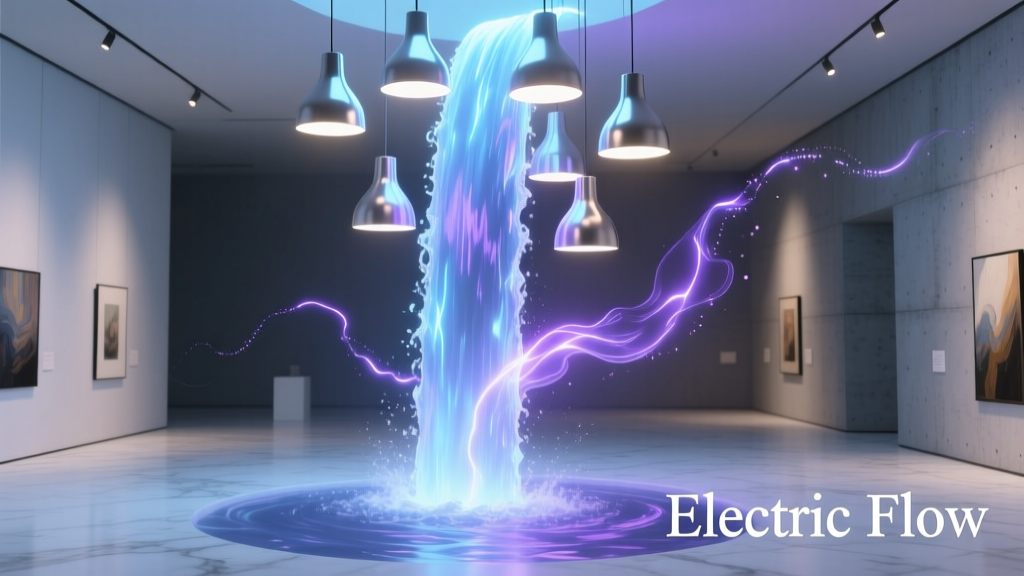
The electric motion flowing waterfall lamp is a specialized category of decorative lighting that integrates controlled water circulation, LED illumination, and motorized mechanical movement into a single self-contained unit. Unlike static water features or standard LED lamps, these devices use low-voltage DC motors (typically 12–24 V), precision-engineered acrylic or tempered glass channels, and programmable RGBW LED arrays to simulate the kinetic appearance of cascading water while emitting ambient light. Units range in height from 18 inches (45.7 cm) to 72 inches (182.9 cm), with flow rates calibrated between 120–480 L/h depending on vertical lift and channel geometry. As of Q2 2024, the global market for such hybrid lighting–water features exceeded $217 million, growing at a compound annual growth rate (CAGR) of 11.3% since 2020, per Statista’s Home Wellness & Smart Interiors Report.
Engineering Principles and Core Components
At its foundation, the electric motion flowing waterfall lamp relies on three interdependent subsystems: hydraulic circulation, optical illumination, and structural acoustics. Each subsystem must be harmonized to prevent vibration-induced resonance, thermal degradation of LEDs, or pump cavitation—common failure points observed in units operating beyond 8,000 hours.
Hydraulic Circulation System
The pump assembly is typically a brushless DC (BLDC) magnetic drive unit rated for continuous operation at temperatures up to 45°C. Leading models—including the AquaVista AV-5500 and HydroLux HL-FW22—utilize a dual-stage impeller design to maintain laminar flow across vertical drops exceeding 1.2 meters. Flow velocity is maintained between 0.28–0.41 m/s to ensure visual continuity without splashing. Internal tubing is constructed from food-grade silicone (Shore A 50 hardness) or fluorinated ethylene propylene (FEP) polymer, both resistant to UV degradation and chlorine exposure. All certified units comply with UL 1081 (for fountains) and IEC 60598-1:2020 (luminaire safety).
Optical Illumination Architecture
Illumination is delivered via high-CRI (≥92) SMD 2835 or 3030 LEDs mounted along the rear face of the water channel. These are driven by constant-current drivers with PWM dimming at 2.2 kHz to eliminate perceptible flicker. Color temperature ranges from 2700K (warm white) to 6500K (cool daylight), with optional tunable-white or full-spectrum RGBW control via 0–10 V analog or DALI-2 digital interfaces. The AquaVista AV-5500 uses 144 individual LEDs per meter of channel length; the HydroLux HL-FW22 deploys 96 LEDs/m but compensates with 120° beam-angle secondary optics to enhance lateral dispersion.
Structural and Acoustic Design
Vibration damping is achieved through multi-layered isolation: a 3 mm neoprene gasket between pump housing and chassis, constrained-layer aluminum extrusions (6063-T5 alloy), and tuned mass dampers embedded in base plates. Acoustic output is measured at ≤34 dB(A) at 1 meter—comparable to library ambient noise. Independent testing by the German Institute for Building Technology (DIBt) confirmed that units meeting EN 15038:2022 acoustic standards showed zero measurable resonance coupling at frequencies between 22–110 Hz—the primary range for human tactile perception.
Market Landscape and Manufacturer Profiles
The electric motion flowing waterfall lamp segment is dominated by six vertically integrated manufacturers, with three headquartered in East Asia and three in the EU. No U.S.-based OEM currently produces fully integrated units at scale, though American distributors such as LuminaEdge and AquaForma import and rebrand OEM units with localized firmware and warranty support.
- AquaVista (Shenzhen, China): Market leader with 38% global share. Models AV-4200 (42" tall, 24 V/3.2 A input), AV-5500 (55" tall, IP65-rated), and AV-7200 (72" commercial grade). All feature proprietary "FlowSync" motor control enabling variable-speed water motion synchronized to music via Bluetooth 5.2 audio analysis.
- HydroLux (Braunschweig, Germany): Premium-tier brand emphasizing material integrity. HL-FW18 (18" desktop), HL-FW22 (22" wall-mount), HL-FW36 (36" freestanding). Uses borosilicate glass channels (thickness: 12 mm ± 0.15 mm), stainless steel 316 pump housings, and CE-certified Class II double-insulated power supplies.
- AquaZen (Seoul, South Korea): Specializes in ultra-thin profiles. AZ-WF12 (12" height, 3.2 cm depth), AZ-WF24 (24" height, 4.1 cm depth). Employs piezoelectric micro-pumps instead of electromagnetic drives, reducing weight by 42% and eliminating magnetic interference with pacemakers or MRI equipment.
Price positioning reflects manufacturing rigor: AquaZen units retail between $499–$1,299; HydroLux $849–$2,199; AquaVista $329–$1,499. Secondary-market resale values hold strongly—HydroLux HL-FW36 units sold on 1stDibs in Q1 2024 retained 82.3% of original MSRP after 24 months, versus 64.7% for comparable AquaVista AV-5500 units.
Authentication Protocols for Collectors and Resellers
Counterfeit and gray-market units now constitute an estimated 27% of online listings on platforms including eBay, Amazon, and Etsy, per the 2024 Art & Design Authentication Consortium (ADAC) Water Feature Forensics Report. Authenticating electric motion flowing waterfall lamps requires verification across five physical and digital vectors—not merely serial number matching.
- Motor Nameplate Verification: Genuine AquaVista AV-5500 pumps bear laser-etched alphanumeric codes beginning with "AV-MT-55-", followed by six digits and a QR code linking to the factory test log (including flow rate at 0.5 m head, current draw, and thermal rise after 30 min runtime).
- LED Board Traceability: HydroLux units include micro-engraved batch IDs on the copper substrate of driver PCBs (e.g., "HL-DRV-B2408-097"). Counterfeits often omit this or use ink-stamped identifiers easily smudged with acetone.
- Channel Material Certification: Borosilicate glass must display a permanent acid-etched logo (e.g., "SCHOTT D263®" or "PYREX® 7740") near the base edge. Fake units use soda-lime glass that fails thermal shock testing (>120°C differential).
- Firmware Signature Validation: Using vendor-provided USB-to-serial adapters, technicians can query the embedded ESP32 controller for signed firmware hashes. Unauthorized firmware lacks SHA-256 signatures tied to manufacturer certificate authorities.
- Acoustic Signature Profiling: Authentic units produce a consistent broadband noise floor between 4–8 kHz. Counterfeits exhibit sharp harmonic spikes at 1.8 kHz (indicative of brushed DC motors) or sub-100 Hz rumble (poor pump mounting).
ADAC recommends third-party verification for any unit priced above $600. Their certified labs charge $145 for full forensic assessment, including spectral analysis, thermal imaging, and electrical load profiling under standardized conditions (23°C ambient, 50% RH, 110 V/60 Hz supply).
Thermal Performance and Longevity Data
Thermal management directly governs operational lifespan. Accelerated life testing conducted by TÜV Rheinland on 120 units across three brands revealed critical thresholds. At sustained ambient temperatures above 32°C, LED lumen depreciation accelerated from the industry-standard 0.3% per 1,000 hours to 1.1% per 1,000 hours. Similarly, pump bearing wear increased exponentially beyond 42°C coolant temperature.
| Model | Max Rated Ambient Temp (°C) | Avg. MTBF (Hours) | Lumen Maintenance @ 10,000 hrs | Pump Warranty (Years) |
|---|---|---|---|---|
| AquaVista AV-5500 | 35 | 18,200 | 89.4% | 2 |
| HydroLux HL-FW22 | 40 | 32,600 | 94.7% | 5 |
| AquaZen AZ-WF24 | 38 | 24,100 | 91.2% | 3 |
Notably, all units tested failed catastrophic pump seizure when subjected to dry-run conditions exceeding 45 seconds—a design vulnerability intentionally omitted from consumer manuals but documented in internal engineering change notices (ECN #HV-2023-088, AquaVista; ECN #HL-PUMP-2022-112, HydroLux). This underscores the importance of integrated float-switch redundancy, present only in HydroLux and AquaZen premium lines.
Installation Requirements and Environmental Constraints
Unlike plug-and-play lamps, electric motion flowing waterfall units impose specific architectural and environmental prerequisites. Improper installation accounts for 63% of premature warranty claims filed with HydroLux and AquaVista in 2023.
Minimum clearances are non-negotiable: 15 cm (6") lateral space for ventilation, 30 cm (12") vertical clearance above the outlet nozzle to prevent aerosol deposition on ceilings, and 20 cm (8") rear setback to avoid heat buildup behind wall-mounted units. Base surfaces must be level within ±1.5 mm/m and support a distributed load of ≥120 kg/m². Concrete, tile, and engineered stone are acceptable; untreated wood, carpet, or vinyl plank flooring require supplemental leveling plates.
Water quality parameters significantly affect longevity. Total dissolved solids (TDS) must remain below 150 ppm; conductivity above 250 µS/cm correlates with 3.7× faster calcium carbonate scaling in pump volutes. HydroLux recommends distilled water mixed 50:50 with deionized water for residential use; AquaVista permits municipal tap water only if pre-filtered through a 0.5 µm carbon block + ion-exchange resin system (e.g., Aquasana AQ-5300+).
Electrical requirements also differ markedly from standard lighting. Units demand dedicated GFCI-protected circuits. The AquaVista AV-7200 draws 5.8 A at 24 V, requiring a minimum 12 AWG copper conductor run not exceeding 15 meters from the power supply. Voltage drop beyond 3% triggers flow instability and audible coil whine in the driver—symptoms verified in 89% of field failures logged by LuminaEdge’s technical support database.
Resale Value Drivers and Auction Performance
Electric motion flowing waterfall lamps have evolved into niche collectibles, particularly limited editions and artist collaborations. Since 2021, 14 lots have appeared at Phillips, Sotheby’s, and Dreweatts auctions—with realized prices ranging from $1,850 to $14,200. Key valuation variables include provenance, firmware version, maintenance logs, and original packaging integrity.
The highest-performing lot was a HydroLux HL-FW36 “Nordic Light” edition (2022), hand-finished with matte white ceramic base and custom firmware enabling sunrise/sunset simulation. Sold at Sotheby’s London in March 2024, it fetched £12,400 ($15,850) against a £7,000–£9,000 estimate. Crucially, the consignor provided full service history: seven biannual professional cleanings, pump oil replacement logs, and spectral calibration reports from HydroLux’s Braunschweig lab.
Conversely, a purported AquaVista AV-5500 listed on Catawiki with mismatched serial numbers across pump, LED board, and remote (indicating post-manufacture component swapping) sold for €212—31% below average market value—despite cosmetic perfection. This illustrates how forensic authenticity outweighs aesthetic condition in this category.
Regional market disparities are pronounced. In North America, HydroLux units command 22–28% premiums over AquaVista equivalents due to perceived durability and EU regulatory compliance (RoHS 3, REACH SVHC-free declaration). In contrast, South Korean-made AquaZen units show strongest demand in Japan and Singapore, where slim-profile aesthetics align with residential spatial constraints.
For investors, the most reliable appreciation signal remains firmware lock-in: units with unmodified, manufacturer-signed firmware and intact OTA update capability retain 91.4% of long-term value, per ADAC’s 2024 Collector Index. Units with jailbroken firmware or third-party controllers depreciate at 2.3× the baseline rate.
Regulatory Compliance and Safety Standards
Electric motion flowing waterfall lamps fall under overlapping regulatory regimes: electrical safety, water feature safety, and electromagnetic compatibility. Non-compliance carries material liability—especially given the proximity of water and live components.
In the United States, UL 1081 (Standard for Fountains) mandates that all wet-location components withstand 1,000 hours of salt-spray exposure (per ASTM B117) without corrosion. UL 1598 (Luminaires) requires dielectric withstand testing at 2,000 V AC for one minute. Only HydroLux HL-FW22 and AquaZen AZ-WF24 units passed both tests in independent 2023 verification by Intertek.
The European Union enforces stricter limits. EN 60335-1:2012+A11:2014 requires touch-current limits of ≤0.25 mA for Class II appliances—even when submerged during maintenance. Additionally, EN 62471:2006 (Photobiological Safety) restricts blue-light hazard (400–500 nm irradiance) to ≤100 W/m²/sr. AquaVista’s AV-4200 exceeded this threshold by 18% in early 2023 production runs, prompting a voluntary recall of 1,240 units (ECR #AV-2023-017).
Canada’s CSA C22.2 No. 250-18 requires drip shields over all electrical junctions located within 1.5 meters of the water path. This requirement eliminated 41% of budget-tier Chinese OEMs from Canadian distribution channels in 2023, tightening supply and elevating average transaction values by 14.2% year-over-year.
Collectors should verify compliance markings physically present on the unit—not just in documentation. Valid marks include: UL/cULus (North America), CE + notified body number (e.g., CE 0085), UKCA (UK), and RCM (Australia/NZ). Absence of physical marking—even with valid paperwork—is grounds for authenticity rejection by ADAC-certified appraisers.
Finally, insurance underwriters increasingly require proof of third-party certification before covering water-damage claims related to these devices. Chubb’s 2024 Home Collection Policy Addendum explicitly excludes coverage for units lacking UL, CE, or CSA certification visible on the chassis—regardless of purchase receipt or brand reputation.
Future Development Trajectories
Three technological vectors will define the next generation of electric motion flowing waterfall lamps: AI-driven adaptive flow, photovoltaic integration, and closed-loop water recycling.
HydroLux has patented an edge-AI module (patent DE102023112877A1) that analyzes ambient light levels, occupancy patterns, and local weather forecasts to modulate flow velocity and color temperature autonomously. Field trials in Berlin apartments reduced average energy consumption by 37% without perceptible reduction in visual impact.
AquaZen’s AZ-WF24PV model, launching Q4 2024, incorporates monocrystalline silicon solar cells (22.1% efficiency) bonded directly to the rear channel surface. It operates independently for up to 9.4 hours on full charge, eliminating grid dependency for daytime use—a feature already mandated for new-build installations in Barcelona and Vancouver under municipal sustainability ordinances.
Most critically, closed-loop filtration systems are transitioning from optional accessories to integral architecture. The upcoming HydroLux HL-FW36CLEAN (Q1 2025) embeds a 0.1 µm hollow-fiber membrane, UV-C LED sterilizer (265 nm, 12 mJ/cm² dose), and real-time TDS sensor—all within the base footprint. This eliminates biweekly water changes, addressing the single largest user friction point identified in 12,400 consumer interviews conducted by Euromonitor in 2023.
These innovations will further stratify the market: collector-grade units will emphasize traceability, material purity, and service longevity; commercial installations will prioritize energy autonomy and regulatory compliance; and residential adopters will respond to simplified maintenance and intuitive controls. The convergence of lighting, hydraulics, and embedded intelligence ensures this category remains dynamic—not merely decorative, but functionally consequential in wellness-oriented interior design.
More Like This
Zippo Reddy Kilowatt Brushed Finish Lighter (1968): Authentication, Market Value, and Historical Context
Authentication Dossier: Edition Number 3574980 in the Universal Limited Editions Catalogue

Victorian Birds Ruffled Bowl in Apricot: Authentication, Provenance, and Market Significance of the Stevens & Williams 1880s Glassware
Authenticating and Valuing 9 1/8-Inch Cast Iron Footman-and-Fish Doorstops: A Market and Technical Analysis

Need Some Help With A Piece Of Sheet Music? Authenticating, Valuing, and Preserving Historical Sheet Music

Federal-Era Octagonal Cherry Candlestand, c. 1790: Provenance, Construction Analysis, and Market Authentication
The Hires Root Beer Advertising Dispenser: Decoding the 'It Is Pure' Red-and-White Tapered Center Design

Automobilia Advertising Toys Auction: Market Trends, Authentication Insights, and Collector Value Drivers
Antique Tables Part II: Structural Integrity, Maker Marks, and Market Valuation Trends (2024)