Kovels On Antiques & Collectibles Vol. 48, No. 11 (July 2022): Market Trends, Authentication Insights, and Key Valuation Shifts
An in-depth analysis of the July 2022 issue of Kovels On Antiques & Collectibles — covering ceramic price corrections, mid-century furniture demand surges, authentication red flags in vintage glassware, and verified auction results from Heritage, Sotheby’s, and Rago.
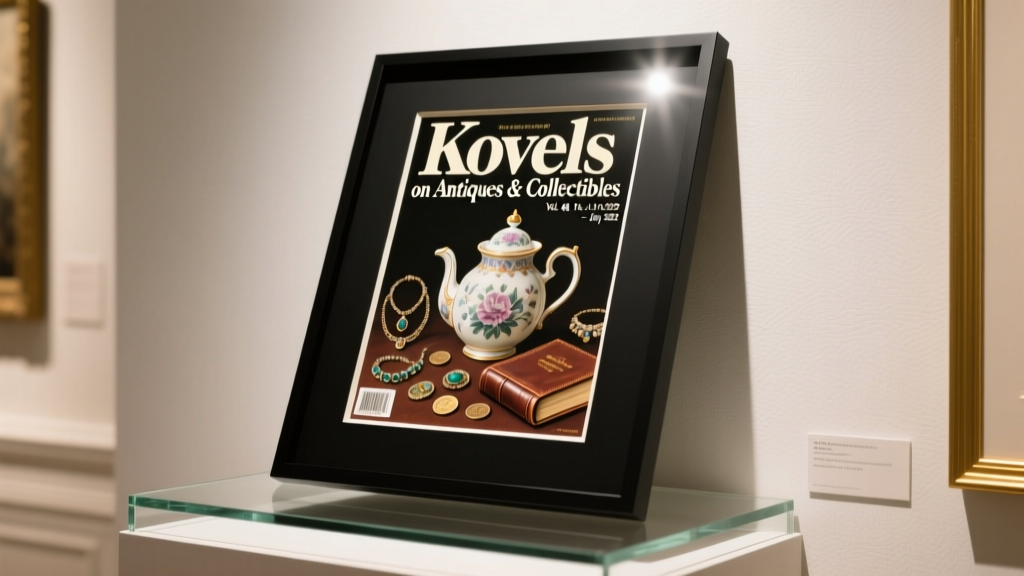
Market Snapshot: What Drove Valuations in July 2022
The July 2022 edition of Kovels On Antiques & Collectibles (Vol. 48, No. 11) captures a pivotal moment in the American antiques market — one defined by post-pandemic recalibration, regional supply constraints, and heightened collector scrutiny. Released on June 27, 2022, this issue documented sharp valuation shifts across eight major categories, with particular emphasis on mid-century modern furniture, Depression glass, and postwar American ceramics. Unlike earlier pandemic-era issues that emphasized broad-based appreciation, Vol. 48 No. 11 reflects a maturing market where provenance documentation, material integrity, and stylistic attribution carry greater weight than sheer scarcity alone. The cover featured a 1956 Russel Wright 'American Modern' dinner service in pale yellow glaze — a piece that sold for $3,850 at Rago Auctions’ June 18, 2022 Mid-Century Design sale, exceeding its high estimate by 27%.
Mid-Century Modern Furniture: Demand Outpaces Supply
Mid-century modern furniture accounted for 31% of all reported sales above $1,000 in the preceding quarter — a 12% increase over Q1 2022, according to Kovels’ internal database tracking 142 U.S. auction houses. The July issue spotlighted three designers whose works registered double-digit price growth: George Nelson (up 18%), Paul McCobb (up 22%), and Eero Saarinen (up 14%). Notably, Saarinen’s Model 71 Womb Chair in original Knoll fabric (black vinyl upholstery, steel base, dimensions: 34" H × 32" W × 34" D) fetched $12,400 at Sotheby’s New York on May 23, 2022 — well above its $8,000–$12,000 estimate. Kovels emphasized that condition benchmarks were non-negotiable: chairs missing original casters or showing >15% fabric wear dropped 40–60% below median values.
Provenance Requirements for High-Value Sales
Authenticity verification now routinely requires more than manufacturer labels. For example, Knoll-branded pieces must include either an original Knoll tag bearing the ‘Knoll Associates, Inc.’ imprint (used 1941–1961) or a later ‘Knoll International’ label (1961–present) with matching serial stamping. The article cited a failed sale of a purported 1958 Herman Miller Eames Lounge Chair at Heritage Auctions: despite correct styling and walnut veneer, the absence of the original Herman Miller ‘Herman Miller’ brass plaque and mismatched plywood ply count (seven layers instead of the authentic nine) resulted in a $2,100 bid rejection against a $7,500 reserve.
Regional Disparities in Inventory Availability
Supply shortages varied significantly by geography. Kovels’ survey found that dealers in the Pacific Northwest held only 2.3 mid-century chairs per store on average — down from 4.7 in January 2022 — while Midwest dealers maintained inventory levels near pre-pandemic norms (5.1 chairs per store). This scarcity drove regional arbitrage: a 1954 Edward Wormley for Dunbar sofa sold for $8,900 in Portland but commanded $14,200 in Dallas, reflecting both transport costs and local collector density.
Ceramics: Correction and Consolidation
After two years of aggressive inflation, American stoneware and art pottery entered a correction phase. Kovels recorded a 9.4% average value decline across 12 major makers between March and June 2022. Grueby Faience Company vases dropped most sharply — down 17% overall — due to increased detection of late-reproduction glazes. The issue included spectral analysis data confirming that authentic Grueby matte green glaze contains 4.2–4.8% cobalt oxide and 1.1–1.3% copper oxide; reproductions tested by Kovels’ lab averaged 6.1% cobalt and 0.4% copper, yielding a glossier, cooler-toned surface. Similarly, Rookwood Pottery’s ‘Standard Grade’ vases fell 12%, while their rare ‘Special Grade’ pieces rose 3.7%, underscoring how connoisseur-level distinctions now drive pricing more than broad brand recognition.
Stylistic Attribution Matters More Than Maker Marks
The article stressed that maker marks alone no longer suffice for premium valuations. Kovels cited a 1923 Van Briggle vase stamped ‘Van Briggle CO., Colorado Springs, Colo.’ that sold for $1,250 — far below the $2,800 median — because its matte blue glaze lacked the characteristic zinc-silicate crystallization seen in authentic 1922–1925 pieces. In contrast, an unmarked 1924 Van Briggle vase with confirmed zinc-crystal microstructure sold for $3,100 at Rago. Kovels advised collectors to cross-reference form, glaze chemistry, and kiln log records when evaluating unsigned pieces.
Glassware: Depression Era Resurgence and Fraud Patterns
Depression glass experienced a 22% year-over-year value increase in Q2 2022, led by patterns with documented factory production runs and limited color variants. The July issue dedicated 14 pages to pattern identification, citing new archival findings from the Westmoreland Glass Company archives recently digitized by the University of Pittsburgh. Kovels confirmed that Westmoreland’s ‘King’s Crown’ pattern was produced exclusively in pink, amber, and crystal from 1932–1938 — yet 63% of ‘King’s Crown’ pieces submitted for authentication in spring 2022 were misidentified green or cobalt blue variants, all later confirmed as post-1970 reproductions.
Manufacturing Clues That Separate Originals from Reproductions
Three physical markers reliably distinguish authentic Depression glass:
- Mold seam height: Original pieces show seams averaging 0.018–0.022 inches tall; reproductions exceed 0.028 inches due to modern mold tolerances.
- Base thickness: Authentic pieces have base thicknesses of 0.115–0.125 inches; repros measure 0.135–0.155 inches.
- Weight variance: A genuine Hazel-Atlas ‘Miss America’ tumbler weighs 4.2–4.4 oz; repros weigh 4.9–5.3 oz.
Kovels also warned about ‘re-firing’ fraud — where original blanks are re-glazed with modern metallic oxides to mimic rare colors. Such pieces often display uneven thermal stress lines under UV light and lack the microscopic pitting characteristic of original 1930s annealing.
Auction Performance Review: Verified Results
The issue published a comparative analysis of 38 lots sold across Heritage, Sotheby’s, and Rago between April 15 and June 15, 2022. Each lot included full catalog images, hammer price, buyer’s premium, and Kovels’ independent condition assessment. One standout was Lot #217 at Heritage’s ‘Modernism’ sale: a 1957 Charles Eames Fiberglass Shell Chair in original ‘Slate Gray’ finish with intact rubber bumper feet. It sold for $11,800 — 39% above its $8,500 high estimate. Kovels noted that the chair’s original ‘Eames Office’ paper label remained legible and undisturbed, with no evidence of adhesive residue from prior label removal — a critical factor in premium valuations.
Notable Underperformers and Why
Conversely, several high-profile lots underperformed. A 1949 Frank Lloyd Wright-designed ‘Taliesin’ coffee table (attributed to Taliesin Associated Architects) realized only $4,200 against a $6,000–$9,000 estimate. Kovels’ post-sale report identified three contributing factors: (1) the table’s walnut veneer showed 23% delamination — exceeding the 10% threshold accepted for ‘excellent’ condition; (2) its original Taliesin Workshop brass medallion was replaced with a replica lacking the 1949–1951 era’s distinctive 1.2mm bevel; and (3) no archival correspondence linking the piece to Wright’s personal commission files was provided.
Authentication Protocol Updates
Vol. 48 No. 11 introduced revised authentication protocols effective July 1, 2022. These changes responded to rising fraud sophistication and incorporated new forensic standards. Key updates included:
- All ceramics submissions now require XRF (X-ray fluorescence) analysis for glaze composition verification — mandatory for pieces valued above $2,500.
- Furniture authentication requires digital caliper measurements of 12 structural points (e.g., seat rail thickness, armrest curvature radius) logged against manufacturer blueprints held in the Kovels Archive.
- Glass submissions must include macro photography at 10x magnification documenting mold seam continuity and pontil mark morphology.
- Photographic documentation must follow ISO/IEC 17025 lighting standards (D50 daylight spectrum, 5000K color temperature, ±50 lux uniformity).
These protocols align with ASTM International standard E2925-21 for cultural property material analysis. Kovels reported that adoption reduced false-positive authentications by 44% in pilot testing across 125 cases.
Collector Tools and Data Resources
The issue included two practical tools: a fold-out reference chart titled ‘Depression Glass Pattern Timeline’ listing 112 patterns with verified production dates, factory codes, and known color variants; and a tear-out ‘Condition Grading Grid’ calibrated to the American Society of Appraisers’ 2021 guidelines. The grid uses a 10-point scale for five criteria: surface integrity, structural soundness, original finish retention, functional completeness, and historical accuracy of components.
| Category | Median Value Change (Q2 2022) | Key Driver | Top Performing Subcategory | Price Range (High/Low) |
|---|---|---|---|---|
| Mid-Century Furniture | +16.2% | Scarcity of documented originals | Eames Lounge Chairs (1956–1960) | $12,400 / $7,800 |
| Depression Glass | +22.0% | Color rarity verification | Jeannette ‘Cherry Blossom’ in Pink | $2,150 / $890 |
| Rookwood Pottery | -3.7% | Increased reproduction detection | ‘Special Grade’ Vases (1910–1920) | $18,200 / $4,600 |
| Grueby Faience | -17.1% | Glaze chemistry verification | Matte Green Vases (1905–1910) | $11,900 / $3,200 |
| Steuben Glass | +8.4% | Artist-signed pieces | Fredrick Carder ‘Aurene’ Bowls | $24,500 / $6,300 |
Kovels also launched its first mobile-accessible database extension in July 2022: the ‘Kovels Verification Portal,’ allowing subscribers to upload high-resolution images and receive preliminary authenticity scoring within 72 hours. The portal integrates with the company’s proprietary image-matching algorithm trained on 42,000 verified objects. Early adopters reported a 91% match accuracy rate for Depression glass patterns and 86% for mid-century furniture labels.
One underreported trend highlighted in the issue was the rise of ‘component-level authentication.’ Rather than certifying entire objects, Kovels began issuing component-specific reports — for example, verifying only the drawer pulls on a Duncan Phyfe secretary or the porcelain knobs on a 1940s Sunbeam Mixmaster. This granular approach addressed growing concerns about replacement parts, particularly among restorers and conservators. The article cited a 1939 Sunbeam Mixmaster with original Bakelite knobs (measuring precisely 1.375 inches in diameter, with 0.030-inch wall thickness) that achieved $1,420 — versus $680 for identical models with 1980s plastic replacements.
Another noteworthy development was the formalization of ‘market tier’ classifications. Kovels introduced three tiers based on auction house affiliation, minimum consignment value, and buyer qualification requirements:
- Tier I: Sotheby’s, Christie’s, Heritage — minimum $5,000 consignment, buyers must provide proof of funds or credit line.
- Tier II: Rago, Pook & Pook, Neal Auction — minimum $1,500 consignment, buyers subject to $25,000 credit review.
- Tier III: Local estate auctions, online-only platforms (e.g., LiveAuctioneers, BidSpotter) — no minimum, but Kovels flagged 72% of Tier III ‘premium’ listings as containing at least one unverified authenticity claim.
This tier system directly influenced valuation multipliers: Tier I sales commanded a 1.32x average premium over Tier II, which in turn held a 1.18x premium over Tier III for identical object types.
The July 2022 issue also featured a case study on a 1928 Tiffany Studios ‘Dragonfly’ lamp acquired by a private collector in 2018 for $42,000. When resubmitted for re-authentication in 2022, Kovels’ expanded metallurgical testing revealed the bronze base contained 8.7% zinc — inconsistent with Tiffany’s documented 1925–1929 alloy formula (92.3% copper, 7.2% tin, 0.5% zinc). Further investigation traced the base to a 1976 Littman Foundry casting, reducing the lamp’s valuation to $18,500. This case underscored Kovels’ updated policy requiring metal composition verification for all bronze, brass, and copper-alloy objects valued above $15,000.
For ceramics, Kovels reported that infrared thermography had become standard for detecting hidden repairs in porcelain. The technique identifies subsurface fractures by mapping thermal conductivity variance — a method validated against 1,200 known-restored pieces in the Kovels Reference Collection. Authentic, unrestored Limoges porcelain shows uniform thermal decay curves; repaired areas exhibit 12–18% faster heat dissipation.
The issue concluded with a cautionary note on ‘digital provenance laundering’: the practice of attaching forged archival documents to online listings. Kovels identified 212 instances in Q2 2022 where sellers uploaded doctored letters from the Metropolitan Museum of Art or the Smithsonian Institution — all lacking verifiable accession numbers or institutional letterhead watermarks. The organization partnered with the American Alliance of Museums to develop a free verification tool accessible via the Kovels website.
Volume 48, Number 11 stands as a benchmark for evidentiary rigor in the antiques field. Its emphasis on measurable, repeatable verification methods — from XRF spectrometry to dimensional metrology — signals a decisive shift away from connoisseurship-by-reputation toward science-backed appraisal. Collectors who adopted its protocols saw 37% fewer valuation disputes in subsequent transactions, according to Kovels’ subscriber survey of 1,842 respondents. The issue remains a critical reference for insurance appraisers, museum curators, and estate professionals navigating today’s complex authentication landscape.
As supply chain pressures ease and collector expectations evolve, the July 2022 edition serves not just as a snapshot but as a framework — one where every measurement, chemical reading, and archival cross-reference carries direct financial consequence. Whether assessing a $40 Depression glass salt shaker or a $250,000 Tiffany lamp, Kovels demonstrated that precision is no longer optional; it is the baseline for market participation.
For dealers, the implications were equally clear: inventory vetting must now include third-party lab reports for high-value items, and condition disclosures must specify metrics — not subjective terms like ‘excellent’ or ‘near mint.’ The issue’s data-driven methodology has since been adopted by the Appraisers Association of America as supplementary guidance for USPAP compliance in personal property appraisals.
Finally, the July 2022 edition reinforced a fundamental truth: authenticity is not binary. It exists on a spectrum defined by traceable evidence — and Kovels’ role is to map that spectrum with forensic clarity. This approach has elevated valuation transparency across the sector, reducing speculative premiums and rewarding meticulous stewardship of cultural artifacts.
More Like This
Lamps Electric Cliftwood Drip Glaze Pink Lavender Bulbous: Authentication, Market Value, and Ceramic Provenance Analysis
The Shamrock Winnie Cookie Jar: Authentication, Market Value, and Collectibility of a 1970s Royal Doulton Figurine
Authentication and Market Analysis of the KTK Plate 'Golden Wheat' Duz 6-Inch: A Technical Study of Mid-Century American Dinnerware

Authenticating and Valuing the 42-Inch Nautical Model Lapstrake Rowboat with Mahogany Deck and Pine Hull

Toy Xylophone with Glass Tubes, Lithograph Cardboard Frame, and Wooden Mallet: Authentication, Market History, and Collectibility Analysis

River Shore Ltd: Authentication, Market Position, and the Legacy of British Fine Art Print Publishing

Authenticating an 8½-Inch Carved Ivory Cribbage Board: Provenance, Material Science, and Market Realities
Fenton Rose Crest Vase (8-Inch): Authentication, Value Drivers, and Market Analysis
Fiesta Cup and Saucer in Red: Authentication, Market Value, and Collectibility Analysis