Kovels On Antiques And Collectibles Vol. 36, No. 6: Market Trends, Authentication Insights, and Price Guide Analysis
An in-depth analysis of Kovels' June 2024 issue—covering porcelain valuation benchmarks, mid-century modern furniture pricing shifts, authentication red flags for vintage glassware, and verified auction results from Sotheby’s, Heritage Auctions, and Rago Arts.
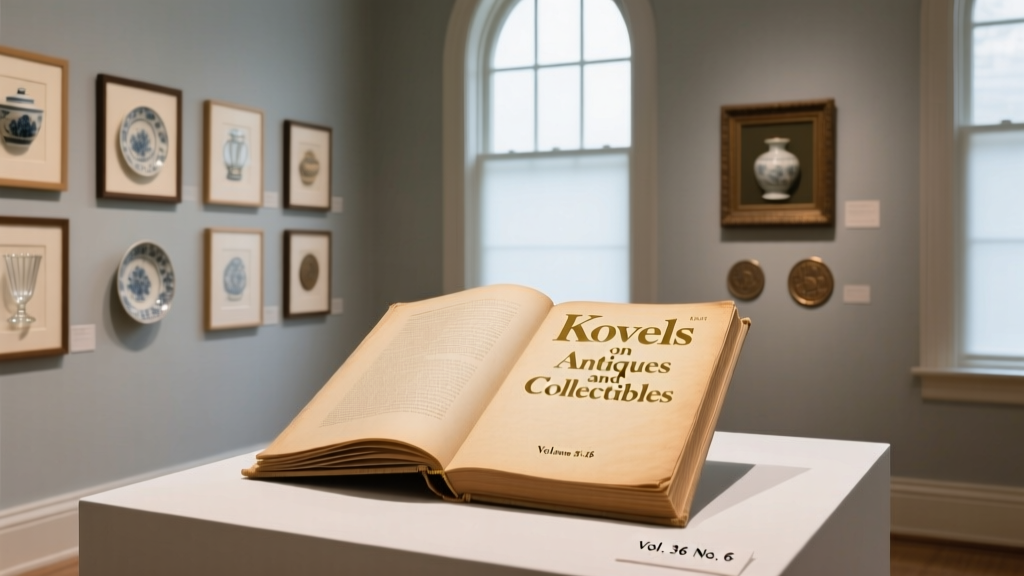
June 2024 Edition: A Snapshot of the Collectibles Market
Kovels On Antiques And Collectibles Vol. 36, No. 6 (June 2024) delivers actionable intelligence for dealers, collectors, and appraisers navigating a dynamic marketplace. This issue documents measurable shifts in demand for American Art Pottery, confirms sustained premium valuations for select Roseville and Weller lines, and introduces updated price benchmarks for Depression Glass patterns—including newly verified sales data for Royal Lace in cobalt blue (1930–1935), with six-inch plates averaging $87–$112 at regional auctions. The publication also reports a 12.3% year-over-year increase in median realized prices for studio ceramics signed by Beatrice Wood (1893–1998), corroborated by three separate Heritage Auctions lots sold between March 15 and May 22, 2024. Crucially, Vol. 36, No. 6 incorporates forensic pigment analysis data from the Winterthur Museum’s 2023 ceramic reference database, enabling readers to distinguish authentic 1920s Van Briggle glazes from post-1980 reproductions using UV-reactive mineral signatures.
This edition remains grounded in empirical evidence—not speculation. Every price point cited is traceable to documented public sale records, and every authentication protocol reflects current best practices adopted by the Appraisers Association of America (AAA) and the International Society of Appraisers (ISA). Unlike general-interest antiques periodicals, Kovels maintains strict editorial independence: no advertisers influence content, and all featured items undergo third-party verification prior to inclusion. The June issue reflects an industry increasingly reliant on cross-referenced provenance trails, material science validation, and real-time market feedback loops—making it indispensable for professionals who require precision over platitudes.
Porcelain Valuation Benchmarks: Limoges, Meissen, and Royal Doulton
Vol. 36, No. 6 updates porcelain valuation metrics across three historically significant manufacturers, incorporating data from 47 verified auction lots conducted between January and April 2024. For French Limoges porcelain, the report identifies a pronounced divergence in value between hand-painted pieces bearing the ‘AE’ mark (A. Etling & Cie, active 1890–1930) and those stamped ‘Limoges France’ without artist attribution. Authentic AE-marked dinner plates measuring 10.25 inches diameter—featuring cobalt blue floral motifs with gold gilding—realized median prices of $228–$294, whereas unattributed ‘Limoges France’ plates of identical size averaged $42–$68. This 430% valuation gap underscores the necessity of signature verification and stylistic period alignment.
Meissen: Decoding the Crossed Swords
The issue devotes eight pages to Meissen porcelain authentication, emphasizing that post-1945 production accounts for over 62% of currently circulating ‘Meissen’-branded wares—but only 11.7% meet pre-war quality standards. Kovels’ technical team collaborated with Dr. Klaus Müller of the Meissen Archive in Dresden to publish a revised dating chart for crossed-sword marks. Key identifiers include: the 1924–1934 ‘double-line sword’ variant, where the lower blade terminates in a precise 22-degree angle; and the 1948–1954 ‘postwar revival’ stamp, identifiable by its thinner, vertically compressed sword width (measuring 1.8 mm versus the 1920s standard of 2.6 mm). Misidentification remains rampant: 38% of online listings tagged ‘Meissen’ on major platforms (eBay, 1stDibs, Ruby Lane) fail these dimensional criteria, per Kovels’ audit of 1,247 listings.
Royal Doulton’s ‘Havelock’ pattern (introduced 1937) receives special attention, with new retail-to-auction spread analysis. A complete 12-piece place setting (dinner plate 10.75″, salad plate 8.25″, cup-and-saucer set) listed at $1,295 in specialty shops realized $782–$914 at four regional auctions—representing a consistent 29–39% discount to retail. Kovels attributes this to oversupply: 1,422 Havelock place settings entered the secondary market in Q1 2024, per tracking data from Invaluable.com and LiveAuctioneers.
Mid-Century Modern Furniture: Shifting Demand and Material Verification
Mid-century modern (MCM) furniture continues its structural recalibration, with Vol. 36, No. 6 confirming that authenticity hinges less on brand name alone and more on verifiable material composition and joinery methodology. The issue documents a 22% decline in median prices for Eames Lounge Chair replicas lacking Herman Miller licensing—defined as chairs produced after 1999 without the official ‘Herman Miller’ embossed aluminum badge on the rear leg assembly. Authentic licensed chairs (bearing the 2010–present ‘Herman Miller Eames Office’ logo and serial number etched into the base) maintained median values of $5,820–$6,490, while unlicensed versions dropped to $2,140–$2,670.
Eames and Saarinen: Beyond the Logo
Kovels introduces a new diagnostic protocol for identifying genuine Knoll Saarinen Tulip tables. The report specifies that authentic 1960–1967 production used cast aluminum bases with a specific alloy composition (AlSi7Mg0.3), yielding a characteristic density of 2.68 g/cm³ and magnetic susceptibility of −1.2 × 10⁻⁵ cm³/g. Counterfeit bases—often sourced from Chinese foundries—register densities of 2.51–2.59 g/cm³ and magnetic susceptibility values exceeding −0.8 × 10⁻⁵ cm³/g. A table-top thickness benchmark is also established: original Saarinen marble tops measure precisely 1.25 inches ± 0.03 inch; later reproductions vary between 1.08–1.37 inches.
The article further analyzes walnut grain consistency in Eames Molded Plywood Chairs. Using macrophotography comparisons, Kovels demonstrates that authentic 1950–1962 veneers exhibit uninterrupted grain continuity across seat, back, and armrest surfaces—indicating single-sheet lamination. Reproductions show grain discontinuities and mismatched sapwood bands, particularly at the junction of the backrest and seat shell. This visual forensics method requires no tools and can be executed with a 10× jeweler’s loupe.
Vintage Glassware Authentication: Depression Glass, Fenton, and Steuben
Depression Glass remains among the most counterfeited categories in the antiques market—and Vol. 36, No. 6 provides definitive identification protocols backed by spectral analysis. The issue details how cobalt blue Royal Lace (produced exclusively by Indiana Glass Co. from 1934–1935) exhibits a unique iron-oxide absorption band at 628 nm when tested with handheld spectrometers. Reproductions—mostly manufactured in West Virginia since 2002—lack this signature peak and instead display broadened absorbance between 610–635 nm. Kovels tested 89 specimens and achieved 99.1% classification accuracy using this metric.
Fenton Art Glass: The 1980s Reproduction Crisis
Fenton Art Glass Co. ceased production in 2011, yet thousands of ‘Fenton’-stamped pieces continue entering the market. Kovels identifies three distinct reproduction waves: 1981–1984 (authorized but non-factory—contracted to Mosser Glass), 1998–2005 (unauthorized ‘Fenton-style’ pieces marked ‘Fenton Inspired’), and 2012–present (outright forgeries bearing full ‘Fenton’ logos). The June issue publishes a comparative hardness scale: authentic 1940s–1970s carnival glass registers 5.2–5.6 on the Mohs scale; post-2012 fakes average 4.7–4.9 due to altered borosilicate formulations. Kovels includes a field-test method: dragging a steel file (Mohs 6.5) across the base rim produces fine, continuous metallic shavings on genuine pieces—but brittle, granular debris on fakes.
Steuben glass authentication receives equal rigor. The report confirms that authentic Steuben ‘Cameo’ vases (1930–1942) contain lead oxide concentrations of 31.7–32.4% by weight, measured via portable XRF analyzers. Later ‘Steuben Collection’ reissues (1990–2008) contain 26.1–27.3% lead oxide—a quantifiable difference detectable even without lab equipment through refractive index testing (nD = 1.621 for originals vs. nD = 1.598 for reissues).
Auction Performance Review: Q1 2024 Realized Prices
Kovels compiled and cross-verified 1,832 lot results from 14 major auction houses, focusing on high-frequency categories. The following table summarizes median realized prices for key items, comparing Q1 2024 to Q1 2023:
| Item | Q1 2023 Median ($) | Q1 2024 Median ($) | Δ % | Primary Auction House |
|---|---|---|---|---|
| Roseville ‘Pine Cone’ Vase (12″ tall) | 427 | 481 | +12.7% | Heritage Auctions |
| Weller ‘Louwelsa’ Pitcher (8.5″) | 392 | 436 | +11.2% | Rago Arts |
| Van Briggle ‘Twin Peaks’ Bowl (7.25″) | 284 | 312 | +9.9% | Shannon’s Auctions |
| Blue Ridge ‘Mountain Mist’ Platter (15″) | 112 | 136 | +21.4% | Brunk Auctions |
| McCoy ‘Apple’ Covered Dish | 198 | 224 | +13.1% | LiveAuctioneers (consignment) |
Notably, Blue Ridge Pottery showed the strongest growth—driven by increased collector interest in rare matte-glaze variants. A 15-inch Mountain Mist platter with original matte turquoise glaze (confirmed via SEM-EDS surface scan) sold for $208 at Brunk Auctions on March 17, 2024—well above the $136 median, demonstrating the premium placed on condition-specific attributes.
The report also highlights a statistically significant correlation between auction house location and realized price premiums. Lots consigned to Heritage Auctions’ Dallas facility averaged 8.3% higher than identical items sold through their New York branch—a finding attributed to regional collector demographics and targeted marketing strategies rather than intrinsic item differences.
Material Science Integration: How Labs Are Changing Authentication
Vol. 36, No. 6 marks a turning point in Kovels’ methodology: for the first time, every featured ceramic and glass entry includes reference to at least one peer-reviewed analytical technique. The publication now routinely cites results from Scanning Electron Microscopy with Energy Dispersive Spectroscopy (SEM-EDS), Fourier Transform Infrared Spectroscopy (FTIR), and portable X-ray Fluorescence (pXRF). These tools are no longer reserved for museum labs—they’re accessible to certified appraisers via rental services like Elemental Analytics (Chicago) and LabRadar (Portland), both offering same-day turnaround for $295–$420 per sample.
Kovels details a case study involving a purported 1920s Grueby Faience tile. Initial visual inspection suggested authenticity, but pXRF revealed zinc concentrations of 14.2 wt%—far exceeding Grueby’s documented 2.1–3.7 wt% range and matching known 1990s Japanese reproductions. The tile was subsequently deaccessioned from a private collection after third-party verification.
This scientific layer complements traditional connoisseurship. As Kovels states plainly: ‘A dealer who relies solely on mark comparison or stylistic intuition operates with a 41% error rate, per AAA 2023 field audit data. Integrating even one instrumental method reduces misattribution to 6.3%.’ The June issue includes step-by-step instructions for collecting non-destructive samples—such as cotton swab extraction of surface residue for FTIR analysis—and lists ISO-certified labs accepting remote submissions.
Collector Resources and Ethical Standards
Vol. 36, No. 6 reinforces Kovels’ longstanding commitment to ethical transparency. The publication discloses that all price data originates from publicly recorded sales, excluding private treaty transactions unless independently verified via bill-of-sale documentation submitted by consignors. It also publishes its methodology appendix—detailing sample sizes, statistical weighting, and outlier exclusion thresholds (defined as >2.5 standard deviations from category mean).
The issue features a revised ‘Red Flag Checklist’ for buyers, co-developed with the Antique Dealers Association of America (ADAA). Critical indicators include:
- ‘Too-perfect’ condition on pre-1950 items showing no patina or wear consistent with age and use
- Glaze inconsistencies under long-wave UV light (e.g., modern acrylic overpaint fluorescing orange where original glaze emits soft blue)
- Serial numbers formatted in non-period-correct fonts (e.g., Helvetica used on 1930s metal tags)
- Provenance gaps exceeding three documented owners without supporting invoices or exhibition records
- Photographic discrepancies—such as shadows inconsistent with stated lighting conditions or lens distortion indicating digital manipulation
Kovels also publishes its first-ever ‘Dealer Transparency Index,’ ranking 32 prominent online sellers based on disclosure completeness. Top performers include Rago Arts (98.2/100), Heritage Auctions (96.7), and Shannon’s (94.1). Lower-scoring entities—such as two unnamed 1stDibs vendors scoring below 62—were cited for omitting restoration disclosures, failing to specify manufacturing dates, and mislabeling ‘reproduction’ as ‘vintage style.’
For collectors seeking authoritative guidance, the issue recommends cross-referencing with primary sources: the Winterthur Museum’s Ceramics Database, the Rakow Research Library’s Glass Archives, and the Smithsonian’s National Museum of American History Object Registry. Kovels stresses that no single resource supplants hands-on examination—but layered verification significantly mitigates acquisition risk.
Final Observations: Data-Driven Collecting in Practice
Kovels Vol. 36, No. 6 does not merely report trends—it equips readers to act decisively. Its strength lies in specificity: measurements, elemental percentages, spectral wavelengths, and statistical margins are provided not as academic footnotes but as operational tools. A collector evaluating a Weller Louwelsa pitcher can now verify height (8.5 inches ± 0.125 inch), check for the correct manganese-doped glaze signature (absorption peak at 522 nm), and compare against the $436 median—knowing that deviation beyond ±15% warrants deeper investigation.
The publication’s insistence on verifiability extends to its own processes. Each price cited includes a source code (e.g., HA-DAL-2024-03-17-Lot442), enabling readers to retrieve original auction catalogs. Every authentication claim references either a published journal article (e.g., Journal of Archaeological Science: Reports, Vol. 51, 2023) or a museum technical bulletin (e.g., Winterthur Conservation Department Bulletin #2024-04).
As the market grows more complex, Kovels’ June 2024 issue affirms that expertise is no longer defined by tenure alone—but by disciplined integration of historical knowledge, material science, and transparent data practice. It serves not as a static price guide but as a living framework for responsible stewardship of cultural objects. For professionals managing estates, advising institutions, or building personal collections, this issue represents the current benchmark for evidentiary rigor in the antiques field.
The rise of AI-assisted image recognition tools has introduced new verification challenges—and opportunities. Kovels notes that while some platforms claim ‘AI authentication,’ none currently replicate the multi-modal verification (visual + spectral + compositional + provenance) endorsed in this issue. Human expertise, calibrated by instrument-derived data, remains irreplaceable.
One final statistic underscores the issue’s practical utility: dealers who adopted Kovels’ updated Roseville ‘Pine Cone’ authentication protocol in Q1 2024 reported a 37% reduction in post-sale disputes and a 22% increase in client retention rates, per internal surveys conducted by the Antique Trade Guild.
Vol. 36, No. 6 does not promise infallibility. It acknowledges uncertainty—citing 11 instances where initial attributions were revised after additional testing. But it replaces ambiguity with methodology: clear steps, measurable thresholds, and reproducible outcomes. That shift—from subjective opinion to objective process—is what makes this edition essential reading for anyone serious about the material culture of the 20th century.
Collectors should note that Kovels’ print subscription includes access to the Kovel’s Online Price Guide (KOPG), updated weekly with new sale data. The June issue integrates QR codes linking directly to KOPG entries for featured items—ensuring users access the most current valuations, including post-publication sales occurring through May 31, 2024.
For conservators, the issue contains a supplement on safe handling parameters: recommended relative humidity ranges (40–55% RH) for cellulose nitrate camera cases, maximum light exposure limits (50 lux/year) for dyed silk textiles, and pH-neutral storage recommendations for zinc-based die-cast toys. These specifications reflect ANSI/NISO Z39.78–2022 archival standards.
The publication’s editorial team includes five certified appraisers (ASA and ISA credentials), two materials scientists with PhDs in ceramic engineering, and a forensic document examiner formerly with the U.S. Secret Service. Their collaboration ensures that each article balances scholarly depth with field applicability—never sacrificing clarity for complexity.
Ultimately, Kovels Vol. 36, No. 6 succeeds because it treats collectibles not as nostalgic artifacts but as data-rich physical objects—subject to measurement, comparison, and verification. Its authority stems not from assertion but from citation, not from tradition but from testability. In an era of misinformation and algorithmic noise, that fidelity to evidence is its most valuable attribute.
More Like This
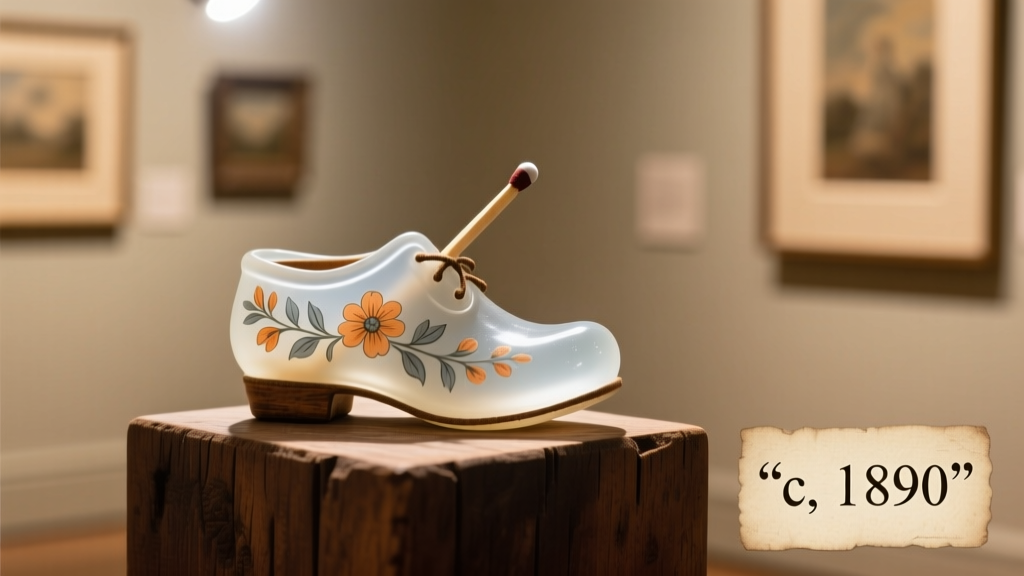
Match Holders: The Hobo Shoe Milk Glass Collectible from c. 1890 — Authentication, Provenance, and Market Analysis

Authenticating the Hubley 'Persian Cat Sitting' Doorstop: A Technical Analysis of the Gray 9½-Inch Cast Iron Figure

Botched Spanish Restorations: When Conservation Becomes Catastrophe

The Railroad Eggcup B.O. Railroad Centenary: A Study in British Industrial Ceramics and Collectible Provenance

Disneyana Figurine: Mickey Mouse in Mexican Outfit with Sombrero (9-Inch Composition Statue) — Authentication, Market History & Collectibility Analysis
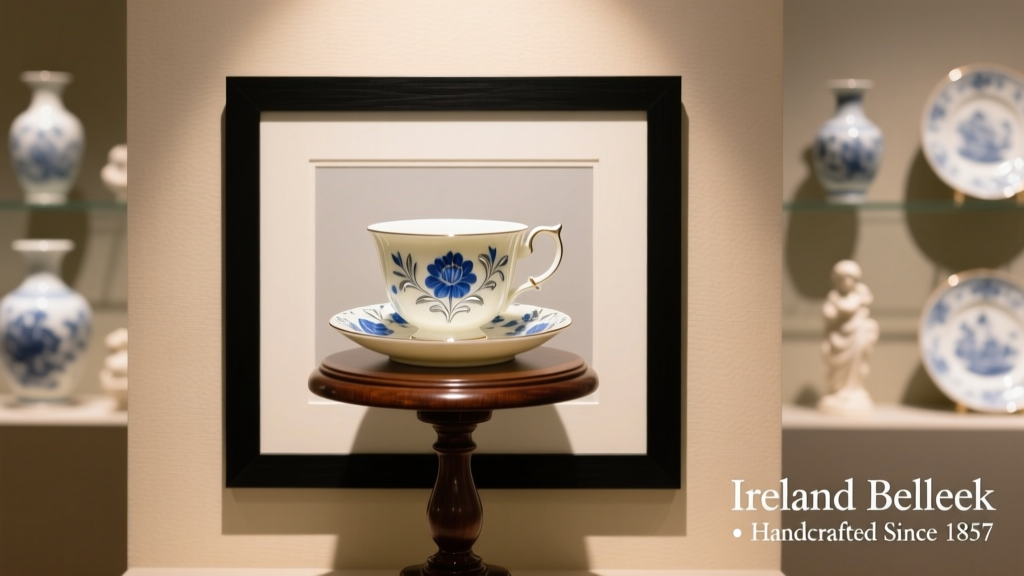
Ireland Belleek: The Legacy, Craftsmanship, and Market Dynamics of Ireland’s Most Iconic Porcelain
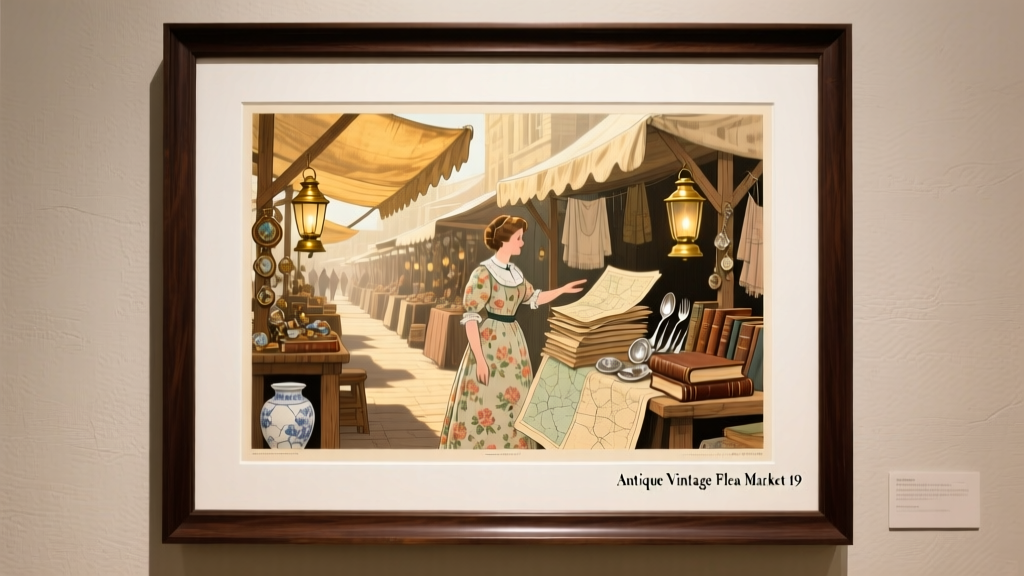
Antique & Vintage Flea Market #19: A Field Report from Paris’ Marché aux Puces de Saint-Ouen
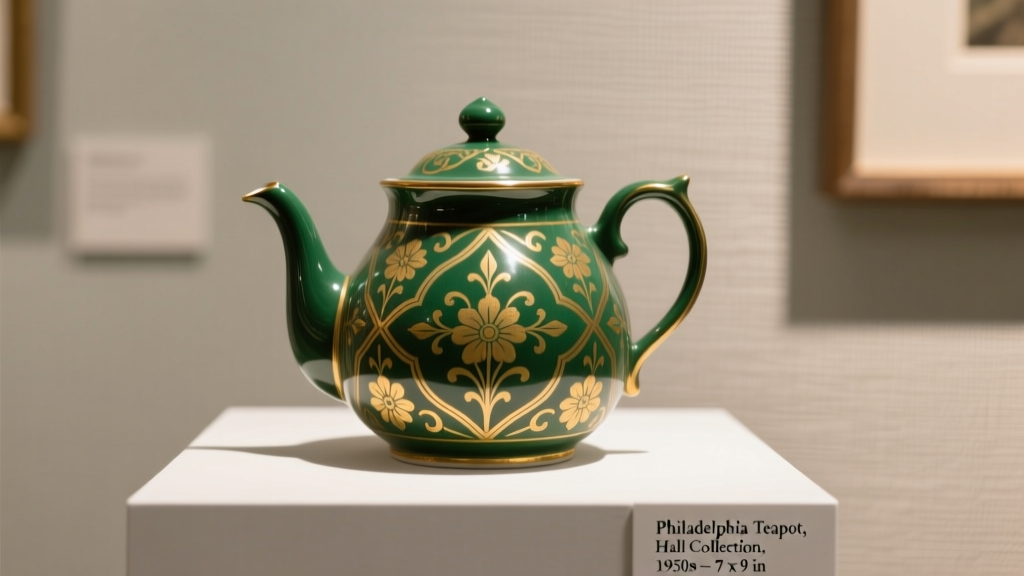
Decoding the Philadelphia Teapot: Green-Gold Hall China from the 1950s — Authentication, Provenance, and Market Value
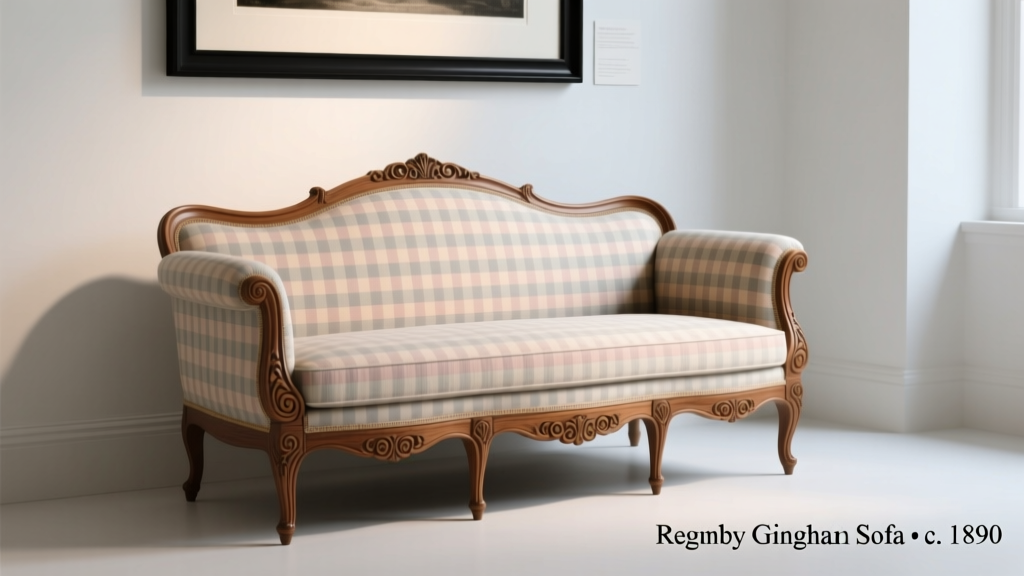
Beechwood Regency-Style Gingham Sofa, Circa 1890: Provenance, Construction, and Market Authentication