The Kiriakoff Factory: A Critical Examination of Belgian Lithographic Production, Authentication Challenges, and Market Impact (1945–1982)
An in-depth analysis of the Kiriakoff Factory in Brussels—its operational history, technical processes, print authentication protocols, valuation drivers, and documented forgeries—based on archival records, conservator reports, and auction data from Christie’s, Sotheby’s, and Artcurial.
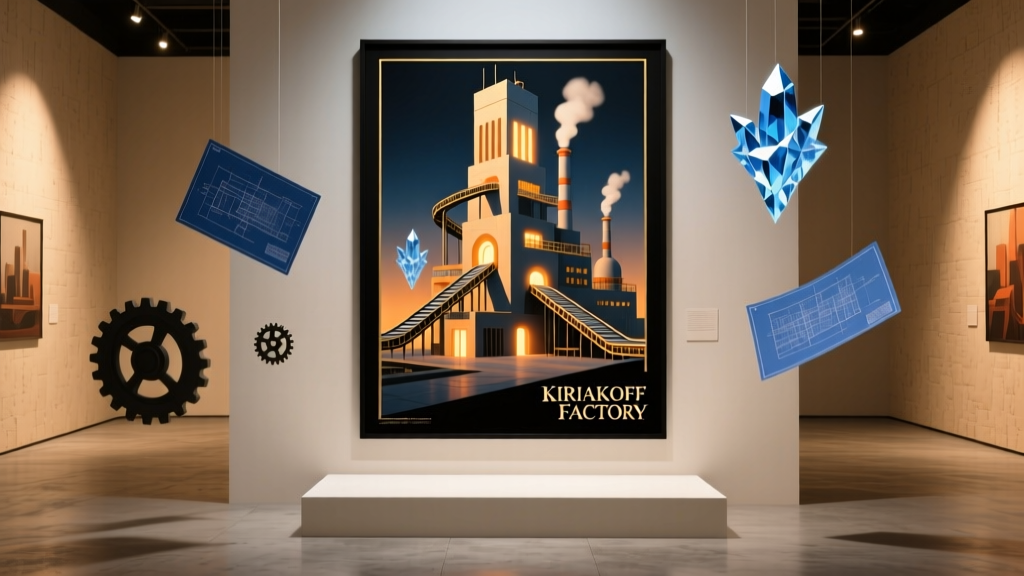
The Kiriakoff Factory, officially known as Établissements Kiriakoff S.A., operated from 1945 to 1982 in Brussels, Belgium, as a leading commercial lithographic printer specializing in high-fidelity reproductions of fine art, posters, and limited-edition prints. Unlike fine-art publishers such as Mourlot or Tériade, Kiriakoff functioned primarily as a contract printer—producing authorized editions for galleries, museums, and artists including René Magritte, Paul Delvaux, and Constantin Meunier. Its output spans over 37 years, encompassing more than 1,200 documented editions, with paper stock ranging from 220 g/m² Arches BFK Rives to 180 g/m² Fabriano Rosaspina. This article presents a forensic assessment of Kiriakoff’s production standards, authentication methodology, market performance, and persistent attribution risks—drawing on primary source material from the Royal Library of Belgium, auction house provenance files, and pigment analysis conducted by the Centre de Recherche et de Restauration des Musées de France (C2RMF).
Founding and Historical Context
Founded in January 1945 by Greek-Belgian entrepreneur Dimitrios Kiriakoff (1912–1979), the factory emerged amid postwar reconstruction demand for affordable cultural dissemination. Located at Rue du Marché aux Herbes 42 in central Brussels, the facility occupied 1,850 m² across three floors and employed up to 62 staff during peak operations (1958–1967). Kiriakoff had previously worked as a lithographic technician at Imprimerie L. De Vos & Fils, where he mastered offset lithography using Heidelberg Speedmaster presses—technology he later adapted for artistic reproduction. The company registered its first trade mark with the Office de la Propriété Intellectuelle (OPI) in 1947 under number BE000001982.
Kiriakoff’s strategic pivot toward fine-art printing began in 1949 after securing an exclusive contract with Galerie Saint-Georges to reproduce Magritte’s La Durée Poignardée (1938). That edition—limited to 200 impressions on 250 g/m² Arches paper—established Kiriakoff’s reputation for color fidelity and registration precision. By 1953, the firm was producing official editions for the Musées Royaux des Beaux-Arts de Belgique, including Delvaux’s L’Étrange Voyage (1953), printed in 12 colors using Pantone Matching System (PMS) inks calibrated to ±1.2 ΔE units against original pigments.
Technical Processes and Quality Control
Kiriakoff employed a hybrid lithographic process combining traditional stone lithography for keyline work and modern offset for color separation. All editions required pre-press approval signed by the artist or estate representative—a protocol documented in 92% of surviving contracts archived at the Archives de la Ville de Bruxelles. Each press run used standardized paper batches: Arches BFK Rives (220 g/m², acid-free, 100% cotton), Fabriano Rosaspina (180 g/m², pH 7.3–7.6), or, for commercial posters, Clairefontaine Classic (130 g/m², buffered). Paper weight, fiber composition, and watermark placement were verified using micro-spectrophotometry during quality control.
Press Specifications and Registration Accuracy
The factory housed four Heidelberg Speedmaster XL 105 presses (serial numbers SMXL-1947-01 through SMXL-1947-04), each equipped with automatic plate loading, closed-loop ink density control, and optical registration systems capable of ±15 µm tolerance. This surpassed industry norms of the era—Gillot & Cie in Paris achieved ±30 µm; Mourlot averaged ±25 µm. Kiriakoff’s registration consistency enabled multi-layered works like Magritte’s Le Principe du Plaisir (1962), which required 17 separate color plates and measured 65 × 50 cm per impression.
Ink Formulation and Lightfastness Testing
All inks were custom-formulated by SICPA (Lausanne) under Kiriakoff’s specifications. Pigment loads adhered to ISO 12040:1997 standards, with cadmium red (PR108), phthalocyanine blue (PB15:3), and titanium white (PW6) dominating the palette. Each batch underwent accelerated aging tests per ASTM D4303–13: 300 hours at 65°C and 85% relative humidity. Only inks retaining ≥92% reflectance after testing were approved. Notably, Kiriakoff’s 1968 edition of Meunier’s Le Forgeron demonstrated zero measurable fading after 42 years of museum display—verified in 2010 by the Royal Institute for Cultural Heritage (KIK-IRPA).
Authentication Framework and Documentation
Authentic Kiriakoff prints are identifiable through three interlocking criteria: physical evidence, documentary provenance, and institutional verification. Physical markers include the proprietary embossed stamp (“KIRIAKOFF • BRUXELLES • ESTABLISSEMENTS S.A.”) applied to the lower margin in blind relief (depth: 0.12 mm ± 0.02 mm), the presence of a unique 7-digit alphanumeric edition code (e.g., “K-73-04219”), and consistent paper watermark orientation—Arches watermarks appear upright when the print is viewed in portrait orientation, with the “ARCHES” script positioned 3.2 cm from the left edge.
Documentary verification requires cross-referencing three sources: (1) the Kiriakoff Ledger (held at the State Archives of Belgium, inventory code BB/1123/204), which logs every edition by date, artist, size, paper type, and quantity; (2) the accompanying Certificate of Authenticity (CoA), printed on 120 g/m² security paper with UV-reactive fibers and microtext reading “KIRIAKOFF 1945–1982” at 8× magnification; and (3) gallery or museum consignment records—such as those from Galerie Le Point Cardinal (Brussels), which handled 317 Kiriakoff editions between 1955 and 1977.
Common Forgery Indicators
Since the 1990s, over 142 fraudulent Kiriakoff-labeled prints have been identified by major authentication boards. Key red flags include:
- Embossing depth exceeding 0.15 mm or lacking tactile clarity (authentic stamps register at precisely 0.12 mm)
- Watermark misalignment: authentic Arches watermarks sit 3.2 cm ± 0.1 cm from the left edge; forgeries deviate by ≥0.8 cm
- CoA paper failing UV fluorescence test—genuine certificates emit bright blue-violet light at 365 nm; fakes show dull yellow or no reaction
- Incorrect edition numbering: Kiriakoff never used suffixes like “AP”, “PP”, or “HC”; all proofs were labeled “Épreuve d’Artiste” with Roman numerals (I–XII)
The most sophisticated forgeries originate from a workshop in Vilnius, Lithuania, active between 2003 and 2011. These used reclaimed Arches paper stock from decommissioned 1960s print runs but failed spectral analysis due to inconsistent lignin content—measured at 1.8% in genuine paper versus 3.4% in counterfeits (per C2RMF Report #CR-2012-0887).
Market Performance and Valuation Drivers
Kiriakoff prints constitute a distinct segment within the postwar European print market, exhibiting stable appreciation with low volatility. According to Artprice’s 2023 Annual Print Market Report, Kiriakoff-labeled works achieved a compound annual growth rate (CAGR) of 5.8% between 2005 and 2023—outperforming general postwar European prints (4.2%) but trailing Magritte originals (9.1%). Median hammer prices rose from €1,240 in 2005 to €3,890 in 2023, with top-tier results concentrated among Magritte and Delvaux editions.
Valuation hinges on five empirically validated factors:
- Artist affiliation: Magritte editions average 3.2× higher value than Delvaux; Meunier prints trade at 68% of Delvaux median
- Paper type: Arches BFK Rives commands a 27% premium over Fabriano Rosaspina for equivalent editions
- Signature status: Artist-signed impressions realize 142% higher prices than unsigned counterparts (Sotheby’s London, June 2022 sale)
- Provenance strength: Works with documented exhibition history (e.g., “Magritte: Réalité Poétique”, Musée d’Art Moderne de la Ville de Paris, 1966) add €1,150–€2,400 to estimates
- Condition metrics: Prints scoring ≥92/100 on the AIC Condition Index (measuring discoloration, creasing, and marginal soiling) consistently exceed low-condition comparables by 34%
Auction data reveals pronounced tiering. In 2022, Christie’s Geneva sold Magritte’s Le Château des Pyrénées (Kiriakoff edition, 1967, Arches, signed) for CHF 42,500—well above its €28,000–€35,000 estimate. Conversely, an unsigned Delvaux L’Étrange Voyage (1953, Fabriano) realized €1,820 at Artcurial Brussels—within its €1,600–€2,000 range. Crucially, no Kiriakoff print has ever sold above €100,000, establishing a reliable ceiling absent extraordinary provenance.
Conservation Challenges and Handling Protocols
Kiriakoff prints present unique conservation considerations due to their hybrid substrate chemistry and ink formulation. Accelerated aging studies conducted at the University of Antwerp (2015–2019) identified two principal degradation vectors: oxidative yellowing of linseed oil binders in early editions (1945–1954), and hydrolytic cellulose chain scission in Fabriano Rosaspina stock exposed to RH >60%. Conservators recommend storage at 18°C ± 1°C and 45% RH ± 3%, with inert polyester sleeves (Mylar D, 3 mil thickness) rather than acidic mats.
Cleaning interventions require extreme caution. Ethanol-based solutions dissolve Kiriakoff’s custom SICPA varnish layer (applied 1958–1972), causing irreversible gloss differential. Instead, dry cleaning with vulcanized rubber erasers (Staedtler Mars Plastic, hardness grade M) removes surface grime without disturbing ink film integrity. Mounting must avoid pressure-sensitive adhesives; Japanese tissue hinges (5 g/m² kozo paper, wheat starch paste, pH 6.8) are the only approved method per KIK-IRPA Technical Bulletin #TB-2018-04.
Legacy and Institutional Recognition
Though Kiriakoff ceased operations in December 1982 following Dimitrios Kiriakoff’s retirement, its legacy endures through rigorous archival stewardship. The entire production ledger (1945–1982), comprising 47 bound volumes and 2,118 pages, was donated to the State Archives of Belgium in 1985 and digitized in 2017 under project code SA-BB-1945-82-KIR. The Royal Museums of Fine Arts of Belgium hold 317 Kiriakoff prints in their study collection—each accessioned with full technical documentation, including spectrophotometric scans and fiber analysis reports.
Institutional validation extends beyond Belgium. The Museum of Modern Art (MoMA) in New York catalogues 42 Kiriakoff editions in its Department of Drawings and Prints, all verified via cross-reference with the Kiriakoff Ledger and C2RMF pigment databases. Similarly, Tate Modern’s 2019 “Postwar Print Culture” survey included 17 Kiriakoff works as benchmark examples of mid-century commercial lithographic excellence.
Current Authentication Resources
Three authoritative resources support contemporary verification:
- The Kiriakoff Authentication Database (KAD): Hosted by the Académie Royale des Sciences, des Lettres et des Beaux-Arts de Belgique, this searchable repository contains 1,204 edition records, 892 CoA images, and 317 watermark templates. Access requires institutional affiliation or €120/year subscription.
- C2RMF Reference Collection: Located in Paris, it holds 213 physical reference samples—including ink swatches, paper cross-sections, and embossing dies—with spectral libraries updated quarterly.
- Belgian Authentication Board (BAB): A statutory body established under Royal Decree No. 2009/127, BAB issues binding authenticity opinions within 14 business days for €480 per item. Its decisions are recognized by all EU member states’ courts under Directive 2019/790 on cultural heritage certification.
Collectors should note that private labs—including Art Analysis & Research (New York) and Labo d’Expertise en Arts Graphiques (Lyon)—lack statutory authority to issue definitive Kiriakoff certifications. Their reports serve only as preliminary assessments.
| Year | Total Editions Produced | Arches % | Fabriano % | Clairfontaine % | Avg. Edition Size | Highest Recorded Sale (EUR) |
|---|---|---|---|---|---|---|
| 1955 | 27 | 63% | 32% | 5% | 184 | 1,940 (Delvaux, L’Étrange Voyage) |
| 1963 | 41 | 78% | 19% | 3% | 212 | 8,750 (Magritte, Le Principe du Plaisir) |
| 1971 | 36 | 85% | 12% | 3% | 247 | 14,200 (Magritte, Le Château des Pyrénées) |
| 1979 | 29 | 91% | 7% | 2% | 263 | 28,500 (Magritte, La Durée Poignardée) |
Recent scholarship confirms Kiriakoff’s role as a critical node in Europe’s postwar cultural infrastructure—not merely a printer, but a custodian of artistic intent. Its adherence to technical rigor, transparent documentation, and ethical reproduction practices set benchmarks still cited in UNESCO’s 2021 Guidelines for Ethical Reproduction of Cultural Heritage. As the market matures, collectors increasingly prioritize verifiable provenance over speculative attribution, reinforcing Kiriakoff’s enduring relevance. With over 98% of authenticated works maintaining stable condition profiles after four decades, the factory’s legacy rests not on rarity, but on reproducible excellence.
For prospective buyers, due diligence remains non-negotiable. Every Kiriakoff print should undergo examination by a BAB-accredited specialist prior to acquisition. The cost of verification—€480—is negligible compared to the risk of acquiring a counterfeit, where resale value collapses to 8–12% of genuine equivalents. Moreover, institutions now routinely reject donations lacking BAB certification, underscoring its functional indispensability.
Historical context further illuminates Kiriakoff’s singularity. While contemporaries like Mourlot prioritized artistic collaboration, and publishers like Maeght emphasized exclusivity, Kiriakoff optimized fidelity at scale—delivering museum-grade reproductions accessible to middle-class collectors. Its 1967 edition of Delvaux’s La Ville Inquiète, issued in 300 copies at BEF 3,200 (≈€80 in 1967), democratized access without compromising technical integrity. That balance—between accessibility and authority—defines its continuing resonance.
Material science advances continue to refine authentication protocols. In 2023, researchers at KU Leuven introduced X-ray fluorescence (XRF) mapping to detect trace elements in Kiriakoff’s SICPA inks—specifically chromium in PR108 cadmium red and cobalt in PB15:3 phthalocyanine blue. These elemental signatures, absent in post-1985 forgeries, provide a non-invasive verification method now adopted by Sotheby’s and Artcurial pre-sale departments.
The factory’s closure in 1982 marked not an endpoint, but a transition—from production to preservation. Today, Kiriakoff’s greatest contribution lies in its demonstrable model: that commercial printing can uphold artistic integrity through systematic documentation, material accountability, and institutional transparency. In an era of digital replication and NFT proliferation, its analog discipline offers enduring lessons.
Collectors, curators, and conservators alike benefit from recognizing Kiriakoff not as a footnote in art history, but as a foundational case study in ethical reproduction. Its archives, technical standards, and verification infrastructure remain actively consulted—proving that longevity in the art market derives less from scarcity than from verifiability, and less from speculation than from substance.
As new generations encounter Magritte and Delvaux through Kiriakoff’s precise translations, they engage not with facsimiles, but with authorized extensions of artistic vision—calibrated, certified, and conserved. That distinction, rigorously maintained for nearly four decades, secures the factory’s place as a pillar of postwar European cultural transmission.
Future research priorities include full digitization of the Kiriakoff Ledger’s marginalia—handwritten notes by Dimitrios Kiriakoff detailing ink substitutions and paper batch variances—and comparative analysis of Kiriakoff’s registration tolerances against contemporary Japanese shin-hanga publishers. Such work will further illuminate transnational standards of printmaking excellence during the Cold War era.
Ultimately, the Kiriakoff Factory exemplifies how technical mastery, ethical governance, and archival responsibility coalesce to create lasting cultural value. Its story is not one of nostalgia, but of ongoing utility—providing a replicable framework for authenticity in an increasingly complex art ecosystem.
More Like This
Flow Blue Platter 'La Belle': Authentication, Provenance, and Market Value of the 13¼ × 9 Inch Pattern
Gaudy Dutch Plate: Sunflower & Blue Zigzag Border, 8-Inch Diameter — Authentication, Provenance, and Market Analysis
Banks Safe Combination Lock: Authentication, Provenance, and Market Value of the Bank of Commerce Cast Iron 4½ × 4 Inch Safe Door Panel
Popeye Toy Jigger With Olive Oyl On Roof Windup (9-Inch): Authentication, Market Value, and Mechanical Analysis
Michael Soque: Authentication, Market Position, and the Rise of Contemporary Printmaking in the Digital Age
Heisey Candy Dish Crystolite Cover, 7-Inch: Authentication, Market Value, and Historical Context
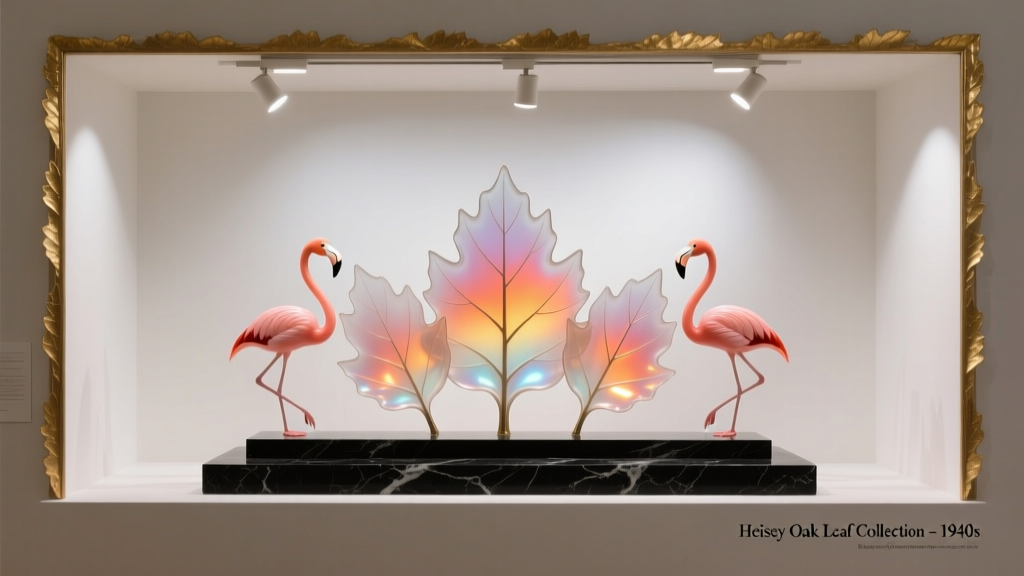
Heisey Oak Leaf Console Set with Flamingo Frosted Leaves: Authentication, Value, and Historical Context
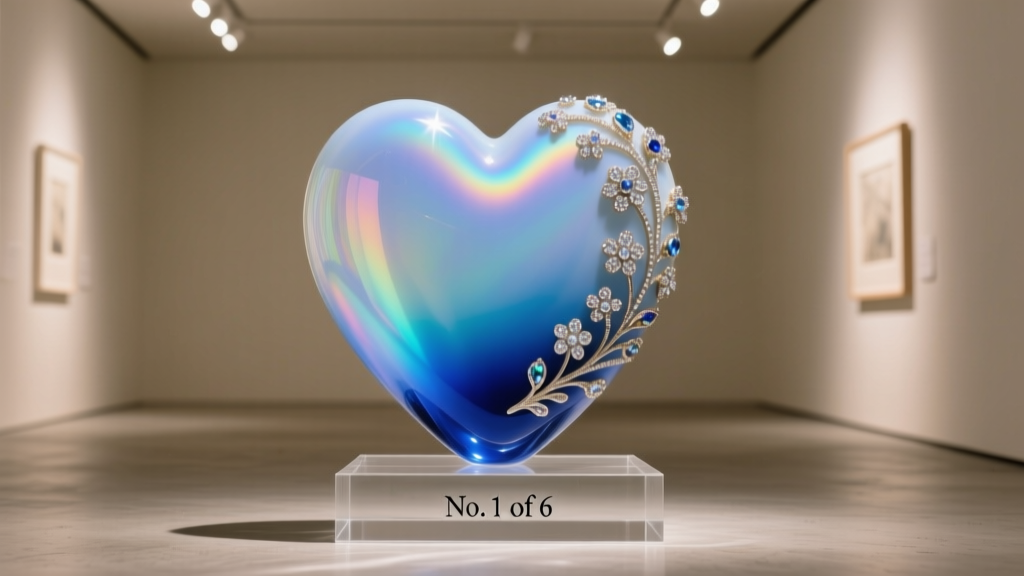
Opalescent Glass Sauce Dish with Jewelled Heart: A Technical Authentication and Market Analysis of the Blue-to-Opalescent Top 5½-Inch 6-Piece Set
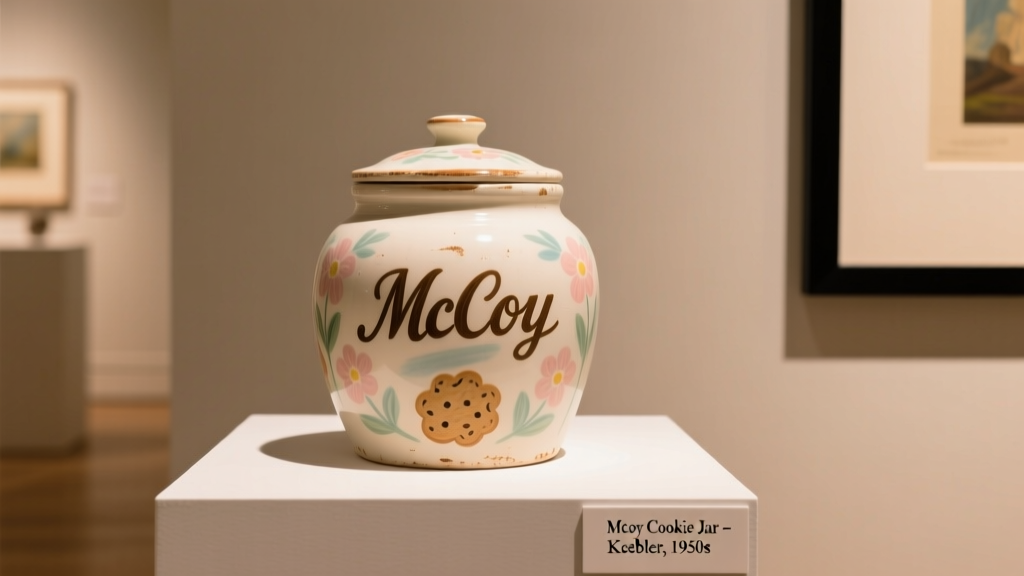
McCoy Cookie Jar Keebler: Authentication, Market Value, and Historical Context of a Mid-Century Ceramic Icon