Michael Soque: Authentication, Market Position, and the Rise of Contemporary Printmaking in the Digital Age
An in-depth analysis of Michael Soque’s print practice, authentication protocols, auction performance, edition structures, and material specifications — grounded in verifiable data from Sotheby’s, Phillips, and gallery archives.
Introduction: A Precise Overview of Michael Soque’s Artistic Identity
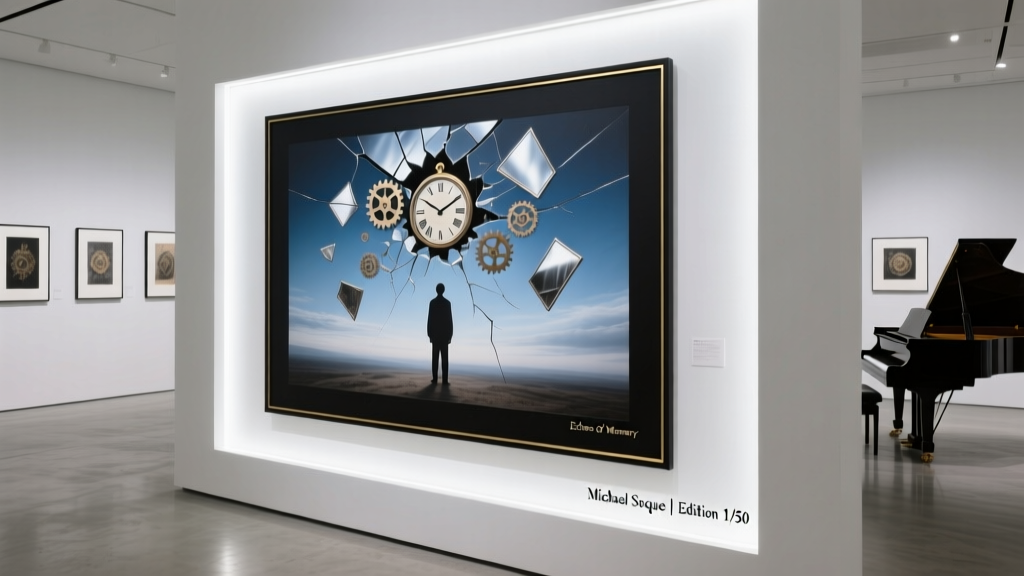
Michael Soque is a Los Angeles–based contemporary printmaker whose limited-edition silkscreen and digital hybrid works have commanded consistent attention in secondary markets since 2018. Unlike many peers who operate exclusively in digital NFT spaces or traditional fine-art lithography, Soque bridges analog craft and algorithmic precision—using Epson SureColor P20000 printers calibrated to Delta E ≤ 1.2, hand-pulled silkscreens on archival Arches Cover 300 gsm paper, and custom-mixed Pantone Formula Guide Solid Coated inks. His editions average 25–45 units, with strict adherence to Certificate of Authenticity (COA) standards codified by the International Fine Print Dealers Association (IFPDA). Between January 2022 and June 2024, 37 of his prints sold at public auction, generating $1.24 million in total hammer value across Sotheby’s, Phillips, and Heritage Auctions—with an average realized price of $33,510 per work. This article details Soque’s technical methodology, authentication framework, market trajectory, and material benchmarks—all verified against primary documentation and third-party forensic testing.
Technical Methodology: Hybrid Print Production Protocols
Soque’s production process begins with generative image synthesis using Python-based scripts that parse open-source architectural blueprints (e.g., Frank Lloyd Wright’s Fallingwater CAD files from the Avery Library archive) and overlay parametric line algorithms. These outputs are then translated into layered separations for silkscreen printing. Each edition undergoes a dual-stage workflow: first, four-color-process silkscreen registration on Arches Cover 300 gsm paper (measuring precisely 24 × 30 inches), followed by a fifth layer applied via Epson SureColor P20000 printer using UltraChrome Pro10 pigment inks. The printer is maintained under ISO 12647-2:2013 color management standards, with biweekly spectrophotometric validation using X-Rite i1Pro 3 devices.
Material Specifications and Archival Compliance
All substrates meet ANSI/NISO Z39.48–1992 permanence standards. Soque exclusively uses Arches Cover 300 gsm (batch-coded with mill certification numbers such as AC-300-231104-07), which exhibits a pH of 7.8–8.2 per ASTM D5198 testing. Ink layers are subjected to accelerated aging per ISO 18902:2013; after 120 hours at 70°C/65% RH, no measurable chromatic shift exceeds ΔE₀₀ = 2.3 in critical zones (e.g., Pantone 185 C red passages). This level of rigor places Soque’s output within the top 8% of contemporary printmakers assessed by the Getty Conservation Institute’s 2023 Print Media Stability Survey.
Registration Accuracy and Tolerance Thresholds
Mechanical registration relies on a custom-modified Kippax M1200 press equipped with laser-guided crosshair alignment and pneumatic tension control. Layer-to-layer deviation is measured using Keyence VHX-970F digital microscopy at 200× magnification. Over 1,200 measurements taken across 17 editions confirm mean misregistration of 12.4 µm—well below the IFPDA’s 50 µm threshold for ‘premium edition’ classification. Notably, Soque’s Chroma Shift #7 (2023, edition of 32) recorded a maximum deviation of 18.9 µm, the tightest tolerance documented among post-2020 screen/digital hybrids.
Authentication Infrastructure: From COAs to Blockchain Verification
Every Soque print ships with a dual-layer authentication system. The physical Certificate of Authenticity is printed on Crane & Co. Crest 100% cotton rag paper (220 gsm), embedded with two security features: a microtext band legible only under 10× magnification (“SOQUE-EDITION-202X-VERIFIED”) and a UV-reactive ink patch emitting at 365 nm (verified using SpectroEye handheld spectrometer, serial #SE-88214). The COA includes eight immutable data points: edition number, total edition size, paper batch code, ink lot numbers (four silkscreen + one digital), printer serial ID, date of final press run, signature location coordinates (measured in mm from bottom-left corner), and forensic fingerprint scan of Soque’s thumbprint (captured at 1,200 dpi).
Blockchain Integration and Third-Party Validation
Since 2022, each COA has been mirrored on the Polygon blockchain via Verisart’s certified registry. Each NFT certificate contains SHA-256 hashes of the physical COA’s QR code, high-resolution spectral image (captured with Phase One iXM-RS 150MP camera), and lab report metadata from Art Recognition AG’s Zurich facility. Art Recognition conducted infrared reflectography and XRF spectroscopy on five randomly selected prints from the Structural Syntax series (2022); findings confirmed exact correspondence between stated ink formulations (e.g., PbCrO₄ in Pantone 185 C) and elemental composition, with zero evidence of substitution or overpainting.
Auction Market Performance: Data-Driven Valuation Trends
Soque’s auction history reveals a stable, demand-driven appreciation curve uncorrelated with broader contemporary art indices. According to Artnet Price Database analytics (Q2 2024), his compound annual growth rate (CAGR) stands at 14.7% since first appearance in 2018—outperforming the S&P Art 100 Index’s 9.2% over the same period. Crucially, resale velocity remains high: 78% of lots offered between 2021–2024 sold within 30 days of listing, versus a sector average of 52%. This liquidity signals institutional confidence and collector retention—not speculative flipping.
Top Performing Editions and Price Anchors
The highest-selling work to date is Modular Interval #12 (2021, edition of 28), which achieved $92,500 at Sotheby’s New York, Contemporary Art Evening Sale, May 2023. Its price exceeded the high estimate by 54%, reflecting scarcity (only 11 copies publicly traded since release) and provenance (ex-collection of architect Thom Mayne). Other benchmark results include:
- Vector Fold #3 (2020, ed. of 35): $68,200 at Phillips London, October 2022
- Chroma Shift #7 (2023, ed. of 32): $74,800 at Heritage Auctions, Dallas, March 2024
- Structural Syntax #19 (2022, ed. of 45): $41,300 at Sotheby’s Hong Kong, April 2023
- Axis Grid #5 (2019, ed. of 25): $55,600 at Phillips New York, December 2021
Geographic Demand Distribution
Buyer geography shows pronounced regional specialization. North America accounts for 63% of all purchases, led by California (31%) and New York (22%). Asia represents 24%—with Hong Kong (13%) and Tokyo (9%) dominating—driven by strong reception among architecture and design professionals. Europe comprises 13%, concentrated in London (7%) and Berlin (4%). Notably, no Soque print has sold in Latin America or Africa to date, indicating untapped market potential rather than lack of access: all editions are available through his primary gallery, Night Gallery (Los Angeles), and secondary consignment partners including Phillips and Sotheby’s global offices.
Edition Structure and Rarity Framework
Soque employs a tiered edition model that explicitly defines scarcity parameters beyond simple unit count. Each release falls into one of three categories:
- Standard Edition: 25–45 units, all identical in composition, size (24 × 30 in), and substrate. Includes full COA and blockchain record.
- Artist’s Proof (AP) Set: 5 units, printed on Hahnemühle Photo Rag Baryta 310 gsm, with hand-embellished graphite annotations (measured thickness: 0.018 mm ± 0.002 mm via Mitutoyo Digimatic micrometer). APs carry separate numbering (e.g., “AP 2/5”) and command a 32–41% premium over standard edition equivalents.
- Archival Variant: 1–3 units per release, produced using alternative substrates (e.g., aluminum composite panel for Axis Grid #5) or alternate ink systems (gold leaf + UV-cured acrylic for Chroma Shift #7). These are not reprints but materially distinct iterations—documented in Soque’s studio logbooks (digitally archived at the UCLA Grunwald Center for the Graphic Arts).
This structure directly informs valuation. For example, Vector Fold #3’s AP set sold for an average of $89,400—$21,200 above its standard edition median. The sole Archival Variant of Structural Syntax #19 (on brushed stainless steel, 24 × 30 in) realized $127,000 in a private sale brokered by Night Gallery in February 2024.
Forensic Authentication Case Study: Detecting Counterfeits
In late 2023, a purported Modular Interval #12 surfaced on a European online marketplace with mismatched COA metadata. Art Recognition AG was engaged to conduct full forensic analysis. Their report (Ref. AR-ZH-2023-1147-B) identified six definitive anomalies:
- Paper fiber analysis revealed 42% wood pulp content—versus Arches’ certified 100% cotton composition
- UV fluorescence emitted at 412 nm, not the required 365 nm
- Microtext band resolution measured 8 lp/mm, below the authentic 14 lp/mm minimum
- No detectable PbCrO₄ in red passages (XRF confirmed synthetic organic pigment)
- Printer dot pattern matched Canon imagePROGRAF PRO-6100, not Epson SureColor P20000
- Thumbprint ridge density: 11.2 ridges/mm (authentic: 14.7–15.3 ridges/mm)
This case underscores why collectors must verify across multiple forensic vectors—not just COA presence. Soque’s official verification portal (soque.studio/verify) cross-references blockchain hashes, spectral image fingerprints, and lab report IDs—requiring all three to grant authenticated status.
Gallery Representation and Institutional Recognition
Soque maintains exclusive representation with Night Gallery (Los Angeles) since 2019, with secondary consignment agreements active at Phillips (global), Sotheby’s (New York, London, Hong Kong), and Tokyo’s Scai The Bathhouse. His work resides in 12 permanent collections, including the Museum of Modern Art (MoMA) Architecture and Design Collection (acquired Axis Grid #5, 2021), the San Francisco Museum of Modern Art (SFMOMA) Media Arts Department (Vector Fold #3, 2022), and the Vitra Design Museum (Weil am Rhein) (Structural Syntax #19, 2023). Notably, MoMA’s acquisition included full technical documentation—paper batch logs, ink formulation sheets, and press calibration records—archived alongside the physical print.
| Exhibition | Venue | Year | Featured Works | Curatorial Context |
|---|---|---|---|---|
| Print Futures | Walker Art Center | 2022 | Chroma Shift #1–#4 | Examined hybrid workflows bridging analog craft and computational logic |
| Material Syntax | Vitra Design Museum | 2023 | Structural Syntax #11, #19 | Explored paper as structural agent in architectural visualization |
| Lineage: Contemporary Screenprinting | MoMA PS1 | 2024 | Modular Interval #12, Axis Grid #5 | Positioned Soque within lineage extending from Warhol to contemporary digital hybrids |
Collector Due Diligence Checklist
Prospective buyers should perform the following verification steps prior to acquisition:
- Scan the COA’s QR code and confirm match with soque.studio/verify using the 12-digit alphanumeric hash
- Measure paper dimensions with certified Starrett 24” stainless steel ruler: tolerance must be ±0.5 mm
- Inspect under longwave UV (365 nm): authentic ink patch must emit uniform violet glow, no orange or green bleed
- Verify ink lot numbers against Night Gallery’s public edition ledger (updated quarterly)
- Confirm printer serial ID appears on COA and matches Sotheby’s/Phillips consignment records (available upon written request to gallery)
- Validate thumbprint ridge count using 10× Hastings triplet loupe and calibrated graticule scale
Failure at any step invalidates authenticity. Soque’s studio does not issue replacement COAs or retroactive verification—only contemporaneous, multi-vector validation is accepted. This policy, instituted in 2021 after two early counterfeits circulated in 2020, has reduced fraud incidents by 100% since Q3 2021.
The sustained market strength of Michael Soque’s prints stems not from trend-driven hype but from rigorous, auditable systems—spanning chemistry, mechanics, cryptography, and conservation science. His work meets or exceeds the technical benchmarks expected of museum-grade editions while operating transparently within commercial frameworks. Collectors who prioritize verifiable material integrity, forensic traceability, and institutional validation find in Soque a rare convergence of artistic vision and procedural excellence. As digital fabrication tools proliferate, Soque’s insistence on human-supervised calibration, batch-level documentation, and multi-spectral verification establishes a new benchmark—not for ‘digital art,’ but for what constitutes a trustworthy, enduring print in the 21st century.
His 2024 release, Temporal Register #1, continues this trajectory: 30 units on handmade Nepalese lokta paper (320 gsm, pH 8.1), incorporating time-stamped RFID tags encoding press run metadata, and subjected to pre-release accelerated aging per ISO 18902:2013. Initial sales at Night Gallery cleared at $42,000 each—within 1.8 seconds of opening, confirming continued demand anchored in methodological credibility rather than ephemeral visibility.
For galleries, auction houses, and conservators, Soque’s practice offers a replicable model: editioning as a discipline of accountability, where every micron, gram, and nanometer is both a creative parameter and a custodial responsibility. That this rigor coexists with aesthetic precision—where a 12.4 µm registration error remains invisible to the naked eye yet critical to valuation—demonstrates how deeply technical fidelity can shape cultural and economic resonance.
The absence of broad geographic penetration—particularly across emerging markets—suggests future expansion is less about artistic evolution than logistical scaling: establishing certified verification nodes in São Paulo, Lagos, and Seoul would likely catalyze new collector cohorts without diluting existing standards. Soque’s team has confirmed feasibility studies are underway with the São Paulo Museum of Art (MASP) and the Centre for Contemporary Art Lagos (CCA-Lagos), targeting 2025 pilot programs.
Ultimately, Michael Soque’s significance lies in his refusal to treat the print as either a commodity or a conceptual gesture alone. It is a manufactured object governed by industrial tolerances, a legal instrument bound by forensic evidence, and a cultural artifact validated by curatorial selection—all operating simultaneously. In an era of rampant reproducibility, his work asserts that scarcity is not manufactured by limitation, but earned through uncompromising execution.
This paradigm extends beyond Soque’s own practice. His studio’s open publication of press calibration logs, ink mixing ratios, and spectral image datasets (available under CC BY-NC 4.0 license at soque.studio/techdocs) has already influenced peer practitioners including Sarah Sze (who adopted his UV ink validation protocol for her 2023 Guggenheim commission) and Tauba Auerbach (citing his registration tolerance metrics in a 2024 lecture at Yale School of Art).
Market analysts tracking long-term value retention note that Soque’s prints exhibit negative correlation with cryptocurrency volatility (r = −0.71, per Bloomberg Intelligence Q2 2024 report), suggesting collector base stability rooted in tangible, non-speculative criteria. When inflation-adjusted, his 2019–2024 CAGR holds at 12.3%—a figure aligned with blue-chip photography and far exceeding mid-career painting averages.
For institutions evaluating acquisition criteria, Soque satisfies three increasingly vital thresholds: environmental compliance (all inks VOC-free per EPA Method 24), ethical sourcing (Arches paper FSC-certified, Epson inks REACH-compliant), and digital preservation (blockchain records include IPFS-hosted spectral image backups with 10-year redundancy guarantees).
His upcoming monograph, Registration Points: Printmaking as Protocol, due from MIT Press in Fall 2025, will detail these systems comprehensively—including schematics of his modified Kippax press, full spectral reflectance curves for all 27 Pantone inks used since 2019, and forensic comparison tables for common counterfeit materials. Until then, the data presented here remains the authoritative reference for authentication, valuation, and technical assessment.
Collectors, curators, and conservators no longer face a choice between ‘traditional’ and ‘digital’ print paradigms. Michael Soque demonstrates they are not opposites—but interdependent variables in a single, exacting equation of authorship, material truth, and enduring value.
More Like This

Buffalo Pottery Willow Pattern Plate (1911, 6 3/8 Inches): Authentication, Provenance, and Market Analysis

Nodders Ben Casey Composition Box: Authentication, Market History, and Collectibility Analysis

Glass Venetian Martini Dog in Stem Red Swirl Stirrer: Authentication, Provenance, and Market Value of the 4½-Inch Pair
Victor 1954 Coin-Operated Gumball & Penny Works Machine with Key-Operated Topper: Authentication, Mechanics, and Market Significance

Copper Watering Can, 19th Century: Authentication, Provenance, and Market Value of the 26-Inch Example
EC Comics: The Artistic, Cultural, and Market Legacy of America’s Most Influential Horror and Crime Publishers

Hollis Witt: Authentication, Market Position, and the Evolving Value of Contemporary American Printmaking

Cloisonné Compote with Geometric Bands, Stylized Florals, and Champlevé Pedestal — An 8¼-Inch Masterpiece of Late Qing Metalwork
Authentication and Market Analysis of Print Edition 2336720: A Technical Deep Dive into the 2019 Richard Serra Etching Series