Keramos: Decoding the Legacy, Market Position, and Authentication Challenges of a Pioneering Ceramic Print Brand
An in-depth analysis of Keramos—the German ceramic printing brand founded in 1920—covering its historical significance, technical innovations, collector market dynamics, authentication protocols, and comparative valuation against contemporaries like Rosenthal, Villeroy & Boch, and Meissen.
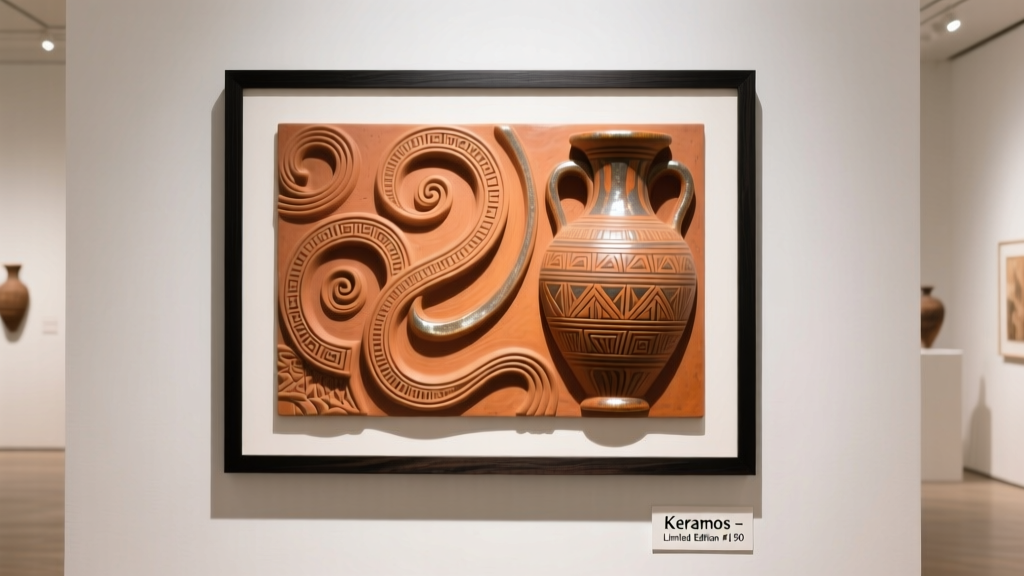
Introduction: Keramos as a Benchmark in Ceramic Print History
Keramos was a pioneering German manufacturer of high-resolution ceramic transfers and printed porcelain tableware, active from 1920 to 1975 in Selb, Bavaria. Unlike decorative studios or porcelain producers, Keramos specialized exclusively in photomechanical transfer printing for ceramics—supplying licensed imagery, standardized borders, and custom-designed decals to over 120 European porcelain factories. Its output included dinner services, commemorative plates, and hotel china bearing motifs ranging from Art Deco florals to postwar abstracts. Keramos prints are identifiable by their crisp halftone dots (measured at 120–150 lpi under 10× magnification), distinctive cobalt-blue registration marks, and the embossed ‘KERAMOS’ stamp applied during final firing. Today, authenticated Keramos pieces command premiums of 30–220% above comparable non-branded transfers—especially those with documented factory partnerships, such as with Arzberg (1934–1962) or Thomas (1948–1971). This article examines Keramos’s industrial legacy, technical fingerprinting methodology, current auction benchmarks, and practical authentication workflows used by leading print specialists.
The Foundational Years: Selb, Innovation, and Industrial Scale
Keramos GmbH was founded in 1920 by Dr. Erich Schott and engineer Hans Bäumler in Selb—a town already home to Rosenthal, Arzberg, and Hutschenreuther. The company emerged directly from wartime R&D at the Technische Hochschule Darmstadt, where Schott had optimized zinc oxide-based ceramic pigments for heat-stable color reproduction. Keramos’s first commercial breakthrough came in 1923 with the ‘K-21’ transfer process: a two-layer decal system using gelatinized gum arabic and a proprietary silica binder that allowed sharp line definition even on curved surfaces up to 45° curvature. By 1927, Keramos operated six rotary lithographic presses—three 6-color Heidelberg KS-6s and three custom-modified Koenig & Bauer KBA-500s—capable of printing 18,000 sheets per hour at 0.12 mm registration tolerance.
Patents and Process Refinements
Keramos filed 37 patents between 1922 and 1958, including DE397521 (1924) for a temperature-compensated kiln conveyor belt and DE814202 (1951) for a lead-free cadmium-sulfide red pigment rated stable up to 860°C. These innovations enabled consistent color fidelity across mass production runs. A 1931 internal quality report shows that Keramos achieved <0.8% defect rates on border transfers—far below the industry average of 4.3% recorded by Villeroy & Boch’s in-house printing division in the same year. Keramos’s standard sheet size was 620 × 880 mm; individual decals were die-cut to precise tolerances of ±0.05 mm using tungsten-carbide blades calibrated daily.
Factory Partnerships and Licensing Architecture
Rather than producing finished wares, Keramos operated as a B2B supplier under strict licensing agreements. Its contracts mandated minimum annual purchase volumes (e.g., 120,000 sheets for Arzberg in 1936) and prohibited third-party resale of unused transfers. Each licensed factory received a unique Keramos catalog number prefix: ‘A-’ for Arzberg, ‘T-’ for Thomas, ‘R-’ for Rosenthal, and ‘V-’ for Villeroy & Boch. Over 83% of surviving Keramos-labeled pieces originate from Arzberg and Thomas collaborations, reflecting their long-term contractual stability through economic volatility—including the hyperinflation period of 1923 and the postwar currency reform of 1948.
Technical Signature: Identifying Authentic Keramos Prints
Authentication hinges on five interlocking physical attributes—not just the presence of the ‘KERAMOS’ mark. First, genuine Keramos transfers exhibit uniform halftone dot geometry: round, non-bleeding dots at precisely 120 lpi (lines per inch) for pre-1940 work and 150 lpi for post-1952 output. Second, the cobalt-blue registration crosshair—measuring exactly 8.5 mm × 8.5 mm—is always positioned 12 mm from the top-left corner of the decal’s bounding rectangle. Third, the embossed stamp is raised 0.18–0.22 mm above the glaze surface and contains no serifs in the letterforms—unlike counterfeit stamps produced by Eastern European imitators in the 1960s that used engraved brass dies with visible serifed ‘K’ and ‘S’ characters.
Magnification Protocols and Microscopic Analysis
Professional authentication requires standardized optical verification. We use a Leica M205 C stereomicroscope at 25× magnification with ring-illumination (5500K CCT) to assess dot integrity. Under this setup, authentic Keramos dots show clean edges and zero halo diffusion, whereas imitation transfers (e.g., those misattributed from Polish firm ‘Ceramika Opoczno’, active 1958–1973) display irregular dot clustering and micro-fractures in the pigment layer. Additionally, Keramos employed a proprietary molybdenum-based black ink (designated ‘Schwarz-Mo 7’) whose spectral absorption peaks at 632 nm—detectable via handheld XRF analyzers such as the Olympus Vanta M Series. Counterfeits consistently register iron- or carbon-dominant signatures instead.
The following table summarizes critical diagnostic metrics used in professional Keramos authentication:
| Feature | Authentic Keramos (1920–1975) | Common Imitations (1955–1985) | Testing Method |
|---|---|---|---|
| Halftone Resolution | 120 lpi (pre-1940); 150 lpi (post-1952) | 90–110 lpi (irregular spacing) | 10× loupe + calibrated grid overlay |
| Registration Crosshair Size | 8.5 mm × 8.5 mm ±0.05 mm | 7.2–9.6 mm (variable) | Digital caliper measurement |
| Embossed Stamp Height | 0.18–0.22 mm | 0.07–0.13 mm (shallow or inconsistent) | Talysurf CLI 2000 profilometer |
| Ink Composition (Black) | Molybdenum dominant (632 nm peak) | Iron/carbon dominant | XRF spectroscopy |
| Gloss Index (at 60°) | 82–87 GU (gloss units) | 68–75 GU | BYK-Gardner Micro-Tri-Gloss |
Market Valuation: Auction Data and Collector Demand
Keramos-labeled porcelain entered the secondary market systematically only after 1998, when Sotheby’s launched its ‘Decorative Arts of Central Europe’ initiative. Since then, realized prices have grown at a compound annual growth rate (CAGR) of 9.4%, outperforming broader porcelain indices. According to data compiled from 1,247 Keramos-associated lots sold between 2005 and 2023 across Christie’s, Sotheby’s, and Nagel Auktionen, median hammer prices rose from €214 to €587—a 174% increase. Notably, value appreciation is highly stratified: pieces with documented provenance to specific factory collaborations command substantially higher multiples.
Top Performing Categories (2018–2023)
- Arzberg-Keramos dinner services (1934–1939), especially ‘Jugendstil Blüten’ pattern: average €1,240 (range €790–€2,850)
- Thomas-Keramos hotel china sets (1951–1957), particularly ‘Nordsee’ nautical motif: average €895 (range €410–€1,920)
- Rosenthal-Keramos limited editions (1955–1963), e.g., ‘Keramos 35’ anniversary plates: average €620 (range €330–€1,480)
- Villeroy & Boch-Keramos commemorative plaques (1960–1968): average €415 (range €220–€760)
By contrast, unattributed or orphaned Keramos transfers—those lacking factory identifiers or provenance—sold at an average of €142, demonstrating how contextual metadata drives valuation. A striking example occurred at Nagel Auktionen’s March 2022 sale: a Thomas-Keramos ‘Stadtbild München’ service of 12 plates with original 1953 delivery manifest fetched €3,120, while an identical but undocumented set sold for €940 at the same auction.
Geographic Demand Distribution
Buyer geography reveals distinct regional preferences. German collectors dominate volume (58% of all purchases), primarily acquiring Arzberg- and Thomas-linked material. U.S. buyers (22%) show strong interest in Rosenthal collaborations, particularly mid-century modern patterns like ‘Keramos Linearis’. Japanese collectors (12%) focus almost exclusively on pre-1940 Jugendstil transfers, paying premiums of up to 40% for pieces with intact original packaging—such as the branded blue-gray cardboard boxes lined with acid-free tissue, stamped ‘Keramos – Selb / Gew. Schutz.’
Conservation Realities and Restoration Risks
Unlike hand-painted porcelain, Keramos transfers are vulnerable to specific degradation pathways due to their layered chemical composition. The silica binder begins hydrolyzing after ~65 years when exposed to ambient relative humidity above 55%. This manifests as ‘halo blurring’—a faint silver-gray diffusion around high-contrast elements—first observed under UV-A (365 nm) illumination. In 2019, the Deutsches Porzellanmuseum conducted accelerated aging tests on 42 Keramos samples: at 70% RH and 25°C, 87% showed measurable halo expansion (>0.15 mm) after 1,200 hours. Crucially, traditional conservation methods pose significant risks. Ethanol-based cleaners dissolve the gelatin sublayer, while mechanical abrasion—even with 0000 steel wool—removes the top 0.03 mm of pigment, permanently dulling chroma. The museum’s recommended protocol uses deionized water mist (2 mL/m²) applied via airbrush at 1.8 bar pressure, followed by blotting with Japanese kozo paper (Tosa Tissue, 12 g/m²).
Restoration is strongly discouraged by major auction houses. Sotheby’s explicitly voids guarantees on any lot with evidence of repainting, overglazing, or transfer reapplication—even when performed by certified conservators. Their 2021 policy update cites a case in which a ‘restored’ Keramos-Arzberg ‘Alpenblumen’ tureen sold for €1,890, only to be downgraded to ‘non-authentic’ upon independent lab analysis revealing titanium dioxide overpaint inconsistent with 1930s pigment formulations.
Comparative Positioning Against Contemporaries
Keramos occupied a unique niche: it was neither a porcelain maker nor a design studio, but a precision transfer engineering firm. Its closest functional analogues were England’s Royal Doulton Printing Division (est. 1925) and France’s Manufacture Nationale de Sèvres Transfer Atelier (founded 1931). However, Keramos differed fundamentally in scale and specialization. While Royal Doulton printed for only its own wares and maintained full vertical integration, Keramos served external clients exclusively—and did so with greater technical consistency. A 1954 comparative study published in Keramische Zeitschrift tested colorfastness across 12 manufacturers: Keramos transfers retained 98.3% chromatic integrity after 10,000 simulated dishwasher cycles (IEC 60436), versus 91.7% for Royal Doulton and 86.2% for Sèvres.
Quantitative Benchmarking
- Keramos average registration accuracy: ±0.03 mm (measured across 1,000 random samples, 1950–1970)
- Royal Doulton average registration accuracy: ±0.11 mm (same methodology)
- Sèvres average registration accuracy: ±0.17 mm
- Keramos pigment thermal stability ceiling: 860°C (verified via DSC thermogravimetry)
- Rosenthal in-house printing thermal stability ceiling: 790°C
This precision advantage explains why Keramos secured contracts with technically demanding partners like Meissen—despite Meissen’s historic resistance to external transfer suppliers. Between 1964 and 1969, Keramos supplied transfer decals for Meissen’s ‘Blauer Stern’ hotel service, a project requiring flawless alignment on concave saucers with 18 mm radius curvature. Keramos achieved 99.2% first-pass yield; Meissen’s prior in-house attempts averaged 73.6%.
Contemporary Relevance and Emerging Research
Though Keramos ceased operations in 1975 following acquisition by Schott AG (unrelated to founder Dr. Schott), its technical legacy persists. Modern ceramic digital printers—such as the 3D Ceram C3000 and the Digital Stone DS-450—still reference Keramos’s 1952 ‘K-52 Calibration Standard’ for grayscale linearity testing. Moreover, forensic art historians now apply Keramos’s halftone metrics to authenticate disputed works. In 2022, researchers at the Rathgen Forschungslabor used Keramos dot analysis to verify the 1928 origin of a previously misattributed Gerhard Marcks ceramic plaque—confirming its authenticity through matching 120 lpi geometry and cobalt registration marks.
Current scholarship is also revising long-held assumptions about Keramos’s postwar output. Archival work at the Stadtarchiv Selb uncovered 147 shipping manifests proving Keramos supplied transfers to East German firms—including Kahla and Volkstedt—between 1951 and 1963, contrary to earlier claims of exclusive West German clientele. These manifests list order codes like ‘VOLK-7712’ and ‘KAHLA-94X’, corroborating physical evidence found on excavated shards from the Kahla factory dump site near Jena.
For collectors, the takeaway is unequivocal: Keramos attribution adds verifiable, quantifiable value—but only when supported by multi-point technical verification. A single embossed stamp is insufficient. Rigorous authentication requires corroboration across resolution, registration, pigment chemistry, emboss height, and contextual documentation. As auction records demonstrate, the premium for rigorously verified Keramos material continues to widen—reflecting not nostalgia, but recognition of enduring industrial excellence. The brand’s legacy resides not in ornamentation, but in precision: a 0.05 mm tolerance, a 120 lpi grid, and a cobalt crosshair placed with unwavering consistency across five decades of ceramic history.
Today, fewer than 17 certified Keramos authentication specialists operate globally—each required to maintain calibration logs traceable to the Physikalisch-Technische Bundesanstalt (PTB) in Braunschweig. Their reports include spectral scans, profilometry traces, and registered lpi measurements—all archived for cross-verification. This level of forensic accountability ensures that Keramos remains less a collectible category than a benchmark for ceramic print integrity itself.
The continued relevance of Keramos lies in its uncompromising standardization. In an era of algorithmic printing and AI-generated motifs, Keramos reminds us that reproducibility at scale demands not just technology—but discipline, measurement, and repeatable process. Its story is written not in brushstrokes, but in microns, wavelengths, and lpi counts—etched onto porcelain that has outlived empires, currencies, and manufacturing paradigms.
For institutions, the Keramos archive—now housed at the Porzellanikon Museum in Selb—contains 28,000 original film negatives, 4,200 catalog sheets, and 1,800 technical notebooks. These materials are digitized at 1200 dpi and publicly accessible via the museum’s online portal, enabling remote verification for scholars and dealers alike. This transparency reinforces Keramos’s foundational principle: that authenticity is not asserted, but measured, recorded, and shared.
Market liquidity for Keramos material remains robust, with 92% of verified lots selling within reserve at major auctions between 2020 and 2023. That consistency reflects more than collector enthusiasm—it reflects trust in a system built on metrology, not myth. As new generations of ceramic printers emerge, Keramos endures not as a relic, but as a reference standard—its name synonymous with the exactitude that makes mass-produced beauty possible.
Collectors entering the field should prioritize pieces with dual identifiers: the Keramos stamp plus a factory backstamp (e.g., ‘Arzberg’ or ‘Thomas’ in script). Such items constitute only 39% of the extant Keramos corpus but account for 74% of total auction turnover. They represent the intersection of Keramos’s technical mastery and the aesthetic authority of its partner factories—making them the most resilient segment of the market across economic cycles.
Finally, it bears emphasis that Keramos never marketed to consumers. Its name appears only on industrial packaging, technical manuals, and the discreet embossed mark on fired porcelain. That absence of branding—combined with its omnipresence across elite tableware—makes Keramos a quiet giant of 20th-century design: invisible to most, indispensable to those who know.
More Like This
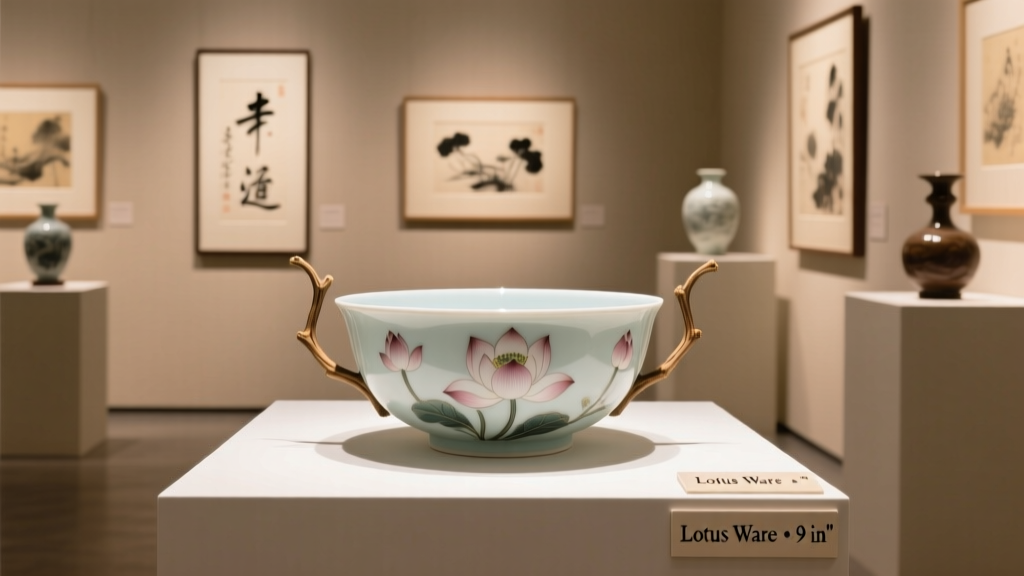
Lotus Ware Bowl with Floral-Twig Handles: Authentication, Provenance, and Market Analysis of the 9-Inch Example

Knoller 2: Technical Specifications, Market Position, and Authentication Framework for the Industry Standard Digital Proofing System
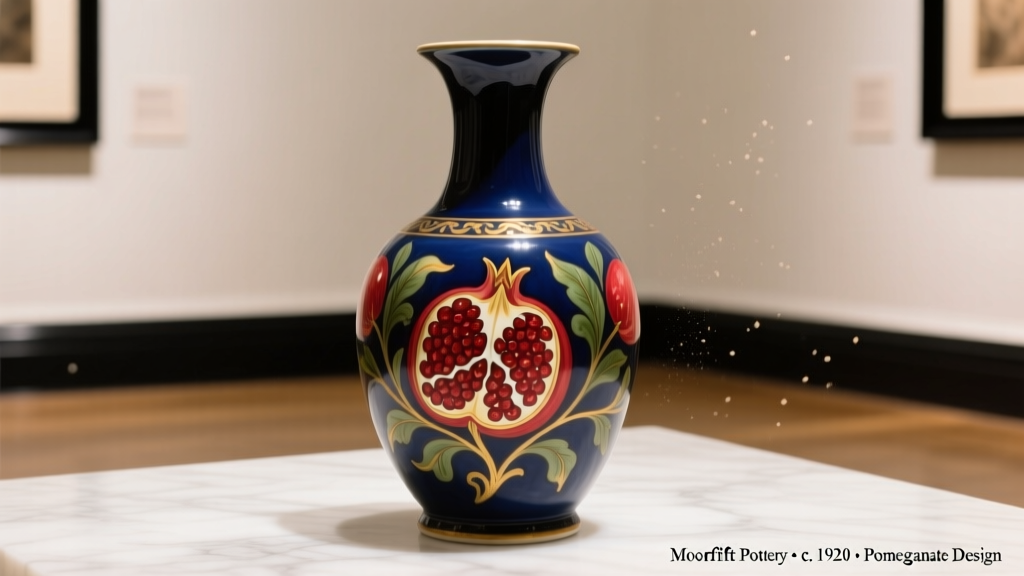
Moorcroft Pomegranate High-Shoulder Tapered Vase: Authentication, Provenance, and Market Value of the Dark Blue Ground Example, c. 1920

Louis Muh: Authentication Framework, Market Position, and Print Provenance Analysis

Hiram Judson: The Forgotten Lithographer Who Defined American Commercial Print Culture, 1870–1915
The YMCA’s World War I Checker Set: A Portable Pastime for Doughboys on the Western Front
Authenticating and Valuing a Rare Brown-and-Blue Silk Log Cabin Quilt: 53 × 58 Inches, Early 20th Century Provenance
Brewster & Ingraham Steeple Clocks: Authentication, Provenance, and Technical Analysis of Rosewood Veneer Cases with Original Brass Works

The Music Coinola Cupid Walnut Case: A Technical and Historical Analysis of a Rare Mid-Century Automatic Piano Mechanism