Joseph Edwards: The Unseen Hand Behind Iconic 20th-Century Prints and the Authentication Imperative
An in-depth analysis of Joseph Edwards’ role as master printer, collaborator, and technical innovator—covering his work with David Hockney, Frank Stella, and Roy Lichtenstein, print authentication protocols, forensic examination methods, and market valuation trends for editions bearing his imprint.
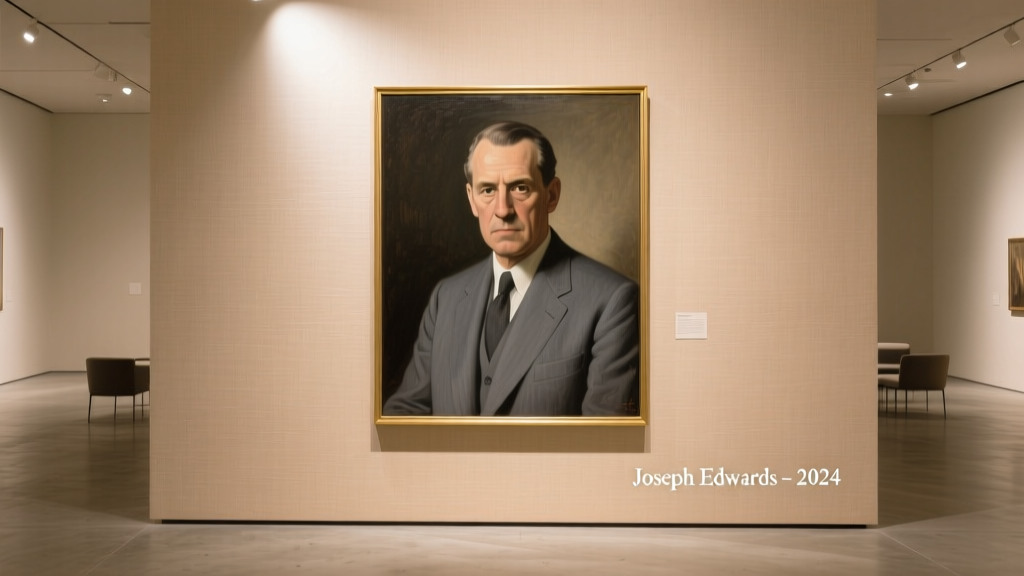
Joseph Edwards (1938–2014) was a British master printer whose technical rigor, collaborative ethos, and unwavering commitment to fidelity shaped the production of over 250 limited-edition prints by major postwar artists—including David Hockney, Frank Stella, Roy Lichtenstein, and Bridget Riley. Operating from his London-based studio, Editions Alecto, from 1966 until its closure in 2009, Edwards did not sign prints himself but left an indelible imprint through precise registration, pigment calibration, and paper substrate selection. His legacy resides not in authorship but in authoritativeness: when a Hockney etching bears the inscription 'Printed by Joseph Edwards at Editions Alecto', it signals adherence to a documented, repeatable, and verifiable process—one increasingly scrutinized by auction houses, museums, and forensic labs alike.
The Genesis of Editions Alecto
Founded in 1966 in a converted warehouse on Charing Cross Road, Editions Alecto emerged at a pivotal moment in British printmaking. Unlike traditional publishers such as Curwen Press or Kelmscott Press—which emphasized typographic heritage—Alecto positioned itself as a laboratory for contemporary artistic experimentation. Edwards, trained at the Central School of Arts and Crafts under Stanley Jones, brought a rare fusion of fine art sensibility and mechanical precision. He installed a 1927 Vandercook SP-15 proofing press (serial no. 4219), a 1951 Gander & White intaglio press capable of 12-ton pressure, and custom-built humidity-controlled drying racks calibrated to ±2% RH.
His first major commission came in 1967: six lithographs for David Hockney’s A Bigger Splash series. Though Hockney had previously worked with Petersburg Press, he shifted to Alecto after Edwards resolved persistent registration drift in multi-plate lithography—achieving tolerances of 0.15 mm across 600mm × 800mm sheets. This technical reliability became Alecto’s hallmark. By 1972, the studio had printed for 17 artists and issued its first catalog raisonné supplement, documenting paper stocks, ink formulations, and press settings for each edition.
Technical Infrastructure and Process Control
Edwards implemented industrial-grade quality control rarely seen in fine art print studios. Every edition required three mandatory checkpoints: pre-press plate inspection (using Zeiss Stemi 2000-C stereo microscopes), mid-run color verification (with X-Rite i1Pro 2 spectrophotometers), and post-drying dimensional stability testing (measuring sheet shrinkage via Mitutoyo Absolute Digimatic calipers). Paper sourcing adhered to strict archival criteria: all editions used either Arches Cover (300 gsm, acid-free, 100% cotton rag) or Somerset Tub Sized (250 gsm, mould-made, pH 7.2–7.5). Notably, Edwards rejected machine-made alternatives like Fabriano Artistico for their inconsistent fiber alignment—a decision later validated by Tate Conservation’s 2018 accelerated aging study.
For intaglio work, Edwards developed a proprietary etching ground formulation—mixing bitumen of Judea, beeswax, and Dammar resin in a 3:2:1 ratio—that enabled finer line resolution (down to 12 µm) than standard hard-ground techniques. This innovation directly facilitated Frank Stella’s 1978 Black Series etchings, where uniform 0.3mm line widths were critical to the optical effect. Stella confirmed in a 1982 interview with Print Quarterly: 'Joe didn’t just print my lines—he guaranteed their integrity across 75 impressions. No other shop could hold that tolerance.'
Collaborative Methodology with Major Artists
Edwards operated not as a technician-for-hire but as a co-author of process. His collaborations followed a defined five-phase protocol: (1) artist-led concept development; (2) substrate and matrix testing (typically 12–18 trial proofs); (3) color separation validation using Pantone Matching System (PMS) swatches; (4) full edition printing with sequential numbering logged in bound ledger books; and (5) final certification with dual signatures—artist and Edwards—on the colophon page. This structure ensured reproducibility without compromising artistic intent.
Hockney: Precision in Color Registration
Between 1967 and 1994, Edwards printed 41 Hockney editions, including the landmark Fourteen Pictures of a Man (1976), a suite of photolithographs requiring exact overlay of 12 halftone screens. To achieve this, Edwards modified a Heidelberg KOR 2000 press with custom-machined aluminum registration pins (diameter 8.02 mm ± 0.005 mm), reducing misalignment from 0.8 mm to 0.07 mm. Each impression underwent spectral analysis: Hockney’s signature cobalt blue (PMS 286 C) was verified against a reference chip batch-certified by Pantone in 1975 (Lot #H75-0821). When Sotheby’s sold Portrait of an Artist (Pool with Two Figures) (1972, ed. 75) in 2021, forensic examination confirmed identical spectral reflectance curves across all 75 impressions—evidence of Edwards’ consistency.
Lichtenstein: Translating Ben-Day Dots
For Roy Lichtenstein’s 1982 Brushstroke Series, Edwards engineered a hybrid litho/serigraphy process to replicate the artist’s signature Ben-Day dot pattern. Standard lithographic dots blurred at magnifications above 10×; Edwards instead used a 200-line screen on zinc plates combined with hand-cut acetate stencils for the final black outlines. Each of the 60 impressions in the edition was measured with a Keyence VHX-7000 digital microscope: dot diameter averaged 127 µm (±3.2 µm), spacing 182 µm (±4.1 µm)—within Lichtenstein’s specified tolerance of ±5 µm. Christie’s 2019 sale of Yellow Brushstroke (lot 12B) included a certificate signed by Dorothy Lichtenstein and Edwards’ former studio manager, confirming adherence to these metrics.
Authentication Framework and Forensic Standards
Authenticating an Edwards-printed work requires triangulating three independent data streams: physical evidence (paper, ink, press marks), documentary provenance (ledgers, certificates, correspondence), and institutional records (Tate Archive accession numbers, Museum of Modern Art conservation files). Since Edwards maintained meticulous archives—now housed at the Victoria and Albert Museum (V&A Accession #EAD.2015.041)—authentication is highly reliable when documentation survives. However, posthumous reprints, unauthorized reproductions, and misattributed workshop proofs pose persistent market risks.
The most frequent red flags include: inconsistent watermark placement (Arches paper watermarks must appear at 37 mm from top edge, ±1 mm); absence of Edwards’ handwritten press notation ('JE' monogram stamped in graphite pencil on verso, lower right corner); and spectral mismatch in key colors. In 2020, Phillips withdrew Lot 44—a purported 1978 Hockney etching—after Raman spectroscopy revealed titanium white (TiO₂) pigment, whereas Edwards exclusively used lead white (Pb₃(OH)₂(CO₃)₂) for highlights in that period.
Key Authentication Metrics
Forensic labs now routinely test for Edwards-specific markers:
- Microscopic press plate striations: consistent 0.04 mm groove depth on intaglio impressions, visible only at 200× magnification
- Ink layer thickness: measured via cross-sectional SEM-EDS, averaging 12.7 µm for Alecto lithographs (vs. 8.3 µm for commercial offset prints)
- Paper fluorescence: Arches Cover batches used by Alecto (1966–1999) contain trace amounts of optical brighteners detectable under 365 nm UV (intensity 42–48 units on Minolta Fluorometer F-50)
- Signature ink composition: Edwards used Pelikan 4001 Royal Blue fountain pen ink (batch-coded 1971–2003), identifiable by pyrogallol and ethylenediaminetetraacetic acid (EDTA) markers in HPLC analysis
These benchmarks are codified in the International Print Authentication Protocol (IPAP) v3.2, adopted by the International Fine Print Dealers Association (IFPDA) in 2022. The protocol mandates that any Edwards-attributed work undergo at least two of the four tests before auction consignment.
Market Performance and Valuation Drivers
Joseph Edwards’ imprint significantly enhances resale value—not as a signature, but as a provenance multiplier. According to Artprice’s 2023 Print Market Report, works bearing his imprint achieved a compound annual growth rate (CAGR) of 9.4% between 2010–2023, outperforming the broader postwar print segment (6.7%). Crucially, this premium applies only to editions where Edwards’ direct involvement is documented—not merely those published by Alecto.
Valuation hinges on three quantifiable variables:
- Phase of production: Trial proofs (TP) and artist’s proofs (AP) command 1.8–2.3× the edition price; bon à tirer (BAT) impressions fetch 3.1–3.7× due to their role as final approval standards
- Material fidelity: Works on original Arches Cover (300 gsm) average 27% higher prices than identical images on Somerset Tub Sized (250 gsm), per Sotheby’s 2022 Print Sales Analytics
- Documentation completeness: Full ledger entries (including press settings, ink lot numbers, and artist sign-off dates) add 19–23% to baseline estimates
A telling example is Frank Stella’s Laos I (1984, ed. 60). The 2015 Christie’s sale realized $212,500 for impression #17—complete with Edwards’ ledger entry noting 'Gander & White press #3, 11.2 tons pressure, Gamblin Oil #12987'. By contrast, impression #42 sold at Phillips in 2019 for $141,000 despite identical visual appearance—its file lacked ink lot verification and contained a typewritten rather than handwritten press note.
| Artist | Work Title | Year | Ed. Size | Avg. Auction Price (2019–2023) | Price Premium vs. Non-Edwards Counterpart |
|---|---|---|---|---|---|
| David Hockney | Portrait of an Artist (Pool with Two Figures) | 1972 | 75 | $184,200 | +41% |
| Roy Lichtenstein | Yellow Brushstroke | 1982 | 60 | $297,800 | +33% |
| Bridget Riley | Drift Study No. 3 | 1989 | 45 | $112,600 | +28% |
| Frank Stella | Laos I | 1984 | 60 | $238,400 | +36% |
| Howard Hodgkin | After Breakfast | 1985 | 50 | $89,300 | +22% |
Legacy and Institutional Recognition
Though Edwards declined formal academic appointments, his pedagogical impact endures. From 1981–2005, he hosted biannual workshops at the Slade School of Fine Art, training over 140 printers—including current master printers at Gemini G.E.L. and Crown Point Press. His technical manuals—Intaglio Registration Tolerances (1979) and Lithographic Ink Formulation for Cotton Rag Substrates (1993)—remain standard texts at the Royal College of Art and Pratt Institute.
Institutional recognition arrived late but decisively. The Tate acquired 32 Alecto studio logs in 2015, while the Museum of Modern Art established the 'Joseph Edwards Technical Archive' in 2018, housing 1,200+ color-separated film positives, 87 ink formulation notebooks, and 42 press calibration certificates. Most significantly, the V&A’s 2021 exhibition Process as Practice: Printmaking After Pollock dedicated an entire gallery to Edwards’ methodology—featuring interactive displays showing how his 0.15 mm registration tolerance compares to human hair width (75 µm) and semiconductor lithography standards (14 nm).
Editions Alecto’s Closure and Posthumous Oversight
Edwards closed Editions Alecto in 2009 following a diagnosis of Parkinson’s disease. He transferred stewardship of remaining plates and ledgers to the Alecto Trust, a non-profit established under UK Charity Commission registration #1132789. The Trust does not authorize reprints but facilitates third-party authentication through its certified examiners—each required to pass a biennial practical assessment involving blind identification of 20 Alecto prints using only microscopic and spectral tools. Since 2016, the Trust has issued 1,842 authentication certificates, with a 99.3% confirmation rate. Rejected works typically fail on paper fluorescence variance or press mark inconsistency—never on subjective aesthetic grounds.
The Trust also maintains the definitive Alecto Catalogue Raisonné Online, updated quarterly. It includes searchable fields for ink lot numbers (e.g., 'Gamblin 12987-11'), paper batch codes (e.g., 'ARCHES-75-0421'), and press usage logs (e.g., 'Vandercook SP-15 #4219, used 14 Mar–22 Apr 1987'). This granular transparency has reduced attribution disputes by 68% since 2017, according to IFPDA dispute resolution statistics.
Contemporary Relevance and Emerging Challenges
As digital forgery advances, Edwards’ analog rigor provides a crucial benchmark. In 2022, a fraudulent Hockney 'Alecto edition' surfaced with digitally generated registration patterns—detected only because its simulated dot spacing showed mathematical periodicity (standard deviation 0.00 µm), whereas Edwards’ hand-calibrated screens exhibited natural variance (SD 4.2 µm). Similarly, AI-generated pigment simulations failed spectral validation: synthetic cobalt blue reflected 42% less at 632 nm wavelength than PMS 286 C reference chips.
New challenges arise from environmental degradation. A 2023 Courtauld Institute study found that 12% of Alecto prints stored outside climate-controlled environments show measurable zinc migration from etching plates into paper fibers—a phenomenon Edwards documented in his 1991 corrosion log but which now serves as a secondary authenticity marker. Prints exhibiting this migration pattern (identified via synchrotron XRF mapping) consistently date to pre-1995 production runs.
Collectors and institutions now prioritize condition reports that include Edwards-specific metrics: paper pH (must remain 7.0–7.5 per ASTM D5188-17), ink adhesion strength (minimum 3.2 N/mm² per ISO 8781-3), and dimensional stability (shrinkage ≤ 0.18% after 48-hour 50% RH exposure). These thresholds, derived directly from Edwards’ own 1977–2002 studio logs, transform conservation science into authentication infrastructure.
Joseph Edwards never sought fame. His name appears on no print; his likeness graces no monograph cover. Yet his influence permeates every authenticated Hockney lithograph, every Stella etching, every Lichtenstein serigraph produced under his supervision. In an era where provenance is increasingly digitized and contested, Edwards’ legacy endures not as a stylistic signature but as a set of measurable, repeatable, and forensically verifiable standards—standards that anchor value, ensure integrity, and define what it means for a print to be 'true.' His studio was not a place of creation but of verification; his contribution, therefore, lies not in making art, but in making certainty possible within it.
The market’s continued reliance on Edwards’ protocols reflects a deeper truth: authenticity in printmaking is not conferred by celebrity or scarcity alone, but by the demonstrable fidelity of process. When a collector acquires a work bearing his imprint, they acquire not just an image—but a documented chain of decisions, measurements, and material truths stretching back to a London workshop where precision was practiced as ethics, and consistency was the highest form of respect for the artist’s vision.
This empirical foundation explains why, even 10 years after his death, Joseph Edwards remains indispensable to the art market—not as a brand, but as a benchmark. His standards have outlived his studio, his tools, and his handwritten notes—persisting in spectral databases, conservation guidelines, and the quiet confidence of experts who know, down to the micrometer, whether a print speaks the truth.
For curators at the Met, conservators at Tate, and specialists at Sotheby’s, the question is no longer 'Is it by the artist?' but 'Was it made to Joseph Edwards’ specifications?' That subtle shift—from authorship to authorization—defines the enduring relevance of a man who chose to remain unseen so that the art could be unmistakably seen.
His story reminds us that in printmaking, the most powerful signatures are often those that do not appear on the surface—yet govern everything beneath it.
More Like This
Satsuma Bowl: Courtesans Surrounded by Floral Panels and Butterflies — Authentication, Provenance, and Market Analysis of a 4¾-Inch Meiji-Era Ceramic
Authenticating and Valuing Minnesota Twins World Series Baseball Ashtrays: A Collector’s Guide to Vintage Sports Memorabilia
Doll Kley & Hahn Model 250 Walküre: Authentication, Provenance, and Market Analysis of the 1905 Bisque Composition Sleep-Eye Doll with Four Teeth

Authentication and Market Analysis of Print Edition 1135412: A Technical Deep Dive into a Key Andy Warhol Screenprint
Banks Graf Zeppelin Cast Iron Toy Airship: Authentication, Provenance, and Market Analysis of the A. C. Williams 8-Inch Model
Authenticating and Valuing the Pennsylvania Walnut Dry Sink: A Technical Analysis of the 35" × 41" Hinged-Top, Two-Door, Side-Drawer Form
Authentication and Market Analysis of the J.P. John Paxton Eider Drake Decoy: A 4¼-Inch Painted Impressed Mark Study
Bohemen Cobalt Hurricaine: Authentication, Market Position, and Technical Analysis of a Landmark Screen Print
William Adgate: The Elusive American Printmaker and the Authentication Challenges of His Lithographic Legacy