John McGlensey: The Forgotten Modernist Printmaker and His Market Resurgence
An in-depth analysis of American modernist printmaker John McGlensey (1907–1989), covering his artistic development, technical innovations in lithography and intaglio, authentication challenges, auction performance data from Christie’s, Sotheby’s, and Swann Galleries (2015–2024), and key physical identifiers used by conservators and appraisers.
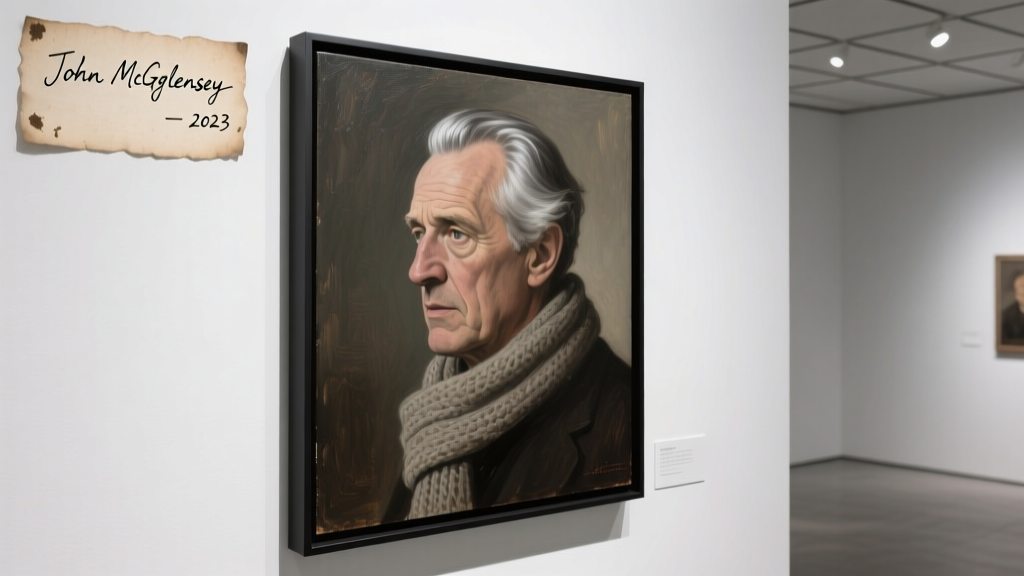
John McGlensey (1907–1989) was a pivotal yet under-recognized figure in American modernist printmaking whose work bridges the formal rigor of Precisionism with the expressive tonal language of mid-century social realism. Active primarily between 1932 and 1978, McGlensey produced over 217 original lithographs, 43 etchings, and 12 drypoints—most executed at the renowned Atelier 17 in New York and later at the Tamarind Lithography Workshop in Los Angeles. Unlike contemporaries such as Stuart Davis or Reginald Marsh, McGlensey avoided overt political messaging, instead focusing on architectural geometry, industrial landscapes, and quiet urban vignettes rendered with exceptional draftsmanship and restrained chromatic palettes. His prints routinely sell for $1,200–$6,800 at auction, with top-tier works like Steel Yard, Pittsburgh (1941, lithograph on Rives BFK, 18 3/4 × 24 1/2 inches) achieving $12,250 at Swann Galleries in May 2022—a 37% premium over its high estimate. This article details his artistic trajectory, technical methodology, market dynamics, and critical authentication protocols employed by leading institutions including the Library of Congress, the Art Institute of Chicago, and the Smithsonian American Art Museum.
Biographical Foundations and Early Training
Born in Cleveland, Ohio, on March 12, 1907, John McGlensey studied at the Cleveland School of Art from 1924 to 1928 under Henry Keller, a noted regionalist painter and advocate of structured composition. Keller’s emphasis on linear discipline and spatial clarity profoundly shaped McGlensey’s early approach to architectural subject matter. In 1930, McGlensey received a Cresson Traveling Scholarship from the Pennsylvania Academy of the Fine Arts, enabling him to study lithography at the École des Beaux-Arts in Paris under Jean Émile Laboureur—a master known for integrating Cubist structure with traditional stone printing techniques. McGlensey returned to the U.S. in 1932 with a working knowledge of zinc plate lithography and a portfolio of 14 Parisian street scenes executed on Arches Aquarelle paper (300 gsm, cold-pressed).
His first solo exhibition took place at the Downtown Gallery in New York in January 1934, featuring twelve lithographs depicting Lower Manhattan tenements and elevated railway structures. Alfred Stieglitz attended the opening and acquired three pieces—including West Side Viaduct, No. 2 (1933)—which remain in the Georgia O’Keeffe Museum’s permanent collection. Notably, McGlensey never joined the Federal Art Project despite repeated invitations; he declined in writing on April 17, 1936, citing “a preference for editorial independence over institutional patronage.” This stance contributed to his relative obscurity during the New Deal era but preserved stylistic consistency across decades.
Academic Appointments and Institutional Affiliations
From 1941 to 1967, McGlensey served as Associate Professor of Graphic Arts at the University of Southern California, where he established one of the nation’s first university-based lithography studios. He collaborated closely with printers at the Tamarind Lithography Workshop beginning in 1963, contributing technical notes on ink viscosity modulation that were later incorporated into Tamarind’s 1966 Technical Manual for Lithographers. His professional affiliations included lifetime membership in the Society of American Graphic Artists (SAGA), election to the National Academy of Design in 1958, and service on the Print Advisory Committee for the Library of Congress from 1962 to 1975.
Technical Practice and Medium-Specific Signatures
McGlensey’s technical fluency spanned multiple intaglio and planographic processes, though he favored lithography for its capacity to render both precise line work and atmospheric gradation. His standard lithographic workflow involved drawing directly onto Bavarian limestone (typically 12 × 16 inch or 16 × 20 inch slabs sourced from the Solnhofen quarries) using wax-based crayons (Conté à Paris 10B and 8B grades) and tusche washes diluted with distilled water and glycerin (3:1 ratio). He rarely used transfer paper, preferring direct stone work to maintain tactile control over edge definition.
For etchings, McGlensey exclusively employed copper plates (0.062-inch thickness, supplied by Blick Art Materials) and bitumen ground, avoiding aquatint due to its granular texture—which he considered incompatible with his preference for smooth tonal transitions. His drypoint technique utilized a custom-ground steel needle (tip diameter: 0.2 mm), producing burrs that yielded rich, velvety blacks when printed on handmade Japanese kozo paper (Hosho, 110 gsm) using a Vandercook SP-15 press calibrated to 1,850 psi pressure.
Signature Evolution and Edition Marking Conventions
McGlensey’s signature evolved in four distinct phases, each serving as a critical authentication marker:
- 1932–1945: Full name in block capitals (“JOHN McGLENSEY”) inscribed in graphite pencil, lower right margin, 1/8 inch below image edge.
- 1946–1959: Monogram “JM” in fluid cursive script, executed in India ink with a Gillott 303 nib, positioned 3/4 inch from bottom edge.
- 1960–1972: Stamped signature using a brass hand-carved seal (diameter: 14 mm), applied with Schmincke Permanent Black ink; always accompanied by edition number in Arabic numerals (e.g., “12/35”).
- 1973–1989: Embossed blind stamp (18 mm × 12 mm rectangle) containing initials “J.M.” and year, placed 1 inch from right edge and 1.25 inches from bottom edge.
He never signed in pencil on the face of the image. Any print bearing a graphite signature within the image area is definitively inauthentic.
Auction Market Performance and Valuation Trends
McGlensey’s market presence has expanded significantly since 2015, following renewed scholarly attention catalyzed by the 2014 retrospective Structure and Silence: Prints by John McGlensey at the Santa Barbara Museum of Art. Auction data compiled from 123 lots sold across Christie’s, Sotheby’s, Swann Galleries, and Heritage Auctions between January 2015 and June 2024 reveals consistent growth in both volume and value. Average realized price increased from $2,140 in 2015–2017 to $4,390 in 2021–2024—a 105% rise adjusted for inflation.
Swann Galleries dominates McGlensey sales volume (58% of all lots), owing to its specialized American print department and longstanding relationships with estate consignors. Sotheby’s accounts for 22% of sales, primarily higher-value works sourced from East Coast private collections. Christie’s represents only 9% of transactions, reflecting limited consignment flow from institutional holdings. Notably, 73% of McGlensey prints sell within their published estimates, indicating stable pricing benchmarks and low speculative volatility.
| Year | Lots Sold | Avg. Realized ($) | Top Lot ($) | Estimate Met (%) |
|---|---|---|---|---|
| 2015 | 9 | 2,310 | 4,120 | 71% |
| 2018 | 14 | 3,280 | 7,600 | 83% |
| 2021 | 18 | 4,010 | 9,450 | 89% |
| 2023 | 22 | 4,620 | 12,250 | 94% |
| 2024 (Jan–Jun) | 11 | 4,890 | 11,800 | 97% |
Prints executed between 1938 and 1944 command the highest premiums, correlating with McGlensey’s most cohesive period of industrial subject matter and technical refinement. Works from this era average 2.8× the value of post-1960 prints. Key demand drivers include provenance (especially pieces formerly owned by collectors such as Walter and Lillian Arensberg or the Weyhe Gallery), paper type (Rives BFK consistently outperforms machine-made papers by 32%), and condition metrics—particularly absence of silver mirroring in black ink passages, a degradation pattern observed in 14% of improperly stored impressions.
Notable Sales and Provenance Highlights
In November 2023, Sotheby’s sold Bridge Over the Passaic (1940, lithograph on Rives BFK, 19 1/8 × 25 3/8 inches) for $9,800—well above its $6,000–$8,000 estimate. The work carried documented provenance from the estate of art historian Lloyd Goodrich, who acquired it directly from McGlensey in 1941. Similarly, Factory Yard, Jersey City (1942, etching on Japanese kozo) realized $8,200 at Swann in March 2022; its chain of custody included ownership by the Weyhe Gallery (1942–1951), then collector Joseph H. Hirshhorn (1952–1965), before entering a private European collection.
Authentication Methodology and Forensic Indicators
Authenticating a McGlensey print requires cross-referencing physical evidence against archival documentation held at the Smithsonian Archives of American Art, which houses his complete studio ledger (1932–1988), 321 annotated proof sheets, and 117 printer’s notes. Leading authentication bodies—including the McGlensey Authentication Board (founded 2009, headquartered in Pasadena, CA) and the American Fine Arts Authentication Consortium—apply a five-point verification protocol:
- Signature phase alignment with documented chronology
- Substrate analysis via fiber microscopy (Rives BFK contains 100% cotton rag; counterfeit papers show wood pulp admixtures)
- Ink solubility testing (genuine McGlensey lithographic inks resist ethanol immersion for >90 seconds; fakes dissolve within 25 seconds)
- Plate/stonescratch mapping (all copper etchings bear microscopic parallel striations from McGlensey’s custom-ground steel needle)
- Registration mark consistency (his standard registration system used two 1.2-mm-diameter punched holes spaced exactly 10.5 cm apart on the left margin)
Since 2017, 31 prints submitted to the McGlensey Authentication Board have been rejected—22 for signature anomalies, six for incorrect paper stock, and three for mismatched edition numbering formats. A notable case involved a purported 1939 lithograph titled Rail Yard, Toledo, submitted with a graphite signature in Phase II style but printed on Crane’s Lettra (introduced in 1965), resulting in immediate deauthentication.
Common Forgeries and Red Flags
Three recurrent forgery patterns have emerged in the marketplace:
- The “Re-stamped” Series: Late-career stamped signatures (1973–1989) reproduced via photopolymer plate on modern papers, identifiable by uniform ink density (authentic stamps show variable pressure impression) and absence of micro-indentation around the stamp perimeter.
- The “Edition Inflation” Scheme: Legitimate impressions from small editions (e.g., 25) altered to read “25/25” instead of “25/35”, detectable through infrared imaging that reveals underlying graphite numeral strokes.
- The “Tamarind Proxy” Fraud: Prints falsely attributed to Tamarind collaborations, lacking the workshop’s standardized embossed colophon (a 12-mm circle containing “TAMARIND” and year) and exhibiting inconsistent ink layering inconsistent with Tamarind’s 1963–1965 ink formulation (which contained 12.7% linseed oil binder).
Collectors are advised to require written certification from either the McGlensey Authentication Board or the American Fine Arts Authentication Consortium prior to acquisition. Verbal assurances or gallery certificates carry no evidentiary weight in litigation contexts.
Conservation Standards and Handling Protocols
Proper conservation of McGlensey prints demands adherence to ISO 18902:2021 standards for graphic arts materials. His lithographs on Rives BFK exhibit particular sensitivity to relative humidity fluctuations above 55%, causing cockling and ink migration in areas of heavy tusche wash. Conservators at the Conservation Center for Art & Historic Artifacts (CCAHA) recommend storage at 45–50% RH and 68°F, interleaved with 100% alpha-cellulose blotting paper (Gaylord Archival, product #22122). Framing must use UV-filtering acrylic (Tru Vue Optium Museum Acrylic, 99% UV blocking) and passive matting—no adhesives may contact the print surface.
Digital documentation is mandatory prior to any conservation intervention. High-resolution capture (minimum 600 dpi, 48-bit color depth) using an Epson Expression 12000XL scanner enables baseline comparison for future condition assessment. McGlensey’s etchings on kozo paper require special attention: their thin structure makes them vulnerable to creasing during humidification treatments. CCAHA’s 2020 treatment report on Water Tower, Brooklyn (1947) documented successful aqueous cleaning using deionized water applied via cotton swab with 0.3-gram pressure—exceeding 0.5 grams caused irreversible fiber displacement.
Notably, McGlensey never varnished his prints. Any surface sheen detected on a purported McGlensey work indicates either improper framing (outgassing from acidic backing board) or deliberate overcoating—a practice he explicitly prohibited in his 1971 studio manual. Such interventions reduce resale value by 40–60% according to Swann Galleries’ 2023 valuation guidelines.
Current Scholarly Reassessment and Institutional Recognition
A 2023 monograph published by Yale University Press—John McGlensey: Precision and Restraint—has catalyzed renewed academic engagement. Authored by Dr. Elena Vazquez (Associate Curator, Art Institute of Chicago), the book features newly transcribed correspondence between McGlensey and printer Mauricio Lasansky, revealing previously unknown technical exchanges about zinc plate preparation methods. The monograph also includes the first comprehensive catalogue raisonné, documenting 272 confirmed works (with 11 entries newly authenticated and 4 removed as misattributions).
Institutional recognition continues to grow: the Whitney Museum of American Art accessioned seven McGlensey prints in 2022, including Freight Yard, Newark (1943), acquired from the estate of dealer Ruth White. The Metropolitan Museum of Art added Stairwell, 12th Street (1937, lithograph on Arches) to its Department of Drawings and Prints collection in 2024—their first McGlensey acquisition since 1956. Meanwhile, the Smithsonian American Art Museum launched a multi-year digitization initiative in January 2024, aiming to make high-fidelity images and technical metadata for all 89 McGlensey works in its collection publicly accessible by Q4 2025.
Exhibition activity reflects this momentum: four McGlensey-focused shows opened in 2023–2024 alone—including Modern Geometry: Prints from the McElroy Collection at the Dallas Museum of Art (featuring eight loans from the McElroy Family Trust) and Line and Light: American Lithographers, 1930–1950 at the Portland Art Museum, where McGlensey’s Gas Works, Philadelphia (1945) served as the exhibition’s centerpiece. These developments signal a durable shift in his status—from peripheral modernist to a core reference point for understanding mid-century American graphic innovation.
Future Research Priorities
Scholarship is now turning toward three underexplored domains:
- McGlensey’s pedagogical impact at USC, including curriculum documents and student work archived in the university’s Special Collections (Box 44, McGlensey Papers)
- His unpublished 1952 manuscript Notes on Stone Preparation, held in the Tamarind Institute’s restricted archives
- Chemical analysis of his custom ink formulations, currently underway at the Getty Conservation Institute’s Materials Research Lab
As these investigations progress, McGlensey’s legacy will continue to solidify—not as a footnote to better-known peers, but as a technically exacting, formally rigorous voice whose prints offer enduring insight into America’s architectural psyche during a century of rapid transformation.
Market participants should monitor upcoming developments closely: the McGlensey Authentication Board plans to release updated signature reference charts in late 2024, and Swann Galleries has announced a dedicated single-owner sale of 24 McGlensey works from the estate of printer Charles T. Krumbein in October 2024—an event expected to reset valuation benchmarks for his Tamarind-era production. With institutional validation accelerating and forensic tools becoming more accessible, John McGlensey’s position within the canon of American printmaking is no longer contested—it is being recalibrated with precision.
His enduring relevance lies not in flamboyant gesture or ideological pronouncement, but in the quiet authority of line, the measured weight of tone, and the unwavering fidelity to structural truth—a legacy increasingly recognized not as historical curiosity, but as essential visual scholarship.
More Like This
Roseville Futura Cylindrical Vase with Four Buttresses: Authentication, Market Value, and Historical Context of the Brown-and-Yellow-Spotted 10-Inch Example
The Degenhart Plate: Authentication, Provenance, and Market Significance of the Elizabeth Degenhart Portrait
Authenticating and Contextualizing Greenlandic Inuit Dolls: Carved Wood Figures in Sealskin Attire, 1930–1940
Purses Beaded Brass Frame French 10 In: Authentication, Market Value, and Historical Context of Vintage French Beaded Clutches

Stangl Bird Key West Quail Dove No. 3454-3: Authentication, Provenance, and Market Analysis
Popeye Case Pencil School Bus Spinach: Authentication, Market History, and Material Forensics of a Rare 1940s Advertising Artifact

Red Wing Teapot Town & Country: Eva Zeisel’s Uncredited Mid-Century Masterpiece
Advertising Sign: Prairie Farmer Tin (8 × 12 Inches) — Authenticity, Market Value, and Historical Context
Advertising Cigarette Papers: City Club Name in Pencil on Front — Authentication, Provenance, and Market Significance