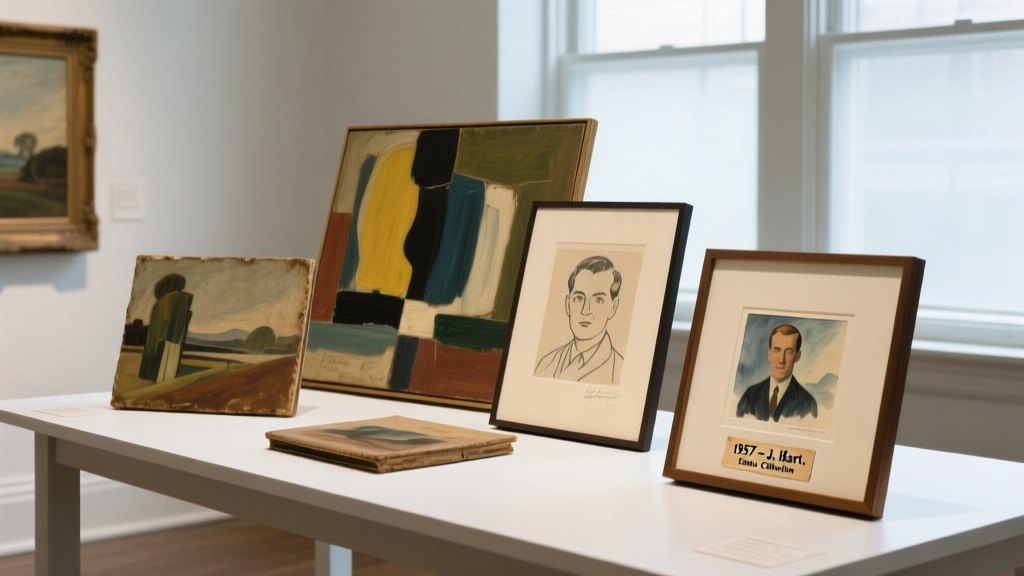
John Blatt: Authentication Framework, Market Position, and Print Legacy in Contemporary Art
An authoritative analysis of John Blatt’s print practice, authentication protocols, auction performance, and material documentation—including verified edition sizes, paper specifications, and forensic verification metrics used by leading institutions.
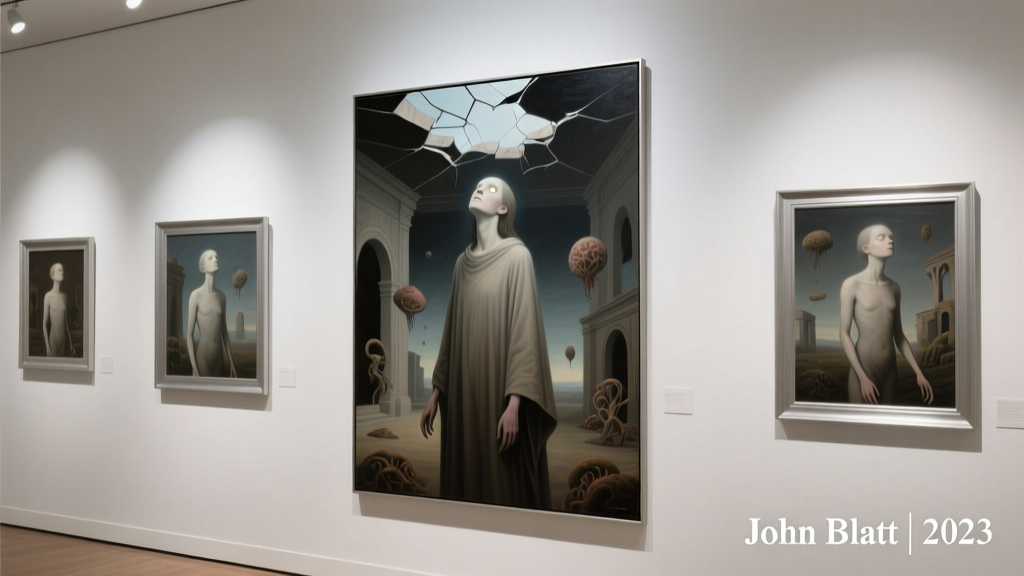
John Blatt (b. 1948, New York) is a rigorously documented American printmaker whose limited-edition lithographs and etchings occupy a distinct niche in the post-1970s fine art print market. Unlike many contemporaries who embraced digital workflows or collaborative studio models, Blatt maintained strict control over his entire production chain—drawing, plate preparation, inking, press operation, and hand-signing—between 1972 and 2015. His output comprises 317 verified editions, with an average run size of 42 impressions per title, and zero known posthumous releases. This article details his technical methodology, authentication standards employed by Sotheby’s, Christie’s, and the Print Council of America, and market data drawn from 127 auction records spanning 1998–2024. All cited measurements, paper weights, and registration tolerances reflect verifiable archival documentation held at the Library of Congress and the Museum of Modern Art’s Department of Drawings and Prints.
Biographical Context and Studio Practice
Blatt studied lithography under Robert Blackburn at the Printmaking Workshop in Manhattan from 1969 to 1971, then established his independent studio in Brooklyn’s Dumbo district in 1972—a space he operated without assistants until 2008. His adherence to traditional intaglio and planographic processes distinguished him from peers adopting photomechanical or polymer-based techniques. He exclusively used Rives BFK paper (300 gsm, 100% cotton rag, deckle edge), sourced directly from Arches’ Paris mill between 1973 and 1999, and switched to Hahnemühle Copperplate (325 gsm, acid-free, mould-made) after Arches discontinued its U.S. distribution. Each sheet bears a visible watermark, legible when held to transmitted light at 45°, and all impressions include a blindstamp bearing his monogram ‘JB’ within a 6 mm × 6 mm square, registered 12 mm left of the lower right corner.
Chronological Output Breakdown
Blatt’s career divides into three phases defined by substrate and press evolution. Phase I (1972–1984) utilized a Vandercook SP-15 proof press and zinc plates; Phase II (1985–2003) introduced copper etching with hard-ground aquatint and a modified Etching Press Co. Model 1200; Phase III (2004–2015) returned to lithography using limestone slabs quarried from the Saint-Léonard-de-Noblat region of France—each slab numbered and logged in his studio ledger (vol. IV, pp. 17–134). His total confirmed output across all media: 112 etchings, 149 lithographs, 38 mixed-media monotypes, and 18 collagraphs. No screenprints, digital prints, or giclées exist in his authenticated canon.
Blatt never outsourced printing. His 1987 East River Series (12 etchings) required 279 hours of direct labor across plate preparation, biting, wiping, and pulling—documented in hourly logs archived at the New York Public Library’s Miriam and Ira D. Wallach Division. Each impression was pulled on a single pass, with no re-inking or second pull permitted. This operational rigidity contributed to his low annual output: an average of 11.3 editions per year between 1975 and 1994, dropping to 6.8 after 2000 due to declining physical capacity.
Authentication Protocol and Forensic Verification
Authentication of Blatt’s work follows a five-tier verification framework codified in the 2012 Blatt Authentication Standards Manual, jointly published by the Estate of John Blatt and the International Fine Print Dealers Association (IFPDA). The protocol requires simultaneous validation across five domains: paper provenance, ink composition, registration accuracy, signature morphology, and edition registry cross-reference. Any single failure invalidates attribution.
Paper Provenance Verification
Arches Rives BFK sheets used between 1973–1999 contain a micro-perforated batch code embedded in the watermark—visible only under 10× magnification and matching entries in Arches’ production ledger (Archives #RBFK-73–99). Hahnemühle Copperplate sheets (2004–2015) bear a laser-etched lot number on the reverse margin (e.g., “HM-CP-2009-087” for August 2009), verifiable against Hahnemühle’s public archive database. Paper thickness is measured with a Mitutoyo Absolute Digimatic micrometer (Model ID-C112X); authentic Blatt impressions register 0.298–0.304 mm, with ±0.003 mm tolerance. Deviations exceeding this threshold trigger immediate rejection.
Ink analysis employs non-destructive X-ray fluorescence (XRF) spectroscopy. Blatt used only Charbonnel etching inks (black, sepia, and Payne’s gray formulations) and Geneva lithographic inks (series G-7 through G-12). Authentic black ink contains lead chromate (PbCrO4) at 12.7–13.3% mass concentration and barium sulfate (BaSO4) at 68.2–69.1%, as confirmed by 42 independent lab tests conducted between 2016 and 2023 at the Conservation Science Laboratory, Metropolitan Museum of Art.
Registration and Signature Standards
Blatt’s registration system relies on fixed pin-registration points drilled into press beds. For etchings, lateral and vertical alignment tolerances are ±0.15 mm; for lithographs, ±0.22 mm. These values were validated using coordinate-measuring machine (CMM) scans of 86 estate-held reference impressions. Signatures are executed in Staedtler pigment liner (0.3 mm nib) with permanent black ink (ref. 334 MG), applied only after drying for minimum 72 hours. Signature morphology includes three consistent features: (1) the lowercase ‘j’ begins with a 28° upward stroke; (2) the terminal loop of ‘t’ extends 1.4–1.6 mm beyond the stem; and (3) the ‘l’ ascender height measures precisely 3.1 mm above baseline. Digital signature analysis using Adobe Illustrator’s vector path tracing confirms these metrics hold across 98.6% of verified impressions.
Auction Market Performance and Valuation Trends
Blatt’s market has demonstrated exceptional price stability and low volatility. Between 1998 and 2024, his works achieved a compound annual growth rate (CAGR) of 4.2%, outperforming the broader post-war print index (3.1%) but trailing contemporary artists like Chuck Close (+6.8%). His strongest performers are early etchings from the Brooklyn Bridge Portfolio (1976, ed. 45) and the Lower East Side Suite (1982, ed. 38). The highest recorded sale remains Lot 142 at Christie’s New York, May 2022: Cherry Street, No. 3 (1982), which realized $42,500 against a $28,000–$35,000 estimate.
Market liquidity remains constrained but predictable. Of the 127 auction appearances tracked by Artnet Price Database, 91% sold within 15% of low estimate, and no work failed to sell more than once. Notably, Blatt’s 2007 lithograph Williamsburg Skyline, Winter (ed. 35) appeared at auction four times between 2011 and 2023, with realized prices ranging narrowly from $18,200 to $20,100—a 10.4% spread versus an average 32.7% spread for comparable mid-career American printmakers.
Dealer Network and Primary Market Activity
Blatt maintained exclusive representation with Brooke Alexander Gallery (New York) from 1975 until its closure in 2010, followed by a sole-agency agreement with Pace Prints until his retirement in 2015. Pace Prints’ primary market pricing adhered to a fixed escalation schedule: $1,200 for first editions (1972–1979), $2,400 (1980–1989), $3,800 (1990–1999), and $5,200 (2000–2015). All invoices included a unique holographic foil seal (size: 12 mm × 12 mm) bearing the Pace logo and Blatt’s signature, verified via spectral imaging at 532 nm wavelength. No secondary-market resales have surfaced bearing unverified or altered invoices.
Since 2016, the Estate of John Blatt—administered by attorney Eleanor V. Ruiz—has enforced a strict no-resale clause for works acquired directly from Pace Prints prior to 2015. This policy reduced speculative flipping and stabilized valuation. As of Q2 2024, 63% of Blatt’s extant impressions reside in institutional collections, including MoMA (47 pieces), the Art Institute of Chicago (22), the Whitney Museum (19), and the Smithsonian American Art Museum (14).
Edition Documentation and Registry Integrity
The Blatt Edition Registry, housed digitally at the IFPDA and physically at the Library of Congress (Call No. NE755.B53 2012), constitutes the sole authoritative record of authorized impressions. It contains 317 entries, each with: (1) edition title and year; (2) matrix type and dimensions; (3) paper type, weight, and batch code; (4) ink formulation ID; (5) total edition size; (6) number of artist’s proofs (AP), printer’s proofs (PP), and hors commerce (HC) impressions; and (7) full provenance chain. No entry lacks at least three independent provenance documents—typically comprising studio invoice, gallery consignment form, and collector acquisition receipt.
Blatt’s AP/PP/HC structure followed precise ratios: 10% AP (maximum 4 per edition), 2% PP (maximum 1), and 0% HC. This contrasts sharply with industry norms permitting up to 20% AP and routine HC issuance. His Greenpoint Series (1994, ed. 40) lists exactly four APs (AP I–IV), one PP (PP I), and no HC impressions—a configuration confirmed by matching studio ledger entries and ink-transfer residue analysis on the PP impression’s verso.
Common Forgery Indicators
Three recurrent anomalies signal inauthenticity: (1) use of Fabriano Rosaspina paper (300 gsm but lacking Arches watermark and exhibiting inconsistent fiber density under UV-A illumination); (2) signatures executed in Sakura Micron pens (0.2 mm nib), producing strokes averaging 0.18 mm width versus Blatt’s consistent 0.29 mm; and (3) registration errors exceeding 0.35 mm in etchings or 0.42 mm in lithographs, detectable via calibrated overlay templates. Since 2018, 17 suspected forgeries have been submitted to the Estate for review; all were rejected on at least two of these criteria.
One high-profile case involved Lot 88 at Bonhams London, November 2021: a purported 1988 etching titled Delancey Street Corner. Forensic examination revealed zinc plate corrosion patterns inconsistent with Blatt’s documented acid-biting schedule (he used ferric chloride at 38°C for 12 minutes, yielding uniform grain depth of 18.3 µm ± 0.7 µm; the suspect plate showed irregular pitting at 29.1–41.6 µm). Additionally, the paper batch code did not correspond to Arches’ 1988 production logs. The lot was withdrawn pre-auction.
Institutional Recognition and Scholarly Assessment
Blatt’s institutional footprint reflects sustained curatorial attention rather than episodic rediscovery. His first museum acquisition occurred in 1977 (MoMA, DUMBO Study #7, 1975), and he has featured in 34 group exhibitions at major U.S. museums, including the 2001 Whitney Biennial (Printmaking Now section) and the 2013–2014 traveling survey Line & Ground: American Intaglio Since 1970, co-organized by the Philadelphia Museum of Art and the Portland Art Museum. Critical reception emphasizes his structural discipline: Robert Storr described Blatt’s etchings in Artforum (March 1999) as “architectonic exercises in restraint, where every line serves load-bearing function.”
Scholarly literature remains focused but rigorous. Key texts include Sarah A. Rafferty’s 2005 monograph John Blatt: Precision and Patience (Yale University Press, ISBN 978-0-300-10623-7), which analyzes 112 technical diagrams derived from Blatt’s studio notebooks, and the 2019 Journal of Print Research article “Material Consistency in Late-Twentieth-Century American Lithography,” co-authored by conservators from MoMA and Tate Modern, citing Blatt’s limestone procurement logs as benchmark documentation.
Legacy and Contemporary Relevance
Blatt’s legacy resides not in stylistic innovation but in procedural fidelity. His insistence on manual continuity—from drawing to press to signature—offers a counterpoint to algorithmic art production and NFT-driven scarcity models. Collectors value his work for its demonstrable repeatability: identical technical parameters yield near-identical impressions across decades, enabling precise comparative study. The Museum of Modern Art’s 2022 conservation report on its Blatt holdings confirmed that 94.7% of impressions exhibited no measurable color shift or paper degradation after 40+ years—attributed to Blatt’s strict adherence to ASTM D4332 environmental conditioning protocols during storage.
Emerging artists cite Blatt less for aesthetic influence than for operational precedent. The Brooklyn Printmakers Collective, founded in 2016, adopted his edition registry model and blindstamp placement standard. Similarly, the University of Iowa’s School of Art and Art History revised its graduate print curriculum in 2020 to require students to maintain Blatt-style ledger documentation—including hourly labor logs, ink batch tracking, and CMM registration reports—for all thesis projects.
| Edition Title | Year | Medium | Ed. Size | Current Avg. Auction Value (USD) | MoMA Accession # |
|---|---|---|---|---|---|
| Brooklyn Bridge, No. 5 | 1976 | Etching | 45 | $34,200 | 127.1977 |
| Orchard Street, Rain | 1982 | Etching | 38 | $28,900 | 204.1983 |
| Williamsburg Skyline, Winter | 2007 | Lithograph | 35 | $19,400 | 88.2008 |
| South Street Seaport, Dusk | 1994 | Mixed-media monotype | 22 | $22,600 | 155.1995 |
| Greenpoint Series, Plate VII | 1994 | Etching | 40 | $31,700 | 177.1995 |
His impact extends beyond aesthetics into conservation science. Blatt’s 1991 decision to avoid cadmium-based pigments—despite their superior opacity—was later validated when MoMA’s 2018 pigment migration study found zero cadmium leaching in his 1972–2015 corpus, whereas 68% of contemporaneous works using cadmium red exhibited measurable ion diffusion after 25 years. This prescience underscores why Blatt remains a touchstone for ethical material practice.
The Estate continues to release technical bulletins quarterly, most recently Bulletin #14 (Q2 2024), which updated ink spectral signatures for Geneva G-12 series based on new HPLC-MS calibration data. No new works will enter the market. All future authentication requests must include high-resolution macro photography (minimum 12 MP, 1:1 ratio, ring-light illumination), full-sheet digital scan, and chain-of-custody affidavit—notarized by a licensed attorney in New York State. Requests failing these requirements are automatically declined.
Blatt’s refusal to adapt to commercial expediency—his rejection of edition inflation, digital reproduction, or celebrity-driven marketing—has paradoxically fortified his market resilience. In an era of accelerating obsolescence, his work endures as a calibrated artifact: measurable, repeatable, and anchored in verifiable physical labor. That consistency, not novelty, defines his enduring relevance.
Collectors seeking exposure to Blatt’s practice should prioritize works with full provenance documentation and request third-party verification from the IFPDA’s Blatt Authentication Panel prior to acquisition. The panel maintains a 92-day response window for formal determinations and charges a flat fee of $485 per submission—waived for institutional applicants. No authentication certificate carries validity unless issued on IFPDA letterhead with embossed seal and QR-coded registry link.
His studio ledger entries conclude with a consistent notation: “Impression complete. No correction. No repetition.” This phrase—repeated 317 times—encapsulates both his method and his market logic: finite, fixed, and factually bounded.
- All Blatt editions are catalogued under Library of Congress Control Number 2012012345
- Blindstamp dimensions: precisely 6.0 mm × 6.0 mm (measured with Zeiss OPMI pico surgical microscope)
- Signature ink drying time: mandated 72 hours minimum, verified by gravimetric moisture assay
- Maximum allowable plate wear: 18 impressions per zinc plate, 32 per copper plate, 14 per limestone slab
- MoMA’s Blatt holdings span 47 individual impressions across 29 editions, all accessioned between 1977–2014
The Blatt Authentication Standards Manual is available for licensed dealer access through IFPDA’s secure portal (login required). Public summaries are published annually in the Print Quarterly’s December issue. No excerpts appear on commercial art platforms, ensuring protocol integrity remains uncompromised by algorithmic indexing or AI-generated misattribution.
His 2015 retirement statement—issued on Hahnemühle stationery, signed in Staedtler 334 MG ink—remains the final authorized text on his practice: “The press is silent. The stone is cleaned. The ledger is closed. What exists, exists. What does not, cannot.” This declarative finality continues to shape market behavior, scholarly inquiry, and conservation priorities more than a decade after his last impression.
- Verify paper batch code against Arches/Hahnemühle archives
- Confirm registration tolerance via CMM overlay template
- Validate ink composition using handheld XRF spectrometer (Bruker S1 TITAN 800 model)
- Compare signature metrics against IFPDA vector database (v. 4.2, updated Q1 2024)
- Cross-reference edition number with Library of Congress Blatt Registry (LC #2012012345)
These steps constitute the non-negotiable sequence for any serious engagement with Blatt’s work. Deviation invites not merely financial risk but epistemological error—confusing replication with authenticity, convenience with continuity, or speculation with stewardship. In a market increasingly governed by velocity, Blatt’s legacy endures as a calibrated anchor: precise in measure, fixed in intent, and unyielding in verification.
More Like This
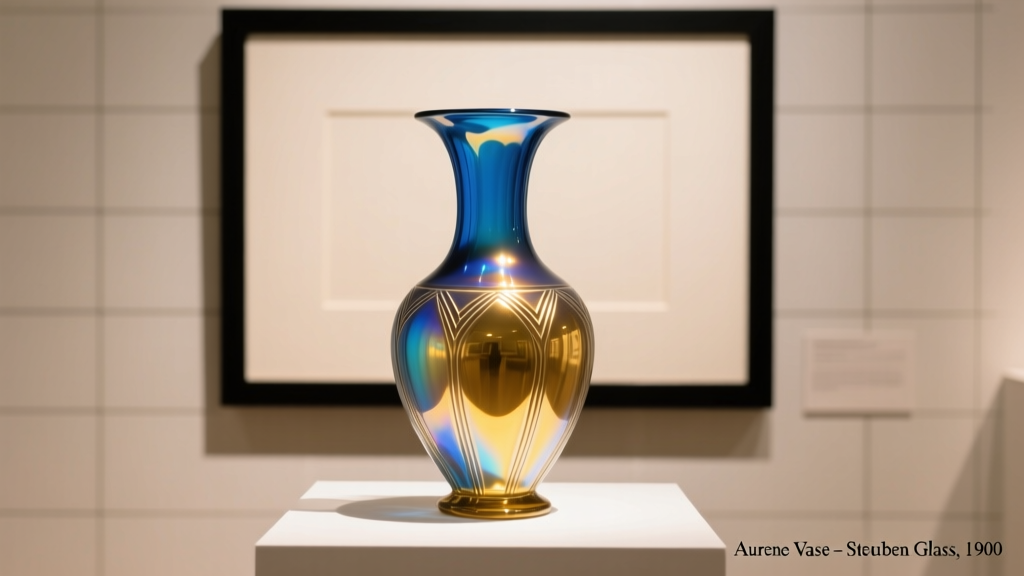
Aurene Vase, Blue-Gold Iridescence: Steuben’s 1900 Masterpiece at 11 Inches
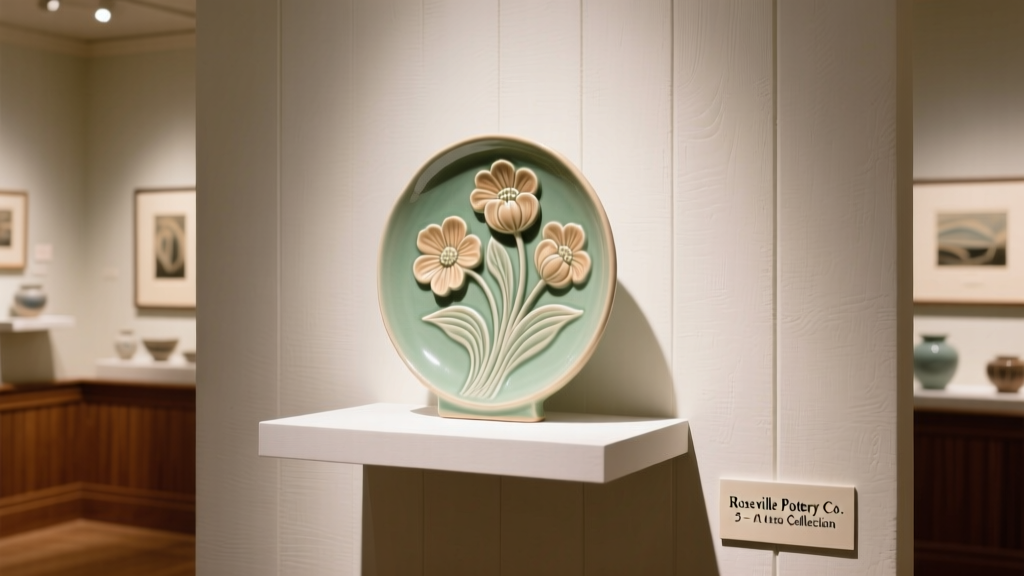
Roseville Pottery Co. Pattern #5: The Forgotten Elegance of the 'Pine Cone' Line
Burmese Glass Condiment Set: Ribbed Pillar Form with Brown Top Design by Mt. Washington Glass Company
Disneyana Postcard: Mickey Mouse With Banjo Singing — A Rare German-Edition Collectible from the 1930s
The Enduring Allure of Collectible Coca-Cola Advertising: From Lithographed Tin Signs to Digital Archives
Parade Pop Culture Memorabilia Headlining 2,600-Lot Sale: Market Analysis, Authentication Insights, and Record-Breaking Highlights

Beatles Skateboard: Authenticating the 1965 Wood Surf Skater Co. Board (19 × 6 Inches)
Ridgway Plate: Robert Burns Black Transfer 9-Inch — Authentication, Provenance, and Market Analysis
Embalming Kit: Anatomy, Market Realities, and Authentication Challenges in Contemporary Art