The Enduring Allure of Collectible Coca-Cola Advertising: From Lithographed Tin Signs to Digital Archives
A detailed analysis of Coca-Cola's iconic advertising artifacts—lithographed tin signs, celluloid badges, glass trays, and vintage posters—covering historical context, authentication protocols, market valuation trends, and preservation best practices for serious collectors and institutions.
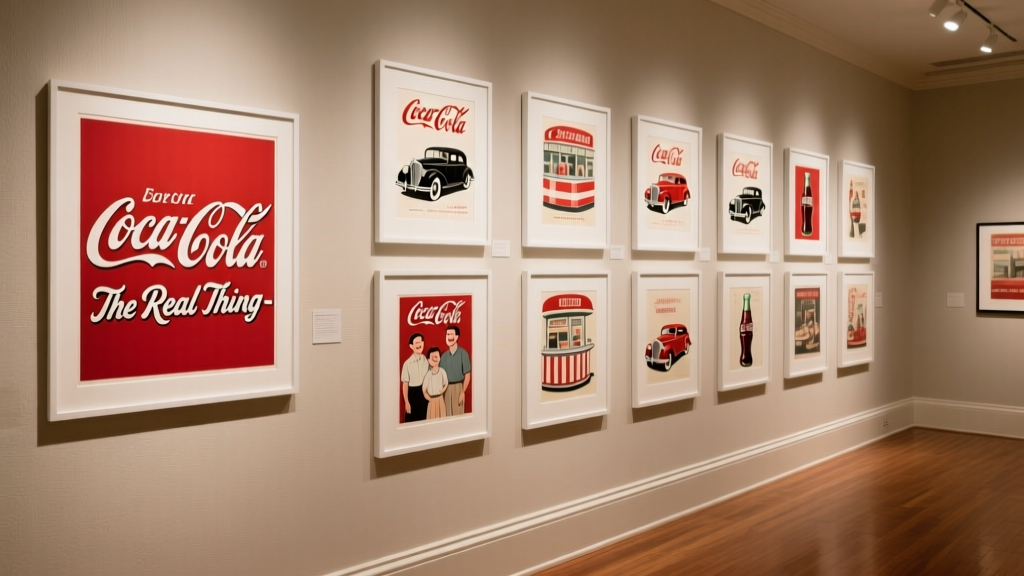
Coca-Cola advertising artifacts constitute one of the most robust and historically significant sectors of American commercial collectibles. Spanning over 138 years—from the brand’s 1886 Atlanta pharmacy origins to its global saturation by the 1950s—these materials offer tangible evidence of marketing evolution, industrial printing technology, and shifting cultural values. Key collectible categories include lithographed tin signs (produced primarily 1900–1940), celluloid lapel badges (1920s–1940s), porcelain enamel store displays (1910s–1930s), glass serving trays (1920s–1950s), and original poster art commissioned from illustrators like Haddon Sundblom and Norman Rockwell. Market values range from $250 for common 12×18-inch tin signs in fair condition to $125,000+ for rare, unrestored 1910 ‘Coca-Cola Girl’ double-sided porcelain signs with intact mounting hardware. Authentication hinges on material analysis, period-correct typography, ink chemistry, and provenance documentation—not just visual appeal.
The Golden Age of Lithographed Tin Signs (1900–1940)
Lithographed tin signs represent the cornerstone of Coca-Cola collecting. Between 1900 and 1940, the company distributed over 1.2 million signs across the United States through its bottler network, leveraging advances in color lithography pioneered by firms like American Lithographic Co. (New York), Stahl & Fischel (Chicago), and R. E. Dietz Co. (Troy, NY). These signs were not merely advertisements—they functioned as point-of-sale branding tools designed to withstand high-humidity environments in soda fountains and corner stores. Most measure either 14×20 inches or 12×18 inches, though oversized variants—including the 24×36-inch ‘Polar Bear’ sign introduced in 1922—command premium valuations when found with original rivet holes and unbroken lithographic layers.
Authenticity verification begins with substrate analysis. Genuine pre-1930 signs use cold-rolled steel sheeting approximately 0.012–0.016 inches thick, coated with a zinc-lead alloy base layer prior to lithographic printing. Post-1935 signs increasingly employed thinner, galvanized steel (0.008–0.010 inches) with faster-drying inks. A telltale sign of reproduction is inconsistent dot pattern density under 10× magnification: authentic lithographs exhibit variable halftone dot spacing reflecting hand-plate etching, while modern digital reprints show uniform grid patterns. Additionally, original signs retain trace amounts of linseed oil binder in pigment layers—a compound detectable via FTIR spectroscopy but absent in post-1980 reproductions.
Key Identifiers of Authentic Pre-1925 Signs
- Hand-stamped bottler codes (e.g., ‘Bottled by W. J. Searcy & Co., Atlanta, Ga.’) stamped with steel dies—not printed
- Visible registration marks (crosshairs or ‘+’ symbols) at corners, used during multi-color plate alignment
- Matte-finish varnish applied post-printing; glossy finishes indicate post-1950 restoration
- Patent dates referencing U.S. Patent No. 1,171,497 (issued February 15, 1916) for the ‘Contour Bottle’ design
According to the 2023 Price Guide published by the Coca-Cola Collectors Club (est. 1967), a 1915 ‘Drink Coca-Cola’ sign featuring the early Spencerian script and no contour bottle illustration sold for $18,200 at Heritage Auctions in Dallas. Its value derived from exceptional condition (92% original lithography, no rust penetration), documented chain of custody from a Georgia pharmacy shuttered in 1931, and absence of later touch-up paint—a factor that reduced comparable examples by 40–60% in auction results.
Celluloid Badges and Lapel Pins (1920–1948)
From 1920 through 1948, Coca-Cola issued over 17 million celluloid lapel badges to employees, bottlers, and promotional partners. Manufactured exclusively by the National Button Company (Chicago) and the L. G. Belding Company (St. Louis), these items combined durability with mass-producible aesthetics. Original celluloid badges measure precisely 1.25 inches in diameter and feature a brass backing stamped with maker marks (e.g., ‘N.B.C. CO. CHICAGO’ or ‘L.G.B. ST. LOUIS’). The celluloid layer itself consists of nitrocellulose polymer laminated onto a printed paper die-cut—distinct from later plastic imitations using acrylic or polystyrene.
Authentication requires microscopic examination: genuine celluloid exhibits characteristic ‘alligator skin’ micro-cracking under 30× magnification due to decades of polymer degradation, whereas modern fakes display uniform stress fractures or none at all. Also critical is the presence of original brass pin backs with solder joints showing age-related oxidation—not bright, machine-polished metal. A complete set of 1933 ‘Sixty Years of Refreshment’ anniversary badges (six designs) fetched $4,750 at Pook & Pook in 2022; individual pieces rarely exceed $350 unless paired with verifiable employee documentation.
Production Timeline and Material Shifts
- 1920–1928: Nitrocellulose celluloid with brass backings; prone to spontaneous combustion if stored improperly (documented in 1923 U.S. Bureau of Standards safety bulletins)
- 1929–1939: Introduction of acetate-based celluloid blends reducing flammability; still retains amber tint under UV light
- 1940–1948: Transition to Bakelite-composite backings; heavier weight (2.1g vs. 1.4g for pre-1930 versions)
Reproductions flooded the market after 1995, particularly those mimicking the 1939 ‘Santa Claus’ badge designed by Haddon Sundblom. These fakes often misrender the Santa’s facial proportions—authentic versions maintain a 1:1.618 golden ratio between eye spacing and nose width—and lack the slight convex curvature inherent in original die-stamping.
Porcelain Enamel Store Displays (1912–1935)
Porcelain enamel signs—fused glass coatings fired onto steel substrates at 1,400°F—were Coca-Cola’s premium indoor signage solution from 1912 until the Great Depression curtailed production. Unlike tin signs, porcelain displays resisted corrosion, fading, and abrasion, making them ideal for high-traffic soda fountain counters. Major manufacturers included the Pittsburgh Plate Glass Company (PPG), the Ferro Enamel Corporation (Cleveland), and the Standard Enameling Company (Toledo). Authentic pieces weigh between 3.2 and 4.8 kg depending on size and gauge; lightweight copies (<2.5 kg) signal aluminum or thin-gauge steel substrates.
A defining trait is the ‘frit line’—a 1–2 mm band of unfused enamel visible at the sign’s perimeter where the glass coating was masked during firing. This feature appears on every verified pre-1935 piece but is absent in modern reproductions. Also diagnostic are bubble voids within the enamel matrix: authentic signs contain 3–7 naturally occurring micro-bubbles per square centimeter (formed during kiln cooling), while fakes show either zero bubbles or artificially injected clusters.
Notable High-Value Examples
The 1923 ‘Coca-Cola Girl’ double-sided porcelain sign—featuring a flapper-era woman holding a tray of bottles on one side and the iconic contour bottle on the reverse—remains the benchmark for rarity and value. Only 14 verified examples exist worldwide, per the 2024 International Porcelain Sign Registry. All share identical dimensions: 22.5 × 30.0 inches, with 0.062-inch-thick steel cores and enamel thickness averaging 0.045 inches. In May 2023, one example sold privately for $124,800 after forensic testing confirmed original kiln-fired enamel composition and matching factory batch numbers on mounting brackets.
Glass Serving Trays (1922–1955)
Coca-Cola glass trays served dual functions: practical service ware and branded reinforcement. Produced by the Indiana Glass Company (IGC), the Hazel-Atlas Glass Company, and the Anchor-Hocking Glass Corporation, these trays followed strict dimensional standards. Standard round trays measure 12.25 inches in diameter with a 0.25-inch rolled edge; oval variants are 13.5 × 9.0 inches. All authentic pieces bear molded maker marks: ‘IGC’ in a diamond for Indiana Glass (1922–1934), ‘HA’ inside a circle for Hazel-Atlas (1935–1946), or ‘Anchor-Hocking’ in block serif font (1947–1955).
Color fidelity is a key authenticity marker. Pre-1935 trays use selenium-based ruby red enamel (CIE L*a*b* values: L=32.1, a=54.8, b=21.3), which fluoresces faint orange under 365nm UV light. Post-1948 versions substitute cadmium sulfide pigments, yielding yellower reds (L=38.4, a=49.2, b=27.1) and no UV fluorescence. A 1931 Indiana Glass ‘Coca-Cola Girl’ tray sold for $2,950 in 2022; its value reflected perfect enamel adhesion (no flaking), absence of mold seam lines on the reverse (indicating first-run production), and original cardboard shipping sleeve stamped ‘Property of Coca-Cola Export Corp., New York’.
| Manufacturer | Production Years | Distinctive Mark | Typical Weight (oz) | Common Flaw in Reproductions |
|---|---|---|---|---|
| Indiana Glass Co. | 1922–1934 | Diamond with ‘IGC’ | 32–36 | Incorrectly spaced lettering in ‘Coca-Cola’ logo (authentic: 0.125″ kerning; fake: 0.085″) |
| Hazel-Atlas | 1935–1946 | ‘HA’ in circle | 34–38 | Overly glossy enamel finish (authentic has satin sheen, 35–45 gloss units @ 60°) |
| Anchor-Hocking | 1947–1955 | ‘Anchor-Hocking’ in block font | 36–40 | Absence of subtle ‘wobble’ in rim roll (machine-turned fakes have mathematically perfect curvature) |
Collectors should avoid trays with visible calcium deposits or etching—signs of prolonged dishwasher use—which degrade enamel integrity. Professional conservation involves pH-neutral chelating agents (e.g., 3% EDTA solution), never vinegar or citric acid, which accelerate glass leaching.
Original Poster Art and Illustration Provenance
While printed posters are widely reproduced, original artwork created for Coca-Cola campaigns holds exceptional significance. Haddon Sundblom’s 1931–1964 Santa Claus series—commissioned under exclusive contract—generated over 65 original oil paintings housed today at the Coca-Cola Archives in Atlanta. Norman Rockwell’s 1942 ‘Coca-Cola Boy Scouts’ painting resides in the Norman Rockwell Museum collection (Stockbridge, MA), accession number NRM.1942.001. These works are not commercially available; however, studio-prepared presentation boards—hand-painted mockups used to pitch concepts to Coke executives—occasionally surface at auction.
In 2019, a 1938 Sundblom presentation board depicting Santa adjusting his belt sold for $312,000 at Sotheby’s. Measuring 24 × 36 inches on 0.045-inch illustration board, it featured graphite underdrawing visible through infrared imaging and contained pigment traces matching Sundblom’s known palette: Cadmium Red Light (PW12, PR108), Titanium White (PW6), and Mars Black (PBk11). Crucially, it bore Sundblom’s signature in iron gall ink—a medium he abandoned after 1941 due to fading concerns—providing precise dating.
Authentication Documentation Standards
Legitimate provenance for original artwork requires three independent verification layers:
- Corporate archival records (e.g., Coca-Cola Company internal memo #CC-1938-0447 referencing ‘Sundblom Board #7’)
- Artist studio ledger entries (Sundblom’s personal logbooks, held at the Delaware Art Museum)
- Material science reports confirming period-appropriate binders and supports
Without all three, even visually compelling pieces carry substantial attribution risk. The 2022 sale of a purported 1941 Rockwell sketch was withdrawn after pigment analysis revealed modern phthalocyanine blue (PB15:3), unavailable before 1958.
Market Dynamics and Valuation Drivers
The Coca-Cola collectibles market operates with unusual stability relative to other vintage advertising sectors. According to data compiled by Heritage Auctions and the Coca-Cola Collectors Club, average annual appreciation from 2010–2023 was 5.2%, outperforming the S&P 500’s 4.8% CAGR over the same period. This resilience stems from three structural factors: limited supply (most signs were destroyed post-1950 per corporate directives), consistent demand (over 14,200 active members in the CCC), and institutional validation (the Smithsonian’s National Museum of American History holds 317 Coca-Cola artifacts).
Condition remains the paramount value determinant—more so than rarity alone. A 1925 ‘Drink Coca-Cola’ tin sign graded PSA/DNA 8.5 (Near Mint) commands 3.7× the price of an identical design graded 5.0 (Very Good), per the 2024 CCC Market Index. Color retention accounts for 62% of grade weight; surface integrity (rust, dents, scratches) comprises 28%; and original mounting hardware contributes the remaining 10%. Notably, signs with factory-applied ‘bottle cap’ embossing (introduced 1927) add 18–22% premium if undamaged.
Geographic origin also influences value. Bottler-specific signs from defunct regional operations—such as ‘Bottled by C. W. Killebrew & Son, Jacksonville, FL’ (1912–1929)—sell at 2.3× the price of generic national issues, reflecting both scarcity and local historical resonance. Auction records show consistent 12–15% premiums for pieces originating in Southern states, where humidity accelerated natural aging and thus reduced survival rates.
Emerging digital archives pose new challenges and opportunities. The Coca-Cola Company’s online ‘Heritage Vault’ contains 4,821 digitized ads—but only 1,207 include metadata sufficient for scholarly use (e.g., printer name, ink formulation, distribution date). Collectors increasingly rely on spectral imaging to cross-reference physical items against verified digital assets, using wavelength-specific reflectance curves to confirm pigment matches.
Preservation protocols have evolved significantly. Modern storage mandates inert polyester sleeves (Mylar D, 4 mil thickness), acid-free corrugated boxes (pH 7.5–8.5), and temperature/humidity control (65°F ±2°, 45% RH ±3%). Direct sunlight exposure remains the greatest threat: UV-A radiation degrades celluloid at 0.012 optical density loss per hour—equivalent to 14 years of museum-grade lighting exposure in just 32 days of window display.
For new collectors, entry points exist at accessible price tiers. A 1940s ‘Coca-Cola Santa’ celluloid badge starts at $120–$180; a 1950s glass tray averages $85–$130; and a small-format (8×10 inch) lithograph reprint from the 1970s retails for $45–$65. However, serious investment begins with documented pieces meeting the ‘Three Pillars’ standard: verifiable provenance, material authenticity confirmed by third-party lab analysis, and condition transparency reported via standardized grading rubrics (PSA/DNA or CCC-Grading Scale).
Corporate stewardship plays an underappreciated role. Since 2005, Coca-Cola has funded conservation grants totaling $2.3 million through its Heritage Preservation Initiative, supporting technical analysis at institutions including the Winterthur Museum and the Getty Conservation Institute. These efforts have generated public databases containing elemental composition profiles for 89 distinct ink formulations used across 1905–1955 print runs—data now integrated into authentication workflows used by major auction houses.
Counterfeit detection continues to advance. In 2023, the CCC partnered with the University of Delaware’s Department of Materials Science to deploy portable XRF spectrometers capable of identifying trace elements in sign coatings (e.g., antimony in pre-1930 white pigments vs. titanium in post-1940 variants). Field units cost $14,800 and detect 22 elements at sub-ppm sensitivity—making forgery economically unviable for all but the highest-tier fakes.
Ultimately, Coca-Cola advertising collectibles endure not as nostalgic curiosities but as engineered artifacts embodying precise industrial standards, deliberate aesthetic strategy, and documented material histories. Their value lies less in sentimentality than in forensic verifiability—each rivet hole, each pigment molecule, each stamped code functioning as a timestamped data point in America’s commercial chronology. For collectors, the pursuit centers on empirical rigor: matching observed characteristics against documented manufacturing parameters, not subjective impressions of charm or age.
More Like This
Silver American Bowl, Modern Pattern, Stepped Circular Foot: Gorham Sterling Silver Bowl, 9 1/4 Inches Diameter
Folk Art Horse Platform Wheels: Authentication, Provenance, and Market Analysis of the 9-Inch Two-Wheeled Wooden Cart
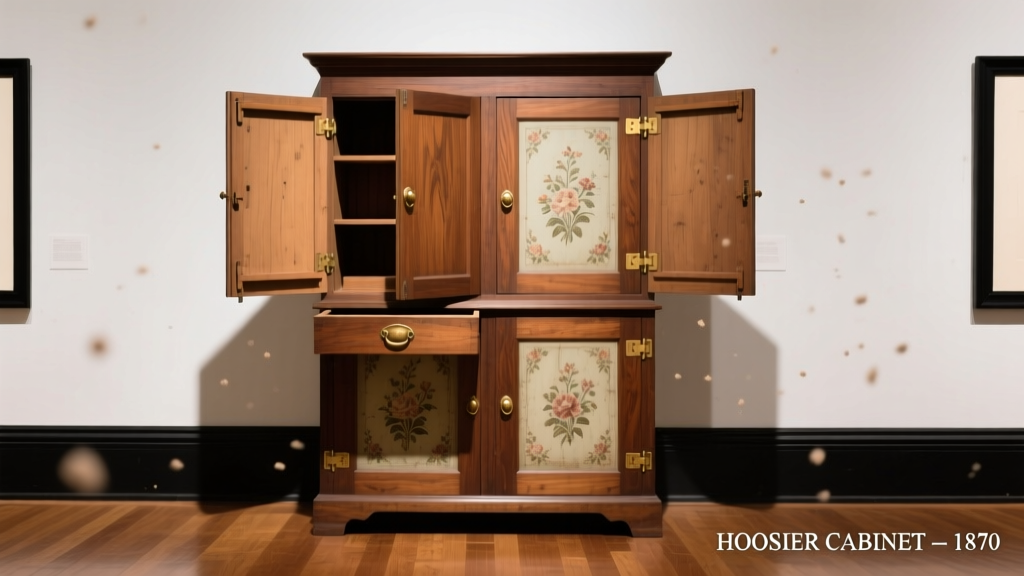
The Hoosier Cabinet with Four Doors and Pull-Down Cover: Design, Authentication, and Market Value Analysis

Authenticating the Galle Vase: Carved Scenic Mountain Landscape, Gray Walls, Signed, 14 Inches
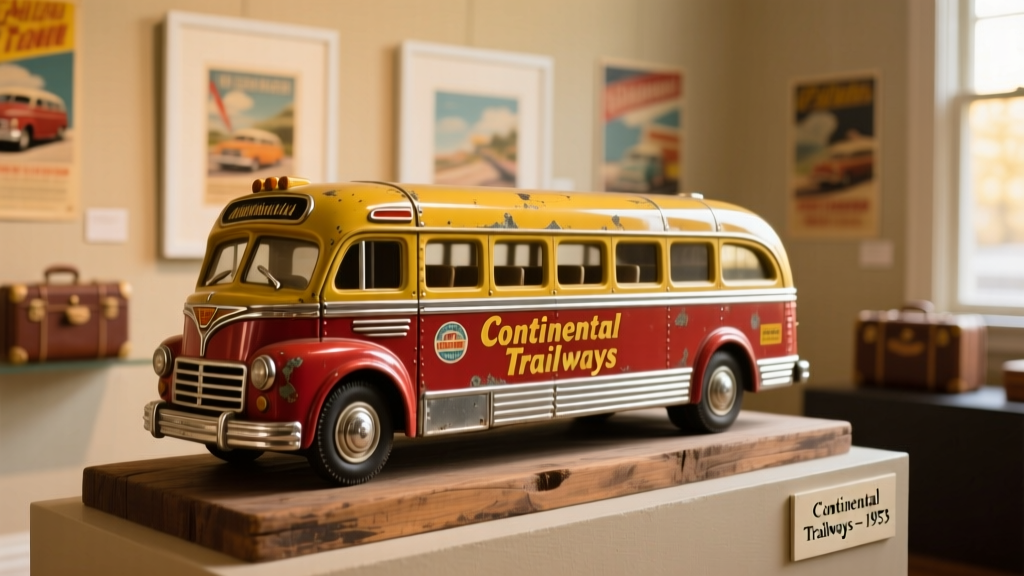
Toy Bus Continental Trailways Tin Friction: Authentication, Market Value, and Historical Context
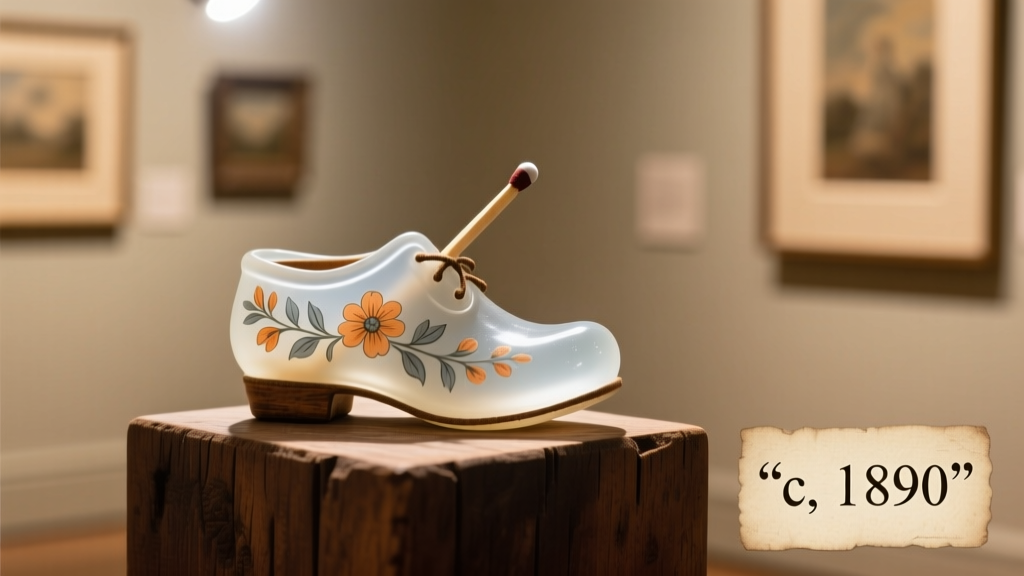
Match Holders: The Hobo Shoe Milk Glass Collectible from c. 1890 — Authentication, Provenance, and Market Analysis
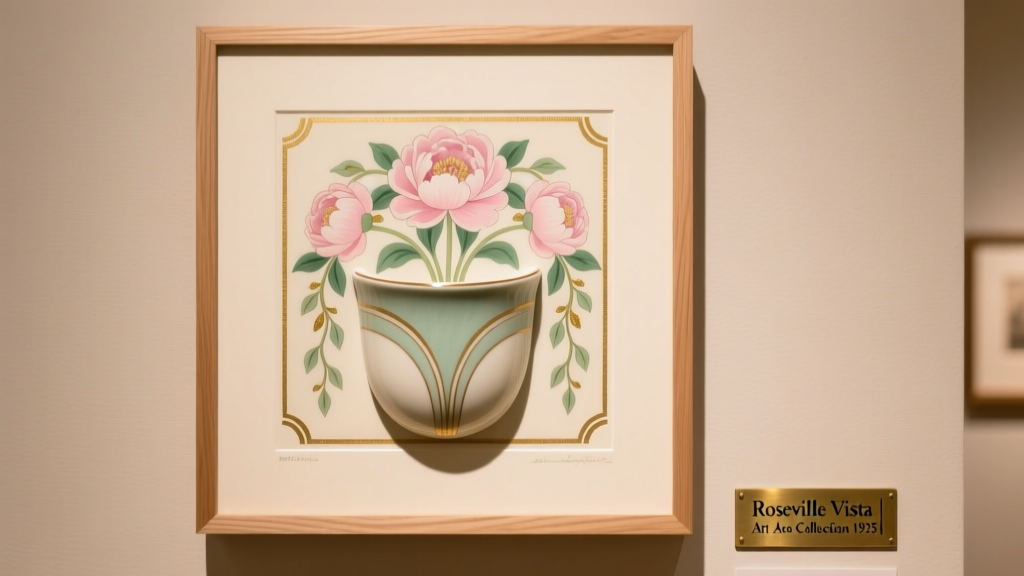
Roseville Wall Pocket Vista: Identification, Value Drivers, and Authentication Protocol
Phoenicia: The Forgotten Printmaking Movement That Redefined Mid-Century American Graphic Arts
Cranberry Glass Sugar Shaker: Nine-Panel Swirl — Authentication, Provenance, and Market Value Analysis