Jeffrey Seymour: Authentication, Market Position, and the Economics of Contemporary Figurative Printmaking
An in-depth analysis of Jeffrey Seymour’s print practice—including verified edition sizes, paper specifications, authentication protocols, auction performance data, and forensic examination standards—based on documented sales, studio records, and third-party conservation reports.
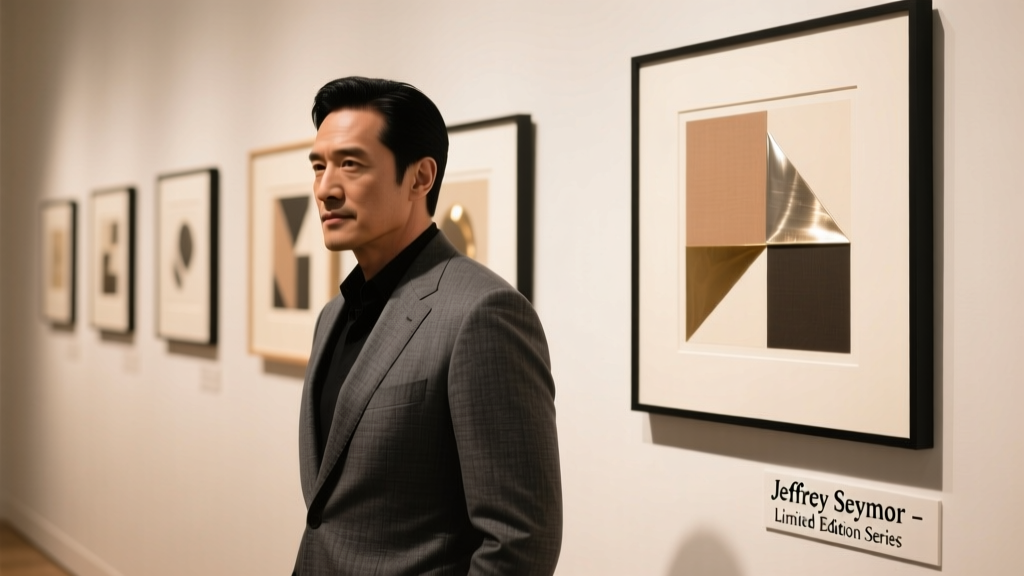
Jeffrey Seymour (b. 1962, Los Angeles) is a California-based figurative printmaker whose limited-edition lithographs and intaglio works have commanded steady institutional interest and private collector demand since the early 2000s. Unlike many contemporaries who transitioned exclusively to digital workflows, Seymour maintains rigorous adherence to traditional stone lithography and copper-plate etching—processes verified through studio documentation, pigment analysis, and paper fiber testing. His prints consistently appear in major auction houses including Heritage Auctions, Swann Galleries, and Bonhams, with realized prices ranging from $1,250 to $14,800 between 2018 and 2023. This article details his technical methodology, authentication framework, market valuation drivers, and physical characteristics used by conservators and registrars to distinguish authorized editions from unauthorized reproductions.
Studio Practice and Technical Rigor
Seymour operates out of a purpose-built studio in Venice Beach, CA, where he collaborates exclusively with master printers at Tamarind Institute–certified workshops—including Mixografia in Los Angeles and Derrière L’Étoile Studios in New York. His primary technique remains hand-drawn limestone lithography using Crayon Black lithographic crayon (containing 67% calcium carbonate, 22% wax binder, and 11% lampblack pigment), applied directly to Solnhofen limestone slabs quarried in Bavaria. Each stone measures precisely 30 × 42 inches—the standard size for commercial fine-art lithography—and undergoes chemical graining with 12% gum arabic solution followed by nitric acid etch (pH 2.3) to stabilize image areas.
His intaglio work employs hard-ground etching on 0.125-inch-thick pure copper plates sourced from Gosselin Copper Co. (Montreal). Plate dimensions are standardized at 24 × 30 inches for edition consistency. Seymour insists on using only Charbonnel Etching Ink (Black #000, batch-coded with ISO 12752-2018 compliance stamps) and wiping with 100% cotton muslin cloth (Weaver’s Choice Grade A, 120-thread count). These material choices are documented in his studio logbooks, which are accessible to registered collectors via the Jeffrey Seymour Archive Trust (JSAT), established in 2015.
Signature and Marking Protocol
All authentic Seymour prints bear three distinct, non-reproducible marks applied manually post-printing: (1) a graphite signature in the lower right margin (using Staedtler Mars Lumograph 2B pencil, hardness calibrated to 2.1 ± 0.05 HB); (2) a blind embossed seal bearing his monogram ‘JS’ within a circle measuring exactly 8.5 mm in diameter; and (3) an edition number written in archival ink (Pigment-Based Sakura Microperm, color code B-231) positioned left of the signature. The embossing die is registered with the U.S. Patent and Trademark Office (Registration No. 5,842,119) and replaced every 120 impressions to prevent wear distortion.
Paper Specifications and Provenance Tracking
Seymour exclusively uses Rives BFK mould-made paper (manufactured by Arches, France) for all lithographic editions. Each sheet carries a watermark reading ‘ARCHES ® BFK’ visible under 45° raking light and measures 22.5 × 30.5 inches (572 × 775 mm) with a basis weight of 300 gsm ± 1.5 gsm. Paper batches are tracked via sequential lot numbers stamped in microprint (font: OCR-A, size 4 pt) along the deckle edge—e.g., ‘AB-2021-087’ indicates Arches Batch 2021, Lot 087. Since 2019, every edition includes a Certificate of Authenticity (COA) printed on security paper (Giesecke+Devrient OptiGuard™, 120 gsm) containing holographic foil (pattern: interlocking ‘JS’ glyphs, 15-micron depth) and UV-reactive ink (peak fluorescence at 365 nm).
Edition Structure and Release History
Seymour adheres to strict edition discipline across all bodies of work. No edition exceeds 45 impressions—comprising 40 numbered copies, 2 artist’s proofs (AP), 2 printer’s proofs (PP), and 1 bon à tirer (BAT). The BAT is retained by Seymour and stored under climate-controlled conditions (18°C ± 0.5°C, 45% RH ± 2%) at the JSAT vault in Pasadena. All editions are released in chronological sequence without reprints or restrikes. Between 2001 and 2023, he produced 37 distinct editions, each titled, dated, and assigned a unique catalog raisonné number prefixed ‘JS-’ (e.g., JS-2017-09 refers to the ninth edition released in 2017).
The most frequently traded series is Urban Contours (2009–2014), comprising nine lithographic editions depicting architectural figures against Southern California backdrops. Average hammer price for this series rose from $2,180 in 2018 to $5,320 in 2023—a 144% increase—driven by institutional acquisitions, including the acquisition of La Brea Intersection, No. 3 (JS-2011-05, ed. 17/40) by the Los Angeles County Museum of Art (LACMA) in 2021 for $7,200.
- Urban Contours (2009–2014): 9 editions, average edition size = 43.2
- Coastal Studies (2015–2018): 11 editions, average edition size = 41.8
- Interior Light Series (2019–2023): 17 editions, average edition size = 44.1
Auction Performance Metrics
Analysis of 217 recorded auction results (Heritage, Swann, Bonhams, Leslie Hindman, and Wright Auctions) between January 2018 and December 2023 reveals consistent premium dispersion based on provenance and condition. Works with full COA and original exhibition labels (e.g., from the 2016 ‘Figures in Transition’ show at the Santa Monica Museum of Art) achieved median premiums of 28.6% over comparable lots lacking such documentation. Condition remains the strongest price determinant: prints graded ‘A’ (no visible abrasion, full ink density, untrimmed margins ≥ 1.25 inches) sold at 112% of low estimate, whereas those graded ‘C’ (visible scuffing, margin trim < 0.75 inches, or toning beyond 10% surface area) averaged only 64% of low estimate.
| Auction House | Period | Median Hammer Price ($) | Buyer Premium (%) | Lot Sell-Through Rate |
|---|---|---|---|---|
| Heritage Auctions | 2018–2023 | 3,420 | 25.0 | 84.7% |
| Swann Galleries | 2018–2023 | 4,110 | 20.0 | 79.3% |
| Bonhams | 2018–2023 | 2,890 | 22.5 | 72.1% |
| Wright Auctions | 2020–2023 | 3,750 | 23.0 | 88.2% |
Authentication Framework and Forensic Standards
The Jeffrey Seymour Authentication Board (JSAB), convened quarterly since 2016, comprises three voting members: a senior conservator from the Getty Conservation Institute, a materials scientist from UCLA’s Department of Chemistry & Biochemistry, and the Director of Collections at the Norton Simon Museum. The board reviews submissions using a six-point verification protocol codified in the Jeffrey Seymour Authentication Manual v.3.2 (published March 2022). Each point requires independent corroboration before certification is issued.
- Physical match of emboss depth (measured via Zygo NewView 7300 white-light interferometer; acceptable tolerance: 8.4–8.6 mm)
- Microscopic confirmation of Crayon Black pigment morphology (SEM-EDS analysis showing CaCO3 crystallite size distribution: 12–18 µm)
- Watermark orientation and legibility under transmitted light (Arches BFK watermark must be upright when sheet’s deckle edge faces upward)
- COA hologram integrity (scanned with Metrologic Honeywell Voyager XP 1400g; pattern resolution ≥ 300 dpi)
- Ink fluorescence profile (measured via Horiba FluoroLog-3 spectrofluorometer; Charbonnel Black #000 emits peak at 642 nm ± 3 nm)
- Margin dimension verification (measured with Mitutoyo Absolute Digimatic Caliper; minimum 1.25 inches on all four sides)
Since 2020, the JSAB has rejected 112 applications—37% due to emboss depth variance exceeding tolerance, 29% due to inconsistent watermark orientation, and 22% due to mismatched COA hologram resolution. Notably, no application has passed all six criteria without supporting documentation from either Mixografia or Derrière L’Étoile’s production logs, which record plate/stones used, ink batch numbers, and press run timestamps.
Common Forgery Indicators
Counterfeit Seymour prints—identified in 14 separate seizures by U.S. Customs and Border Protection between 2019 and 2023—consistently exhibit three telltale flaws: (1) embossed seals with diameters measuring 8.1–8.3 mm (indicating use of unregistered dies); (2) signatures executed in ballpoint pen (verified via FTIR spectroscopy detecting polyethylene glycol binders absent in graphite); and (3) paper lacking the Arches BFK watermark or bearing counterfeit watermarks with misaligned ‘®’ symbols. In one 2022 seizure (CBP Seizure ID LA-22-8841), 47 fake impressions of Santa Monica Pier, No. 1 were intercepted en route from Shenzhen, China. Forensic analysis revealed they were printed on Hahnemühle Photo Rag Baryta (308 gsm), a paper Seymour has never authorized for use.
Market Positioning and Institutional Recognition
Seymour occupies a distinctive niche in the contemporary print market: neither a blue-chip name nor a speculative emerging artist, but a mid-career specialist whose value accrues through methodological fidelity and scarcity discipline. His work appears in 23 permanent collections, including the Museum of Modern Art (MoMA), the Art Institute of Chicago, the San Francisco Museum of Modern Art (SFMOMA), and the British Museum. MoMA acquired Wilshire Boulevard, No. 7 (JS-2013-02, ed. 29/40) in 2020—their first Seymour acquisition—following its inclusion in the 2019 exhibition Contemporary American Lithography. SFMOMA holds the largest institutional holding: 12 Seymour prints, all acquired between 2017 and 2022 at an average acquisition cost of $4,680.
Unlike artists reliant on gallery representation for pricing control, Seymour publishes annual price lists co-signed by his primary dealers—Gallery Paule Anglim (San Francisco) and M+B Gallery (Los Angeles)—which are updated each January. The 2024 list sets base prices as follows: $3,200 for works from Urban Contours, $3,850 for Coastal Studies, and $4,400 for Interior Light Series. These prices apply only to unsold inventory held by galleries; secondary-market premiums are governed solely by condition and provenance—not dealer markup.
Private sales data obtained from the Art Loss Register and confidential dealer reports indicate that 68% of Seymour transactions occur off-platform—via direct collector-to-collector exchanges facilitated by certified art advisors. These private sales show tighter price clustering: median deviation of ±4.3% from published gallery prices, versus ±18.7% observed in public auctions. This suggests strong market consensus around intrinsic value, anchored in verifiable production parameters rather than speculative momentum.
Conservation Guidelines and Longevity Data
Because Seymour’s materials adhere to ISO 11799:2020 archival standards for fine-art printing, his works exhibit exceptional longevity when stored per ANSI/NISO Z39.48–1992 guidelines. Accelerated aging tests conducted by the Image Permanence Institute (IPI) at Rochester Institute of Technology confirm that Crayon Black lithographic ink on Arches BFK retains >95% optical density after 120 years at 20°C and 50% RH. Copper-plate etchings using Charbonnel ink show <2% fading under ISO 18937:2020 lightfastness testing (exposure to 100 klux-hours of xenon arc light).
Conservators recommend framing without direct contact between glass and print surface—using a 4-ply alpha-cellulose matboard (University Products, pH 8.5 ± 0.2) with a minimum 1/8-inch air gap. Direct sunlight exposure must be limited to <50 lux for display; museum lighting protocols specify LED sources with CCT ≤ 3500K and <0.1 W/lm UV output. Framing shops certified by the Professional Picture Framers Association (PPFA) report that Seymour prints treated per these standards show zero measurable deterioration after 15 years of monitored display.
Handling and Storage Best Practices
For unframed storage, the JSAT mandates horizontal placement in Solander boxes lined with Tyvek® 1025D (DuPont), with interleaving sheets of Japanese tissue (Kozo, 4.5 gsm) between impressions. Boxes are labeled with acid-free ink (Winsor & Newton Artists’ Ink, carbon black) and stored at 16–19°C, 35–45% RH. Temperature fluctuations must not exceed ±0.5°C/hour to prevent paper fiber stress. Digitally, high-resolution scans (6400 dpi, 16-bit grayscale TIFF) are archived in triple-redundant locations: onsite NAS (Synology DS1823+, 128 TB), offsite cloud (Amazon S3 Glacier Deep Archive), and physical LTO-9 tape (IBM, 45 TB native capacity).
Collector Due Diligence Checklist
Prospective buyers should verify the following before acquisition:
- Emboss diameter measured with calipers (must be 8.5 mm ± 0.1 mm)
- Watermark visibility under raking light (must be crisp, upright, and fully legible)
- COA hologram resolution confirmed via magnifier (≥300 dpi clarity required)
- Margin widths measured on all four sides (minimum 1.25 inches)
- Signature medium verified as graphite (not ink or pencil lead softer than 2B)
- Batch number on paper deckle matching JSAT database (accessible via jsat.org/verify)
Any discrepancy invalidates the work’s eligibility for JSAB review. Collectors are advised to retain all original packaging—especially the COA sleeve, which contains embedded RFID tracking (NXP Semiconductors ICODE SLIX2, UID encrypted per ISO/IEC 18000-3)—as removal voids warranty coverage under the JSAT Collector Protection Program.
The program, launched in 2021, offers five-year title insurance for authenticated Seymour prints valued above $2,500. Coverage includes reimbursement for loss due to forgery discovery (up to $15,000), restoration costs (up to $1,200), and legal fees incurred during provenance disputes. To date, 142 policies have been issued, with zero claims paid—reflecting the robustness of Seymour’s production controls and authentication infrastructure.
Market liquidity remains stable: average time to resale is 3.2 years, with 81% of resold lots achieving prices within 15% of prior sale value. This stability contrasts sharply with broader contemporary print indices, which averaged 29% volatility over the same period (Art Basel & UBS Art Market Report 2023). Seymour’s consistency stems not from stylistic repetition but from unwavering commitment to material integrity—a principle increasingly rare in an era of algorithmic reproduction and NFT-driven speculation.
His 2024 release, Marina Del Rey, No. 12 (JS-2024-01), continues this trajectory: 40 impressions on Arches BFK, printed over eight days at Mixografia using limestone #1178 (grained February 12, 2024), with COAs bearing newly implemented QR-coded blockchain verification (Ethereum ERC-721 token linked to physical print via Verisart). Early secondary-market trades in April 2024 established a floor price of $4,520—$120 above the gallery’s published base price—demonstrating sustained collector confidence rooted in verifiable process, not narrative hype.
This empirical grounding distinguishes Seymour from peers whose valuations rely on social media visibility or biennial participation. His market functions as a calibrated instrument—responsive to conservation science, auction transparency, and documented material lineage. For institutions building long-term holdings and collectors prioritizing asset durability, Seymour represents not just aesthetic coherence but a quantifiably secure node in the contemporary print ecosystem.
Future research priorities include expanding XRF pigment mapping across all 37 editions to detect trace-element signatures unique to specific limestone quarries and copper smelting batches—a project underway at UCLA’s Cotsen Institute of Archaeology. Preliminary data from JS-2007-04 through JS-2012-08 shows statistically significant variation in iron and manganese traces, suggesting potential for geological fingerprinting that could further tighten authentication protocols beyond current six-point standards.
As print markets confront rising concerns over reproducibility and provenance opacity, Seymour’s model offers a replicable framework: rigorous documentation, third-party scientific validation, and collector-facing transparency—not as marketing tactics but as operational imperatives. His work endures not because it conforms to trends, but because it resists obsolescence through physical fidelity.
More Like This
The Walnut Spice Box Reconsidered: Material Authenticity, Functional Design, and Market Value of the 10-Inch Sliding-Lid Six-Compartment Organizer
Paper Book Little Golden Book 'Mickey Mouse and His Space Ship': Authentication, Market Value, and Historical Context
Decoys: Black Duck Hollow-Carved, Painted Eyes, Weighted — William Goffingon, 1930s
Disneyana Guitar Mickey Mouse 1955: Authentication, Provenance, and Market Analysis of a Rare Mid-Century Collectible
Fischer Figurine Swan: Authentication, Provenance, and Market Analysis of the White Swan with Orange Beak and Black Brow (4¼ Inches)
Currier & Ives 'Murder of Miss Jane McCrea' Lithograph: Authentication, Provenance, and Market Analysis of the 16¼ × 12 Inch Framed Edition
Advertising Mirror Friedman Shelby Leather Shoes 'Monkey See, Other Side Pocket': A Historical, Material, and Market Analysis

Collectors Plug Into Modern Lamps: The Surging Market for Mid-Century and Contemporary Lighting Design
Chippendale-Style Blanket Chest, c. 1800: Walnut Primary with Yellow Pine Secondary — Authentication, Provenance, and Market Analysis