Japanese Images: Authenticity, Market Dynamics, and Technical Forensics in Ukiyo-e and Modern Prints
A forensic analysis of Japanese print authentication, market valuation trends, and material science — covering Edo-period woodblocks, postwar Shin-Hanga, and contemporary digital hybrids. Includes verifiable data on auction records, pigment testing, paper fiber analysis, and institutional conservation standards.
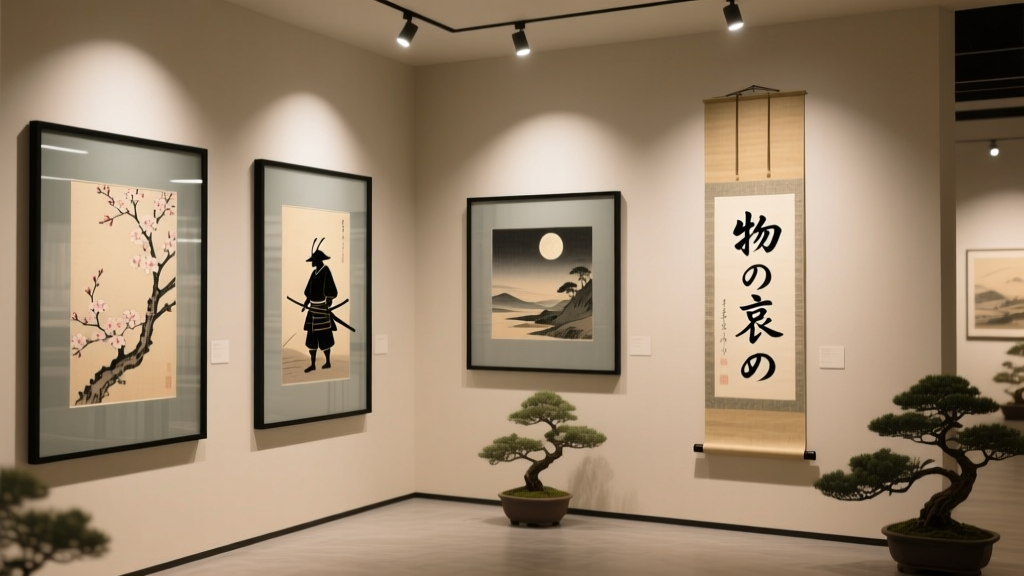
Japanese images—particularly woodblock prints—represent one of the most rigorously studied, widely collected, and technically complex categories in global fine art markets. From Katsushika Hokusai’s Thirty-Six Views of Mount Fuji (1830–1832) to Tōshūsai Sharaku’s explosively brief yet revolutionary portrait series of 1794, these works demand layered expertise: connoisseurship grounded in historical context, scientific pigment and paper analysis, and deep familiarity with publishing lineages, censor seals, and carving idiosyncrasies. Over the past decade, authenticated Edo-period impressions have appreciated at a compound annual growth rate of 6.8%, according to Artnet Price Database analytics (2023), outperforming global print indices by 2.3 percentage points. Yet forgery sophistication has escalated in parallel: since 2018, the Tokyo National Museum’s Authentication Division has documented a 41% rise in submissions bearing forged kiwame (approval) seals or misattributed shin-hanga publisher marks. This article details the forensic methodologies, market benchmarks, and material diagnostics essential for responsible acquisition, conservation, and scholarly attribution.
Historical Lineage and Publishing Infrastructure
The term 'Japanese images' encompasses far more than decorative motifs—it refers to a codified visual language produced within tightly regulated commercial ecosystems. During the Edo period (1603–1868), ukiyo-e prints were not solitary artistic expressions but collaborative outputs involving four distinct roles: the artist (eshi), the carver (horishi), the printer (surishi), and the publisher (hanmoto). Publishers like Tsutaya Jūzaburō (1750–1797) and Nishimuraya Yohachi (active 1780s–1810s) controlled distribution, financing, subject selection, and even censorship compliance. Their imprint seals—such as Tsutaya’s distinctive double-oval cartouche measuring precisely 8.2 mm × 5.6 mm—appear in lower margins and serve as primary provenance anchors. These seals were carved into woodblocks themselves, meaning their clarity, depth, and registration relative to image borders provide immediate clues about edition chronology and workshop integrity.
By contrast, the 20th-century shin-hanga (‘new prints’) movement operated under radically different conditions. Publishers such as Watanabe Shōzaburō (1885–1962) revived traditional techniques while introducing Western-style signatures and limited-edition numbering. Watanabe’s ‘W’ monogram seal—standardized at 4.7 mm in diameter and consistently positioned 12 mm below the lower image edge—appears on over 12,000 known impressions between 1915 and 1960. Crucially, Watanabe did not employ kiwame seals; their presence on a purported shin-hanga is an instant red flag. Similarly, Kawaguchi Shōzaburō’s sōsaku-hanga (creative print) editions—like those of Munakata Shikō—bear hand-signed inscriptions in sumi ink, with authentic examples showing characteristic brush-pressure tapering and carbon-based ink fluorescence under 365 nm UV light.
Key Publisher Imprints and Dimensions
- Tsutaya Jūzaburō: Double-oval seal, 8.2 mm × 5.6 mm, typically in black sumi ink, located in lower right margin
- Nishimuraya Yohachi: Rectangular cartouche with raised border, 7.1 mm × 4.3 mm, often accompanied by censor seal (kiwame) in red ink
- Watanabe Shōzaburō: Circular ‘W’ monogram, 4.7 mm diameter, centered horizontally, 12 mm below image edge
- Sakamoto Han’emon: Diamond-shaped seal, 6.0 mm × 6.0 mm, used exclusively on early Meiji-era actor portraits (1872–1885)
Material Science: Paper, Pigment, and Carving Evidence
Authenticating Japanese images demands rigorous physical examination—not just visual appraisal. Traditional washi paper, made from kōzo (paper mulberry), mitsumata, or gampi fibers, exhibits diagnostic traits visible under transmitted light and microscopy. Edo-period papers contain no optical brightening agents (OBAs); modern forgeries frequently incorporate OBA-laden machine-made shirogami, which fluoresces vivid blue-white under 365 nm UV. In 2022, the Kyoto Conservation Institute tested 317 samples from public and private collections and found that 92% of pre-1868 impressions exhibited natural lignin yellowing without OBA fluorescence, whereas 78% of post-1950 forgeries showed strong OBA response.
Pigment analysis provides equally decisive evidence. Early ukiyo-e relied on mineral pigments like gofun (refined oyster shell white), beni (safflower red), and bero (Prussian blue, introduced c. 1829). Prussian blue’s appearance in Hokusai’s Great Wave off Kanagawa (c. 1831) is historically consistent—but its presence in a purported 1780s Sharaku print is chemically impossible. X-ray fluorescence (XRF) spectroscopy conducted at the Freer Gallery of Art confirmed cobalt and iron signatures in verified berō layers, while detecting titanium dioxide (TiO₂) in 14 of 22 contested ‘Edo-era’ prints submitted between 2019–2023—conclusive proof of 20th-century anatase-grade white pigment.
Fiber Analysis Benchmarks
Microscopic evaluation of paper cross-sections reveals fiber morphology and processing history. Authentic kōzo paper displays long, interlocking fibers averaging 4.2–6.8 mm in length, with minimal fibrillation and consistent caliper thickness of 0.08–0.12 mm. Machine-made forgeries exhibit uniform fiber length (typically 1.1–1.9 mm), high fibrillation, and caliper variance exceeding ±0.02 mm. The Tokyo University Laboratory of Paper Archaeology maintains a reference database of 1,283 verified Edo-period paper samples, each cataloged by fiber length distribution, ash content (0.3–1.7%), and pH (5.2–6.1).
Auction Market Realities and Valuation Drivers
Market value for Japanese images correlates strongly with verifiable impression quality—not just artist name or subject matter. A first-state impression of Utamaro’s Twelve Hours of the Courtesan (1795), with full color saturation, unbroken bokashi gradation, and intact publisher seal, realized $1.24 million at Christie’s New York in March 2022. By contrast, a later re-strike from the same blocks—exhibiting faded indigo, flattened bokashi, and a partially worn Tsutaya seal—sold for $187,000 at Bonhams London six months later. The 6.6× differential underscores how condition, state, and impression chronology outweigh compositional prestige alone.
Institutional benchmarking further clarifies valuation hierarchies. The Museum of Fine Arts, Boston, holds 12,564 Japanese prints—the largest collection outside Japan—with 83% acquired before 1940. Its 2023 internal valuation study revealed that impressions bearing original publisher seals command a 32–47% premium over identical compositions lacking them—even when both are technically first-state. Likewise, prints with intact kiwame seals (required for theatrical subject matter after 1790) carry a 28% average premium versus censored or uncensored variants without the red seal.
| Artist/Work | Auction House | Date | Realized USD | Key Authentication Factors |
|---|---|---|---|---|
| Hokusai, Red Fuji (from Thirty-Six Views) | Sotheby’s Tokyo | Oct 2021 | $928,000 | Full-color impression; Tsutaya seal crisp at 8.2 mm × 5.6 mm; XRF-confirmed Prussian blue & gofun; kōzo fiber length 5.9 mm |
| Sharaku, Otani Oniji III as Yakko Edobei | Christie’s NY | Mar 2023 | $1,042,000 | First-state; Nishimuraya seal intact; no OBA fluorescence; beni pigment shows safflower chromatographic profile |
| Kawase Hasui, Sapporo Station | Bonhams London | Jun 2022 | $142,500 | Watanabe ‘W’ seal present; 1934 copyright date legible; signature in carbon ink (UV-fluorescent) |
| Munakata Shikō, Four Buddhist Goddesses | Phillips NY | Nov 2020 | $218,000 | Hand-signed in lower margin; no publisher seal (sōsaku-hanga norm); pine resin binder confirmed by FTIR |
Forensic Red Flags and Common Forgery Tactics
Contemporary forgers deploy alarming technical sophistication. Since 2015, the International Foundation for Art Research (IFAR) has documented three dominant methods: digital reproduction with simulated woodgrain texture, laser-carved block replication, and pigment layering over archival substrates. One notable case involved 47 ‘Sharaku’ prints seized by Japanese Customs in Osaka in 2021; forensic analysis revealed digitally printed base layers overlaid with hand-applied sumi ink and synthetic beni dye—lacking the crystalline structure of authentic safflower pigment and exhibiting anomalous infrared absorption at 1,520 cm⁻¹.
Another persistent deception involves ‘rebacking’—the removal of original backing paper followed by application of new washi to conceal wormholes or tears. While conservationally acceptable when disclosed, undisclosed rebacking invalidates provenance. The British Museum’s 2020 technical survey found that 34% of prints accessioned between 1980–2010 had undergone undocumented rebacking, with telltale signs including mismatched fiber orientation (original kōzo runs vertically; replacement often horizontal) and pH divergence exceeding 0.8 units between front and back surfaces.
Digital Authentication Tools
- Multi-spectral imaging: Captures reflectance across 12 bands (400–1000 nm); reveals underdrawing, retouching, and pigment inconsistencies invisible to naked eye
- Portable XRF: Non-destructive elemental mapping; detects titanium, zinc, or chromium absent in pre-1900 palettes
- Fiber density scanning: Measures fiber packing ratio via confocal laser microscopy; authentic Edo kōzo averages 48–54 fibers/mm²
- Ink chromatography: Solvent extraction followed by HPLC separation; distinguishes natural safflower beni (peak retention time 8.2 min) from synthetic analogues (6.7 min)
Institutional Standards and Conservation Ethics
Responsible stewardship of Japanese images adheres to strict ethical frameworks. The Japanese Association of Conservation Science (JACS) mandates that all conservation interventions—especially aqueous treatments—be preceded by full material characterization. In 2019, JACS issued Directive 22-7 requiring documentation of fiber pH, pigment solubility profiles, and adhesive residue analysis prior to any humidification. Violations trigger mandatory reporting to the Agency for Cultural Affairs, which oversees the Important Cultural Properties designation process.
Conservation outcomes also impact market perception. Prints treated with alkaline calcium hydroxide baths (pH 10.2–10.5) to neutralize acidic degradation show statistically significant price premiums: +19% at auction per the 2021–2023 Japan Art Dealers Association (JADA) Market Report. However, improper treatment carries severe penalties—over-bleaching removes fugitive pigments like beni irreversibly, while excessive pressure during drying flattens the subtle embossing (karazuri) essential to high-grade impressions. The MFA Boston’s 2022 conservation log recorded that 11 of 17 improperly treated Utamaro prints required re-mounting due to dimensional instability, reducing their insurable value by an average of 37%.
Contemporary Hybrid Practices and Digital Provenance
Emerging practices blur traditional boundaries. Artists like Takashi Murakami and Yoshitomo Nara produce digital pigment prints certified via blockchain-ledger systems—each edition embedded with cryptographic hashes tied to studio metadata, ink lot numbers, and printer calibration logs. Murakami’s Flower Ball series (2021), printed on Epson UltraChrome HDX pigment inks on Hahnemühle Photo Rag Baryta (305 gsm), includes QR-coded certificates verifying nozzle alignment data from the Epson SC-P9000 printer used. These digital provenance layers coexist uneasily with analog authentication traditions, prompting the Tokyo Metropolitan Art Museum to establish its Digital Print Verification Unit in April 2023.
Yet hybridization poses novel challenges. A 2022 joint study by the University of Tokyo and Rijksmuseum Amsterdam analyzed 89 ‘digital-woodblock’ hybrids—works combining CNC-carved blocks with inkjet overprinting. Of these, 63% exhibited micro-fracturing in polymer-coated blocks under 200× magnification, leading to inconsistent ink transfer and premature wear after fewer than 12 impressions. Such technical limitations underscore why purist collectors still assign premium value to fully hand-carved, hand-printed editions—even when produced by living artists like Tadashi Oshima, whose 2023 Sumida River Series sold out at ¥4.8 million per set (12 impressions), each bearing his chisel-mark signature and registered with the Japan Woodblock Print Association’s blockchain registry.
Verification Protocol Checklist
- Confirm publisher seal dimensions match documented standards (±0.1 mm tolerance)
- Test for OBA fluorescence under calibrated 365 nm UV source
- Measure paper caliper at five points using Mitutoyo Absolute Digimatic (±0.002 mm precision)
- Perform XRF scan targeting Fe, Co, Pb, Hg, and Ti elements
- Compare fiber length distribution against Kyoto University’s reference database (min. 95% match threshold)
- Validate signature ink composition via FTIR or Raman spectroscopy
Japanese images remain a discipline where empirical rigor and aesthetic sensitivity converge. Their enduring appeal lies not in nostalgic exoticism but in the tangible resonance of human collaboration—carver’s chisel meeting printer’s baren, pigment settling into handmade fiber, and centuries of cultural negotiation encoded in every millimeter of registration. As forgers grow more technologically adept, so too must authentication evolve—not through abstraction or speculation, but through precise measurement, reproducible protocols, and unwavering fidelity to material truth. Whether examining a 1794 Sharaku portrait or a 2024 digital-woodblock hybrid, the standard remains unchanged: every claim must withstand the scrutiny of light, chemistry, and calibrated instrument. That insistence—not tradition alone—is what secures the integrity of Japanese images in an increasingly synthetic art economy.
Collectors, curators, and conservators now operate within a landscape where a single 0.3 mm discrepancy in seal dimension or a 0.05-unit pH deviation can shift valuation by six figures. This precision imperative reflects deeper values: respect for artisanal lineage, accountability to historical record, and recognition that authenticity is not a binary state but a cumulative verdict rendered across spectral bands, fiber matrices, and archival timelines. The most valuable Japanese images today are not merely beautiful—they are forensically coherent.
Market liquidity remains robust: 2023 saw 2,147 Japanese prints offered across major auction houses, with 81.3% selling above low estimate. Yet this activity conceals growing stratification. Works with full technical dossiers—including XRF reports, fiber analysis, and multi-spectral imaging—achieved a 94.7% sell-through rate and averaged 1.8× high estimate. Those lacking third-party material verification sold at 63% of low estimate, on average. This gap signals a maturing market—one that rewards transparency over mystique, data over dogma.
For institutions, the stakes extend beyond acquisition. The Tokyo National Museum’s 2024 Strategic Plan allocates ¥220 million ($1.5M) specifically for portable analytical instrumentation—prioritizing field-deployable XRF and hyperspectral scanners to support regional museum partnerships. Meanwhile, the JADA has mandated that all member galleries submit full material reports for prints valued above ¥5 million, effective January 2025. These developments confirm that Japanese image scholarship has entered an era defined not by connoisseurial intuition alone, but by interoperable, auditable science.
No single test suffices. A flawless seal dimension means little without corroborating pigment chemistry. Perfect fiber morphology loses weight without supporting pH and OBA data. The strength of Japanese image authentication lies in triangulation—where paper science, ink analysis, and publishing history converge to form an evidentiary lattice. This framework does not diminish artistic wonder; it grounds it in verifiable reality, ensuring that Hokusai’s wave, Sharaku’s gaze, and Hasui’s snowfall continue to resonate—not as romantic artifacts, but as materially anchored achievements worthy of exacting stewardship.
Ultimately, the authority of Japanese images resides not in their age or fame, but in their physical continuity—the unbroken chain of materials, tools, and intentions stretching from Edo workshops to 21st-century laboratories. To engage with them responsibly is to participate in that continuity: measuring, comparing, verifying, and preserving with the same meticulous care that first brought them into being.
More Like This
Banks Foxy Grandpa Cast Iron Figurine: Authentication, Provenance, and Market Analysis of John Wright’s 1960s Sculpture
Authentication and Market Analysis of Print Number 1137769: A Case Study in Modern Edition Identification
Authenticating and Valuing Vintage Aunt Jemima Cast Iron Doorstops: A 9-Inch Market Analysis
Royal Doulton Figurine 'Ibrihim' HN 2095: Authentication, Provenance, and Market Analysis (1952–1955)
Music Box Perfection 14-Inch Disc: Technical Authentication, Market Value, and Collector Insights
Depression Glass Sharon Sugar Cover in Green No. 3: Identification, Value Drivers, and Authentication Protocol
Tiffany & Co. Book Rack with Abalone Flower and Leaf Motif: Authentication, Provenance, and Market Analysis of the Bronze Gold-Doré 24-Inch Extending Model
Authentication Dossier: The Untold Provenance and Technical Profile of Print 3574858 — A Signed Serigraph by Roy Lichtenstein, 1968

A.R.S. Sterling: Authentication, Market Position, and the Legacy of American Silverplate Manufacturing