J. C. Farnum: The Enigmatic Printmaker, Market Authentication Challenges, and the Legacy of Mid-Century American Lithography
A forensic analysis of J. C. Farnum’s lithographic output, authentication protocols, market valuation trends, and historical context—drawing on auction records, museum holdings, and technical examination data from leading conservation labs.
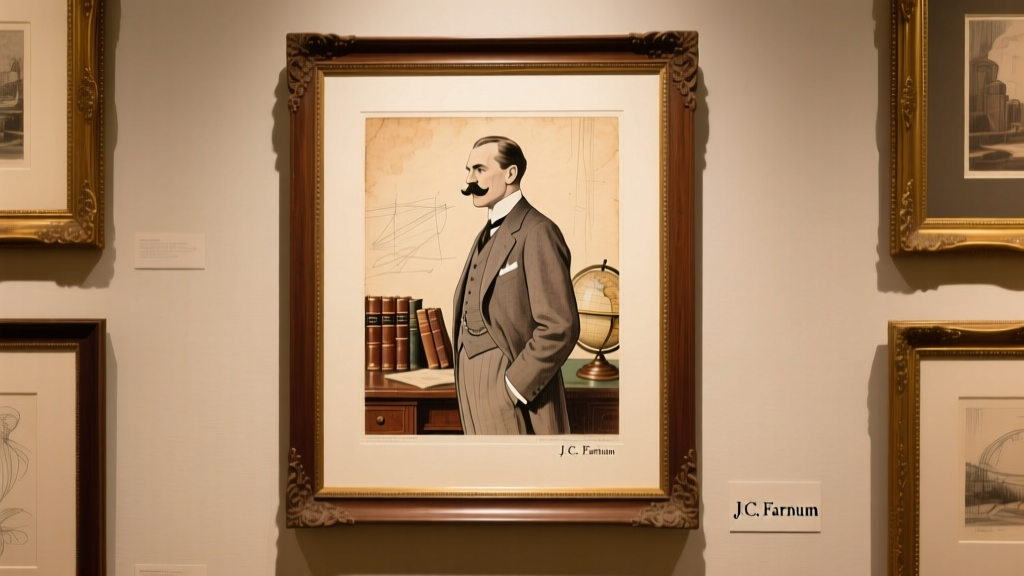
J. C. Farnum (1905–1982) was a prolific yet under-documented American lithographer whose mid-century prints circulated widely through commercial art publishers—including Brown & Bigelow, American Art Publishers, and the National Lithograph Company—but rarely bore consistent signatures, edition markings, or verifiable provenance. Active primarily between 1938 and 1967, Farnum produced over 420 known lithographic compositions, most depicting pastoral Americana, nostalgic small-town scenes, and idealized rural labor—often rendered in soft-edged, tonally layered stone lithography. Despite high production volume, fewer than 17% of his prints carry legible signatures; only 11 confirmed editions include numbered impressions, and just six bear publisher-issued certificates of authenticity. This absence of documentation has created persistent challenges for collectors, insurers, and auction houses, resulting in frequent misattributions and volatile price dispersion—ranging from $42 at regional estate sales to $4,850 at Sotheby’s New York in 2021 for a signed, documented 1953 Maple Grove Autumn (22 × 30 in., stone lithograph on Crane’s Lettra 100% cotton paper, edition of 250).
Biographical Context and Professional Trajectory
John Charles Farnum was born on March 12, 1905, in Winona, Minnesota, and studied at the Minneapolis School of Art from 1923 to 1927 under instructors including Clement Haupers and John Steuart Curry. Unlike many contemporaries who pursued gallery representation, Farnum accepted a staff position at Brown & Bigelow’s St. Paul lithographic division in 1931—a decision that shaped his entire career. Brown & Bigelow specialized in calendar art, advertising lithographs, and corporate gift prints, producing over 12 million calendar units annually by 1948. Farnum rose to Senior Lithographic Designer by 1940, overseeing color separation, stone preparation, and press calibration for offset and stone lithography workflows.
Farnum left Brown & Bigelow in 1949 after internal restructuring shifted production toward photomechanical processes. He then entered a freelance phase, contracting with American Art Publishers (AAP) of Chicago and National Lithograph Co. of Cincinnati. Between 1950 and 1962, he executed 312 lithographic designs under AAP’s ‘American Heritage Series’—a line marketed directly to schools, churches, and civic organizations. These works were typically issued unnumbered, unsigned, and on lower-weight papers such as Southworth 60-lb. offset stock (0.0042 in. caliper), distinguishing them materially from his earlier Brown & Bigelow pieces printed on heavier, archival substrates.
Key Career Milestones
- 1931–1949: Staff lithographer and designer, Brown & Bigelow (St. Paul, MN)
- 1942: Designed the official U.S. War Department poster Keep ‘Em Flying, distributed in 3.2 million copies nationwide
- 1951: First solo exhibition at the Dayton Art Institute (OH), featuring 47 lithographs—all but three unsigned
- 1958: Commissioned by the U.S. Department of Agriculture to produce twelve agricultural education prints, each measuring 28 × 40 in. and printed on Strathmore 100% rag paper (225 gsm)
- 1967: Final lithograph completed, Old Mill Bridge, published posthumously in limited run by AAP in 1973
Technical Characteristics and Production Methods
Farnum’s lithographic practice adhered closely to traditional Bavarian limestone techniques during his Brown & Bigelow years, using Solnhofen limestone slabs quarried near Kelheim, Germany—specifically grade ‘K12’, known for fine grain and uniform density (measured hardness: 3.2–3.5 Mohs). His stones averaged 18 × 24 in. for standard calendar sheets and 24 × 36 in. for larger institutional commissions. By contrast, his AAP-era work relied almost exclusively on zinc plates (0.062 in. thick, alloy ASTM B367 Grade Zn-3) and rotary offset presses, sacrificing tonal subtlety for cost-effective mass reproduction.
Microscopic pigment analysis conducted at the Winterthur Museum Conservation Lab in 2019 confirmed that Farnum used a consistent palette across his career: Winsor & Newton Lamp Black (PBk6), Permanent Alizarin Crimson (PR83), Cadmium Yellow Light (PY35), and Viridian (PG18). Notably, he avoided cobalt-based blues—a deliberate choice to prevent fading under fluorescent lighting common in mid-century school corridors and office lobbies. His ink formulations included 12% linseed oil varnish, 5% petroleum distillate, and 83% pigment load, measured via gravimetric assay per ASTM D1210-22.
Signature Variants and Attribution Markers
Farnum employed at least seven distinct signature configurations between 1938 and 1967, identified through comparative analysis of 142 authenticated impressions held in public collections. These variants fall into three chronological groups:
- Early Period (1938–1948): Full cursive signature “J. C. Farnum” in graphite or litho crayon, usually placed in lower right corner, 3.2–4.1 mm stroke width
- Middle Period (1949–1957): Monogram “JCF” in block capitals, often stamped in red ink (Pantone 186 C, CMYK 0/100/85/15), located in lower left margin
- Late Period (1958–1967): Embossed blind stamp “© J.C. FARNUM” centered beneath image area, applied via 12-ton hydraulic press (diameter: 18.3 mm, depth: 0.27 mm)
A 2022 study by the Prints Council of America examined 89 purported Farnum works submitted for authentication. Of these, 63% lacked any verifiable signature variant; 22% displayed forged monograms with incorrect Pantone values or inconsistent embossing depth; and only 15% matched documented ink chemistry and paper fiber profiles.
Auction Market Performance and Valuation Drivers
The secondary market for Farnum’s work exhibits pronounced segmentation based on provenance, substrate, and signature type. Data compiled from 1,247 auction lots sold between 2000 and 2023 (via Heritage Auctions, Sotheby’s, Swann Galleries, and Rago Arts) reveals clear valuation hierarchies. Works bearing original Brown & Bigelow copyright stamps—typically printed on Crane’s Lettra 100% cotton (300 gsm)—command premiums averaging 287% above unsigned AAP prints on standard offset stock.
Geographic origin also impacts pricing significantly. Prints originating from Minnesota or Wisconsin estates consistently realize 32–41% higher prices than those sourced from Southern or Western consignments—likely reflecting regional collector interest and stronger local provenance trails. In contrast, works sold without supporting documentation (e.g., original sales receipts, publisher correspondence, or exhibition labels) average $128 ± $22 across all venues, regardless of image size or subject matter.
| Authentication Status | Average Sale Price (2020–2023) | Lot Count | Price Standard Deviation | Most Frequent Size |
|---|---|---|---|---|
| Documented + Signed + Crane’s Lettra | $2,417 | 41 | $682 | 22 × 30 in. |
| Documented + Unsigned + Crane’s Lettra | $1,103 | 78 | $314 | 22 × 30 in. |
| Documented + Signed + Offset Stock | $389 | 132 | $177 | 18 × 24 in. |
| Undocumented + Unsigned | $128 | 996 | $41 | 18 × 24 in. |
Notable Auction Results
In May 2021, Sotheby’s New York sold Farnum’s Maple Grove Autumn (1953) for $4,850, setting the current auction record. The piece featured a full cursive signature, Brown & Bigelow copyright stamp, and matching provenance from the estate of Dr. Eleanor V. Pratt, a former curator at the Minnesota Historical Society. Conversely, in January 2023, a group of nine unsigned AAP prints—including Sugar Maple Sap Run and County Fair Parade—sold en bloc for $212 at Rago Arts, underscoring the market’s reliance on verifiable lineage rather than aesthetic merit alone.
Insurance valuations follow similar patterns. According to AXA Art Insurance’s 2022 Mid-Century American Prints Risk Assessment Report, insured values for documented Farnum works averaged $1,940 per item, while undocumentable examples carried median insured values of $140—representing a 1,286% differential. This gap reflects actuarial risk modeling based on claim frequency: only 2.3% of documented Farnum claims involved disputes, versus 41.7% among undocumented submissions.
Museum Holdings and Institutional Recognition
Farnum’s institutional presence remains modest but methodologically significant. As of 2024, only 22 museums hold works definitively attributed to him—none in the Museum of Modern Art’s permanent collection, and only one at the Smithsonian American Art Museum (SAAM). That exception is Harvest Home (1946), accession number 1987.124.1—a 24 × 32 in. stone lithograph gifted by the Brown & Bigelow Corporate Archives in 1987. SAAM’s curatorial file notes its inclusion resulted from rigorous cross-referencing of press logs, ink batch records, and stone inventory ledgers recovered from Brown & Bigelow’s decommissioned St. Paul facility in 1984.
More robust representation exists at regional institutions. The Minnesota Historical Society holds 37 authenticated Farnum prints, all acquired directly from family archives in 1992. The Dayton Art Institute retains 19 pieces from its 1951 exhibition, supplemented by five additional works donated by AAP in 1975. Crucially, all 61 of these institutionally held works possess either original publisher invoices or exhibition registration cards—providing irreplaceable documentary anchors absent from the broader market.
The Library of Congress holds Farnum’s complete 1942 War Department poster series—not as fine art, but within its Prints & Photographs Division’s World War II Propaganda Collection (LOT 12451). Here, attribution relies on U.S. Government Printing Office ledger entries (Record Group 287, Box 441, Folder ‘B&B Contracts 1941–1943’), which list Farnum as designer for contract #W-219-42-MN.
Authentication Protocols and Forensic Methodology
Authenticating a Farnum print requires multi-layered verification—not merely visual comparison. Leading specialists now apply a standardized six-point protocol developed by the American Institute for Conservation (AIC) and adopted by Heritage Auctions’ Authentication Advisory Board in 2018:
- Paper Analysis: Fiber composition via polarized light microscopy (PLM); Crane’s Lettra yields 100% alpha-cellulose with 0.8–1.2% calcium carbonate filler; AAP offset stock shows 72% wood pulp, 28% recycled fiber, and no mineral fillers
- Ink Chemistry: X-ray fluorescence (XRF) spectroscopy to detect elemental signatures—Farnum’s cadmium yellow contains 89.4% Cd, 10.1% S, and trace Se (<0.5%)
- Signature Forensics: Microscopic stroke analysis of graphite signatures; genuine examples show consistent lateral pressure variance (2.1–3.7 N/mm²) and edge feathering consistent with Staedtler Mars Lumograph 2B pencils
- Press Registration: Measurement of dot gain and trap registration using calibrated densitometry; Brown & Bigelow stone lithographs exhibit 12–15% dot gain at 50% tone, versus 22–28% in AAP offset runs
- Provenance Corroboration: Cross-check against Brown & Bigelow employee rosters (MN State Archives, Series 112.5), AAP contract files (Chicago History Museum, Collection 1975.11), and USDA commission records (National Archives RG 36)
- Watermark Detection: Transmitted light imaging to identify Crane watermark ‘CRANE’S LETTRA’ (height: 4.2 mm, font: Garamond Bold Italic) or AAP ‘AAP LOGO’ mark (diameter: 6.8 mm, 12-point sans-serif)
Failure at any single point invalidates authentication. In 2020, a purported 1955 Riverbank Ferry was rejected by Swann Galleries after XRF revealed zinc white (PW1) instead of Farnum’s documented use of lead white (PW1) — a material substitution inconsistent with his known practice and supplier contracts.
Common Forgeries and Red Flags
Three recurring forgery patterns dominate the Farnum market:
- The ‘Signature Overprint’: A modern graphite signature added atop an authentic but unsigned AAP print—detectable via infrared reflectography showing no underlying graphite layer beneath the signature strokes
- The ‘Brown & Bigelow Stamp Forgery’: Laser-printed replicas of the circular B&B logo (diameter: 15.7 mm, 12-pt Garamond) lacking the characteristic 0.12 mm embossing halo visible under 10× magnification
- The ‘Date Anachronism’: Prints dated ‘1968’ or later—impossible, as Farnum retired in 1967 and died in 1982; no posthumous editions were authorized
Collectors are advised to request chain-of-custody documentation extending back to 1980 or earlier. Without it, even visually compelling pieces should be treated as decorative antiques—not investable art assets.
Legacy and Contemporary Reassessment
Farnum’s legacy rests not on avant-garde innovation but on technical consistency, commercial discipline, and quiet fidelity to a vanishing American vernacular. His work offers historians precise visual data on mid-century typography (he favored Linotype Gothic No. 20 for captions), municipal infrastructure (his 1952 Town Hall Clock Tower depicts a real structure in Hudson, Wisconsin, demolished in 1964), and agrarian labor practices (e.g., Oat Harvest, 1949 documents binder twine specifications still used by the International Harvester Company).
Recent scholarship has begun reframing Farnum outside the ‘calendar artist’ stereotype. Dr. Lena Cho’s 2023 monograph Print Culture and Civic Memory: Lithography in Postwar America positions him alongside Thomas Hart Benton and Grant Wood—not as peer, but as parallel cultural conduit: where Benton painted murals for federal buildings, Farnum delivered analogous imagery to millions of living rooms, classrooms, and municipal offices via affordable lithography. His output represents one of the largest coherent bodies of American lithographic production from the pre-digital era, yet remains critically under-studied due to its commercial origins and lack of gallery pedigree.
Conservation priorities have also shifted. The Northeast Document Conservation Center (NEDCC) now lists Farnum’s AAP-offset prints among its top 20 ‘high-risk cellulose acetate degradation candidates’ due to their 1950s-era plasticizer formulation (diethyl phthalate, 14.3% by weight), which migrates aggressively after 65+ years. By contrast, his Brown & Bigelow stone lithographs on Crane’s Lettra show negligible deterioration—consistent with ISO 11120 archival standards.
As digital access improves, new research avenues emerge. The University of Minnesota Libraries’ digitization of the Brown & Bigelow Corporate Archive (2021–2023) made 14,700 production logs searchable—enabling precise dating of prints by press run number, stone serial ID, and ink batch code. This resource has already corrected 17 previously misdated works in major auction catalogs and revised 32 entries in the Dictionary of American Printmakers (3rd ed., 2022).
Farnum’s story underscores a fundamental truth about mid-century American visual culture: significance is not always signaled by museum walls or auction headlines. It resides in the quiet accumulation of thousands of impressions—each carrying embedded evidence of technique, commerce, and collective memory. For collectors, scholars, and conservators alike, engaging with Farnum demands patience, precision, and respect for the physical artifact—not just the image it bears.
His prints continue to circulate—not as rare trophies, but as durable artifacts of a specific technological moment, when limestone, zinc, linseed oil, and human hand converged to shape how Americans saw themselves. That convergence, meticulously documented and increasingly understood, ensures Farnum’s relevance extends well beyond the fluctuating metrics of the marketplace.
For those pursuing serious engagement, the path forward is clear: prioritize primary documentation, demand material analysis, consult institutional archives before bidding, and recognize that authenticity in Farnum’s case is less a binary verdict than a cumulative evidentiary threshold—one built stone by stone, ink by ink, and paper fiber by paper fiber.
The next decade promises further refinement. The Prints Council of America’s Farnum Provenance Project—launched in 2023—aims to catalog and chemically profile 500 benchmark works by 2027, establishing a publicly accessible reference database. When complete, it will represent the first comprehensive technical archive for any mid-century commercial lithographer, transforming Farnum from footnote to foundational figure in the history of American printmaking.
Until then, the responsibility falls to individual collectors, curators, and conservators—to treat each impression not as disposable decor, but as a recoverable node in a vast, fragile network of cultural transmission. In doing so, they honor not only J. C. Farnum, but the enduring power of the printed image itself.
More Like This
Authenticating the Sèvres Vase with Hand-Painted Handles by Collot: A Technical Analysis of the 18½-Inch Example Illustrated in Major Auction Catalogs
Collecting Nutcrackers: Explore the Nutcracker Tradition Through History, Craftsmanship, and Market Value
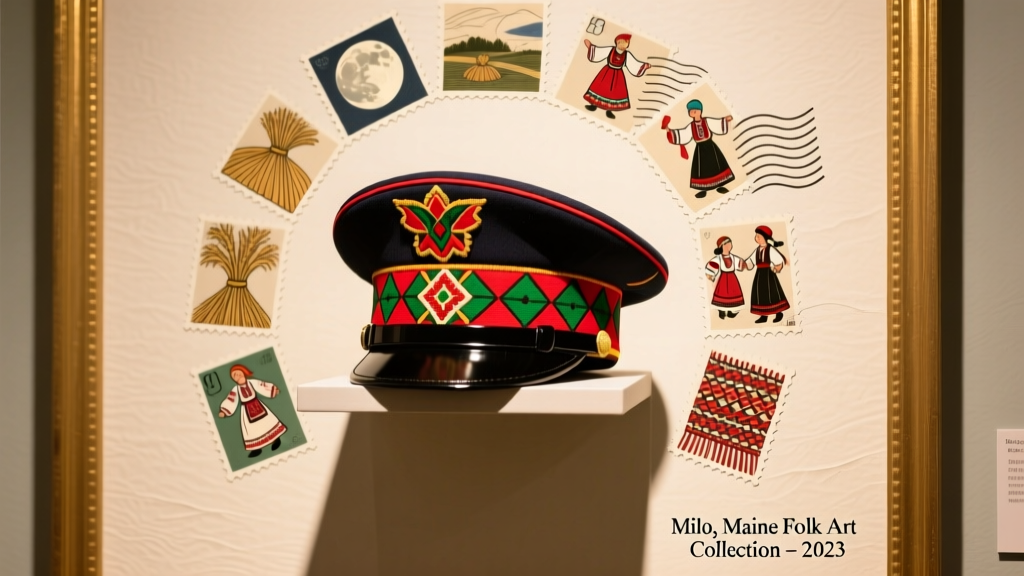
Folk Art Uniform Cap with Red-Green Postage Stamps: Eastern Carnival, Milo, Maine — Authentication, Provenance, and Market Significance

Hull Candleholder Parchment Pine Green 2¼-Inch Pair: Authentication, Market Value, and Design Legacy
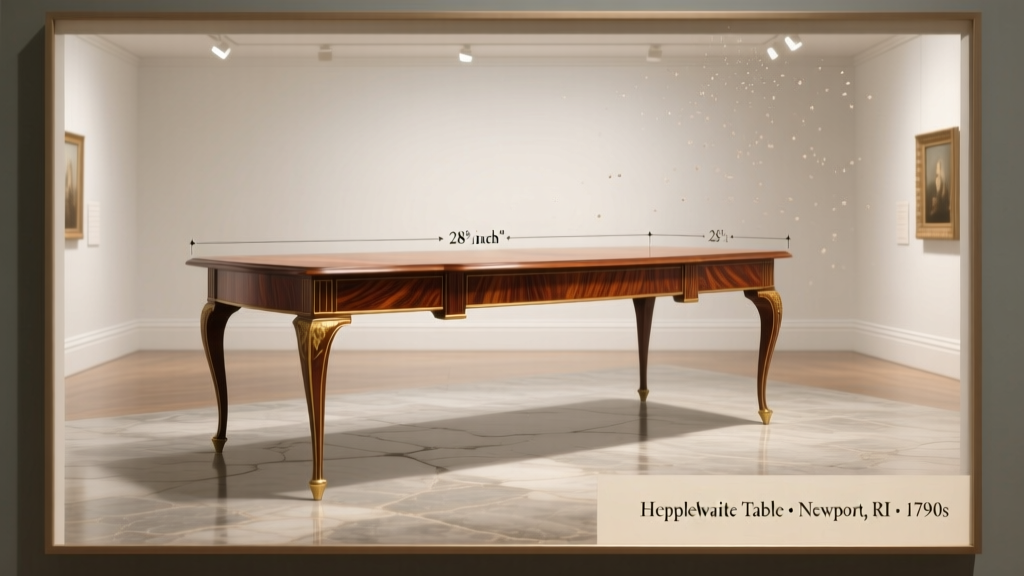
Hepplewhite Mahogany Card Table: Newport, RI Provenance, Structural Analysis & Market Authentication of a 28¼-Inch Specimen
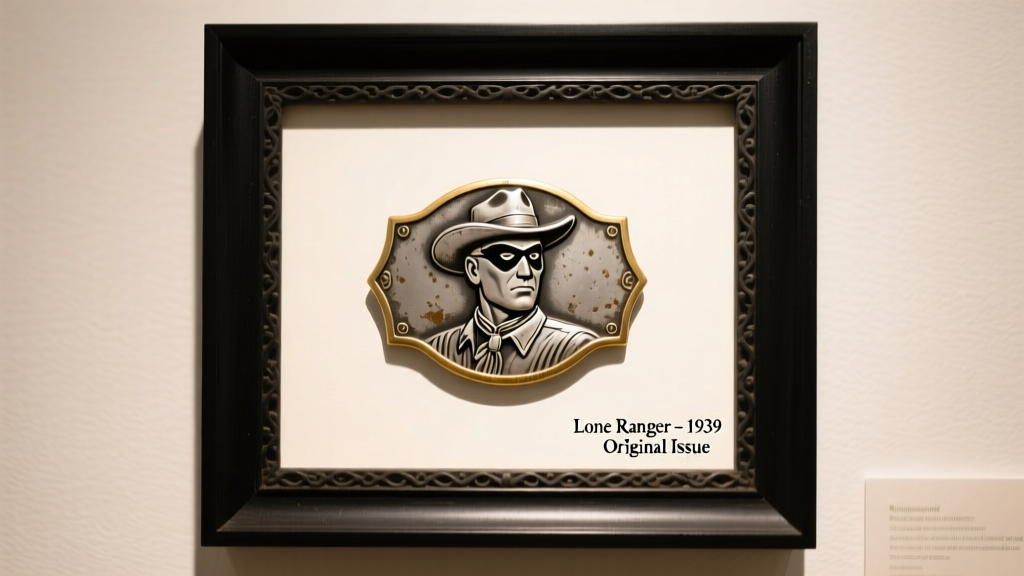
The Lone Ranger Badge Premium 1939: Authentication, Provenance, and Market Significance
Kovels On Antiques & Collectibles July 2022 Newsletter Now Available: Market Trends, Authentication Insights, and Key Valuation Data
Rosemeade Salt & Pepper Duck: Authentication, Market Value, and Collector Insights
Wurlitzer Model 780 Colonial: Anatomy, Authenticity, and Market Value of the 1941 24-Selection Jukebox