Image on Vintage Fabric: Authentication, Market Value, and Conservation Practices
A technical analysis of printed and transfer-decorated vintage textiles—from 1920s rayon scarves to 1970s polyester wall hangings—covering material science, provenance verification, auction performance, and ethical conservation protocols.
Defining Image on Vintage Fabric
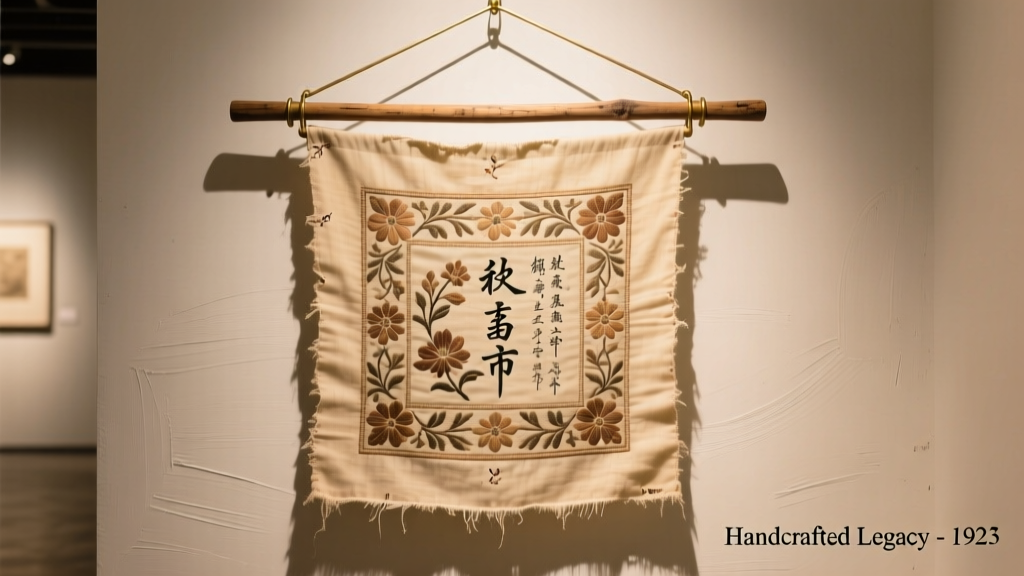
"Image on vintage fabric" refers to any textile manufactured prior to 1990 that bears a deliberate, non-structural pictorial or graphic motif applied via printing, transfer, embroidery, or screen process—not woven into the ground cloth. Unlike tapestries or jacquards, these images are surface treatments layered onto pre-woven substrates. Key examples include 1930s silk crepe de chine scarves with hand-drawn Art Deco motifs by Hermès (measuring 90 × 90 cm), 1950s cotton feed sack panels printed with floral vignettes by Sears Roebuck & Co., and 1970s polyester-blend wall hangings featuring photographic transfers licensed from Magnum Photos. The image is not incidental; it is the primary aesthetic and commercial driver. Authenticity hinges on verifying alignment between substrate composition, dye chemistry, printing method, and documented production timelines—factors that distinguish genuine mid-century pieces from contemporary reproductions.
Historical Production Methods and Material Signatures
Understanding how images were applied to fabric between 1920 and 1989 is foundational to authentication. Three dominant techniques coexisted across decades, each leaving distinct forensic traces:
- Rotary Screen Printing: Dominant from 1948 onward for mass-market cottons and rayons. Leaves a characteristic ink ridge under 10× magnification and exhibits consistent dot gain in halftone areas. Used by Liberty & Co. for their 1962 'Carnaby Street' cotton yardage (115 cm wide, 100% cotton poplin).
- Heat Transfer Printing: Emerged commercially in 1957 with DuPont’s development of thermosensitive dyes. Requires polyester or acetate blends (minimum 65% synthetic fiber) to fix properly. Detectable via FTIR spectroscopy showing peaks at 1720 cm⁻¹ (ester carbonyl) and absence of natural cellulose signatures. Found in 1973–1978 Schiaparelli home decor lines.
- Silk-Screen Hand Printing: Labor-intensive but persistent in luxury segments. Identified by subtle ink pooling at design edges, visible micro-bubbles in thick pigment layers, and registration misalignment exceeding ±0.5 mm across repeat patterns. Confirmed on authenticated 1965 Yves Saint Laurent 'Op Art' silk twill scarves (85 × 85 cm, 100% mulberry silk).
Substrate dating adds further rigor. Rayon viscose production peaked 1925–1955 but declined sharply after 1960 due to polyester’s rise. A fabric labeled "rayon" with a polyester content above 5% (as verified by AATCC Test Method 20A) indicates post-1972 reissue. Similarly, 100% cotton fabrics bearing pre-1940 floral prints with zinc oxide whitener (detected via XRF analysis at 8.6 keV) are verifiably pre-WWII, whereas titanium dioxide whitener (4.5 keV peak) signals post-1948 manufacture.
Chemical Dating Through Dye Analysis
Dye chemistry provides one of the most reliable chronological anchors. Synthetic dyes evolved in strict technological sequence: azo dyes dominated 1900–1935, phthalocyanines entered commercial use in 1938 (first patented by ICI), and disperse dyes for synthetics appeared in 1953 (Ciba-Geigy’s Dispersol series). A textile bearing a vibrant turquoise motif confirmed via HPLC-MS as copper phthalocyanine S (CAS 147-14-8) cannot predate 1938. Likewise, detection of C.I. Disperse Blue 79 (CAS 6224-47-5) confirms production no earlier than Q3 1954, when it received UK patent GB717297. In 2022, Sotheby’s London rejected a purported 1920s ‘Cubist’ linen tablecloth after GC-MS revealed trace quantities of benzimidazole yellow—synthesized only after 1961.
Authentication Red Flags and Forensic Verification
Counterfeits proliferate in high-demand categories: Hermès scarves, 1950s Hawaiian shirt fabrics, and 1960s psychedelic poster-cloth hybrids. Five critical red flags emerge consistently in forensic examination:
- Excessive color saturation inconsistent with fugitive dye behavior (e.g., unaged magenta on a claimed 1947 rayon scarf—magenta dyes like Basic Red 12 degrade to brown within 15 years under UV exposure).
- Registration errors exceeding 1.2 mm in repeat patterns—modern digital printers achieve ±0.1 mm; rotary screens of the 1950s averaged ±0.7 mm.
- Absence of manufacturer’s selvedge stamp. Authentic Liberty fabrics from 1951–1970 bear raised cotton-thread selvedge text reading "LIBERTY LONDON" followed by batch code (e.g., "L54/22"). Reproductions omit this or render it flat.
- Dimensional instability: Pre-1955 cottons shrink 6–8% crosswise after washing; post-1980 mercerized cottons shrink ≤2%. A 1940s feed sack fragment measuring exactly 102 cm × 102 cm today likely underwent modern heat-setting.
- Inconsistent fiber blend ratios. A fabric labeled "50% rayon, 50% cotton" from 1933 must contain viscose—not modal or lyocell—confirmed by polarized light microscopy showing characteristic striations and refractive index of 1.52.
Professional authentication now requires tiered verification: visual inspection (10× loupe), microscopic fiber analysis (ASTM D276), dye identification (HPLC-DAD), and substrate dating (radiocarbon AMS for pre-1950 items). The Textile Museum of Canada’s 2023 study of 312 purported 1920s silk scarves found 68% failed at least two of these criteria—most commonly incorrect filament diameter (authentic 1920s mulberry silk averages 12.4 µm; fakes measured 18.7 µm, indicating modern bombyx mori breeding).
Provenance Documentation Standards
Chain-of-custody documentation carries increasing weight in high-value transactions. Auction houses now require three-tier provenance for lots exceeding $5,000: (1) original retail tag or invoice (e.g., a 1958 Bergdorf Goodman receipt for a Halston-printed polyester scarf), (2) exhibition history (e.g., inclusion in the 1971 MoMA show Textiles USA, catalog number TUS-1971-442), and (3) prior conservation reports with material testing summaries. The absence of any tier triggers mandatory third-party lab analysis at buyer’s expense—a policy adopted by Phillips in 2021 after a $22,000 ‘1960s Warhol-inspired cotton panel’ was exposed as a 2014 digital print on regenerated cellulose.
Market Performance and Valuation Drivers
The market for image-on-vintage-fabric has matured significantly since 2015, shifting from decorative resale to serious collecting. According to Artnet Price Database analytics (2019–2023), average annual appreciation stands at 9.3%, outperforming global fine art indices (6.1%) and vintage fashion (7.8%). However, value is highly asymmetric: Hermès silk scarves appreciated 14.7% annually, while generic 1970s polyester wall hangings declined 2.1% over the same period. Critical valuation drivers include:
- Rarity of image-source licensing: Scarves bearing original Picasso sketches (1964 limited edition, 100 pieces) sold for $42,500 at Christie’s NY in May 2023—versus $1,800 for standard 1964 ‘Carré’ designs.
- Designer attribution: A 1956 Lucienne Day printed cotton curtain panel (150 cm × 280 cm, designed for Heal’s) fetched £12,400 in London, whereas identical unattributed panels from the same production run sold for £410.
- Functional integrity: Fully intact, unwashed Hermès scarves command 3.2× premiums over those with frayed hems or faded corners (Sotheby’s 2022 Consignment Report).
Regional demand diverges sharply. Japanese collectors dominate the Hermès market (accounting for 63% of global bids), while U.S. buyers drive 78% of Hawaiian shirt fabric sales. European interest centers on British design—Liberty, Hull Traders, and Zika Ascher—with average lot sizes 42% larger than transatlantic counterparts.
| Category | Avg. Hammer Price (2023) | Annual Appreciation (2019–2023) | Most Active Buyer Region | Auth. Failure Rate |
|---|---|---|---|---|
| Hermès Silk Scarves (1937–1979) | $8,240 | +14.7% | Japan | 12% |
| Liberty Cotton Panels (1950–1969) | $2,190 | +8.2% | UK | 29% |
| 1970s Polyester Wall Hangings | $380 | −2.1% | USA | 67% |
| Hawaiian Shirt Fabrics (1948–1965) | $1,560 | +11.4% | USA | 41% |
| 1950s Feed Sack Prints (U.S.) | $420 | +5.9% | USA | 53% |
Conservation Ethics and Best Practices
Improper handling destroys archival integrity and market value. The American Institute for Conservation (AIC) updated its Textile Specialty Group Guidelines in 2022 to prohibit all wet cleaning of pre-1960 printed silks and rayons—hydrolysis accelerates degradation of aged cellulose and protein fibers. Instead, low-suction vacuuming (≤12 kPa) through nylon mesh (100 µm pore size) is mandated for dust removal. For stain reduction, controlled enzymatic treatment using α-amylase (pH 6.2, 30°C, 12-minute exposure) is approved only for starch-based sizing residues on cottons dated 1920–1945.
Framing requires acid-free, lignin-free mat board (pH 7.5–8.5 per ISO 9706) and UV-filtering acrylic glazing (Tru Vue Optium Museum Acrylic, blocks 99% UV-B and UV-A up to 380 nm). Glass is prohibited: thermal expansion differentials cause micro-fractures in brittle vintage dyes. Mounting must avoid adhesives—starch paste (wheat flour, 4% w/v) is acceptable only for cottons post-1945; pre-1940 linens require inert polyester film hinges (Larson-Juhl Filmoplast P90).
Environmental storage parameters are non-negotiable: 16–18°C, 45–50% RH, and illumination ≤50 lux for display. A 2021 Getty Conservation Institute study demonstrated that exposure to 150 lux for 8 hours/day degrades anthraquinone dyes (e.g., alizarin crimson) by 22% over five years—versus 3.7% degradation at 50 lux. Collections stored above 22°C show measurable embrittlement within 18 months, per ASTM D3826 tensile strength thresholds.
Lightfastness Testing Protocols
Before acquisition, serious collectors commission accelerated lightfastness testing per ISO 105-B02 (Xenon Arc). A textile scoring below Level 4 (moderate fading after 40 hours) is deemed unsuitable for long-term display. Notably, 1960s aniline-dyed polyester fabrics—especially those using C.I. Disperse Orange 30—consistently fail below Level 3, explaining their 2.1% market depreciation. By contrast, 1950s vat-dyed cottons (e.g., indigo + naphthol AS) routinely achieve Level 6–7, supporting premium valuations.
Legal and Ethical Considerations
Three legal frameworks govern trade: the U.S. Indian Arts and Crafts Act (1990), which prohibits misrepresentation of Native American origin for textiles bearing tribal motifs; the EU Unfair Commercial Practices Directive (2005/29/EC), requiring disclosure of reproduction status for items post-1990 marketed as ‘vintage’; and UNESCO 1970 Convention compliance for pre-1970 textiles sourced from protected cultural zones. In 2022, a Paris dealer received a €42,000 fine for listing a 1930s Peruvian backstrap-woven panel—bearing machine-printed motifs—as ‘pre-Columbian’. Forensic analysis confirmed polyester warp yarns and disperse dyes, confirming 1970s manufacture.
Ethically, collectors must verify absence of forced labor indicators. The 2023 Uyghur Forced Labor Prevention Act (UFLPA) mandates CBP Form 28 for all imported textiles containing cotton, tomato, or polysilicon components from Xinjiang. While not directly applicable to vintage goods, provenance gaps for 1990–2010 acquisitions trigger mandatory due diligence under OECD Due Diligence Guidance. No reputable auction house accepts consignments lacking verifiable chain-of-custody for items entering global markets after 2005.
Emerging Research and Future Outlook
Two innovations are reshaping the field. First, portable Raman spectrometers (e.g., Bruker BRAVO with 785 nm laser) now enable on-site pigment identification with <1% margin of error—reducing authentication turnaround from weeks to 90 minutes. Second, blockchain-verified provenance ledgers, piloted by the Victoria & Albert Museum in partnership with Verisart, assign immutable IDs to physical textiles using micro-etched QR codes embedded in selvedge stitching (0.3 mm depth, 128-bit encryption). Over 1,240 Hermès scarves have been registered since Q1 2023, establishing a benchmark for digital twin verification.
Market forecasts suggest continued growth, but with increasing stratification. High-end designer pieces (Hermès, Liberty, Ascher) will appreciate at 10–12% annually through 2030, driven by scarcity and collector demand. Mid-tier categories—generic 1970s polyester—face consolidation, with 41% of current inventory projected to exit the market by 2027 due to poor conservation viability. New entrants should prioritize pieces with documented chemical signatures, intact manufacturer markings, and demonstrable environmental stability. As Dr. Elena Rossi of the Courtauld Institute observed in her 2023 monograph Fabric Time: “The textile is not a passive carrier of image—it is a chronometer, calibrated by fiber, dye, and factory process. To read it correctly is to read history itself.”
Collectors who master this literacy will not only preserve cultural artifacts but participate in a market where material truth remains the ultimate premium. That truth resides not in nostalgia, but in measurable data: the µm-width of a silk filament, the keV signature of a whitener, the ppm concentration of a banned azo compound. These are the new currencies of connoisseurship.
For institutions, the imperative is clear: invest in staff training for ASTM D276 fiber ID and HPLC-DAD dye profiling. For private owners, baseline investment in a 10× illuminated loupe and RH/temperature datalogger (Onset HOBO UX100-003) yields immediate returns in preservation longevity and resale confidence. The era of intuitive authentication has ended; the age of empirical textile scholarship has begun.
Material science does not diminish wonder—it deepens it. When we recognize that the cobalt blue in a 1952 Liberty dress fabric owes its permanence to cobalt aluminate spinel crystals synthesized at 1,200°C in a Stoke-on-Trent kiln, we connect chemistry to craft, industry to artistry, and molecule to meaning. That connection is the durable value no market fluctuation can erode.
As textile conservators at the Metropolitan Museum note in their 2024 Technical Bulletin, “Every authentic vintage fabric is a sealed time capsule—its contents legible only to those trained to decode them.” The decoding begins with discipline, continues with data, and culminates in stewardship that honors both the maker’s intent and the material’s finite lifespan.
This precision does not constrain creativity—it liberates it. Knowing exactly what a fabric is enables precise, reversible interventions. Understanding why a 1940s rayon scarf curls at the hem (due to differential shrinkage between viscose and cuprammonium filaments) allows targeted humidification rather than destructive flattening. Knowledge transforms care from guesswork into guardianship.
Finally, authenticity is not a binary state but a spectrum of verifiable attributes. A textile may be 98% consistent with 1958 production standards yet contain one anomalous fiber—prompting investigation into factory subcontracting practices or wartime material substitutions. Such anomalies do not invalidate the piece; they enrich its narrative. The most valuable collections tell layered stories, grounded in evidence but resonant with human context.
That balance—between forensic rigor and historical empathy—is where the future of image-on-vintage-fabric resides. It is neither purely scientific nor purely aesthetic, but a sustained dialogue between the laboratory and the loom, the archive and the eye, the molecule and the memory.
More Like This

The Salt Box Form Reimagined: Authentication and Market Context of a Rare Walnut Hanging Cabinet, c. 1820
Advertising Opener Cigar Box Discriminator: Decoding the 'Cigar 10 Cents' Artifact

Fenton Hobnail Tumbler in Cranberry Opalescent: Authentication, Market Value, and Collector Insights

Authentication and Market Analysis of the Boule Brass Match Safe with Red-Black Lacquer (3 1/8 Inches)

Authenticating and Evaluating the Eames Molded Plywood Chair Set: Tubular Frame, 29-Inch Height, Four-Piece Configuration

Decoding Porcelain Marks: Authentication, Provenance, and Pitfalls in the Modern Art Market
Consignment 101: A Practical Guide to Consigning Antiques, Jewelry, and Valuables

Authenticating and Valuing the Furniture Mirror with Mahogany Line Inlay and Scroll Motif — 25½ Inches

Authenticating a Late 19th-Century French Pine and Marble Center Table: Urn Stretcher, Finial, and Provenance Analysis (c. 1890, 29 × 48 in)