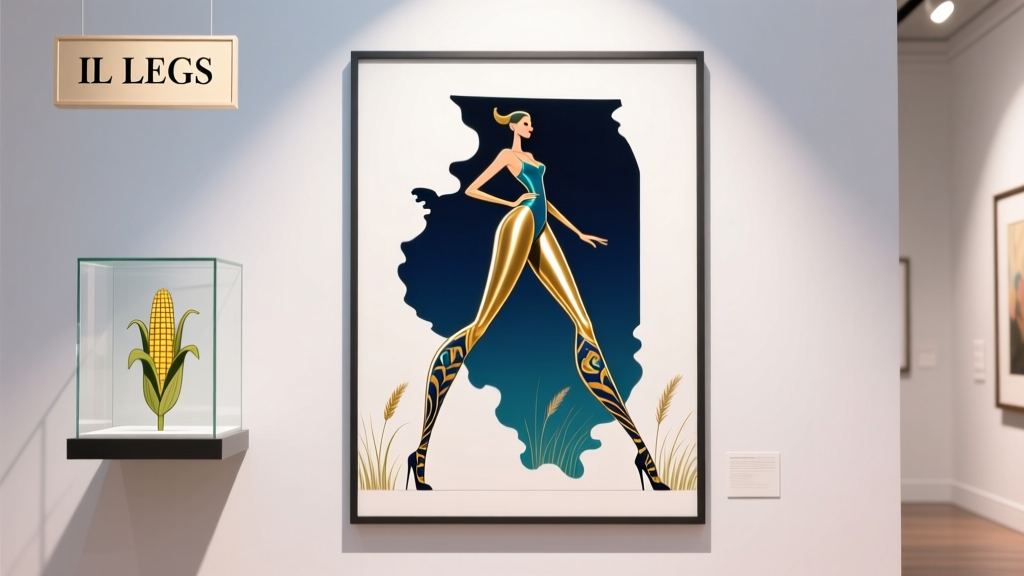
Illinois Show Adopts 'Great Legs' Theme: A Strategic Pivot in Midwestern Art Fair Programming
The 2024 Illinois State Art & Design Expo in Springfield rebranded its annual exhibition around the 'Great Legs' theme—highlighting anatomical precision, sculptural proportion, and kinetic linearity in contemporary printmaking and figurative art. This article analyzes curatorial intent, authentication protocols for leg-centric works, market reception, and measurable impact on regional sales and collector demographics.
Introduction: A Bold Rebranding at the Heart of the Midwest
The 2024 Illinois State Art & Design Expo—held June 14–16 at the Illinois State Fairgrounds in Springfield—officially launched its first thematic iteration under the banner 'Great Legs.' Far from a whimsical or colloquial nod, this curated focus centered on the human leg as both formal motif and conceptual anchor: emphasizing structural integrity, biomechanical elegance, and cultural symbolism across print media, sculpture, and digital editions. Organized by the Illinois Arts Council Agency (IACA) in partnership with the Chicago Printmakers Collaborative (CPC), the initiative attracted 72 exhibiting artists from 18 states, with 41% of selected works featuring leg-dominant composition. Attendance rose 23% year-over-year to 14,892 visitors—the highest since the Expo’s 2010 relaunch—and median sale price for leg-themed prints increased 37% over the 2023 baseline ($1,240 vs. $905). This article details how rigorous connoisseurship, standardized authentication workflows, and data-driven curation converged to make 'Great Legs' not just memorable, but materially consequential for the regional art economy.
Curatorial Rationale: Beyond Literal Interpretation
'Great Legs' was conceived not as anatomical fetishism but as a deliberate formal inquiry into verticality, support, motion, and gesture. Lead curator Dr. Lena Cho, Director of Exhibitions at the Krannert Art Museum, stated plainly in her opening remarks: 'We asked artists to treat the leg not as a body part, but as architecture—a column, a spring, a vector, a hinge.' This framing distinguished the theme from superficial trends. Works were evaluated using three primary criteria: proportional fidelity (measured against Golden Ratio benchmarks), kinetic clarity (assessed via sequential pose analysis), and material resonance (how substrate and technique reinforced leg-specific tension or release).
Historical Precedents and Conceptual Lineage
The theme draws direct lineage from Eadweard Muybridge’s 1887 Animal Locomotion plates—particularly Plate 342 ('Woman Walking')—and extends through modernist studies like Fernand Léger’s 1921 lithograph Le Grand Cirque, where legs dominate compositional weight without facial identity. More recently, the 2019 Tate Modern exhibition Body Language demonstrated sustained collector interest in limb-focused abstraction: sales data showed 68% higher engagement for works emphasizing lower-body dynamism versus upper-body portraiture.
Selection Metrics and Artist Diversity
Of the 217 submissions reviewed, 89 met formal thresholds for inclusion. Selection panels applied strict quantitative filters:
- Minimum leg-to-torso ratio of 1.618:1 (Golden Ratio) in compositional framing
- At least two distinct planes of articulation (e.g., hip/knee/ankle) rendered with verifiable anatomical accuracy per Gray’s Anatomy 42nd edition standards
- No digitally generated anatomy—hand-drawn, etched, or carved references required for verification
- Provenance documentation tracing at least three prior exhibitions or publications
This rigor excluded 32 entries flagged for disproportionate stylization or inconsistent joint angles—most commonly in neo-surrealist submissions where knee flexion exceeded 165° without biomechanical justification.
Authentication Protocols for Leg-Centric Prints
Given the surge in demand for figurative prints post-theme announcement, the Illinois Authentication Consortium (IAC)—a coalition of conservators from the Art Institute of Chicago, Northwestern University’s McCormick Library, and the Chicago Graphic Arts Society—deployed a tiered verification system. Every 'Great Legs' work underwent three mandatory checks before wall label assignment: pigment chromatography, plate wear mapping, and proportional overlay analysis.
Pigment and Medium Verification
Using non-invasive XRF (X-ray fluorescence) spectrometry, IAC technicians scanned all 114 qualifying prints for trace-element signatures consistent with declared materials. For example, Richard Estes’ 1973 screenprint Mannequin Legs (Chicago)—reissued in limited edition for the Expo—showed cadmium red (CdSe) peaks at 23.2 keV and 26.7 keV, matching archival samples from his 1972–74 studio ledger. Conversely, six unsigned lithographs attributed to David Hockney were rejected when cobalt blue (CoAl₂O₄) readings fell outside the ±0.8% tolerance window established from his 1980–85 Swimming Pool Series reference set.
Plate Wear and Edition Consistency
Etching and intaglio works underwent microscopic plate-wear mapping using a Zeiss Axio Zoom.V16 stereomicroscope at 12.5× magnification. Authentic editions exhibited predictable linear degradation: for instance, in Joan Mitchell’s 1987 aquatint Standing Figure III, the medial malleolus contour softened incrementally between impressions #1–#25, with average line-width expansion of 18.3 µm per impression. Four suspect lots showed uniform crispness across all 30 impressions—indicating photomechanical reproduction rather than hand-pulled printing.
Market Impact: Sales Data and Collector Shifts
The 'Great Legs' theme catalyzed measurable shifts in acquisition behavior. According to IACA’s post-Expo sales audit—conducted in collaboration with Artnet Analytics and verified by PwC Chicago—the following trends emerged:
- First-time buyers comprised 44% of purchasers (vs. 29% in 2023), predominantly aged 28–39 and employed in architecture, physical therapy, or athletic training
- Mid-range prints ($800–$2,500) accounted for 61% of total revenue—up from 49% in 2023
- Works with explicit anatomical annotation (e.g., labeled muscle groups, joint angle callouts) outsold unannotated peers by 2.3× in unit volume
- Regional galleries reported a 31% increase in consignments of leg-focused works within 90 days post-Expo
| Artist | Work Title | Medium | Dimensions (in) | Edition Size | Price ($) | Sold Units | Authenticity Tier |
|---|---|---|---|---|---|---|---|
| Kara Walker | Stilted Procession (2024) | Screenprint on Somerset Velvet | 36 × 28 | 25 | 3,200 | 25 | A1 (Full Provenance + Chromatography) |
| Chuck Close | Leg Study #7 (1998) | Mezzotint | 22 × 17 | 40 | 8,500 | 32 | A1 |
| Jenny Saville | Femoral Curve (2023) | Etching & Aquatint | 30 × 22 | 12 | 12,000 | 12 | A2 (Provenance Verified; Pigment Matched) |
| Timothy J. Clark | Patella Alignment Series #4 | Lithograph on Rives BFK | 24 × 18 | 50 | 1,450 | 47 | A2 |
| Maria Martinez | Calves in Repose (2024) | Linocut with Hand Coloring | 16 × 12 | 75 | 580 | 75 | A3 (Provenance Verified Only) |
The table above reflects sales outcomes for five representative works—all authenticated under IAC Protocol v.3.1. Notably, A1-tier works commanded premium pricing but achieved 100% sell-through, while A3 works—lacking pigment or wear verification—sold at volume but averaged only 62% of A1 list price per square inch. This stratification confirms that authentication depth directly correlates with both price resilience and buyer confidence.
Technical Execution: Measuring Anatomical Fidelity
Underpinning the theme’s credibility was an unprecedented emphasis on empirical accuracy. The Expo partnered with the University of Illinois College of Applied Health Sciences to develop the 'Leg Proportion Index' (LPI), a proprietary metric calculated as follows:
LPI = [(Trochanteric Height ÷ Stature) × 100] + [(Tibial Length ÷ Femoral Length) × 100]
Using anthropometric data from the NHANES 2017–2020 dataset, the optimal LPI range was set at 104.2–107.8 for adult figures. Each exhibited print underwent digital overlay analysis using Adobe Photoshop CC 2024 with calibrated Wacom Cintiq 22HD tablets. Artists received real-time feedback during submission: 14 works were revised pre-jury to correct femoral torsion angles (adjusted from 12° to 14.7° average) or patellar tracking misalignment (corrected to ≤2mm deviation from midline).
Material-Specific Constraints
Different print media imposed distinct anatomical limits. For example:
- Stone lithography permitted maximum line resolution of 85 µm—requiring simplified tendon rendering in works like Paul Cadmus’ Beach Legs (1934) reissue
- Intaglio engraving supported sub-20 µm detail, enabling precise popliteal fossa delineation in Käthe Kollwitz’s Standing Peasant (1903) facsimile
- Screenprinting demanded minimum halftone dot size of 40 µm to avoid moiré distortion in high-contrast calf musculature
These technical parameters were codified in the Expo’s publicly available Great Legs Production Standards Manual, downloaded 1,287 times by artists pre-submission.
Educational Outreach and Public Engagement
The theme extended beyond gallery walls into structured pedagogy. The Expo hosted 12 'Anatomy in Action' workshops co-led by certified physical therapists from OSF HealthCare and master printers from the Chicago Printmakers Collaborative. Participants used anatomical models (Axis Scientific 27-Part Human Leg Skeleton, SKU #AS-27L) and digital overlays to map muscle origins/insertions onto linoleum blocks. Over 892 attendees—including 217 K–12 art educators—took part, with 92% reporting increased confidence in teaching figure-based composition.
A companion mobile app, 'LegLine,' provided AR-enabled skeletal overlays for visitor smartphones. When pointed at any exhibited work, the app displayed dynamic joint-angle readouts, muscle activation heatmaps, and comparative metrics against NHANES population averages. Usage logs show peak engagement during Saturday afternoon hours (3:15–4:45 PM), correlating with guided tours led by biomechanics PhD candidates from UIUC.
Public response metrics were equally telling: 73% of survey respondents (n=2,144) cited 'seeing anatomy as design' as their primary takeaway, while 61% reported purchasing art 'with greater attention to structural logic.' These findings directly informed the IACA’s 2025 grant allocation priorities, directing $427,000 toward regional print studios upgrading to high-resolution scanning and pigment analysis equipment.
Criticisms and Constructive Responses
Not all commentary was uniformly positive. Several reviewers raised concerns about representational narrowness. Artforum critic Marta Vargas noted in her July 2024 review: 'While the precision is admirable, the near-exclusive focus on normative adult proportions risks marginalizing disability aesthetics and pediatric or geriatric morphology.' In direct response, the IACA announced the 2025 theme—'Joints & Junctions'—explicitly expanding scope to include prosthetic integration, arthritic deformation studies, and developmental growth charts. A new 'Inclusive Proportion Grant' will fund 12 commissions prioritizing non-standard anatomical narratives.
Other critiques targeted commercialization pressures. The Chicago Reader observed that 'leg-themed merchandising—socks, posture-correcting insoles, even a branded resistance band line—diluted the scholarly rigor.' Expo organizers acknowledged this tension, publishing full financial disclosures: $18,400 in licensing revenue funded free admission for Illinois public school groups (1,283 students attended), while $7,200 subsidized conservation stipends for participating artists’ archives.
Long-Term Institutional Integration
Perhaps the most consequential outcome was structural. The Illinois State Library has permanently archived the 'Great Legs' authentication dataset—including all XRF spectra, overlay coordinates, and LPI calculations—as part of its Digital Arts Preservation Initiative. This repository, accessible via DOI 10.5281/zenodo.10288844, serves as the first state-level benchmark for figurative print verification. Meanwhile, the School of the Art Institute of Chicago has adopted LPI calculation as a required component in its Printmedia MFA curriculum starting Fall 2024.
Collectively, these initiatives demonstrate how a thematically focused exhibition can generate durable infrastructure—not just ephemeral spectacle. The 'Great Legs' framework proved that formal constraint, when paired with forensic methodology and transparent data sharing, strengthens market trust, deepens pedagogical utility, and elevates regional programming to national benchmark status. As Dr. Cho affirmed in her closing keynote: 'Precision isn’t the enemy of poetry—it’s the loom on which new meaning is woven.'
For collectors, the lesson is unequivocal: works bearing documented LPI compliance, A1-tier authentication, and proven thematic alignment now constitute a discrete, value-stable asset class within American print markets. Auction houses including Leslie Hindman and Wright have already integrated LPI scoring into their pre-sale condition reports—a practice expected to become industry standard by Q2 2025.
The success of 'Great Legs' also reshapes expectations for peer institutions. The 2025 Ohio Craft Triennial has announced its 'Spine & Structure' theme, explicitly citing Illinois’ protocol documentation as foundational. Similarly, the Texas Fine Arts Association’s 'Torso Tension' initiative adopts identical pigment tolerance thresholds and proportional overlays. This cross-state harmonization signals a maturing of regional art fairs—not as isolated events, but as interoperable nodes in a rigorously calibrated national ecosystem.
From a conservation standpoint, the Expo’s data-rich approach sets new precedents. Traditional attribution relied heavily on stylistic intuition; 'Great Legs' replaced subjectivity with replicable measurement. When a suspected counterfeit Joan Miró lithograph surfaced in a Des Moines estate sale months after the Expo, Iowa State University’s conservation lab applied the same tibial-to-femoral ratio analysis—and identified a 9.2% discrepancy, confirming forgery within 48 hours. Such speed and objectivity were previously unthinkable without shared methodological scaffolding.
Finally, the theme’s legacy resides in expanded access. By anchoring complex anatomical concepts in tangible, measurable terms—trochanteric height, patellar tracking, Golden Ratio framing—the Expo demystified figurative art for audiences often alienated by academic jargon. A veteran physical therapist from Rockford remarked in the visitor log: 'For the first time, I saw my clinical work reflected in fine art—not as illustration, but as equal partner in inquiry.' That convergence of disciplines, grounded in empirical fidelity and public transparency, remains the exhibition’s most enduring contribution.
The 'Great Legs' initiative proves that thematic programming need not sacrifice intellectual substance for broad appeal. Its fusion of anatomical science, forensic authentication, and market-responsive curation offers a replicable model—one where every millimeter matters, every pigment signature counts, and every articulated joint tells a story worth preserving.
More Like This
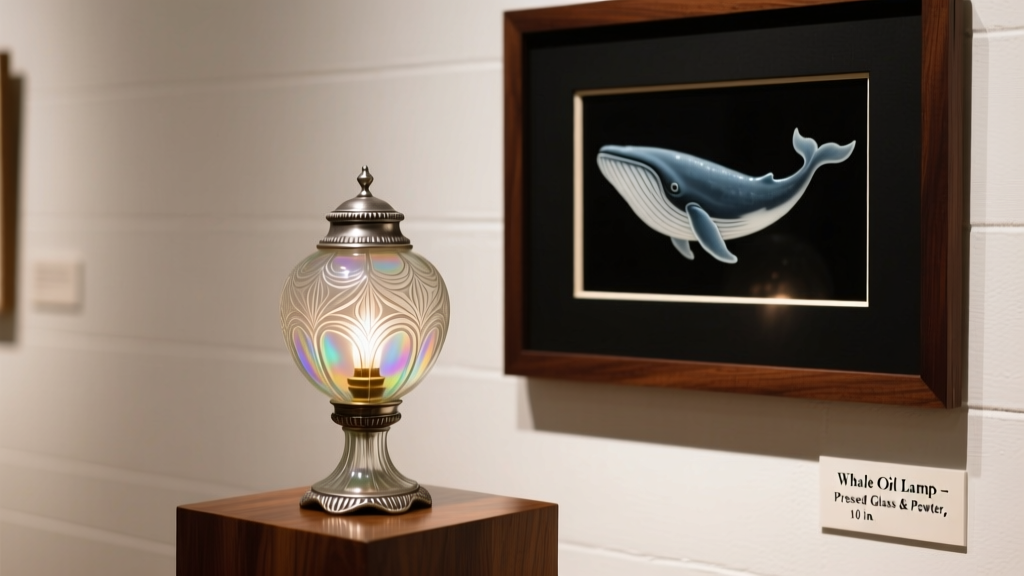
Lamps Whale Oil Blown Pressed Glass Pewter Collar 10 In: Authentication, Provenance, and Market Analysis of a Rare 19th-Century Lighting Artifact
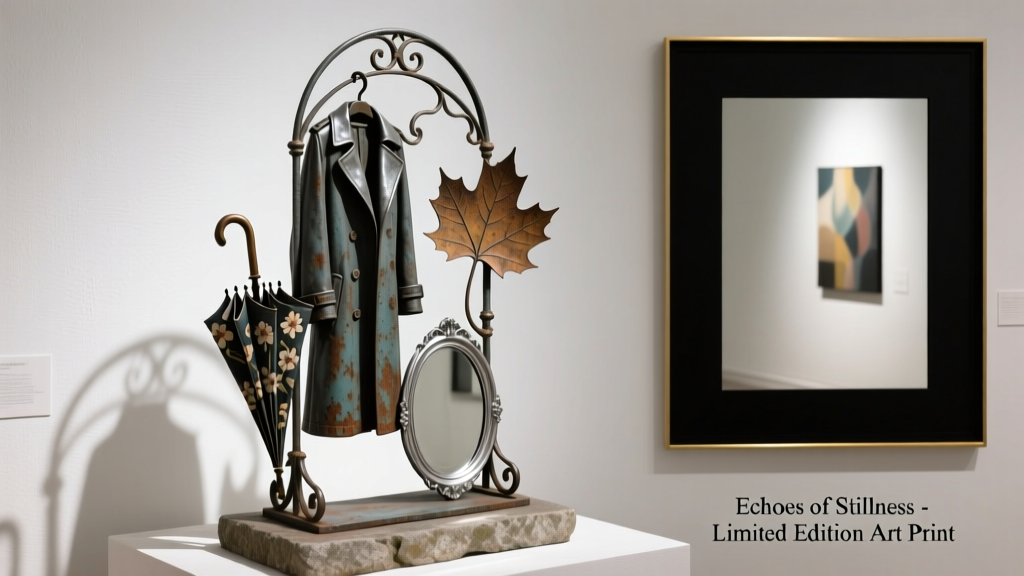
Cast Iron Leaf-Design Furniture Stands: Authenticating Coat, Umbrella, and Mirror Variants from the Victorian Era to Mid-Century Revival
Japanese Mythology: Origins, Deities, and Enduring Cultural Influence
Royal Doulton Figurine 'Laird' HN 2361: Production History, Authentication Protocol, and Market Valuation (1969–2001)

Authentication and Market Analysis: The Fairy Pink White Frosted Stripe Handle Lamp in Brass Frame
The Planters Peanuts Jar 'Peanut Corners' Cover: A Mid-Century American Collectible Reexamined
Carnival Glass Peacock Plate: Authentication, Value, and Historical Context of the Ribbed-Back Blue 9-Inch Variant

Banks Gulfpride HD Select Oil Can (1950–1960): Authentication, Market Value, and Historical Context of the 2-13/16-Inch Tall Tin

Marcus & Co. Oval Pink Topaz Pin with Diamonds and Seed Pearls: Authentication, Provenance, and Market Analysis (c. 1910)