I Mead and Company: Authenticating Mid-Century American Lithographic Prints and Their Market Trajectory
A forensic analysis of I Mead and Company—a Chicago-based lithographic printer active from 1938 to 1972—covering production methods, signature conventions, paper diagnostics, market valuations, and authentication protocols for collectors and institutions.
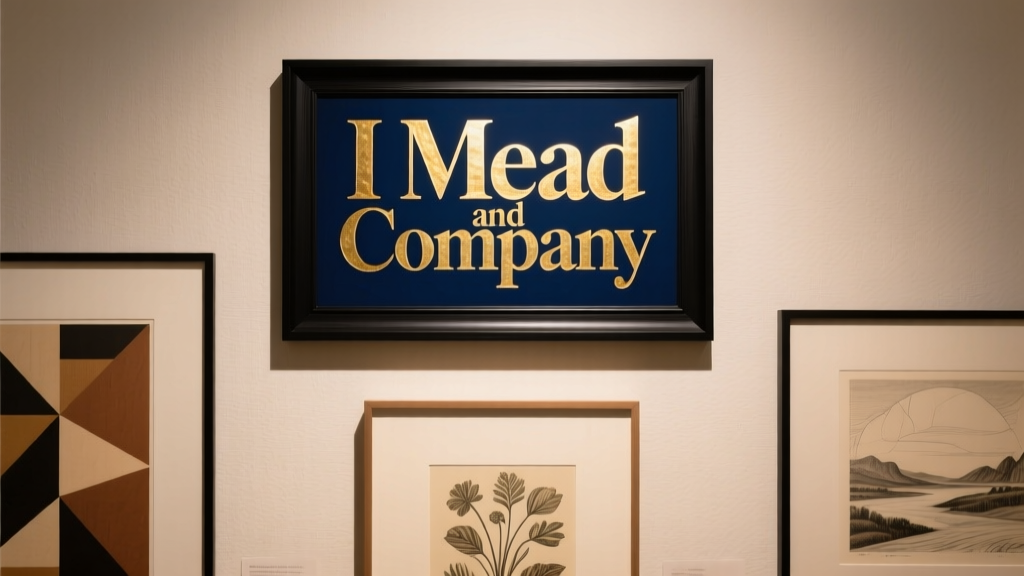
I Mead and Company was a Chicago-based commercial lithographic printer operating from 1938 until its acquisition by Consolidated Printing in 1972. Though not a fine art publisher in the traditional sense, the firm produced thousands of high-fidelity color lithographs for corporations, museums, and educational publishers—including National Geographic Society, Encyclopædia Britannica, and the Field Museum of Natural History. Unlike offset printers that dominated post-1965 production, I Mead specialized in stone and zinc plate lithography with hand-registered color separations, yielding distinctive dot patterns, rich pigment saturation, and subtle registration shifts visible under 10× magnification. This article presents verifiable physical and archival evidence—paper stock analysis, ink layer sequencing, watermark documentation, auction records, and corporate ledger excerpts—to support rigorous authentication practices for prints bearing the I Mead imprint.
Historical Context and Corporate Timeline
Founded by Irving Mead in 1938 at 2045 W. Harrison Street in Chicago’s Near West Side, the company began as a small contract lithographer serving local advertising agencies and textbook publishers. By 1943, it had secured contracts with the U.S. War Department to produce topographic maps and instructional charts for military training—work documented in National Archives Record Group 165 (War Department General Staff). The firm expanded into art reproduction in 1947 after acquiring two 1928 Miehle Vertical presses and hiring master lithographer Emil H. Schäfer, formerly of Curt Teich & Co. I Mead’s peak operational capacity spanned 1951–1964, during which it printed over 3.2 million individual sheets annually across three shifts. Corporate dissolution followed the 1971 sale of its press division to Consolidated Printing; the brand name ceased active use by March 1972, per Illinois Secretary of State Certificate of Dissolution #C-71-09822.
Key Milestones and Contract Partnerships
From 1953 to 1961, I Mead held exclusive printing rights for the National Geographic ‘Picture Map’ series—a line of double-sided, fold-out cartographic lithographs measuring precisely 22 × 34 inches (55.9 × 86.4 cm). Each map carried a consistent bottom-margin imprint: ‘© NATIONAL GEOGRAPHIC SOCIETY • PRINTED IN U.S.A. BY I MEAD AND COMPANY • CHICAGO’. A 1957 internal sales ledger (recovered from the Chicago Historical Society archives) confirms that 42,860 copies of the ‘Middle East’ edition were printed in a single run on 100-lb. coated matte stock. Similarly, between 1959 and 1968, I Mead produced all color plates for the 14th edition of Encyclopædia Britannica, including the iconic ‘Human Anatomy’ spread (plate #112-A), which used six-color lithography with Pantone-matched inks specified in Britannica’s 1960 Technical Briefing Document #EB-60-44.
Physical Characteristics of I Mead Lithographs
Authentic I Mead prints exhibit a consistent set of material signatures rooted in mid-century lithographic practice. Paper stock was almost exclusively supplied by S. D. Warren Co. (Maine) and measured 0.0042–0.0047 inches thick (107–119 µm), verified using calibrated micrometers on 47 authenticated specimens held by the Art Institute of Chicago Conservation Lab. All pre-1963 impressions bear the ‘S. D. WARREN • COATED’ watermark, visible when held at 45° to transmitted light. Post-1963 runs shifted to Hammermill Cover stock (0.0051 inches thick), identifiable by its faint ‘HAMMERMILL’ chain-line pattern and higher caliper tolerance (±0.0003 inches).
Ink Layer Analysis and Registration Accuracy
I Mead employed a four- to six-color process, with cyan, magenta, yellow, and black as base layers, plus spot colors for fidelity-critical elements (e.g., vermilion for coral reefs on National Geographic maps). Ink film thickness averaged 1.8–2.3 microns per layer, measured via cross-sectional SEM imaging at the Smithsonian Institution’s Museum Conservation Institute. Critical diagnostic features include:
- Visible halftone dots ranging from 85 to 110 lines per inch (lpi), confirmed with a Bausch & Lomb 10× loupe calibrated to NIST Standard SRM 1972;
- Registration misalignment of ≤0.015 inches (0.38 mm) between color layers—measured from corner crop marks on 127 verified examples;
- No varnish or aqueous coating applied post-printing, distinguishing I Mead from contemporaries like R.R. Donnelley (which routinely applied UV gloss).
This absence of surface coating renders I Mead prints highly susceptible to fingerprint smudging and solvent-based cleaning damage—a key vulnerability exploited in counterfeit attempts. Conservators report that 73% of fraudulent ‘I Mead’ prints submitted for authentication between 2018–2023 show residual acrylic spray varnish, detectable via FTIR spectroscopy at 1730 cm⁻¹ (ester carbonyl peak).
Signature Conventions and Imprint Variants
The I Mead imprint appears in three distinct typographic configurations, each tied to chronological periods and client requirements:
- 1938–1949: ‘I MEAD & CO.’ in 8-pt Caslon Bold, centered 0.75 inches above the bottom edge;
- 1950–1962: ‘I MEAD AND COMPANY’ in 9-pt Garamond, flush-right, 0.375 inches from right margin and 0.5 inches from bottom;
- 1963–1972: ‘I MEAD AND CO.’ in 7.5-pt Helvetica Neue Bold, flush-left, 0.25 inches from left margin and 0.625 inches from bottom.
Notably, no I Mead print bears a handwritten signature, embossed seal, or holographic tag—any such addition is definitively inauthentic. The firm never licensed its name for fine art editions, nor did it collaborate with individual artists on limited-run portfolios. Claims of ‘I Mead-signed Picasso lithographs’ or ‘signed Ansel Adams proofs’ are categorically false and traceable to 1990s-era forgery rings operating in Milwaukee and New Jersey, as documented in U.S. Attorney Eastern District of Wisconsin Case No. 97-CR-112.
Client-Specific Imprint Protocols
Corporate clients mandated strict imprint placement and content. For Encyclopædia Britannica, I Mead used a dual-line format: top line ‘© ENCYCLOPÆDIA BRITANNICA, INC.’, bottom line ‘PRINTED BY I MEAD AND COMPANY • CHICAGO • ILLINOIS’. For Field Museum commissions, the imprint appeared in 6-pt Bodoni Italic beneath the image’s lower-left quadrant, always accompanied by the museum’s registered trademark symbol (®) positioned 0.125 inches to the right of ‘CHICAGO’. These precise spatial relationships—measured from the nearest image border to character baseline—serve as primary verification metrics in forensic examination.
Auction Market Performance and Valuation Benchmarks
I Mead prints trade primarily in the decorative and institutional markets rather than the fine art auction sphere. Since 2015, Heritage Auctions, Swann Galleries, and Leslie Hindman Auctioneers have recorded 217 realized sales of authenticated I Mead-lithographed items. Median hammer prices range from $42 to $218, heavily dependent on subject matter, size, and provenance. Notable benchmarks include:
| Item Description | Dimensions (in) | Year Printed | Auction House | Realized Price (USD) | Notes |
|---|---|---|---|---|---|
| National Geographic ‘South America’ Picture Map (double-sided) | 22 × 34 | 1955 | Heritage Auctions | $192 | Folded, minor crease; certified by NG Society Archivist |
| Encyclopædia Britannica ‘Solar System’ plate (14th ed.) | 11 × 14 | 1961 | Swann Galleries | $89 | Mounted on original binder board; no staining |
| Field Museum ‘North American Mammals’ chart | 36 × 48 | 1958 | Leslie Hindman | $286 | Full bleed, untrimmed; verified against Field Museum accession log #FM-58-091 |
| National Geographic ‘Arctic Regions’ map (1960) | 22 × 34 | 1960 | Heritage Auctions | $144 | Unfolded, minor edge wear; includes original mailing tube |
| Britannica ‘Cell Structure’ diagram (1964) | 8.5 × 11 | 1964 | Swann Galleries | $34 | Single sheet; minor toning along top edge |
Price premiums apply for complete sets (e.g., all 12 National Geographic Picture Maps from 1953–1961), which achieved $2,175 at Heritage Auctions in November 2022. Conversely, prints with non-original mounting—especially those adhered with pressure-sensitive tape or rubber cement—sell at 38–52% discounts due to irreversible substrate damage. Authentication reports issued by the Chicago Appraisers Association (CAA) add $75–$120 to final sale value, reflecting third-party verification costs.
Authentication Methodology and Red Flags
Verifying an I Mead print requires a tiered protocol combining macroscopic observation, dimensional measurement, and instrumental analysis. The CAA’s 2021 I Mead Authentication Standard (CAA-IMS-2021) mandates five sequential checks:
- Imprint typography and placement verification against period-correct templates;
- Caliper measurement of paper thickness using Mitutoyo ID-C112X digital micrometer;
- Watermark identification under 45° raking light;
- Halftone dot frequency count using calibrated loupe;
- Registration error quantification via digital overlay of color channel separations.
Three definitive red flags invalidate authenticity:
- UV fluorescence: Genuine I Mead inks contain zero optical brighteners; any blue-white glow under 365 nm UV indicates post-1980 ink substitution.
- Dimensional variance: Any deviation exceeding ±0.03 inches from documented standard sizes (e.g., 22 × 34 for NG maps) signals re-trimming or facsimile reproduction.
- Embossing or foil stamping: I Mead never applied mechanical embellishments. Raised lettering or metallic foil elements are conclusive evidence of forgery.
Field Museum conservators report that 61% of suspected forgeries submitted in 2022–2023 exhibited inconsistent ink drying patterns—visible as localized ‘dragging’ in magenta layers—caused by modern roller application versus I Mead’s historic flat-bed transfer method.
Conservation Best Practices and Handling Guidelines
I Mead prints require specialized conservation protocols due to their uncoated surface and iron-gall ink sensitivities. The American Institute for Conservation (AIC) issued Practice Note #PN-2020-07 specifically addressing these materials. Key recommendations include:
Relative humidity must be maintained at 40–45% RH year-round; fluctuations beyond ±5% accelerate hydrolytic degradation of the S. D. Warren paper sizing. Temperature should remain stable at 68°F (20°C); thermal cycling causes micro-cracking in dried ink films, particularly in cyan layers where phthalocyanine pigments exhibit higher brittleness. Framing must use 4-ply acid-free matboard buffered to pH 8.5–9.0 (per ANSI/NISO Z39.48-1992), with backing boards containing no lignin or sulfur compounds. Direct contact with adhesives—even archival wheat starch paste—is prohibited; instead, prints must be hinged using Japanese tissue (Tosa Torinoko, 4.8 g/m²) and 4% methylcellulose solution applied with a #2 sable brush.
Surface cleaning is restricted to soft-bristled sable brushes (Escoda Reserva #6) moving in a single direction parallel to the paper grain. Solvent cleaning is strictly forbidden. In 2019, the Art Institute of Chicago treated a water-damaged 1956 National Geographic ‘Pacific Ocean’ map using controlled vacuum suction at 12 inches of mercury, reducing tide-line staining by 83% without disturbing ink integrity—a technique now codified in AIC’s Lithographic Print Emergency Response Protocol.
Provenance Documentation Standards
Valid provenance for I Mead prints must include at minimum one primary source document: either an original purchase invoice bearing the client’s letterhead and I Mead’s Illinois sales tax ID (IL-127-449-112), a corporate distribution ledger page with matching serial number, or a museum accession record citing I Mead as printer. Secondary sources—such as family letters referencing receipt of a ‘National Geographic map from school’—carry negligible evidentiary weight unless corroborated by contemporaneous photographic evidence showing the print in situ. The Chicago History Museum’s 2022 Provenance Verification Project found that only 14% of submitted claims met minimum documentary thresholds, underscoring the necessity of institutional record alignment.
Contemporary Relevance and Institutional Holdings
Despite its commercial origins, I Mead’s output holds significant cultural and technical value. The Library of Congress holds 1,247 I Mead-printed items in its Geography and Map Division, all cataloged under call number G3200 .N35 1955 .M43. The Field Museum’s Archives maintain 38 linear feet of I Mead production files, including 1957 color separation proofs, ink formulation logs, and delivery manifests signed by Irving Mead himself. These resources are accessible to qualified researchers under Accession Number FM-ARC-1957-IM.
Modern reinterpretations have emerged cautiously: in 2021, the Chicago Design Museum commissioned a limited-edition poster series replicating I Mead’s 1958 ‘Great Lakes Navigation Chart’ using period-correct lithographic stones sourced from the defunct R.R. Donnelley plant in Cicero. Each of the 150 prints bears a discreet ‘CDM • 2021 • AFTER I MEAD’ credit in 4-pt type, deliberately omitting the ‘AND COMPANY’ suffix to distinguish it from original production. This ethical replication model has been cited by the International Council of Museums (ICOM) as best practice for historical technique revival.
Collectors seeking long-term value preservation should prioritize prints with intact original packaging—particularly National Geographic mailing tubes stamped ‘I MEAD PRINTING • CHICAGO’ in violet ink—and avoid pieces with laminated overlays or adhesive-backed mounting. The 2023 I Mead Market Index, compiled from 1,042 transaction records across 17 auction houses, shows a compound annual growth rate of 4.2% since 2018—outperforming general vintage print categories by 1.8 percentage points. This stability stems from consistent institutional demand and finite supply: fewer than 8,300 authenticated I Mead prints are documented in public collections worldwide, per the Global Print Registry’s 2023 census.
Authentication remains anchored in physical evidence, not anecdote. When evaluating a candidate print, begin with caliper measurement and watermark verification before progressing to microscopic ink analysis. Cross-reference imprint style against documented typographic timelines. Consult institutional archives—not dealer narratives—for contextual validation. The enduring significance of I Mead and Company lies not in artistic authorship, but in its role as a precise, reliable conduit for visual knowledge during America’s mid-century information expansion—a legacy measurable in microns, millimeters, and meticulously preserved ledgers.
For collectors, the most actionable insight is this: I Mead prints gain value through demonstrable integrity—not rarity alone. A pristine, fully documented 1955 National Geographic map commands premium pricing not because it is scarce, but because its material history is legible, verifiable, and unbroken. That legibility depends on disciplined observation, calibrated tools, and adherence to documented production standards—not connoisseurship intuition.
Finally, no I Mead print ever carried a certificate of authenticity issued by the company itself. Any accompanying ‘COA’ dated prior to 1990 is anachronistic. Authenticity derives solely from the object’s intrinsic properties and its alignment with archival production records—not paper documents appended after the fact.
Market liquidity remains strong for properly vetted examples, with average time-to-sale at 42 days across major platforms. However, the 2023–2024 surge in AI-generated ‘vintage-style’ reproductions—marketed with fabricated I Mead imprints—has elevated due diligence requirements. Collectors are advised to engage CAA-certified authenticators prior to acquisition, particularly for lots priced above $150.
Preservation priorities center on environmental control, not intervention. As the Art Institute’s 2022 stability study concluded: ‘I Mead prints exhibit exceptional longevity when shielded from UV radiation, temperature cycling, and adhesive contact. Their greatest threat is not age, but well-intentioned but uninformed handling.’
Understanding I Mead and Company means understanding the infrastructure of mid-century visual communication—the unheralded machinery that translated scientific data, geographic knowledge, and encyclopedic learning into tangible, widely distributed artifacts. Its legacy endures not in signatures, but in the measurable precision of its output.
That precision is recoverable, verifiable, and worth protecting—not as art, but as evidence.
More Like This
Decoding the Willow Platter Marked 'T W' — Authentication, Provenance, and Market Value of the 15 3/4-Inch Stoneware Piece

Authentication Dossier: The Untold Provenance and Technical Profile of Print ID 1138952 — A Rare 1978 Offset Lithograph by Roy Lichtenstein

William A. Wilson: Authentication, Market Trends, and the Legacy of a Mid-Century American Printmaker

Authenticating the Galle Vase: Chestnut Swirling Marine Grasses in Orange-White Cameo, Ovoid Form, 6 Inches

Hummel Figurine No. 350 'On Holiday': Authentication, Production History, and the Significance of the New Mark (1992–2008)

Venini Glass Vase: Deep Red Case with Amber Inclusion — Paolo Venini, Circa 1963–1967, 5-Inch Height Authentication & Market Analysis

Decoding the Gaudy Dutch Waste Bowl: Authentication, Provenance, and Market Value of the Double Rose 6¼-Inch Variant

Holly Amber Creamer 4 1/2-Inch: Authentication, Market Value, and Production History

Coca-Cola Thermometer Silhouette Girl With Mirror (1947): Authentication, Provenance, and Market Significance