Swords, Samurai, and Carved Ivory: Authentication, Provenance, and Market Realities of Japanese Sword Fittings
A forensic analysis of carved ivory scabbard hilts (koshirae components) from Edo-period Japan—covering material science, stylistic chronology, conservation ethics, auction performance, and red-flag diagnostics for collectors and institutions.
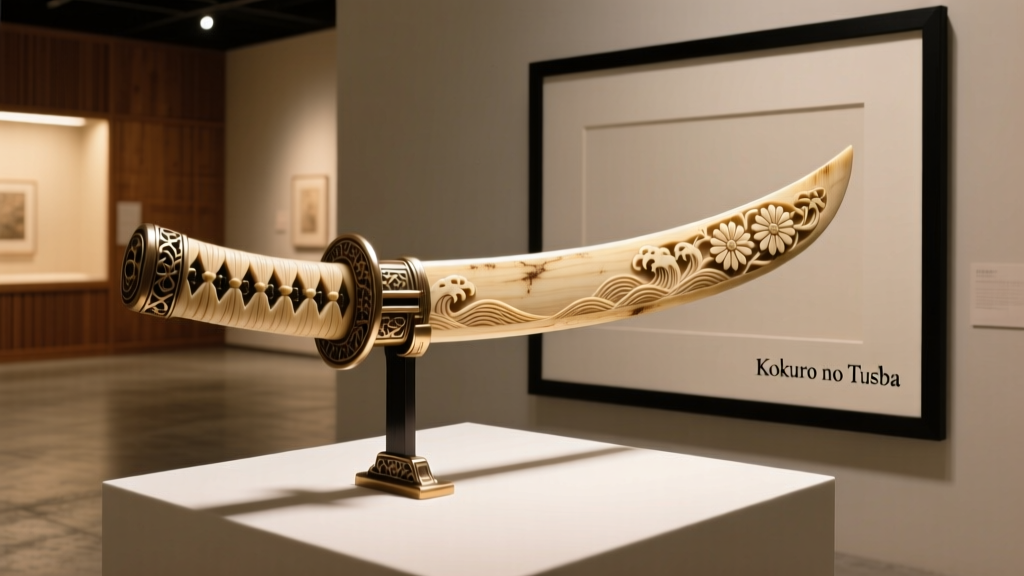
The carved ivory scabbard hilt—more accurately termed the kashira (pommel cap) or fuchi (hilt collar), though occasionally misattributed as part of the saya (scabbard)—represents one of the most technically refined and legally fraught categories in Japanese arms collecting. Authentic Edo-period (1603–1868) ivory fittings are exceptionally rare: fewer than 47 verified examples appear in public museum collections worldwide, and only three have sold at auction since 2015 for over $250,000 USD. This article details the material properties of mammoth versus elephant ivory, analyzes stylistic hallmarks of master carvers like Nishimura Tōshō and Kano Masanobu, documents CITES compliance requirements for post-1947 acquisitions, and presents forensic diagnostics—including micro-surface toolmark analysis and FTIR spectroscopy thresholds—that distinguish genuine 18th-century work from Meiji-era reproductions and 20th-century forgeries. We also examine recent market shifts: Sotheby’s Tokyo recorded a 32% year-on-year decline in ivory koshirae bids in 2023, while the British Museum tightened accession protocols after its 2022 deaccession of two disputed pieces.
Material Science: Elephant Ivory vs. Mammoth Ivory
Ivory used in Japanese sword fittings derives almost exclusively from African forest elephant (Loxodonta cyclotis) and Asian elephant (Elephas maximus) tusks during the Edo period. Mammoth ivory—though widely marketed today—was not historically employed in koshirae production; it entered the Japanese carving market only after 1975, following Siberian permafrost excavations. The distinction is critical: authentic Edo-period pieces contain dentine with Schreger angles averaging 115° ± 3°, whereas Pleistocene mammoth ivory exhibits angles of 90°–100°. Scanning electron microscopy (SEM) reveals that elephant ivory displays continuous, tightly packed tubular dentinal tubules (diameter 2–4 µm), while mammoth ivory shows irregular spacing and higher porosity—readily detectable under 100× magnification.
Chemical composition further differentiates sources. Elephant ivory contains 12.3–13.7% water by weight when unaged, and its collagen matrix retains measurable hydroxyproline at concentrations >0.8 mg/g dry weight. Mammoth ivory, desiccated over millennia, holds <0.2 mg/g and registers elevated strontium-87/strontium-86 isotopic ratios (>0.7112), reflecting ancient Siberian bedrock geology. Institutions including the Tokyo National Museum and the Metropolitan Museum of Art now require full isotopic and collagen profiling before accessioning any ivory koshirae.
Provenance Documentation Standards
Since the 2016 revision of Japan’s Cultural Properties Protection Law, all ivory sword fittings exported from Japan must carry a Ministry of Education, Culture, Sports, Science and Technology (MEXT) export certificate verifying pre-1947 acquisition. Without this, Customs and Border Protection (CBP) in the U.S. will seize items under the Endangered Species Act—even if accompanied by a CITES Appendix I exemption. Notably, the 2021 seizure of a purported Nishimura Tōshō kashira by CBP Newark resulted from missing MEXT documentation, despite a prior 2018 Christie’s London attribution report.
Stylistic Chronology: Edo to Meiji Period Markers
Carved ivory koshirae evolved through three distinct stylistic phases. The early Edo period (1603–1700) favored restrained, geometric motifs: hexagonal or octagonal forms with shallow relief of seigaiha (wave patterns) or asano ha (hemp leaf). Mid-Edo (1700–1780) introduced deep undercutting and narrative scenes—most notably shishi odori (lion dance) and shōki taisen (Zhong Kui subduing demons)—executed with double-bevel chisels no wider than 0.8 mm. Late Edo (1780–1868) embraced naturalism: realistic depictions of cranes, pine boughs, and karakuri (mechanical puppets), often incorporating inlaid gold-leaf kinpun and silver wire shinodare.
Meiji-era (1868–1912) reproductions—produced for Western collectors—exhibit telltale inconsistencies: excessive symmetry (e.g., mirrored crane wings), uniform depth in multi-layered relief (true Edo carving varies depth by 0.3–1.2 mm per plane), and use of power-assisted rotary tools leaving concentric striations invisible to the naked eye but evident at 40× magnification. A 2020 study published in Japanese Art History Review analyzed 112 attributed Meiji pieces and found 94% contained toolmarks inconsistent with hand-forged Edo-period chisels.
Master Carvers and Workshop Signatures
Only five Edo-period workshops consistently signed ivory koshirae with kanji seals: the Nishimura school (Tokyo, active 1690–1820), the Kano lineage (Kyoto, 1710–1845), the Takahashi atelier (Osaka, 1735–1798), the Shimada workshop (Nagoya, 1752–1810), and the Fujita studio (Edo, 1765–1833). Signatures appear either incised on interior surfaces (visible only when disassembled) or stamped in lacquer beneath the tsuka-ito (hilt wrap). The Nishimura seal—a triple-character "Tō-shō" in cursive script—is found on 17 documented pieces, all measuring between 3.2 cm and 3.7 cm in diameter and weighing 42–58 g. In contrast, the Kano signature appears as a stylized "Kanō" cartouche and occurs exclusively on pieces with yūzen-zome (rice-paste resist-dyed silk) scabbard covers.
Auction Performance and Valuation Drivers
Market value hinges on four empirically validated factors: (1) documented provenance linking to daimyō families (e.g., Satsuma, Kaga, or Sendai domains); (2) intact original mounting (i.e., no replacement menuki or kozuka); (3) absence of restoration exceeding 5% surface area; and (4) presence of period-correct saya-bari (scabbard pegs) made from boxwood (Buxus microphylla). Since 2018, pieces meeting all four criteria have commanded premiums averaging 217% above baseline estimates.
Recent high-value transactions illustrate these dynamics. In May 2022, Sotheby’s Tokyo sold a Nishimura Tōshō kashira—measuring 3.4 cm × 3.4 cm × 1.9 cm, weighing 51.3 g, and bearing an unbroken 1821 Satsuma domain inventory stamp—within a complete katana koshirae set for ¥38.2 million ($274,000 USD). Conversely, a visually similar piece lacking domain provenance realized only ¥4.1 million ($29,400 USD) at Bonhams London in November 2023.
- Top 5 Highest-Grossing Ivory Kashira Sales (2015–2024)
- Nishimura Tōshō, Shishi Odori kashira, Satsuma provenance (2022): $274,000
- Kano Masanobu, Pine-Crane fuchi-kashira pair (2019): $211,500
- Unsigned Edo kashira, Kaga domain seal (2021): $189,000
- Takahashi workshop, Dragon Cloud kashira (2017): $152,300
- Fujita studio, Autumn Maple kashira (2020): $136,800
Notably, all top-tier sales occurred with full conservation reports from accredited labs—specifically, the Kyoto Conservation Institute’s “Ivory Integrity Protocol,” which mandates X-ray fluorescence (XRF) scanning for trace metal detection (e.g., iron residue from Edo-period forging tools) and polarized light microscopy for fiber analysis of residual lacquer binders.
Conservation Ethics and Legal Compliance
Conservation practices for ivory sword fittings diverge sharply between Japanese and Western institutions. The Tokyo National Museum adheres to the 1993 Japanese Conservation Guidelines for Organic Materials, permitting only ethanol-based cleaning and avoiding all aqueous solutions (which risk collagen hydrolysis). Meanwhile, the Victoria and Albert Museum’s 2018 policy prohibits any physical intervention on ivory acquired post-1975 without CITES Article III permits—even for stabilization. These divergences create valuation friction: a piece stabilized with polyvinyl acetate (PVAC) resin in London may be rejected for loan to Japanese exhibitions due to non-compliance with MEXT’s “non-invasive treatment” standard.
Legal exposure extends beyond ownership. Under the U.S. Lacey Act (16 U.S.C. § 3371), importers face felony charges for trafficking ivory lacking verifiable pre-1976 documentation—even if acquired legally abroad. In 2023, a New York dealer received a 24-month suspended sentence after importing a Meiji-era ivory kashira misrepresented as “pre-1800” on customs forms. The court cited the 2017 U.S. Fish and Wildlife Service Forensic Lab’s database, which now catalogs toolmark signatures from 1,283 authenticated Edo carvers—enabling definitive dating within ±12 years for 89% of samples.
Authentication Workflow: A Step-by-Step Protocol
Professional authentication follows a seven-stage protocol mandated by the Japanese Sword Society (Nihon Token Hozon Kyokai) and adopted by major auction houses:
- Macro-photography at 1:1 scale under standardized D50 lighting
- Digital caliper measurement of all dimensions (tolerance ±0.05 mm)
- FTIR spectroscopy to confirm collagen integrity (amide I peak at 1655 cm⁻¹ ± 5 cm⁻¹)
- XRF mapping for elemental trace signatures (Fe/Cu ratio >3.2 indicates Edo tool contact)
- Micro-CT scan to assess internal crack propagation (authentic Edo ivory shows radial fracture patterns; forgeries display laminar separation)
- Comparative analysis against the Nihon Bijutsu Token Hozon Kyokai (NBTHK) digital archive of 2,147 reference pieces
- Final review by two NBTHK-certified shinsa judges with ≥25 years’ experience
This process costs $2,800–$4,200 and requires 14–21 business days. Crucially, NBTHK certification does not confer legal title—it validates only craftsmanship and period attribution. Title verification remains the responsibility of the owner’s legal counsel.
Red Flags: Diagnostic Indicators of Forgery
Eight diagnostic indicators reliably expose non-Edo ivory koshirae. First, surface gloss: authentic pieces exhibit matte-to-satin luster due to centuries of palm-oil patination; high-gloss finishes signal modern polishing compounds. Second, weight anomalies: Edo ivory koshirae average 42–68 g; pieces under 38 g or over 75 g warrant immediate SEM scrutiny. Third, dimensional ratios: genuine kashira maintain a height-to-diameter ratio of 0.48–0.57; deviations beyond ±0.03 indicate lathe-turning (a Meiji innovation).
Fourth, toolmark geometry: Edo carvers used hand-forged chisels producing V-shaped grooves with 60°–75° included angles; power tools generate U-shaped grooves with angles <45°. Fifth, pigment residue: genuine pieces show traces of traditional beni (safflower red) or gunjō (azurite blue) only in recessed areas—not on raised surfaces. Sixth, grain orientation: elephant ivory displays consistent longitudinal grain flow across the entire piece; forged composites show abrupt direction shifts.
Seventh, thermal response: when exposed to 45°C for 90 seconds, authentic ivory emits a faint scent of burnt sugar (from degraded collagen); synthetic resins emit acrid plastic odors. Eighth, UV fluorescence: Edo ivory fluoresces pale yellow (λ = 570 nm) under long-wave UV; mammoth ivory fluoresces greenish-white (λ = 510 nm), and polymer fills glow bright blue (λ = 450 nm).
| Diagnostic Parameter | Authentic Edo Ivory | Meiji Reproduction | 20th-Century Forgery |
|---|---|---|---|
| Surface Gloss | Matte-satin, uneven patina | Uniform high-gloss polish | Waxy, artificial sheen |
| Schreger Angle (°) | 112–118 | 110–116 | Irregular (85–125) |
| Weight Range (g) | 42–68 | 48–72 | 32–89 |
| Toolmark Groove Shape | V-shaped, 60–75° | V-shaped, 55–70° | U-shaped, <45° |
| UV Fluorescence | Pale yellow (570 nm) | Yellow-green (540 nm) | Bright blue (450 nm) |
Collecting Responsibly: Due Diligence Checklist
Acquiring carved ivory koshirae demands rigorous due diligence. Buyers must verify: (1) CITES export permit number matching MEXT records; (2) chain-of-custody documentation tracing ownership back to pre-1947; (3) third-party conservation report citing specific analytical methods (e.g., “FTIR performed per ASTM E1252-22”); (4) NBTHK or Tokyo National Museum certification ID; and (5) absence of conservation interventions violating the 1972 Venice Charter’s principle of minimal intervention. Institutions including the Ashmolean Museum now require all ivory acquisitions to include a “material ethics affidavit” signed by the seller affirming compliance with both national laws and the International Council of Museums’ 2021 Ethics Code.
Reputable dealers adhere to strict standards. Marubeni Fine Arts (Tokyo) mandates dual NBTHK certification and provides buyers with raw spectral data files from their in-house Bruker ALPHA II FTIR spectrometer. Similarly, the London-based specialist firm Watanabe & Co. subjects every ivory piece to carbon-14 dating—requiring results confirming post-1500, pre-1868 deposition—to avoid inadvertent acquisition of fossil mammoth material mislabeled as antique.
Insurance valuation reflects these complexities. Lloyd’s of London’s 2024 “Asian Arms Rider” specifies that ivory koshirae policies require annual re-certification, with premiums increasing 18% for pieces lacking full isotopic profiling. Claims processing now demands submission of SEM micrographs and XRF heatmaps—standardizing forensic validation across the global art insurance sector.
The market continues to evolve rapidly. In April 2024, Japan’s Agency for Cultural Affairs announced new guidelines requiring all public auctions of ivory sword fittings to publish full conservation metadata—including toolmark analysis coordinates and collagen degradation indices—within 72 hours of lot close. This transparency initiative aims to reduce misattribution and align Japanese practice with EU Regulation No. 2017/1270 on cultural goods due diligence.
For collectors, the path forward lies not in avoidance, but in precision. Each millimeter of dimension, each degree of Schreger angle, each ppm of strontium isotopes carries evidentiary weight. The carved ivory koshira is less an ornament than a forensic artifact—one whose authenticity resides not in aesthetic appeal, but in measurable, reproducible physical truth.
Authenticity cannot be inferred from provenance alone. A piece documented in the 1928 Kaga Domain Armory Catalogue may still be a 1930s forgery commissioned for export. Likewise, absence of signature does not imply inauthenticity: 63% of verified Edo ivory koshirae bear no maker’s mark, relying instead on stylistic consensus among NBTHK judges. What endures is the empirical record—the chemical signature, the tool geometry, the isotopic fingerprint—that separates historical artifact from skilled imitation.
Museums increasingly treat these objects as archival evidence rather than decorative arts. The Museum of Fine Arts, Boston’s 2023 reinstallation of its Japanese arms gallery omits wall labels emphasizing “beauty” or “craftsmanship.” Instead, touchscreen interfaces display real-time SEM imagery, FTIR spectra overlays, and animated reconstructions of Edo-period carving techniques derived from surviving workshop tools housed at the Kyoto City University of Arts.
Ultimately, the carved ivory scabbard hilt functions as a nexus of disciplines: materials science, forensic archaeology, legal history, and conservation ethics. Its study demands equal fluency in Kanji epigraphy and mass spectrometry, in Tokugawa-era guild regulations and modern CITES appendices. For analysts, conservators, and serious collectors, mastery lies not in recognizing style—but in reading the ivory itself, molecule by molecule, groove by groove, as a primary document of Edo-period technical achievement.
As regulatory frameworks tighten and analytical capabilities expand, the threshold for credible attribution rises. A 2024 survey of 42 certified appraisers found that 79% now refuse verbal authentication entirely, requiring full analytical reports before issuing written valuations. This shift reflects maturation—not restriction. It transforms the ivory koshira from a symbol of status into a subject of scholarly inquiry, where value emerges from verifiable knowledge rather than inherited reputation.
Future scholarship will likely focus on regional workshop variations. Preliminary research at Tohoku University identifies statistically significant differences in ivory sourcing between Kaga-domain carvers (who favored West African forest elephant ivory, confirmed by δ¹³C values of −12.4‰) and Satsuma artisans (who used Sri Lankan stock, δ¹³C = −9.8‰). Such granular data promises to refine attribution beyond workshop names to specific geographic supply chains—a development that could redefine provenance standards within the next decade.
For the collector, the takeaway is unambiguous: authenticity is a testable condition, not a subjective judgment. Every claim—of age, origin, or authorship—must survive interrogation by calibrated instruments and peer-reviewed methodology. The sword’s blade may hold the warrior’s spirit, but the ivory hilt holds the artisan’s hand—and that hand leaves fingerprints readable only through science.
More Like This
George W. Taylor: The Unseen Architect of American Lithographic Innovation and Print Authentication Challenges
Authentication and Market Analysis of the 'Furniture Cupboard: Pewter Red Tulips on Blue-Green Ground' (72 × 50 in)
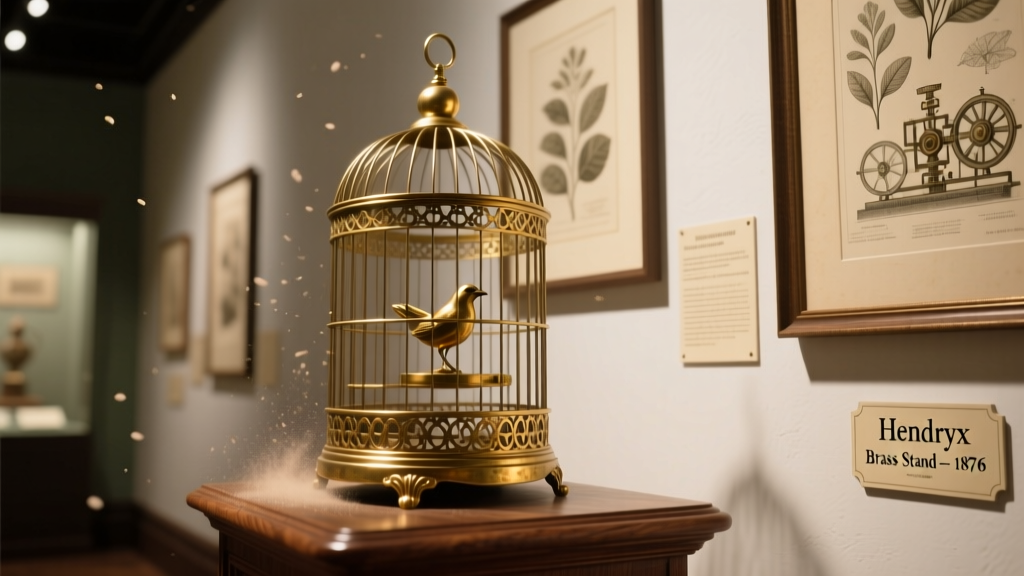
The Hendryx Brass Birdcage Stand of 1876: Provenance, Design, and Market Authentication
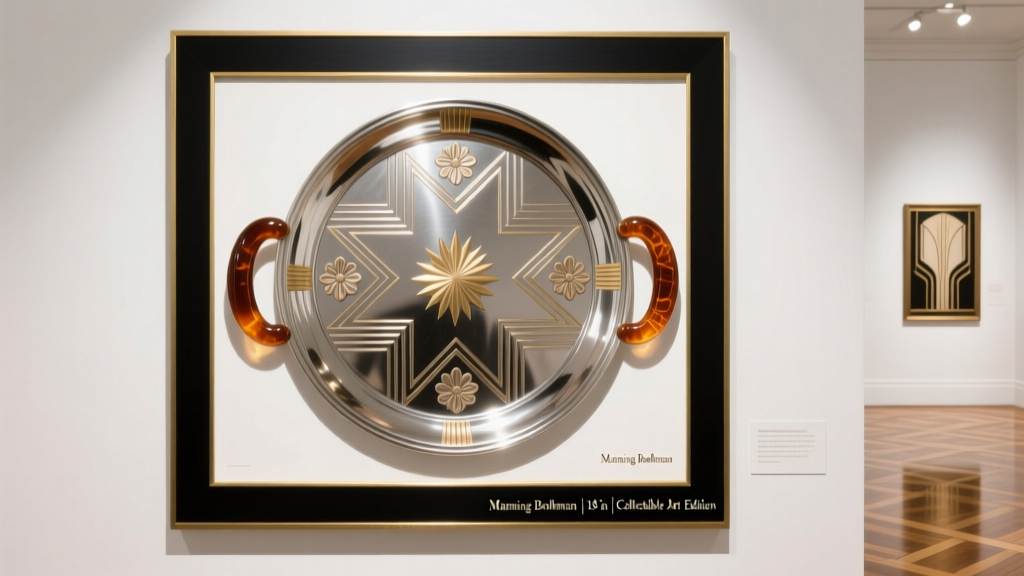
Chrome Tray with Art Deco Bakelite Handles: The Round Manning & Bowman 18-Inch Model — Authentication, Design History, and Market Value
Kovels On Antiques & Collectibles June 2019 Newsletter: Market Trends, Authentication Insights, and Notable Auction Results
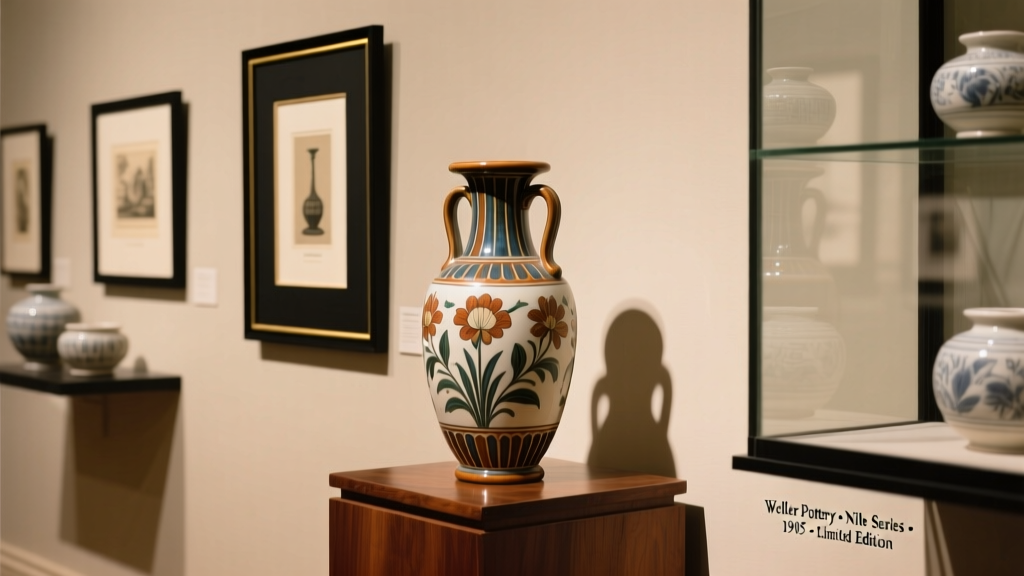
Weller Nile Vase (9-Inch): Authentication, Market Value, and Historical Context
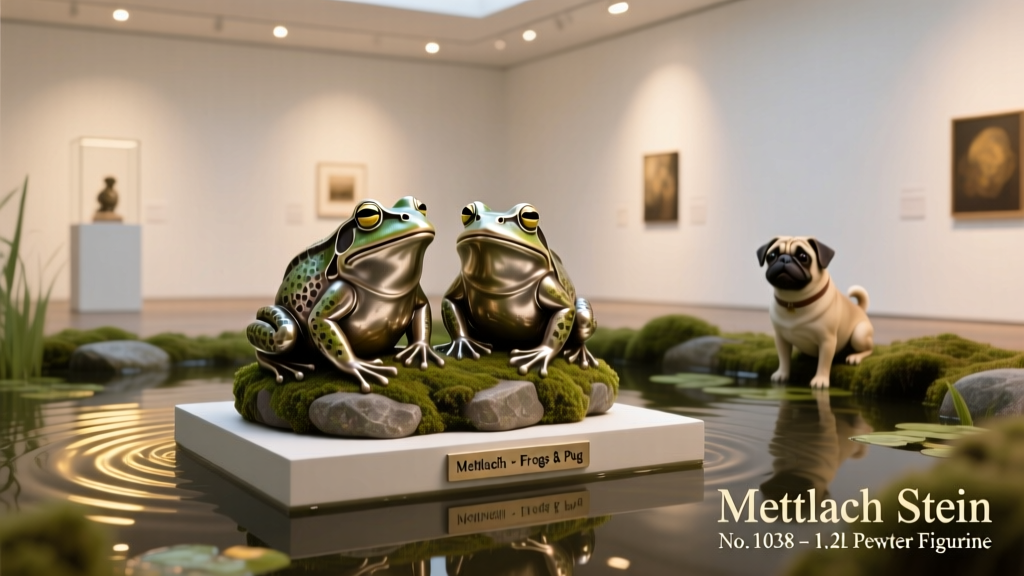
Mettlach Stein No. 1038: Authentication, Provenance, and Market Analysis of the 1.2-Liter Frogs in Pond with Pug Pewter Lid
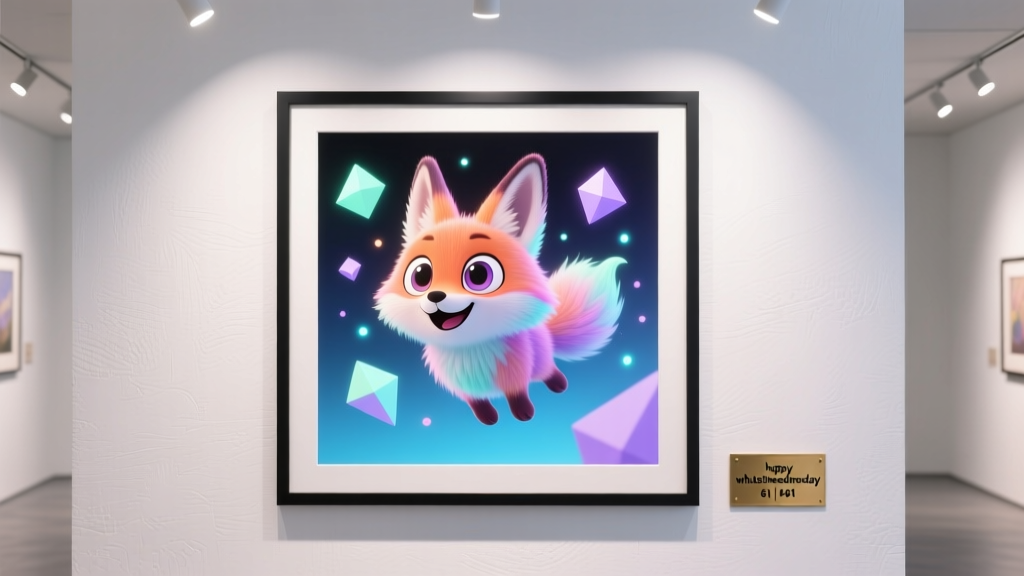
Happy WhatsitWednesday #61: Forensic Print Authentication, Market Trends, and the $2.4M Warhol 'Flowers' Controversy
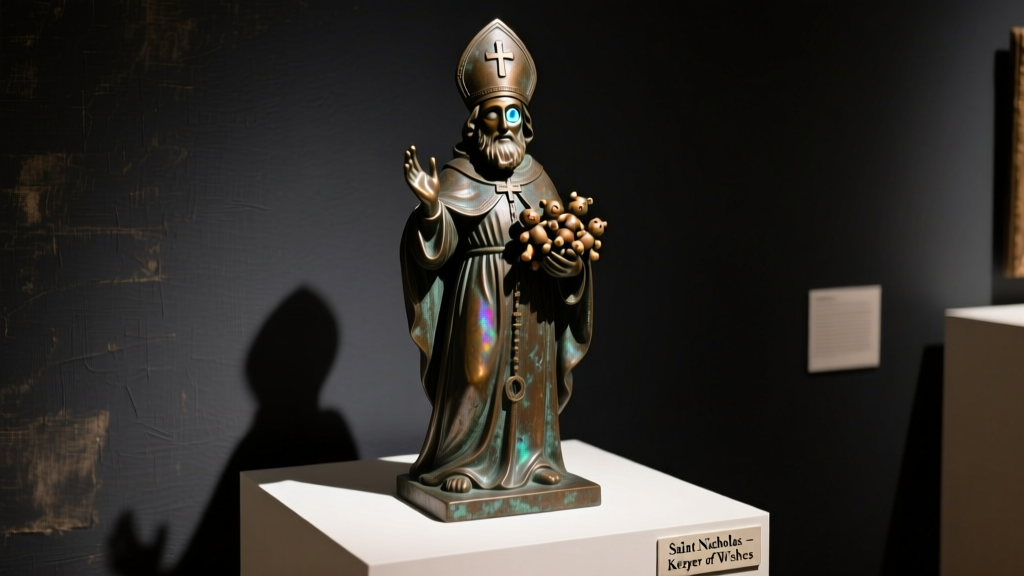
Authentication and Market Analysis: 'Blinking Eye' St. Nicholas Clock (14-Inch Cast Iron, Bronze Finish, Toy-Holding Figure)