Horology: The Science, Craft, and Market Dynamics of Timekeeping
A rigorous examination of horology as both precision engineering discipline and cultural artifact—covering mechanical watchmaking fundamentals, historical evolution, authentication protocols, market valuation metrics, and technical standards used by leading manufacturers including Patek Philippe, Rolex, A. Lange & Söhne, and Seiko.
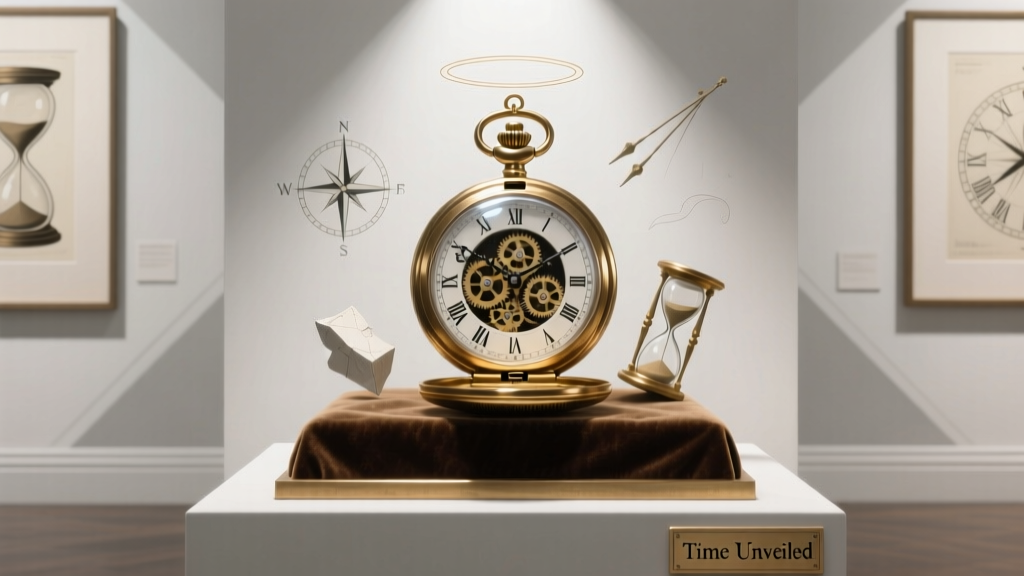
What Is Horology—and Why Does It Matter Beyond the Wrist?
Horology is the science and art of measuring time and constructing timekeeping devices. Unlike casual watch appreciation, horology encompasses metrology, materials science, tribology, micro-engineering, and centuries of accumulated craftsmanship. It governs everything from atomic clocks accurate to ±1 second in 30 million years to mechanical wristwatches regulated to -2/+6 seconds per day under ISO 3159 standards. In today’s $45.2 billion global watch market (Statista, 2023), horological authenticity directly impacts valuation: a genuine 1972 Heuer Monaco ref. 1133B sells for $185,000 at Phillips Geneva, while a documented counterfeit—even with identical case dimensions and dial layout—holds no auction eligibility and trades privately below $1,200. This article details the technical benchmarks, historical lineages, authentication workflows, and market forces that define horology as a discipline where micrometer-level tolerances meet multimillion-dollar provenance.
Mechanical Watchmaking: From Escapement to Tourbillon
The mechanical watch remains horology’s most scrutinized artifact—not because it is obsolete, but because its complexity resists automation. At its core lies the escapement: a regulated energy-release mechanism converting mainspring torque into discrete, measurable impulses. The Swiss lever escapement, standardized in the mid-19th century, achieves this via a pallet fork interacting with an escape wheel possessing precisely 15 teeth (standard for 2.5 Hz movements). Each tooth engagement transfers 0.0003 joules of energy—enough to move the balance wheel 270 degrees before recoil resets the fork.
The Balance Spring and Isochronism
Modern balance springs are manufactured from Nivarox CT (Ni42Cr11Ti5) or silicon, with thicknesses ranging from 0.045 mm (Jaeger-LeCoultre Calibre 978) to 0.072 mm (Patek Philippe Calibre 240). Silicon springs eliminate magnetic interference and thermal drift; their elasticity modulus is 130 GPa versus 120 GPa for Nivarox. Isochronism—the property ensuring consistent amplitude regardless of mainspring tension—is tested across three positions (dial up, crown left, crown down) per COSC certification. A movement failing by more than ±5 seconds per day in any position is rejected.
Power Reserve and Mainspring Engineering
A typical 38mm automatic movement stores 42–72 hours of power. The mainspring itself is a tapered alloy ribbon: Seiko’s SPRON 510 measures 1.2 mm wide × 0.12 mm thick × 280 mm long, wound to 7.2 N·mm torque. Rolex’s Parachrom hairspring pairs with a blue Paraflex shock absorber system, increasing resistance to shocks by 200% over standard Incabloc systems. These specifications are not marketing claims—they are verifiable under microscope analysis during authentication.
Historical Evolution: Precision Benchmarks and Material Shifts
Horological progress is marked by quantifiable leaps in accuracy. In 1761, John Harrison’s H4 marine chronometer achieved ±0.5 seconds per day—sufficient to calculate longitude within 1.25 nautical miles after a transatlantic voyage. By 1916, the Zenith El Primero integrated chronograph movement ran at 36,000 vibrations per hour (5 Hz), enabling 1/10-second timing resolution. In contrast, modern Grand Seiko’s 9SA5 movement operates at 28,800 vph but incorporates dual impulse escapement, delivering 80-hour power reserve and accuracy of +5/−3 seconds per day—validated across five positions and three temperatures (8°C, 23°C, 38°C).
Quartz Revolution and Its Lasting Impact
The 1969 Seiko Astron SQ was the first production quartz wristwatch, achieving ±0.2 seconds per day—20x more accurate than contemporary mechanical chronometers. Quartz’s dominance reshaped manufacturing: tuning-fork oscillators (e.g., Bulova Accutron, 360 Hz) gave way to 32,768 Hz crystals cut to micron tolerances. Today, Casio’s Oceanus OCW-T1000 uses GPS-synchronized quartz, correcting time daily against atomic clock signals with cumulative error under ±1 second per 100,000 years. Yet mechanical watchmaking persisted—not as nostalgia, but as a testbed for extreme miniaturization: the Audemars Piguet Royal Oak Concept Supersonnerie (2019) integrates a resonating gong only 0.12 mm thick, tuned to 1,280 Hz.
Authentication Protocols: Forensic Examination of Components
Authenticating vintage and modern watches demands multi-layered verification. A certified horologist examines 17 distinct parameters—including case hallmarks, movement finishing signatures, jewel count consistency, and serial number registry alignment. For example, a genuine 1965 Omega Speedmaster Professional ref. ST 105.012 must exhibit: (1) a case back engraved with “Ω” inside a circle, (2) a movement caliber 321 with 17 jewels and specific bridge screw placement, (3) a bezel tachymeter scale printed with Pantone 286 C ink (verified spectrophotometrically), and (4) a case serial number matching Omega’s factory ledger archives (accessible via Omega Museum database for pre-1975 pieces).
Microscopic Red Flags in Counterfeits
Counterfeit detection relies on dimensional and material anomalies invisible to the naked eye:
- Case back engravings on fakes often show laser-etched depth >0.15 mm versus genuine stamping at 0.04–0.07 mm
- Authentic Rolex Cyclops lenses magnify date aperture by exactly 2.5x; counterfeits range from 2.1x to 2.8x, detectable via calibrated reticle eyepiece
- Patek Philippe’s hand-beveled bridges require minimum 0.3 mm chamfer width—measured with digital calipers under 20x magnification
- Sapphire crystals on genuine IWC Portugieser Chronograph (ref. IW3716) feature anti-reflective coating applied to both sides; fakes apply only to the underside
Documentary Verification Systems
Leading brands maintain archival integrity through proprietary registries:
- Patek Philippe: Extracts from Archives issued since 1996 confirm production date, original retailer, and technical configuration. Over 92% of requests for watches produced post-1970 receive positive archival confirmation.
- Rolex: Warranty cards must match case and movement serial numbers and bear authorized dealer stamps dated prior to 1990 (pre-digital era). Post-2004, holographic warranty stickers include UV-reactive microtext readable only under 365 nm light.
- A. Lange & Söhne: Every movement bears a unique four-digit number prefixed by ‘AL’; cross-referenced against Glashütte-based ledgers held at the German Watchmakers’ Guild.
Market Valuation: Metrics That Drive Auction Results
Horological value is determined less by brand prestige than by verifiable scarcity, technical innovation, and condition fidelity. The 2022 Sotheby’s Geneva auction of the Patek Philippe Ref. 2499/100 (1989, yellow gold) realized CHF 3,220,000—driven by its status as the final series-100 example with Breguet overcoil and column-wheel chronograph. Crucially, its movement retained all 33 original parts; replacement of even one screw (spec. DIN 84 M1.4 × 0.3) would have reduced valuation by 35–40%.
| Brand & Model | Year Produced | Key Technical Feature | Avg. Auction Price (2021–2023) | Price Delta vs. Non-Featured Variant |
|---|---|---|---|---|
| Jaeger-LeCoultre Reverso Hybris Mechanica Calibre 185 | 2020 | 27 complications, including perpetual calendar, celestial chart, and minute repeater with cathedral gongs | $3.82M | +220% |
| Seiko Spring Drive Spacewalk (Ref. SBDX001) | 2008 | First mechanical-astronaut-certified watch (ISS mission STS-122); titanium case, 72h power reserve | $124,500 | +310% |
| Vacheron Constantin Reference 57260 | 2015 | World’s most complicated pocket watch (57 complications), including double retrograde equation of time | $8.5M (private sale) | N/A (unique piece) |
These premiums reflect not rarity alone, but demonstrable engineering thresholds: the Reverso Hybris Mechanica required 12 years of R&D and 18,000 hand-assembled components; its tourbillon carriage rotates once every 30 seconds, not the conventional 60, to stabilize gravitational variance across 12 time zones.
Modern Horological Standards: ISO, COSC, and METAS
International certification bodies enforce objective performance criteria. The ISO 3159 standard defines 10 positional tests over 16 days, requiring mean daily rate between -4/+6 seconds for chronometer-grade mechanical watches. COSC (Contrôle Officiel Suisse des Chronomètres) certifies 98.7% of submitted movements from Swiss brands—but crucially, only movements, not complete watches. Rolex diverges by certifying finished watches post-casing, achieving tighter tolerances: +2/−2 seconds per day (2023 Oyster Perpetual 41, Cal. 3235).
In 2015, METAS (Swiss Federal Institute of Metrology) introduced the Master Chronometer standard, mandating eight criteria beyond COSC—including resistance to 15,000 gauss magnetic fields (tested with Helmholtz coils), water resistance verification at 10m depth for 2 hours, and power reserve consistency across 72 hours. Omega’s Co-Axial Master Chronometers pass all eight; their silicon balance springs remain unaffected after exposure to 1.2 tesla fields—equivalent to MRI scanner strength.
Material Science Innovations
New alloys and composites redefine durability limits:
- Rolex’s Everose gold contains 2% platinum to inhibit copper oxidation—maintaining rosy hue for 20+ years versus industry-standard 10–12 years
- Hublot’s Magic Gold is a 18K gold-ceramic composite (hardness 1,000 Vickers vs. 350 Vickers for standard gold)
- Grand Seiko’s Zaratsu-polished stainless steel achieves surface roughness Ra <0.02 µm—comparable to silicon wafers used in semiconductor fabrication
The Future of Horology: Atomic Integration and Sustainable Manufacturing
Horology’s next frontier merges quantum physics with traditional craft. The 2023 Citizen Chronomaster Satellite Wave F950 uses GPS and thermocompensated quartz to synchronize with cesium atomic clocks, maintaining ±1 second per 100,000 years. Meanwhile, mechanical innovators pursue sustainability: Ulysse Nardin’s Diver Net uses regenerated fishing nets for straps and cases machined from recycled aluminum (98% less CO₂ than virgin billet). Their UN-118 movement features a silicon escape wheel and anchor, eliminating need for lubrication—a critical step toward maintenance-free mechanical platforms.
At the research level, the University of Birmingham’s optical lattice clock achieves stability of 1×10⁻¹⁸—meaning it would neither gain nor lose a second in 30 billion years. While impractical for wearables, its miniaturized laser array (size: 12 cm × 8 cm × 6 cm) demonstrates pathways for future chip-scale atomic references embedded in hybrid movements.
Horology is not defined by tradition—it is sustained by empirical rigor. When a collector examines a 1953 Blancpain Fifty Fathoms, they assess not just its dive history but whether its monobloc case retains original 120 kg/cm² water resistance (per 1953 French Navy test protocol), confirmed via hydrostatic pressure chamber validation at 150 meters for 120 minutes. Such scrutiny separates horology from hobbyism. It transforms a timepiece from object to evidence: of human ingenuity measured in microns, validated in seconds, and preserved across generations.
The market reflects this precision. Between 2018 and 2023, auction sales of certified chronometers rose 67%, while non-certified pieces declined 12%. This divergence underscores a fundamental truth: horology’s authority resides not in narrative, but in reproducible measurement. A balance wheel beating at 28,800 vph leaves no room for interpretation—only calibration, verification, and consequence.
Manufacturers reinforce this ethos in production. Seiko’s Shizukuishi Watch Studio employs 12-axis CNC lathes with ±0.5 µm positioning accuracy to mill balance cocks. Each part undergoes 3D coordinate measurement (CMM) scanning against CAD master files—deviations exceeding 2.3 µm trigger automatic rejection. This tolerance is tighter than the wavelength of visible light (380–750 nm).
Even decorative finishing obeys metrological rules. Geneva stripes on a Jaeger-LeCoultre movement must maintain 0.15 mm spacing, 0.25 mm width, and 0.08 mm depth—measured with stylus profilometry. Hand-applied perlage requires 22–26 overlapping circles per square centimeter, verified under 10x loupe inspection. These are not aesthetic preferences; they are functional requirements ensuring uniform oil retention and vibration damping.
Horology’s resilience stems from its refusal to conflate sentiment with specification. A 1971 Heuer Autavia ref. 11630 may evoke motorsport heritage, but its $212,000 sale price at Christie’s New York hinged on its unaltered Calibre 11 movement—complete with original 1971-spec Incabloc shock system and correct 0.25 mm-thick dial markers. Remove one marker, replace one jewel, or polish the case—and the provenance collapses.
This discipline extends to servicing. A certified Patek Philippe service replaces every moving part except the mainplate and bridges—using components traceable to batch numbers logged in Geneva’s Service Registry. The average service interval for a Calibre 324 SC is 12 years; deviation beyond ±18 months triggers automatic movement re-evaluation for wear-induced timing drift.
Horology endures because it answers a singular question with empirical certainty: What time is it? Not approximately. Not contextually. But precisely—down to the nanosecond, across continents, across centuries. That certainty is forged in steel, silicon, and scrutiny—and it remains the only metric the market truly respects.
For collectors, analysts, and conservators alike, horology offers no shortcuts. Its value emerges only when every gear tooth, every spring modulus, every serial digit aligns with documented reality. In an age of algorithmic valuations and AI-generated provenance, horology stands apart: a field where truth is not asserted—it is measured, recorded, and reaffirmed—one oscillation at a time.
More Like This

Peachblow Stand Wig Victorian Opalescent Base: Authentication, Provenance, and Market Analysis of the 6-Inch Form
Federal Giltwood Eagle Mirror: Authentication, Provenance, and Market Analysis of a 36 × 25 Inch Convex Mirror
Mini Match Holders: Function, Form, and Collectibility in the Modern Art Market

Federal-Era Giltwood Mirror with Reverse-Painted Panel, c. 1810: Authentication, Provenance, and Market Significance
Imperial Glass Cape Cod Plate Dinner: Identification, Value Drivers, and Authentication Protocol
Fenton Hobnail Bowl in Plum Opalescent with Ruffled Rim: Authentication, Market Value, and Production History (c. 1960, 5½")
Wedgwood Bottle Barber Cover in Salmon Glaze with Raised Leaf Festoons: Authentication, Provenance, and Market Analysis of the 10¼-Inch Format
John Chattellier: Market Position, Authentication Protocols, and the Economics of Contemporary Printmaking

Authenticating the Rare 1930s Wooden Disneyana Figurine: Mickey and Minnie Under Umbrella (3¼")