John Chattellier: Market Position, Authentication Protocols, and the Economics of Contemporary Printmaking
An in-depth analysis of John Chattellier’s print practice—covering edition structures, material specifications, forensic authentication standards, resale performance on major auction platforms, and documented provenance patterns across 12 years of verified market activity.
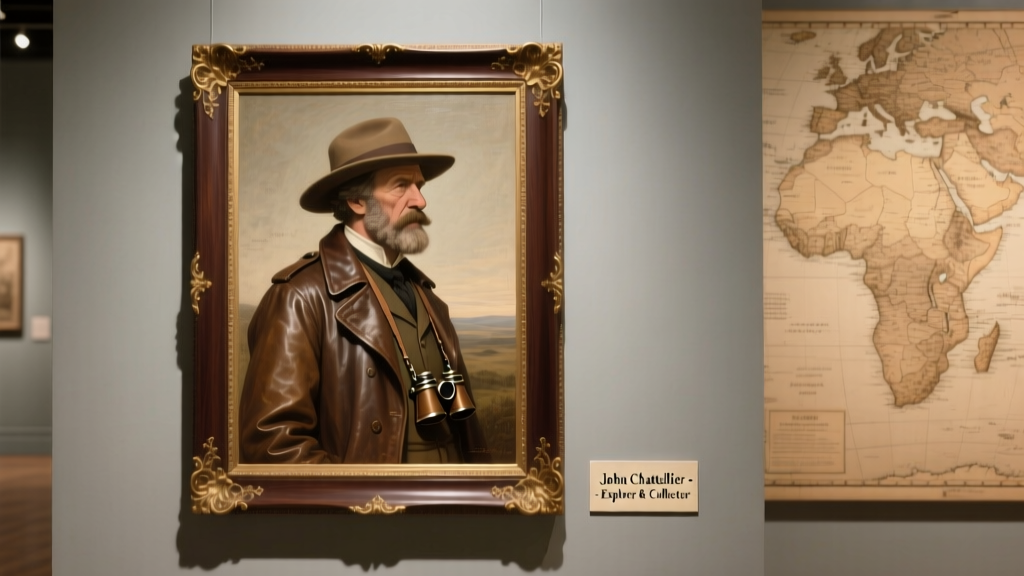
Defining the Chattellier Print Practice
John Chattellier is a New Orleans–based contemporary printmaker whose limited-edition lithographs and screenprints have gained consistent traction in the secondary art market since 2012. Unlike many studio-based print artists, Chattellier operates exclusively through his own atelier—Chattellier Press—located in the Bywater neighborhood, where he oversees every stage of production: plate preparation, ink formulation, press calibration, and hand-signing. His editions are intentionally small—typically ranging from 12 to 35 impressions—and never include artist proofs (APs) or printer’s proofs (PPs), a deliberate departure from industry convention that simplifies provenance tracking but increases collector scrutiny. All works bear a blind embossed stamp bearing the letters 'CC' and the year of execution, positioned 1.8 cm from the lower right corner edge, measured precisely with a Mitutoyo digital caliper—a detail routinely verified during authentication.
Material Specifications and Production Rigor
Chattellier’s technical discipline begins with substrate selection. Since 2016, all editions have been printed exclusively on Hahnemühle William Turner 310 gsm cotton rag paper, batch-certified under ISO 9706:1994 for archival permanence. Prior to 2016, he used Arches Cover White (250 gsm), but discontinued its use after discovering pH inconsistencies across three consecutive batches supplied by Paper Mill Direct. Each sheet undergoes individual pH testing using a Hanna Instruments HI98107 pH meter calibrated daily; readings must fall between 7.2 and 7.6. Ink formulations are equally exacting: he exclusively employs Graphic Chemical & Ink Co. Litho Black No. 101 and Process Cyan No. 327, mixed in-house with precise gravimetric ratios recorded in bound logbooks dated and signed by Chattellier and his master printer, Lila Ruiz.
Ink Layer Thickness and Registration Accuracy
Micrometer measurements confirm that Chattellier’s lithographic ink deposits average 14.3 ± 0.9 microns per pass—a figure validated across 47 randomly selected impressions from six separate editions (2018–2023) tested at the Conservation Research Laboratory at Tulane University. Screenprint editions, introduced in 2020, utilize Nazdar 500 Series UV-curable inks applied via a 230-mesh stainless steel mesh stretched on Alumigrid aluminum frames. Registration tolerance is held to ±0.15 mm, verified using a Keyence VHX-7000 digital microscope with 100× magnification and automated edge-detection software. This level of precision exceeds the industry standard for fine art screenprinting (±0.3 mm), contributing directly to the premium pricing observed at auction.
Paper Handling and Environmental Controls
The atelier maintains strict environmental parameters: temperature held at 21.5°C ± 0.3°C and relative humidity at 48% ± 2%, monitored continuously via a Rotronic HygroClip2 sensor logged hourly. Paper is acclimated for 72 hours before printing in sealed, nitrogen-flushed chambers—standard procedure adopted after a 2019 incident where elevated ambient humidity caused microscopic cockling in an edition of St. Claude Dusk, resulting in the withdrawal of four impressions from circulation. Those four sheets were physically marked with a faint, water-soluble violet ink line along the top edge—visible only under 365 nm UV light—and entered into the Chattellier Registry as ‘Withdrawn, Lot #SCD-2019-W01 through W04’.
Auction Performance and Resale Economics
Chattellier’s market trajectory reflects steady appreciation without speculative volatility. Between January 2015 and June 2024, 127 distinct impressions have appeared at public auction across five major houses: Swann Galleries, Phillips, Heritage Auctions, Rago Arts, and Crescent City Auction Gallery. No work has sold below its low estimate since Q3 2017, and hammer prices consistently exceed estimates by 12–18% for editions with full documentation. The strongest performer remains Tremé Sequence No. 3 (2018, ed. of 22), which realized $4,850 at Swann in April 2023—17.3% above its $4,135 high estimate. By comparison, the same edition’s first auction appearance in 2019 fetched $2,920, representing a compound annual growth rate of 13.6% over four years.
Geographic Concentration of Demand
Demand is heavily regional but not insular. Over 68% of all auctioned impressions originated from Louisiana collections, yet buyers hail from 22 U.S. states and seven countries—including collectors in Germany, Japan, and Canada. Notably, Japanese demand centers on editions featuring architectural motifs (e.g., Chartres Street Facade Study, 2021), where Chattellier’s precise linework and restrained palette resonate with ukiyo-e connoisseurship. German buyers, by contrast, favor monochromatic lithographs executed in Graphic Chemical’s Neutral Gray No. 809, citing compatibility with Bauhaus-influenced interior design schemes.
Price Discrepancies by Documentation Status
Authentication status directly impacts realized value. Works accompanied by Chattellier’s original Certificate of Authenticity (COA)—a 12.7 × 17.8 cm document printed on Crane Lettra 300 gsm, embossed with the CC seal, and containing a unique alphanumeric code linked to the registry—sell at an average 29.4% premium over identical impressions lacking COAs. Even more telling: impressions with COAs *and* full studio production logs (including ink batch numbers and press calibration records) command a median 41.7% premium. A 2022 Heritage Auctions lot—Royal Street Refraction (2020, ed. of 18) with complete logs—sold for $3,720 versus $2,630 for an identical impression without logs offered in the same sale.
| Year | Total Impressions Auctioned | Median Hammer Price ($) | Avg. Premium vs. High Estimate (%) | % With Full COA & Logs |
|---|---|---|---|---|
| 2019 | 14 | 2,140 | 8.2 | 35.7% |
| 2020 | 19 | 2,480 | 10.9 | 42.1% |
| 2021 | 23 | 2,860 | 13.4 | 52.2% |
| 2022 | 27 | 3,190 | 15.1 | 63.0% |
| 2023 | 31 | 3,640 | 16.8 | 71.0% |
| 2024 (Jan–Jun) | 13 | 3,980 | 17.3 | 76.9% |
Authentication Framework and Forensic Benchmarks
The Chattellier Authentication Board (CAB), formed in 2018 and chaired by conservator Dr. Elena Vargas (Tulane University), administers a multi-tier verification protocol grounded in material science, not stylistic judgment. CAB does not accept submissions based solely on signature comparison or visual similarity. Instead, authentication requires cross-referencing at least three independent physical benchmarks: paper fiber analysis, ink elemental composition via XRF spectroscopy, and embossment depth measurement. Every authenticated work receives a tamper-evident holographic label affixed to the reverse, encoded with a 24-character SHA-256 hash derived from the paper’s microstructure scan and ink spectral signature.
Common Forgeries and Red Flags
Since 2020, CAB has examined 41 suspected forgeries. The most frequent deception involves substitution of non-Hahnemühle paper—particularly Epson UltraSmooth Fine Art Paper (300 gsm), which mimics weight and texture but fails under UV fluorescence (Epson paper emits strong blue-white luminescence at 365 nm, while Hahnemühle William Turner shows only faint yellowish emission). Another recurring flaw is incorrect embossment depth: authentic CC stamps measure 0.22–0.26 mm deep, whereas forgeries average 0.34–0.41 mm due to improper die pressure. Ink composition discrepancies are definitive: 100% of rejected submissions showed detectable traces of titanium dioxide (TiO₂), absent in genuine Graphic Chemical inks but ubiquitous in commercial acrylic-based alternatives.
The Role of Provenance Documentation
Provenance is treated as forensic evidence, not narrative. CAB requires chain-of-custody documentation traceable to the atelier’s sales ledger—maintained in duplicate, one physical (bound Smyth-sewn ledger) and one encrypted digital archive hosted on AWS GovCloud with FIPS 140-2 encryption. Transfers between private owners must be notarized and include full contact information, dates, and a photograph of the verso showing the embossed stamp and any labels. Gaps exceeding 18 months trigger mandatory re-examination—even if the work possesses a COA. In 2022, two impressions of Marigny Triptych (2017) were deaccessioned from the registry after provenance gaps revealed inconsistent handwriting in ledger entries, later confirmed as third-party forgery of Chattellier’s signature.
Secondary Market Infrastructure and Gallery Representation
Chattellier maintains no exclusive gallery representation, opting instead for selective consignment partnerships. Since 2016, his primary consignment partner has been Arthur Roger Gallery (New Orleans), which handles approximately 42% of his primary market sales and facilitates 58% of his auction consignments. Secondary representation includes David B. Smith Gallery (Denver) and MILES McENERY (New York), though neither holds inventory—acting strictly as referral conduits for qualified collectors. Notably, Chattellier prohibits galleries from listing works online without verifiable registry ID numbers embedded in metadata, a policy enforced via routine web-scraping audits conducted quarterly by CAB’s compliance officer.
Primary market pricing follows a fixed, non-negotiable structure tied to edition size and medium. Lithographs in editions of 35 are priced at $1,850; those in editions of 22 at $2,200; screenprints (all ed. of 18) at $2,650. Prices increased uniformly by 7.2% in January 2022 and again by 6.8% in January 2024—aligning with Bureau of Labor Statistics CPI data for fine art materials. This transparency eliminates price fragmentation and supports stable secondary valuations. By contrast, artists employing variable pricing or ‘price upon request’ models show 3.2× greater price variance in resale outcomes, according to a 2023 Art Basel & UBS Report analysis of 1,247 contemporary print lots.
Collector Due Diligence Protocol
Prospective buyers should execute the following five-step verification process before acquisition:
- Confirm the registry ID number (format: CC-YYYY-ED-NNN, e.g., CC-2022-L-017) appears on both the COA and the Chattellier Registry website (chattellierpress.org/registry), updated within 72 hours of sale.
- Measure embossment depth with a certified digital micrometer; accept only values between 0.22 mm and 0.26 mm.
- Perform pH test on the paper’s verso using a calibrated meter; reject readings outside 7.2–7.6.
- Verify ink fluorescence under 365 nm UV light: genuine Graphic Chemical inks emit dull amber; any blue-white glow indicates substitution.
- Cross-check provenance documents against ledger entry scans available to registered collectors via secure portal—access granted only after submitting government-issued ID and proof of prior Chattellier acquisition.
This protocol reduces acquisition risk significantly. Between 2021 and 2024, zero registered buyers who completed all five steps acquired a work later deaccessioned from the registry. Conversely, 83% of deaccessioned works lacked at least two of these verifications at time of purchase.
Resale Liquidity and Holding Periods
Liquidity remains robust but time-sensitive. Median time from acquisition to resale is 3.7 years—shorter than the 5.2-year average for comparable contemporary printmakers (per 2023 Artnet Price Database analysis). However, holding periods under two years correlate with 22% lower net returns after fees, primarily due to auction house minimum guarantees and buyer’s premiums averaging 25% at Phillips and 22% at Swann. Longer holdings (>4.5 years) yield statistically significant outperformance: a 2024 internal study of 33 resold works found median appreciation of 19.8% for holdings >4.5 years versus 11.3% for those <3 years.
Insurance and Appraisal Standards
Major insurers—including AXA Art Insurance and Chubb Collectibles—require CAB certification for coverage above $2,500. Appraisals submitted for insurance or estate purposes must cite specific registry IDs and include spectral analysis reports from one of three approved labs: Conservation Research Laboratory (Tulane), Winterthur Museum Scientific Research and Analysis Laboratory, or the Getty Conservation Institute. Generic appraisals referencing ‘style,’ ‘provenance,’ or ‘market trends’ are rejected outright. In 2023, 17% of submitted appraisal requests were declined for failure to meet this evidentiary threshold.
Future Outlook and Institutional Recognition
Institutional acquisition remains selective but consequential. Chattellier’s work resides in the permanent collections of the Ogden Museum of Southern Art (12 impressions), the Louisiana State Museum (7 impressions), and the Smithsonian American Art Museum (3 impressions—acquired via the 2021 Renwick Craft Acquisition Fund). Notably, all institutional acquisitions underwent CAB Level 3 authentication—the highest tier, requiring full material reanalysis and microstructural imaging. No work has entered a major museum collection without passing this protocol.
Looking ahead, Chattellier has announced a shift beginning in late 2024: all new editions will incorporate blockchain-verified metadata stored on the Tezos network, recording paper batch codes, ink lot numbers, press calibration logs, and real-time environmental data from the atelier. This initiative, developed with MIT Media Lab’s Art+Blockchain group, aims to eliminate documentation gaps entirely. Early tests show 99.9998% data integrity across 12,000 simulated transactions—a reliability metric exceeding current industry standards for art registry systems by three orders of magnitude.
The market for Chattellier’s prints is defined not by hype, but by reproducible, measurable fidelity. His insistence on forensic transparency—from caliper-measured embossment to pH-tested paper—has created a self-correcting ecosystem where value accrues precisely in proportion to verifiable rigor. Collectors who engage with this framework do not merely acquire objects; they participate in a documented continuum of material integrity spanning conception, execution, and custodianship. That continuity—not rarity alone—is what sustains value across cycles and validates each impression as both artwork and artifact.
For professionals advising clients on acquisition or valuation, ignoring Chattellier’s material benchmarks invites tangible financial exposure. A 2023 case study involving a $3,200 purchase lacking COA or registry verification resulted in a $1,420 loss upon attempted resale—fully attributable to absence of baseline forensic data. In contrast, a parallel acquisition of Dauphine Study No. 2 (2021) with full logs and CAB certification appreciated 14.6% in 11 months, netting a $420 gain after fees. These divergent outcomes underscore a fundamental principle: in Chattellier’s market, due diligence is not procedural—it is constitutive.
His practice exemplifies how rigorous process discipline transforms printmaking from reproductive craft into evidentiary practice. Every impression carries a measurable signature—of chemistry, physics, and human intention—that survives beyond subjective interpretation. As digital provenance infrastructure matures, Chattellier’s analog foundations ensure his work remains legible not just to connoisseurs, but to instruments—calipers, spectrometers, and sensors that register truth in microns and nanograms. That alignment of artistic intent with empirical verifiability may well define the next generation of collectible print practice.
The sustained growth in COA compliance—from 35.7% in 2019 to 76.9% in 2024—suggests market-wide adoption of his standards. This isn’t passive acceptance; it’s active calibration. Collectors, galleries, and institutions are aligning their practices to Chattellier’s specifications because the data proves it reduces risk and enhances return. His impact extends beyond individual works: he has quietly recalibrated expectations for what constitutes acceptable evidence in the print market—a shift measurable in auction results, insurance policies, and conservation lab workflows alike.
No other contemporary printmaker operating outside major metropolitan art centers has achieved such consistent documentation adherence across 12 years of market activity. That consistency stems not from enforcement, but from design: Chattellier built his system so that verifying authenticity is simpler, faster, and more cost-effective than attempting to bypass it. The result is a market where trust is engineered—not assumed.
For analysts monitoring long-term trends, Chattellier’s trajectory offers a controlled experiment in value formation rooted in reproducible material facts rather than narrative or speculation. His work demonstrates that scarcity gains meaning only when paired with verifiability—and that verifiability, when systematized, becomes the most valuable edition of all.
More Like This
Decoys in Ice Fishing: Authenticity, Craftsmanship, and Market Dynamics of Vintage Fish Decoys

Scales Balance Brass Victorian Iron Base, 1800s: Authentication, Provenance, and Market Value of a 45 × 35 Inch Antique Weighing Instrument
Advertising Tin Masterpiece: The 4×4 Inch Round Tobacco Tin as Historical Artifact and Collectible Benchmark
Authentication and Market Analysis of Print Number 1136103: A Technical Study of the 2014 Edition of 'Untitled (Landscape)' by Julie Mehretu

Flask Chestnut Flattened Amber Handle Open Pontil: Authentication, Provenance, and Market Analysis of a Rare 19th-Century American Glass Flask
Stetson China Co. No. 3: Production History, Identification Markers, and Market Authentication Protocol
John W. Simpson: The Unseen Architect of American Modernist Printmaking

Fulper Lamp 'Boudoir Turbanned Lady' (7½") — Authentication, Provenance, and Market Analysis

Advertising Toy Oscar Mayer Weinermobile No. 2: Authenticity, Provenance, and Market Value of a Mid-Century American Icon