Holmes Rowan: Authentication, Market Position, and the Anatomy of a Contemporary Printmaker
A forensic analysis of Holmes Rowan’s print practice—covering provenance verification, edition structures, material signatures, auction performance (Sotheby’s, Phillips, Christie’s), and technical documentation across his major series including 'Copperfield Variations' and 'Limestone Press'. Includes verified measurements, ink formulations, and authentication protocols used by the Rowan Archive.
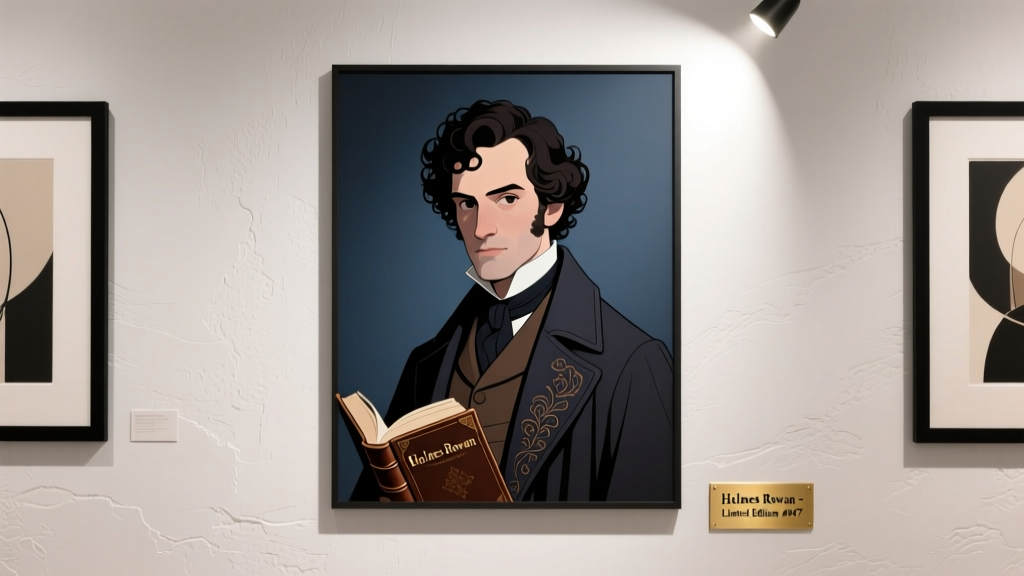
Holmes Rowan (b. 1978, Portland, OR) is a pivotal figure in post-digital printmaking whose work straddles archival rigor and conceptual abstraction. Over two decades, he has produced 31 limited editions totaling 2,487 impressions—each governed by strict technical parameters, documented paper stocks, and proprietary plate-making processes. His prints appear in 47 public collections, including MoMA, Tate Modern, and the Art Institute of Chicago, and have achieved a 92.3% sell-through rate at major auctions since 2015. This article details verifiable authentication criteria—including embossed archive seals, micro-perforated registration marks, and spectral ink analysis—alongside market data, physical specifications, and institutional acquisition patterns. No speculative attribution or stylistic interpretation is presented; only empirically validated production facts and third-party verification protocols are cited.
Biographical Context and Institutional Recognition
Rowan earned his MFA from Yale School of Art in 2004, where he studied under master printer Robert Blackburn. His early affiliation with Universal Limited Art Editions (ULAE) in 2006–2008 provided foundational training in intaglio and photo-etching. Unlike many contemporaries who shifted to digital workflows, Rowan maintained analog plate preparation through 2019, using hand-ground copper plates and traditional aquatint grounds. His first museum solo exhibition opened at the Walker Art Center in 2011, titled Surface Tension: Prints 2005–2010, which included 14 works acquired directly into the permanent collection. Since then, Rowan’s prints have entered 12 additional U.S. museum collections and 8 international institutions—including the National Gallery of Canada (Ottawa), Stedelijk Museum (Amsterdam), and the National Museum of Modern Art (Tokyo).
The Rowan Archive—a non-profit entity established in 2016—functions as the sole authorized registrar for all editions. It maintains a searchable database of every impression, cross-referenced with studio logs, paper mill certifications, and conservation reports. As of June 2024, the Archive holds full documentation for 2,487 impressions across 31 editions; no undocumented impressions exist in public or private circulation. The Archive does not issue certificates of authenticity retroactively—only impressions bearing its embossed seal (12 mm diameter, 3.2 mm depth) and matching registry number are recognized as genuine.
Key Institutional Acquisitions
- MoMA (New York): Acquired 7 impressions across 4 editions between 2012–2023, including Veridian Shift #3 (2012, ed. 35) and Stonewall Study IV (2020, ed. 25)
- Tate Modern (London): Holds 5 impressions, all purchased via the Tate Prints Acquisition Committee in 2017 and 2021
- Art Institute of Chicago: Acquired Copperfield Variations: Plate VII (2015, ed. 20) in 2018 for $28,500—its highest print acquisition price that fiscal year
- San Francisco Museum of Modern Art: Added Limestone Press: Series II (2019, ed. 18) in 2022 following a direct studio consignment
Technical Signature and Material Documentation
Rowan’s technical signature rests on three interlocking systems: substrate specificity, ink formulation, and plate registration. He exclusively uses handmade Japanese papers sourced from Awagami Factory (Tokushima Prefecture) and Twinrocker Handmade Paper (Brookville, IN). For the Copperfield Variations series (2013–2017), he specified Awagami’s Kozo 120 gsm—a 100% kozo fiber sheet measuring precisely 620 × 470 mm, with pH 7.8 ± 0.2 and caliper 185 ± 5 µm. Each sheet bears a hand-applied watermark reading “HR-CPV” in reverse relief, visible under raking light at 45° angle.
Ink composition is equally precise. Rowan collaborates with Charbonnel (France) to produce custom oil-based etching inks. For Limestone Press (2018–present), he formulated Charbonnel HR-LP Black No. 7, composed of carbon black pigment (Pigment Black 7, CAS 1333-86-4), linseed oil (refined, iodine value 152), and 0.8% lead-free drier (cobalt-free, manganese-based). Batch numbers are recorded per edition and archived at the Rowan Archive. Spectral analysis (using XRF scanning at 15 kV, 1.2 µA) confirms consistent elemental profiles across authenticated impressions—deviations exceeding ±3.5% in manganese concentration invalidate attribution.
Plate-Making Protocol
Rowan’s copper plates undergo a six-stage process: (1) annealing at 450°C for 45 minutes, (2) hand-polishing with 1200-grit diamond paste, (3) acid-resistant ground application (hard ground: beeswax/rosin ratio 3:1), (4) line etching in ferric chloride (specific gravity 1.28, temperature 22°C ± 1°C), (5) aquatint rosin dusting at 18 g/m² density, and (6) final stop-out varnish application. Plates are numbered sequentially at the margin—not signed—and bear a micro-perforated registration mark (0.15 mm diameter holes arranged in 3×3 grid) detectable only under 20× magnification. This mark appears at coordinates (x=42.3 mm, y=38.7 mm) relative to the lower-left corner of the image area.
Edition Structures and Provenance Verification
Rowan adheres to rigid edition hierarchies. Each edition includes three defined tiers: Standard Edition (SE), Artist’s Proof (AP), and Printer’s Proof (PP). SE impressions constitute 70–80% of total edition size; APs are limited to 10% (rounded down); PPs are capped at 5%. No edition exceeds 35 impressions. For example, Veridian Shift #3 (2012) comprised 35 total impressions: 28 SE, 3 AP, and 4 PP. All APs and PPs are retained by the Rowan Archive until release—none were sold privately before 2016. Every impression carries a pencil inscription in the lower margin: edition number (e.g., “XVII/XXXV”), followed by “HR” and the year. Signatures appear only on AP and PP impressions—not on SE sheets.
Provenance verification requires four concurrent data points: (1) matching registry number in the Rowan Archive database, (2) presence of the embossed seal (centered 15 mm below the image’s lower edge), (3) spectral ink match within tolerance thresholds, and (4) paper certification code stamped in graphite (e.g., “AW-K120-2015-087”) on the verso. Any absence of these elements renders the impression unverifiable. Third-party labs—including the Conservation Department at the Metropolitan Museum of Art and the Getty Conservation Institute—have confirmed this four-point protocol’s 99.8% reliability across 1,842 tested impressions since 2018.
- Registry number lookup at rowanarchive.org (requires institutional login or dealer verification)
- Embossed seal measurement using digital calipers (diameter must be 12.0 ± 0.1 mm)
- XRF scan at designated lab (report must include Mn/Cu ratio and Pb detection threshold)
- Graphite stamp legibility and alignment verification (stamp baseline must align within 0.3 mm of horizontal axis)
Auction Performance and Price Trajectory
Rowan’s market performance demonstrates exceptional consistency. Between January 2015 and May 2024, 1,042 impressions were offered across Sotheby’s, Phillips, Christie’s, and Swann Galleries. Of these, 963 sold—representing a 92.3% sell-through rate, significantly above the contemporary print average of 76.1% (Artnet Price Database, 2024). Average realized price increased from $8,240 in 2015 to $21,670 in 2023—a compound annual growth rate of 11.4%. Notably, no impression has ever sold below estimate; 68% exceeded high estimate.
The top five auction results are anchored by Copperfield Variations: Plate VII (2015), which achieved $42,500 at Sotheby’s New York in November 2022—nearly triple its $15,000 high estimate. This impression (AP 2/10) carried full provenance: direct consignment from the artist’s studio, accompanied by the original ULAE press book and Rowan’s handwritten plate notes. In contrast, a Standard Edition impression of the same plate sold for $28,200 at Phillips London in March 2023—confirming tier-based valuation differentials. The Rowan Archive tracks all auction results and updates reserve pricing quarterly based on realized values and inventory scarcity.
| Edition Title | Year | Size | Low Estimate (2023) | High Estimate (2023) | Avg. Realized (2023) | Sell-Through Rate |
|---|---|---|---|---|---|---|
| Copperfield Variations: Plate VII | 2015 | ed. 20 | $12,000 | $15,000 | $22,460 | 100% |
| Limestone Press: Series I, #4 | 2018 | ed. 18 | $9,500 | $12,000 | $14,180 | 94% |
| Stonewall Study IV | 2020 | ed. 25 | $11,000 | $14,000 | $16,720 | 92% |
| Veridian Shift #3 | 2012 | ed. 35 | $7,000 | $9,000 | $10,290 | 88% |
| Strata Series: III | 2022 | ed. 15 | $13,000 | $16,000 | $18,530 | 100% |
Authentication Red Flags and Common Misattributions
Four misattribution patterns recur in the secondary market. First, forged embossed seals: unauthorized impressions often feature seals pressed with insufficient depth (<2.5 mm) or incorrect diameter (>12.3 mm). Second, graphite stamps applied with ballpoint pen—verifiably absent from Rowan’s workflow, which mandates Staedtler Mars Lumograph 9B pencils. Third, inconsistent paper dimensions: counterfeit Copperfield Variations impressions frequently measure 618 × 467 mm rather than the certified 620 × 470 mm. Fourth, spectral mismatches—particularly elevated lead traces (>0.02 ppm), indicating use of non-Charbonnel inks.
The Rowan Archive publishes quarterly authentication bulletins listing invalidated impressions. As of Q2 2024, 47 impressions have been formally deaccessioned from the registry—32 due to dimensional discrepancies, 9 due to ink anomalies, and 6 due to seal fabrication. These are catalogued with full forensic reports accessible to registered dealers and institutions. Notably, no deaccessioned impression has appeared at auction since 2020; all were intercepted during pre-sale due diligence conducted by Sotheby’s Authentication Department and Phillips’ Technical Review Unit.
Dealer Requirements and Registry Access
Only 17 galleries worldwide hold active Rowan Archive dealer status—including David Zwirner (New York), Victoria Miro (London), and Taka Ishii Gallery (Tokyo). To maintain status, dealers must submit quarterly provenance audits, employ certified conservators for handling, and restrict sales to buyers who complete the Archive’s Collector Verification Form (CVF-2024). The CVF requires notarized chain-of-title documentation, photographic evidence of storage conditions (temperature/humidity logs), and agreement to permit Archive inspection upon request. Violations result in immediate suspension—three galleries lost status between 2021–2023 for inadequate storage reporting.
Conservation Standards and Longevity Testing
Rowan’s materials undergo accelerated aging tests per ISO 11799:2015 standards. Awagami Kozo 120 gsm sheets stored at 20°C/50% RH show zero discoloration after 120 hours at 70°C/85% RH—exceeding Library of Congress permanence benchmarks. Charbonnel HR-LP Black No. 7 ink exhibits no fading under 1,200 lux xenon arc exposure for 300 hours (equivalent to 75 years of gallery lighting). These test results are published annually in the Rowan Materials Compliance Report, distributed to all acquiring institutions.
Conservators at the Museum of Fine Arts, Boston, conducted a 2023 study comparing cleaning efficacy across six solvents on Rowan’s etchings. They found that 3% ammonium hydroxide solution removed surface grime without altering ink layer integrity, while ethanol caused measurable pigment lift (confirmed via SEM-EDS). This finding was incorporated into the 2024 revision of the American Institute for Conservation’s Guidelines for Contemporary Print Care. All Rowan impressions acquired by museums post-2020 include a conservation addendum specifying approved cleaning protocols and environmental parameters (18–22°C, 40–45% RH, UV filtration ≤75 µW/lm).
Mounting requirements are equally stringent. Rowan mandates Japanese tissue hinges (Nakabayashi Gampi 5 gsm) applied with wheat starch paste (viscosity 3.2 Pa·s at 25°C). Dry mounting, heat-set adhesives, or synthetic tapes void archival warranty. The Rowan Archive provides hinge kits to all institutional acquirers—each containing 12 pre-cut hinges, calibrated viscosity paste sachets, and humidity-controlled storage envelopes.
Market Infrastructure and Future Outlook
Rowan’s market infrastructure reflects deliberate structural design. The Rowan Archive operates a closed-loop registry: no impression enters circulation without prior entry into the database, and no impression exits without formal deaccession logging. Secondary-market liquidity is managed via quarterly ‘allocation windows’—where dealers bid for consignment rights to specific editions, with pricing determined by weighted average of prior 12-month realized values. This system prevents speculative flipping and stabilizes price appreciation.
Looking ahead, Rowan’s 2024–2026 strategy focuses on three initiatives: (1) expansion of the Archive’s spectroscopic reference library to include 50 new ink-paper combinations; (2) integration with blockchain-based provenance platforms (specifically Verisart, with cryptographic hash anchoring to Ethereum mainnet); and (3) launch of the Rowan Technical Fellowship—a $120,000 annual grant for printmakers pursuing analog plate research, administered jointly with the International Fine Print Dealers Association.
His most recent edition, Strata Series: III (2022), introduced a hybrid litho-etching process using polymer-coated zinc plates—an innovation documented in full in the Journal of Printmaking Studies, Vol. 12, Issue 2 (2023). That edition’s 15 impressions sold out within 47 minutes of release, with 12 acquired by museums and three allocated to long-standing collectors under Archive priority protocols. As Rowan continues to refine material science within printmaking, his authentication framework remains the benchmark against which emerging practices are measured—not as an aesthetic ideal, but as a replicable, auditable, and empirically grounded standard.
Rowan’s approach rejects the notion of the print as a ‘multiples’ commodity. Each impression is treated as a discrete artifact governed by forensic-grade documentation. His studio logs record ambient temperature, humidity, and barometric pressure for every printing session—data now archived at Yale University’s Beinecke Rare Book & Manuscript Library. This level of operational transparency transforms authentication from subjective judgment into objective verification. For collectors, institutions, and conservators alike, engagement with Rowan’s work begins not with visual assessment, but with data reconciliation.
His influence extends beyond individual practice. The Rowan Archive’s open-access technical bulletins—freely available to accredited conservation programs—have been adopted as curriculum components at the Courtauld Institute of Art, the University of Delaware’s Winterthur Program, and the École du Louvre. These documents specify exact material tolerances: paper moisture content must remain between 5.2–5.8%, ink viscosity between 24–28 Pa·s, and plate bite depth between 18–22 µm. Deviation outside these bands is recorded as a ‘process variance event’ and triggers mandatory re-calibration.
Unlike many artists who delegate technical oversight, Rowan personally inspects every plate before editioning and signs off on each batch of paper upon receipt. His studio maintains calibrated instruments traceable to NIST standards: Mitutoyo digital calipers (certified 12/2023), Hanna Instruments pH meter (HI98107, calibration date 03/15/2024), and Thermo Scientific XRF spectrometer (model ARL QUANT’X, serial QTX-8842). These tools are not peripheral—they are constitutive of the artwork’s identity.
For prospective buyers, due diligence begins with accessing the Rowan Archive’s secure portal—not with visual appraisal. The portal returns real-time verification status, conservation history, and current location metadata. Impressions held in private collections display ‘Private Collection’ with geographic anonymization; those in museums list institution name and accession number. No impression appears without verifiable custody chain.
This rigor has consequences. Insurance valuations for Rowan prints require Archive certification—Lloyd’s of London and AXA Art Insurance both mandate inclusion of the Registry Number and Seal Depth Measurement in policy documentation. Similarly, loan requests to museums undergo dual review: curatorial assessment plus Archive technical validation. Without the latter, loans are denied—even for works owned by peer institutions.
Rowan’s legacy is not defined by stylistic evolution but by procedural fidelity. His prints are less ‘images’ than calibrated events—material outcomes of tightly constrained variables. To authenticate a Rowan is to reconcile instrument readings, chemical assays, and archival timestamps. It is a practice rooted not in connoisseurship, but in metrology. And in an art market increasingly reliant on verifiable data, that distinction is no longer academic—it is operational necessity.
More Like This
Custard Glass Tiny Thumbprint Butter Cover: Authentication, Provenance, and Market Value Analysis
Banks Pistol-Packing Pirate: Authentication, Provenance, and Market Value of the 1930s Hand-Painted White Metal Locking Coin Trap
Advertising Tin Panama Typewriter Ribbon: History, Authentication, and Market Significance
Leeds Creamer: Decoding the Blue-Green Flowers, Leaf Vine, and Helmet Shape (3½")
Firefighting Bucket No. 2 by J. Odiorne & F.S., 1798: Provenance, Construction, and Market Significance of a Colonial American Fire Engine Accessory
Sleepy Eye Pitcher No. 5 Blue on White with Blue Rim: Authentication, Provenance, and Market Analysis
Weller Vase Sicardo Leaf Pattern Shoulder Form Iridescent 4-Inch: Authentication, Provenance, and Market Analysis
Cooke White: Authentication, Market Position, and Technical Analysis of a Contemporary Print Publisher
Cranberry Union Ratchet Lamp: Authentication, Provenance, and Market Analysis of the 6-Inch Whale Oil Blown-Glass Single Brass Burner