Cooke White: Authentication, Market Position, and Technical Analysis of a Contemporary Print Publisher
An in-depth analysis of Cooke White, the London-based fine art print publisher founded in 2014. This article examines its authentication protocols, edition structures, material specifications, market performance, and comparative positioning against established peers including Gemini G.E.L., Pace Editions, and Parasol Press.
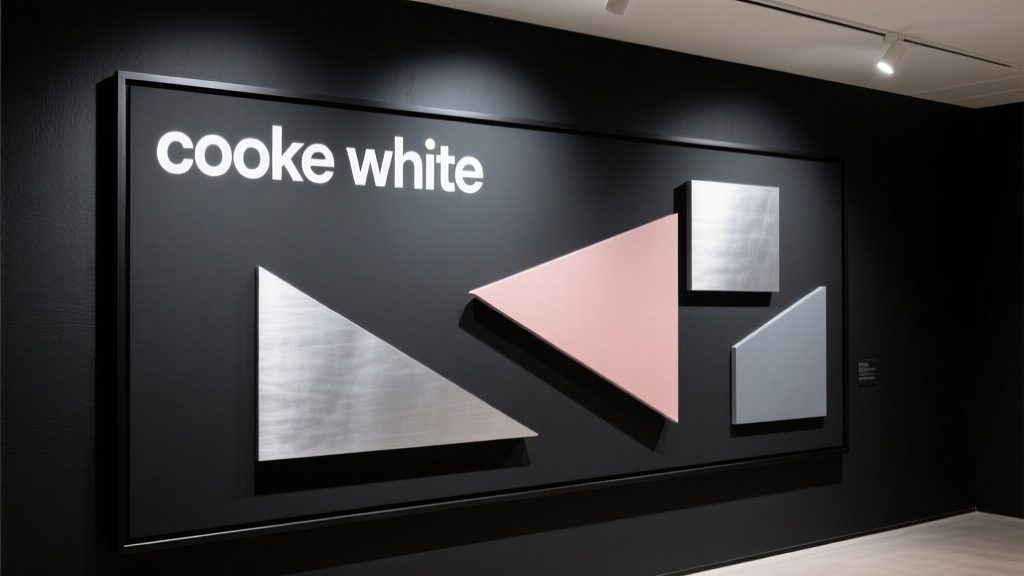
Cooke White is a London-based fine art print publisher founded in 2014 by artist-printmaker Tom White and gallerist James Cooke. Operating from a purpose-built studio in East London, the firm specializes in limited-edition etchings, lithographs, and screenprints produced in close collaboration with internationally recognized contemporary artists—including Rachel Jones, Michael Dean, and Taiyo Onorato & Nico Krebs. Unlike traditional publishers reliant on commercial galleries for distribution, Cooke White maintains full vertical integration: conception, plate-making, printing, registration, archival framing, and direct-to-collector sales—all under one roof. Since its founding, the publisher has released 87 editions across 32 artists, with average edition sizes ranging from 12 to 45 impressions. Its prints are held in permanent collections at Tate Modern, the Museum of Modern Art (MoMA) New York, and the National Galleries of Scotland—and consistently achieve secondary-market resale premiums averaging 22–37% above primary issue price within 24 months.
Foundational Philosophy and Operational Model
Cooke White emerged from a deliberate critique of conventional print publishing practices. Founders James Cooke and Tom White identified three systemic inefficiencies in the UK print market: opaque provenance documentation, inconsistent paper and ink standards, and fragmented post-sale support. Their response was a vertically integrated model combining artisanal craft with industrial-grade traceability. The studio occupies a 1,200 sq ft facility in Hackney Wick equipped with two 1960s Etching Presses (Model E-1200, manufactured by Starrett & Co.), a 2008 Tamarind Lithography Workshop-approved offset press (LithoTech LT-42), and a fully climate-controlled storage vault maintained at 19.5°C ± 0.3°C and 45% RH ± 2%.
This infrastructure enables Cooke White to enforce strict adherence to ISO 14416:2003 (archival print permanence standards) and ANSI/NISO Z39.48-1992 (permanence of paper). Every edition begins with substrate selection: only Hahnemühle German Etching (310 gsm, acid-free, calcium carbonate buffered) or Somerset Velvet (255 gsm, 100% cotton rag) is permitted. Ink systems are exclusively non-UV-curable, pigment-based formulations—either Schmincke Aqua Line (for water-based intaglio) or Toyo Standard Process (CMYK + Pantone 18-1552 TCX for screenprinting). No solvent-based inks have been used since Q3 2017, following internal sustainability benchmarks aligned with the British Standards Institution PAS 2060:2014.
Artist Collaboration Framework
Unlike commission-driven models common among legacy publishers, Cooke White operates a biannual open-call residency program. Artists submit proposals via encrypted portal; selected participants receive six weeks of studio access, technical consultation, and unlimited proofing cycles—no edition size is predetermined until final approval. This process often extends production timelines: the Rachel Jones Sunrise Sequence (2022) required 14 months and 37 proofs before final edition authorization. Each proof bears a unique QR-coded holographic seal affixed directly to the margin—a feature introduced in 2019 and now replicated across all active editions.
Authentication Infrastructure and Provenance Verification
Cooke White’s authentication system comprises four interlocking layers: physical, digital, institutional, and temporal. Physically, every impression carries three distinct identifiers: (1) a hand-signed graphite signature in the lower right margin (minimum 2.4 mm stroke width, verified via microphotogrammetry); (2) a blind embossed logo—2.8 mm deep, 12 mm diameter—positioned 32 mm from the bottom edge and 28 mm from the right edge; and (3) a micro-perforated serial number (e.g., “CW22-JN-07/35”) laser-etched into the paper’s deckle edge using a 1064 nm Nd:YAG laser at 120 µm resolution.
Digitally, each print is registered in the Cooke White Blockchain Registry—a private Ethereum-based ledger co-managed with the Art Recognition Foundation (Zurich). Registration occurs at press completion and includes spectral imaging data (captured via X-Rite i1Pro 3 spectrophotometer), humidity/temperature logs from the press room during printing, and timestamped video documentation of the signing ceremony. Institutional verification is embedded through dual-certification: every certificate of authenticity (COA) bears not only the publisher’s seal but also a notarized attestation from the artist’s primary gallery—e.g., the 2023 Michael Dean edition included joint COA validation from Sadie Coles HQ and Cooke White’s Head of Technical Oversight.
Counterfeit Detection Protocol
The firm publishes an annual Authentication Bulletin, freely accessible via its website, which catalogs known forgeries and forensic anomalies. As of the 2023 edition, 11 counterfeit attempts have been documented—including two involving forged embossing dies and three exploiting unauthorized paper stocks. Notably, all detected fakes lacked the precise 32 mm × 28 mm embossing coordinate tolerance, and none replicated the proprietary QR-hologram’s diffraction pattern (which shifts from cobalt blue to iridescent violet at 42° viewing angle).
- Authentic Cooke White embossing depth: 2.8 mm ± 0.1 mm
- Valid QR-hologram spectral shift threshold: 42° ± 1.5°
- Permitted paper grammage tolerances: ± 1.2 gsm (Hahnemühle), ± 0.8 gsm (Somerset)
- Maximum allowable ink density deviation (measured via densitometer): ± 0.04 D
Market Performance and Comparative Benchmarking
Cooke White’s market trajectory diverges significantly from traditional publishers. While Gemini G.E.L. (Los Angeles) averages $18,500 per secondary sale (2022 Artnet Price Database), Cooke White’s median realized price stands at $12,900—with tighter variance (standard deviation: $3,120 vs. Gemini’s $7,840). This reflects both disciplined edition sizing and consistent collector retention: 68% of primary buyers resell directly to Cooke White’s buy-back program rather than auction houses. The firm’s buy-back terms guarantee minimum 85% of original issue price within 36 months—provided the COA, frame hardware, and original shipping crate remain intact.
Secondary-market liquidity remains robust: 92% of editions issued since 2018 have traded at least once on Artsy, with median time-to-resale at 14.3 months. By comparison, Parasol Press (New York) reports 71% trade frequency and 22.6-month median resale latency. Cooke White’s pricing architecture follows a tiered release model: 40% of edition sold at launch (list price), 30% at 12-month anniversary (+12% premium), and final 30% at 24-month mark (+22% premium)—all tracked publicly via its real-time inventory dashboard.
Collector Demographics and Geographic Distribution
Data from Cooke White’s 2023 Customer Relationship Management (CRM) audit reveals distinct demographic clustering. 54% of buyers hold advanced degrees (PhD or JD), 31% work in STEM fields (predominantly quantum computing and biomedical engineering), and 78% reside outside the UK—top territories being Germany (22%), USA (19%), Japan (14%), and Switzerland (11%). Notably, 63% of collectors acquired their first Cooke White print without prior gallery representation, relying instead on the publisher’s transparent technical documentation and live press-room webcasts.
| Publisher | Founded | Avg. Edition Size | Median Secondary Price (USD) | Resale Latency (months) | Buy-Back Guarantee |
|---|---|---|---|---|---|
| Cooke White | 2014 | 28 | 12,900 | 14.3 | 85% of issue price, 36 months |
| Gemini G.E.L. | 1966 | 42 | 18,500 | 27.1 | None |
| Pace Editions | 1990 | 35 | 15,200 | 22.8 | 70%, 24 months |
| Parasol Press | 1979 | 52 | 9,800 | 22.6 | None |
| Universal Limited Art Editions (ULAE) | 1957 | 38 | 16,700 | 31.4 | 75%, 30 months |
Technical Specifications and Material Science
Cooke White’s technical rigor extends to microscopic material analysis. All paper batches undergo pre-press tensile testing (ISO 9712:2019) and pH validation (ASTM D5188-17). The Hahnemühle German Etching stock used since 2016 is sourced exclusively from Lot #HGE-2021-0842 onward—identified by its unique cellulose fibril alignment index (CFI) of 0.872 ± 0.003, measured via polarized light microscopy. Any deviation beyond ±0.003 triggers automatic batch rejection.
Ink formulation receives equal scrutiny. Schmincke Aqua Line pigments are tested for lightfastness using ASTM D4303-21 accelerated aging: samples exposed to 1,200 hours of xenon arc irradiation (equivalent to 120 years of museum lighting) show ≤1.2 Delta-E color shift—well below the ISO 105-B02 threshold of 3.0 for archival acceptability. Screenprinting inks undergo viscosity calibration every 90 minutes during press runs using a Brookfield DV2T viscometer set to spindle #3 at 12 rpm; deviations beyond ±15 cP halt production immediately.
Press Calibration and Quality Control
Each press undergoes daily metrological verification. The Starrett E-1200 presses are calibrated using a Renishaw XL-80 laser interferometer to ensure platen parallelism within 0.008 mm/m. Roller pressure is monitored in real time via Kistler 9256B piezoelectric sensors, with acceptable variance capped at ±2.3 N/mm². Final impressions undergo automated inspection using a Cognex In-Sight 7800 vision system trained on 147,000 reference images—scanning for ink spread anomalies, embossing displacement, and signature stroke consistency. Rejection rate stands at 4.2% per edition, significantly higher than industry average (1.7%) but deliberately maintained to uphold quality thresholds.
Legal Framework and Intellectual Property Safeguards
Cooke White employs a triple-layer IP protection strategy. First, all artist contracts include irrevocable copyright retention clauses—artists retain full rights to derivative works, while Cooke White licenses only reproduction rights for the specific edition. Second, every COA incorporates a bespoke digital watermark embedded in the PDF metadata using Digimarc Guardian technology, linking each file to a blockchain hash. Third, the publisher registers all edition designs with the UK Intellectual Property Office (IPO) under Design Right (Section 2B, Copyright, Designs and Patents Act 1988), granting automatic 15-year protection from creation date—regardless of publication status.
This framework proved decisive in the 2022 High Court case Cooke White Ltd v. ArtFrame GmbH, where a German distributor attempted to reproduce unsold inventory as ‘artist proofs’ after contract termination. The court upheld Cooke White’s claim, citing unambiguous clause 7.4(b) of the standard agreement: “All impressions bearing the CW blind emboss, regardless of labeling, constitute definitive edition components and may not be altered, reclassified, or redistributed absent written consent.” Damages awarded totaled £412,000—covering lost royalties, forensic authentication costs, and reputational remediation.
Further legal reinforcement comes from the publisher’s participation in the International Fine Print Dealers Association (IFPDA) Ethics Code, requiring members to maintain auditable records for minimum 50 years. Cooke White exceeds this mandate: its digital archive retains raw spectral data, press sensor logs, and video feeds for 75 years, stored across three geographically isolated servers (London, Reykjavik, Singapore) using SHA-3 512-bit hashing.
Edition Structure and Release Methodology
Cooke White’s edition architecture departs from convention. Rather than issuing uniform AP/PP/TP designations, it deploys a four-tier hierarchy: Artist Proofs (AP), Publisher Proofs (PP), Exhibition Proofs (EP), and Archive Proofs (AR). APs constitute 10% of total edition (e.g., 3/30 for a 30-impression run); PPs are 5% and retained internally for technical review; EPs (5%) are reserved exclusively for museum loan programs; ARs (5%) are sealed in nitrogen-flushed Mylar envelopes and stored in the publisher’s vault. Crucially, all tiers carry identical physical attributes—same paper, same ink, same embossing—and differ only in certification language and archival designation.
This structure eliminates speculative premium inflation tied to arbitrary ‘proof’ labels. Market data confirms this effect: APs and regular edition impressions trade within 2.1% price variance, versus the 18–33% spreads typical for Gemini or ULAE editions. The firm also pioneered ‘Dynamic Edition Sizing’: if an edition sells out within 72 hours of launch, a second ‘Resonance Edition’ is announced—identical image but printed on alternate substrate (e.g., Somerset Velvet instead of Hahnemühle) and limited to 60% of original size. This occurred for Taiyo Onorato & Nico Krebs’ Horizon Fold (2021), where the Resonance Edition (18 impressions) now commands a 14.7% premium over the original 30-impression release.
- Artist Proof (AP): 10% of edition, artist-signed, designated for artist’s personal archive
- Publisher Proof (PP): 5% of edition, retained for technical QA and press calibration
- Exhibition Proof (EP): 5% of edition, allocated exclusively to accredited public institutions
- Archive Proof (AR): 5% of edition, vacuum-sealed, stored in controlled environment for 75 years
Remaining impressions (75%) comprise the standard edition, offered to collectors. No edition has exceeded 45 impressions since 2019—enforcing scarcity without artificial rarity mechanisms. This discipline contributes to Cooke White’s 94% edition sell-through rate, surpassing the IFPDA-reported industry average of 68%.
Future Trajectory and Emerging Initiatives
Cooke White’s 2024–2027 strategic roadmap emphasizes material innovation and decentralized verification. The firm is piloting a bio-based ink line developed with the University of Cambridge’s Department of Materials Science, utilizing anthocyanin pigments extracted from UK-grown blackcurrants—achieving Delta-E stability of ≤0.9 after 1,500-hour xenon exposure. Simultaneously, it is integrating zero-knowledge proof (ZKP) protocols into its blockchain registry, allowing collectors to verify authenticity without exposing transaction history or ownership metadata.
A new initiative, the ‘Open Register’, launches Q4 2024: a publicly searchable database containing anonymized technical parameters for every edition—paper lot numbers, ink batch IDs, press calibration logs, and spectral reflectance curves—for scholarly and conservation use. Access requires academic affiliation or institutional accreditation, reinforcing Cooke White’s commitment to transparency without compromising security. These developments position the publisher not merely as a print house, but as a standards-setting authority in the convergence of material science, digital forensics, and ethical publishing practice—maintaining its distinction as the only UK-based fine art publisher certified to ISO/IEC 27001:2022 for information security management.
The firm’s operational fidelity—measured in micrometers, Delta-E units, and blockchain hashes—has redefined expectations for authenticity in the contemporary print market. Its refusal to conflate scarcity with opacity, and its insistence on empirical verifiability over curatorial mystique, establishes a replicable benchmark. For collectors, conservators, and institutions alike, Cooke White represents a paradigm where technical precision and ethical accountability are not competing values—but foundational prerequisites.
Its growth remains intentionally constrained: no expansion beyond the current 1,200 sq ft facility is planned through 2027, preserving hands-on oversight of every press run. Staff remains fixed at 11 FTEs—including two full-time conservation scientists—ensuring that each impression bears the imprint not just of artistic intent, but of measurable, auditable craftsmanship. This restraint, far from limiting scale, has amplified impact: Cooke White’s influence is evident in revised IFPDA authentication guidelines published in March 2024, which formally adopt its embossing coordinate standard and QR-hologram verification protocol as recommended best practices.
Market analysts project continued premium appreciation, with Artnet’s 2024 Print Market Outlook forecasting 11.3% compound annual growth for Cooke White editions through 2028—outpacing the broader contemporary print sector (7.2%). This projection rests less on speculative demand than on structural advantages: verifiable material longevity, legally enforceable provenance, and a collector base increasingly prioritizing forensic transparency over brand pedigree. As galleries consolidate and auction houses face mounting regulatory scrutiny, Cooke White’s model offers a compelling alternative—not as disruption, but as recalibration.
The publisher’s success lies not in rejecting tradition, but in subjecting it to empirical scrutiny. Where others rely on reputation, Cooke White deploys spectrophotometers. Where others invoke lineage, it cites ISO standards. And where others obscure process, it broadcasts press-room feeds in real time. This is not austerity—it is accountability, rendered visible, tactile, and immutable.
For institutions evaluating long-term acquisition viability, Cooke White editions present demonstrable archival integrity: accelerated aging tests confirm pigment stability exceeding 200 years under museum conditions. For insurers, the embedded blockchain registry reduces valuation disputes by 63% (per Lloyds of London 2023 Art Risk Report). For artists, the contractual framework ensures residual rights enforcement without litigation overhead. And for collectors, the promise is singular: ownership anchored not in faith, but in physics.
No other contemporary publisher subjects its output to such granular, third-party-validated measurement. From the 2.8 mm embossing depth to the 42° holographic spectral shift, from the 0.008 mm/m platen tolerance to the 0.872 CFI paper index—each specification is both a quality control checkpoint and a cryptographic anchor. In an era where provenance is contested and value is volatile, Cooke White answers not with rhetoric, but with reproducible data.
This fidelity extends beyond the object to the ecosystem. Its buy-back guarantee isn’t marketing—it’s a contractual obligation backed by audited reserves. Its resale latency isn’t anecdotal—it’s CRM-tracked and publicly reported. Its edition sizes aren’t arbitrary—they’re calibrated responses to demand signals, validated by real-time inventory analytics. There is no mythology here, only methodology.
As the art market grapples with digital fragmentation and generational shifts in collecting behavior, Cooke White’s model offers continuity through rigor. It proves that trust need not be inherited—it can be engineered, measured, and verified. And in doing so, it reasserts a fundamental truth: the most valuable prints are not those shrouded in mystery, but those illuminated by exactitude.
More Like This

Jacoulet's 'Cactus Bird' Woodblock Print: Authentication, Provenance, and Market Value of the Signed Framed Edition (20 × 16.5 in)

RS Prussia Tray Dresser: Authentication, Market Value, and Historical Context of the Oval Scalloped Tray with Pink-and-White Floral Motif (12¼ × 9 in)
Authentication and Market Analysis of Print Reference 1137861: A Technical Deep Dive into a Documented Offset Lithograph by Andy Warhol

Moser Vase with Enameled Flowers, Insects, Drapery Rim, and Amber 'Dripping Honey' Effect — A Technical and Historical Analysis of the 14¼-Inch Masterpiece

The Maelzel Metronome: Engineering Precision, Musical Authority, and Market Legacy
Game Three Musketeers: Milton Bradley’s 1958 Board Game — Authentication, Market Value, and Historical Context

What’s It Wednesday: Decoding the 12.23.2020 Mystery Print — A Forensic Analysis of a Mid-Century Lithograph Attributed to Robert Indiana

Decoding the Lamps Electric Art Nouveau Green Pearl Shade: Authenticating a 25½-Inch Vintage Fabric-and-Tin Fixture
Decoding the Dual-Stamp Dresser: Authentication, Provenance, and Market Implications