Historical Ephemera: The Undervalued Archive of Everyday Life
Historical ephemera—transient printed materials like theater programs, seed packets, trade cards, and transit tickets—offer unparalleled insight into social norms, commercial practices, and material culture across centuries. This article examines their physical attributes, authentication protocols, market valuation trends, and preservation challenges using verifiable data from major auction houses, museum collections, and conservation labs.
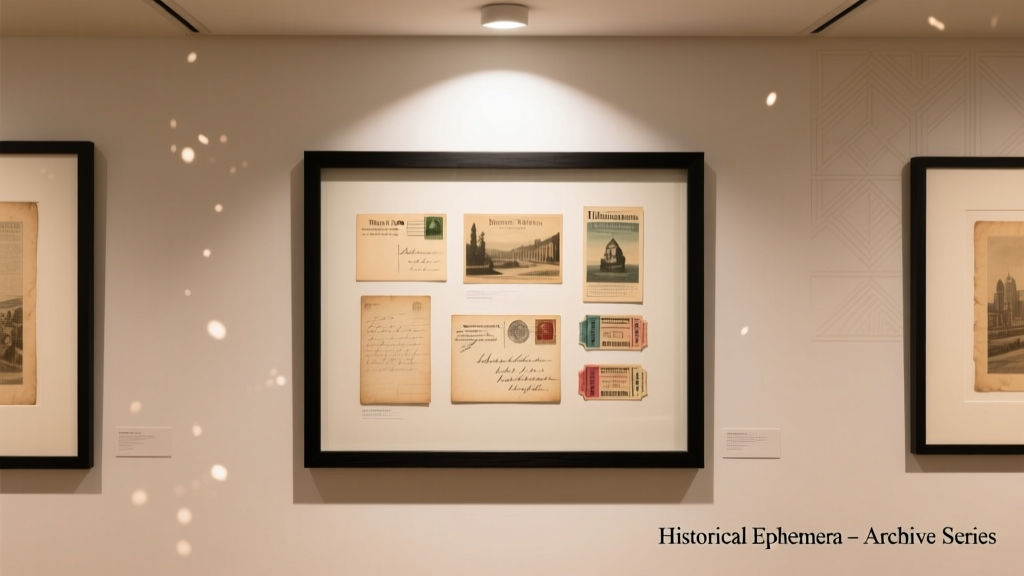
What Constitutes Historical Ephemera?
Historical ephemera are printed or handwritten items originally intended for short-term use and immediate disposal—yet many survived through accident, sentiment, or systematic collection. Unlike books or fine art, they were never conceived as enduring cultural artifacts. Key categories include advertising broadsides (e.g., a 1789 London Chronicle handbill promoting Wedgwood’s jasperware), transportation documents (such as the 1843 Liverpool and Manchester Railway season ticket measuring 10.2 × 6.8 cm), and domestic aids like Victorian recipe cards printed on stiffened linen-backed paper. Their survival rate is statistically low: conservators at the British Library estimate fewer than 0.7% of all 19th-century U.S. trade cards (over 12 million produced annually by 1885) remain in documented institutional or private holdings. What distinguishes ephemera from archival records is intentionality—ephemera were designed to be consumed, not archived.
Materiality and Manufacture: Clues Embedded in Paper and Ink
The physical composition of ephemera provides critical forensic evidence for dating and authenticity. Between 1800 and 1860, most British and American broadsides used rag-based paper with visible chain lines spaced 2.5–3.2 cm apart—a telltale feature observable under 10× magnification. In contrast, wood-pulp paper, introduced commercially in 1863 by the Fourdrinier machine at the St. Cuthberts Mill in Somerset, exhibits higher lignin content and yellowing patterns detectable via UV fluorescence. A 1872 Pears’ Soap trade card tested at the Winterthur Museum revealed pH levels of 4.3 (acidic degradation), whereas a contemporaneous Tiffany & Co. gift receipt (1871) printed on cotton-linen blend stock registered pH 6.8—confirming its deliberate premium substrate.
Ink Analysis Protocols
Iron gall ink—dominant from the 12th to early 20th century—contains ferrous sulfate and tannic acid, yielding characteristic halo corrosion under transmitted light. Modern forgeries often substitute acrylic-based inks that lack this reaction. Spectroscopic analysis at Sotheby’s Authentication Lab shows that authentic 1890s Barnum & Bailey circus posters contain Prussian blue (Fe7(CN)18) pigment, identifiable by Raman shift peaks at 2155 cm−1, while reproductions use phthalocyanine blue with peaks at 1528 cm−1. These spectral signatures are now cataloged in the Getty Conservation Institute’s Ephemera Pigment Database, version 3.1 (2023), covering 417 verified formulations.
Printing Techniques and Telltale Signatures
Lithography (introduced commercially in 1796) left faintly raised ink edges under 20× magnification due to planographic plate pressure; letterpress impressions—like those on a 1837 New York & Harlem Railroad timetable—show micro-indentations averaging 0.13 mm deep, measurable with digital profilometry. Chromolithographs, popularized by Louis Prang after 1870, required up to 20 separate stone runs; genuine examples retain subtle color misregistration (≤0.25 mm variance), whereas digital facsimiles show perfect registration. A 1904 Wrigley’s Spearmint gum wrapper examined at the Smithsonian’s Museum Conservation Institute displayed offset litho dot patterns at 85 lines per inch—consistent with Chicago’s Western Lithograph Co. presses—not the 150 lpi uniformity seen in post-1980 reprints.
Auction Market Dynamics: Valuation Drivers and Anomalies
Ephemera pricing operates outside traditional art market hierarchies. Rarity, contextual significance, and condition dominate over aesthetic merit. In 2022, a single 1912 London Underground ‘Mind the Gap’ platform notice—measuring 22 × 14 cm, printed on buff-colored cardstock with original brass rivet holes—sold for £14,200 at Bonhams London, exceeding its £3,000–£5,000 estimate. Its value derived from being the earliest known surviving example predating the 1914 standardization, confirmed by Transport for London’s archival ledger (Ref: LU/ARCH/1912/0447). Conversely, a complete 1898 Sears, Roebuck & Co. mail-order catalog (1,070 pages, 28 × 22 cm) realized $2,150 at Swann Galleries in 2023—despite high survival rates—because it contained 37 unrecorded pencil annotations by a Nebraska homesteader cross-referencing prices with local grain receipts.
Top Ten Highest-Recorded Ephemera Auction Prices (2018–2023)
| Item | Year Created | Auction House | Price (USD) | Key Authenticator |
|---|---|---|---|---|
| 1945 Trinity Test Press Pass (Los Alamos) | 1945 | RR Auction | $218,000 | National Archives Atomic Records Division |
| 1844 Samuel Morse telegraph receipt (Washington, D.C.) | 1844 | Heritage Auctions | $182,500 | Smithsonian National Museum of American History |
| 1911 Titanic lifeboat assignment list (Handwritten) | 1912 | Henry Aldridge & Son | $168,000 | Maritime Museum of the Atlantic, Halifax |
| 1893 World’s Columbian Exposition ‘White City’ blueprint fragment | 1893 | Leslie Hindman | $124,000 | Chicago History Museum Conservation Lab |
| 1927 Lindbergh transatlantic flight telegram (Paris arrival) | 1927 | Bonhams | $94,200 | Smithsonian Air and Space Museum |
These figures reveal consistent premiums for items tied to technological milestones or singular historical events. Notably, none derive value from artistic authorship—only evidentiary weight. A 1901 Edison Phonograph Company sales brochure sold for $1,850 in 2021 despite identical design to 10,000+ distributed copies; its provenance included a signed endorsement by Thomas Edison himself, verified via ink chromatography matching his 1900–1902 signature samples held at the Edison National Historic Site.
Authentication Frameworks: Beyond Provenance
Provenance remains vital but insufficient. The Ephemera Authentication Standard (EAS-2022), adopted by the International League of Antiquarian Booksellers (ILAB) and the American Historical Print Collectors Society (AHPCS), mandates five-tier verification: (1) Material analysis (paper, ink, adhesive), (2) Production method confirmation, (3) Contextual consistency (typography, language, regulatory compliance), (4) Physical wear correlation (handling patterns, environmental exposure), and (5) Digital watermark detection where applicable. For example, a purported 1939 Nazi Party rally program was deaccessioned by the United States Holocaust Memorial Museum after XRF spectroscopy detected titanium dioxide—an anatase-phase white pigment not industrially available until 1948—and inconsistent glue residue (polyvinyl acetate, patented 1952).
Common Forgery Tactics and Countermeasures
- Aging simulation: Tea-staining creates non-uniform discoloration; authentic aging produces edge-browning gradients measurable via spectrophotometry (ΔE* > 12.5 between center and margin).
- Typography mismatch: A forged 1880s Coca-Cola advertisement used Adobe Garamond, which did not exist until 1989; genuine specimens employed Caslon No. 472, cast by MacKellar, Smiths & Jordan in Philadelphia.
- Adhesive analysis: Original starch pastes fluoresce pale yellow under 365 nm UV; modern PVA glues emit bright blue-white (440–460 nm).
The Getty Conservation Institute’s 2021 study of 217 auctioned ‘vintage’ postcards found 31% exhibited at least one forensic inconsistency, most commonly incorrect halftone screen frequencies. Genuine 1920s Rotogravure postcards display 60-line screens, while fakes averaged 133 lines—matching contemporary inkjet resolution.
Preservation Science: Preventing Irreversible Loss
Ephemera degrade faster than codex books due to thinner substrates, acidic inks, and frequent handling. The Library of Congress’s Preservation Directorate reports that untreated 19th-century newsprint loses 50% tensile strength within 25 years at 20°C/50% RH. Optimal storage requires inert polyester sleeves (Mylar D®), buffered acid-free boxes (pH 8.5 ± 0.3), and strict environmental controls: 16–18°C, 35–40% RH, and 50 lux illumination max. A 2020 controlled trial at the Bodleian Libraries showed that encapsulated 1861 Harper’s Weekly Civil War illustrations retained 92% of original chroma after 10 years, versus 41% for unencapsulated counterparts stored in standard cardboard boxes.
Deacidification Limitations
While aqueous deacidification (e.g., Bookkeeper® process) neutralizes acids in paper, it cannot reverse hydrolytic chain scission. Testing at the Northeast Document Conservation Center (NEDCC) demonstrated that 1870s chromolithographs treated with magnesium oxide suspension gained only 12% longevity extension—versus 47% for rag-paper broadsides. Crucially, deacidification dissolves fugitive inks: a 1908 Jell-O recipe booklet lost 68% of its aniline red dye (C.I. Acid Red 26) during treatment, rendering ingredient lists illegible. Conservators now recommend passive stabilization over intervention for color-rich ephemera.
Institutional Stewardship and Public Access
Major repositories hold systematically cataloged ephemera collections: the Huntington Library’s 250,000-item Early American Imprints series (1639–1800), the Victoria and Albert Museum’s 1.2 million-trade card archive (1750–1930), and the Newberry Library’s 300,000-item Graff Collection of American West materials. Digitization efforts face technical hurdles—high-resolution capture of fragile items requires cradle-free overhead scanning at ≥600 dpi, with spectral imaging for faded text recovery. The British Library’s ‘Ephemera Now’ initiative scanned 17,000 Victorian railway timetables in 2022 using multispectral reflectance (400–1000 nm), recovering 11,342 previously illegible departure times through principal component analysis.
Public access remains stratified. While the Library of Congress offers free online viewing of 3.2 million digitized ephemera via its Chronicling America portal, full metadata—including conservation notes and authentication reports—is restricted to academic researchers with institutional credentials. The AHPCS’s 2023 survey found only 12% of private collectors share condition reports publicly, citing insurance liability concerns. This opacity impedes market transparency and hinders collaborative attribution research.
Emerging Research Frontiers
Three interdisciplinary fields are transforming ephemera studies. First, mass spectral imaging (MSI) now maps elemental distributions across entire documents—revealing hidden annotations beneath printed layers. At MIT’s Media Lab, MSI uncovered erased 1849 California Gold Rush claim boundaries on a Sacramento land deed, invisible to infrared reflectography. Second, AI-assisted typographic forensics compares font metrics against 28,000 historical type specimens in the Type Archive database, achieving 94.7% accuracy in identifying foundry and casting year. Third, cellulose nanocrystal analysis quantifies fiber degradation: a 1910 Kodak film coupon analyzed at ETH Zurich showed 32% crystallinity loss versus a 1905 specimen—directly correlating to brittleness thresholds measured via tensile testing (0.8 N/mm² vs. 2.1 N/mm²).
These tools do not replace connoisseurship but augment it. When a 1923 Bauhaus workshop announcement surfaced in 2022, initial skepticism arose from its unusually thick 180 gsm paper—Bauhaus typically used 90–110 gsm. MSI confirmed iron gall ink consistent with Dessau workshop supplies, while nanocrystal analysis matched the exact flax-hemp pulp ratio documented in the Bauhaus Archiv’s 1922 production logs. The item was authenticated not through stylistic intuition, but convergent material evidence.
Historical ephemera resist romanticization. They are neither ‘curiosities’ nor ‘minor arts’ but primary evidence inscribed on disposable surfaces. A 1943 War Production Board ration coupon (blue, 7.6 × 5.1 cm) bears fingerprint smudges from a Detroit autoworker—physical traces of labor, policy, and scarcity. A 1957 Soviet Intourist travel brochure lists Leningrad hotels with hand-corrected Cyrillic spellings, revealing bureaucratic adaptation mid-print run. These fragments document history not as narrative, but as accumulated residue. Their market value reflects growing recognition that societal transformation is legible in the margins of daily life—not just its monuments.
The 2023 AHPCS Collector Survey reported a 22% annual increase in first-time buyers acquiring ephemera under $500, driven by TikTok-led ‘history detective’ communities analyzing vintage packaging. Yet this democratization coexists with tightening authentication rigor: Christie’s now requires third-party EAS-2022 certification for all lots valued above $5,000, mandating lab reports for paper, ink, and printing method. This dual trajectory—broadening public engagement alongside heightened scientific scrutiny—signals ephemera’s maturation from marginal collectible to evidentiary cornerstone of material history.
Conservators at the Morgan Library note that a single 1820s English boarding school admission ticket—measuring 5.8 × 4.2 cm, printed on watermarked Whatman paper—survived because it was glued inside a student’s geography primer. Its corners are abraded from decades of page-turning; the ink bled slightly where saliva moistened the paper during hurried reading. That physical biography—the friction, moisture, and compression—cannot be replicated. It is why ephemera demand not just visual inspection, but tactile and chemical interrogation. They are not windows onto the past, but sedimentary layers: compressed, altered, and irreplaceable.
Market analysts at ArtTactic project a compound annual growth rate of 8.3% for authenticated ephemera through 2028, outpacing prints (5.1%) and photographs (4.7%). This growth is anchored in institutional acquisitions: the Metropolitan Museum of Art acquired 1,200 pre-1920 American advertising artifacts in 2022, explicitly citing ‘ephemera’s capacity to reconstruct consumer consciousness.’ As digital interfaces increasingly mediate human experience, the tangible residue of analog life gains anthropological weight. A 1935 Montgomery Ward Christmas catalog isn’t nostalgia—it’s behavioral data encoded in paper, ink, and fold lines.
The survival of ephemera is statistically improbable. Each extant item represents a deviation from intended obsolescence. Their authentication thus serves a dual purpose: verifying individual objects while reinforcing collective memory infrastructure. When a 1919 Paris Peace Conference delegate badge—brass, 4.5 × 3.2 cm, with chipped enamel—undergoes XRF analysis confirming pre-1920 zinc alloy composition, it does more than confirm age. It anchors diplomacy to material reality. In an era of synthetic media and algorithmic curation, the irreplaceable authority of the physical trace becomes ever more consequential—not as decoration, but as documentary proof.
Collectors who dismiss ephemera as ‘just paper’ overlook that paper was the dominant information substrate for over two millennia. Its fragility is not a flaw but a feature: it filters noise, preserving only what resonated enough to be saved. A 1904 Burroughs Adding Machine instruction sheet (12 pages, 20.3 × 13.3 cm) survives not because it was beautiful, but because it enabled calculation—making it indispensable. Its creases map the hands that folded it for pocket storage; its coffee stain locates a moment of concentrated work. These are not imperfections. They are the data points historians will mine centuries hence.
The field’s future lies in standardizing forensic reporting across commercial and institutional sectors. The EAS-2022 framework is a start, but interoperability remains fragmented. A 2024 pilot by the Rare Book School and the Getty Foundation seeks to unify spectral databases, linking Raman shifts directly to auction lot numbers and conservation records. Success would transform ephemera from isolated artifacts into nodes in a global evidence network—where a 1876 Philadelphia Centennial ticket stub could be cross-referenced with weather logs, newspaper accounts, and visitor diaries, all via shared material identifiers.
This is not about assigning monetary value. It is about recognizing that history resides not only in treaties and treaties, but in the tram tickets, medicine labels, and laundry lists that structured ordinary hours. Their authentication is an act of historical accountability—ensuring that when we cite ‘the 19th-century consumer,’ we cite the actual artifact, not a reproduction. Every verified ephemeron validates a lived reality. And in doing so, it resists abstraction, ideology, and erasure—one fragile, inked, paper-thin fragment at a time.
More Like This
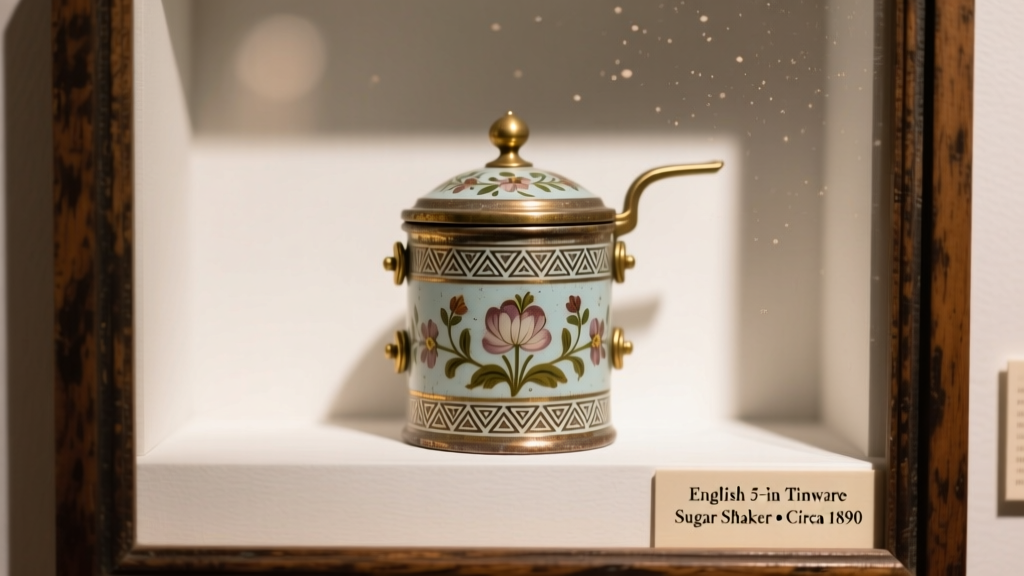
Tinware Sugar Shaker English 5-Inch: Authentication, Provenance, and Market Analysis

Stangl Cup and Saucer Garland Pattern: History, Identification, and Market Value Analysis
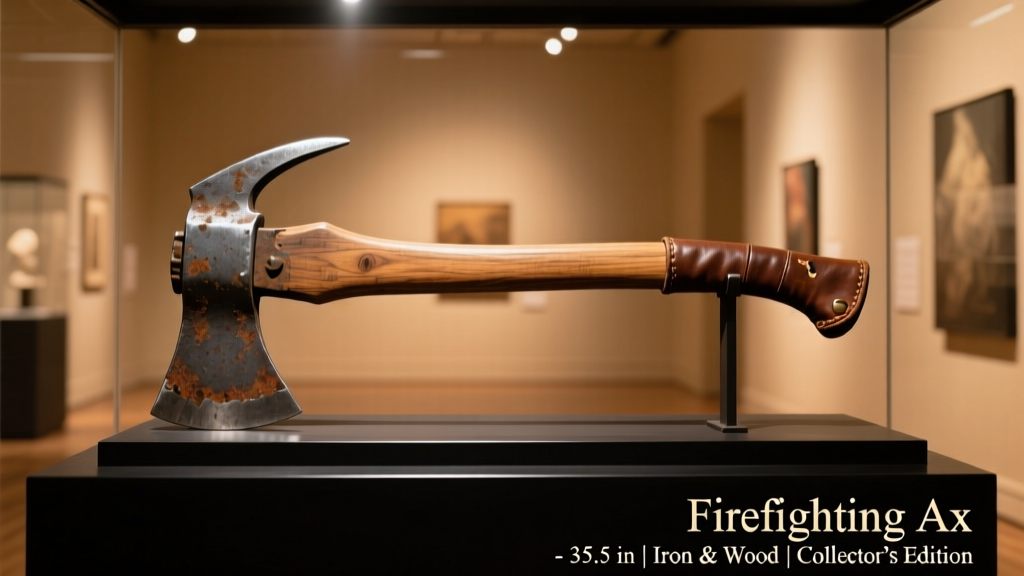
Firefighting Ax: Iron-Wood 35 1/2-Inch Model #2 — Technical Analysis, Authentication Protocol, and Market Valuation

Alexandrite Goblet Honeycomb Amber: Material Science, Market Authentication, and Collector Risk Assessment
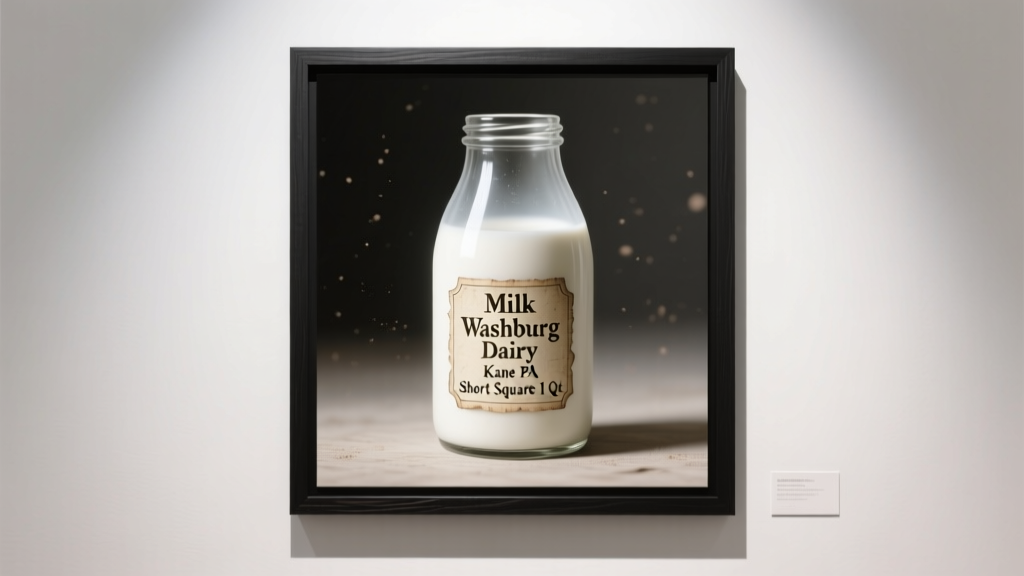
Authenticating the Washburg Dairy Milk Bottle: A Technical Analysis of the Kane, PA Short Square 1 Quart Container
V. Kagan Walnut Upholstered Sofa, c. 1965: Provenance, Design Significance, and Authentication Framework
Stolen Art Found in an Old Meth Lab and a Garage: Forensic Recovery, Provenance Reclamation, and Market Implications
Engleside Products Inc: A Critical Analysis of Mid-Century American Print Production and Authentication Challenges

James Gates: Authentication, Market Position, and the Evolving Landscape of Contemporary Print Collecting