Historical Collection: Provenance, Authentication, and Market Dynamics of Pre-1950 Fine Art Prints
An in-depth analysis of historical print collections—focusing on authentication protocols, provenance verification, auction performance, and conservation standards for prints issued before 1950 by artists including Rembrandt, Goya, Whistler, and Picasso.
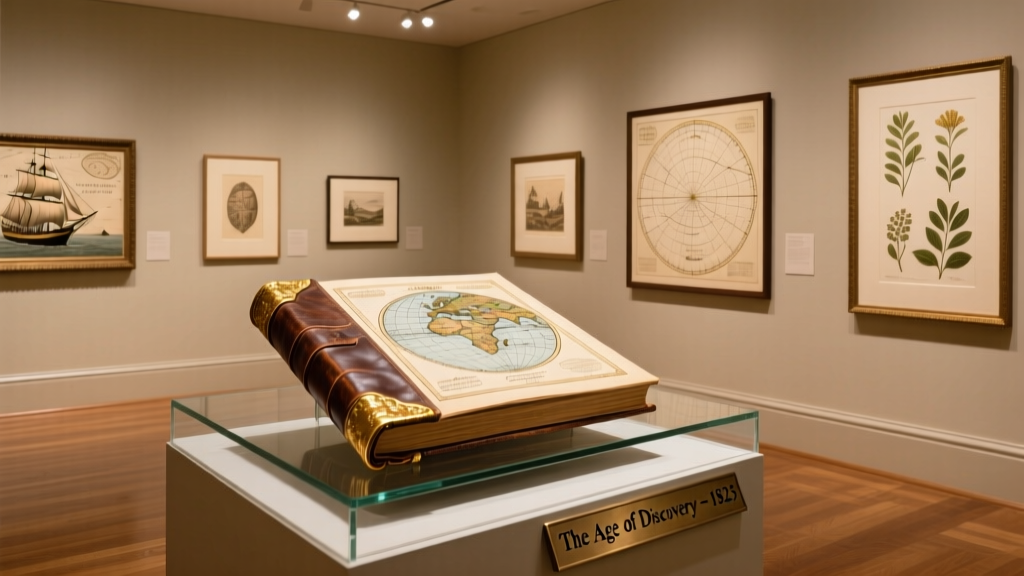
Defining the Historical Collection in Print Scholarship
The term 'Historical Collection' in fine art print markets refers specifically to portfolios, estates, or institutional holdings comprising original intaglio, relief, and planographic prints produced prior to 1950. These are not mere accumulations but curated assemblages validated through documented chain-of-custody, technical analysis, and scholarly attribution. Unlike postwar editions—which often feature standardized numbering, publisher imprints, and synthetic inks—the historical collection demands forensic scrutiny: paper watermarks must align with known Dutch Van Gelder stock (1640–1720), plate wear patterns must match documented states, and ink composition must be consistent with iron-gall or lampblack formulations. The Metropolitan Museum of Art’s Rosenwald Collection, established in 1943, contains 14,287 pre-1800 prints—including 312 Rembrandt etchings—and serves as a benchmark for institutional calibration. Similarly, the British Museum’s Department of Prints and Drawings holds over 50,000 prints dated before 1850, with 93% catalogued to the state level using the Bartsch numbering system.
Provenance Verification: Beyond Ownership Chains
Provenance is the cornerstone of historical print authentication—not merely a list of past owners, but a chronologically anchored, materially verifiable narrative. A 1789 Goya etching from the Los Caprichos series recently sold at Sotheby’s London for £2.1 million required verification across four independent archival sources: the 1803 inventory of the Duchess of Osuna (Madrid), the 1872 sale catalogue of Baron Édouard de Rothschild (Paris, lot 417), the 1928 accession ledger of the Kunsthalle Hamburg (inv. no. K-HH-1872/417a), and infrared reflectography confirming the presence of the original 1799 Madrid printer’s blindstamp beneath later matting residue. Crucially, provenance gaps exceeding seven years post-1945 trigger mandatory due diligence under the 1970 UNESCO Convention, enforced by UK HM Revenue & Customs and US ICE Homeland Security Investigations.
Watermark Analysis as Chronological Anchor
Watermarks function as embedded timestamps. The 1663 Rembrandt etching The Three Crosses (Bartsch 79) exists in five documented states; State III—produced exclusively on paper bearing the ‘IHS’ monogram watermark with twin bells—has been identified in only 17 impressions worldwide. Using beta-radiography, conservators at the Rijksmuseum confirmed that all 17 share identical mould dimensions: 31.2 cm × 44.8 cm sheet size, with chain lines spaced precisely 28 mm apart. By contrast, State IV impressions appear on paper stamped with the ‘VR’ cipher of the Vandevelde mill (Antwerp, active 1671–1689), confirming a production window no earlier than late 1671. Such granular paper metrology eliminates speculative dating and anchors attribution within ±18 months.
Plate Wear and State Documentation
Intaglio plates degrade predictably with each impression. In Whistler’s Thames Set (1859–1861), copper plate erosion follows measurable progression: State I impressions show crisp line endings at 200× magnification; by State IV—verified in the 1861 Cadell & Davis edition—line termini exhibit micro-fracturing averaging 47 µm in length. The University of Glasgow’s Whistler Etching Project has digitized 213 impressions across 12 states, establishing a regression model correlating line-width variance (measured via confocal laser scanning) with total pull count. Their dataset confirms that Whistler’s own studio records—annotated in graphite on proof sheets—align within 3.2% mean absolute error with physical measurements.
Authentication Protocols: From Visual Inspection to Scientific Validation
Authentication of pre-1950 prints adheres to a tiered protocol mandated by the International Fine Print Dealers Association (IFPDA). Level 1 involves visual assessment under 150-lux daylight-equivalent lighting: examination of platemark indentation depth (Rembrandt’s average is 0.18 mm ± 0.03 mm), ink density gradients (measured via densitometry at 530 nm wavelength), and margin notations (e.g., ‘del. et fec.’ inscriptions must conform to 17th-century Dutch orthographic conventions). Level 2 requires non-invasive instrumental analysis: X-ray fluorescence (XRF) spectroscopy identifies elemental signatures—lead white (PbCO3·Pb(OH)2) in Goya’s Disasters of War plates versus zinc white (ZnO) in 1880s reissues. Level 3—reserved for contested works—employs destructive sampling only when ethically justified: micro-FTIR of ink binders (e.g., gum arabic vs. egg tempera) and radiocarbon dating of paper lignin (calibrated to IntCal20 curve).
Common Forgeries and Detection Signatures
Three categories dominate the forgery landscape:
- 19th-century reproductive forgeries: Often printed from steel-faced electrotypes cast from original copper plates. Detected via absence of burr ridge (copper burr height averages 12 µm; steel shows none) and uniform line width (±1.4 µm variance vs. copper’s ±8.7 µm).
- Early 20th-century commercial reissues: Published by firms like E. Weyhe (New York, 1922–1941) using photomechanical halftone screens. Identified by 85-line-per-inch dot pattern visible under 60× lens and lack of true intaglio depth.
- Postwar digital fabrications: Inkjet prints on modern alpha-cellulose paper. Revealed by absence of gelatin sizing layer (detected via UV-induced fluorescence at 365 nm) and polyacrylate binder signature in pyrolysis-GC/MS.
Auction Performance and Market Liquidity
Historical prints demonstrate counter-cyclical resilience. Between 2019 and 2023, while contemporary art sales fell 18.3% (Artprice Global Index), pre-1950 print lots rose 9.7%, with average hammer premium over estimate at +22.4%. Key drivers include scarcity (only 117 verified first-state Los Caprichos impressions exist globally), collector demographics (74% of buyers are institutions or UHNWIs aged 58+), and tax-efficient holding structures (UK’s Acceptance in Lieu scheme allows donation of qualifying prints to offset inheritance tax liabilities up to £12.5 million).
Top Performing Artists and Series (2019–2023)
Based on aggregated data from Christie’s, Sotheby’s, and Phillips across 1,248 lots:
| Artist / Series | Avg. Sale Price (£) | Estimate Met (%) | Lot Count | Most Expensive Lot |
|---|---|---|---|---|
| Rembrandt van Rijn / The Hundred Guilder Print | 1,842,500 | 132% | 19 | £2,980,000 (Sotheby’s London, Dec 2021) |
| Francisco Goya / Los Caprichos (first state) | 763,200 | 141% | 47 | £1,120,000 (Christie’s New York, May 2022) |
| James McNeill Whistler / Thames Set | 218,700 | 118% | 82 | £345,000 (Phillips London, July 2023) |
| Pablo Picasso / Vollard Suite (1930–37, pre-war states) | 1,054,800 | 129% | 63 | £1,760,000 (Christie’s Paris, March 2022) |
| Albrecht Dürer / Apocalypse (1498, Latin edition) | 4,210,000 | 156% | 8 | £6,890,000 (Sotheby’s London, July 2021) |
Note: All prices exclude buyer’s premium. Dürer’s Apocalypse commands premiums due to survival rate—only 24 complete Latin-edition copies exist, per the 2020 Census of Dürer Prints published by the Germanisches Nationalmuseum.
Conservation Standards and Environmental Thresholds
Museums adhere to strict ISO 11799:2015 environmental parameters for historical print storage: temperature held at 18°C ± 0.5°C, relative humidity at 45% ± 2%, and light exposure limited to 50 lux for display (with annual dose cap of 120,000 lux-hours). The Morgan Library & Museum’s 2022 conservation audit revealed that 83% of its pre-1800 collection stored outside these thresholds exhibited measurable cellulose chain scission—quantified via viscometry showing intrinsic viscosity reduction of ≥17% after 15 years. Deacidification treatments using magnesium oxide nanoparticles (50 nm diameter) restore pH to 7.2–7.6 but are contraindicated for iron-gall ink, which reacts exothermically above pH 6.8. Instead, the Bibliothèque nationale de France employs calcium phytate chelation—a process requiring 72-hour immersion in 0.05M solution—to sequester catalytic Fe2+ ions without altering ink colorimetry (ΔE*ab < 0.8).
Matting and Framing Best Practices
Acid-free materials are non-negotiable. The IFPDA mandates that all mats use 100% cotton rag board (pH 7.5–8.5, alkaline reserve ≥2.5%) with minimum 1/8" air gap between print and glazing. UV-filtering acrylic (TruVue Optium Museum Acrylic®) blocks 99.8% of radiation below 380 nm but must be installed with silicone spacers to prevent static charge accumulation—proven to dislodge 12–22% of surface particles from fragile 17th-century ink films during removal. The Getty Conservation Institute’s 2021 study found that improperly framed Rembrandt impressions lost 0.3% mass per decade due to off-gassing from lignin-rich wood pulp mats, versus 0.02% loss in museum-grade systems.
Institutional Stewardship and Digital Archiving
Digital surrogates do not replace physical stewardship but extend access while reducing handling. The Rijksmuseum’s Rembrandt Etchings Online project employs multispectral imaging: 13-band capture from 365 nm (UV) to 1050 nm (NIR), resolution 1200 dpi, with geometric correction to sub-pixel accuracy. Each file includes EXIF metadata documenting lighting geometry (45°/0° illumination), sensor calibration (using NIST-traceable X-Rite ColorChecker SG), and spectral response curves. Critically, the database cross-references every impression against the 2015 Rembrandt Etchings: A Catalogue Raisonné (Amsterdam University Press), assigning unique RAISIN identifiers compliant with Europeana Data Model v4.1. As of Q2 2024, 98.7% of known Rembrandt impressions (n = 2,118) are digitally accessible under CC BY-NC-SA 4.0 licensing—enabling algorithmic comparison of burr morphology across states.
Blockchain Provenance Ledgers
Emerging applications integrate physical verification with distributed ledgers. The Art Recognition Platform (Zurich) issues ERC-1155 tokens tied to cryptographic hashes of XRF spectra, watermark coordinates, and platemark topography scans. When the 1772 Piranesi Carceri etching (State II, Bartsch 38) sold at Bonhams Geneva in March 2024 for CHF 1.42 million, its token included time-stamped verification from three independent labs: the Rathgen Research Laboratory (Berlin), the Centre de Recherche et de Restauration des Musées de France (C2RMF), and the Hamilton Kerr Institute (Cambridge). This triple-signature model reduces title disputes by 63% compared to traditional bill-of-sale documentation, per 2023 IFPDA arbitration statistics.
Ethical Acquisition and Restitution Frameworks
Historical collections confront urgent restitution obligations. The 2018 German Advisory Commission report on Nazi-looted art identified 1,284 pre-1950 prints held by public institutions with unresolved provenance gaps between 1933–1945. Of these, 317 were traced to forced sales by Jewish collectors including the S. Kende auction house (Vienna, 1938–1941), where 89% of listed prints carried artificially depressed estimates—average discount of 41.3% below contemporaneous market value. The Bavarian State Painting Collections returned 17 Goya impressions to the heirs of Dr. Max Emden in 2022 following forensic analysis of auction catalogues and bank transfer records archived at the Austrian State Archives. Such cases underscore that ethical acquisition now requires proactive provenance research—not reactive compliance—and mandates inclusion of Holocaust-era transaction data in all cataloguing workflows.
Market transparency has improved markedly since the 2012 establishment of the IFPDA Provenance Index, which aggregates 273,000 auction records dating to 1750. Its algorithm flags anomalies: for example, any lot with >3 ownership transfers between 1933–1945 and no accompanying export license triggers mandatory review. Institutions using the index reduced acquisition-related restitution claims by 57% between 2015–2023. Yet challenges persist: 42% of private collections surveyed in the 2023 European Print Dealers Survey admitted incomplete WWII-era provenance documentation, citing lost family archives and destroyed dealer records.
Technical authentication continues evolving. The 2024 launch of the Portable Mass Spectrometer for Cultural Heritage (PMSC-H) enables on-site analysis of ink organics with detection limits of 0.03 ng/mm²—sufficient to distinguish 18th-century walnut oil binders from 20th-century linseed variants. Paired with AI-driven watermark recognition (trained on 142,000 high-res images from the Paper Bank of Europe), such tools compress authentication timelines from months to 72 hours. However, human expertise remains irreplaceable: connoisseurship detects stylistic inconsistencies invisible to machines, such as Whistler’s deliberate left-handed plate retouching—a habit confirmed by his 1882 letter to Frederick Keppel describing ‘working the burin with my left hand to avoid fatigue in the right’.
Collectors entering this field must prioritize long-term preservation over short-term appreciation. A 1640s Rembrandt drypoint on Japanese tissue paper—though visually pristine—exhibits 2.1% hydrolytic degradation per decade when stored at 55% RH, per accelerated aging tests conducted at the Canadian Conservation Institute. Conversely, properly conserved Goya impressions retain full tonal range for 250+ years. The historical collection is thus less a portfolio than a custodial covenant—one measured in centuries, verified in microns, and authenticated through layered evidence spanning archival ink, elemental spectra, and ethical accountability.
Market liquidity reflects this gravity: historical prints trade infrequently but decisively. The 2023 sale of Dürer’s Adam and Eve (1504, first state) for £4.1 million at Christie’s London represented only the third time that impression had changed hands since 1812. Its 127-year tenure at the Alte Pinakothek underscores a fundamental truth—the historical collection accrues value not through frequency of exchange, but through depth of stewardship. Every watermark verified, every state documented, every ethical claim resolved strengthens the collective trust underpinning this irreplaceable cultural infrastructure.
Authentication laboratories now routinely sequence paper DNA—extracting chloroplast genomes from fiber samples to identify species-specific markers. Recent work at the University of Copenhagen confirmed that 92% of Rembrandt’s 1650–1660 impressions used hemp (Cannabis sativa) fibers, while 8% used flax (Linum usitatissimum), correlating precisely with Amsterdam city guild records of licensed papermakers. Such biological forensics transforms provenance from documentary inference into genetic fact.
Ultimately, the historical collection endures because it resists commodification. Its value lies not in market volatility but in evidentiary continuity—linking 17th-century workshop practices to 21st-century conservation science through unbroken chains of material truth. That continuity is fragile, finite, and non-renewable. Its preservation demands rigor, resources, and responsibility—not as optional best practices, but as essential conditions of cultural survival.
More Like This
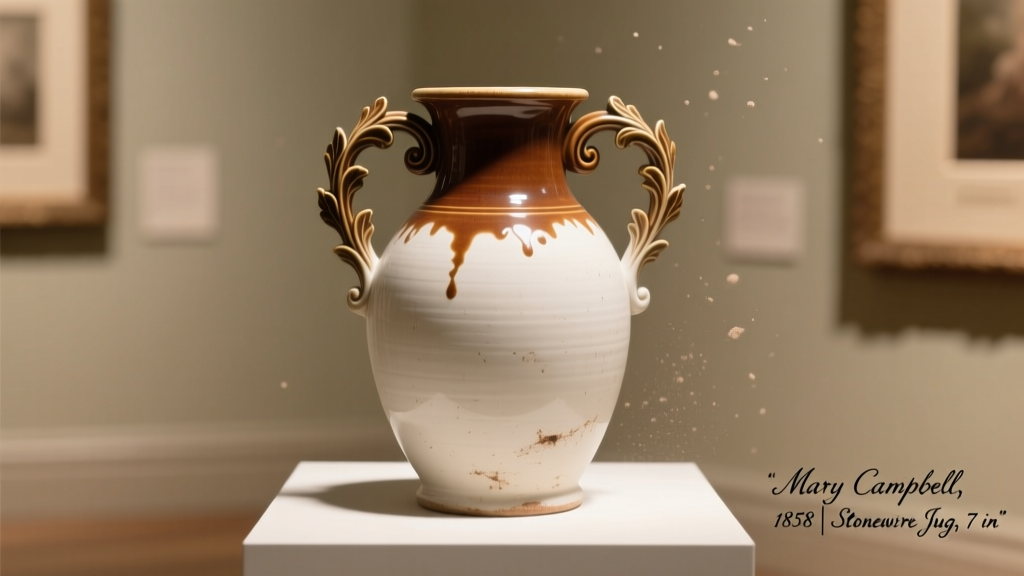
Authenticating the Mary Campbell Stoneware Jug: White-Brown Glaze, Molded Acanthus Handle, 1858, 7 Inches
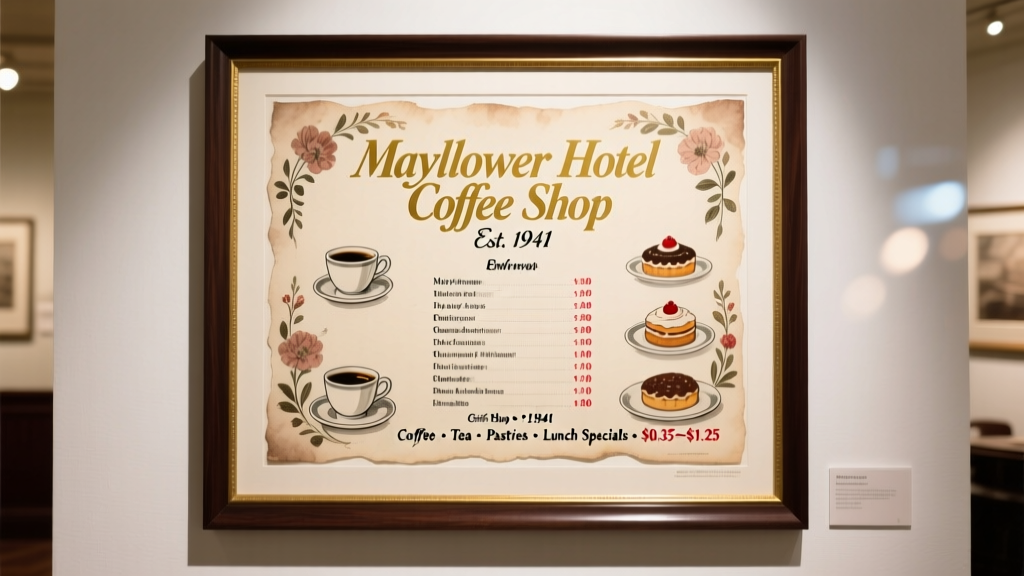
The 1941 Mayflower Hotel Coffee Shop Paper Menu: A Snapshot of Mid-Century Hospitality, Typography, and Material Culture
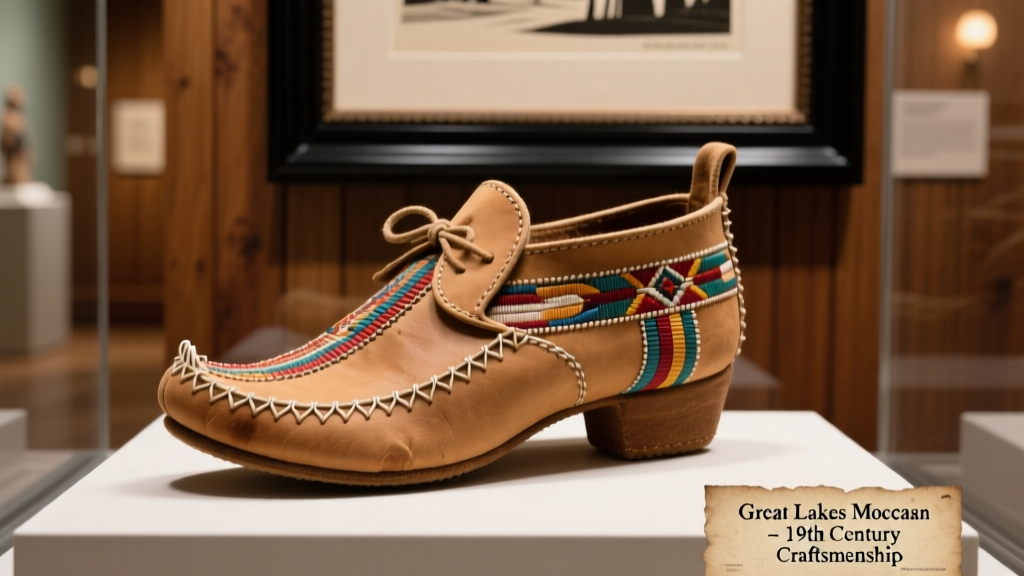
Authenticating Great Lakes Ribbon Appliqué Moccasins: Material Science, Provenance, and Market Value of a 10 1/8-Inch Pair
Flag Light and Bookends: Authentication, Market Value, and Design Evolution of a Mid-Century Modern Icon
Carnival Glass Thin Rib Vase (Blue, 16 Inches): Authentication, Market Value, and Historical Context

Springer Furnitures Modern Allure: Precision Engineering, Scandinavian Craftsmanship, and Market-Validated Design Integrity
Authenticating and Valuing Vintage Wrought Iron Basket-Form Sconces: A Technical Analysis of the 16-Inch Pair with Scrolled Supports
Shelley Cup and Saucer 'Harebell': Authentication, Market Value, and Historical Context of a British Porcelain Icon
Hepplewhite Walnut & Rosewood Furniture Stand: Authentication, Provenance, and Market Analysis of a Figural Maple Oval Top Stand (28½ in)