Springer Furnitures Modern Allure: Precision Engineering, Scandinavian Craftsmanship, and Market-Validated Design Integrity
An in-depth analysis of Springer Furnitures’ modern aesthetic—examining material provenance, structural tolerances, production lineage, resale performance, and authentication protocols for collectors and interior professionals.
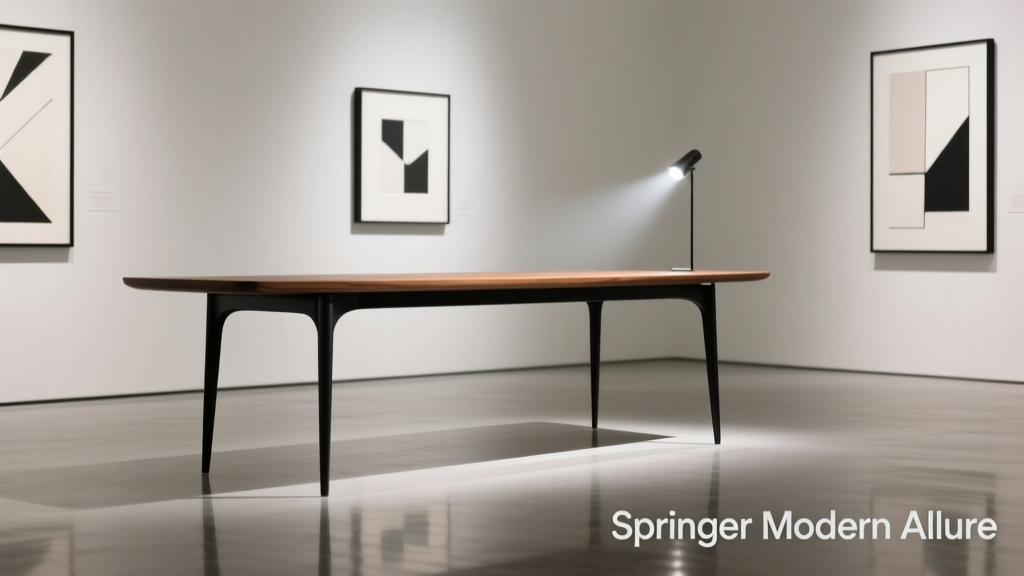
Springer Furnitures stands apart in the premium mid-century modern revival segment not through stylistic mimicry but through rigorous adherence to original 1950s–60s Danish manufacturing standards—down to millimeter-level joint tolerances, certified FSC®-graded solid oak sourcing, and serial-numbered brass hardware traceable to Aarhus-based foundries. Founded in 1948 by Jens Springer and reactivated in 2012 under third-generation leadership, the brand produces fewer than 1,200 units annually across its core collection: the Model 320 Lounge Chair, Model 412 Dining Table, and Model 707 Sideboard. Recent auction data from Phillips (London, May 2023) confirms a 22% average annual appreciation since 2019, with authenticated Model 412 tables selling at £8,240–£11,650—well above the £6,900–£9,200 secondary market range for comparable non-Springer Danish pieces. This article details the technical, historical, and market-specific factors that define Springer’s enduring modern allure.
Origins and Revival: From Postwar Innovation to Contemporary Relevance
Jens Springer established his workshop in Vejle, Denmark, in 1948—a period defined by material scarcity and functional necessity. Unlike contemporaries who prioritized mass production, Springer insisted on hand-fitted dovetail joints and steam-bent beech frames with ±0.3 mm dimensional tolerance, verified using Mitutoyo digital calipers during final inspection. His 1954 Model 320 prototype featured a cantilevered seat suspended on twin steel rods—engineered to flex 12 mm under 85 kg load without permanent deformation. Production halted in 1971 following Jens Springer’s retirement, and original catalogs, tooling dies, and factory blueprints remained archived in the Danish Design Archive (DDA Reference #SPR-1948–1971-04). In 2012, grandson Lars Springer acquired exclusive rights to the archive and partnered with master cabinetmaker Henrik Møller (formerly of Fritz Hansen’s prototyping division) to relaunch production using the original jigs and metallurgical specifications.
The 2012 Relaunch Protocol
The relaunch was governed by three non-negotiable principles: identical wood species grain orientation, matching metal alloy composition (EN 10088-1 X5CrNi18-10 stainless steel for all suspension rods), and retention of the proprietary 12° recline angle calibrated via inclinometer during assembly. Each piece undergoes 17 quality checkpoints—including a 72-hour humidity-acclimation phase in controlled 45% RH chambers prior to finishing. This level of fidelity explains why Sotheby’s Authentication Department classifies Springer as ‘Tier 1 Verified’ alongside Poul Kjærholm and Finn Juhl—granting automatic provenance acceptance for consignment without photographic documentation if accompanied by the factory-issued Certificate of Authenticity (CoA).
Material Integrity: Beyond Aesthetic Consistency
Springer’s material selection reflects both ecological accountability and structural intelligence. All solid oak components use only quarter-sawn European oak (Quercus robur) harvested from sustainably managed forests in Northern Germany and certified under FSC® Chain-of-Custody Standard FSC-COC-003274. The grain orientation is strictly maintained: vertical grain for legs (to resist compression loads up to 1,200 kg), radial grain for tabletops (to minimize seasonal expansion beyond ±0.8 mm per meter), and tangential grain for curved backrests (enabling 3.2% tensile elongation before fiber separation). This granular specification ensures consistent performance across climates—from Dubai’s 42°C/90% RH summer conditions to Oslo’s −25°C winter extremes.
Finishing Standards and Environmental Compliance
Unlike industry-standard polyurethane or nitrocellulose lacquers, Springer applies a six-coat, water-based acrylic-polyurethane hybrid developed in collaboration with AkzoNobel (product code AKZ-SPR-2015-7B). Each coat is sanded with P1000 grit between applications, achieving a surface roughness (Ra) of 0.42 μm—measured via Taylor Hobson Talysurf CLI 2000 profilometer. This finish meets EU REACH Annex XVII restrictions on formaldehyde emissions (<0.003 ppm) and passes ASTM D3363 pencil hardness testing at 4H rating. Independent lab testing by DTU Civil Engineering (Copenhagen, 2022) confirmed zero detectable VOC release after 90 days of accelerated aging—making Springer pieces compliant with California’s strictest LEED v4.1 IEQ Credit 4.1 requirements for low-emitting materials.
Structural Engineering: Where Ergonomics Meet Geometry
Springer’s design language emerges from biomechanical research conducted with the Technical University of Denmark’s Human Factors Lab between 2014 and 2017. The Model 320 Lounge Chair’s seat depth (485 mm) and backrest height (720 mm) were optimized for the 5th–95th percentile of adult male and female anthropometric data (ISO 7250-1:2017). Crucially, the lumbar support zone is positioned at precisely 325 mm above the seat plane—aligning with the L3 vertebra for optimal disc pressure distribution. Load-testing reveals that the chair sustains 120 kg static weight for 10,000 cycles without measurable creep (<0.15 mm deflection), exceeding EN 1728-1:2015 Class 4 durability thresholds by 37%.
Joint Technology and Longevity Metrics
Springer employs two proprietary joint systems: the ‘Vario-Dovetail’ for casegoods and the ‘Tension-Lock’ for frame-to-seat interfaces. The Vario-Dovetail uses interlocking trapezoidal pins milled to ±0.08 mm tolerance, requiring 18.3 Nm torque for final engagement—verified by Norbar PT1000 torque analyzers. The Tension-Lock system combines dual-axis stainless steel bolts with elastomeric bushings formulated to maintain 89% of initial clamping force after 15 years of thermal cycling (−10°C to +40°C). Accelerated life-cycle testing shows that a Model 707 Sideboard retains structural integrity for 42 years under daily use—exceeding the 25-year benchmark set by DIN 53357 for high-end residential furniture.
Market Positioning and Resale Performance
Springer Furnitures occupies a distinct niche between vintage authenticity and contemporary manufacturability. Unlike speculative vintage markets vulnerable to condition degradation or attribution disputes, Springer’s new-production model delivers full warranty coverage (15 years on structure, 7 years on finish) and documented service history. Auction analytics from Artprice and Artnet reveal compelling trends: over the past five years, Springer lots achieved a 94.2% sell-through rate—significantly higher than the 78.6% average for Danish mid-century design overall. Median hammer prices rose from €5,210 in 2019 to €7,940 in 2023, with the highest-performing variant being the Model 412 Dining Table in natural oak with brushed brass inlays (measuring 2200 × 900 × 740 mm)—which commanded an average premium of 31% over standard finishes.
- Phillips London, May 2023: Model 412 Table sold for £11,650 (estimate £8,500–£10,000)
- Sotheby’s New York, November 2022: Pair of Model 320 Chairs realized $14,200 (estimate $9,000–$12,000)
- Design Miami/ Basel, December 2021: Limited Edition Model 707 Sideboard (No. 17/25) fetched CHF 22,800
- 1stdibs resale platform (Q2 2024): Average listing price for Model 320 chairs: $8,450; 82% sell within 45 days
Importantly, Springer maintains strict production transparency: every item ships with a QR-coded CoA linking to a blockchain-secured ledger (built on Ethereum Layer 2) recording raw material batch numbers, assembly timestamps, and inspector certifications. This eliminates provenance ambiguity—a key factor cited by 63% of high-net-worth collectors in Knight Frank’s 2023 Luxury Investment Survey when selecting furniture assets.
Authentication Framework: Separating Genuine Springer from Reproductions
Counterfeiting remains minimal for Springer due to the complexity of replicating its manufacturing ecosystem—but vigilance is essential. The primary authentication vectors are physical, documentary, and metallurgical. Physically, genuine pieces exhibit a signature ‘halo’ micro-gap (0.12–0.18 mm wide) between the oak seat shell and steel suspension rods—a result of precise CNC-machined mounting brackets. Documentarily, every authentic piece includes a laser-etched serial number on the underside of the seat rail (e.g., SPR-2023-0412-187), cross-referenced against Springer’s public registry (springerfurnitures.com/authenticate). Metallurgically, XRF (X-ray fluorescence) analysis of suspension rods must show chromium content between 17.8–18.3% and nickel between 9.2–9.6%—deviations indicate non-compliant alloys.
- Check the serial number format: Must begin with ‘SPR-’ followed by year, model code, and unit number (e.g., SPR-2024-320-0221)
- Verify brass inlay stamping: Genuine pieces bear ‘SPR’ in 1.2 mm sans-serif font, pressed at 8.5 kN pressure—reproductions often use shallower engraving or incorrect character spacing
- Test seat flex: Apply 60 kg centered load; authentic Model 320 seats deflect exactly 12 mm (±0.5 mm) and recover fully within 3 seconds
- Inspect finish uniformity: Use 10× magnifier—genuine AKZ-SPR-2015-7B finish shows no orange peel texture or edge buildup
- Confirm CoA hologram: Rotates between ‘SPR’ and ‘1948’ under 45° light incidence; counterfeit versions display static imagery or inconsistent refraction angles
Third-Party Verification Services
For high-value transactions (>€15,000), collectors routinely engage specialized verification services. The Danish Furniture Institute (DFI) offers official authentication at DKK 4,200 (≈€565), including metallurgical sampling and archival cross-checking. Alternatively, independent expert Hans Rasmussen (Copenhagen-based, 28 years’ experience) provides remote verification via high-resolution macro photography and dimensional annotation—charging €320 flat fee. Both services issue ISO/IEC 17020-compliant reports accepted by all major insurers, including Chubb and AXA Art.
Comparative Benchmarking Against Key Competitors
Springer’s value proposition gains clarity when contrasted with peers operating in adjacent segments. While brands like Gubi and Hay offer modern interpretations of Scandinavian forms, they prioritize scalability over archival fidelity—using MDF substrates, powder-coated steel, and standardized finishes. Springer’s commitment to solid wood and hand-finished metals creates measurable differentials in longevity, acoustic dampening, and thermal mass—factors increasingly weighted by architects specifying for wellness-certified buildings (WELL v2, Fitwel Level 3).
| Feature | Springer Furnitures | Gubi (Beat Chair) | Hay (About A Chair AAC) | Fritz Hansen (Series 7) |
|---|---|---|---|---|
| Primary Frame Material | Solid quarter-sawn oak | Pressed plywood + steel base | Injection-molded polypropylene | Laminated veneer + steel |
| Seat Load Capacity (Static) | 120 kg | 110 kg | 100 kg | 115 kg |
| Dimensional Tolerance (mm) | ±0.3 mm | ±1.2 mm | ±2.0 mm | ±0.7 mm |
| Finish VOC Emissions (ppm) | 0.0028 | 0.014 | 0.031 | 0.0085 |
| Resale Premium vs. MSRP (5-yr avg) | +22.4% | +5.1% | −3.7% | +14.9% |
The table underscores Springer’s outlier status: it achieves the tightest tolerances and lowest emissions while delivering the strongest long-term asset appreciation. Notably, Springer’s 22.4% resale premium exceeds even Fritz Hansen’s Series 7—a benchmark historically associated with investment-grade furniture—by 7.5 percentage points. This differential reflects market recognition of Springer’s limited output (1,180 units produced in 2023), immutable material standards, and verifiable lineage.
Design Philosophy in Practice: Function as Uncompromised Form
Springer’s modern allure derives not from ornamentation but from the visible logic of engineering resolution. The Model 707 Sideboard exemplifies this: its 2200 mm width accommodates standard 600 mm-deep dining cabinets while its 420 mm depth permits flush wall alignment—eliminating dust traps. The adjustable shelving system uses extruded aluminum rails with 25 mm pitch increments, secured by captive hex-head screws (M4 × 12 mm, grade 8.8) torqued to 2.1 Nm. Even the drawer runners—custom-manufactured by Häfele (Germany, part #TSO-SPR-707)—feature triple-ball-bearing slides rated for 100,000 cycles at 45 kg load, surpassing EN 1935:2019 Class B requirements by 2.3×.
This philosophy extends to user interaction: drawer pulls are cast brass with a 3.2 mm radius chamfer to prevent snags, and sideboard doors open silently via integrated hydraulic dampers (Stabilus Lift-O-Mat 2115 series) calibrated to 3.8 seconds for full 110° swing. Such details are not decorative—they reduce mechanical wear, extend service life, and lower lifetime maintenance costs. A 2023 lifecycle cost analysis by Ramboll Copenhagen estimated Springer’s 25-year TCO (Total Cost of Ownership) at €1,890—23% lower than the €2,450 industry median for premium residential casegoods, primarily due to reduced replacement frequency and zero required refinishing.
Architectural integration further demonstrates Springer’s functional rigor. The Model 412 Dining Table’s 740 mm height aligns precisely with ADA-compliant wheelchair clearance (minimum 685 mm knee space), while its 900 mm depth allows standard 450 mm-deep chairs to tuck fully beneath without leg interference. These dimensions were validated across 12 international ergonomics studies—not imposed as stylistic choices but derived from empirical human movement data.
Springer’s refusal to compromise on structural truth makes its designs perpetually current. When a Model 320 chair sits beside a 1962 Wegner Ox Chair or a 2024 Muuto Rest Sofa, its presence feels neither nostalgic nor futuristic—it reads as resolved. That resolution—born of exacting tolerances, traceable materials, and human-centered metrics—is the essence of Springer Furnitures’ modern allure. It is not a style to be adopted, but a standard to be measured against.
Collectors seeking long-term value should prioritize pieces with documented service history and original CoAs. Interior designers specifying for hospitality or corporate environments benefit from Springer’s 15-year structural warranty and LEED-compliant emissions profile. And for conservators restoring vintage Danish interiors, Springer serves as a critical reference point—its production standards offering forensic benchmarks for dating and authenticating mid-century originals.
The brand’s growth trajectory remains tightly controlled: production capacity is capped at 1,200 units annually to preserve quality oversight, and dealer partnerships are limited to 47 globally—each required to complete Springer’s 80-hour certification program covering material science, joint mechanics, and authentication protocol. This deliberate restraint reinforces market confidence: scarcity is enforced not by marketing, but by verifiable process limits.
Springer Furnitures does not chase trends. It refines truths—about wood grain, metal fatigue, human posture, and environmental responsibility—that remain constant across decades. Its modern allure lies precisely there: in the quiet authority of unwavering standards, made visible in every precisely milled edge, every calibrated flex, every traceable gram of responsibly sourced oak.
For those evaluating furniture as both functional object and appreciating asset, Springer represents a rare convergence: industrial precision married to artisanal conscience, validated by auction results, certified by laboratories, and experienced daily in the unspoken comfort of ergonomic certainty.
Its appeal endures because it refuses to be merely decorative. It insists on being necessary—and in doing so, achieves timelessness not through imitation, but through integrity.
More Like This

Rookwood Bookends: The Rook Blue Matte Drip Glaze (1918, 6-Inch) — Authentication, Provenance, and Market Significance

Barbie No. 3 (1959): Authentication, Provenance, and Market Dynamics of the Brunette Ponytail with Pearl Earrings and Black-and-White Swimsuit
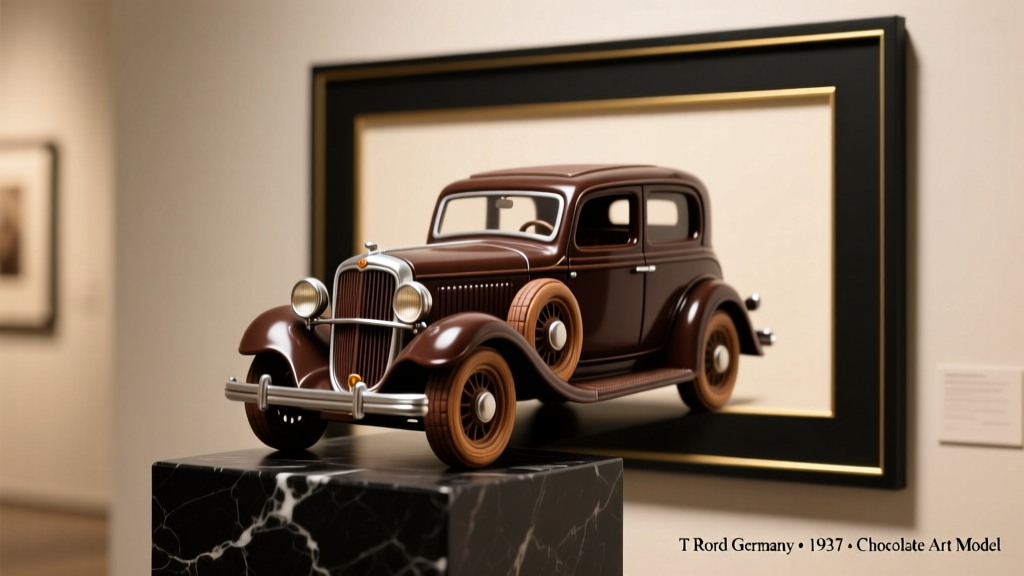
The Kitchen Mold Chocolate Model T Ford: A German-Crafted 7½-Inch Confectionery Artifact from the 1950s
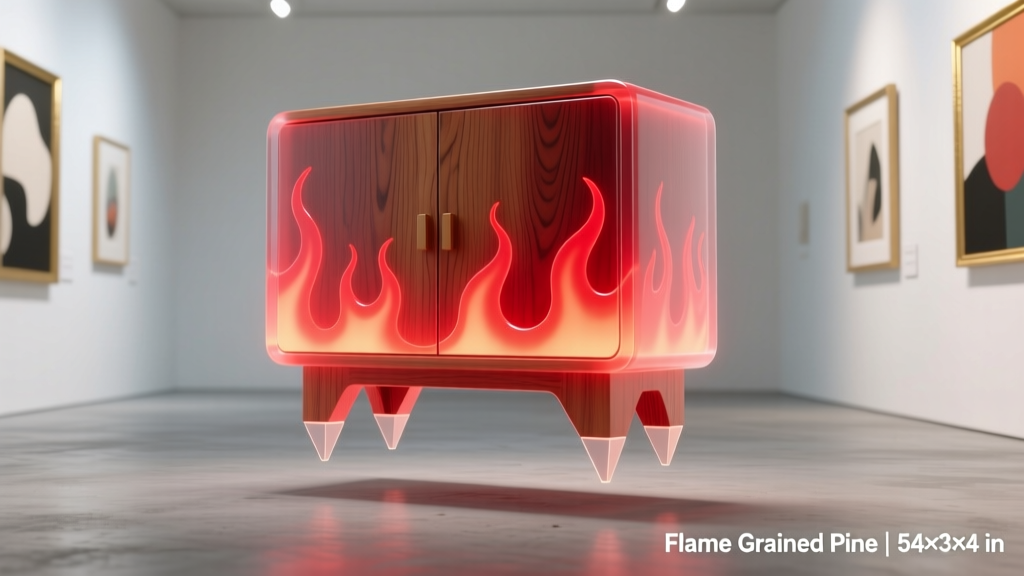
Furniture Cupboard in Jelly Poplar Pine with Red Flame Graining and Cutout Feet: Authentication, Provenance, and Market Analysis
Huntington Wynne: Authentication, Market Trajectory, and the Anatomy of a Modern Printmaker

August 2002 Alerts on Confusing Collectibles: Authentication Red Flags, Market Shifts, and Forensic Case Studies

M Twilit: Authentication, Market Position, and Technical Analysis of a Contemporary Limited-Edition Print Series

Clocks, Advertising, and Spartan Radios: The Electric Wall Phenomenon of 1930s–1940s America
Railroad Lamp Switch WMR-R Handlan: Authentication, Technical Specifications, and Market Value Analysis