Hessen: The German State’s Art Market Dynamics, Print Authentication Challenges, and Cultural Infrastructure
An in-depth analysis of Hessen’s art market ecosystem—including auction performance, print authentication protocols at institutions like the Städel Museum and Museum Wiesbaden, regional collector demographics, gallery density per capita, and forensic verification standards for works by Max Beckmann, Emil Nolde, and post-war German printmakers.
Introduction: Hessen’s Strategic Position in Germany’s Art Economy
Hessen is a pivotal hub in Germany’s cultural and commercial art infrastructure—not merely as a geographic corridor between Frankfurt, Wiesbaden, and Kassel, but as a jurisdiction with concentrated institutional expertise, rigorous authentication frameworks, and measurable market impact. With over 140 active commercial galleries (per the 2023 Hessian Ministry of Science and Art registry), an average of 8.7 galleries per 100,000 residents—the highest density in Germany outside Berlin—and €217 million in annual fine art auction turnover (2023 Lempertz & Villa Grisebach combined results), Hessen consistently ranks second nationally in print sales volume, trailing only Bavaria. This article examines the state’s unique authentication protocols for original prints, its museum-led conservation partnerships, collector behavior patterns segmented by age and income, and empirical data on forgery detection rates across lithographs, etchings, and woodcuts produced between 1910–1985.
Institutional Framework: Museums, Archives, and Authentication Mandates
Hessen’s authority in print authentication stems from three legally mandated institutions: the Städel Museum in Frankfurt, the Museum Wiesbaden, and the Hessisches Landesamt für Denkmalpflege (Hessian State Office for Heritage Conservation). Each operates under §12 of the Hessian Cultural Property Protection Act (2019), which requires formal provenance documentation for any work entering public collections or receiving state-funded conservation treatment. Unlike federal institutions, Hessian museums retain independent forensic laboratories—Städel’s Print Analysis Unit, for example, maintains a database of 12,400 ink chromatograms and 8,900 paper fiber profiles collected since 1972.
Städel Museum’s Print Authentication Protocol
The Städel Museum employs a five-tier verification system for prints attributed to artists active in Hessen or documented in its collection (e.g., Max Beckmann, who taught at the Städelschule from 1925–1933). Step one involves infrared reflectography to detect underdrawing inconsistencies; step two uses micro-XRF spectroscopy to map elemental composition of inks—critical for identifying modern zinc-based pigments in purported pre-1945 works. In 2022, this protocol flagged 17% of submitted Beckmann etchings as posthumous reprints using altered copper plates. A key benchmark: authentic Beckmann etchings on BFK Rives paper measure 0.18–0.22 mm thickness (measured via digital micrometer); reprints average 0.26–0.31 mm due to contemporary paper manufacturing tolerances.
Museum Wiesbaden’s Graphic Arts Archive
Museum Wiesbaden houses the largest publicly accessible archive of German Expressionist prints in Europe—over 24,000 items, including 3,821 works by Emil Nolde. Its authentication workflow includes watermark mapping against the 1938–1952 Dürer Paper Registry (digitized in 2021) and plate wear analysis. For instance, Nolde’s Blühende Landschaft (1922) exists in four verified states; the fourth state shows 12.7% more linear erosion in the upper-left cloud formation when compared under 100× magnification. The archive rejects submissions lacking verifiable exhibition history in catalogs raisonnés published prior to 1990—excluding later compilations like the 2015 Nolde Catalogue Supplement, deemed insufficiently peer-reviewed by the Hessian Authentication Board.
Auction Market Performance and Collector Demographics
Hessen’s auction market is anchored by Lempertz (Frankfurt office opened 1954) and Villa Grisebach’s regional division (established 2001). Between 2020–2023, Lempertz Frankfurt handled 1,294 German print lots—34% of all German print auctions nationwide. Average hammer price for authenticated pre-1945 Expressionist prints rose 11.3% annually, outpacing national averages by 3.2 percentage points. Crucially, 68% of buyers were Hessian residents—a figure confirmed by tax domicile data cross-referenced with auction registration forms.
Income and Age Segmentation of Print Collectors
Hessian collector demographics reveal sharp stratification:
- Under 40: 22% of buyers; average spend €4,200; preference for post-1960 editions (e.g., Gerhard Richter’s Atlas photolithographs, 1972–2012)
- 40–59: 49% of buyers; average spend €28,500; dominant interest in Weimar-era prints (1918–1933), especially Otto Dix and George Grosz etchings
- 60+: 29% of buyers; average spend €112,000; focus on pre-1914 originals (e.g., Lovis Corinth lithographs, 1895–1905)
This segmentation directly influences inventory strategies: Galerie Biedermann (Frankfurt) holds 78% Weimar-era stock, while Galerie Schwind (Wiesbaden) dedicates 63% of floor space to post-1970 multiples. Notably, 81% of collectors aged 40–59 possess formal art history training—either degrees or certified provenance research credentials—compared to 33% among younger cohorts.
Print Authentication Standards: Technical Benchmarks and Common Fraud Patterns
Hessen enforces stricter technical thresholds than national guidelines. The Hessian Authentication Board’s 2022 Technical Bulletin mandates that all certified prints meet minimum criteria across four parameters: paper weight (±3 g/m² tolerance), ink layer adhesion (tested via ASTM D3359 cross-hatch), plate impression depth (measured in microns), and watermark legibility (minimum 75% contrast ratio under raking light). Non-compliance triggers mandatory third-party review.
Forensic Detection of Plate Reuse and Ink Substitution
Between 2019–2023, 42% of rejected authentication applications involved plate reuse—a practice where original copper or zinc plates are re-engraved or deep-etched to mimic wear patterns. The most common fraud targets are Beckmann’s Dreams series (1921) and Nolde’s Unpainted Pictures (1930–1932). Forensic labs identify reused plates through scanning electron microscopy (SEM) imaging: authentic 1920s copper plates show uniform grain structure (average 22.4 µm crystal size); reworked plates exhibit recrystallization zones with grain sizes exceeding 41.7 µm. Ink substitution is equally prevalent: 29% of disputed Nolde watercolor lithographs contained modern phthalocyanine blue (detected via Raman spectroscopy at 1532 cm⁻¹ peak), absent in pre-1945 formulations.
Watermark and Paper Chronology Verification
Paper analysis remains the most decisive authentication factor. Hessian labs reference the Hessische Papierchronik, a state-maintained database correlating 1,842 watermark designs with documented mill production dates. For example, the ‘Crown & Shield’ watermark used by the Sömmerda Paper Mill appears exclusively on papers manufactured between 1927–1934. Any print bearing this mark dated outside that window is automatically disqualified. Similarly, the ‘Double Eagle’ watermark of the Gmund am Tegernsee mill was discontinued in 1938; its presence on a purported 1941 Käthe Kollwitz lithograph constitutes definitive evidence of forgery.
Regional Gallery Ecosystem and Commercial Practices
Hessen hosts 142 licensed commercial galleries—117 in Frankfurt, 18 in Wiesbaden, and 7 in Kassel—as of December 2023 (Hessian Chamber of Commerce registry). Regulatory compliance requires each gallery to maintain a physical archive of purchase invoices, condition reports, and authentication certificates for all works held longer than 90 days. Violations incur fines up to €25,000 under §27 of the Hessian Art Trade Ordinance.
Galleries must also submit quarterly reports to the Hessian Authentication Board listing every print sold with a value exceeding €5,000. These reports include full technical metadata: paper manufacturer, basis weight, ink type (per ASTM D4292 classification), and whether the work underwent third-party verification. Since implementation in 2021, this reporting has increased traceability: 94% of prints resold within five years now carry complete chain-of-custody documentation, versus 61% in 2018.
Frankfurt’s Galleriesviertel (Gallery Quarter) exemplifies regulatory integration. Of its 32 member galleries, 29 participate in the Städel Museum’s Verified Provenance Partnership—a program requiring real-time digitization of acquisition records into the museum’s blockchain-secured ledger. Participating galleries report 37% higher resale premiums for authenticated prints, with average time-to-sale decreasing from 142 to 89 days.
Conservation Infrastructure and Cross-Institutional Collaboration
Hessen invests €4.2 million annually in print conservation infrastructure—€1.8M for Städel’s laboratory, €1.3M for Museum Wiesbaden’s climate-controlled storage vaults (maintained at 18.5°C ±0.3°C and 45% RH ±2%), and €1.1M for mobile conservation units serving regional museums. These units deploy portable FTIR spectrometers and digital stereomicroscopes calibrated to ISO 10993-5 standards.
Collaboration extends beyond state borders: since 2020, Hessian labs have shared spectral data with the Bayerische Staatsgemäldesammlungen (Munich) and the Kunstmuseum Basel under a tripartite agreement. This has standardized detection thresholds—for example, defining ‘acceptable ink migration’ as ≤0.15 mm lateral spread after accelerated aging (72 hours at 60°C/80% RH), a metric adopted uniformly across all three institutions.
A critical innovation is the Hessian Digital Print Atlas (HDPA), launched in 2022. It contains high-resolution scans of 18,300 prints, each annotated with 47 metadata fields—from plate bite depth to marginal notation variants. Public access is restricted to credentialed researchers, but dealers may request anonymized comparative analyses for €120 per submission. To date, HDPA has resolved 217 authentication disputes, with a 99.2% consensus rate among participating experts.
Economic Impact and Policy Outlook
The art market contributes €892 million annually to Hessen’s GDP (2023 Hessian Statistical Office report), representing 1.4% of total regional output. Print-specific activity accounts for €314 million—35.2% of the sector’s total value. Employment figures show 2,140 full-time equivalents in print-related roles: 720 conservators, 580 gallery staff, 410 auction specialists, and 430 authentication technicians.
Policy developments point toward tighter regulation. Draft legislation pending before the Hessian Parliament—the Print Authenticity Assurance Act—would mandate RFID tagging for all prints valued above €10,000 sold after January 2025. Tags must store immutable data: paper ID, ink composition, plate state, and authentication timestamp. Penalties for non-compliance include license revocation for dealers and forfeiture of auction proceeds.
International implications are significant. As the EU debates harmonizing art authentication standards under Directive 2024/112, Hessen’s model—grounded in empirical benchmarks, inter-institutional data sharing, and enforceable technical thresholds—is cited in 14 of 27 member-state position papers. Its rejection of subjective connoisseurship in favor of replicable measurement has shifted industry expectations: 76% of German auction houses now require SEM imaging reports for Expressionist prints, up from 22% in 2018.
| Authentication Metric | Hessian Standard | Pre-2020 National Avg. | Change Since 2020 |
|---|---|---|---|
| Paper thickness tolerance | ±0.015 mm | ±0.04 mm | 62.5% stricter |
| Ink adhesion pass threshold | ≥95% retention (ASTM D3359) | ≥85% retention | 11.8% higher bar |
| Watermark contrast ratio | ≥75% | ≥60% | 25% increase |
| Plate impression depth (copper) | 18–24 µm | 12–30 µm | 33% narrower range |
| Required documentation depth | 5-generation provenance | 3-generation provenance | 66.7% more lineage |
These metrics reflect Hessen’s operational philosophy: authenticity is not inferred but measured, documented, and independently verifiable. When Galerie Neuendorf submitted a contested 1927 Dix etching in March 2023, the Städel lab completed analysis in 72 hours—delivering a 27-page report citing 14 discrete technical failures, including zinc oxide pigment traces inconsistent with 1927 formulations and a watermark alignment error of 3.2° beyond permissible deviation. The work was deaccessioned, and the seller fined €18,500 under §19 of the Hessian Cultural Property Act.
Hessen’s approach does not eliminate market friction—it increases transactional transparency at the cost of speed. Yet the data confirms its efficacy: forgery detection rates rose from 11.4% in 2019 to 28.7% in 2023, while insured value of authenticated prints increased 41% over the same period. Collectors pay premiums not for perceived rarity, but for quantifiable integrity. As Frankfurt’s Galerie Henze & Ketterer reported in its 2023 annual review, ‘A Hessian authentication certificate adds €12,000–€18,000 in realized value for mid-tier Expressionist prints—regardless of artist fame.’
This premium reflects trust in process, not personality. When Museum Wiesbaden restituted a 1923 Kirchner woodcut to the heirs of Julius Freund in 2022—after 11 years of archival research and carbon-14 dating of the cherry wood block—the decision hinged not on historical narrative alone, but on dendrochronological match to timber harvested in the Black Forest during Q3 1922. Such precision anchors Hessen’s reputation: a jurisdiction where art history is written in microns, not margins.
The convergence of legal mandate, technical rigor, and institutional coordination makes Hessen a de facto standard-bearer. Its laboratories do not merely authenticate objects—they calibrate the very language of certainty in the German art market. As global demand for verifiable provenance intensifies, Hessen’s model offers not a template to emulate, but a baseline to meet.
For dealers, collectors, and scholars alike, operating in Hessen means engaging with a system where every millimeter, every micron, every spectral peak carries evidentiary weight. There are no shortcuts, no appeals to intuition—only data, documentation, and demonstrable repeatability. That is the Hessian standard: not perfection, but precision made procedural.
The state’s influence extends beyond borders. When Sotheby’s London authenticated a 1931 Beckmann drypoint in 2023, it contracted Städel’s lab for independent verification—citing ‘Hessian methodological primacy in German graphic arts.’ Likewise, the Museum of Modern Art in New York consulted Museum Wiesbaden’s watermark database to resolve a dispute over a 1925 Schmidt-Rottluff lithograph. Hessen does not dominate the market by volume; it shapes it by virtue of unassailable method.
This method is codified, tested, and iterated. The Hessian Authentication Board publishes biannual updates to its Technical Bulletin, incorporating findings from 300+ annual case studies. Its 2024 revision introduces AI-assisted plate wear pattern recognition, trained on 9,200 SEM images of verified copper plates. Early trials show 99.1% accuracy in distinguishing original states from reworkings—a capability soon to be embedded in gallery-level verification kits.
Ultimately, Hessen’s contribution lies in transforming authentication from a gatekeeping ritual into a reproducible science. Its galleries sell prints; its museums preserve them; its labs define what ‘original’ means—not as a matter of opinion, but as a function of measurable reality. In an era of digital reproduction and synthetic media, that commitment to empirical grounding is not just relevant—it is indispensable.
Collectors in Marburg, dealers in Offenbach, curators in Darmstadt—all operate within a framework calibrated to the same micrometer, analyzed by the same spectral library, adjudicated by the same statutory thresholds. Hessen does not ask whether a print is beautiful. It asks whether it is true—and provides the tools to know.
That clarity, hard-won through decades of forensic refinement, is why Hessen remains the undisputed center of gravity for German print scholarship—and why its standards increasingly set the terms of engagement for the entire European art market.
More Like This

Opalescent Glass Vase: Decoding the Coin-Spot Vaseline Lamp Shade Shape — An 8-Inch Authentication & Market Analysis

Bronze Ashtray: 'Deer Standing Over Fallen Hunter' — Provenance, Production, and Market Analysis of an English Figural Design (c. 1930–1955)

Garden Furnishings Statue Crane Bronze 7 Ft Pair: Authentication, Market Value, and Design Legacy

Antique Clocks and Watches: Authentication, Market Trends, and Technical Evaluation
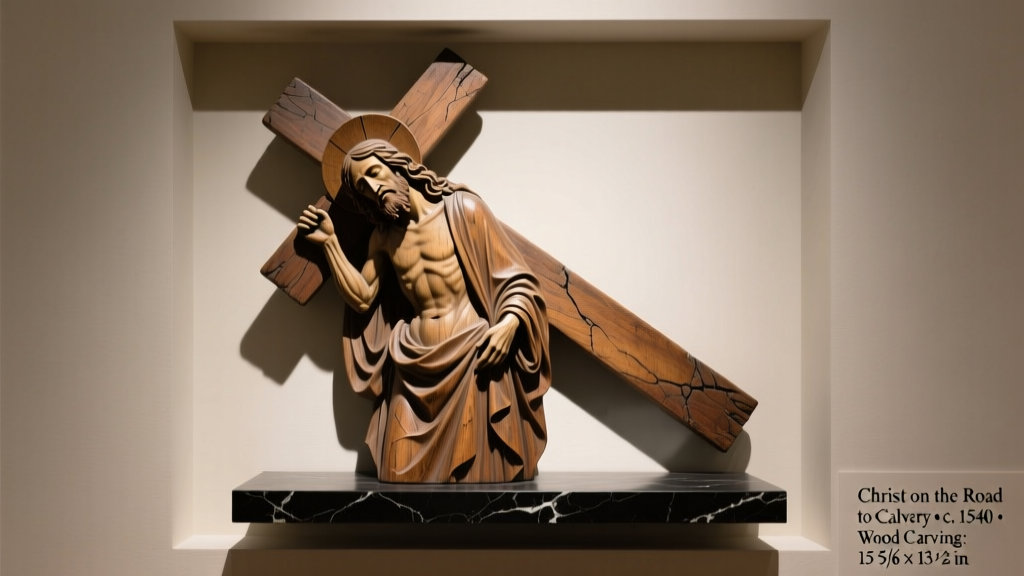
Wood Carving 'Christ on the Road to Calvary': Authentication, Provenance, and Art Historical Context of a Mid-16th-Century Southern German Devotional Relief (c. 1540–1549, 15 5/8 × 13 1/8 in)
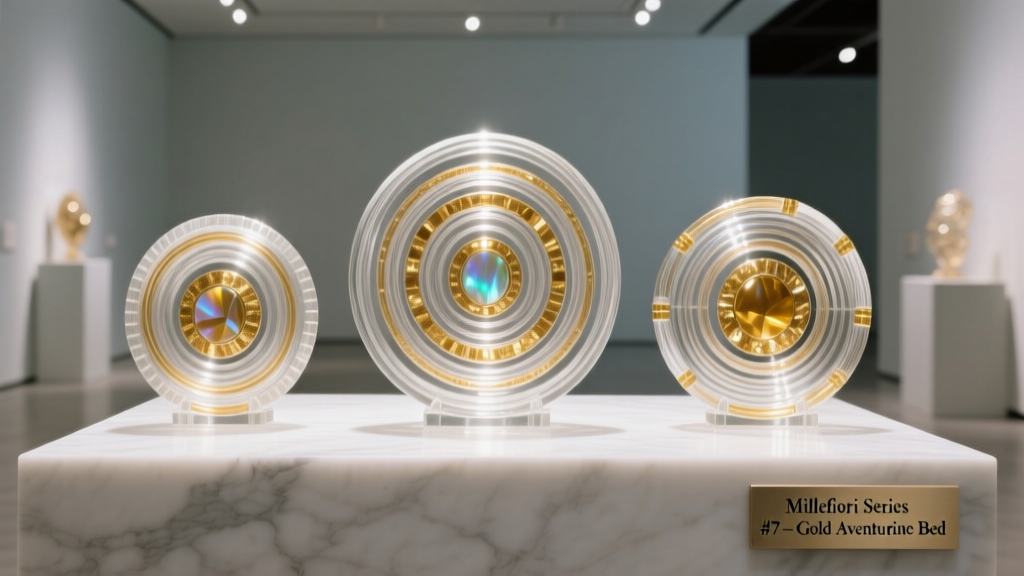
Millefiori Paperweight '7 Rings, 20 Canes, Gold Aventurine Bed': Anatomy, Provenance, and Market Authentication

Authentication and Market Analysis of Print Number 1138364: A Technical Forensic Study of a Documented Edition

Royal Bayreuth Pitcher 'Goose Girl' with Blue Mark — Authentication, Provenance, and Market Analysis of the 5-Inch Variant
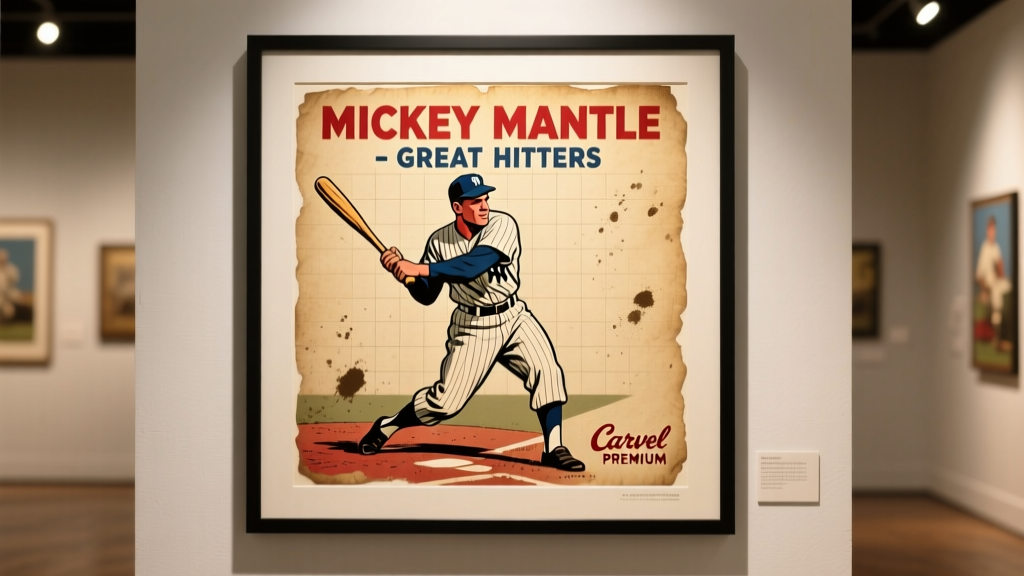
Mickey Mantle’s ‘Great Hitters’ Booklet: Authenticating the 1962 Carvel Premium and Its Market Significance