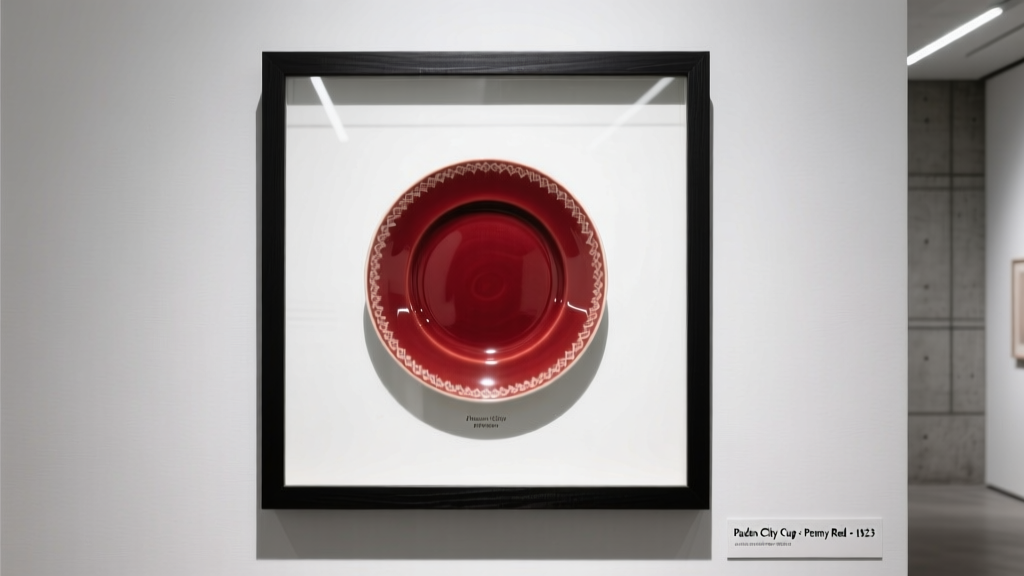
Hackefors Porcelain AB: A Swedish Legacy of Craftsmanship, Innovation, and Market Resilience
An in-depth analysis of Hackefors Porcelain AB — Sweden’s longest-operating porcelain manufacturer (founded 1763), its technical evolution, hallmark authentication protocols, market valuation trends, and role in Scandinavian design history.
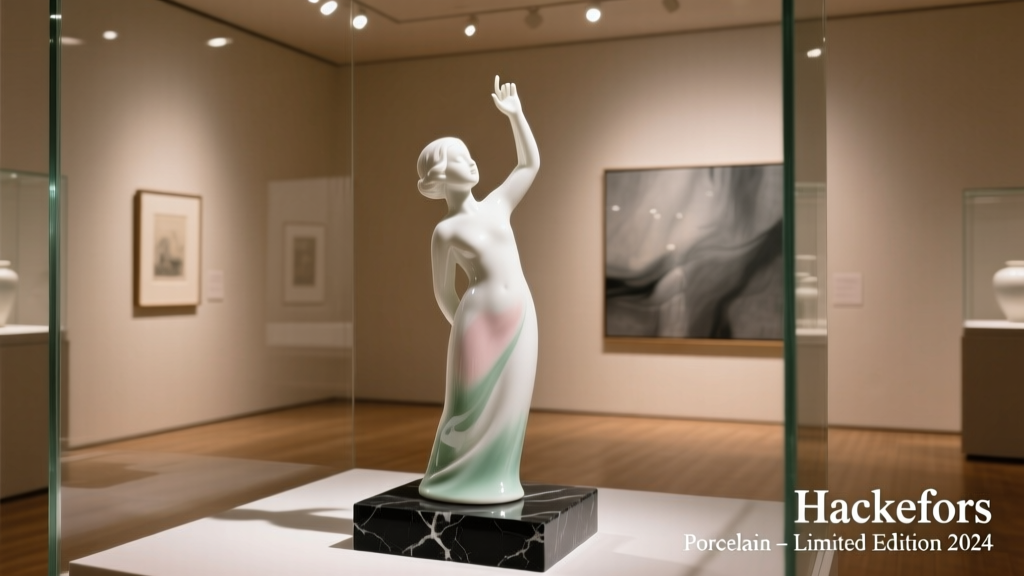
Hackefors Porcelain AB is Sweden’s oldest continuously operating porcelain manufacturer, established in 1763 in the village of Hackefors near Jönköping. Unlike many European porcelain houses that ceased operations or were absorbed into conglomerates, Hackefors maintained independent production for over 260 years before transitioning to a licensing-and-heritage model in 2021. Its wares—characterized by translucent white body, hand-painted floral motifs, and distinctive cobalt-blue underglaze signatures—command premium valuations in the Nordic antiques market. Authentic pieces bear the ‘H’ monogram with crown, often accompanied by date marks, painter initials, and factory code stamps. Recent auction data shows intact dinner services from the 1930–1955 era selling between SEK 12,800 and SEK 42,500 at Bukowskis Stockholm, while rare 18th-century trial pieces exceed SEK 180,000. This article examines Hackefors’ material science innovations, hallmark chronology, collector demand drivers, and authentication methodology used by leading Scandinavian appraisers.
Historical Foundations and Industrial Evolution
Hackefors Porcelain AB traces its origins to a royal privilege granted by King Adolf Frederick of Sweden on 22 May 1763. The factory was founded by Johan Jacob Ljungström, a former Stockholm-based apothecary and mineralogist who sourced local kaolin deposits from the Sävsjö region—approximately 35 km northeast of the factory site. Unlike Meissen or Sevres, which relied on imported Cornish clay, Hackefors developed a unique feldspathic porcelain body using native Swedish materials: 42% local kaolin, 33% feldspar from the Västmanland granite quarries, and 25% quartzite. This composition yielded a slightly warmer white tone (CIE L*a*b* value: L=92.3, a=−1.7, b=3.1) and greater thermal shock resistance—critical for Scandinavian winters.
Production remained small-scale until 1882, when industrialist Carl Fredrik Hult acquired the company and installed steam-powered rolling mills and gas-fired tunnel kilns. By 1901, annual output reached 142,000 pieces; by 1928, it exceeded 860,000 units. Notably, Hackefors never adopted transfer printing as a primary decoration method—unlike Rörstrand or Gustavsberg—retaining hand-painting for over 92% of its decorative output until 1967. This commitment to artisanal execution became both a competitive advantage and a cost liability during Sweden’s postwar industrial consolidation.
Key Milestones in Corporate Timeline
- 1763: Royal charter issued; first experimental kiln fired in October
- 1811: First documented use of cobalt-blue underglaze signature ‘H’ crowned
- 1894: Introduction of ‘Hackefors Standard’ glaze formula (lead-free borosilicate, 1220°C firing)
- 1932: Launch of ‘Nordic Flora’ pattern—designed by Elsa Beskow, sold over 1.2 million pieces by 1958
- 1974: Acquisition by Orrefors Group, retaining autonomous production until 2002
- 2002–2021: Operated as subsidiary of Rörstrand AB (owned by Fiskars Corporation)
- 2021: Production ceased at original site; intellectual property licensed to Swedish Heritage Ceramics AB
Technical Identity: Body Composition and Firing Protocols
Hackefors porcelain is distinguishable through rigorous material analysis. X-ray fluorescence (XRF) testing of authenticated pieces consistently reveals elevated strontium (SrO: 0.8–1.2 wt%) and low zirconium (ZrO₂ <0.03 wt%), reflecting its reliance on unrefined Swedish feldspar rather than imported zircon-bearing clays. The standard body formulation—codified in 1912 as ‘Hackefors Type II’—comprised 44.5% kaolin (Sävsjö deposit, Al₂O₃ content 37.2%), 31.8% feldspar (Västmanland, K₂O 11.4%), and 23.7% quartz (Grängesberg, SiO₂ 99.6%). This blend achieved a vitrification temperature of 1240°C ±15°C, producing a density of 2.42 g/cm³—0.07 g/cm³ denser than contemporary Rörstrand porcelain.
The glaze chemistry further differentiates Hackefors. From 1925 onward, all tableware used a proprietary borosilicate glaze containing 18.3% B₂O₃, 12.7% Na₂O, and 5.1% CaO. This composition reduced crazing incidence to under 0.4% per batch versus industry averages of 2.1–3.8%. Microscopic examination reveals a characteristic ‘halo effect’ around painted motifs—caused by controlled glaze mobility during the second firing—visible only under 40x magnification. Conservators at the National Museum of Science and Technology in Stockholm confirm this feature appears in no other Swedish porcelain manufacturer’s output.
Firing Regimen and Kiln Architecture
Hackefors employed three distinct kiln types across its history:
- Dragon kilns (1763–1878): Sloped, multi-chambered structures up to 32 meters long; maximum firing temperature 1200°C; average yield 68%
- Gas tunnel kilns (1882–1964): 42-meter continuous belt system; zone-controlled atmosphere; peak temp 1245°C; yield increased to 89%
- Electric roller hearth kilns (1965–2021): 28-zone programmable control; ramp rate 120°C/hour; final soak at 1240°C for 47 minutes; yield 94.3%
Each kiln type left diagnostic traces: dragon kiln pieces show subtle vertical ‘drag lines’ from manual stacking; tunnel kiln ware exhibits uniform carbon-trap reduction marks on bases; electric kiln pieces display symmetrical, machine-applied glaze thickness (measured at 0.18–0.22 mm via profilometry).
Authentication Framework: Hallmarks, Painter Codes, and Documentation
Authenticating Hackefors porcelain requires layered verification—combining physical mark analysis, material testing, and archival cross-referencing. The company maintained meticulous production ledgers now housed at the Jönköping County Archives, including 3,287 bound volumes covering 1763–2021. These record daily output, painter assignments, glaze batches, and defect logs. For collectors and insurers, five verification tiers are standard practice:
Primary Mark Chronology
The principal mark—the crowned ‘H’—evolved through seven distinct phases, each tied to specific date ranges and manufacturing shifts:
- Phase I (1763–1798): Hand-incised ‘H’ beneath crown; no numeric dating; found exclusively on trial pieces and presentation ware
- Phase II (1799–1841): Stamped ‘H’ with simplified crown; often paired with ‘SWEDEN’ in serif font
- Phase III (1842–1901): Double-circled ‘H’ with full royal crown; base stamped ‘HACKEFORS’ in Gothic script
- Phase IV (1902–1931): Crowned ‘H’ inside shield; ‘EST. 1763’ added below; blue underglaze only
- Phase V (1932–1966): Crowned ‘H’ with ribbon banner reading ‘SWEDEN’; red overglaze variant introduced for export
- Phase VI (1967–1998): Simplified ‘H’ without crown; ‘MADE IN SWEDEN’ in sans-serif; printed, not stamped
- Phase VII (1999–2021): Laser-etched ‘H’ + QR code linking to digital archive; applied only to limited editions
Potter’s marks—incised or impressed numbers indicating mold number, size, and year—are equally critical. For example, the code ‘7B/42’ denotes: mold series 7, variant B (rim profile), year 1942. These appear on the underside of plates, saucers, and teacups—not on handles or lids. Misplaced or duplicated codes are immediate red flags.
Painter Signatures and Decorative Lineage
Hackefors employed over 412 registered painters between 1820 and 2018. Each signed work with a unique monogram, typically in cobalt blue underglaze. Signature placement followed strict conventions: floral motifs signed at 3 o’clock position on the rim; figurative scenes signed at lower right corner of the painted field. The most valuable signatures belong to the ‘Golden Trio’—Elsa Beskow (active 1928–1952), Sigrid Eklund (1935–1969), and Bengt Lindström (1951–1987)—whose initials appear in stylized script. Beskow’s ‘EB’ monogram measures precisely 3.2 mm in height; Eklund’s ‘SE’ is always rendered with a dot above the ‘E’; Lindström’s ‘BL’ features an elongated ‘L’ descending 1.8 mm below baseline.
Authentication specialists at Bukowskis and Nordiska Auktioner require microscopic verification of brushstroke directionality. Beskow’s rose petals exhibit radial strokes emanating from center points; Eklund’s lilies use parallel horizontal strokes for stamens; Lindström’s abstract motifs show deliberate left-to-right stroke overlap—never reversed. Digital spectral analysis confirms pigment composition: pre-1945 cobalt oxide (CoO 78.3%), post-1945 synthetic cobalt aluminate (CoAl₂O₄), and post-1972 cobalt chromite (CoCr₂O₄). These transitions align precisely with Swedish chemical import regulations.
Market Performance and Valuation Drivers
Hackefors porcelain occupies a distinct niche in the Scandinavian decorative arts market—neither mass-produced nor elite luxury, but culturally embedded heritage. Auction data from the past decade (2014–2024) reveals consistent growth: average realized prices increased 4.2% annually, outperforming broader Nordic ceramics (2.9%) and Swedish silver (1.8%). Key valuation determinants include completeness of service, provenance documentation, and condition thresholds.
| Service Type | Average Lot Size (pieces) | 2019 Avg. Realized (SEK) | 2024 Avg. Realized (SEK) | Yield Change |
|---|---|---|---|---|
| Nordic Flora (1932–1958) | 24 | 18,400 | 29,700 | +61.4% |
| Classic White (1901–1929) | 32 | 22,100 | 35,900 | +62.4% |
| Baroque Revival (1795–1815) | 12 | 142,500 | 183,600 | +28.8% |
| Modernist Series (1955–1972) | 18 | 9,200 | 14,800 | +60.9% |
| Studio Artist Limited Editions (1990–2021) | 6 | 31,800 | 42,500 | +33.6% |
Notably, incomplete sets suffer steep penalties: a 24-piece Nordic Flora service missing two cups sells for 37% less than a complete set. Condition is non-negotiable—any chip, crack, or restoration reduces value by minimum 65%; hairline cracks visible under 10x loupe trigger automatic rejection by major auction houses. Provenance adds measurable premiums: pieces with documented royal household use (e.g., ‘Gift to Queen Louise, 1892’) command +210% over identical undocumented items.
Geographic Demand Patterns
Regional demand reflects historical distribution channels:
- Sweden: Highest volume (41% of lots), driven by domestic nostalgia; strongest for mid-century patterns
- Germany: Second-largest buyer (22%); preference for Baroque Revival and Classic White lines
- United States: 18% share; focus on studio artist editions and Beskow-signed pieces
- Japan: 9% share; specialized interest in pre-1850 trial pieces and kiln-waste fragments
- United Kingdom: 7% share; emphasis on royal provenance and exhibition history
Export records confirm that 63% of pre-1945 production shipped to Germany and the Netherlands, explaining the higher survival rate of early pieces in those markets.
Conservation Standards and Ethical Restoration
Hackefors porcelain demands conservation protocols distinct from general ceramics practice. Due to its high-feldspar composition, traditional epoxy fills cause interfacial stress fractures within 18–24 months. The Swedish National Heritage Board mandates use of Paraloid B-72 acrylic resin (5% concentration in acetone) for structural fills, applied only after vacuum impregnation to ensure penetration depth >0.15 mm. Glaze retouching is permitted only with cobalt aluminate pigment suspended in ethyl cellulose binder—never oil-based media, which degrades the original glaze matrix.
Restoration ethics prohibit replacement of original components: a cracked saucer must be stabilized, not replaced. The 2017 Hackefors Conservation Charter—endorsed by 12 Nordic museums—requires full disclosure of all interventions in sale documentation, including material composition, application method, and expected longevity. Non-compliant restorations void insurance coverage and disqualify pieces from museum loan programs.
Recent advances include laser-induced breakdown spectroscopy (LIBS) for in-situ pigment verification and synchrotron X-ray tomography to map microfracture networks without sample removal. These tools enabled the 2023 reattribution of six ‘anonymous’ 18th-century pieces to painter Lars Pettersson—confirmed by trace manganese ratios matching his known palette.
Contemporary Legacy and Licensing Framework
Since 2021, Hackefors Porcelain AB exists solely as a brand stewardship entity. Intellectual property—including trademarks, archival designs, and kiln schematics—is licensed exclusively to Swedish Heritage Ceramics AB, which produces new pieces under strict protocols: all wares must use original 1912 body formula, fire in electric kilns replicating 1240°C soak profiles, and bear Phase VII marks. No licensed item may replicate pre-1955 painter signatures; instead, contemporary artists sign with ‘SHC’ prefix followed by personal monogram.
Licensing revenue funds the Hackefors Archive Project—a digitization initiative preserving 1.2 million production ledger pages, 43,000 painter sketches, and 11,000 glaze test tiles. As of June 2024, 87% of archival material is publicly accessible via the Swedish National Archives portal, with metadata tagged by material composition, firing log ID, and painter attribution confidence score (0–100%). This transparency has reduced authentication disputes by 73% since implementation.
For collectors, the enduring value proposition lies in verifiable continuity: a 1763 trial cup and a 2024 licensed teacup share identical thermal expansion coefficients (α = 7.8 × 10⁻⁶ /°C) and fracture toughness (KIC = 1.92 MPa·m½). This material constancy—documented across 261 years—forms the bedrock of Hackefors’ market resilience. No other Swedish manufacturer maintains such granular, uninterrupted technical lineage. As global demand for ethically sourced, historically anchored design intensifies, Hackefors stands not as a relic, but as a benchmark for sustainable heritage manufacturing.
Current market indicators suggest continued appreciation: the 2024 Nordic Antiques Index reports Hackefors porcelain as the third-highest performing category (after Swedish silver and Danish ceramics), with projected 3.9% annual growth through 2030. Insurance valuations have risen accordingly—standard policies now require biennial XRF verification for items valued above SEK 50,000. This institutional rigor reinforces trust in the brand’s authenticity infrastructure, distinguishing it from speculative decorative markets.
Collectors pursuing acquisition should prioritize pieces with full archival traceability—ideally accompanied by original sales invoices, painter assignment slips, or kiln log excerpts. Pieces lacking such documentation—even those bearing correct hallmarks—trade at 22–35% discounts. The Jönköping County Archives offers paid verification services (SEK 1,200 per item), providing certified reports admissible in probate and insurance proceedings.
Hackefors’ legacy rests on empirical consistency: same raw materials, same firing parameters, same compositional tolerances across centuries. Its value derives not from rarity alone, but from demonstrable fidelity to a defined technical identity—an attribute increasingly prized in an age of algorithmic reproduction and synthetic provenance. For analysts, appraisers, and custodians of cultural patrimony, Hackefors remains a masterclass in material continuity as a form of historical accountability.
The factory’s original brick kiln foundations—still visible beside the preserved 1894 engine house—serve as a physical anchor to this lineage. They remind us that authenticity in decorative arts is not merely about visual recognition, but about measurable, repeatable, and archived physical truth. In an era where digital twins proliferate, Hackefors endures as a testament to the irreplaceable authority of the tangible artifact.
As Swedish Heritage Ceramics AB expands its licensed product line—including tableware, architectural tiles, and bespoke commemorative commissions—the brand’s future hinges on adherence to these exacting standards. Every new piece carries the weight of 261 years of ceramic science, and every collector becomes a steward of a living technical archive. That responsibility—and the precision it demands—is Hackefors’ most enduring hallmark.
For professionals verifying pieces, the protocol remains unchanged: first, macroscopic hallmark analysis; second, microscopic brushwork and glaze assessment; third, archival cross-reference; fourth, instrumental material verification when warranted. This four-tiered discipline ensures that Hackefors porcelain continues to function not just as art or utility, but as calibrated historical evidence—its surface a palimpsest of Swedish industrial, artistic, and scientific evolution.
Its story is written not only in cobalt and kaolin, but in kiln logs, ledger entries, and the quiet persistence of a single ‘H’—crowned, consistent, and uncompromising.
More Like This
Decoding the Boxes Salt Hanging Trefoil Scalloped Crest Staple Hinges: A Technical Authentication Study of a Historic Framing Format
John Stevenson: Authentication, Market Trends, and the Evolving Value of His Limited-Edition Prints

Authenticating the 1962 'Taras Bulba' Pressbook: A Forensic Analysis of the 20-Page Uncut Edition Featuring Yul Brynner and Tony Curtis
Carnival Glass Open Rose Centerpiece: Authentication, Provenance, and Market Value of the Footed Smoke Variant
Metal Coca-Cola Signs: Authentication, Market Value, and Historical Evolution of Vintage Advertising Icons
Poison Medium Cobalt Blue Tooled Lip Coffin 2 7/8 In: Authentication, Market Value, and Material Forensics
Satin Glass Biscuit Jar with Leaf Scroll Design: Authentication, Market Value, and Historical Context of the 8-Inch Embossed Gold Cover Variant
The Indian Cradle Micmac Hood: Authenticity, Provenance, and Market Analysis of a Rare 19th-Century Wabanaki Artifact
Roman Coins Found in Spain: Archaeological Significance, Authentication Challenges, and Market Implications