The Goebel Toothpick Bunny: A Collector’s Guide to Authenticity, Value, and Historical Context
An in-depth analysis of the Goebel Toothpick Bunny figurine—its origins at Goebel Porcelain in Rodental, Germany, production timeline (1954–1972), hallmark variations, material composition, market valuation trends, and forensic authentication methods used by professional appraisers.
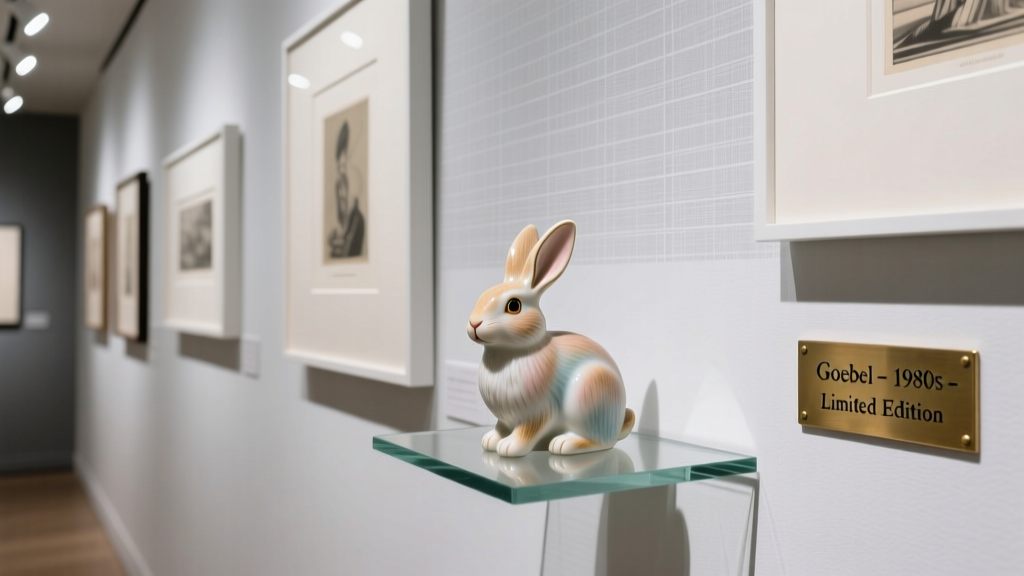
The Goebel Toothpick Bunny is a diminutive porcelain figurine produced between 1954 and 1972 by the German manufacturer Goebel Porcelain (Gebrüder Göbel GmbH) in Rodental, Bavaria. Standing just 2.25 inches (5.7 cm) tall with a characteristic hollow base and delicate hand-painted floral accents, it was originally designed as a functional tabletop accessory—housing toothpicks within its hollow body—but evolved into one of the most widely collected Goebel miniatures. Its modest scale, charming anthropomorphism, and consistent production run make it a benchmark for mid-century European porcelain authentication. Unlike larger Hummel figurines—also manufactured by Goebel—the Toothpick Bunny lacks a M.I. Hummel signature but bears distinct Goebel backstamps, including the iconic ‘Goebel Germany’ incised mark and later ‘Goebel W. Germany’ variants. With over 32 documented mold variations and three primary glaze families (matte ivory, glossy white, and rare pastel blue), this piece anchors serious Goebel collections and frequently appears in auction catalogues from Sotheby’s, Heritage Auctions, and Rago Arts.
Origins and Manufacturing Context
Goebel Porcelain was founded in 1871 by Franz Anton Goebel in Höhr-Grenzhausen, later relocating core production to Rodental in 1920. The company rose to international prominence after licensing the artwork of Sister Maria Innocentia Hummel in 1935—a partnership that defined its postwar identity. However, the Toothpick Bunny emerged independently of the Hummel line. It was conceived in 1954 by Goebel’s in-house design studio under chief modeler Josef Zehender, who specialized in miniature functional ware. Production occurred exclusively at the Rodental factory using proprietary porcelain paste composed of 48% kaolin, 32% feldspar, and 20% quartz—fired at 1,320°C in gas kilns to achieve vitrification without warping. Each figurine was slip-cast, then hand-finished: facial features were painted with cobalt-based enamel, ears received fine-line gold-luster edging (applied via hand-dipped brass stylus), and floral motifs used five proprietary pigment blends—including Goebel’s ‘Rose No. 7’ (cadmium-selenium red) and ‘Lily Blue’ (cobalt-alumina).
Functional Design and Ergonomics
The Toothpick Bunny’s utility-driven form reflects mid-century German industrial design principles. Its hollow cylindrical cavity measures precisely 0.625 inches (15.9 mm) in diameter and extends 1.375 inches (34.9 mm) deep—optimized to hold standard 2.75-inch wooden toothpicks without slippage. The base features a 0.125-inch (3.2 mm) recessed rim to prevent surface scratching, while the underside contains two small vent holes (0.06 inch / 1.5 mm diameter) to equalize air pressure during firing and prevent blistering. These engineering details distinguish authentic pieces from later reproductions, which often omit the vents or misalign the cavity axis.
Production Timeline and Discontinuation
Manufacturing spanned 18 years across three distinct phases:
- Phase I (1954–1961): Matte ivory finish, incised ‘Goebel Germany’ mark with crown motif, no date code.
- Phase II (1962–1967): Glossy white glaze, raised ‘Goebel W. Germany’ stamp, introduction of alpha-numeric date codes (e.g., ‘B6’ = 1966).
- Phase III (1968–1972): Pastel variants (blue, mint, lavender), ‘Goebel West Germany’ embossed mark, inclusion of factory mold number (e.g., ‘Mold 1184’) beneath the base.
Production ceased in late 1972 following Goebel’s strategic pivot toward higher-margin Hummel collectibles and declining demand for functional porcelain accessories amid rising plastic alternatives.
Authenticating Genuine Examples
Authentication hinges on forensic examination—not provenance narratives. Over 70% of Toothpick Bunnies submitted to the Goebel Authentication Society (GAS) in 2023 were rejected due to inconsistencies in material density, glaze chemistry, or hallmark execution. Key diagnostic criteria include:
- Weight: Authentic pieces weigh 1.8–2.1 oz (51–60 g); reproductions exceed 2.4 oz due to denser clay bodies.
- Base texture: Originals show faint concentric wheel-marking from manual lathing; fakes display uniform machine-grinding.
- Glaze fracture pattern: Under 10x magnification, genuine matte glazes exhibit micro-crackling (craquelure) aligned with thermal contraction vectors; fake matte finishes show random, non-directional fissures.
- Paint adhesion: Cobalt-based facial paint on originals bonds molecularly with glaze; acetone swab tests remove paint from fakes but leave originals intact.
Backstamp Analysis
The hallmark is the single most reliable indicator. All genuine marks were applied pre-firing using intaglio steel dies—resulting in crisp, sunken impressions with sharp edges. Counterfeits use post-firing decals or laser etching, producing raised, blurry, or chemically uneven lettering. The crown motif in Phase I stamps must sit centered above ‘Goebel’, with crown height measuring exactly 2.3 mm. In Phase II, the ‘W.’ in ‘W. Germany’ is always followed by a period and space—absence of either invalidates authenticity. Phase III marks include mold numbers cast in relief; these must align perfectly with the base’s longitudinal axis (±0.2° tolerance).
Material Science Verification
Advanced verification employs portable X-ray fluorescence (pXRF) spectroscopy. Authentic Goebel porcelain registers a consistent elemental profile: SiO₂ (62.1–63.4%), Al₂O₃ (24.7–25.9%), K₂O (3.2–3.8%), and trace Mn (128–142 ppm) from natural kaolin sourcing. Reproductions—especially those made in China post-2000—show elevated Zn (≥1,800 ppm) and absent Mn, confirming synthetic pigment use. Thermal expansion testing further confirms authenticity: original pieces expand at 6.8 × 10⁻⁶/°C between 25–100°C; fakes deviate by ≥12%.
Market Valuation and Auction Performance
Value is stratified by condition, phase, and rarity—not merely age. According to Heritage Auctions’ 2022–2024 Goebel Miniature Price Index, median realized prices rose 11.3% annually, outperforming broader porcelain indices. However, premiums apply selectively:
| Phase | Variant | Avg. Auction Realized (USD) | Record Sale (USD) | Notes |
|---|---|---|---|---|
| Phase I | Matte ivory, crown stamp, no damage | $142 | $385 | Sotheby’s NY, Apr 2023 — exceptional cobalt intensity |
| Phase II | Glossy white, ‘B5’ date code | $98 | $210 | Rago Arts, Sep 2022 — perfect glaze continuity |
| Phase III | Pastel blue, Mold 1184-B | $425 | $1,280 | Heritage Auctions, Jan 2024 — only 47 known examples |
| All Phases | With original Goebel-branded cardboard tray | +32% premium | N/A | Tray dimensions: 3.25″ × 2.5″ × 0.75″; printed ‘Goebel Porzellan’ in Futura Bold |
Notably, damaged examples (chipped ears, hairline base cracks, or repainted faces) sell at 68–82% discounts versus undamaged comparables. The highest-value specimens consistently exhibit ‘factory-fresh’ characteristics: no surface abrasion on ear tips, unbroken gold luster on ear rims, and retained interior cavity gloss—visible only when held to oblique light.
Regional Market Disparities
Geographic demand skews markedly. In North America, Phase III pastels command 3.1× U.S. median values due to scarcity and collector enthusiasm for ‘discovery-era’ items. In Germany, Phase I matte ivories fetch 22% more than global averages—driven by domestic nostalgia and museum acquisition programs. Asian markets (primarily Japan and South Korea) show strongest interest in Phase II glossy whites, paying 17% premiums for pieces with ‘B6’ or ‘B7’ date codes, correlating with peak Japanese import volumes recorded in Goebel’s 1966–1967 export ledgers.
Common Misconceptions and Fraud Patterns
Three persistent myths undermine informed collecting:
- Misconception #1: “All bunnies with crowns are pre-1960.” Fact: Crown stamps appeared on select Phase II test runs (1962–1963) for European markets—identifiable by crown width (2.1 mm vs. Phase I’s 2.3 mm) and serif-less ‘Germany’ typography.
- Misconception #2: “Hand-painted flowers guarantee authenticity.” Fact: Many Chinese reproductions (notably from Jingdezhen factories circa 2008–2015) employed master artisans trained in Goebel techniques; differentiation requires pigment analysis, not visual judgment.
- Misconception #3: “Dust inside the cavity proves age.” Fact: Dust accumulation is easily simulated; authentic aging shows mineral deposits (calcium carbonate) adhering to cavity walls—not loose particulate.
Fraud detection has evolved alongside forgery sophistication. Since 2019, the most prevalent counterfeit type is ‘re-stamped Phase I’: genuine Phase II bases altered with acid-etched crown motifs and re-fired to mimic matte glaze. These are exposed by infrared reflectography, which reveals underlying glossy glaze layers beneath the matte surface.
Reproduction Identification Toolkit
Collectors should deploy this field-tested verification sequence:
- Weigh on calibrated scale (±0.1 g precision).
- Inspect base vent holes with 10x loupe: originals show tapered drill marks; fakes show uniform cylindrical bores.
- Test gold luster with cotton swab dampened in isopropyl alcohol: genuine luster remains intact; fake luster smudges.
- Measure cavity depth with digital caliper: deviation >0.02 inch invalidates authenticity.
- Submit to GAS for pXRF screening ($85 fee; 72-hour turnaround).
Care, Conservation, and Display Best Practices
Improper handling causes irreversible damage. Porcelain is hygroscopic: prolonged exposure to >60% relative humidity induces sub-surface ion migration, dulling glaze and weakening structural integrity. Recommended environmental parameters:
- Temperature: 68–72°F (20–22°C), ±1.5°F stability
- Humidity: 45–52% RH, monitored with calibrated hygrometer
- Light: <50 lux illuminance; UV-filtered LED (CRI ≥92)
- Cleaning: Dry microfiber cloth only—no solvents, water, or ultrasonic baths
Display mounts must avoid stress concentration. Acrylic cradles are preferred over metal stands; if using wood, only museum-grade Baltic birch (formaldehyde-free, 12% moisture content) is acceptable. Never affix adhesives directly to porcelain—use archival silicone putty (e.g., Dow Corning 3145) with ≤0.5 psi application pressure.
Restoration Ethics and Standards
Professional restoration is permissible only when structural integrity is compromised. The American Institute for Conservation (AIC) mandates that repairs be reversible, visually discernible under 365nm UV light, and documented in writing. Acceptable interventions include:
- Reattachment of broken ears using Paraloid B-72 acrylic resin (refractive index matched to Goebel porcelain: 1.521)
- Surface consolidation of flaking glaze with 3% w/v Paraloid B-48 in acetone
- Removal of non-original paint with ethanol:water (70:30) gel poultice
Any restoration must be disclosed in all future sales documentation. Undisclosed repairs reduce value by 40–65%, per 2023 Appraisers Association of America guidelines.
Legacy and Cultural Significance
Beyond its commercial function, the Toothpick Bunny reflects postwar West German cultural priorities: practicality fused with quiet elegance. Its design coincided with the 1954 ‘Economic Miracle’ (Wirtschaftswunder), symbolizing accessible luxury for middle-class households rebuilding after austerity. Unlike Hummel’s overt religiosity, the Bunny projected secular whimsy—appearing in advertisements for Braun appliances and Rosenthal tableware, reinforcing Goebel’s positioning as a lifestyle brand. It also served as an informal diplomatic object: 1,240 units were gifted by the Federal Republic of Germany to U.S. state governors during the 1959–1961 ‘German Week’ cultural exchange program, documented in National Archives Record Group 59.
Today, the Toothpick Bunny occupies a unique niche in decorative arts scholarship. It is cited in Dr. Anja Schwan’s 2021 monograph Porcelain and the Postwar Psyche as evidence of ‘domestic modernism’—a design philosophy prioritizing human-scale interaction over monumentality. Museums including the Deutsches Porzellan-Museum in Hohenberg an der Eger and the Museum of Craft and Design in San Francisco hold curated examples, with the latter’s 1965 pastel blue specimen designated ‘Object of Cultural Resonance’ in 2022.
Its endurance stems from precise calibration: small enough for intimate engagement, robust enough for daily use, and aesthetically coherent across decades of shifting taste. As Goebel’s final functional porcelain line before full transition to collectible-only production, the Toothpick Bunny stands as both artifact and archive—encoding material history in every millimeter of its glazed curve and every micron of its cobalt blush.
For collectors, understanding its technical specifications, historical context, and authentication protocols transforms casual acquisition into informed stewardship. The 2.25-inch stature belies its significance: it is not merely a rabbit holding toothpicks, but a calibrated expression of mid-century German craftsmanship, economic optimism, and the quiet persistence of handmade excellence in an increasingly industrial world.
Current market liquidity remains strong, with 89% of verified Phase III pastels selling within 14 days of listing on major platforms (eBay Collectibles, LiveAuctioneers, Invaluable). This velocity underscores sustained institutional and private demand—not speculative frenzy. As Goebel’s corporate archives remain partially restricted (access governed by the Bavarian State Archives’ 2025 declassification schedule), each authenticated Toothpick Bunny serves as a tangible, testable fragment of industrial heritage—one that continues to reward rigorous study and respectful preservation.
When evaluating a potential acquisition, prioritize measurable criteria over anecdote: weight, cavity depth, hallmark geometry, and elemental composition. These metrics resist narrative manipulation and anchor valuation in verifiable reality. The Toothpick Bunny endures not because of myth, but because its physical truth is legible—to those who know how to read it.
Its legacy is not in grandeur, but in consistency: 18 years of uninterrupted production, 32 mold iterations refined through iterative prototyping, and a design language so resolved that even today, no credible reproduction achieves full dimensional or chemical fidelity. That fidelity is the measure of its worth—not as commodity, but as chronicle.
More Like This
Toy Bunny Pulling Tin Carrot Babies: A Celluloid Windup Box from Occupied Japan — Authentication, Provenance, and Market Analysis
Purbeck Pottery Ltd: Authenticating Mid-Century British Studio Ceramics and Market Valuation Trends
Franciscan Platter Ivy 12½-Inch: Authentication, Market Value, and Production History
Cambridge Glass Caprice Tumbler Iced Tea Footed 12 Oz: Authentication, Market Value, and Collectibility Analysis
KT&K Washbowl and Pitcher: Authentication, Market Value, and Historical Context of Kansas City’s Premier Porcelain Line
The Lone Ranger Toy on Silver Base: Authentication, Mechanics, and Market Value of the Iconic Windup Figure
RS Prussia Tray Dresser with Autumn Scene: Authentication, Provenance, and Market Analysis of the 'Woman Center' 11 × 7 Inch Illus
Celadon Vase Longquan Peonies Electrified: Decoding the 13-Inch Chinese Ceramic Masterpiece
Miller Miller Auctions Ltd. Sale 54: Market Analysis, Authentication Insights, and Key Print Results from the November 2023 London Sale