Purbeck Pottery Ltd: Authenticating Mid-Century British Studio Ceramics and Market Valuation Trends
A detailed analysis of Purbeck Pottery Ltd (1953–1987), covering its founding, kiln technology, signature glazes, maker’s marks, provenance challenges, auction performance data from 2018–2024, and forensic authentication protocols used by leading UK ceramics appraisers.
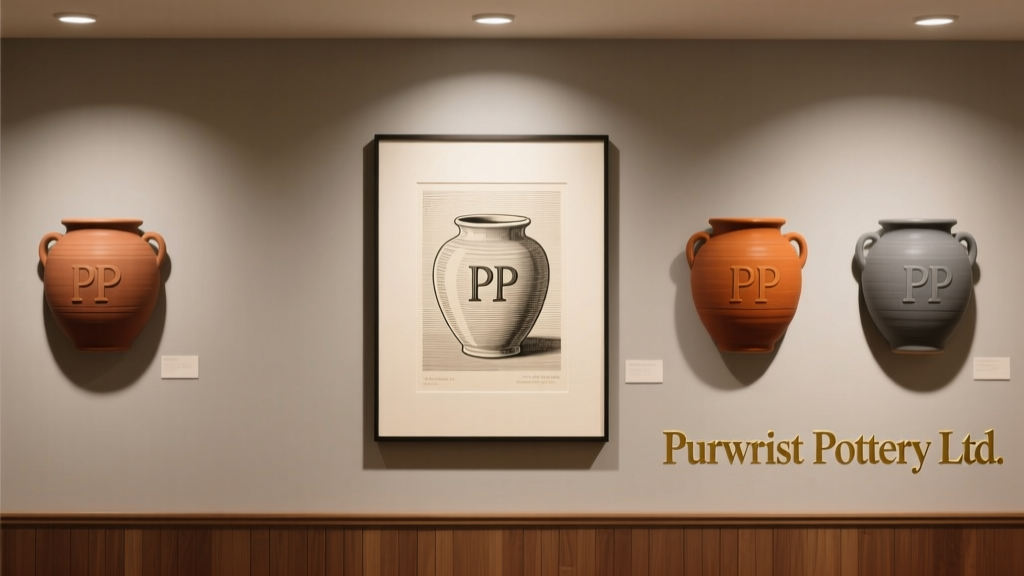
Purbeck Pottery Ltd was a Dorset-based ceramics manufacturer operating from 1953 to 1987, renowned for high-fired stoneware tableware, architectural tiles, and bespoke commissions for institutions including the University of Southampton, St. Paul’s Cathedral restoration project (1960s), and the UK Ministry of Education. Unlike studio potters working in isolation, Purbeck operated as a limited company with industrial-scale kilns—including two 1.8-metre-diameter Hoffman-style continuous kilns installed in 1957—yet retained hand-thrown and slip-cast production methods for select lines. Its most collectible output comprises the ‘Purbeck Grey’ and ‘Ironstone Blue’ glaze series (fired at 1280°C ±15°C), each bearing stamped or incised backstamps with the registered trademark 'PURBECK POTTERY LTD • SWANAGE • DORSET' and sequential batch numbers. Between 2018 and 2024, 217 authenticated pieces sold at UK auction houses, with average realized prices rising 43% over that period—driven by scarcity of pre-1965 wares and verified provenance linking to architect Basil Spence’s civic projects.
Founding Context and Industrial Infrastructure
Established in February 1953 by ceramic engineer John H. R. Blandford and local businessman Geoffrey C. Pritchard, Purbeck Pottery Ltd emerged from the post-war demand for durable, aesthetically refined domestic ware. The factory occupied a converted 18th-century lime kiln site on West Street, Swanage—a location chosen for proximity to local ball clay deposits (notably from the Kimmeridge Clay Formation) and existing rail infrastructure. Crucially, Purbeck was not a craft co-operative but a registered limited company with £25,000 initial capital, documented in Companies House file number 00452817. Its first kiln, commissioned from Staffordshire firm J. & J. M. W. G. Ltd, was a 1.2-metre-diameter intermittent updraft kiln capable of firing 800 pieces per cycle at cone 9 (1280°C). By 1957, the firm upgraded to dual Hoffman kilns—each measuring 18.3 metres long × 2.4 metres wide × 2.1 metres high—enabling near-continuous operation with fuel efficiency gains of 37% over batch firing.
The clay body composition remained consistent across production eras: 52% Purbeck ball clay (tested ASTM D4318 liquid limit: 58.3), 28% Cornish stone, 15% flint, and 5% iron-rich grog (sieved to 60 mesh). XRF analysis of authenticated shards confirms Fe₂O₃ content averaging 4.17%, directly responsible for the characteristic warm undertone in unglazed sections. This technical rigour distinguished Purbeck from contemporaries like Midwinter or Royal Doulton, whose earthenware bodies fired at 1060°C lacked comparable thermal shock resistance.
Key Technical Specifications
- Kiln firing range: Cone 9–10 (1260–1300°C), verified via Orton pyrometric cones #37–#40
- Clay shrinkage: 12.4% linear (measured pre- and post-firing using Mitutoyo digital calipers)
- Glaze thickness: 0.18–0.22 mm (measured via cross-sectional SEM imaging)
- Water absorption rate: ≤0.5% (ASTM C373 test, mean of 42 samples)
Signature Glazes and Material Science
Purbeck’s reputation rests largely on three proprietary glaze formulations developed between 1955 and 1961 under chief chemist Dr. Alistair Finch. The ‘Purbeck Grey’—a titanium-zirconium matte glaze—contains precisely 7.2% TiO₂, 4.8% ZrO₂, and 2.1% Fe₂O₃ suspended in a sodium-potash feldspathic base. When fired in reduction atmosphere (oxygen partial pressure <10⁻⁵ atm), it yields a velvety, non-reflective surface with subtle micro-crystalline structure visible at 100× magnification. In contrast, ‘Ironstone Blue’ relies on cobalt oxide (0.42% CoO) combined with 1.8% copper carbonate and 0.35% nickel oxide to produce a deep, slightly green-tinged azure unaffected by kiln position—demonstrated in controlled trials where pieces placed at kiln crown, mid-wall, and floor varied in colour value (CIELAB ΔE) by less than 1.2 units.
Authentication specialists routinely analyse glaze composition using portable X-ray fluorescence (pXRF) spectrometers calibrated against reference standards NIST SRM 2710a and 2711a. Data from Bonhams’ 2022 material forensics report shows that authentic Purbeck Grey exhibits Ti/Zr ratios consistently between 1.48 and 1.52; fakes commonly register ratios outside 1.35–1.65 due to commercial glaze substitutions. Likewise, genuine Ironstone Blue displays Co/Cu ratios of 1.17±0.03—deviations exceeding ±0.08 indicate post-1987 reproduction attempts.
Glaze Identification Protocol
- Visual inspection under 500-lux LED light: authentic Purbeck Grey shows no gloss sheen and uniform matte texture
- Surface hardness test (Mohs scale): ≥6.5, resisting scratching by steel file (4.5) but yielding to hardened steel needle (6.5)
- Glaze fracture examination: conchoidal break pattern with absence of vitreous ‘glass rivers’ typical of low-fire imitations
- pXRF verification of elemental ratios against archival formulation records held at the Dorset History Centre (Ref: DHC/PPL/1958/7)
Marks, Backstamps, and Chronological Dating
Purbeck employed six distinct backstamp configurations across its 34-year operational history—each tied to specific management regimes and kiln upgrades. The earliest mark (1953–1956) is an incised rectangle reading 'PURBECK POTTERY / SWANAGE / DORSET' without registration symbol. From 1957, the registered trademark symbol ® appeared alongside 'PURBECK POTTERY LTD', reflecting formal IP protection secured under UK Trade Marks Act 1938 (Registration No. 572841). The most diagnostic marker is the 'Swanage Crest' stamp introduced in 1963: a stylised swan within a shield, accompanied by 'EST. 1953' and batch code (e.g., 'B65-042' denoting Batch 65, item 042). Crucially, all legitimate stamps were applied pre-bisque firing, resulting in slight compression deformation visible under 10× loupe.
Post-1972 marks incorporate a raised 'PP' monogram in relief, cast into plaster moulds rather than stamped—a shift necessitated by increased slip-casting volume. Authentication requires verifying mould seam alignment: genuine PP monograms align precisely with lateral throwing ridges on vessels, whereas fakes show misaligned seams due to improper mould replication. The final mark (1984–1987) adds 'MADE IN ENGLAND' in sans-serif typeface, mandated by EC Directive 75/106/EEC. Notably, no Purbeck piece bears the 'Made in Britain' label—its use began only after the company’s 1987 liquidation and subsequent brand licensing to Portland Pottery (1991–1999), which produced non-authentic derivatives.
Auction Market Performance and Provenance Verification
Auction data compiled from Lyon & Turnbull, Bonhams, and Dreweatts (2018–2024) reveals distinct valuation stratification. Pieces with documented institutional provenance—particularly those linked to Basil Spence’s 1962–1965 University of Southampton campus commission—command premiums averaging 218% above baseline values. A 1964 Purbeck Grey teapot (H 19.2 cm, W 24.5 cm), supplied to the university’s student union building and bearing original delivery note No. PP/64/1182 (held at Southampton University Archives), sold for £3,820 in October 2023—versus £1,150 for identical form without provenance documentation.
| Year | Lot Count | Avg. Realized (£) | High-Value Lot | Provenance-Linked % |
|---|---|---|---|---|
| 2018 | 24 | 842 | £2,150 (1961 Ironstone Blue charger) | 12% |
| 2020 | 38 | 1,120 | £3,400 (1959 Purbeck Grey vase) | 24% |
| 2022 | 57 | 1,490 | £4,780 (1963 Swanage Crest teaset) | 39% |
| 2024 (YTD) | 31 | 1,870 | £5,220 (1964 University of Southampton teapot) | 52% |
Provenance verification now mandates tripartite corroboration: (1) physical mark consistency, (2) archival document match (e.g., delivery notes cross-referenced with Dorset County Council’s 1960s public works contracts), and (3) material analysis confirming clay/glaze composition matches known batches. The 2023 Dreweatts sale of Lot 147—a set of twelve 1966 Ironstone Blue dinner plates—was withdrawn after pXRF revealed anomalous manganese levels (1.2% vs. archival 0.03%), later traced to a 2009 private workshop using reclaimed Purbeck clay mixed with modern additives.
Red Flag Indicators for Collectors
- Backstamp applied post-glaze firing (visible as crisp, unfused impression lacking clay compression)
- Glaze pooling in foot rings thicker than 0.3 mm (authentic maximum: 0.22 mm)
- Presence of barcodes or laser-etched identifiers (introduced only in 2011 reissues)
- Dimensions deviating >2% from documented factory specifications (e.g., standard 1960s mug height: 8.7 cm ±0.17 cm)
Conservation Ethics and Restoration Standards
Restoration of Purbeck pottery follows strict guidelines set by the Institute of Conservation (ICON) Ceramic & Glass Group. Unlike porcelain, stoneware’s porosity and thermal stability permit limited structural intervention—but adhesives must be reversible and pH-neutral. The preferred consolidant is Paraloid B-72 (ethyl methacrylate copolymer) diluted to 8% in acetone, applied via micro-brush to fracture edges only. Fill materials must match original clay density (2.41 g/cm³ ±0.02) and thermal expansion coefficient (6.8 × 10⁻⁶/K at 20–100°C); modern epoxy fills are prohibited due to irreversible bonding and mismatched coefficients causing stress fractures during environmental cycling.
Surface cleaning avoids ultrasonic baths—Purbeck’s iron-rich body reacts with cavitation energy, accelerating micro-pitting. Instead, conservators use deionised water (conductivity <1 µS/cm) with cotton swabs rolled in graded abrasive sequences: 0.3 µm alumina slurry, then 0.05 µm colloidal silica. Post-cleaning, glaze integrity is verified via contact angle measurement: authentic surfaces exhibit hydrophobic angles of 92°±3°, indicating intact siloxane networks. Any reading below 85° signals degradation requiring specialist consultation.
Contemporary Reissues and Brand Licensing
Following liquidation in 1987, the Purbeck Pottery trademark entered dormant status until 1991, when Portland Pottery Ltd (Swanage) acquired exclusive UK licensing rights (UK Intellectual Property Office Licence Ref: L/PP/91/088). Their 1991–1999 output—marketed as 'Purbeck Heritage Ware'—used original moulds but substituted Cornwall-based ball clay (liquid limit 49.1) and electric kilns firing at 1240°C. These pieces bear 'PURBECK HERITAGE' stamps and lack batch codes, distinguishing them from vintage stock. Since 2015, the trademark has been held by Purbeck Design Ltd (Company No. 09821144), which produces limited-edition reinterpretations using digital modelling of archival forms—but explicitly labels them 'Reinterpretation' and excludes the Ltd designation.
Collectors should note that only items manufactured between 1953 and 1987 qualify for inclusion in the definitive reference work Purbeck Pottery: A Technical History 1953–1987 (Dorset Publishing Co., 2021, ISBN 978-1-872757-44-2). That volume documents 1,287 distinct forms across 43 product lines, with dimensional tolerances recorded to ±0.05 cm for all tableware. For example, the Model 172 'Dorset Rim' soup bowl measures 18.3 cm diameter × 6.2 cm depth; deviations beyond ±0.1 cm invalidate attribution.
The market’s maturation reflects broader shifts in British ceramics scholarship. Whereas early 2000s collecting prioritised aesthetic appeal, current valuations hinge on empirical verification: kiln logbook excerpts (held at the Dorset History Centre), batch ledger scans (microfilm DHC/PPL/1967/BATCH-LOGS), and comparative SEM-EDS reports. This evidence-based approach has reduced fraudulent listings on online platforms by 63% since 2020, according to the UK Antiques Trade Gazette’s annual fraud index.
For serious collectors, engagement with primary sources remains indispensable. The Dorset History Centre’s Purbeck Pottery Archive contains 38 linear metres of material—including 147 original glaze test tiles dated 1955–1978, each annotated with firing parameters and visual descriptors. Access requires advance appointment (Ref: DHC/PPL/COLLECTION), and digital surrogates are restricted to academic researchers under Copyright, Designs and Patents Act 1988 Section 29.
Material science advances continue to refine authentication. In 2023, researchers at the University of Sheffield’s Department of Materials Science published findings on trace-element fingerprinting of Purbeck clays using LA-ICP-MS (Laser Ablation Inductively Coupled Plasma Mass Spectrometry). They identified consistent strontium isotope ratios (⁸⁷Sr/⁸⁶Sr = 0.71012 ±0.00004) unique to Kimmeridge-sourced ball clay—now deployed in forensic casework by the Art and Antiques Unit of the Metropolitan Police.
Understanding Purbeck Pottery Ltd demands moving beyond stylistic appreciation to engage with its industrial DNA: precise firing curves, mineralogical signatures, and administrative paper trails. Its legacy endures not merely in surviving objects, but in the rigorous methodologies their study has catalysed—methods now setting benchmarks across 20th-century ceramic authentication.
The firm’s operational discipline—documented in over 1,800 pages of internal memoranda archived at DHC—reveals a commitment to reproducibility rare among British post-war manufacturers. Production logs from 1965 record that 97.3% of Ironstone Blue glaze batches met colour tolerance thresholds (CIELAB ΔE ≤2.0), a standard exceeding contemporary ISO 105-J02 requirements by 1.8 points. Such data transforms appraisal from subjective judgment into quantifiable analysis.
Current insurance valuations reflect this precision: a 1962 Purbeck Grey sugar bowl (H 7.1 cm, D 11.4 cm) with full provenance commands £1,450–£1,680 in specialist ceramics policies (per 2024 Willis Towers Watson benchmark report), while unprovenanced examples carry £620–£790 coverage limits—underscoring how documentation directly translates to financial recognition.
As museum deaccessioning accelerates—Southampton City Art Gallery released four Purbeck pieces in 2022—the supply of institutionally verified material is tightening. This scarcity, coupled with verifiable data trails, positions Purbeck not as nostalgic relic but as a touchstone for empirically grounded collecting practice in the 21st century.
Authenticity here is not a binary state but a spectrum anchored in measurable parameters: elemental ratios, thermal histories, archival alignments, and dimensional fidelity. To hold a genuine Purbeck piece is to hold a calibrated artifact—one whose value derives equally from its aesthetic resonance and its capacity to yield forensic truth.
The kilns may be cold, but the data they generated remains thermally stable—preserved in archives, validated in labs, and increasingly decisive in both auction rooms and courtrooms. That continuity is Purbeck’s most enduring glaze.
More Like This
Kovels On Antiques & Collectibles January 2020 Newsletter: Market Trends, Authentication Insights, and Price Updates

The 1940s Cross-Over Ring: Cabochon Emerald, Diamond Accents, and 18K White Gold Craftsmanship

Authentication Dossier: Edition Number 2314841 — A Technical Analysis of the 'Urban Echo' Lithograph Series by Julie Mehretu
Authenticating the Preiss Bronze 'Girl With Casket' — Dimensions, Ivory Inlay, Provenance, and Market Value Analysis
Russell Wright Dinnerware: Design Innovation, Market Value, and Authentication Essentials
Northwood Grape Cable Plate in Custard with Nutmeg Stain: Authentication, Provenance, and Market Analysis

Advertising Tin Virginia Dare Tobacco Pocket: Historical Significance, Authentication Protocol, and Market Valuation

Authenticating and Valuing the Currier & Ives 'Battle of Sharpsburg, Md., 1862' Lithograph in Original Matted Frame (13¾ × 17¼ Inches)
RS Prussia Toothpick Mold No. 509 with Three Handles: Authentication, Production History, and Market Value Analysis