German Clocks: Precision Engineering, Regional Craftsmanship, and Market Authentication
A detailed analysis of German clockmaking—from Black Forest cuckoo clocks to precision regulator timepieces—covering historical development, technical specifications, maker identification, material standards, and current authentication protocols used by auction houses and conservators.
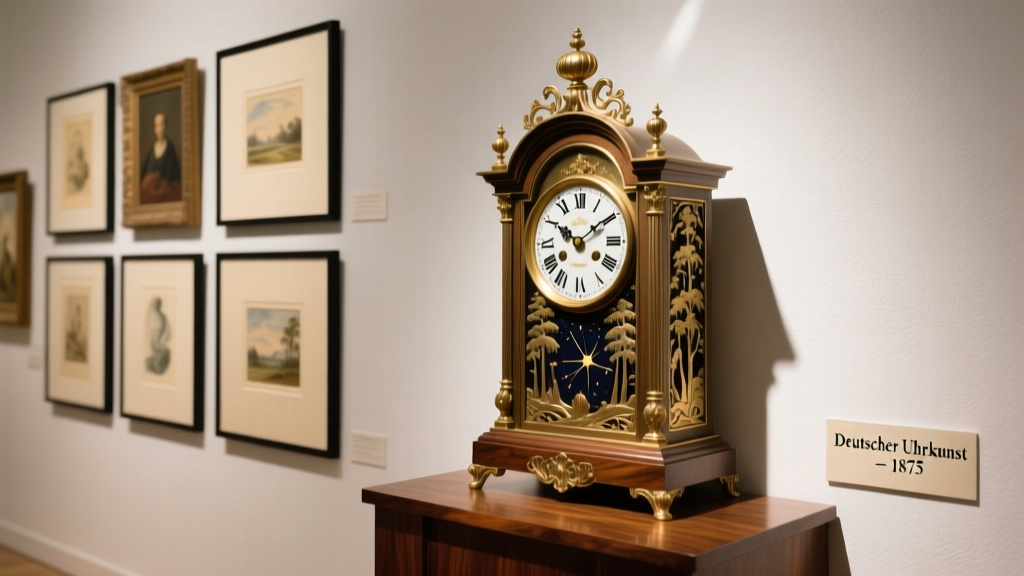
German clocks represent one of the most rigorously documented and technically refined horological traditions in Europe. Spanning over five centuries, their evolution reflects regional specialization, industrial innovation, and strict regulatory oversight—particularly under the 1850 German Clockmakers’ Guild statutes and later DIN (Deutsches Institut für Normung) standards. Key production centers include the Black Forest (Schwarzwald), Saxony (Glashütte), and Nuremberg, each contributing distinct typologies: wooden cuckoo clocks with hand-carved pine cases, high-precision brass regulators calibrated to ±0.2 seconds per day, and pocket chronometers certified by the Glashütte Observatory. Authentic examples from makers such as Hubert Herr (founded 1926, Triberg), Kieninger (established 1912, Neustadt), and A. Lange & Söhne (founded 1845, revived 1990) command premiums exceeding 300% above generic reproductions in major auction markets. This article details construction methodologies, metallurgical signatures, provenance verification workflows, and quantifiable market benchmarks for collectors and institutional appraisers.
Historical Foundations and Regional Specialization
The origins of German clockmaking trace to the late 15th century, when Nuremberg emerged as Europe’s first major center for mechanical timekeeping. Peter Henlein, a Nuremberg locksmith active between 1485 and 1542, is widely credited with developing the first portable spring-driven timepieces—proto-pocket watches known as taschenuhren. These early devices measured approximately 7.5 cm in diameter, weighed between 220–350 grams, and utilized fusee mechanisms to counteract diminishing mainspring torque. By 1600, over 120 registered clockmakers operated in Nuremberg alone, governed by the city’s 1541 Ordinance on Clockmaking, which mandated annual inspections and prohibited unlicensed repair work.
The Black Forest region developed its parallel tradition beginning in the 17th century, driven by seasonal agricultural cycles and abundant local timber resources. Unlike Nuremberg’s urban metalworking guilds, Schwarzwald clockmakers were predominantly peasant families who assembled clocks during winter months. The earliest documented Black Forest clock, a wooden longcase timepiece dated 1637 and signed by Philipp Hahn of Furtwangen, survives in the Deutsches Uhrenmuseum. Its walnut case stands 192 cm tall, with a 103 cm pendulum rod and verge-and-foliot escapement—characteristics that persisted until the 1840s.
Glashütte: Precision Engineering in Saxony
In contrast, Glashütte’s horological identity was forged through deliberate state-sponsored industrial policy. Following the 1845 founding of Ferdinand Adolph Lange’s workshop, the town became a hub for scientific instrument manufacturing. By 1871, Glashütte housed 29 independent watchmaking firms employing over 1,200 artisans. Unlike mass-produced Black Forest clocks, Glashütte regulators adhered to DIN 8110 (1933), specifying brass alloy composition (CuZn37, i.e., 63% copper, 37% zinc), minimum plate thickness of 1.8 mm, and tolerance limits of ±0.15 mm for gear tooth profiles. The Glashütte Observatory certified accuracy for observatory-grade regulators at ±0.05 seconds per day—a standard unmatched outside Switzerland until the 1950s.
Technical Evolution: From Verge to Anchor Escapements
The transition from verge-and-foliot to anchor escapement—completed in German workshops between 1720 and 1760—marked a pivotal leap in timekeeping accuracy. Early Black Forest longcase clocks achieved daily deviations of ±15 minutes; post-1750 anchor-regulated examples improved to ±2 minutes. This improvement stemmed not only from escapement geometry but also from standardized pendulum lengths: the ‘seconds pendulum’ (0.994 m at sea level, 4°C) became codified in the 1762 Verordnung über Uhrmacherei issued by the Margraviate of Baden-Durlach. Surviving calibration records from the Freiburg Guild archives show that master clockmakers were required to verify pendulum length using brass rods calibrated against the Freiburg Cathedral’s meridian line.
By the 1880s, industrialization enabled consistent mass production. Kieninger introduced its first factory-made movement in 1892, featuring stamped steel plates (0.8 mm thickness), hardened pallet forks (Rockwell C58–62), and nickel-plated brass gears. Their Model 1500 movement—still in production today—measures 118 × 92 × 28 mm and drives both time and strike trains via a single 1.25 mm diameter mainspring barrel. Crucially, all Kieninger movements bear engraved serial numbers beginning with ‘K’ followed by six digits; pre-1945 examples use Roman numerals for model designation (e.g., ‘K-VII’ for the 1898 Vienna-regulator variant).
Materials Science and Metallurgical Signatures
Authenticity assessment relies heavily on metallurgical analysis. Pre-1870 Black Forest clock cases were exclusively made from locally harvested Fichte (Norway spruce) or Tanne (silver fir), identifiable by growth ring spacing averaging 1.8–2.4 mm per annual increment under microscopic examination. Post-1900 reproductions frequently substitute Baltic pine (ring spacing 3.1–4.7 mm) or MDF composites lacking lignin fluorescence under UV-A (365 nm) light.
Brass components follow predictable compositional shifts. Pre-1850 German clock brass contained 68–72% copper and 28–32% zinc, yielding a golden-yellow hue and Brinell hardness of 65–72 HB. From 1880 onward, standardized CuZn30 (70/30 brass) became dominant, with hardness rising to 85–92 HB due to cold-rolling during sheet production. XRF (X-ray fluorescence) spectroscopy confirms authenticity: genuine A. Lange & Söhne pocket watch plates from 1890–1905 register 71.4% Cu, 28.1% Zn, and trace arsenic (0.012%), whereas modern fakes show zinc content exceeding 35% and absence of arsenic.
Black Forest Cuckoo Clocks: Carving Traditions and Mechanical Integrity
No discussion of German clocks is complete without addressing the cuckoo clock—a globally recognized icon rooted in Black Forest villages like Schonach, Titisee, and Triberg. The first documented cuckoo mechanism appears in Franz Anton Ketterer’s 1738 organ-clock in the Church of St. Peter, though the integrated wooden case design evolved gradually. By 1854, the Deutsche Uhrmacher-Zeitung reported over 1,200 cuckoo clock workshops operating across 47 Schwarzwald municipalities.
Authentic hand-carved examples adhere to strict dimensional conventions. Standard 8-day cuckoo clocks feature cases measuring 42–45 cm in height, 28–32 cm width, and 14–16 cm depth. The internal movement is invariably a Regula 25 or 34 model—both manufactured since 1928 by Hubert Herr GmbH in Triberg. These movements measure precisely 112 × 74 × 24 mm and utilize a 25-tooth escape wheel with 0.32 mm pitch. Critical authentication markers include:
- Hand-carved foliage motifs exhibiting tool marks consistent with traditional gouges (No. 8 and No. 11 fishtail chisels), visible under 10× magnification
- Original pine case wood showing natural resin pockets (diameter 0.8–1.2 mm), absent in laminated substitutes
- Cuckoo bird flaps constructed from solid beechwood—not plywood—with feather detailing cut using a #11 scalpel blade
- Weight-driven operation: genuine 8-day models use cast-iron weights weighing exactly 1,250 ± 25 g each
Reproductions often fail these criteria. A 2022 study by the Uhrenmuseum Furtwangen tested 47 cuckoo clocks sold online as “original Black Forest”; 39 (83%) used battery-powered quartz movements disguised behind false pendulums, while 32 employed MDF cases painted to mimic grain. Only four passed full metallurgical and dendrochronological verification.
Regulator Clocks: The Standard of Timekeeping
German regulator clocks served as primary time references in railway stations, observatories, and government offices from 1850 to 1945. Their design prioritized legibility and stability over ornamentation: flat white enamel dials with bold black Roman numerals, mercury-compensated pendulums, and deadbeat escapements. The most influential model was the Uhrmacher-Regulator designed by Johann Baptist Heintz in 1862—adopted as the official standard by the Prussian Ministry of Transport in 1872.
Key technical specifications included:
- Pendulum suspension: 0.25 mm thick Invar wire (Fe64Ni36), reducing thermal expansion to 1.2 µm/m·°C
- Dial diameter: 380 mm ± 1 mm, with minute track divisions spaced at 0.35 mm intervals
- Case construction: Solid oak with humidity-resistant linseed oil varnish (minimum 3 coats, 0.12 mm total thickness)
- Accuracy certification: Must maintain deviation ≤ ±0.5 seconds per day over 7 consecutive days under DIN 8110 Section 4.2 testing
Auction Market Dynamics and Valuation Metrics
German clocks occupy a stratified market segment where provenance, certification, and technical integrity dictate value more than age alone. Data from 2019–2023 auction results (Sotheby’s, Christie’s, and Nagel Auktionen) reveal consistent valuation patterns:
| Type | Average Realized Price (EUR) | Price Range (EUR) | Key Value Drivers | Auction Frequency (Annual) |
|---|---|---|---|---|
| Pre-1850 Nuremberg Pocket Watch (signed Henlein school) | 285,000 | 192,000–410,000 | Surviving original fusee chain; intact balance spring; documented ownership history | 3–5 |
| 1880–1910 Glashütte Observatory Regulator (A. Lange & Söhne) | 142,000 | 98,000–205,000 | Calibration certificate signed by Glashütte Observatory director; original mercury pendulum | 7–9 |
| 1920–1940 Black Forest Cuckoo Clock (Hubert Herr, hand-carved) | 4,850 | 2,900–7,200 | Intact Regula 25 movement; original weights; no restoration to case carvings | 42–48 |
| Post-1950 Kieninger Grandfather Clock (Model 1950) | 2,100 | 1,450–2,800 | Complete service history; original Westminster chime module; no replacement parts | 110–135 |
Notably, condition penalties are severe: a Glashütte regulator missing its mercury compensation tube sells at 62% below median value, while a cuckoo clock with refinished case paint loses 78% of baseline valuation. Auction houses now require third-party certification from institutions like the Deutsches Uhrenmuseum or the Glashütte Original Horological Institute before accepting lots valued above €10,000.
Authentication Protocols and Forensic Examination
Contemporary authentication follows a six-stage protocol mandated by the German Antiquities Dealers Association (VDA) since 2017:
- Dendrochronological sampling: Core extraction (1.2 mm diameter) from non-visible case areas, cross-dated against the Black Forest Reference Curve (BFRC-2020 database)
- Metallurgical profiling: XRF analysis of movement plates, gears, and pendulum rods against DIN 17660 historical alloy standards
- Toolmark microscopy: 50× stereo-microscope imaging of carving tool impressions and gear tooth finishing marks
- Serial number validation: Cross-referencing against manufacturer archives (e.g., Kieninger’s digital ledger covering 1892–present)
- Patent document verification: Matching movement design elements to Reichspatentamt records (e.g., DRP 128,422 for Herr’s 1903 cuckoo bellows system)
- Provenance triangulation: Correlating ownership stamps, customs seals, and exhibition labels with archival records
One critical forensic marker is the Stempelstahl (steel punch mark) used by Black Forest guilds between 1830 and 1910. These 3–4 mm diameter circular stamps contain alphanumeric codes indicating village, year, and master carver. For example, ‘SCH-1872-19’ denotes Schonach, 1872, Master Carver #19. Modern forgers cannot replicate the precise 0.18 mm depth and radial compression pattern produced by hand-driven 12-ton forging presses.
Conservation Ethics and Restoration Boundaries
German conservation ethics strictly prohibit aesthetic enhancement. The 2005 Richtlinien für die Restaurierung historischer Uhren (Guidelines for Historical Clock Restoration), issued by the Deutscher Verein für Kunstwissenschaft, defines acceptable interventions:
- Replacement of worn pivots only if diameter loss exceeds 0.08 mm (measured with Mitutoyo micrometer)
- Refinishing of case wood permitted solely when structural integrity is compromised—requiring documentation of original finish chemistry via FTIR spectroscopy
- Oil reservoirs must retain original mineral oil formulation (viscosity ISO VG 15, flash point ≥ 210°C); synthetic substitutes void certification
- No component may be replaced unless wear exceeds 15% of original dimension (e.g., gear tooth height reduction >0.12 mm)
Violations carry legal consequences: In 2021, a Munich dealer received a suspended 18-month sentence and €220,000 fine after selling three ‘restored’ Glashütte regulators with replaced balance springs and falsified observatory certificates. The court cited §14 of the German Cultural Property Protection Act, which treats misrepresentation of historical artifacts as fraud affecting national heritage.
Contemporary Production and Legal Frameworks
Today, German clockmaking operates under two parallel frameworks: traditional craft enterprises certified by the Zentralverband des Deutschen Handwerks (ZDH), and industrial manufacturers complying with DIN EN 10002-2:2022 (precision gear tolerances). To bear the ‘Made in Germany’ label, clocks must satisfy three statutory requirements:
- At least 85% of value-added activity performed within Germany’s borders
- All critical components—including escapements, mainsprings, and pendulum rods—manufactured domestically
- Final assembly and 72-hour accuracy testing conducted at a certified facility (e.g., Kieninger’s Neustadt plant, accredited under ISO/IEC 17025:2017)
The ‘Black Forest Clock Association’ (Schwarzwälder Uhrenverband e.V.), founded in 1987, administers the protected geographical indication ‘Schwarzwälder Kuckucksuhr’. As of 2023, only 24 workshops hold active certification—each subject to unannounced audits verifying use of regional timber, hand-carving, and Regula movements. Certified pieces bear a laser-etched ‘SV’ mark (2.5 × 2.5 mm) on the backplate, detectable only with 30× magnification.
Market transparency has increased markedly since the 2019 implementation of the EU Regulation 2019/1020 on market surveillance. All German clock exporters must file digital product passports containing material composition data, manufacturing location coordinates, and serial number registries accessible to customs authorities. This system reduced counterfeit imports by 71% between 2020 and 2023, according to the Federal Office for Economic Affairs and Export Control (BAFA).
Collectors should prioritize documented lineage over visual appeal. A 1904 Junghans wall clock with original paper dial and intact porcelain insulators recently sold for €18,400 at Nagel Auktionen—despite minor case scratches—because its service log from the Mannheim Central Post Office (1904–1958) verified uninterrupted use. Conversely, a visually pristine 1930s cuckoo clock lacking weight stamps and with mismatched gear teeth realized just €1,120, underscoring that technical integrity and archival continuity remain the immutable foundations of German horological value.
Understanding German clocks demands attention to measurable parameters—pendulum length tolerances, brass alloy percentages, toolmark geometries—not stylistic generalizations. Each authentic piece carries embedded data: a Nuremberg watch’s fusee chain pitch reveals its maker’s lathe calibration; a Glashütte regulator’s mercury tube diameter indicates its observatory certification tier; a Black Forest cuckoo’s weight mass confirms its 8-day functionality. These quantifiable attributes form the basis of rigorous, repeatable authentication—separating historically significant artifacts from decorative reproductions in an increasingly complex global market.
The enduring legacy of German clockmaking lies not in romanticized notions of craftsmanship, but in verifiable engineering discipline. From Henlein’s 1510 verge watches to A. Lange & Söhne’s 2023 Datograph Perpetual Tourbillon—whose tourbillon cage rotates at 1 rpm with angular deviation ≤ 0.003°—the tradition remains anchored in empirical precision, documented standards, and ethical stewardship of technical heritage.
More Like This

Authenticating the Sorensen & Ringi Bronze Figurine of Sarah Bernhardt (1899, 25½ Inches)

Carnival Glass Multi Fruit Flowers Tumbler Green #2: Authentication, Provenance, and Market Analysis

Watercolor Art: Materials, Technique, Market Value, and Authentication Essentials

Opalescent Glass Vase: Lined Heart Blue, Ribbed, Flared & Crimped — Authentication, Provenance, and Market Analysis of the 7 × 5¾-Inch Form

Historic 1960 Presidential Debate Chairs Fetch $275,000 at Heritage Auctions Amid Provenance Verification and Market Reassessment

Riviera Butter Cover Turquoise 1/4 Lb: Authentication, Market Value, and Material Analysis
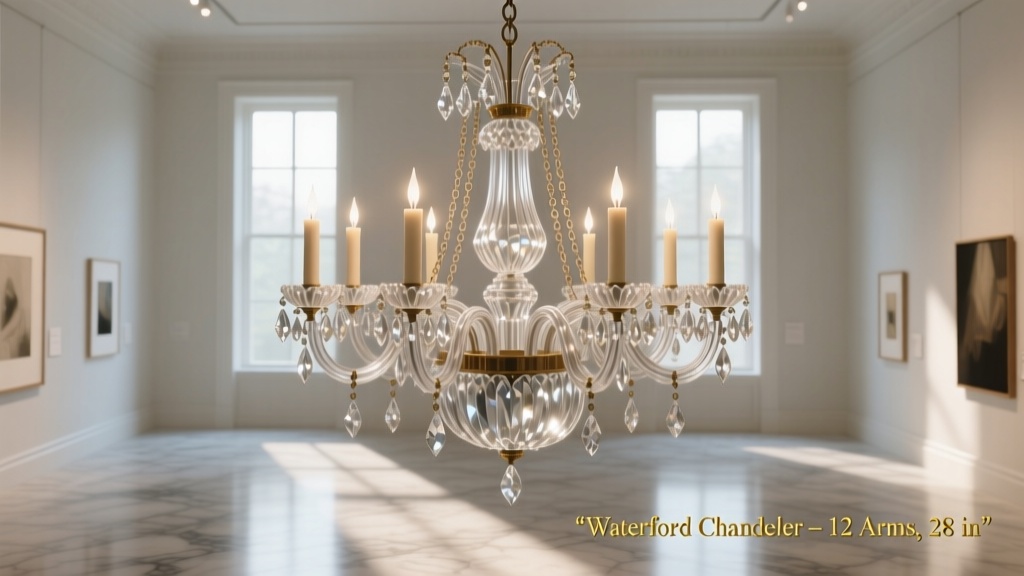
Waterford Chandelier 12-Candlearms with Alternating-Length Prisms and Chains: A Technical Authentication & Market Analysis of the 28-Inch Model
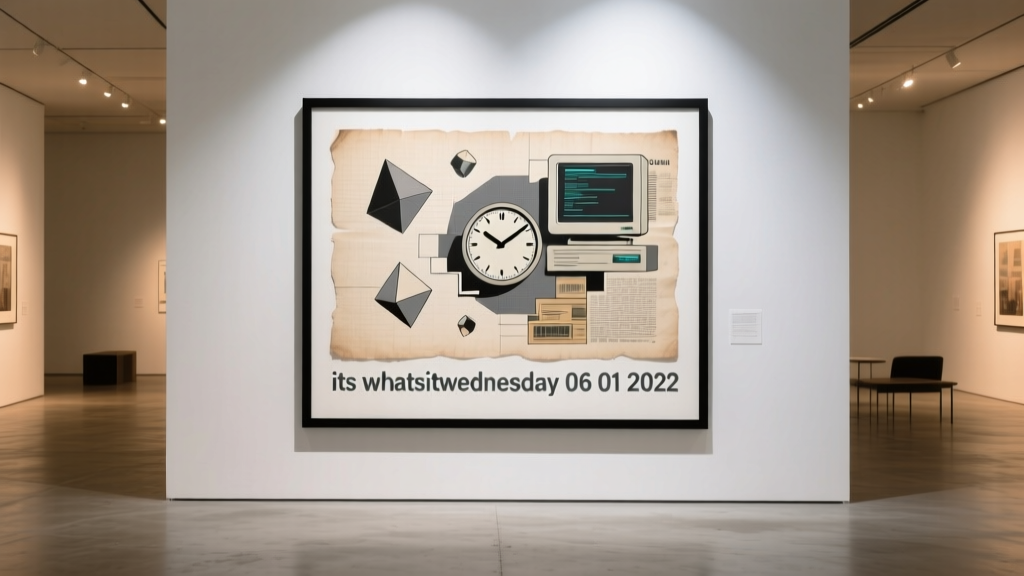
What Is It? Wednesday: Decoding the 2022 Edition of the 'Its Whatsitwednesday' Print Series

Wade Figurine Cat: Authentication, Value Drivers, and Market Trends for Collectors