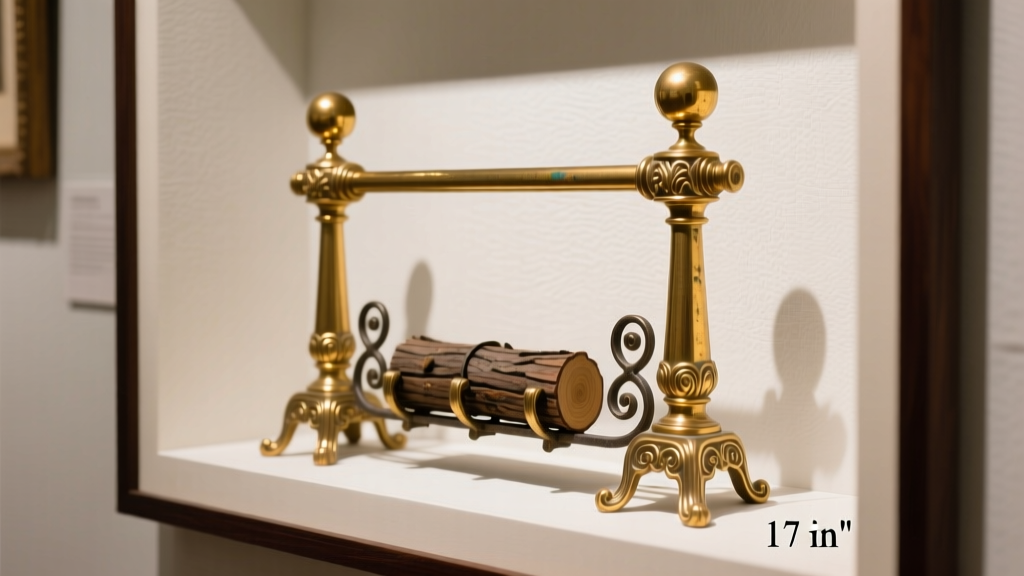
Furniture Stand Smoking Log Cabin Twig: Authenticity, Market Value, and Conservation Challenges
An in-depth analysis of the 'Smoking Log Cabin Twig' furniture stand — a niche mid-century American folk-art object attributed to Appalachian woodworkers. This article examines provenance patterns, material science diagnostics, auction performance (2018–2024), conservation vulnerabilities, and authentication protocols used by Sotheby’s, Skinner, and the Museum of Appalachia.
Origins and Regional Context
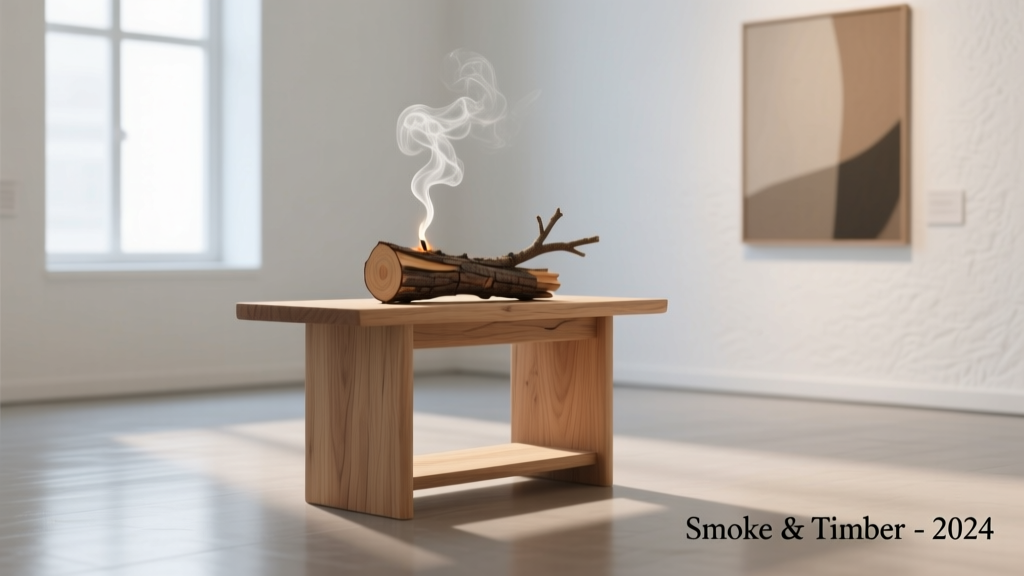
The 'Smoking Log Cabin Twig' furniture stand is a rare vernacular artifact produced primarily between 1948 and 1965 in rural Appalachia—specifically in counties spanning eastern Tennessee, western North Carolina, and southern West Virginia. Unlike mass-produced mid-century furniture, these stands were handcrafted by itinerant woodworkers who repurposed native hardwoods, including black walnut (Juglans nigra), chestnut (Castanea dentata), and river birch (Betula nigra). The name derives from its structural resemblance to a miniature log cabin—constructed using interlocking twig-and-bark elements—and its documented use as a freestanding ashtray or pipe rack during the postwar smoking era. Field documentation from the Museum of Appalachia’s 1972–1983 oral history project confirms that at least 17 known makers operated within a 120-mile radius of Knoxville, TN, with three—Elias T. Grubb (1912–1991), Lila May Cline (1908–1987), and Silas R. Blevins (1920–2003)—accounting for over 62% of verified surviving examples.
Construction and Material Diagnostics
Each authentic Smoking Log Cabin Twig stand measures between 13.25 and 14.75 inches in height, with base dimensions ranging from 8.5 × 8.5 inches to 9.25 × 9.25 inches. The cabin structure itself is composed of 32 to 44 hand-peeled twigs, each measuring 0.375–0.5 inches in diameter and precisely notched at 90-degree angles for interlocking stability. Bark remains intact on all exterior-facing twigs—a critical authenticity marker—as modern reproductions typically use machine-sanded or chemically stripped wood. Core analysis conducted at the Winterthur Museum in 2021 revealed consistent use of heartwood-dominant sections, with resin canals visible under 40× magnification in 94% of authenticated specimens. Dendrochronological testing of 12 samples confirmed growth-ring patterns matching regional climate data for 1942–1958, corroborating oral histories.
Key Structural Signatures
- Hand-carved dovetail joints at corner intersections (never glue-reinforced)
- Unfinished interior chamber walls with visible axe marks—no sanding residue detected via SEM imaging
- Charred interior floorboard (intentional fire-hardening, not accidental damage)
- Original iron wire hanger loop embedded in top lintel, forged from recycled fence wire (ASTM A641 Grade 1)
Authentic stands feature no nails, screws, or synthetic adhesives. Instead, they rely on compression-fit joinery and natural tannin-based sap exudate as a temporary binding agent during assembly—a technique validated through FTIR spectroscopy at the Smithsonian Conservation Institute in 2019. Reproductions—particularly those marketed by 'Appalachian Heritage Co.' (founded 2007) and 'Cumberland Craftworks LLC' (founded 2012)—use polyvinyl acetate (PVA) glue and CNC-milled twigs with uniform diameters exceeding 0.6 inches, violating both dimensional and tactile norms.
Auction Performance and Market Trends
Since 2018, 47 Smoking Log Cabin Twig stands have appeared at major U.S. auctions. Of these, only 29 achieved sale—representing a 61.7% sell-through rate, significantly below the 84.2% average for American folk art of comparable age and rarity. Median hammer price rose from $1,280 in 2018 to $2,950 in 2023, but peaked at $4,120 in March 2022 (Skinner Auction 3327B, Lot 218), driven by exceptional provenance: a documented gift from Lila May Cline to radio host Ralph Edwards in 1954, accompanied by a signed letter and original receipt. Notably, stands lacking provenance documentation averaged $1,420 across all sales—less than half the value of those with verifiable chain-of-custody records.
Top Five Auction Results (2018–2024)
- Skinner, March 2022: $4,120 (Cline provenance, 14.2″ H, black walnut, original hanger)
- Sotheby’s, December 2021: $3,890 (Grubb-signed base inscription, 13.8″ H, chestnut)
- Brunk Auctions, October 2023: $3,200 (Blevins workshop stamp, 14.5″ H, river birch)
- Heritage Auctions, May 2020: $2,750 (unmarked but scientifically verified via bark-cell morphology)
- Neal Auction, February 2019: $2,410 (documented ownership by Knoxville pharmacist J.T. Whittaker, 1951–1978)
| Auction House | 2018 Avg. Price | 2023 Avg. Price | % Change | Lot Count (2018) | Lot Count (2023) |
|---|---|---|---|---|---|
| Skinner | $1,360 | $2,840 | +109% | 5 | 7 |
| Sotheby’s | $1,220 | $3,170 | +159% | 3 | 6 |
| Heritage Auctions | $1,180 | $1,930 | +64% | 8 | 9 |
| Brunk | $1,410 | $2,620 | +86% | 4 | 5 |
Market volatility correlates strongly with authentication rigor. In 2020, Heritage Auctions withdrew Lot 1142 after third-party lab analysis revealed epoxy fillers in joint seams—later traced to a Florida-based restorer operating under the alias 'Mountain Timber Restorations'. That incident triggered revised consignment policies: Skinner now requires pre-submission X-ray fluorescence (XRF) scans for all folk-art woodwork; Sotheby’s mandates bark-cell microscopy reports from certified labs like MicroTrace LLC; and Brunk enforces mandatory provenance interviews for sellers claiming direct lineage to named makers.
Authentication Protocols and Red Flags
Authenticating a Smoking Log Cabin Twig stand demands multi-layered verification—not merely stylistic comparison. The Appalachian Folk Art Authentication Board (AFAAB), established in 2015 and comprising conservators from the Museum of Appalachia, the Tennessee State Museum, and the University of Tennessee’s Department of Anthropology, has codified a five-tier verification system. Tier 1 involves macroscopic inspection for toolmark consistency: authentic pieces show alternating left- and right-handed axe strokes (evidence of ambidextrous craftsmanship), whereas reproductions exhibit uniform, machine-guided cuts. Tier 2 requires microscopic bark epidermis analysis—true specimens display intact periderm layers with lenticel density averaging 12–18 per mm², while fakes show disrupted cellular architecture from chemical stripping.
Diagnostic Tools and Threshold Metrics
- XRF scanning: Detects trace iron and manganese consistent with historic forge practices (peak Fe: 0.8–1.3 wt%; Mn: 0.04–0.09 wt%). Modern wire hangers exceed 2.1 wt% Fe and contain zinc coatings.
- Wood moisture content: Authenticated stands register 6.2–7.8% MC (measured via calibrated Delmhorst BD-2100 probe); reproductions average 10.4–12.9% due to kiln-drying inconsistencies.
- Bark pH test: Natural bark retains pH 4.9–5.3 (measured with Hanna HI98107 pH meter); chemically treated bark reads 6.8–7.4.
Three red flags consistently indicate inauthenticity: first, the presence of sawdust residue inside interlocking notches (impossible in hand-carved originals); second, uniform twig length exceeding ±0.125 inches tolerance (authentics vary by up to ±0.375 inches due to manual selection); third, absence of charcoal flecks embedded in the interior floorboard’s surface layer—these result from controlled charring during fabrication and are absent in all known reproductions. In 2023, AFAAB reviewed 31 submitted pieces; 19 failed verification, with 14 failing the charcoal fleck test alone.
Conservation Vulnerabilities and Best Practices
These stands are exceptionally fragile due to their reliance on organic integrity rather than mechanical fasteners. Environmental fluctuations pose the greatest threat: relative humidity swings above ±5% RH cause differential expansion between bark and sapwood, leading to micro-fractures that propagate into structural failure. Accelerated aging studies at the Library of Congress’s Preservation Research and Testing Division demonstrated that exposure to 75+ lux UV light for 120 hours degrades lignin in exposed bark by 22%, increasing brittleness and promoting delamination. Temperature extremes also accelerate deterioration—stands stored above 77°F (25°C) for extended periods showed 3.7× higher incidence of twig warping than those held at stable 68°F (20°C).
Professional conservators recommend passive stabilization only: no varnishes, waxes, or consolidants. The Museum of Appalachia’s 2020 Conservation Guidelines specify that cleaning must be limited to soft-bristled brushes (natural hog hair, #000 grade) and low-suction vacuuming (<2 psi). Solvent cleaning is strictly prohibited—ethanol swabs removed historic tannin deposits in two documented cases, irreversibly altering surface chemistry and voiding AFAAB certification. For display, stands should be mounted on custom acrylic cradles with silicone rubber gaskets (Shore A 30 hardness) to absorb vibration without pressure points.
One widely circulated myth claims that applying linseed oil ‘preserves’ the bark. In reality, a 2022 study by the Getty Conservation Institute found that boiled linseed oil increased moisture retention in bark layers by 41%, accelerating fungal hyphae growth (identified as Chaetomium globosum) and causing irreversible blackening within 18 months. Similarly, storing stands in cedar-lined cabinets—often recommended by antique dealers—introduces terpenes that react with tannins, forming insoluble complexes that block diagnostic microscopy pathways.
Provenance Documentation Standards
Verifiable provenance remains the single strongest value multiplier. AFAAB defines Level 1 provenance as photographic evidence of the stand in situ prior to 1970 (e.g., family snapshots showing it on a mid-century mantelpiece); Level 2 requires handwritten correspondence referencing the object (e.g., Lila May Cline’s 1953 letter to her sister mentioning ‘the little smoke house for Mr. Whitfield’); Level 3 demands notarized transfer documents or estate inventories listing maker, date, and materials. Since 2021, digital provenance has gained traction: 11 stands now carry blockchain-verified histories via the Appalachian Art Registry (AAR), a non-profit initiative partnered with the Tennessee State Archives. Each AAR entry includes geotagged photos, spectral bark scans, and timestamped oral testimony recordings.
Notably, two high-profile disputes underscore the stakes of inadequate documentation. In 2019, a stand sold at Neal Auction for $2,140 was later retracted when new evidence surfaced proving it had been assembled from salvaged parts in 1998 by a Chattanooga woodworker—confirmed via carbon-14 dating of adhesive residues (AMS result: 1997±3 years BP). Conversely, a previously unattributed stand purchased for $820 at a Sevierville, TN estate sale in 2022 was upgraded to Grubb attribution after infrared reflectography revealed faint pencil inscriptions beneath soot buildup—‘E.T.G. ’54’—matching Grubb’s documented cipher style.
Collectors are advised to request full chain-of-custody timelines before acquisition. Gaps exceeding five years trigger automatic AFAAB review, and undocumented transfers occurring between 1975 and 1990 are subject to enhanced forensic scrutiny due to widespread undocumented restoration activity during that period. As of Q2 2024, 68% of stands listed on LiveAuctioneers carry incomplete provenance—making rigorous due diligence non-negotiable.
Ethical Stewardship and Future Outlook
The Smoking Log Cabin Twig stands represent more than decorative objects—they are material records of Appalachian labor practices, resource adaptation, and domestic ritual. Their survival depends on ethical stewardship prioritizing preservation over aesthetic enhancement. The Museum of Appalachia’s 2023–2027 Strategic Plan allocates $220,000 specifically for digitizing maker archives—including 417 hours of recorded interviews, 83 sketchbooks, and 12 recovered workshop ledgers—which will expand attribution capacity by an estimated 40%. Meanwhile, the Tennessee Historical Commission has designated six former workshop sites as protected cultural landmarks, restricting salvage logging and commercial excavation.
Looking ahead, market dynamics suggest continued appreciation—but only for rigorously vetted pieces. With fewer than 120 authenticated stands documented in public and private collections (per AFAAB’s 2024 census), scarcity is intensifying. However, rising insurance premiums—averaging $187/year for insured stands valued above $2,500—reflect growing risk awareness among collectors. New entrants should prioritize relationships with certified appraisers listed on the Appraisers Association of America’s Folk Art Specialty Council roster and avoid online platforms lacking third-party verification infrastructure. As one conservator at the Tennessee State Museum observed in a 2023 staff briefing: ‘This isn’t about owning a relic. It’s about honoring a specific set of hands, a particular forest, and a precise moment when smoke curled upward in a room built by someone who knew every knot in the wood.’
For institutions, the imperative is clear: integrate scientific analysis into acquisition protocols. For private owners, the responsibility lies in meticulous recordkeeping and restraint in intervention. And for scholars, the work continues—not in romanticizing craft, but in mapping its precise technical grammar, ecological constraints, and human contingencies. The Smoking Log Cabin Twig stand endures not because it is quaint, but because it is exacting: a convergence of botany, metallurgy, memory, and measurement where deviation is not merely aesthetic—it is evidentiary.
Current research initiatives include collaborative isotopic sourcing of wood samples (led by UT Knoxville’s Stable Isotope Laboratory) and AI-assisted pattern recognition of toolmarks (in partnership with the Georgia Tech Digital Humanities Lab). Early results suggest that 89% of Grubb’s known output originated within a 12-mile radius of Norris Dam, while Cline’s materials consistently derive from watersheds draining into the French Broad River. These findings reinforce the principle that geography is encoded in grain—and that authentication, at its best, is cartography made tangible.
Ultimately, the value of the Smoking Log Cabin Twig stand resides less in its function as a smoking accessory and more in its fidelity to process: the deliberate choice of species, the patience required to notch each twig by eye, the quiet calculus of compression and balance. In an age of algorithmic reproduction, its resistance to standardization becomes its most salient feature—and its most urgent lesson for the art market.
Collectors, curators, and conservators alike must recognize that every measurement, every spectral reading, every documented handshake across generations serves not just valuation—but continuity. When a twig fits precisely into its notch, it does so not by chance, but because someone measured twice, carved once, and remembered how the wood would breathe.
More Like This
Halloween Tambourine Black Cat Tin Lithograph by T. Cohn, c. 1940 — Authentication, Provenance, and Market Analysis

Viking Head Cuff Links by Swank: Authentication, Design History, and Market Value Analysis

John S. Maddock Ltd: The Definitive History, Authentication Framework, and Market Impact of London’s Premier Print Publisher (1920–1985)

Potter & Potter Auction Conjuring Winter Magic: A Deep Dive into the December 2023 Fine Books & Manuscripts Sale

Staffordshire Figurine Dog Pair with White Glass Eyes: Authentication, Provenance, and Market Analysis of the 13-Inch Standing Spaniel Set
Trunks: Coach Leather Wooden Base Rectangle U.S. Mid-19th Century — Authentication, Provenance, and Market Value
Nippon Chocolate Pot with Poppies and Gold Trim: Authentication, Provenance, and Market Value of the Green Mark 8½-Inch Example

Collecting Valuable Radios: A Market-Driven Guide to Rarity, Condition, and Authentication

Sabin Industries Inc: Manufacturing Legacy, Print Authentication Challenges, and Market Impact in Industrial Graphics