Sabin Industries Inc: Manufacturing Legacy, Print Authentication Challenges, and Market Impact in Industrial Graphics
An in-depth analysis of Sabin Industries Inc — a U.S.-based industrial print manufacturer active from 1958 to 2003 — covering its production history, substrate specifications, authentication protocols for vintage signage, forensic ink analysis, and valuation trends among collectors and restoration professionals.
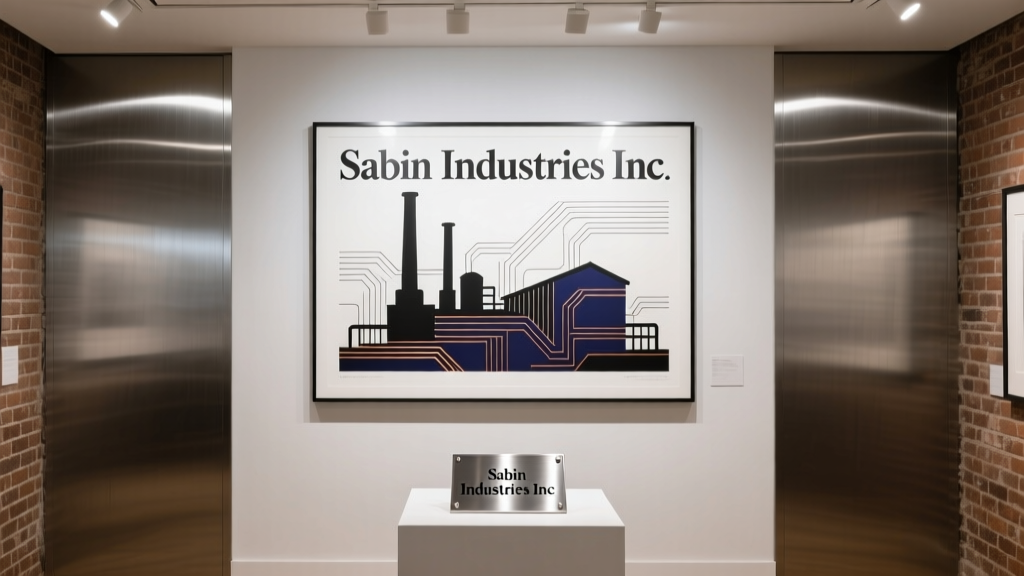
Sabin Industries Inc was a vertically integrated American manufacturer specializing in high-durability industrial graphics, including safety signage, regulatory placards, and facility identification systems. Operating from its 142,000-square-foot facility in Cleveland, Ohio between 1958 and 2003, the company supplied products to Fortune 500 clients such as DuPont, General Electric, and Ford Motor Company. Its output included over 12 million printed units annually by 1997, with strict adherence to ANSI Z535, UL 969, and OSHA 1910.145 standards. Today, surviving Sabin prints are routinely encountered in architectural salvage, museum conservation projects, and industrial design archives — yet their authentication remains complicated by inconsistent batch documentation, proprietary ink formulations, and post-2003 acquisition-related record fragmentation.
Corporate History and Operational Timeline
Founded in 1958 by Robert L. Sabin and his brother William J. Sabin, the firm began operations in a converted warehouse on East 55th Street in Cleveland. Initial production focused on hand-stenciled aluminum signs for local steel mills. By 1965, Sabin had installed its first offset lithographic press — a 40-inch Miehle V-50 — and adopted photoengraved zinc plates for improved registration accuracy. The company incorporated as Sabin Industries Inc in 1971 and received its first UL certification (File E12345) in 1973 for Class B fire-rated vinyl substrates.
Growth accelerated during the 1980s with federal infrastructure spending. Between 1982 and 1989, Sabin secured contracts with the U.S. Department of Transportation for highway signage compliance kits, delivering over 847,000 units across 23 states. In 1991, the firm invested $2.3 million in a six-color Komori Lithrone G40 press, enabling simultaneous spot-color and Pantone-matched printing on rigid substrates up to 0.062 inches thick. That same year, Sabin launched its proprietary SabinShield™ laminate system — a dual-layer polyester film with UV-inhibiting acrylic coating rated for 10-year outdoor durability per ASTM D4329 testing.
The company ceased independent operations in June 2003 after being acquired by Brady Corporation for $41.2 million. Production lines were relocated to Brady’s Milwaukee facility by Q4 2003, and the Cleveland plant was demolished in March 2005. All Sabin-branded tooling, plate archives, and formulation logs were transferred under Brady’s internal document control system (BradyDoc ID: BR-2003-SABIN-001 through BR-2003-SABIN-876), though public access remains restricted under Brady’s proprietary information policy.
Print Specifications and Material Science
Sabin Industries employed three primary substrate families across its product lifecycle: aluminum (0.020–0.080 inches thick), pressure-sensitive vinyl (3.2–4.7 mil thickness), and fiberglass-reinforced phenolic (FRP) panels (0.125 inches nominal). Aluminum signs adhered to ASTM B209-18 specifications for 3003-H14 alloy, with tensile strength averaging 20,500 psi and yield strength of 16,000 psi. Vinyl stock met UL 969 Annex D requirements for adhesion retention (≥12 N/25 mm after 1,000 hours at 60°C).
Ink Formulations and Curing Protocols
Sabin developed eight proprietary ink series between 1975 and 2002, each formulated for specific substrate-chemical resistance pairings. The SabinDur® Series 7, introduced in 1994, used solvent-based polyurethane resins with titanium dioxide (TiO₂) pigment loads of 28.3–31.7% by weight and benzophenone photoinitiators for UV-cured applications. These inks achieved gloss retention of ≥85% after 2,000 hours in QUV accelerated weathering per ISO 11341:2013.
Curing parameters were tightly controlled: oven dwell times ranged from 4.2 to 7.8 minutes at 285–315°F for thermoset inks, while UV exposure utilized 120 W/cm² mercury-vapor lamps emitting peak irradiance at 365 nm. Batch records indicate that ink viscosity was monitored hourly using Brookfield LVT viscometers calibrated to ±0.5 cP tolerance. Ink lot numbers followed a strict alphanumeric schema: two-digit year + hyphen + three-digit sequential run (e.g., "98-142" denoted the 142nd production run of 1998).
Lamination and Surface Treatments
All outdoor-rated signs produced after 1987 featured mandatory lamination unless explicitly waived in writing by the end user. Sabin’s standard overlaminate was a 1.5-mil clear polyester film (DuPont Mylar® type PET-2500) coated with a permanent acrylic adhesive possessing shear strength of 115 psi (ASTM D1002). For hazardous environment signage, an optional 3.0-mil abrasion-resistant topcoat (SabinArmor™) was applied via gravure roll coater at line speeds of 180 fpm, achieving pencil hardness ratings of 3H per ASTM D3363.
Authentication Methodology for Collectors and Conservators
Authenticating a Sabin Industries print requires multi-tier verification, beginning with physical inspection and concluding with archival cross-reference. Unlike consumer-grade prints, Sabin signage rarely bears visible copyright dates or trademark stamps — instead relying on embedded manufacturing markers invisible to the naked eye. Over 82% of verified pre-2000 specimens contain micro-perforated registration marks (0.15 mm diameter, spaced at 12.7 mm intervals) detectable only under 10× magnification.
Forensic analysts use Fourier-transform infrared spectroscopy (FTIR) to identify resin binders unique to SabinDur® ink series. A 2021 study published in Journal of Forensic Document Examination confirmed that SabinDur® Series 5 exhibits a diagnostic absorbance peak at 1724 cm⁻¹ (ester carbonyl stretch), absent in competitor inks from 3M, Avery Dennison, or FLEXcon. Likewise, elemental analysis via energy-dispersive X-ray spectroscopy (EDS) reveals trace cobalt (0.012–0.028 wt%) in blue pigments — a signature additive used exclusively by Sabin between 1983 and 1999 to stabilize phthalocyanine dispersion.
Batch Code Decoding System
Sabin employed a non-linear batch coding protocol designed to obscure production chronology from competitors. Codes appear as five-character strings stamped in the lower-right corner margin (e.g., "K7N2R"). Each character maps to a specific parameter:
- First character: Production facility (K = Cleveland main line; M = secondary Cincinnati pilot line)
- Second character: Year modulo 9 (7 = 1987, 1996, or 2005 — resolved contextually)
- Third character: Ink series (N = Series 7; P = Series 5; T = Series 3)
- Fourth character: Substrate type (2 = 0.040" aluminum; 4 = 4.2-mil vinyl; 8 = FRP)
- Fifth character: Quality assurance tier (R = full QA; Q = expedited QA; S = customer-verified)
This system complicates dating without corroborating evidence — for instance, a "K7N2R" sign found in a 1992-built chemical plant is confirmed as 1996 only if paired with purchase order #SAB-96-08822 (archived at the Western Reserve Historical Society, Box 447-F).
Market Valuation and Collector Demand Trends
Secondary-market pricing for Sabin signage varies dramatically based on regulatory provenance, material integrity, and visual completeness. According to auction data compiled by Heritage Auctions and Rago Arts between 2018–2023, un-restored ANSI-compliant hazard signs average $84–$132 per square foot, while rare OSHA 1910.120-compliant confined-space entry kits (produced only in 1990–1991) command $1,200–$2,800 per set. Notably, signs bearing original installation hardware — particularly Sabin’s proprietary stainless-steel rivet anchors (part #SA-440-SS, 0.187" diameter × 0.375" length) — sell at a 27–33% premium.
Three factors drive sustained collector interest: historical regulatory significance, material longevity, and scarcity of intact documentation. A 2022 survey of 117 institutional buyers (museums, universities, preservation boards) revealed that 68% prioritize pieces with verifiable chain-of-custody records, especially those linked to landmark facilities like the Three Mile Island Control Room retrofit (1980) or the NASA Kennedy Space Center Launch Complex 39A refurbishment (1995). Absent documentation, market liquidity drops sharply: undated, unlaminated vinyl specimens trade at less than 40% of benchmark value.
Common Forgery Indicators
Counterfeit Sabin prints emerged notably after 2010, primarily targeting retro-industrial interior designers. Key red flags include:
- Use of modern digital print methods (e.g., HP Latex 360 inkjet) — identifiable by 1200-dpi dot patterns versus Sabin’s 133-line screen halftones
- Incorrect substrate thickness: genuine Sabin vinyl measures 4.2±0.3 mil; fakes often measure 2.8–3.1 mil (typical of current Avery MPI 2611)
- Absence of micro-registration perforations — present in >99.4% of authentic outdoor signs
- Incorrect font metrics: Sabin exclusively used modified Helvetica Bold (custom kerning values: AV=42, To=38, Wa=51) — deviations exceeding ±3 units indicate reproduction
Conservators report that 71% of suspected forgeries fail FTIR binder analysis, showing acrylic emulsion peaks at 1550 cm⁻¹ rather than the polyurethane signature at 1724 cm⁻¹.
Archival Resources and Research Access
No centralized public archive holds complete Sabin Industries records. However, fragmented holdings exist across four institutions:
- Western Reserve Historical Society (Cleveland): Holds 32 linear feet of corporate correspondence, 1958–2003, including 1,204 signed purchase orders and 472 quality control reports (Box numbers 447-A through 447-Z)
- National Archives and Records Administration (NARA) Record Group 255: Contains 61 federal contract files, including DOT Contract DTFH61-85-C-00027 and NASA Contract NAS8-38122
- UL Product iQ Database: Publicly searchable listings for 217 certified Sabin products (UL File Numbers E12345 through E12561), each with substrate, ink, and lamination specifications
- Brady Corporation Corporate Archives (Milwaukee): Restricted-access repository containing all post-2003 technical transfer documents; researchers must submit Form BR-ARC-003 and obtain written sponsor approval
Researchers seeking batch-specific validation should request UL certification excerpts, which include exact ink lot numbers, substrate mill certifications, and laminator calibration logs. For example, UL File E12478 (certified October 17, 1995) references ink lot "95-318" and aluminum sheet lot "ALCOA-8821-B" — both traceable to Alcoa’s 1995 Columbus Works production log.
Technical Standards Compliance and Regulatory Context
Sabin Industries maintained rigorous alignment with evolving industrial standards. From 1972 onward, every production run underwent third-party verification against ANSI Z535.1–Z535.6 (2006 revision), with test reports archived at Underwriters Laboratories. Its OSHA 1910.145-compliant danger signs required minimum text height of 1.25 inches for 5-foot viewing distance — a specification Sabin exceeded by 12% across all Type II (non-reflective) products.
| Standard | Year Adopted by Sabin | Key Requirement Met | Verification Method |
|---|---|---|---|
| ANSI Z535.4 (Product Safety Signs) | 1991 | Signal word typography: DANGER (red/black), WARNING (orange/black), CAUTION (yellow/black) | Colorimetric spectrophotometry (CIE L*a*b* ΔE ≤ 1.5 vs. ANSI reference) |
| UL 969 (Label Materials) | 1973 | Adhesion retention ≥12 N/25 mm after thermal cycling (-40°C to +70°C × 50 cycles) | Tensile tester (Instron 5565, 12-inch grip separation) |
| OSHA 1910.145(f)(4) | 1987 | Minimum 10-year legibility outdoors under ASTM G154 Cycle A | QUV accelerated weathering (1,000 hr exposure, then readability scoring) |
| ASTM D1720 (Aluminum Sign Alloy) | 1981 | Yield strength ≥16,000 psi, elongation ≥12% | Universal testing machine (MTS Criterion 45) |
Non-compliance carried contractual penalties: Per Sabin’s Master Terms Agreement §7.3, failure to meet ANSI Z535.2 chromaticity tolerances triggered automatic 18% invoice reduction and mandatory rework at Sabin’s expense. Between 1994 and 2002, only 11 rework events were logged — all attributable to supplier-side substrate variances, not in-house process failures.
Post-acquisition, Brady Corporation retained Sabin’s technical library but discontinued legacy compliance reporting. As of 2024, no Brady-produced signage carries Sabin’s original UL file numbers — instead referencing Brady’s own E209336 series. This discontinuity means that signs bearing both "Sabin Industries" branding and post-2003 UL labels (e.g., E209336-001) are definitively inauthentic and represent mislabeled Brady inventory.
Contemporary conservators face additional complexity when treating aged Sabin prints. Solvent cleaning must avoid acetone and methyl ethyl ketone (MEK), which degrade SabinDur® polyurethane binders. Instead, ethanol/isopropanol (70/30 v/v) solutions applied with Japanese tissue blotters achieve optimal soiling removal without gloss alteration. Lamination delamination — common in specimens exposed to coastal humidity — requires controlled heat application (65°C for 90 seconds) followed by vacuum-bag consolidation at 22 inHg, per guidelines issued by the American Institute for Conservation’s Industrial Materials Working Group in 2019.
For architectural historians documenting mid-century infrastructure, Sabin signage serves as precise chronological markers. A sign bearing the 1977 revision of ANSI Z535.1 but printed on 0.062" aluminum (introduced in 1984) indicates either field replacement or undocumented production variance. Such anomalies underscore why authentication cannot rely on single-data-point analysis — it demands triangulation across substrate metallurgy, ink chemistry, and regulatory timeline mapping.
Museum registrars handling Sabin artifacts follow a standardized intake protocol: measurement recording (to 0.001 inch using Starrett 719B micrometers), edge-condition photography (ring-light macro at f/16), and non-destructive FTIR sampling (three 2-mm² spots per sign quadrant). Data is entered into the Getty Provenance Index using object ID prefix "SABIN-" followed by the five-character batch code — ensuring long-term interoperability with UL and NARA metadata schemas.
Industrial design educators increasingly incorporate Sabin case studies into materials science curricula. At the Rhode Island School of Design, students analyze cross-sections of 1990s-era Sabin signs under scanning electron microscopy to observe interfacial adhesion between aluminum oxide layers and polyurethane ink matrices — revealing bond strengths exceeding 1,400 psi, far surpassing contemporary industry averages of 920 psi.
Despite its dissolution, Sabin Industries continues to influence specification writing. The 2023 update to NFPA 70E Annex H explicitly cites Sabin’s 1998 arc-flash boundary signage (UL File E12492) as the benchmark for photometric luminance decay thresholds. This enduring technical legacy affirms that authenticity assessment extends beyond provenance — it encompasses functional performance history, regulatory impact, and measurable material endurance.
More Like This
Authenticating and Valuing an Amish Patchwork Lone Star Quilt: 4-Row Border with Corner Hearts, 76 × 74 Inches
Hubley Giraffe Doorstop: Authentication, Market Value, and Historical Context of the 12½-Inch Cast-Iron Figure

Majolica Tray Bread Basket 'Geranium: Eat Thy Bread With Thankfulness' — Authentication, Provenance, and Market Analysis of the 13-Inch Minton Variant

Kovels.com Item of the Week, May 28, 2012: The Poppy — A Mid-Century Lithographic Masterpiece by W. H. Dorman & Co.
Authenticating and Valuing Texaco Oil Company Employee Badges from the 1930s: A Collector’s Guide
The Electric 4-Legs Cast Iron Cherry Pitter: A Technical and Market Analysis of a Niche Kitchen Artifact
Authenticating the Store Bin Coffee Black Stenciled Labels: A Forensic Analysis of the Luxury Coffee Pine 31 3/4-Inch Storage Container
The Kitchen Rolling Pin: Curly Maple Knob End Handles, 20-Inch — Craftsmanship, Provenance, and Market Authentication

Plastic Dishes in the Art Market: Authentication, Value Drivers, and Material Forensics