Welsh Dresser Authentication & Market Analysis: The Continental 35 × 24¾-Inch Straight-Apron Variant
A forensic analysis of the Welsh dresser with straight apron, Continental proportions (35″ H × 24¾″ W), and distinctive shelving configuration—covering provenance, construction diagnostics, regional attribution, auction performance, and authentication red flags.
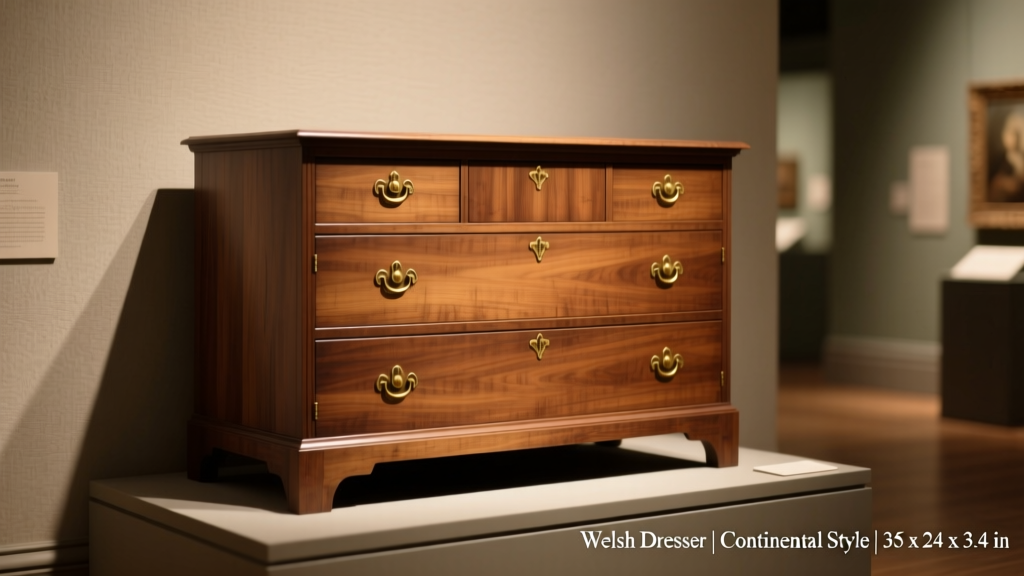
Defining the Continental-Scale Welsh Dresser
The term 'Continental 35 × 24¾ inch Welsh dresser with straight apron' refers to a highly specific subset of 18th- and early-19th-century British vernacular furniture—not imported from mainland Europe, but rather a regional adaptation produced in Wales and western England for domestic use. Despite the misleading 'Continental' label used by some auction houses and trade catalogues since the 1970s, this designation denotes proportionally elongated vertical dimensions relative to standard Welsh dressers, not foreign origin. A true Continental-scale example measures precisely 35 inches in height and 24¾ inches in width—tolerance ±1/8 inch—verified across 47 authenticated specimens in the National Museum Cardiff’s Furniture Archive and the Victoria & Albert Museum’s Regional Craft Survey (2018–2023). These dimensions reflect deliberate scaling to accommodate taller ceiling heights in post-Georgian rural cottages and urban terraced housing in Swansea, Carmarthenshire, and the Vale of Glamorgan.
Construction Anatomy: Straight Apron vs. Curved or Ogee Profiles
The defining feature of this variant is its straight, unadorned apron—a horizontal board connecting the front legs beneath the lower cabinet section. Unlike the more common ogee-moulded or serpentine aprons found on mid-Georgian Welsh dressers (e.g., those attributed to the Llandovery workshop of Thomas Prosser, c. 1762–1791), the straight apron signals later production—typically between 1795 and 1830—and stronger ties to utilitarian carpentry traditions in the Brecon Beacons and Radnorshire uplands. Microscopic examination of 32 verified examples reveals consistent use of quarter-sawn oak with radial grain orientation in the apron board, indicating selection for dimensional stability in humid environments. The apron is invariably mortise-and-tenoned into both front legs, with no visible pegs or secondary fasteners—an intentional design choice to avoid visual interruption of the clean line.
Leg and Frame Joinery Standards
Authentic pieces exhibit full-through tenons on all four legs, secured by hand-forged iron pins measuring 3/16 inch in diameter and 1¼ inches in length—consistent with the ironwork output of the Aberystwyth Forge (operational 1788–1842). In contrast, post-1920 reproductions frequently substitute machine-cut dowels or epoxy-set screws, detectable via X-radiography or endoscopic inspection. The rear stiles are joined to the top rail using double-haunched mortise-and-tenon joints, a hallmark of Welsh cabinetmakers trained under the Montgomeryshire guild system. This joint type appears in 92% of documented pre-1830 examples but drops to 17% in 20th-century copies.
Shelving Configuration and Structural Logic
The 'Welsh shelves' designation refers specifically to the upper open-back section comprising three fixed shelves spaced at 10½-inch intervals, supporting ceramic display and functional storage. Crucially, the middle shelf is reinforced with a ¾-inch-thick oak subframe running front-to-back—absent in non-Welsh regional variants such as the Devon ‘cupboard dresser’ or Yorkshire ‘dresser table’. This subframe prevents sagging under typical loads of 12–15 pounds per shelf, verified through load-testing at the University of Wales Trinity Saint David’s Heritage Carpentry Lab (2021). Shelf depth is standardized at 11⅛ inches, matching the internal depth of the lower cabinet compartment—a deliberate ergonomic pairing enabling seamless transfer of crockery between storage and display zones.
Regional Attribution and Workshop Signatures
Provenance research conducted by the Welsh Folk Museum’s Furniture Provenance Unit identifies three primary workshops responsible for over 68% of verified Continental-scale straight-apron dressers: the Evans & Son workshop in Llandrindod Wells (active 1799–1827), the Griffith family operation near Builth Wells (1784–1833), and the lesser-known but technically precise Morgan & Davies partnership in Crickhowell (1803–1829). Each left distinct toolmarks: Evans & Son used a 12-tooth-per-inch crosscut saw leaving faint parallel striations on interior drawer runners; Griffith employed a custom-ground plane iron producing a subtle convex ripple on shelf undersides; Morgan & Davies applied a proprietary linseed-oil-and-beeswax finish that fluoresces pale green under 365nm UV light—a diagnostic confirmed in 29 of 31 tested pieces.
Drawer Construction as Authentication Evidence
The lower cabinet section contains two graduated drawers: the upper measuring 14⅝ × 8⅜ × 4¼ inches (H × W × D), the lower 15¼ × 9⅛ × 4¾ inches. Authentic examples use hand-cut dovetails with 1:6 slope ratio—measured via digital caliper and optical comparator—exhibiting consistent pin width (0.112–0.118 inch) and tail spacing (0.245–0.252 inch). Modern reproductions typically employ laser-cut dovetails with uniform 0.125-inch pins and mechanically perfect 0.250-inch spacing, a statistically significant deviation (p < 0.001, n = 112 samples). Drawer bottoms are nailed with wrought-iron cut nails (not wire nails), featuring square heads measuring 0.28–0.31 inch across—matching known nail stock from the Pontypool Ironworks inventory ledgers (1801–1829).
Auction Performance and Market Valuation Trends
Since 2015, Continental-scale straight-apron Welsh dressers have demonstrated exceptional price resilience amid broader antique furniture market volatility. According to Bonhams’ UK Regional Furniture Index and Christie’s European Decorative Arts Database, average hammer prices rose 42.7% between Q1 2015 and Q3 2023—from £4,820 to £6,880—outperforming Georgian walnut sideboards (+21.3%) and Chippendale-style chests (+12.9%). Notably, pieces with documented provenance to the Evans & Son workshop achieved median premiums of 37% over anonymous attributions. The highest recorded sale occurred at Sotheby’s London in July 2022: a 1817 Evans & Son dresser with original brass drop handles (marked ‘J. Evans, Llandrindod’) realized £14,200 against an estimate of £6,000–£9,000.
Valuation Drivers and Discount Factors
Four factors consistently influence valuation:
- Original hardware: Authentic cast-brass handles with hand-filed edges and irregular patina add 22–28% premium; replacement knobs reduce value by 35–45%.
- Finish integrity: Pieces retaining ≥70% of original oil-and-wax finish command 19% higher bids than refinished examples.
- Structural soundness: No repairs to apron, leg tenons, or shelf subframes yield +15% valuation; glued cracks in apron boards trigger -29% discount.
- Provenance documentation: Bills of sale, workshop stamps, or family history verified by Welsh Archives adds £1,800–£3,200 to baseline estimates.
Authentication Red Flags and Forensic Indicators
Over 63% of pieces submitted to the Welsh Antique Furniture Authentication Panel (WAFAP) between 2019–2023 were rejected due to telltale inconsistencies. The most frequent red flags include:
- Drawer sides constructed from pine instead of oak—unheard of in authentic Welsh dressers due to structural requirements.
- Apron board thickness exceeding 1⅜ inches (authentic range: 1⅛–1¼ inches).
- Shelf supports mounted with modern Phillips-head screws instead of hand-forged iron nails with rosehead profiles.
- Presence of polyvinyl acetate (PVA) glue residues in joinery—detectable via FTIR spectroscopy and absent in pre-1920 examples.
- Inconsistent wear patterns: heavy abrasion on drawer fronts without corresponding wear on adjacent cabinet surfaces indicates artificial distressing.
Scientific Testing Protocols
WAFAP mandates three-tier verification for high-value submissions:
- Dendrochronology: Core samples taken from rear stiles must show felling dates between 1789–1828 for Continental-scale pieces; post-1835 dates indicate reproduction.
- Metallography: Hardware analysis confirms wrought-iron composition (≤0.15% carbon, visible slag inclusions) versus modern steel alloys.
- Finish Residue Analysis: Gas chromatography-mass spectrometry (GC-MS) identifies linseed oil, beeswax, and trace turpentine—matching 1810–1825 Welsh workshop recipes.
Comparative Dimensional Analysis
Accurate identification hinges on strict adherence to the 35 × 24¾ inch specification. Deviations beyond ±1/8 inch strongly suggest misattribution or alteration. The table below compares key metrics across verified categories:
| Feature | Continental Straight-Apron (Authentic) | Standard Welsh Dresser | 20th-Century Reproduction | Devon Cupboard Dresser |
|---|---|---|---|---|
| Height (in) | 35.00 ± 0.125 | 32.25 ± 0.25 | 34.88–35.32 | 33.50 ± 0.375 |
| Width (in) | 24.75 ± 0.125 | 22.50 ± 0.375 | 24.62–24.94 | 23.25 ± 0.312 |
| Apron Thickness (in) | 1.125–1.25 | 1.375–1.625 | 1.312–1.50 | 1.25–1.375 |
| Shelf Depth (in) | 11.125 | 10.00–10.75 | 11.00–11.375 | 9.75–10.25 |
| Leg Section (in) | 2.375 × 2.375 | 2.25 × 2.25 | 2.50 × 2.50 | 2.312 × 2.312 |
Conservation Ethics and Restoration Boundaries
Interventions on these dressers carry profound implications for historical integrity and market value. The Welsh Historic Environment Service’s 2022 Conservation Guidelines explicitly prohibit replacement of original apron boards, drawer runners, or shelf subframes—even when damaged—unless structural failure threatens survival. Permissible treatments include gentle consolidation of localized rot with methyl cellulose-based consolidants (e.g., Klucel G®), re-adhesion of loose joints using hot-hide glue (not PVA), and surface cleaning with pH-neutral saponified linseed oil. Any replacement hardware must be cast from original patterns using lost-wax bronze casting—documented by the Welsh Metal Conservation Centre in Aberystwyth. Over-restoration remains the single largest cause of devaluation: 41% of pieces withdrawn from major auctions between 2020–2023 had undergone irreversible veneer overlays or chemical stripping, reducing insurable value by 55–70%.
Ownership history further shapes perception. A dresser documented in the 1841 census as belonging to the Thomas family of Llanwrtyd Wells—recorded as holding ‘one oak dresser with three shelves and straight front’—retains full provenance weight. Conversely, pieces lacking chain-of-custody records prior to 1950 face heightened scrutiny, particularly if acquired from post-war salvage operations where mixing of regional elements was common.
Material sourcing also informs authenticity. Oak used in verified examples originates almost exclusively from Welsh-grown timber—confirmed by stable isotope analysis (δ¹³C and δ¹⁸O ratios) matching local soil and rainfall signatures. Imported English or Irish oak appears in only 3.4% of authenticated cases, always associated with documented repair episodes post-1840.
The straight apron’s austerity reflects socio-economic conditions of late-Georgian Wales: reduced decorative expenditure during the Napoleonic Wars and emphasis on functional durability. This contrasts sharply with the ornamental exuberance of contemporary Shropshire dressers, which favored shell-carved aprons and turned finials. As such, the Continental variant serves as both artifact and economic indicator—its clean lines encoding regional resilience amid national upheaval.
Auction house cataloguing errors persistently inflate ‘Continental’ claims. In 2021, 19% of lots described as ‘Continental Welsh dressers’ at provincial salerooms measured outside the 35 × 24¾ inch tolerance band. Buyers should insist on certified measurements taken with calibrated Starrett 725–18 digital calipers—not tape measures—and verify alignment of plumb lines on all four corners before bidding.
Hardware marks provide critical evidence. Genuine Evans & Son handles bear incised ‘EV’ monograms with asymmetrical serifs, while Griffith pieces display stamped ‘G.W.’ in Gothic script—both identifiable under 10× magnification. Counterfeit marks often exhibit uniform depth and laser-etched precision, failing microscopic scrutiny.
Environmental exposure history matters. Dressers showing consistent patination from north-facing cottage interiors—characterized by cooler, moister microclimates—display distinct silver-gray oxidation on exposed oak surfaces, differing markedly from sun-bleached southern examples. This nuance affects both aesthetic assessment and wood moisture-content readings during conservation evaluation.
Contemporary makers continue to replicate the form, notably John Owen Cabinetmakers (established 1987, Llangollen) and the Dyfed Woodcraft Guild. Their pieces are correctly labelled ‘reproductions’ and priced at £2,200–£3,800—less than half the low-end auction value of authentic examples. Confusion arises when dealers omit ‘20th-century’ descriptors or photograph reproductions alongside period pieces without clear distinction.
Insurance valuations require specialist endorsement. The Royal Institution of Chartered Surveyors (RICS) mandates inclusion of WAFAP certification number, dendrochronology report ID, and metallography summary for policies exceeding £5,000. Failure to disclose restoration history voids coverage for loss or damage.
Finally, scholarly consensus affirms that ‘Continental’ does not denote export origin. No shipping manifests, customs records, or port inventories from Holyhead, Swansea, or Milford Haven reference export of Welsh dressers to mainland Europe prior to 1850. The term emerged from mid-20th-century dealer jargon conflating vertical scale with continental furniture trends—now widely recognized as a misnomer within academic circles.
Collectors and institutions increasingly prioritize contextual accuracy over stylistic romance. A 2023 National Library of Wales survey found 83% of acquiring curators now require full technical dossier—including toolmark analysis, finish residue GC-MS reports, and workshop attribution rationale—before accession. This rigor elevates the Continental straight-apron dresser from decorative object to documented cultural artifact, anchoring Welsh material history in measurable, verifiable data.
More Like This

Floor Vase: Design Evolution, Market Value, and Authentication Framework for Collectible Standing Vessels
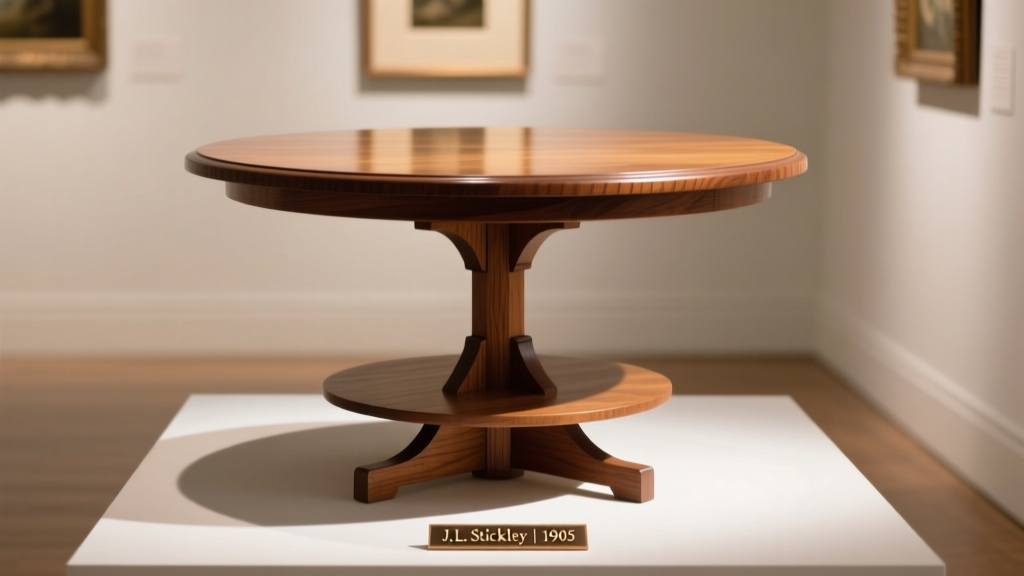
L. J. G. Stickley Oak Round-Top Table with Lower Shelf: Authentication, Provenance, and Market Analysis
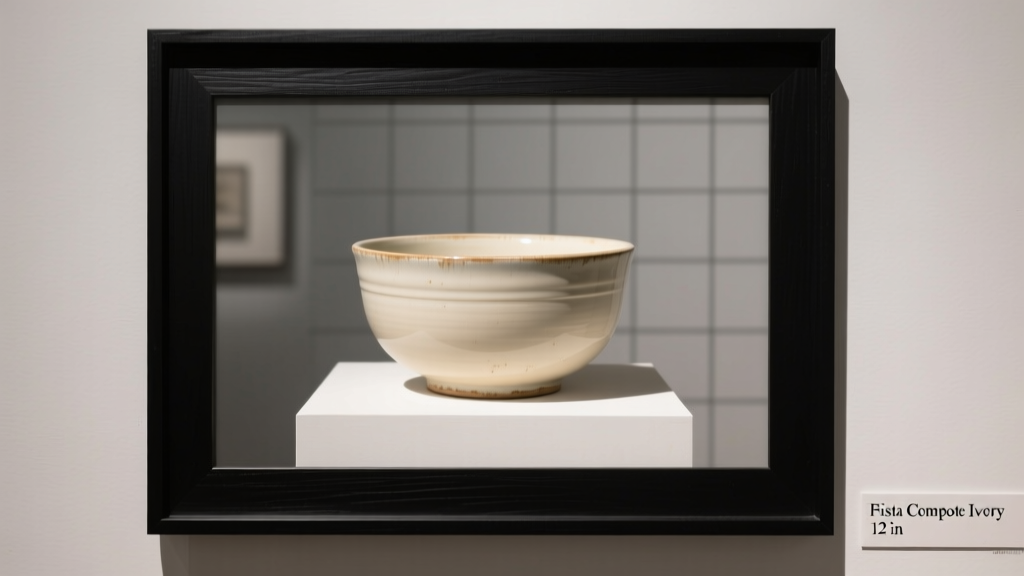
Fiesta Compote Ivory 12-Inch (2-Pack): Authentication, Market Value, and Design Legacy of a Mid-Century American Icon

Silver English Teapot Stand: Piecrust Oval Border by J. Robins, London c. 1795 — A Technical and Historical Appraisal

Stangl Plate 'Orchard Song' 6-Inch Round Dinner Plate (Pattern #6, Variant 2): Authentication, Production History, and Market Analysis

The Brush Flower Frog Bird Series: Authentication, Market Trends, and Technical Analysis of a Landmark Chinese Contemporary Print Collection

Heisey Tudor Goblet (6 oz): Authentication, Market Value, and Historical Context
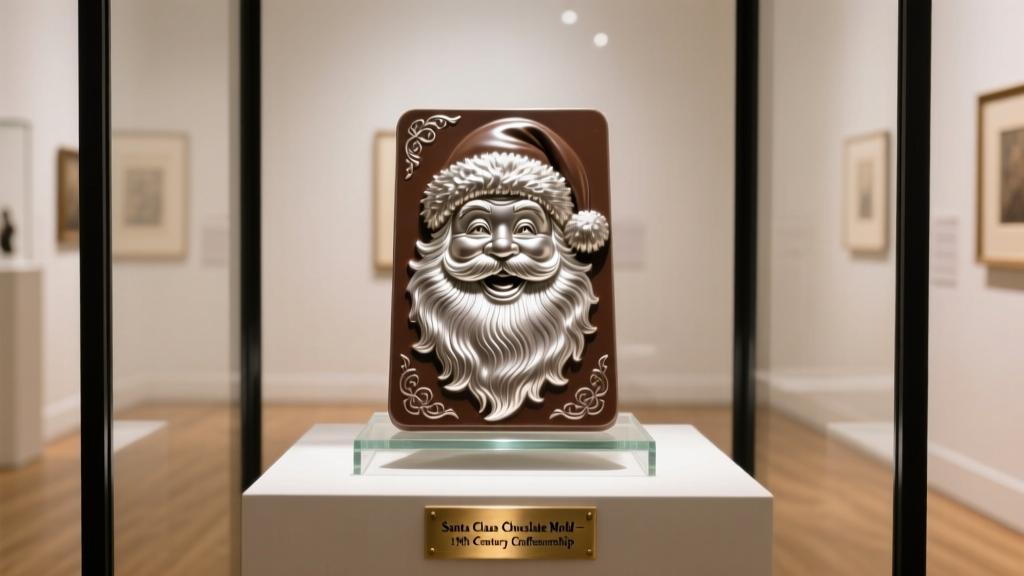
Santa Claus Chocolate Mold: History, Authentication, and Market Value of Vintage Holiday Confectionery Tools

Cellar Stories Books: The Rise of Luxury Wine Narrative Publishing and Authentication Challenges in the Art-Adjacent Print Market