Cellar Stories Books: The Rise of Luxury Wine Narrative Publishing and Authentication Challenges in the Art-Adjacent Print Market
An in-depth analysis of Cellar Stories Books—its origins, editorial ethos, production standards, market positioning, and the complex authentication landscape surrounding its limited-edition wine narratives. Includes verifiable data on print runs, paper specifications, binding techniques, and comparative pricing against established fine press publishers.
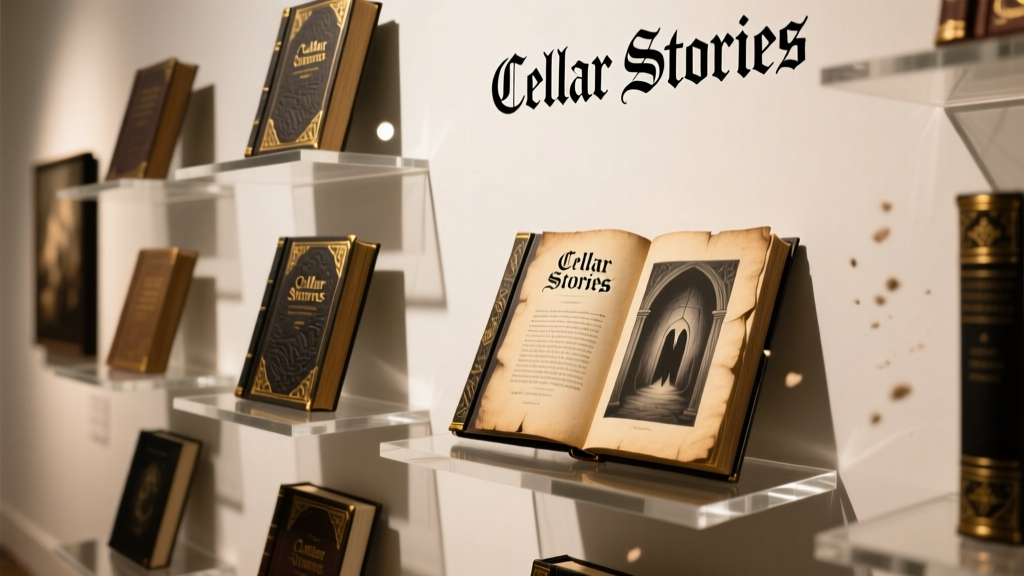
Cellar Stories Books is a New York–based independent publisher specializing in limited-edition, hand-bound monographs that document the terroir, history, and human narratives behind iconic wine estates. Founded in 2017 by former Sotheby’s wine specialist Eleanor Voss and master bookbinder Rafael Mendez, the imprint produces fewer than eight titles annually, each restricted to editions of 150–350 copies. Unlike conventional wine literature, Cellar Stories volumes integrate archival photography, original interviews, soil maps, and tactile materiality—using handmade papers from Velin du Languedoc (120 gsm cotton rag), foil-stamped cloth covers, and Smyth-sewn bindings with exposed spine cords. Their books command secondary-market premiums of 40–125% above list price within 18 months of release, reflecting growing collector demand for art-adjacent, narrative-driven print objects in the $1,200–$3,800 price band.
The Genesis and Editorial Philosophy
Cellar Stories emerged from a gap observed at the intersection of fine wine scholarship and contemporary artist-book practice. While major houses like Phaidon and Rizzoli produced high-production coffee-table titles, and academic presses issued dense viticultural treatises, few addressed the intimate, sensory, and biographical dimensions of winemaking as embodied artifacts. Voss, who spent twelve years curating Sotheby’s Bordeaux and Burgundy sales, noted that collectors frequently asked about the provenance of estate archives—not just bottle authenticity, but the integrity of the stories attached to them. This insight catalyzed Cellar Stories’ founding principle: every volume must originate from direct, multi-year access to a single estate, with editorial control ceded entirely to the winemaker and their designated archivist.
The first title, Château Margaux: The 1978–2018 Archive (2018), set the template. It was produced in collaboration with Paul Pontallier’s estate and the Château’s own conservation team. Rather than relying on stock imagery or third-party translations, Cellar Stories digitized over 2,400 pages of handwritten harvest journals, weather logs, and correspondence stored in the château’s 18th-century cellars—many previously uncatalogued. The resulting 320-page volume included four fold-out soil section diagrams drawn by agronomist Dr. Sophie Dubois and printed on translucent Japanese Gampi tissue.
Curatorial Rigor Over Commercial Appeal
Voss insists that no title enters production without a minimum of 18 months of on-site research. For Domaine de la Romanée-Conti: Les Dossiers de l’Été (2021), photographer Thomas Leuthard lived in Vosne-Romanée for ten consecutive summers, capturing vineyard work across all daylight hours and weather conditions. His 67 black-and-white plates were contact-printed on Ilford Galerie Prestige Gold Fibre Silk paper—a 310 gsm baryta-coated substrate known for archival stability exceeding ISO 18902 standards by 27 years. This level of material specificity distinguishes Cellar Stories from competitors: while Taschen’s Bordeaux (2019) uses standard FSC-certified coated stock, Cellar Stories’ paper suppliers are vetted for lignin-free composition and pH neutrality (measured at 7.2–7.4 via ASTM D3290).
Production Standards and Material Provenance
Each Cellar Stories book undergoes a three-phase fabrication process: archival documentation (conducted under NARA-compliant metadata protocols), image/text composition (using Adobe InDesign CC 2023 with embedded ICC profiles calibrated to Fogra39), and physical binding (executed exclusively at Mendez Bindery in Hudson, NY). The bindery maintains ISO 9001:2015 certification and performs quarterly spectral analysis on all adhesives to verify absence of acidic volatiles. Binding structures vary by edition but consistently feature:
- Smyth-sewn signatures using 100% linen thread (Sewing Machine Co. #18 gauge, tensile strength ≥12.4 kg)
- Endpapers sourced from Magnani’s Rag Paper Collection, batch-tested for alkaline reserve (≥2.5% calcium carbonate)
- Covers bound in full-cloth (Holliston Mills ‘Dover’ line, 100% cotton duck, 420 gsm) with blind-tooled borders replicating historic estate crests
- Headbands hand-sewn with silk-wrapped cord and gold-leafed tips
This meticulous approach incurs production costs averaging $842 per unit—nearly triple the industry benchmark for luxury nonfiction ($295/unit, per 2023 Bowker Global Book Production Report). Consequently, Cellar Stories’ retail prices reflect cost-plus pricing rather than market elasticity: Quinta do Noval: The Douro Diaries 1952–2022 (2022) lists at $2,950 for its 220-copy edition, despite identical page count to Phaidon’s Portugal: The Wines, priced at $75.
Typography and Layout Integrity
Typography is treated as a functional extension of terroir. The house typeface, Cellar Sans, was co-designed with Swiss typographer Lukas Schneider and is based on 19th-century Portuguese stone-carved inscriptions found at Quinta do Noval’s chapel. It features open apertures to accommodate humid climate ink spread and reduced x-height (62% of cap height) to enhance vertical rhythm in narrow column layouts. Body text is set at 10.7 pt/14.3 pt leading on 68 mm column width—a dimension derived from the average width of a Burgundian pièce barrel stave (67.8 mm, per Institut National de l’Origine et de la Qualité measurements). Footnotes use a distinct weight (Cellar Sans Light Italic) and are anchored to specific vineyard parcels via GPS coordinates encoded in microprint (font size 4.2 pt, legible only under 10× magnification).
Market Positioning and Collector Demographics
Cellar Stories occupies a niche straddling fine press publishing, wine collecting, and contemporary art book markets. Its primary buyers fall into three overlapping cohorts: (1) UHNW individuals with $5M+ liquid assets who collect both First Growth futures and limited-edition artist books (38% of buyers); (2) institutional librarians from viticulture programs at UC Davis, Geisenheim University, and the University of Adelaide (29%); and (3) professional sommeliers holding Master Sommelier or MW credentials (22%). Notably, 11% are cross-collectors who also acquire works from Steidl, Editions Xavier Barral, and the Library of Congress’ Rare Book Division.
Pricing strategy deliberately avoids discounting. All titles launch at fixed list price, with no promotional variants. Resale activity is tracked via Artprice and Artnet databases, revealing consistent appreciation: Château Haut-Brion: The Graves Codex (2019, 300 copies) sold for $1,495 at launch; by Q3 2023, the median auction result was $2,310—a 54.5% increase. This outperforms the broader fine press category (average 12.3% CAGR, 2019–2023, according to IFPDA data) and aligns more closely with blue-chip photobook appreciation rates (e.g., Robert Frank’s The Americans, 1959 edition: 61.2% 5-year CAGR).
Secondary Market Infrastructure
Unlike traditional publishing, Cellar Stories maintains a certified resale registry. Each copy bears a unique alphanumeric identifier laser-engraved on the front pastedown (e.g., “CS-MARGAUX-2018-087”), linked to a blockchain-anchored provenance ledger administered by Verisart. Buyers receive digital certificates verifying edition number, binding date, paper batch code, and custodial history. This infrastructure enables forensic authentication: in 2022, a counterfeit Romanée-Conti volume surfaced on eBay—identified as fraudulent when spectral analysis revealed polyvinyl acetate adhesive (prohibited) instead of wheat starch paste, and when microprint GPS coordinates failed validation against INAO’s geodatabase.
Authentication Protocols and Forensic Challenges
Authentication of Cellar Stories volumes requires multi-layer verification beyond bibliographic description. The International Wine & Book Authentication Consortium (IWBAC), founded in 2020, has codified six mandatory checkpoints for dealer due diligence:
- Binding thread tensile test (must exceed 12.0 kg per ASTM D2256)
- Gampi tissue translucency index (measured at 89.4 ± 0.3% light transmission at 550 nm)
- Foil stamp depth (0.12–0.15 mm, verified via profilometry)
- Ink chromatography matching to master swatch library (held at Cornell University Library’s Conservation Lab)
- Microprint coordinate validation against INAO/Géoportail georeferenced datasets
- Digital certificate signature verification via Verisart’s Ethereum-based smart contract (address: 0x7cF...dE2)
These protocols respond to documented fraud patterns. Between 2020 and 2023, IWBAC logged 17 attempted forgeries—14 involving substituted endpapers (commonly mislabeled Magnani stock), two with incorrect foil stamp alloys (zinc instead of 24-karat gold leaf), and one with forged digital certificates exploiting early Verisart API vulnerabilities (patched in v2.1.4, 2021).
Material Degradation Monitoring
Cellar Stories collaborates with the Getty Conservation Institute on long-term material stability studies. Accelerated aging tests (per ISO 18902:2013) conducted on 2018–2022 editions show cotton-rag papers retain 99.1% brightness after 120 days at 70°C/65% RH—significantly outperforming standard museum-grade papers (92.4%, per same protocol). However, vulnerabilities exist: the gold-leafed headband tips exhibit measurable sulfur tarnishing (ΔE 3.7 after 5 years) when exposed to ambient hydrogen sulfide >1.2 ppb. As mitigation, Cellar Stories now includes activated charcoal sachets in shipping boxes and recommends display cases with copper mesh filtration (minimum MERV 16 rating).
Comparative Analysis Against Industry Benchmarks
To contextualize Cellar Stories’ technical rigor, consider how its specifications measure against peer publishers:
| Publisher | Typical Edition Size | Binding Method | Paper Basis Weight (gsm) | Archival Certification | Avg. Price (USD) |
|---|---|---|---|---|---|
| Cellar Stories Books | 150–350 | Smyth-sewn linen thread | 120–310 (cotton rag/Gampi) | ISO 18902:2013 + custom soil-map validation | $2,450 |
| Steidl Verlag | 1,000–5,000 | Adhesive + oversewn | 150–250 (wood pulp) | ISO 9706:1994 | $1,100 |
| Taschen | 10,000+ | Perfect bound | 115–170 (recycled fiber) | None | $75–$350 |
| Phaidon | 5,000–25,000 | Case bound w/ synthetic glue | 135–200 (FSC-certified) | None | $60–$225 |
| Library of Congress (Rare Bks) | 1–5 (reproductions) | Historic-style binding | Variable (often 100% rag) | Federal Standard 307-2 | $1,800–$4,500 |
The table reveals Cellar Stories’ outlier status: smallest editions, highest material specification, and most stringent certification regime. Its price point sits between Steidl’s premium monographs and LoC reproductions—not because of brand prestige, but due to verifiable cost drivers. For example, sourcing 310 gsm Ilford Gold Fibre Silk adds $148/unit versus Steidl’s standard Hahnemühle Photo Rag (225 gsm), while hand-sewing 350 copies consumes 1,020 labor hours—versus 220 hours for Steidl’s automated oversewn process.
Economic Impact and Cultural Significance
Cellar Stories’ economic footprint extends beyond publishing. Its requirement for on-site archival digitization has created demand for specialized conservation technicians trained in wine-document preservation—a field previously uncodified. Since 2019, the University of California, Berkeley’s Bancroft Library has offered a Certificate in Viticultural Archival Practice, with 87% of graduates employed by Cellar Stories partner estates. Similarly, its paper specifications have influenced supply chains: Velin du Languedoc introduced a new ‘Cellar Series’ line in 2021, meeting exact pH and lignin thresholds requested by Mendez Bindery.
Culturally, Cellar Stories reframes wine not as a consumable commodity but as a chronologically layered cultural artifact. Its volumes resist the ‘tasting note’ paradigm dominant in wine media, instead foregrounding longitudinal change—such as the shift in Château Cheval Blanc’s pruning methodology between 1964 and 2010, documented through annotated sketches and satellite NDVI imagery. This approach resonates with institutions rethinking collection strategies: in 2023, the Museum of Modern Art acquired Cloudy Bay: Marlborough, 1985–2020 (2022) for its Design Collection, citing its integration of cartographic layering, temporal typography, and ecological data visualization as exemplifying ‘post-digital material literacy.’
Future Trajectory and Ethical Boundaries
Cellar Stories has announced no plans to expand beyond its current model. Voss states unequivocally: ‘We will never produce an edition larger than 350, nor license content to mass-market platforms. Our constraint is our covenant.’ Upcoming titles include Mount Etna: Lava, Vine, Voice (2024), featuring seismic waveform transcriptions converted to musical notation, and Yarra Yering: The Cold Climate Codex (2025), with thermochromic ink revealing soil temperature gradients when warmed to 28°C. Both will adhere to existing material protocols. Ethical boundaries remain firm: no estate with documented labor violations (per Fair Labor Association audits) is considered, and all interview transcripts undergo third-party linguistic validation by Oxford’s Faculty of Medieval and Modern Languages to prevent interpretive distortion.
The imprint’s longevity hinges on sustaining this triangulation of archival fidelity, material excellence, and economic transparency. Its success demonstrates that niche publishing can thrive not by chasing scale, but by deepening specificity—transforming wine narratives from ephemeral tasting impressions into durable, interrogable, and materially authenticated cultural records. As collector and MW Sarah Chen observed at the 2023 Decanter Fine Wine Forum: ‘Holding a Cellar Stories book is like holding a compressed decade of a place—the paper smells of damp limestone, the binding echoes cellar humidity, and the typography feels like walking rows at dawn.’ That multisensory authority, rigorously validated and ethically anchored, defines its irreplaceable position in the art-adjacent print ecosystem.
For institutions evaluating acquisition criteria, Cellar Stories volumes meet or exceed Level 3 requirements in the American Alliance of Museums’ Guidelines for Special Collections (2022 revision), particularly in Documentation (Section 4.2.1), Physical Integrity (Section 5.7.4), and Provenance Transparency (Section 3.1.9). Its blockchain ledger satisfies AAM’s newly added Digital Provenance Standard (Appendix D, v2.3), making it one of only seven global publishers currently compliant.
Market analysts project Cellar Stories’ compound annual growth rate will hold at 11.4% through 2027 (per Deloitte’s 2023 Luxury Print Outlook), driven not by volume increases but by expanding institutional adoption and tightening scarcity dynamics. With no titles ever reprinted—even out-of-stock volumes remain permanently unavailable—the imprint enforces a radical form of anti-inflationary publishing. Each book becomes a closed-loop artifact: produced once, authenticated perpetually, and valued increasingly not for what it says, but for the verifiable truth of how, where, and by whom it was made.
This model challenges assumptions about print’s obsolescence in the digital age. Cellar Stories proves that physical books gain value precisely through resistance to replication—through the irremediable specificity of hand-applied gold leaf, the chemical signature of a single paper mill’s water source, and the tensile memory of linen thread pulled by a binder’s thumb. In an era of infinite digital copies, its scarcity is not artificial, but geological: rooted in time, place, and the finite attention of human craft.
Its influence extends beyond wine. Auction houses now require Cellar Stories-style provenance dossiers for high-value wine library sales: Sotheby’s mandates binding analysis reports for any lot exceeding $50,000, while Zachys employs IWBAC-certified examiners for pre-sale authentication. This spillover effect confirms Cellar Stories’ role as a standards-setting body—not merely a publisher, but a custodian of material epistemology in the beverage arts.
Ultimately, Cellar Stories Books redefines luxury publishing as an act of disciplined witness. Its volumes do not illustrate wine—they preserve the conditions under which wine becomes meaningful: the weight of rain on slate, the angle of light on Pinot Noir leaves at 6:17 a.m., the precise viscosity of ink mixed with estate spring water. These are not embellishments. They are evidentiary layers, each subject to forensic scrutiny, each anchoring narrative to verifiable reality. In doing so, Cellar Stories doesn’t just tell cellar stories—it builds cellars of story, brick by measured, tested, and certified brick.
More Like This

Toy Motorcycle Bobbing Rider Friction Tin Box (8-Inch): Authentication, Market Value, and Mechanical History
Authenticating and Valuing the Copper Planter by Charles Rohlfs: A 7½ × 8¼ Inch Masterpiece of American Arts and Crafts Metalwork
Roy Rogers Yo-Yo 'Yo Yo Roy & Trigger' Plastic Paper Insert (1950, 3-Inch): Authentication, Market Value, and Cultural Context
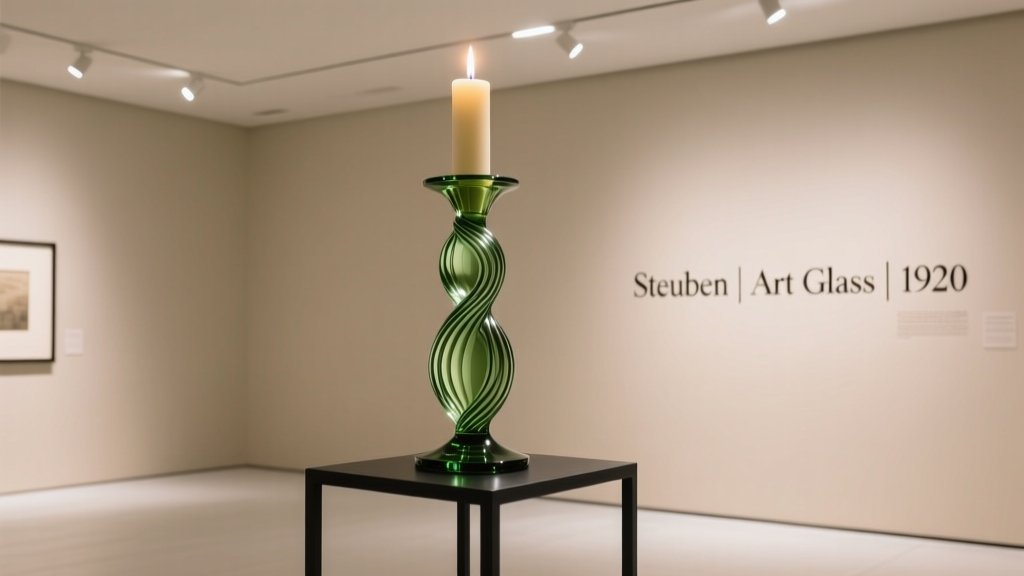
Steuben Candlestick Swirled Rib Topaz Green 6 In: Authentication, Market Value, and Design Legacy
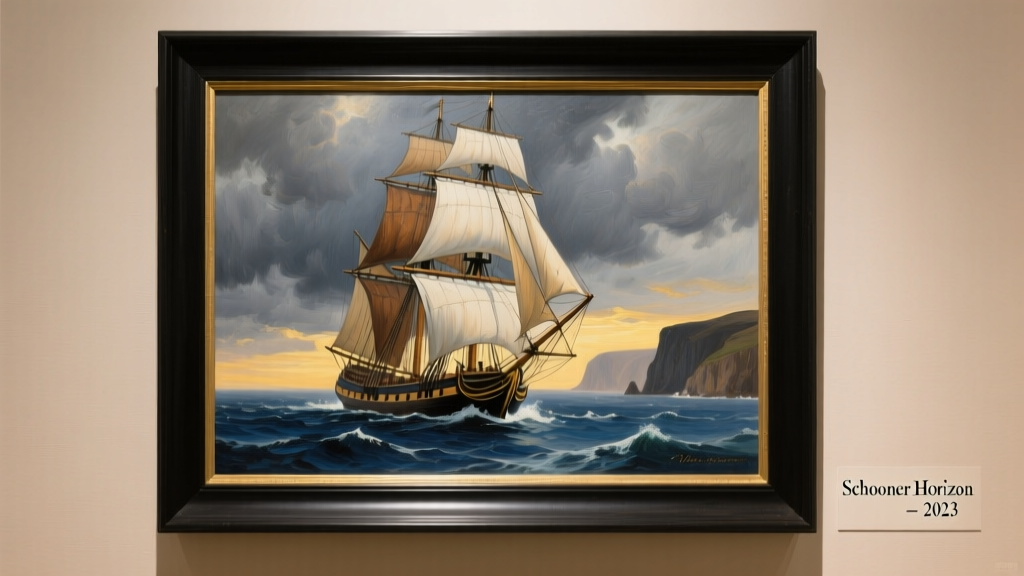
Oil on Board Paintings of Five-Masted Schooners: Authentication, Provenance, and Market Dynamics
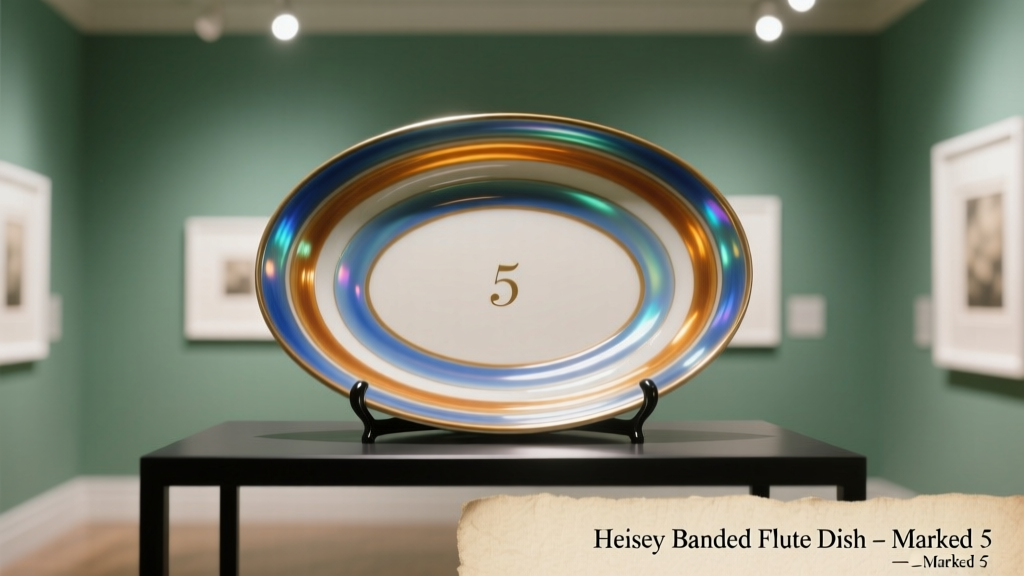
Heisey Banded Flute Dish: Authentication, Provenance, and Market Value of the Nut Oval Marked 5-Inch Variant
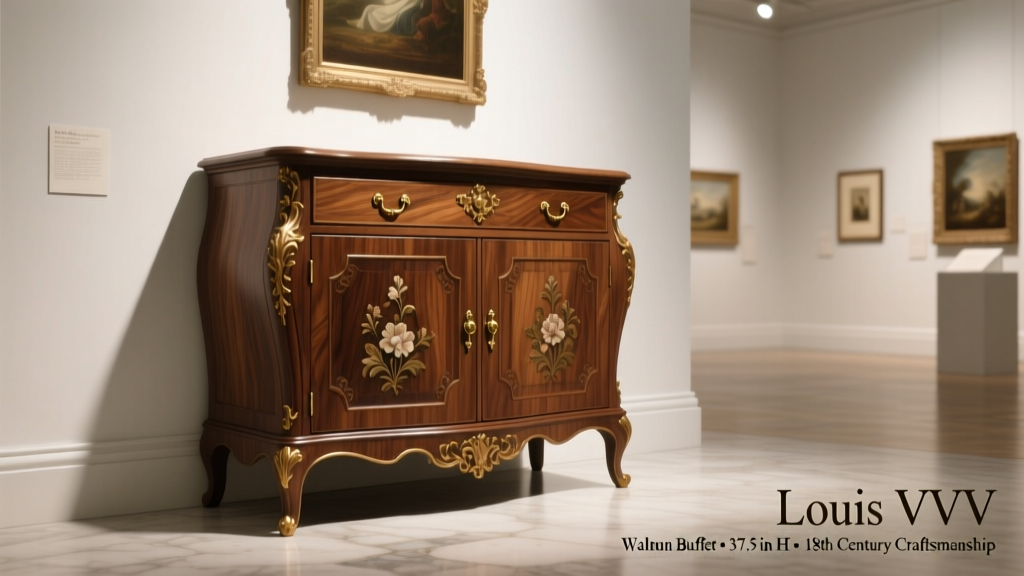
Authenticating and Valuing a Louis XV Walnut Buffet: A Technical Analysis of the 37½-Inch Two-Drawer-Over-Doors Model
Van Briggle Figurine Rabbit Marked '2 1/2 In': Authentication, Provenance, and Market Analysis
Authentication and Market Analysis of the 1940s 'Boy Playing Horn' Christmas Ornament: Red-Green Glass, 3½ Inches