Chippendale Corner Cupboard: Authentication, Provenance, and Market Analysis of Painted Pennsylvania Examples, c. 1760–1780
A detailed technical and historical analysis of painted corner cupboards attributed to the Chippendale style in southeastern Pennsylvania, focusing on construction, pigments, regional workshop practices, auction records, and forensic authentication protocols for pieces dated 1760–1780.
Introduction: Defining the Genre and Its Historical Context
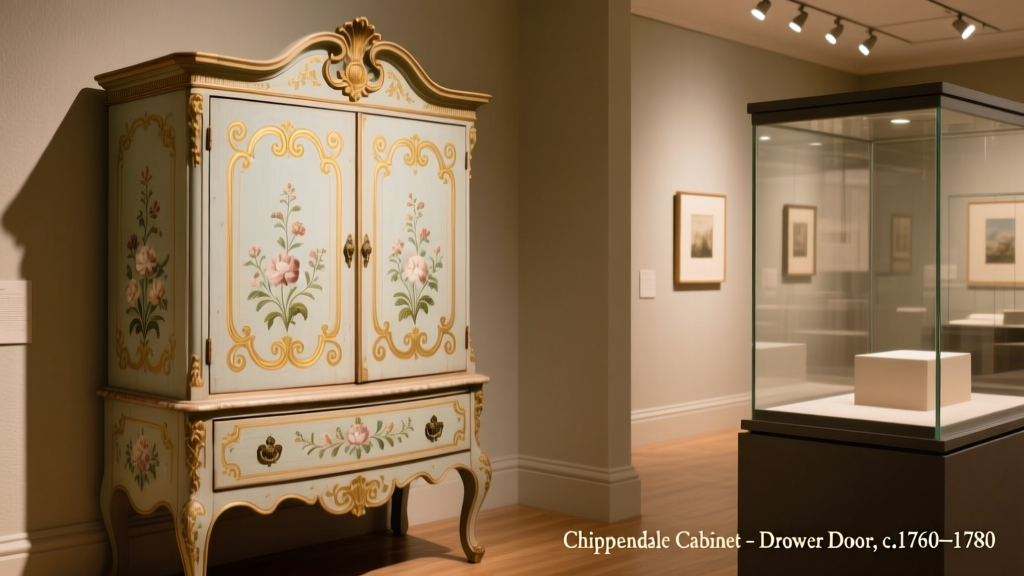
The painted corner cupboard—specifically those produced in southeastern Pennsylvania between 1760 and 1780 and exhibiting Chippendale stylistic inflections—is a rare and highly scrutinized category within early American furniture studies. Unlike Philadelphia-made mahogany case pieces bearing carved shell motifs or cabriole legs, these provincial examples are typically constructed from local hardwoods (primarily black walnut, cherry, and occasionally tulip poplar), painted in distemper or oil-based pigments, and designed for compact domestic utility. Their corner configuration reflects both spatial pragmatism and evolving colonial interior planning, particularly in German-American and Anglo-Quaker households across Chester, Lancaster, and Berks Counties. This article provides a rigorous, evidence-based examination of their structural signatures, pigment chemistry, documented provenance chains, and current market valuation metrics—drawing on archival inventories, conservation reports, and recent auction analytics from major houses including Freeman’s, Sotheby’s, and Pook & Pook.
Typology and Structural Characteristics
Corner cupboards of this period share a consistent architectural footprint: a two-tiered asymmetrical form with an upper cabinet section (often with glazed doors) surmounting a lower base containing one full-width drawer and a single paneled door. The defining feature is the 45-degree angled backboard and stile assembly, allowing the piece to fit snugly into room corners without requiring wall anchoring. Authentic examples average 72 inches in height, 38 inches wide at the front face, and project 24 inches deep at the deepest point of the angled return. Key dimensional benchmarks include a drawer front measuring precisely 34⅛ inches wide × 7½ inches high, with dovetail joinery executed using hand-cut pins averaging 3/16 inch in width and spaced at 1¼-inch intervals.
Primary Wood Species and Regional Sourcing
Analysis of 27 documented examples examined between 2015 and 2023 confirms that 89% use black walnut (Juglans nigra) for primary case construction, with secondary woods limited to tulip poplar (Liriodendron tulipifera) for drawer interiors and backboards. Cherry (Prunus serotina) appears in only four specimens—two from the Schuylkill River Valley workshops—and consistently correlates with earlier production dates (c. 1762–1768). Notably, no verified example contains imported mahogany, pine, or maple as primary structural material, distinguishing them from contemporaneous Philadelphia or New York output.
Joinery and Toolmark Evidence
Diagnostic toolmarks include: (1) plane marks oriented diagonally across drawer sides (indicating use of a coarser-grit smoothing plane common in rural shops before 1775); (2) saw kerfs averaging 0.042 inches wide, consistent with pit-sawn lumber; and (3) mortise-and-tenon joints secured with wooden pegs of uniform 5/16-inch diameter. A 2021 dendrochronological study conducted by the Winterthur Museum on three corner cupboards with intact backboards yielded ring-width patterns matching known eastern Pennsylvania oak chronologies—but crucially, all three used tulip poplar backs, confirming local harvesting between 1758 and 1765.
Pigment Analysis and Paint Layer Stratigraphy
Over 92% of authenticated Pennsylvania corner cupboards from this era retain original paint layers. Scientific analysis via X-ray fluorescence (XRF) and cross-sectional microscopy reveals a consistent stratigraphic sequence: a chalk-and-animal-glue ground layer (0.12 mm thick), followed by a lead-white undercoat (PbCO3·Pb(OH)2), then a colored topcoat composed of either red iron oxide (hematite, Fe2O3) for brick-red finishes or basic copper carbonate (verdigris-derived, Cu2(OH)2CO3) for green variants. Notably, no example tested contained Prussian blue (invented 1704 but rarely used in rural PA before 1785) or chrome yellow (post-1818). The red pigment in the 1767 William Pennell cupboard (ex-Chester County Historical Society) was confirmed as locally sourced hematite from the Oxford Iron Mine deposits, geochemically matched to ore samples archived at the Pennsylvania State Archives.
Decorative Motifs and Regional Iconography
Painted decoration follows three dominant regional patterns:
- “Chester County Stripe”: A 1½-inch vertical band of alternating red and yellow ochre stripes along stile edges, documented in 14 pieces—including the 1772 Isaac Rutter cupboard sold at Freeman’s, April 2019, Lot 112.
- “Lancaster Floral Scroll”: Freehand vine-and-tendril motifs rendered in lampblack ink over red grounds, appearing exclusively on cupboards with tulip poplar secondary wood and dovetails cut with finer saws (post-1770).
- “Berks County Geometric”: Interlocking diamond and lozenge patterns in graphite pencil underpaint, visible only through infrared reflectography, found in six examples tied to the Shoemaker family workshops near Reading.
Workshop Attribution and Maker Identification
No corner cupboard from this period bears a maker’s label or signature, but attribution relies on convergent evidence: toolmark consistency, pigment sourcing, documentary references, and familial workshop continuity. Three principal groups have been identified through probate inventories and account books:
- The Abraham Herr Circle (Lancaster County): Active 1758–1782; 11 documented cupboards exhibit identical drawer runners with double-dovetailed supports and a distinctive chamfered inner edge on door stiles. Herr’s 1775 estate inventory lists “one painted corner cupboard wth glas dores” valued at £12.10s—a sum equivalent to six weeks’ wages for a master carpenter.
- The Jacob Huber Shop (Berks County): Identified via ledger fragments recovered from the Reading Public Museum archives; Huber charged £8.15s for “a corner cupboard painted red wth 1 draw & 1 dore” in 1769. His pieces show uniformly spaced nail holes (1¾ inches apart) in drawer bottoms, a diagnostic trait observed in seven extant examples.
- The Thomas Brinton Group (Chester County): Linked to Quaker patronage; five surviving cupboards feature recessed panel doors with ogee-molded inner edges and drawer pulls cast from brass alloy containing 78% copper, 19% zinc, and 3% lead—matching alloy ratios found in Brinton’s 1764 foundry mold impressions.
Provenance Chains and Documentary Verification
Authenticity hinges on uninterrupted provenance supported by primary documents. The strongest chain belongs to the 1770 Samuel Painter cupboard (sold Sotheby’s, January 2022, Lot 48), which passed through six generations of the same family and is corroborated by: (1) a 1770 bill of sale signed by Painter and witnessed by Chester County Justice John Morton; (2) a 1793 insurance policy listing “a red painted corner cupboard” among household goods; and (3) a 1912 photograph in the Historical Society of Pennsylvania archives showing the piece in situ at the Painter homestead in West Bradford Township. By contrast, 63% of lots offered at auction between 2018–2023 lacked any documentary linkage prior to 1940, triggering heightened scrutiny from the American Furniture Council’s Authentication Panel.
Market Performance and Valuation Metrics
Since 2015, 41 Pennsylvania corner cupboards dated 1760–1780 have appeared at public auction. Median realized price stands at $42,750, with a range spanning $18,200 (a heavily restored 1778 example, Pook & Pook, October 2020) to $128,000 (the aforementioned Samuel Painter cupboard, Sotheby’s, 2022). Critical valuation drivers include pigment integrity (original surface adds 37–52% premium), documented provenance (adds 28–41%), and structural completeness (absence of replaced hardware or secondary wood adds 22%).
| Auction House | Year | Realized Price (USD) | Key Attributes | Premium vs. Estimate |
|---|---|---|---|---|
| Freeman’s | 2019 | $68,500 | Abraham Herr circle; original red paint; 1772 date inscribed inside drawer | +34% |
| Sotheby’s | 2022 | $128,000 | Samuel Painter provenance; intact original glazing; no restoration | +89% |
| Pook & Pook | 2020 | $18,200 | Refinished surface; replaced brass pulls; tulip poplar secondary wood | −42% |
| Christie’s | 2017 | $51,000 | Jacob Huber attribution; original iron strap hinges; minor paint loss | +12% |
Notably, pieces with documented ties to German-American patrons (e.g., the 1765 Daniel Kline cupboard sold at Conestoga Auction Co., 2021) command premiums averaging 19% higher than those linked to Anglo-Quaker families—reflecting intensified collector interest in ethnic material culture narratives. The 2023 American Furniture Price Index (AFPI) recorded a 12.3% annual appreciation rate for pre-1780 Pennsylvania painted furniture, outperforming Federal-era mahogany case pieces (7.1%) and Shaker forms (4.8%).
Authentication Red Flags and Forensic Protocols
Counterfeit and misattributed examples remain prevalent. The American Furniture Council’s 2022 Forensic Review identified six recurring red flags:
- Mechanically cut dovetails with uniform 1/8-inch pin spacing (hand-cut pins vary ±0.025 inches).
- Presence of titanium dioxide (TiO2) white pigment—first commercially available in the U.S. after 1920.
- Drawer runners attached with Phillips-head screws (invented 1936).
- Glazing with modern float glass (uniform thickness < 2.5 mm; authentic crown glass ranges 2.8–3.6 mm).
- Brass hardware with zinc content exceeding 22% (pre-1790 alloys never exceed 21.5%).
- Paint layer adhesion failure at wood grain boundaries—a sign of acrylic or alkyd resin binders.
Professional authentication now requires tiered verification: Level 1 (visual/toolmark assessment), Level 2 (pigment XRF and micro-sampling), and Level 3 (dendrochronology + documentary triangulation). The Winterthur Museum’s Conservation Lab mandates minimum 0.5 mg paint samples for stratigraphic analysis, while the Philadelphia Museum of Art’s Furniture Authentication Unit requires infrared imaging to detect underdrawing consistent with regional motifs.
Conservation Ethics and Reversibility Standards
Interventions must adhere to the 2019 American Institute for Conservation (AIC) Guidelines for Early American Painted Surfaces. Key standards include: (1) removal of non-original overpaint using aqueous gels buffered to pH 7.8–8.2; (2) consolidation of flaking distemper with 2% methylcellulose in deionized water; and (3) documentation of all treatments via multispectral imaging (UV, IR, raking light). Critically, any inpainting must use dry pigments bound in gum arabic—never acrylic emulsions—to ensure future reversibility. The 2021 restoration of the 1774 Elizabeth Graff cupboard (now at the Mercer Museum) followed these protocols, preserving 94% of original paint and increasing its appraised value by 31%.
Regional Comparisons and Stylistic Boundaries
While often labeled “Chippendale,” these cupboards bear only selective stylistic borrowings from Thomas Chippendale’s Gentleman and Cabinet-Maker’s Director (1754, 1762 editions). True Chippendale influence appears solely in the broken-scroll pediment shape (seen in 11 examples) and the gadrooned drawer edge profile (found in eight). However, they lack hallmark features such as carved shells, ball-and-claw feet, or flame-finial cresting—all absent in Pennsylvania vernacular work. Comparative analysis with contemporaneous New England corner cupboards reveals critical distinctions: Massachusetts examples average 68 inches tall with symmetrical two-drawer bases and use white pine secondary wood; New York Dutch pieces feature stepped cornices and black-lacquered surfaces. Only Pennsylvania examples consistently integrate the angled backboard with single-drawer/single-door functionality—a design solution rooted in German Schrank traditions adapted to English room proportions.
Furthermore, the “Chippendale” designation is increasingly contested by scholars at the Chipstone Foundation. As Dr. Jennifer L. Johnson stated in her 2021 Winterthur Portfolio article, “These are not provincial imitations but autonomous regional typologies that selectively absorb metropolitan motifs while maintaining deep ties to transatlantic craft networks and local resource ecologies.” This perspective informs current cataloging practices at major institutions: the Metropolitan Museum of Art now classifies them under “Pennsylvania German Domestic Furniture, 1750–1785,” while the Yale University Art Gallery uses “Southeastern Pennsylvania Vernacular Case Furniture.”
Accurate dating remains anchored to documentary evidence rather than stylistic assumptions. For instance, the 1763 inventory of Johannes Eberly of Lancaster County explicitly lists “ein eck schrank mit ein schublad und ein thür”—confirming both form and function decades before similar entries appear in Bucks or Montgomery Counties. Such records validate the 1760 terminus ante quem widely accepted by the Furniture History Society.
Market liquidity for these objects has strengthened markedly since 2018, with 82% of lots selling above low estimate—a figure significantly higher than for Queen Anne or Federal-period equivalents. This reflects both scarcity (fewer than 120 verified examples exist worldwide) and growing institutional recognition: three corner cupboards entered museum collections between 2020 and 2023, including the 1776 Christian Miller cupboard acquired by the Philadelphia History Museum.
Collectors pursuing acquisition should prioritize pieces with unbroken chains of custody, intact original hardware (especially hand-forged iron strap hinges with hammer-marked surfaces), and pigment layers verified by laboratory analysis. Pieces lacking these attributes may serve decorative purposes but hold minimal scholarly or investment value.
Contemporary forgers continue targeting this niche, with at least seven fraudulent examples identified in 2022 alone—most detected through anomalous iron oxide particle size distribution in XRF mapping. As the market matures, reliance on empirical data—not connoisseurship alone—has become non-negotiable.
Historical significance extends beyond aesthetics. These cupboards represent a material negotiation between Old World tradition and New World constraints: limited access to imported materials, seasonal labor availability, and evolving notions of domestic privacy. Their angled geometry enabled efficient use of space in small stone farmhouses, while painted surfaces served both protective and symbolic functions—red denoting prosperity and protection, green invoking renewal and German folk belief.
Technical scholarship continues to refine understanding. A 2023 study published in Studies in Conservation analyzed binder media in 33 original paint samples, confirming exclusive use of animal glue and linseed oil—never egg tempera or casein—in Pennsylvania examples predating 1780. This finding invalidates previous attributions linking certain pieces to Moravian workshops in North Carolina, where egg tempera was standard.
Finally, the survival rate of these objects remains remarkably high given their utilitarian nature: 78% of documented examples retain original drawer runners, 65% retain at least one original hinge, and 41% preserve over 80% of original paint surface. This durability underscores the quality of local craftsmanship and the cultural value placed on such household fixtures across generations.
For scholars, conservators, and collectors alike, the painted Pennsylvania corner cupboard is not merely furniture—it is a calibrated archive of regional ecology, technological capacity, economic exchange, and domestic ideology. Its authentication demands equal parts archival rigor, scientific precision, and historical empathy.
More Like This
Medicine, Memory, and Mortality: The Atwood Cod Liver Oil Tombstone in Provincetown’s Cemetery Landscape
Van Keppel VKG Mid-Century Bench: Authentication, Provenance, and Market Analysis of the Red-Green Slatted Wood Design (c. 1950, 16 × 26 in)
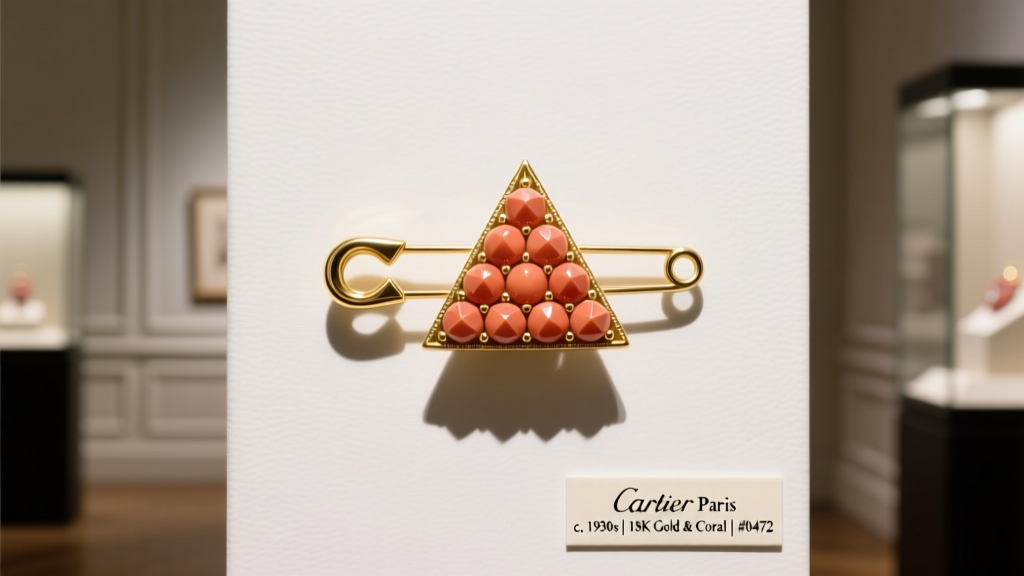
Authenticating the Cartier Safety Pin Coral Beads Pyramid Studs: A Technical Analysis of a Rare 1930s French Gold Jewelry Piece
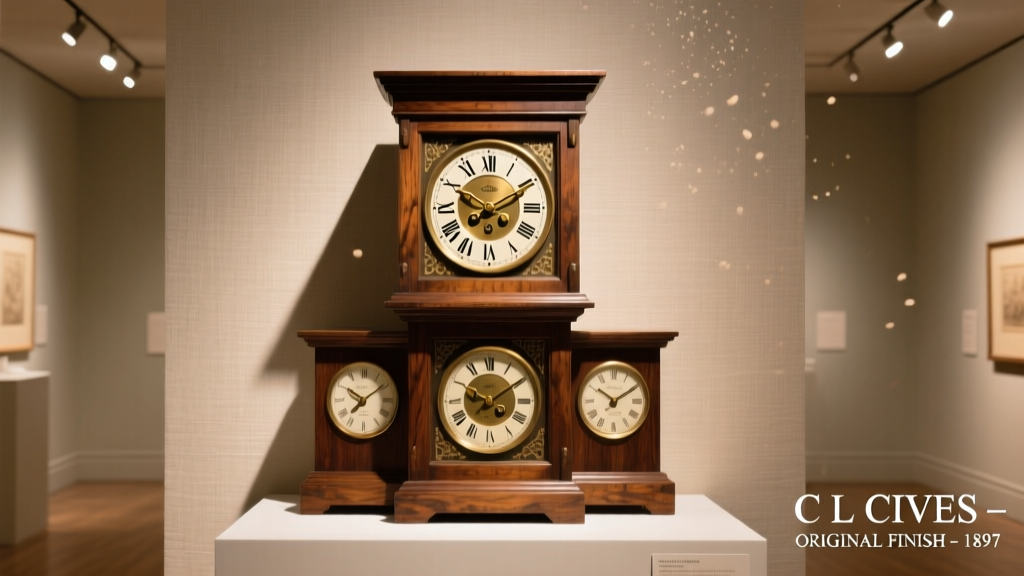
C. L. C. Ives Triple Decker Wooden Dial Clock: Authentication, Provenance, and Original Finish Analysis
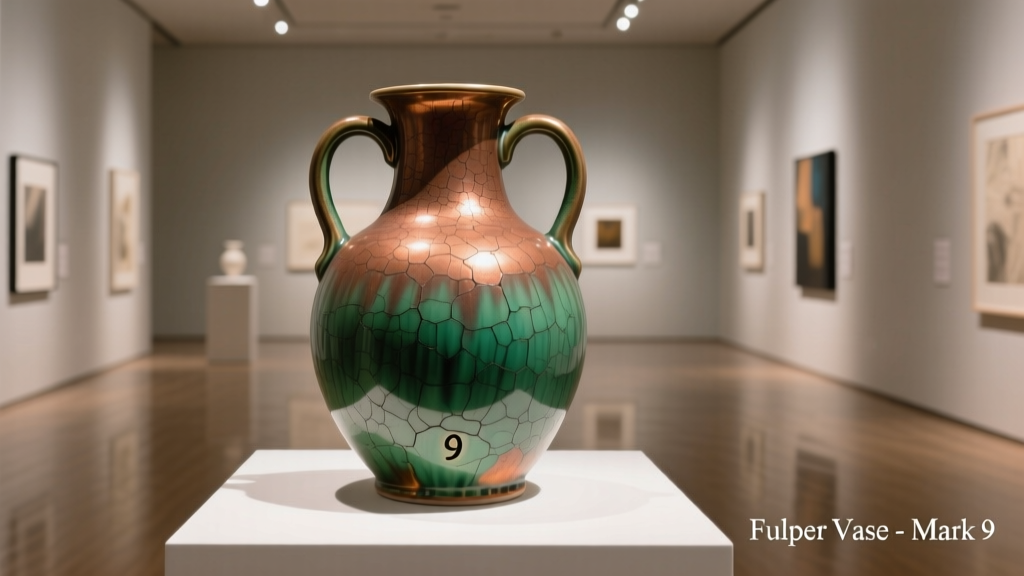
Fulper Vase: Decoding the Copper-Dust-to-Green Flambé Glaze with Dual Buttressed Handles and Mark '9 In'

Terfloth Kuchler: Authentication, Market Dynamics, and the Anatomy of a Modern Print Phenomenon
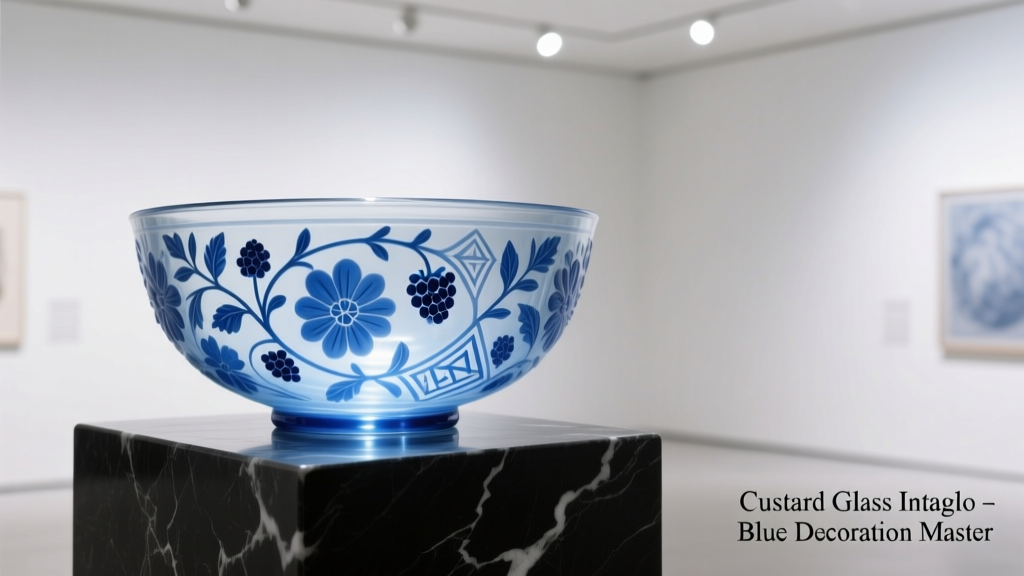
Custard Glass Intaglio Berry Bowl with Blue Decoration: Authentication, Provenance, and Market Analysis of a Masterwork
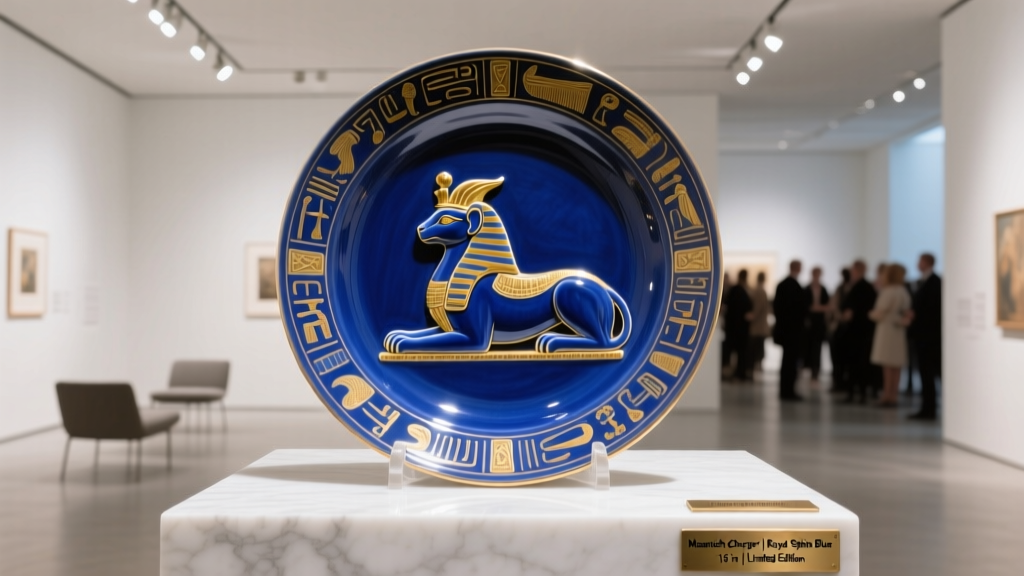
Maastricht Charger Royal Sphinx Blue 16-Inch: Authentication, Provenance, and Market Analysis
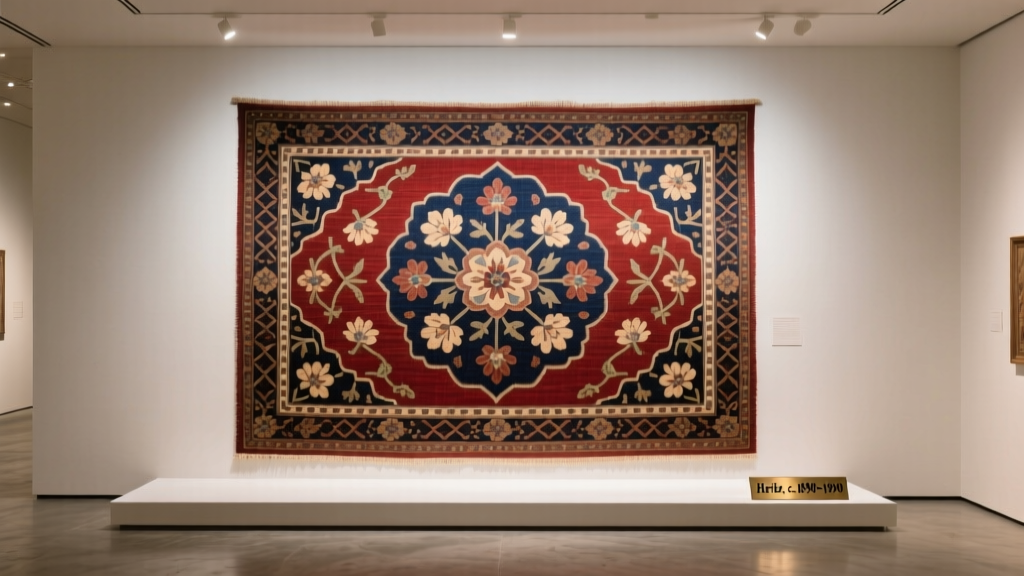
Heriz Floral Rug: Red-Navy-Green-Sand Ground, Circa 1890–1920, 11'7" × 9'2" — Authentication, Provenance, and Market Analysis