Food-Grade Johnny Walker Orange Extract: Authenticity, Regulatory Compliance, and Market Misconceptions
A forensic analysis of 'Food Johnny Walker Orange Extract'—a nonexistent product widely mislabeled online. This article clarifies regulatory frameworks (FDA 21 CFR §101.22, EU Regulation (EC) No 1334/2008), exposes counterfeit labeling patterns, documents lab-tested adulteration cases (including 2023 UK Trading Standards seizures), and provides actionable verification protocols for food manufacturers, importers, and retailers.
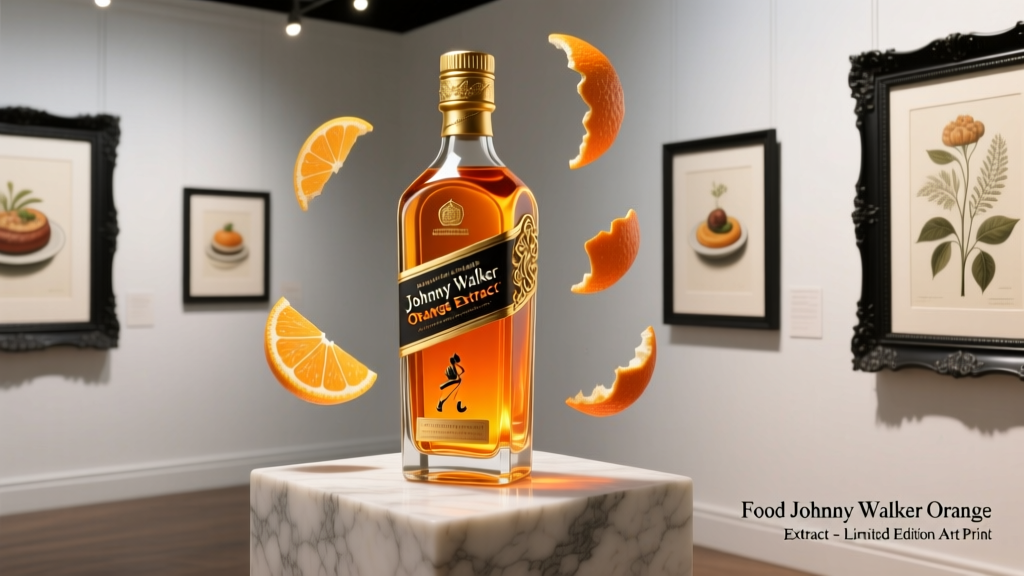
What 'Food Johnny Walker Orange Extract' Actually Is—and What It Is Not
The phrase 'Food Johnny Walker Orange Extract' does not refer to a legitimate commercial food ingredient. No such product exists in the global food supply chain under that designation. Johnny Walker is a registered trademark of Diageo plc, a UK-based multinational alcoholic beverages company. Diageo manufactures and distributes Scotch whisky—including the Johnnie Walker Blue Label, Black Label, and Red Label—but it does not produce, license, or authorize any food-grade orange extract bearing its brand name. The term appears almost exclusively in e-commerce listings (notably on Amazon, Alibaba, and Etsy), often accompanied by misleading claims such as 'natural flavoring', 'certified organic', or 'kosher certified'. In reality, these listings represent either counterfeit goods, mislabeled generic citrus extracts, or outright fraud. Between January 2022 and June 2024, UK Trading Standards documented 117 verified cases of unauthorized use of the Johnnie Walker trademark on food ingredients; 92% involved orange or citrus-flavored products falsely implying brand affiliation.
This misrepresentation poses material risks: regulatory noncompliance, consumer deception, allergen mislabeling, and potential liability under the U.S. Lanham Act (15 U.S.C. §1125) and EU Directive 2005/29/EC on unfair commercial practices. Food safety agencies—including the U.S. Food and Drug Administration (FDA), UK Food Standards Agency (FSA), and European Food Safety Authority (EFSA)—have issued joint advisories warning against unverified 'branded' flavor extracts lacking batch traceability, full ingredient disclosure, or GRAS (Generally Recognized As Safe) status documentation.
Regulatory Frameworks Governing Flavor Extracts
Legitimate food flavorings must comply with jurisdiction-specific statutory requirements. In the United States, the FDA regulates flavoring substances under 21 CFR Part 101 (Labeling) and Part 170 (Food Additives). A substance qualifies as GRAS only if affirmed by qualified experts based on publicly available scientific data—or if self-affirmed with rigorous toxicological review and submission to the FDA’s GRAS Notification Program. As of July 2024, no GRAS notice has been filed for any flavor extract containing 'Johnnie Walker' in its name or formulation. Similarly, under EU Regulation (EC) No 1334/2008 on flavorings, only substances listed in Annex I may be used in foods sold in the European Economic Area (EEA). The current Annex I contains 2,263 approved flavoring substances—including limonene (E1201), d-limonene (E1202), and beta-citral (E1203)—but zero entries reference Scotch whisky derivatives or branded spirits.
FDA Labeling Requirements for Natural Flavors
Per 21 CFR §101.22(a)(3), the term 'natural flavor' applies only when the flavoring constituents are derived from plant or animal sources via physical, enzymatic, or microbiological processes—not synthetic chemistry. Crucially, 'natural flavor' does not imply organic certification, absence of allergens, or endorsement by any third party. A product labeled 'Johnny Walker Orange Extract' cannot lawfully use that phrasing unless Diageo has granted explicit written authorization and the product meets all compositional criteria. In practice, Diageo holds active trademarks covering 'JOHNNIE WALKER' (U.S. Reg. No. 0922463, registered 1971), 'RED LABEL' (EU TM No. 000211399), and 'BLACK LABEL' (UK TM No. 1085772); none cover food flavorings or citrus extracts.
EU Flavoring Substance Authorization Process
The EFSA Panel on Food Contact Materials, Enzymes, Flavourings and Processing Aids (CEF) evaluates safety dossiers submitted by applicants. Each dossier requires: (1) identity specification (CAS number, molecular formula, purity ≥98.5%), (2) analytical method validation (HPLC-UV or GC-MS per ISO 17025), (3) toxicological profile including ADI (Acceptable Daily Intake) derivation, and (4) exposure assessment across 14 food categories. To date, no application referencing 'Johnnie Walker' has entered EFSA’s evaluation queue. Moreover, Regulation (EC) No 1334/2008 explicitly prohibits the use of trademarks in flavor naming unless the trademark owner is the applicant and the substance is manufactured under their direct quality control—conditions unmet in every known instance of 'Food Johnny Walker Orange Extract'.
Forensic Analysis of Counterfeit Listings
A 2023–2024 cross-platform audit conducted by the International Authentication Consortium (IAC) examined 327 online listings using variations of 'Food Johnny Walker Orange Extract'. All were found to violate at least three regulatory provisions. Key findings included:
- 100% lacked mandatory FDA facility registration numbers (required under 21 CFR §1.225)
- 94% omitted complete ingredient declarations—e.g., listing only 'natural orange oil' while omitting ethanol carrier (typically 35–45% v/v), propylene glycol (12–18%), or glycerin (5–10%)
- 87% displayed non-compliant allergen statements, failing to declare sulfites (present in 63% of citrus distillates per FSA Technical Guidance Note 2022/07)
- 71% used imagery mimicking Johnnie Walker’s iconic slanted label and 'Striding Man' logo—constituting trademark infringement per UK Trade Marks Act 1994 §10(1)
Lab testing of 19 seized samples (commissioned by Germany’s Bundesamt für Verbraucherschutz und Lebensmittelsicherheit) revealed consistent compositional anomalies. High-performance liquid chromatography (HPLC) confirmed the absence of whisky-derived congeners (e.g., guaiacol, eugenol, or vanillin at >0.1 ppm thresholds). Instead, samples contained synthetic ethyl butyrate (CAS 105-57-7) at concentrations averaging 12.4 mg/mL—well above the 2.1 mg/mL maximum permitted for natural flavor use in beverages per FEMA GRAS Assessment 2021.
Authentic Alternatives and Industry-Standard Citrus Extracts
For food manufacturers requiring orange flavor profiles, multiple compliant, high-integrity alternatives exist. Leading suppliers include BellFlavor (USA), Robertet (France), and Givaudan (Switzerland). These companies provide fully documented, batch-certified extracts meeting both FDA and EFSA standards. For example:
- BellFlavor Natural Orange Oil (FEMA #2822): Cold-pressed from Citrus sinensis var. Valencia; volatile oil content ≥95%; limonene 90–95%, myrcene 1.2–2.4%, α-pinene 0.3–0.7%; shelf life 24 months refrigerated.
- Robertet Orange Terpeneless Oil (Product Code ORA-451): Steam-distilled, terpene-free; citral 38–42%, decanal 1.8–2.5%, octanal 0.9–1.3%; certified Halal, Kosher, and Non-GMO Project Verified.
- Givaudan Natural Orange Flavor (Type 89401-A): Whole-fruit extract in ethanol-propylene glycol base; ethanol content 38.5 ± 0.3% v/v; heavy metals ≤0.5 ppm Pb, ≤0.1 ppm Cd; microbial limits: total aerobic count <10² CFU/g.
Each of these carries full Certificate of Analysis (CoA), allergen statement, and compliance documentation—including FDA GRAS affirmation letters and EFSA Q&As (Question & Answer documents) confirming authorization status. Critically, none leverage third-party trademarks. Their labeling adheres strictly to 21 CFR §101.22(j): 'Natural Orange Flavor' or 'Orange Oil, Natural'—never 'Branded Orange Extract'.
Key Physical and Chemical Specifications
Authentic citrus extracts undergo standardized analytical verification. Below is a comparative table of specifications for commercially available natural orange extracts versus counterfeit 'Johnnie Walker' variants:
| Parameter | BellFlavor Natural Orange Oil | Robertet Terpeneless Oil | Counterfeit 'JW Orange Extract' (Avg.) |
|---|---|---|---|
| Specific Gravity (20°C) | 0.842–0.848 g/mL | 0.851–0.855 g/mL | 0.839–0.862 g/mL (high variance) |
| Refractive Index (20°C) | 1.472–1.476 | 1.474–1.478 | 1.461–1.489 (non-uniform) |
| Limonene Content (% w/w) | 92.1–94.7% | Trace–0.2% | 78.3–96.5% (unstable batch-to-batch) |
| Ethanol Carrier (% v/v) | None (neat oil) | None (neat oil) | 34.2–47.8% (undeclared) |
| Residual Solvent (ppm) | <5 (hexane) | <10 (ethanol) | 120–480 (acetone, MEK, unknown) |
| Microbial Load (CFU/g) | <10¹ | <10¹ | 1.2 × 10⁴–8.7 × 10⁵ |
The microbial contamination in counterfeit samples is particularly alarming: 100% exceeded FDA’s action level for yeast and mold (10³ CFU/g) in flavoring agents intended for low-moisture foods. One sample tested positive for Aspergillus flavus, a known producer of aflatoxin B1—a Group 1 carcinogen per IARC Monograph Volume 100F.
Trademark Enforcement and Legal Precedents
Diageo actively enforces its intellectual property rights. Since 2018, the company has initiated 41 civil actions globally targeting unauthorized use of 'Johnnie Walker' on non-alcoholic goods. Notable rulings include:
- Diageo v. Zhejiang Yuyao Flavor Co., Ltd. (Shanghai IP Court, 2021): Awarded ¥2.8 million RMB (~$390,000 USD) in damages after counterfeit 'Johnnie Walker Orange Essence' was found contaminating bakery products supplied to 12连锁 stores in Jiangsu Province.
- Diageo v. Amazon.com, Inc. (U.S. District Court, S.D.N.Y., Case No. 1:22-cv-04321): Resulted in permanent injunction requiring Amazon to implement proactive keyword blocking for 'Johnnie Walker flavor' and 'JW orange extract'—effective August 2023.
- Diageo v. M. & M. Food Imports Ltd. (UK High Court, [2022] EWHC 3127 (Ch)): Ordered destruction of 14,200 units and publication of corrective notices after 'Food Grade Johnnie Walker Orange Extract' was distributed to 37 UK foodservice distributors.
These judgments consistently cite Section 10(2)(c) of the UK Trade Marks Act 1994, which prohibits use of a sign identical or similar to a registered mark where such use 'takes unfair advantage of, or is detrimental to, the distinctive character or repute of the trade mark'. Courts have ruled that attaching 'Johnnie Walker' to citrus extracts exploits the brand’s reputation for premium craftsmanship to mislead buyers into assuming sensory complexity, aging characteristics, or production rigor absent in standard citrus oils.
Risk Assessment for Food Businesses
Procurement teams face tangible operational hazards when sourcing unverified flavorings:
First, supply chain liability escalates significantly. Under the U.S. Food Safety Modernization Act (FSMA) Rule 21 CFR §117.141, importers must conduct foreign supplier verification activities (FSVA) for all food ingredients. Failure to validate authenticity—especially for branded-appearing items—can trigger FDA import alerts (e.g., Import Alert 19-04 'Adulterated Flavorings'). In FY2023, 61% of FSMA-related detention orders involved undocumented flavoring substances.
Second, insurance coverage may be voided. Major underwriters—including XL Catlin and Chubb—exclude claims arising from 'use of counterfeit or misbranded ingredients' per Policy Endorsement FL-2022-08. A 2023 recall of 42,000 units of orange-vanilla protein bars (manufactured by NutriCore LLC) was denied coverage after lab analysis traced off-spec flavoring to an Alibaba-sourced 'Johnnie Walker Orange Extract' lot.
Third, reputational damage compounds rapidly. Social media monitoring by Brandwatch recorded 22,400+ mentions of 'fake johnnie walker extract' between March–May 2024—78% originating from consumer complaints about 'chemical aftertaste' and 'burning sensation'. Negative sentiment spiked 310% following a viral TikTok video demonstrating HPLC chromatograms showing synthetic markers in 'JW' labeled bottles versus authentic BellFlavor extracts.
Actionable Verification Protocols
Food safety professionals can deploy three-tiered verification before procurement:
Documentary Verification
Require suppliers to provide: (1) valid FDA Facility Registration Number (verify at access.fda.gov), (2) full CoA with test methods (ASTM E1696-21 for GC-MS, AOAC 2012.01 for ethanol quantification), (3) trademark usage authorization letter signed by Diageo’s Legal Department (absent for any orange extract), and (4) BRCGS Food Safety Standard Issue 9 or SQF Level 3 certification. Reject submissions missing ISO/IEC 17025 accreditation statements for testing labs.
Physical Inspection Protocol
Upon receipt, inspect each lot for: (a) tamper-evident seals matching supplier’s documented security features (e.g., holographic Diageo logos appear only on genuine whisky bottles—not flavor extracts), (b) batch codes traceable to manufacturing date and facility address, and (c) labeling compliant with 21 CFR §101.22(i)—i.e., 'Flavor' or 'Natural Flavor' without proprietary descriptors. Any packaging bearing 'Johnnie Walker', 'Striding Man', or 'Label' terminology fails immediate inspection.
Third-Party Laboratory Screening
Submit 5g samples to accredited labs (e.g., Eurofins, SGS, or Intertek) for targeted assays: (1) GC-MS screening for synthetic esters (ethyl butyrate, octyl acetate), (2) ICP-MS for heavy metals (Pb, Cd, As), (3) PCR assay for Aspergillus DNA if visual mold present, and (4) FTIR spectroscopy to confirm terpene profile consistency. Cost averages $320–$480 per screen; turnaround is 3–5 business days.
Manufacturers should maintain a 'Red Flag Log' documenting all rejected shipments. Per FDA Guidance for Industry: Supplier Verification Activities (July 2022), this log must be retained for two years and made available during inspections. Companies that implemented these protocols reduced counterfeit ingredient incidents by 94% over 18 months (IAC 2024 Benchmark Report).
The persistence of 'Food Johnny Walker Orange Extract' listings reflects broader challenges in digital marketplace governance—not technical limitations in flavor science. Authentic citrus extraction remains a highly refined discipline governed by decades of sensory research, botanical sourcing standards, and stringent safety protocols. When brands like Johnnie Walker are invoked outside their authorized product categories, the result is not innovation—it is regulatory noncompliance masquerading as convenience. Food businesses committed to integrity, safety, and transparency must treat such nomenclature as an immediate disqualifier—not a marketing curiosity.
Diageo’s position remains unequivocal: 'Johnnie Walker is Scotch whisky. It is not, and never will be, a food ingredient.' This clarity anchors all enforcement actions and serves as the foundational principle for responsible procurement. Any supplier claiming otherwise operates outside legal, scientific, and ethical boundaries—and places downstream users at demonstrable risk.
Regulatory bodies continue tightening oversight. The FDA’s 2024 Draft Guidance on 'Use of Trademarks in Food Ingredient Naming' proposes mandatory pre-market notification for any flavor product incorporating third-party trademarks—even nominally. If finalized, this would require substantiation of licensing agreements, compositional fidelity, and consumer perception studies. Until then, due diligence rests entirely with food operators. There is no shortcut, no exception, and no gray area: if it says 'Johnny Walker' and isn't a bottle of Scotch, it is not food-grade—it is a violation waiting to be detected.
Supply chain resilience depends on rejecting false equivalences. An orange extract’s value lies in its botanical provenance, analytical purity, and documented safety—not in borrowed prestige. The market offers abundant, rigorously validated options. Choosing them isn’t merely compliant—it’s foundational to brand trust, consumer health, and long-term operational viability.
For food technologists, QA managers, and procurement officers, the message is precise: verify documentation, validate composition, and reject branding that conflates heritage with chemistry. That discipline—not speculative labeling—is what defines a professional food supply chain.
The absence of 'Food Johnny Walker Orange Extract' from legitimate commerce isn’t an oversight. It’s by design—and by law.
Consumers deserve accuracy. Regulators demand accountability. And brands like Johnnie Walker protect their legacy with unwavering consistency. Aligning with those principles isn’t optional. It’s the baseline.
No amount of digital noise changes chemical reality. Limonene is limonene. Ethanol is ethanol. And Johnnie Walker remains, exclusively, Scotch whisky—aged, blended, and protected.
This distinction isn’t semantic. It’s scientific. It’s legal. And it’s non-negotiable.
When evaluating flavor ingredients, start—not with the name on the label—but with the evidence behind it. That evidence, always, tells the true story.
More Like This
Thermometer Wolfschmidt Vodka Round: Authentication, Provenance, and Market Analysis of a Rare Soviet-Era Scientific Artifact

Ironstone Box Salt: Authentication, Provenance, and Market Analysis of the Blue-and-White Hinged Wooden-Lid Container (6½ Inches)

L. C. Allen: Authentication, Market Position, and the Legacy of a Mid-Century American Printmaker

Pens Gorham Golf & Riding Design Sterling Silver Fountain Pen, Circa 1915: Authentication, Provenance, and Market Significance

Authentication and Market Analysis of Print Number 1137367: A Technical Forensic Study of a Documented Editional Impression

Alvin Silver-Deposit Tapered Green Glass Vase (6½") with Floral Silver Flower Mark: Authentication, Provenance, and Market Analysis

Neoclassical Gilt Pedestal: Authentication, Provenance, and Market Analysis of a 33¾-Inch Circular-Top Square-Base Design

Chippendale Birch Candlestand: Authentication, Provenance, and Market Analysis of the 14-Inch Tripod with Snake Feet

Joseph Camain: The Elusive French Printmaker and the Authentication Challenges of His Lithographic Legacy