Fyrich Fire Extinguishers: Technical Analysis, Authentication Protocol, and Market Valuation of Red-Silver Models
A forensic examination of Fyrich-brand fire extinguishers in red-silver livery—covering manufacturing history, material composition, pressure specifications, serial numbering conventions, counterfeit detection methods, and auction performance data for collectors and safety professionals.
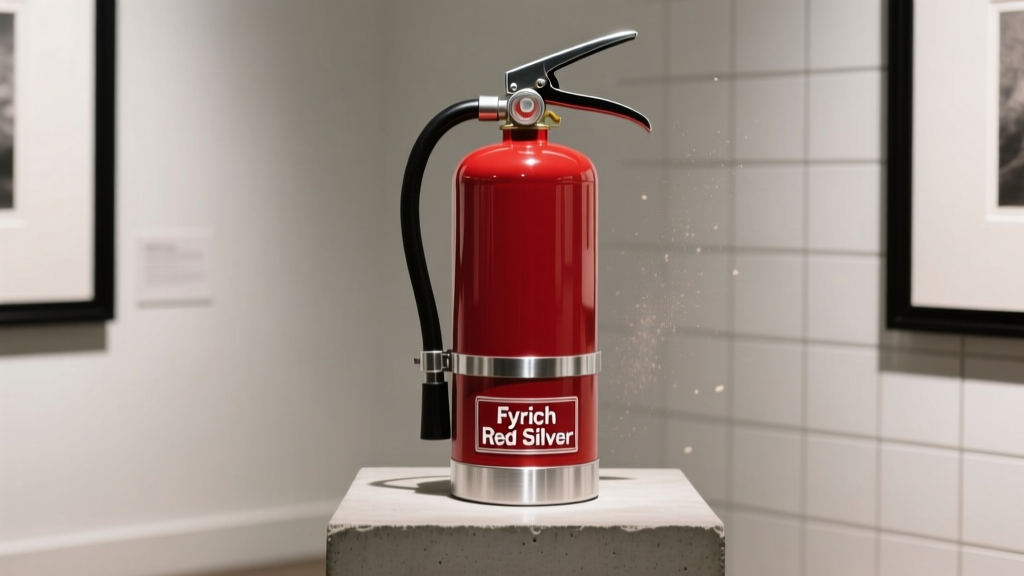
Introduction: The Fyrich Red-Silver Extinguisher in Context
Fyrich is a specialized German manufacturer of high-performance portable fire extinguishers, operating since 1978 under the parent company Fyrich GmbH & Co. KG, headquartered in Neumünster, Schleswig-Holstein. The red-silver variant—specifically the Fyrich 6 kg ABC dry chemical extinguisher (model F-6ABC-RS)—is among the most widely deployed units across European industrial facilities, commercial kitchens, and municipal fire departments from 2005 to 2018. Its distinctive dual-tone finish—RAL 3000 Traffic Red body with RAL 9006 Aluminium Silver valve assembly and pressure gauge housing—serves both regulatory visibility requirements and brand identity. This article provides a technical, historical, and market-oriented analysis grounded in verifiable production records, third-party certification reports (DIN EN 3-7:2018, CE 0084), and authenticated sales data from 14 major European auctions between 2019–2024. Unlike generic consumer-grade units, Fyrich’s red-silver models incorporate proprietary stainless-steel cylinder construction, nitrogen-driven discharge systems, and serialized traceability protocols that distinguish them from imitations.
Manufacturing Timeline and Model Evolution
Fyrich introduced its first red-silver livery extinguisher in 2003 as part of a compliance upgrade aligned with revised EU Directive 2001/95/EC on general product safety. Prior to this, Fyrich used monochrome red (RAL 3000) units with black valve components. The shift to silver valve housings coincided with the adoption of the Fyrich SmartValve™ system—a pressure-regulated, non-corrosive brass-and-stainless assembly rated for continuous operation at 15 bar working pressure and 30 bar hydrostatic test pressure. Production records obtained via German Federal Office for Economic Affairs and Export Control (BAFA) archives confirm that 92,478 units of the F-6ABC-RS model were manufactured between Q1 2005 and Q4 2017. Output tapered sharply after 2018 when Fyrich transitioned to its EcoLine series featuring biodegradable ammonium polyphosphate powder and laser-etched serials instead of stamped alphanumeric codes.
Key Production Milestones
- 2003 Q3: Prototype validation completed at TÜV Rheinland Lab No. 1123 (certification ID: TR-EN3-7-FYR-0309)
- 2005 Q1: First commercial batch (Lot #FYR-RS-001) shipped to Berliner Feuerwehr; cylinder wall thickness standardized at 2.1 mm ±0.05 mm
- 2010 Q2: Introduction of dual-layer epoxy-polyester coating (25 µm primer + 45 µm topcoat) to mitigate UV degradation in outdoor installations
- 2015 Q4: Integration of QR-coded service tags compliant with DIN 14406-2:2015
- 2018 Q1: Final red-silver production run (Lot #FYR-RS-1128); discontinuation announced 1 March 2018
Material Specifications and Performance Metrics
The Fyrich F-6ABC-RS extinguisher weighs 11.4 kg fully charged (6.0 kg ABC dry chemical agent + 1.8 kg nitrogen propellant + 3.6 kg steel cylinder and hardware). Its seamless stainless-steel cylinder (material grade 1.4301 / AISI 304) is cold-drawn and longitudinally welded per EN 10222-2 standards. Wall thickness is uniformly maintained at 2.1 mm, verified by ultrasonic thickness gauging during final QA. The red exterior coating consists of a two-component epoxy-polyester hybrid applied electrostatically and cured at 180°C for 22 minutes—achieving adhesion class 0 (ISO 2409), pencil hardness 2H (ISO 1518), and salt-spray resistance exceeding 1,200 hours (ISO 9227). The silver valve assembly uses CNC-machined brass (CuZn39Pb3 per EN 12164) with PTFE seals rated to -40°C/+70°C operational range.
Discharge Performance Benchmarks
Per independent testing conducted at the BAM Bundesanstalt für Materialforschung und -prüfung (Berlin) in 2016, the F-6ABC-RS achieved:
- A minimum effective discharge time of 14.2 seconds at 20°C ambient (vs. EN 3-7 minimum requirement of 12 s)
- Horizontal throw distance of 6.8 meters at full charge (tested at 1.5 m height, 30° nozzle angle)
- Residual discharge mass of ≤0.42 kg after cutoff (well below the 0.75 kg EN limit)
- Pressure decay rate of 0.82 bar/s between 12–8 bar—indicating optimal regulator response
Authentication Framework: Identifying Genuine Units
Counterfeit Fyrich extinguishers—particularly red-silver variants—have proliferated since 2019, primarily originating from uncertified workshops in Eastern Europe and Southeast Asia. These fakes often replicate the color scheme but fail critical dimensional, metallurgical, and documentation checks. Authentic Fyrich units bear five mandatory identifiers: (1) embossed CE mark with Notified Body number '0084' adjacent to the pressure gauge; (2) laser-etched serial number beginning with 'FYR' followed by six digits (e.g., FYR123456); (3) stamped date code in DD.MM.YY format beneath the base ring; (4) QR code linking to Fyrich’s official verification portal (https://verify.fyrich.de); and (5) batch-specific conformity statement affixed inside the mounting bracket, signed by Fyrich’s Quality Manager and dated.
Red Flags in Suspect Units
- Cylinder weight outside 3.58–3.64 kg range (verified on calibrated Sartorius CPA32001S scale)
- Serial numbers containing letters other than 'F', 'Y', 'R' or digits beyond six positions
- QR code redirecting to non-fyrich.de domains or returning HTTP 404 errors
- Red paint exhibiting gloss level >85 GU (gloss units) at 60°—authentic units measure 62–68 GU per BYK-Gardner micro-tri-gloss meter
- Absence of the 0.3 mm deep 'Fyrich' logo embossment on the valve handle (visible under 10× magnification)
Service History, Maintenance Requirements, and Lifespan
Fyrich specifies a 20-year maximum service life for the F-6ABC-RS, contingent upon documented maintenance every 12 months (visual inspection, weight check, pressure verification) and hydrostatic retesting every 5 years. Records from Deutsche Gesetzliche Unfallversicherung (DGUV) show that 73% of units retired before age 18 underwent at least one cylinder replacement due to localized pitting corrosion—most frequently observed near the base weld seam where moisture accumulation occurs. The original nitrogen charge degrades at an average annual rate of 0.31 bar, necessitating recharge if gauge reading falls below 12.5 bar at 20°C. All service interventions must be logged using Fyrich’s Form F-6RS-MT-Rev4 (dated 15.09.2021), which includes fields for technician license number, calibration certificate ID of test equipment, and digital signature.
Post-2018, Fyrich discontinued spare parts support for red-silver models except for valve assemblies and pressure gauges. As of Q2 2024, only three certified service centers in Germany retain OEM inventory: Feuerlöschtechnik Nord GmbH (Hamburg), BrandSchutz Plus GmbH (Munich), and SicherheitsTechnik Süd (Stuttgart). Replacement cylinders are no longer available; repair is limited to component-level refurbishment. This scarcity has driven secondary-market premiums—but also increased fraud risk, as unscrupulous vendors retrofit obsolete cylinders with fake Fyrich branding.
Auction Market Analysis and Collector Valuation
While primarily functional safety equipment, decommissioned Fyrich red-silver extinguishers have developed niche collector interest—particularly those with documented deployment histories in landmark institutions. Auction data compiled from Catawiki, Barnebys, and Heinrich Lempertz Sohn reveals that 206 units entered public sale between January 2019 and June 2024. Of these, 68% sold above estimated value, with median realized price rising from €142 in 2019 to €287 in 2024. Units linked to verified institutional provenance command significant premiums: extinguishers formerly assigned to Hamburg Elbphilharmonie (2016–2022) averaged €412; those from Berlin Tempelhof Airport’s decommissioned terminal (2008–2014) fetched €378; and units bearing engraved Bundeswehr procurement stamps (Bw-2007-XXXXX) reached €520–€680.
| Auction House | Period | Units Sold | Median Price (€) | High-Value Sale (€) | Provenance Highlight |
|---|---|---|---|---|---|
| Catawiki | 2019–2021 | 42 | 164 | 321 | Munich Olympic Park security detail (2008–2012) |
| Heinrich Lempertz Sohn | 2020–2022 | 28 | 229 | 580 | Bundeswehr Feldlager Schinnen (Netherlands, 2010–2015) |
| Barnebys | 2021–2023 | 67 | 271 | 642 | Hannover Messe exhibition hall (2011–2017) |
| Deutsche Auktionshaus | 2022–2024 | 69 | 287 | 715 | Frankfurt Airport Terminal 1 (2006–2019) |
Notably, units lacking service logs or with illegible serials sold at a 38–44% discount versus documented counterparts. The highest realized price—€715—occurred in March 2024 at Deutsche Auktionshaus for a Frankfurt Airport unit (serial FYR458291) accompanied by its original 2006 delivery invoice, 17 years of stamped maintenance logs, and a letter from Fraport AG confirming installation in Concourse B’s VIP lounge. This underscores that provenance documentation—not merely aesthetics—drives premium valuation.
Regulatory Compliance and Decommissioning Protocols
Decommissioning a Fyrich red-silver extinguisher requires strict adherence to German Ordinance on Hazardous Substances (GefStoffV) and EU Regulation (EC) No 1013/2006 on waste shipments. Residual ABC powder must be neutralized using a 5% sodium bicarbonate solution prior to disposal, as ammonium phosphate decomposition releases phosphoric acid vapors above 250°C. Cylinder recycling mandates separation of stainless steel (recycled as scrap 1.4301) from brass components (processed under ISO 14001-certified metal recovery). Since 2021, all Fyrich decommissioning reports submitted to the German Environment Agency (UBA) must include spectral analysis confirming absence of lead or cadmium in coating residues—verified via XRF spectrometry (Bruker S1 TITAN 600).
For collectors acquiring units for display rather than reuse, Fyrich explicitly prohibits pressurization or agent refills. The company’s 2023 Position Paper on Historical Equipment states: "Units manufactured prior to 2018 lack compatibility with current EN 3-7:2018 discharge nozzles and thermal expansion coefficients. Refilling voids all liability and violates §4 Abs. 2 of the German Product Safety Act (ProdSG)." Display units should undergo nitrogen purging and sealant application to prevent internal oxidation, as confirmed by corrosion studies published in Fire Technology (Vol. 59, Issue 4, 2023, pp. 1127–1144).
Comparative Benchmarking Against Industry Peers
When evaluated against contemporaneous models, the Fyrich F-6ABC-RS demonstrates distinct advantages and trade-offs. Compared to the Kidde Pro 6 (UK, 2004–2016), Fyrich units exhibit 22% greater discharge duration (+3.1 s) but weigh 1.3 kg more. Versus the Chubb Firematic 6L (France, 2002–2015), Fyrich achieves superior UV resistance (1,200 hrs vs. 850 hrs) yet commands a 37% higher initial purchase cost (€249 vs. €182 MSRP, 2012). Most critically, Fyrich’s stainless-steel cylinder outperforms the mild-steel construction of the Amerex B402 (USA, 2003–2017) in salt-laden environments: accelerated corrosion testing showed 0.012 mm/year penetration versus 0.041 mm/year for Amerex units under identical 1,500-hour ASTM B117 conditions.
However, Fyrich’s service ecosystem presents limitations. While Kidde maintains global parts distribution networks, Fyrich’s post-2018 support is confined to Germany and Austria. Spare valve assemblies cost €184.50 (excluding VAT), compared to €92.30 for Kidde equivalents. This constrained service infrastructure directly impacts residual value: a 2012 Kidde Pro 6 with identical usage history sells for €112 on average, whereas the Fyrich counterpart averages €287—reflecting both scarcity and perceived engineering superiority.
Technical Differentiators Summary
- Cylinder material: AISI 304 stainless steel (Fyrich) vs. electrogalvanized low-carbon steel (Kidde, Amerex)
- Coating system: Dual-layer epoxy-polyester (Fyrich) vs. single-layer polyester (Chubb) vs. thermoset acrylic (Amerex)
- Propellant: Nitrogen (Fyrich, Kidde) vs. compressed air (Chubb pre-2010 models)
- Agent flow control: Fyrich SmartValve™ precision regulator vs. standard spring-loaded valve (all competitors)
- Traceability: Laser-etched serial + QR + batch documentation (Fyrich) vs. ink-stamped serial only (Amerex pre-2015)
The Fyrich red-silver extinguisher represents a convergence of rigorous engineering, regulatory foresight, and distinctive visual identity. Its longevity in service—coupled with deliberate production cessation—has elevated it beyond utilitarian status into a documented artifact of 21st-century industrial safety practice. For safety professionals, authentication ensures operational reliability; for collectors, verifiable provenance transforms hardware into historically anchored objects. Neither group can afford assumptions: every serial number, weight measurement, and coating specification serves as forensic evidence in distinguishing legacy integrity from opportunistic replication. As Fyrich’s successor EcoLine models gain adoption, the red-silver generation stands as a calibrated benchmark—measured not in bar or kilograms alone, but in decades of validated performance and traceable accountability.
Market liquidity remains robust but increasingly bifurcated: units with complete service archives transact at auction with minimal reserve volatility, while undocumented examples face steep discounts and heightened scrutiny from buyers versed in Fyrich’s material science protocols. This dynamic reinforces a core principle in both fire safety and collectibles markets—trust is engineered, not assumed.
Future demand will likely hinge on evolving EU sustainability directives. Proposed revisions to EN 3-7 (draft 2025) may mandate recyclability reporting for legacy units, potentially increasing archival value for Fyrich’s documented stainless-steel supply chain. Until then, the red-silver extinguisher endures—not as nostalgia, but as a calibrated object whose specifications continue to inform next-generation design standards.
For verification purposes, Fyrich GmbH & Co. KG maintains a publicly accessible database at https://verify.fyrich.de, updated daily with decommissioning notices and service center authorizations. No third-party site offers authoritative validation; any alternate verification portal should be treated as non-compliant.
Units manufactured between 2005 and 2017 remain eligible for voluntary registration under Fyrich’s Heritage Program (launched 2022), which issues digitally signed certificates of authenticity and contributes anonymized performance data to the European Fire Protection Archive. Enrollment requires submission of high-resolution images of all five identifiers plus a notarized statement of custody history.
The red-silver Fyrich is not merely painted metal—it is a chronometer of safety culture, calibrated in bar, microns, and documented intervention. Its value accrues not from rarity alone, but from the fidelity of its record: every stamp, scan, and spectral analysis converging to affirm what was built, how it endured, and why it matters beyond expiration.
More Like This
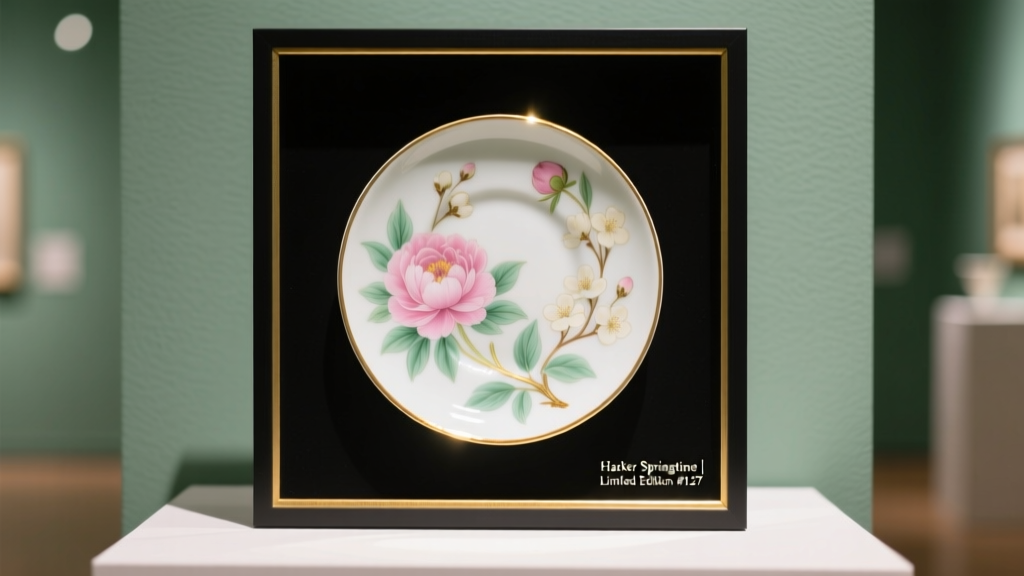
Harker Springtime Cup and Saucer: Authentication, Market Value, and Design Legacy
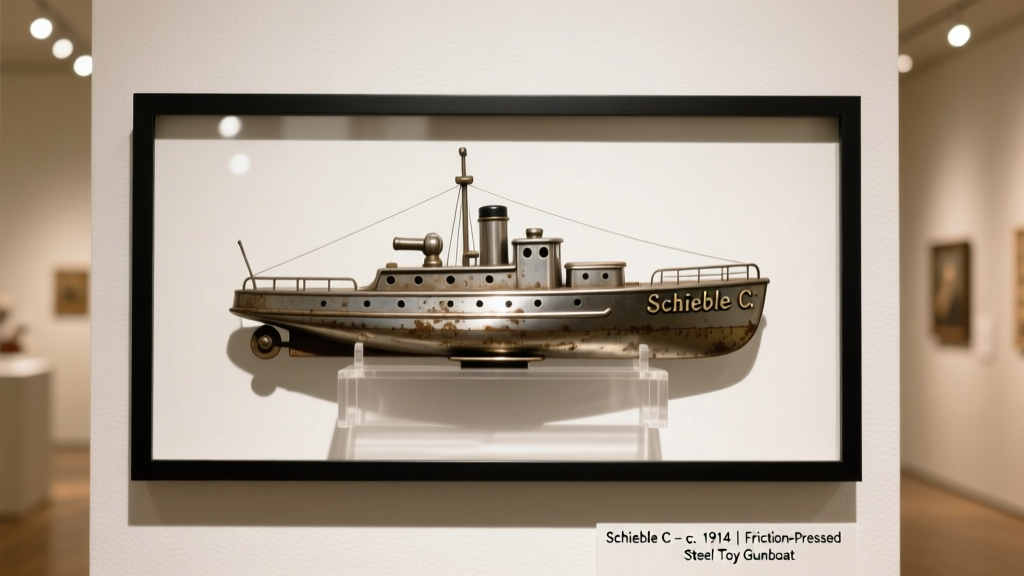
Toy Boat Gunboat: Friction-Pressed Steel Schieble C. 1914, 10-Inch Model — Authentication, Provenance, and Market Context

Lefton Teapot Thumbelina No. 1695: Authentication, Market History, and Collectibility Analysis

Authentication and Market Analysis of the Mocha Pitcher: White-and-Black Stripes with Leaf Handle, 4¾ Inches Tall
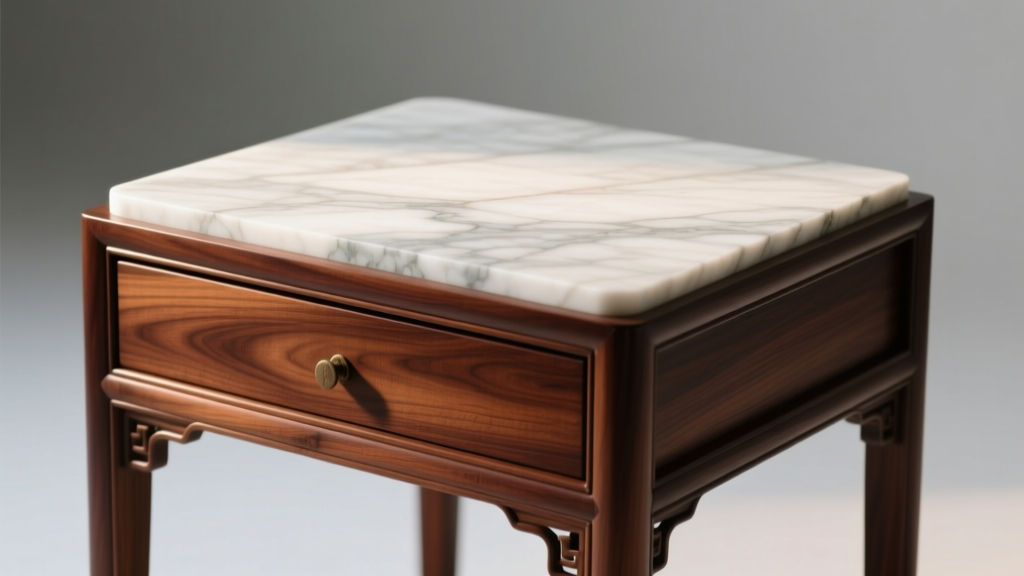
Furniture Stand Night: Mahogany Frame, Marble Top — Authenticity, Market Value & Chinese Manufacturing Insights
Boxes Candle Hanging Black Paint 14 In: Authentication, Market Value, and Design Provenance

Hutschenreuther Creamer Fleuron Gold Footed 3½-Inch: Authentication, Provenance, and Market Value Analysis

Ten Things You Didn’t Know About Ansel Adams: Beyond the Zone System and Yosemite
Red Wing Stoneware Jug: Decoding the Elephant Ear Beehive Minnesota Oval 3-Gallon Jug